
Starting a Pet Grooming Business in the Philippines can be a promising opportunity for entrepreneurs who enjoy working with animals and want to provide a practical service to pet owners. As more households care for dogs and cats as family members, grooming services can help owners maintain their pets’ cleanliness, comfort, and appearance.
A pet grooming business may operate from a small shop, a dedicated space at home, or a mobile grooming setup. Your choice will depend on your starting capital, available space, grooming skills, and the needs of customers in your target area.
However, running a grooming shop involves more than purchasing clippers and bathing equipment. You must understand animal handling, hygiene, customer service, pricing, business registration, and daily operations. Careful planning can help you create a professional service that earns customer trust while prioritizing the welfare of every pet.
Starting a pet grooming business can be a rewarding opportunity for aspiring entrepreneurs. If you’re exploring other affordable ventures, check out our Best Low-Capital Businesses to Start in the Philippines for practical business ideas that match your budget, skills, and available resources.
Quick Summary (TL;DR)
A pet grooming business can be a practical service opportunity in the Philippines when you combine proper planning, safe animal care, and responsible financial management.
- Choose your business model: Decide whether to operate a grooming shop, home-based service, or mobile grooming business.
- Study your location: Look for accessible areas near residential communities, veterinary clinics, pet supply stores, and potential customers.
- Prepare your startup capital: Budget for rent, equipment, grooming supplies, utilities, permits, labor, and working capital.
- Purchase essential equipment: Consider grooming tables, pet clippers, scissors, dryers, bathing stations, brushes, combs, and pet-safe cleaning products.
- Set competitive prices: Calculate labor, supplies, water, electricity, rent, and other operating expenses before setting your rates.
- Follow business requirements: Check business registration, local permits, tax obligations, and other requirements applicable to your grooming business.
- Develop safe grooming procedures: Establish proper animal-handling techniques, sanitation practices, and procedures for recognizing signs of pet distress.
- Promote your services: Use local marketing, social media, veterinary partnerships, customer referrals, and honest reviews to attract repeat customers.
- Monitor your finances: Record daily sales, expenses, inventory, bookings, and cash flow to understand your actual business performance.
- Expand carefully: Add specialized grooming services, mobile appointments, or additional locations when customer demand and available resources support the investment.
Key takeaway: A well-managed pet grooming business depends on a suitable location, reliable equipment, safe animal handling, proper cost management, and consistent customer care. Start with services you can deliver confidently, then expand as your customer base grows.
Table of Contents
1. Understand the Pet Grooming Business Opportunity in the Philippines
A pet grooming business can serve pet owners who need reliable services to maintain their animals’ hygiene and appearance. Its potential depends on local demand, suitable customers, competition, and your ability to provide safe grooming services that meet the needs and expectations of pet owners.
Identify Your Potential Customers
Before investing in equipment or renting a commercial space, identify the pet owners who may use your services.
Your potential customers may include:
- Dog owners who need regular bathing and coat maintenance.
- Cat owners looking for suitable grooming services.
- Busy professionals who prefer convenient appointments.
- Families with multiple pets.
- Owners of long-haired breeds that require frequent coat care.
- Pet owners who need help maintaining their animals between veterinary visits.
- Customers looking for specialized grooming for particular coat types.
Different customers have different expectations. Some may prioritize affordable bathing services, while others may be willing to pay more for careful styling and personalized attention.
Study the Local Pet Grooming Market
Visit existing grooming businesses in your target area. Observe their service menus, prices, operating hours, customer reviews, and booking arrangements.
You can also speak with pet owners to understand their grooming habits. Ask how often they schedule grooming appointments, which services they usually purchase, and what problems they experience with existing providers.
This research can help you identify opportunities to offer better convenience, clearer pricing, careful handling, or more reliable appointments.
2. Choose the Right Pet Grooming Business Model
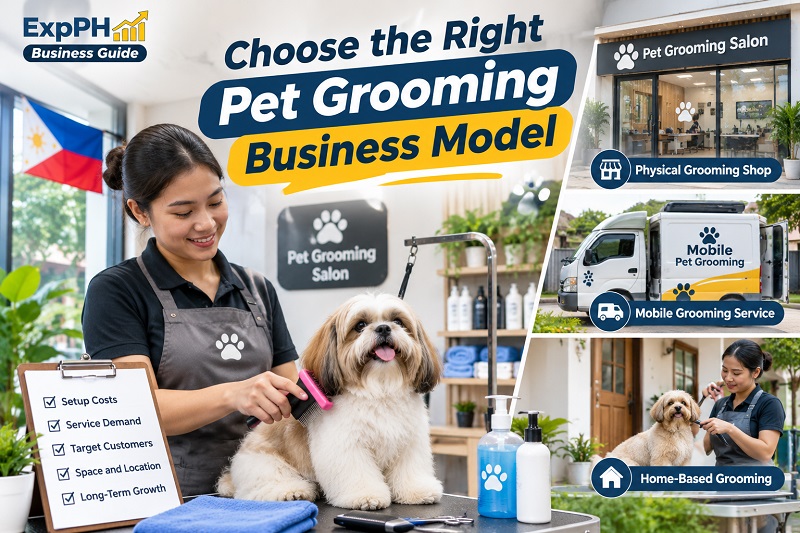
Choosing the right pet grooming business model depends on your startup budget, available space, and grooming experience. Whether you operate a physical shop, home-based service, or mobile business, consider the costs, facilities, and customer needs before deciding which setup best supports your goals.
Pet Grooming Shop
A dedicated grooming shop allows customers to bring their pets to your facility. You can prepare designated areas for bathing, drying, brushing, trimming, and customer reception.
A physical shop may help establish a professional business presence. However, you must account for rent, utilities, facility preparation, equipment, and local operating requirements.
Choose a location with convenient access, sufficient space, reliable water supply, proper drainage, and suitable ventilation.
Home-Based Pet Grooming Business
A home-based grooming business may reduce rental expenses if your property has a suitable area for operations.
You may convert a clean and secure room or designated section of your property into a grooming space. However, check local zoning rules, business permit requirements, property restrictions, and possible neighborhood concerns before accepting customers.
Keep the grooming area separate from your household activities. Pets should have a secure waiting space and should never be left unattended in unsafe conditions.
Mobile Pet Grooming Business
A mobile grooming service brings grooming equipment and services directly to customers. This model may appeal to pet owners who prefer home appointments or have difficulty transporting their animals.
Depending on your setup, you may use a specially equipped vehicle or a portable grooming arrangement.
Consider vehicle expenses, fuel, transportation time, water storage, electricity, equipment security, and wastewater handling. Mobile grooming also requires careful scheduling because travel time affects the number of appointments you can accept.
Select a Model That Fits Your Capital
Compare each business model based on its initial investment and recurring expenses.
A home-based operation may require less rental capital, while a physical shop may provide more room for equipment and multiple appointments. Mobile grooming may offer convenience but can involve higher transportation and setup costs.
Start with a model you can operate responsibly. You can expand your services or move to a larger facility when customer demand and finances support the change.

3. Identify Your Target Customers and Choose Your Location
Choosing the right location for your pet grooming business requires understanding where potential customers are and what they need. Consider nearby pet owners, accessibility, rental costs, and competing shops while ensuring the facility provides enough space and safe conditions for pets and employees.
Look for Areas With Potential Pet Owners
Consider locations near:
- Residential subdivisions and condominium communities.
- Veterinary clinics and animal hospitals.
- Pet supply stores and pet pharmacies.
- Pet-friendly commercial establishments.
- Dog parks and community spaces.
- Areas with established pet-owner groups.
These locations may provide access to potential customers. However, observe actual activity and competition before deciding where to establish your business.
Evaluate Accessibility and Facility Requirements
Your location should have enough space for grooming equipment, bathing, drying, storage, and customer reception.
Consider the following:
- Safe access for customers carrying or transporting pets.
- Reliable water and electricity.
- Proper drainage and wastewater arrangements.
- Adequate ventilation.
- Secure doors, gates, and pet holding areas.
- Surfaces that can be cleaned easily.
- Sufficient space to separate animals when necessary.
Noise and odors should also be managed properly to avoid disturbing neighboring properties.
Compare Rent and Competition
Check rental rates and other property expenses before signing a lease. A location near many pet owners may still be unsuitable if the rent is too high or the facility needs expensive renovations.
Visit competing grooming shops and compare their services, pricing, customer feedback, and operating hours. Look for a practical way to distinguish your business through careful handling, cleanliness, appointment reliability, or transparent service packages.

4. Prepare Your Starting Capital and Business Budget
Preparing a realistic startup budget helps you understand the financial requirements of opening a pet grooming business. Calculate your equipment, facility, registration, and supply costs while setting aside working capital to cover daily operations, unexpected expenses, and slower business periods.
List Your Initial Expenses
Common startup expenses may include:
- Rental deposit and advance payment.
- Renovation and grooming-area preparation.
- Grooming table and bathing station.
- Clippers, scissors, and grooming tools.
- Pet dryers and bathing equipment.
- Shampoos, conditioners, and cleaning products.
- Towels, brushes, combs, and other supplies.
- Pet-safe cages or holding areas.
- Business registration and local permits.
- Signage and marketing materials.
- Initial employee wages, if hiring staff.
The actual cost depends on your business model, location, equipment quality, and the number of services you plan to provide.
Separate One-Time and Recurring Expenses
One-time expenses include equipment purchases, initial renovations, and certain registration costs. Recurring expenses include rent, electricity, water, cleaning supplies, wages, internet, equipment maintenance, and other operating costs.
Separating these expenses helps you understand the amount of money needed to open and the amount required to keep the business running.
Prepare Working Capital
Avoid using your entire budget for equipment and decorations. Set aside money for daily operations, unexpected repairs, and slower business periods.
Your working capital should help cover essential expenses while you build a regular customer base. Prepare a monthly estimate and update it as you receive actual supplier quotations and operating bills.
Consider Funding Options Carefully
You may use personal savings, contributions from business partners, or financing that suits your circumstances. Before borrowing, calculate repayment obligations and determine whether expected business income can support them.
Avoid taking on unnecessary debt before confirming local demand and estimating your realistic earning capacity.
5. Purchase the Essential Pet Grooming Equipment and Supplies
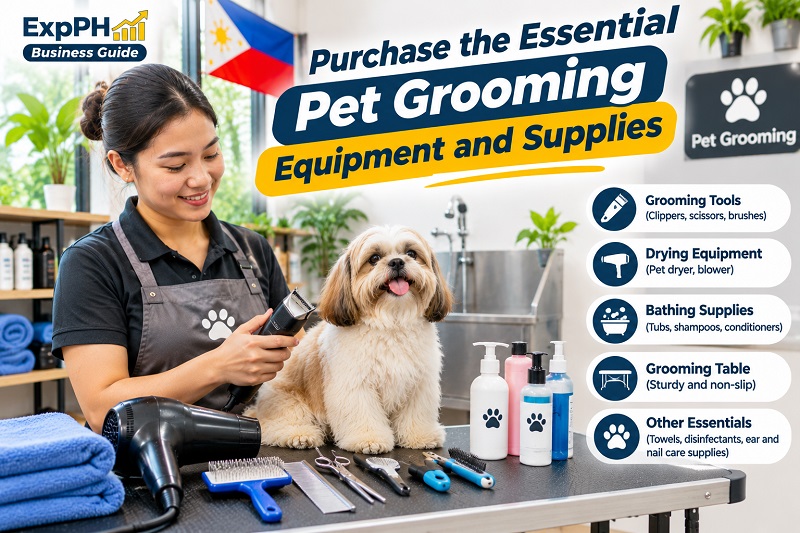
Choosing the right pet grooming equipment and supplies helps maintain service quality while ensuring animal safety and comfort. Compare product suitability, durability, maintenance needs, and costs before purchasing tools and grooming products that match your services and budget.
Essential Grooming Equipment
Consider preparing the following:
- Grooming table: Provides a stable working surface for grooming.
- Pet clippers: Used for appropriate coat trimming with suitable blades.
- Grooming scissors: Include suitable tools for different trimming tasks.
- Pet dryer: Helps dry coats after bathing, using appropriate temperature and airflow.
- Bathing station: Provides a designated area for washing pets.
- Brushes and combs: Select types suitable for different coat textures.
- Nail clippers: Designed for the size and needs of the animal.
- Towels: Use clean towels for each pet.
- Pet-safe holding equipment: Helps prevent animals from escaping or moving into unsafe areas.
- Storage cabinets: Keep tools and products organized.
Choose Appropriate Grooming Products
Purchase shampoos, conditioners, and cleaning products specifically formulated for pets. Different coat types and skin conditions may require different products.
Avoid using human shampoos or unverified chemical mixtures on animals. Follow product instructions and check for warnings or restrictions before use.
Keep products properly labeled and stored away from pets. Never use a grooming product when you are unsure whether it is suitable for the animal.
Compare Equipment Quality and Maintenance Needs
Compare warranties, replacement parts, cleaning requirements, power consumption, and expected durability before purchasing equipment.
A low-priced clipper or dryer may become expensive if it frequently breaks down or cannot support your daily workload. Choose reliable tools that are appropriate for your initial services and budget.
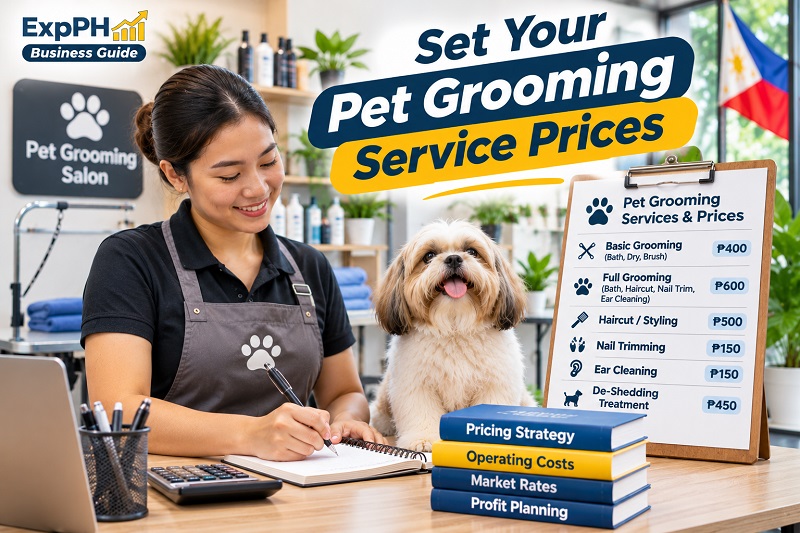
6. Set Your Pet Grooming Service Prices
Setting appropriate pet grooming service prices requires understanding your operating costs and the needs of your customers. Calculate expenses for each service, compare local competitors, and create clear packages that reflect the time, supplies, and work involved while keeping rates reasonable and sustainable.
Calculate the Cost of Each Service
Consider the following when setting prices:
- Shampoo and conditioner consumption.
- Water and electricity.
- Towels and cleaning materials.
- Employee wages.
- Rent and other overhead expenses.
- Equipment maintenance.
- Time required for each appointment.
- Additional supplies for specialized services.
A small dog with a short coat may require less time than a large dog with a thick or tangled coat. Your pricing should reflect the actual work involved.
Research Competitor Prices
Visit grooming businesses in your area and compare their service inclusions and rates.
Do not copy another shop’s prices without checking your own expenses. Competitors may have different rental costs, staff arrangements, equipment, and customer volume.
Use their pricing as a market reference, then calculate whether your own rates can cover expenses and support sustainable operations.
Create Clear Service Packages
You can organize your services into simple packages, such as:
- Basic bath and drying.
- Bath, brushing, and nail trimming.
- Full grooming and coat styling.
- Additional coat care services.
Explain what each package includes and identify services that may require separate fees. Inform customers when coat condition, pet size, or behavior may affect the final price.
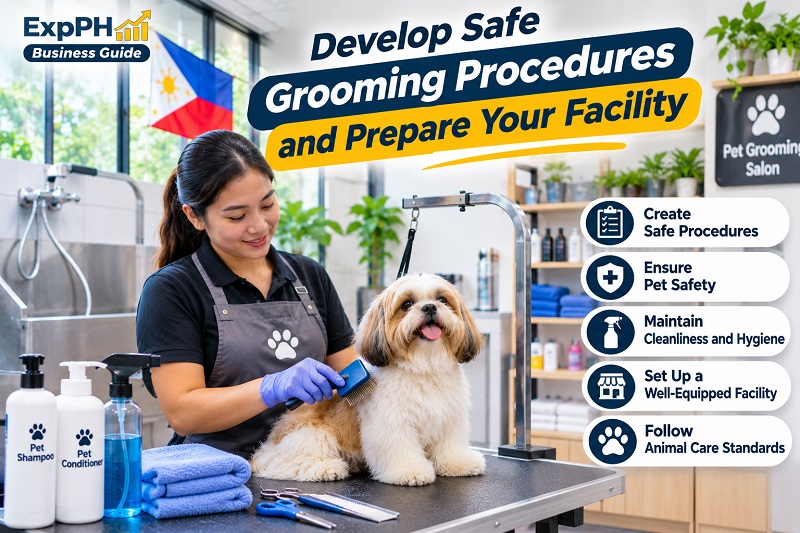
7. Develop Safe Grooming Procedures and Prepare Your Facility
Animal safety should be a central part of your grooming business. Pets may become nervous around unfamiliar people, loud dryers, bathing equipment, or grooming tools. Your procedures should reduce unnecessary stress and prevent avoidable injuries.
Prepare a Clean and Secure Grooming Area
Organize the facility into suitable areas for reception, bathing, drying, grooming, and temporary holding.
Use non-slip flooring where practical and keep electrical equipment away from wet areas. Secure doors and gates to prevent pets from escaping.
Clean grooming tables, bathing stations, brushes, and other reusable tools between appointments. Use fresh towels and maintain proper waste disposal.
Establish Safe Handling Procedures
Before beginning a service, ask the owner about the pet’s health concerns, behavior, sensitivities, and previous grooming experiences.
Employees should learn how to handle animals calmly and recognize signs of distress. Avoid forcing a frightened or aggressive animal through a grooming procedure.
Never leave a pet unattended on a raised grooming table or in an unsecured bathing area. Use appropriate restraint methods without causing unnecessary discomfort.
Know When to Refer a Pet to a Veterinarian
Groomers should understand the limits of their role. They are not substitutes for veterinarians.
If a pet has an unexplained wound, unusual swelling, suspected infection, severe skin irritation, breathing difficulty, or another concerning condition, stop the grooming procedure when necessary and advise the owner to seek veterinary care.
For animal welfare guidance, consult the Bureau of Animal Industry (BAI) and review the Philippines’ Animal Welfare Act of 1998 (Republic Act No. 8485). The law provides protections concerning the treatment and welfare of animals.
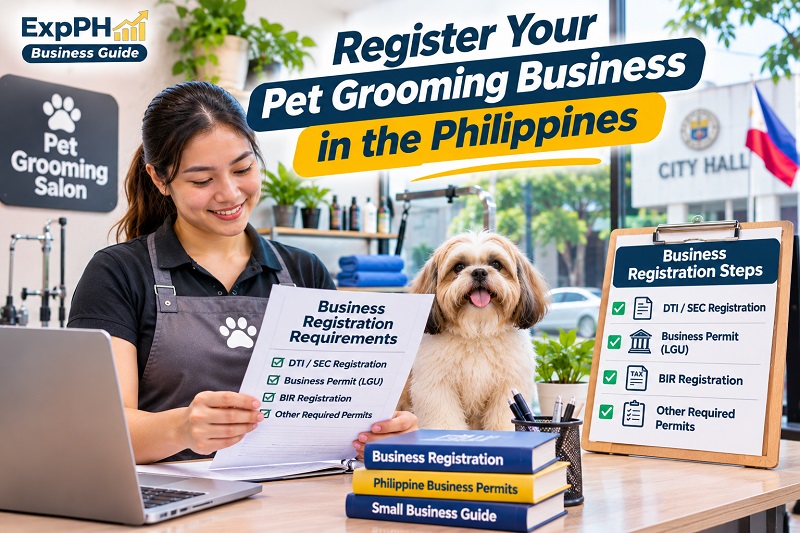
8. Register Your Pet Grooming Business in the Philippines
Registering your pet grooming business involves choosing an appropriate business structure and completing the required registrations and permits. Understand the requirements of the DTI or SEC, your local government, and the BIR to establish your business legally and comply with applicable operating and tax obligations.
Choose Your Business Structure
Common options include:
- Sole proprietorship: Often suitable for an individual who owns and manages the business.
- Partnership: An option when two or more people agree to operate the business together.
- Corporation: A separate legal entity that may suit a business with a more formal ownership structure.
Consider your ownership plans, responsibilities, and financial arrangements before choosing a structure.
Register Your Business Name or Entity
For a sole proprietorship, you may register your business name through the Department of Trade and Industry (DTI).
Partnerships and corporations generally register with the Securities and Exchange Commission (SEC).
Business name or entity registration does not replace the other permits required to operate.
Secure Local Business Permits
Visit your city or municipal Business Permits and Licensing Office (BPLO) to confirm the requirements for your grooming facility.
Depending on your location and premises, these may include:
- Barangay clearance.
- Mayor’s or business permit.
- Zoning or locational clearance.
- Fire safety inspection requirements.
- Sanitary or other applicable local clearances.
Ask your local government which requirements apply to your specific business activity and property.
Register With the BIR
You must also comply with applicable tax registration, invoicing, and recordkeeping requirements through the Bureau of Internal Revenue (BIR).
Keep copies of your registration documents and permits. Monitor renewal dates and comply with applicable tax filing and payment deadlines.
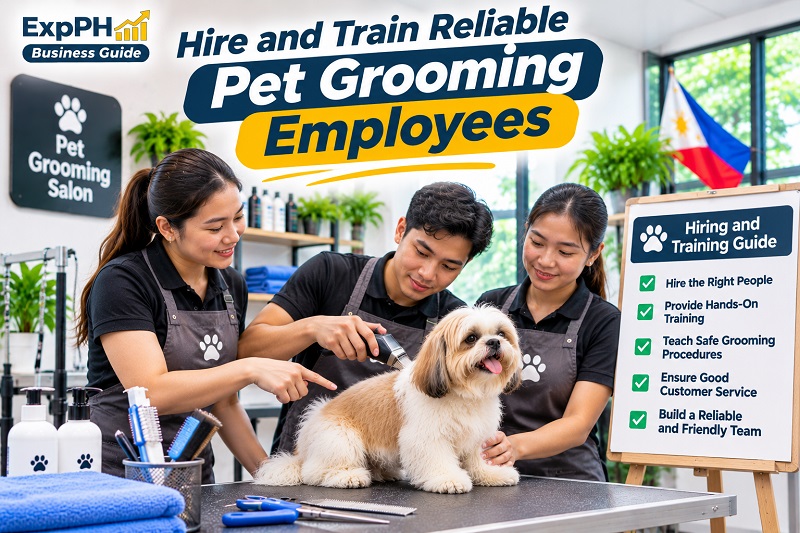
9. Hire and Train Reliable Pet Grooming Employees
Hiring and training reliable employees helps maintain grooming quality while ensuring pets receive safe and attentive care. Choose staff with suitable experience or a willingness to learn, provide proper grooming and animal-handling training, and establish clear customer service standards for consistent daily operations.
Hire People With Suitable Experience
Look for applicants who are patient, responsible, attentive, and comfortable working with animals.
Previous grooming experience or relevant training can be valuable. If you are hiring beginners, provide proper supervision and avoid assigning complicated procedures before they develop the necessary skills.
Clearly explain job responsibilities, working hours, compensation, and workplace expectations.
Train Employees in Grooming Techniques
Training should cover:
- Safe bathing and drying procedures.
- Proper use of grooming clippers and scissors.
- Coat brushing and detangling techniques.
- Nail trimming precautions.
- Cleaning and disinfecting tools.
- Safe pet handling and restraint.
- Recognizing signs of animal distress.
- Maintaining a clean grooming facility.
Employees should understand that different breeds, coat types, and individual animals require different approaches.
Establish Customer Service Standards
Teach employees to greet customers politely, confirm the requested services, explain expected grooming time, and communicate concerns clearly.
Before starting, confirm the pet’s condition and the owner’s instructions. After grooming, explain the services completed and mention any observations that the owner may need to discuss with a veterinarian.

10. Develop a Booking and Customer Management System
Developing an organized booking and customer management system helps you track appointments and understand each pet’s grooming needs. Keep accurate customer and pet records, offer convenient booking options, and monitor service history to prevent scheduling conflicts and improve daily operations.
Record Important Customer and Pet Details
Maintain appropriate records such as:
- Customer name and contact details.
- Pet name and species.
- Breed or general description.
- Coat type and grooming preferences.
- Requested service package.
- Appointment date and time.
- Relevant handling instructions provided by the owner.
- Previous service history.
- Payment status.
Collect only information needed to provide the service. Protect customer records and do not share personal information without a legitimate reason.
Accept Convenient Booking Options
You can accept appointments through phone calls, messaging applications, or social media pages.
As your business grows, you may consider online booking tools that allow customers to select available schedules and receive appointment reminders.
Confirm the appointment details before the visit. For first-time customers, allow enough time to discuss the pet’s grooming needs and any handling concerns.
Monitor Customer Activity
Review booking records to identify busy days, popular services, cancellations, and repeat customers.
This information can help you adjust staffing, operating hours, and service packages. It can also help you identify customers who may benefit from scheduled grooming reminders.
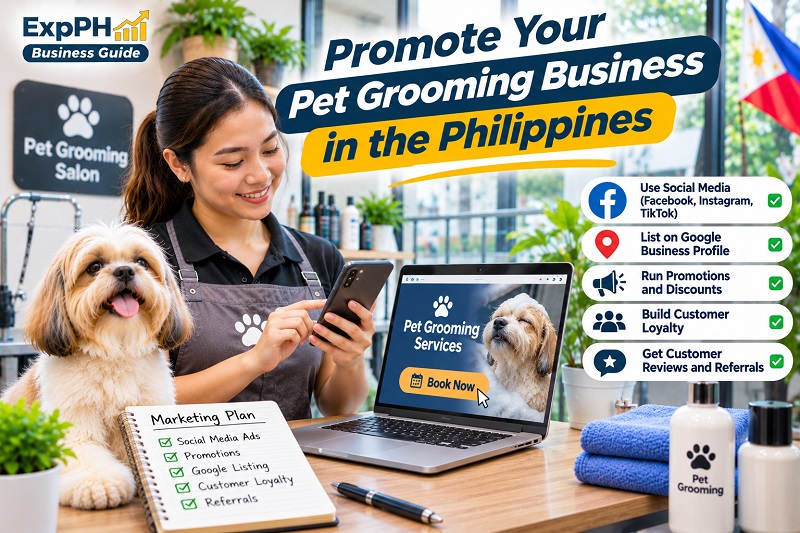
11. Promote Your Pet Grooming Business in the Philippines
Promoting your pet grooming business helps attract local customers and build trust in your services. Use social media, accurate online business listings, local partnerships, and genuine customer reviews to increase visibility and show pet owners what they can expect from your grooming facility.
Create a Social Media Business Page
Set up a business page with your shop’s location, operating hours, contact information, service list, and prices.
You can publish:
- Photos of your grooming facility.
- Service package explanations.
- Grooming preparation tips.
- Appointment announcements.
- Customer testimonials with permission.
- Promotions and seasonal offers.
Use genuine photos of your work and avoid editing images in a way that misrepresents the results.
Improve Your Local Online Visibility
Create or update your business listing on Google Business Profile so nearby customers can find your location, contact information, and operating hours.
Keep your business details accurate and respond politely to customer questions and reviews.
Build Local Partnerships
Connect with nearby veterinary clinics, pet supply stores, pet boarding facilities, and responsible pet-owner communities.
You can introduce your services through approved local channels or discuss referral arrangements where appropriate. Keep any partnership transparent and avoid making medical claims about your grooming services.
Encourage Honest Customer Reviews
Ask satisfied customers to share genuine feedback about their experience. Reviews can help potential clients understand your service quality and customer care.
Respond professionally to complaints and use constructive feedback to improve your procedures.

12. Offer Service Packages and Customer Loyalty Programs
Offering service packages and customer loyalty programs can encourage repeat visits and create more consistent bookings. Develop grooming options that match different pet needs, introduce affordable rewards, and provide convenient appointment reminders while ensuring every promotion remains financially sustainable.
Create Grooming Packages
You may offer different packages based on the services included.
For example, a basic package could include bathing and drying, while a more comprehensive package may include brushing, nail trimming, and coat styling.
Explain what is included in each package. Adjust the service according to the pet’s size, coat condition, and grooming needs.
Introduce a Loyalty Program
A simple loyalty card or digital reward system can encourage repeat visits.
You may offer a discount after a specified number of completed appointments or provide a small additional service as a reward.
Calculate the cost of each reward before introducing the program. Make sure discounts do not reduce your income below the amount needed to cover operating expenses.
Offer Scheduled Grooming Appointments
Some pets benefit from regular grooming based on their coat type, lifestyle, and individual needs.
You can help customers plan future appointments by providing reminders and flexible booking schedules. Avoid recommending the same grooming frequency for every animal. Encourage owners to consider their pet’s specific needs and seek veterinary advice when appropriate.
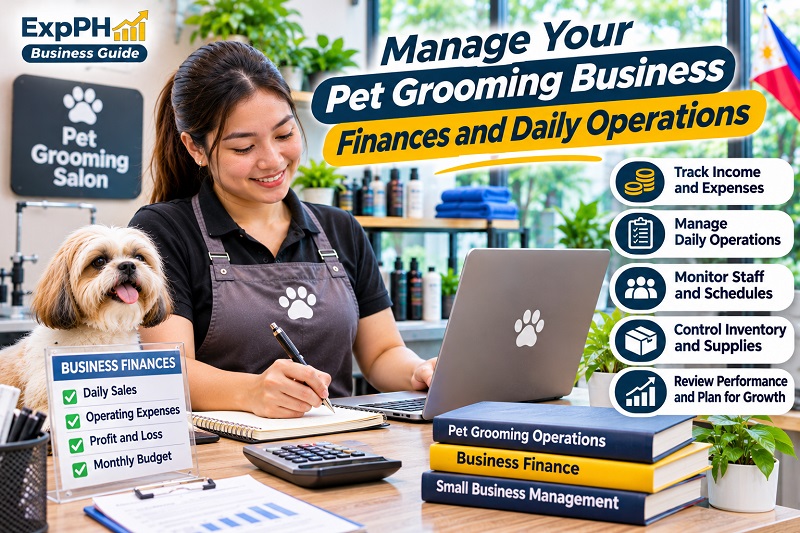
13. Manage Your Pet Grooming Business Finances and Daily Operations
Managing your pet grooming business finances and daily operations helps maintain profitability and service quality. Track income and expenses, separate business funds, calculate your break-even point, and maintain grooming equipment to control costs and keep daily activities running smoothly.
Separate Business and Personal Money
Use a dedicated account or clearly separated records for business transactions.
Avoid mixing personal spending with business funds because doing so makes it difficult to measure actual income and expenses.
Record sales, supplier payments, wages, rent, utilities, equipment purchases, and other business costs.
Monitor Daily Sales and Expenses
At the end of each working day, record:
- Number of pets groomed.
- Total sales collected.
- Services performed.
- Cleaning and grooming supplies used.
- Employee wages or labor costs.
- Other operating expenses.
- Customer feedback and service concerns.
These records help you identify popular services and monitor changes in operating costs.
Calculate Your Break-Even Point
Your break-even point is the level of sales needed to cover your business expenses.
To estimate it, identify your fixed costs and calculate how much each grooming service contributes after its variable expenses.
For example, a business with high rental costs may need more appointments or a higher average transaction value to cover monthly expenses. Use your actual service prices and costs rather than relying on general estimates.
Maintain Grooming Equipment
Clean and inspect clippers, scissors, dryers, bathing stations, electrical connections, and other tools regularly.
Replace damaged equipment and follow manufacturer maintenance instructions. Proper care can reduce interruptions and help maintain a consistent grooming experience.
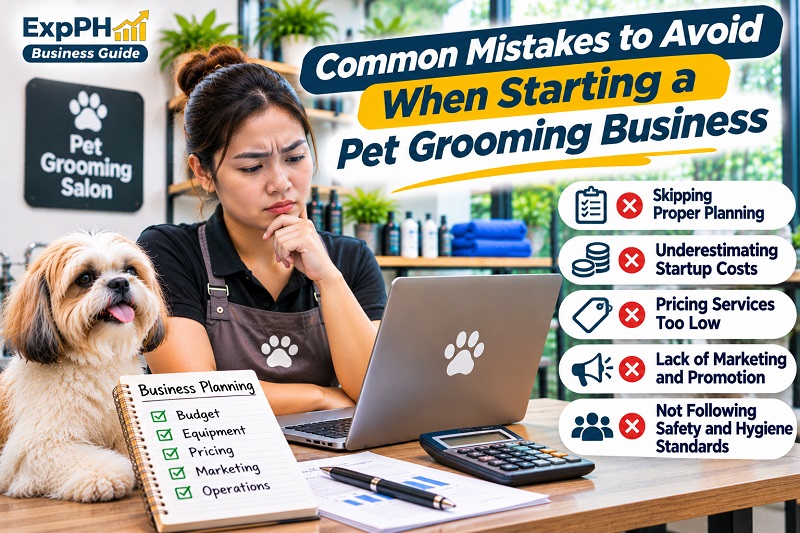
14. Common Mistakes to Avoid When Starting a Pet Grooming Business
Avoiding common mistakes when starting a pet grooming business helps protect your investment and maintain customer trust. Plan your budget carefully, choose a suitable location, invest in reliable equipment, recognize your professional limits, prioritize animal safety, and monitor your finances regularly.
Underestimating Startup Costs
Buying equipment is only one part of the investment. You must also consider rent, renovations, utilities, permits, supplies, wages, and working capital.
Prepare a realistic budget before opening and keep a reserve for unexpected expenses.
Choosing an Unsuitable Location
A property may appear affordable but lack adequate space, ventilation, drainage, or accessibility.
Inspect the premises carefully and confirm local requirements before signing a lease.
Using Poor-Quality Equipment
Unreliable clippers, dryers, and grooming tools may interrupt appointments and affect service quality.
Compare equipment durability, safety features, maintenance needs, and warranties before purchasing.
Accepting Services Beyond Your Skills
Do not accept complicated grooming procedures simply to increase sales. Specialized styling and handling may require additional training and experience.
Refer pets to qualified professionals or veterinary clinics when their needs go beyond your services.
Ignoring Animal Safety and Hygiene
Poor cleaning practices and careless handling can expose pets and employees to unnecessary risks.
Follow consistent sanitation procedures, use suitable grooming products, and prioritize animal welfare throughout every appointment.
Failing to Track Business Finances
Without accurate records, you may not know whether your prices cover expenses or which services contribute most to your income.
Review sales, operating costs, inventory, and customer activity regularly.
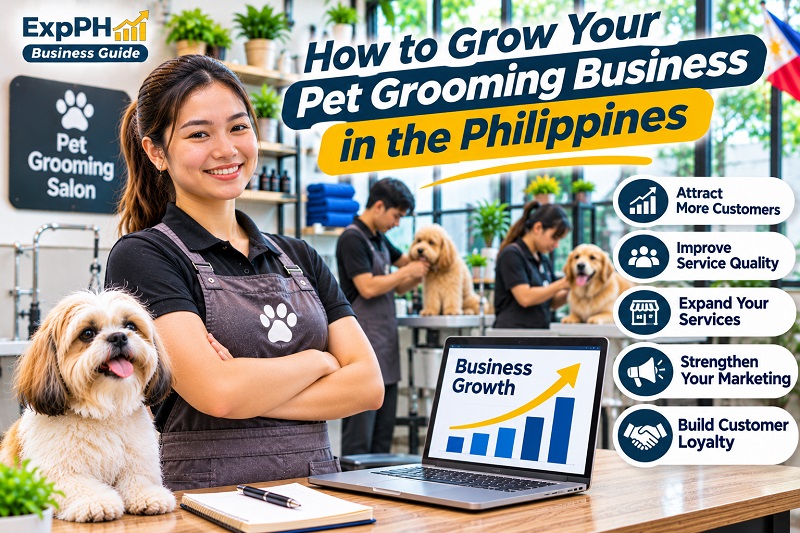
15. How to Grow Your Pet Grooming Business in the Philippines
Growing your pet grooming business requires careful planning and a clear understanding of customer demand. Expand your services, improve equipment, strengthen local relationships, and consider mobile grooming or another location when your finances and operations can support sustainable growth.
Add Services Based on Customer Demand
You may introduce additional grooming services when customers regularly request them.
Possible additions include specialized coat styling, de-shedding treatments, and other suitable grooming options. Research the necessary training, equipment, and products before adding a service.
Avoid offering procedures that require veterinary qualifications or medical treatment.
Improve Your Facility and Equipment
As appointment volume increases, you may need additional grooming tables, dryers, bathing stations, or storage areas.
Upgrade equipment when it improves safety, service capacity, or efficiency. Avoid purchasing expensive tools without a clear business need.
Build Relationships With Pet Owners and Local Businesses
Maintain relationships with regular customers and local pet-related businesses.
You can strengthen your reputation through dependable appointments, clear communication, and careful treatment of animals. Positive customer experiences may encourage referrals and repeat bookings.
Consider Mobile Grooming or a Second Location
If customers request home appointments, a mobile service may be worth exploring.
Opening another location may also become an option when your existing business has consistent demand and sufficient cash flow.
Before expanding, calculate additional equipment, staffing, transportation, rent, registration, and management costs. Make sure your current operation can maintain service quality while you take on new responsibilities.
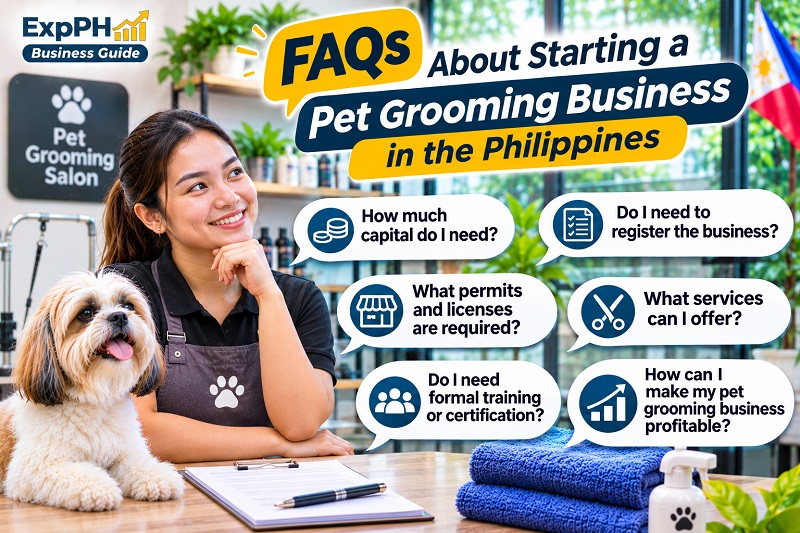
FAQs About Starting a Pet Grooming Business in the Philippines
1. How much capital do I need to start a pet grooming business?
Startup costs depend on your location, business model, equipment, facility preparation, permits, and working capital. Compare supplier quotations and prepare a detailed budget before investing.
2. Do I need to register my pet grooming business?
Yes. Register your business with the appropriate agency, secure required local permits, and complete tax registration. Confirm specific requirements with your city or municipality first.
3. Where is the best location for a pet grooming shop?
Choose an accessible area near residential communities, veterinary clinics, or pet supply stores. Check rental costs, competition, drainage, ventilation, and suitable grooming space before committing.
4. What equipment do I need for a pet grooming business?
Essential equipment includes a grooming table, pet clippers, scissors, brushes, combs, dryer, bathing station, towels, nail clippers, and pet-safe cleaning products and storage.
5. How should I set my pet grooming service prices?
Prices depend on pet size, coat condition, service complexity, grooming time, supplies, labor, and overhead. Compare local rates while ensuring each service covers costs fairly.
6. Can I operate a pet grooming business from home?
Yes, if your property is suitable and local rules allow it. Check zoning, permits, neighborhood restrictions, sanitation, and safe access before accepting customers safely.
7. How can I keep pets safe during grooming?
Prioritize calm handling, proper restraint, clean equipment, suitable products, and supervision. Stop when an animal shows distress and recommend veterinary attention appropriately when needed.
8. How can I attract customers to my pet grooming business?
Promote your services through social media, accurate business listings, local partnerships, customer referrals, and honest reviews. Share clear prices, service details, and appointment information online.
9. How should I manage my pet grooming business finances?
Keep records of appointments, sales, expenses, supplies, wages, and customer feedback. Review these regularly to monitor cash flow, manage inventory, and improve operations daily effectively.
10. When should I expand my pet grooming business?
Consider expansion when bookings are consistent, finances are stable, service quality remains reliable, and you can afford additional equipment, staff, space, and operating costs comfortably.
Conclusion: Build a Trusted Pet Grooming Business in the Philippines
Starting a Pet Grooming Business in the Philippines requires more than buying grooming equipment and opening a shop. You need to understand your target market, choose a suitable business model, prepare a realistic budget, and develop the skills needed to handle animals safely.
Business registration, proper sanitation, reliable equipment, transparent pricing, and organized customer management are also important parts of running a responsible grooming service.
Start with services you can perform confidently and focus on providing a clean, safe, and comfortable experience for every pet. Listen to customer feedback, monitor your expenses, and improve your operations as demand grows. With careful planning and responsible animal care, you can build a grooming business that earns customer trust and serves pet owners in your community.
Starting a pet grooming business is one way to build your entrepreneurial journey. Explore our Complete Guide to Starting a Business in the Philippines to learn more about business planning, registration, financing, daily operations, and practical strategies for building a successful and sustainable business.
Test your knowledge of the essential steps involved in starting a pet grooming business in the Philippines
Results


#1. What should you consider when choosing a pet grooming business model?
#2. Which customers are the primary target market?
#3. Which expense should be included in your startup budget?
#4. Which equipment is essential for trimming pet coats?
#5. What should determine your grooming service prices?
#6. Which agency handles sole proprietorship business name registration?
#7. What should employees learn before handling grooming appointments?
#8. What information belongs in customer management records?
#9. Which approach can help attract local customers?
#10. When should you consider expanding your grooming business?
Share your score or experience in the comments!
Keep learning with ExpPH Business Guide and take another step toward building a successful pet grooming business.

A Filipino web developer with a background in Computer Engineering. Founder of ExpPH Blog and ExpPH Business Guide, two Philippines-focused platforms covering OFW guidance, business, finance, freelancing, travel, and lifestyle. Passionate about helping Filipinos grow, he creates practical content that educates, empowers, and inspires readers nationwide.