
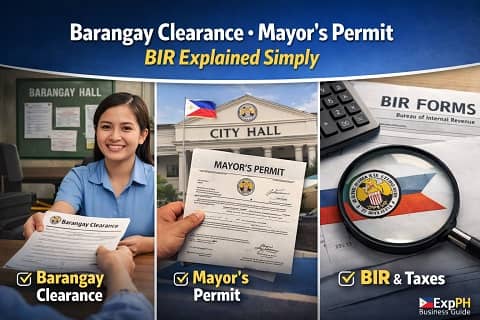
Starting a small business in the Philippines is an exciting milestone, but the registration process can feel confusing at first. Many aspiring entrepreneurs encounter terms such as barangay clearance, mayor’s permit, and BIR registration without clearly understanding how these requirements connect. Since each document is issued by a different government office, the process may appear complex. Once you understand the purpose of each step, the system becomes more structured and manageable for first time business owners.
If you are applying for a Business Permit Philippines for the first time, this guide explains the entire process in clear and practical terms. You will learn what each document represents, why it is required, and how the steps move from local approval to national tax registration. With proper preparation, you can complete your permits efficiently, avoid common mistakes, and begin operating with confidence and full compliance.
This article is written for beginners, home based entrepreneurs, freelancers, and small business owners who want to operate legally and confidently in the Philippines.
Table of Contents
What Is a Business Permit in the Philippines?
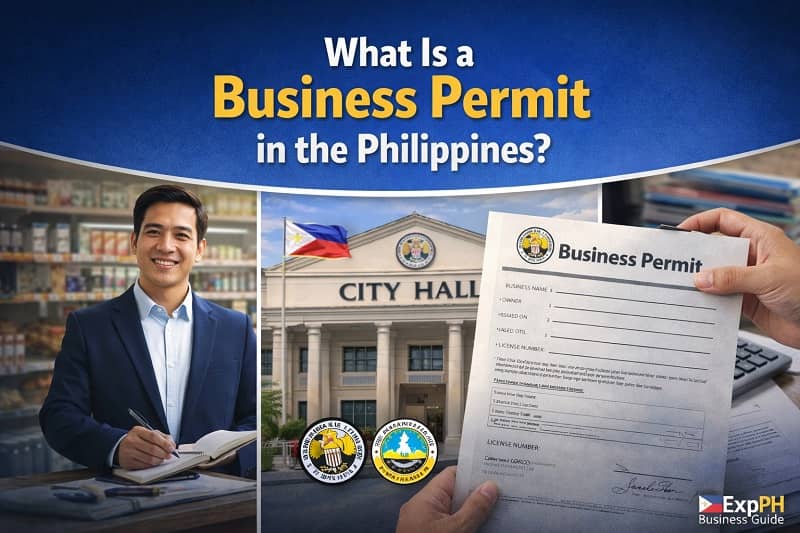
A Business Permit Philippines requirement refers to the set of legal documents required before operating a business in your city or municipality. These permits confirm that your enterprise complies with local regulations and national tax laws. Securing them protects your operations and establishes your business as legitimate.
In practical terms, the Business Permit Philippines process consists of three main components:
- Barangay Clearance
- Mayor’s Permit
- BIR Registration
Each requirement plays a specific and important role in your registration process. The barangay verifies that your business is allowed within the community. The city or municipality issues the mayor’s permit for local authorization. The Bureau of Internal Revenue registers you as an official taxpayer.
Completing all three requirements is necessary to operate legally in the Philippines. Missing even one document may result in penalties, fines, or possible closure. Securing these permits ensures compliance, builds credibility, and lays a strong legal foundation for long term business growth.
Why Securing Proper Permits Protects Your Business
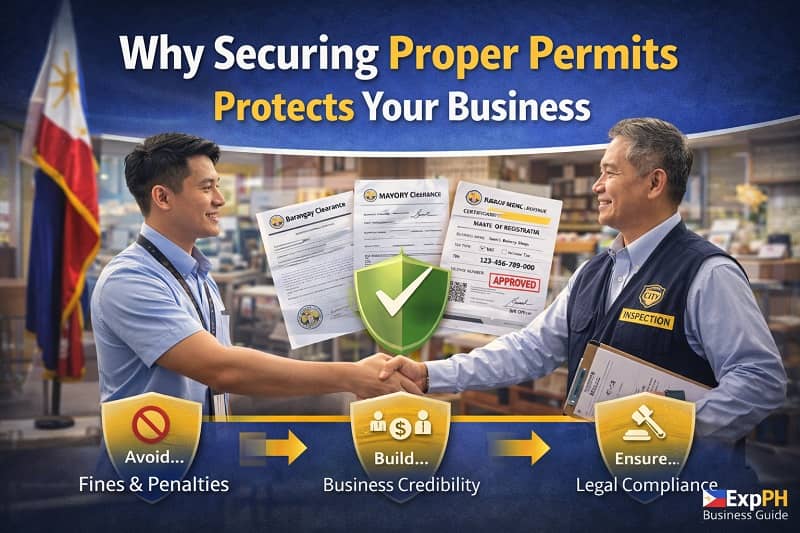
Obtaining your Business Permit Philippines requirements goes beyond simple compliance. Proper registration establishes your enterprise as legitimate and trustworthy. It protects you from legal risks while positioning your business for long term stability, structured growth, and stronger relationships with customers and institutions.
Securing complete permits provides several key advantages:
- Legal protection
- Business credibility
- Access to loans and financing
- Ability to join government programs
- Eligibility for partnerships
From a finance perspective, registered businesses are more likely to qualify for bank loans and government assistance. From a technology perspective, many digital platforms require verified documents before approving merchant or payment accounts. Full compliance expands your opportunities and strengthens your foundation.
3 Powerful Business Permit in the Philippines
Step 1: Barangay Clearance Explained
What Is a Barangay Clearance?
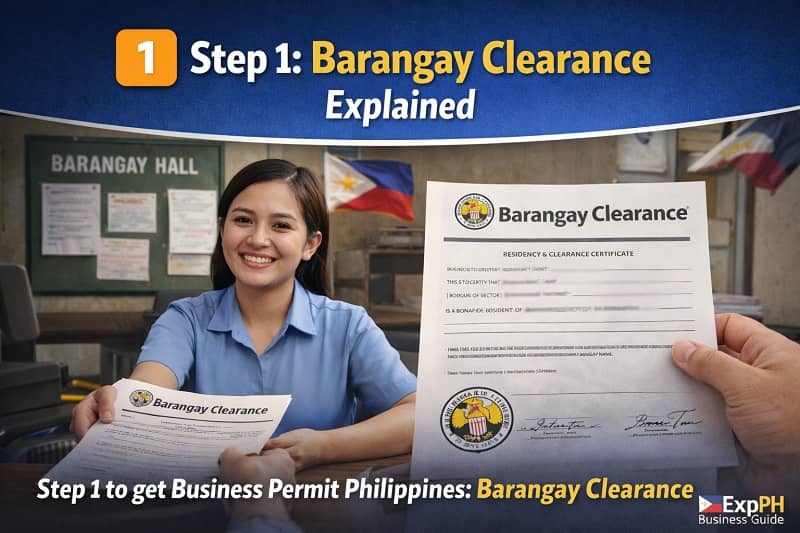
A barangay clearance is an official document issued by the barangay where your business operates. It confirms that your establishment follows local community rules and zoning policies. This clearance is typically the first requirement in the Business Permit Philippines process before moving to city level approval.
Why Is It Required?
The barangay evaluates several important factors before granting clearance. These include:
- Business location
- Zoning compliance
- Community impact
- Basic local records
This review ensures your business does not violate local ordinances. Without barangay clearance, you cannot proceed with your mayor’s permit application at the city or municipal level.
Typical Requirements
Requirements vary slightly by barangay, but most applicants are asked to submit the following:
- DTI Certificate for sole proprietorship
- SEC Registration for partnerships or corporations
- Lease contract or property ownership proof
- Valid government ID
- Community Tax Certificate
Fees are generally affordable and depend on business type and size. Always confirm updated requirements with your local barangay office before applying.
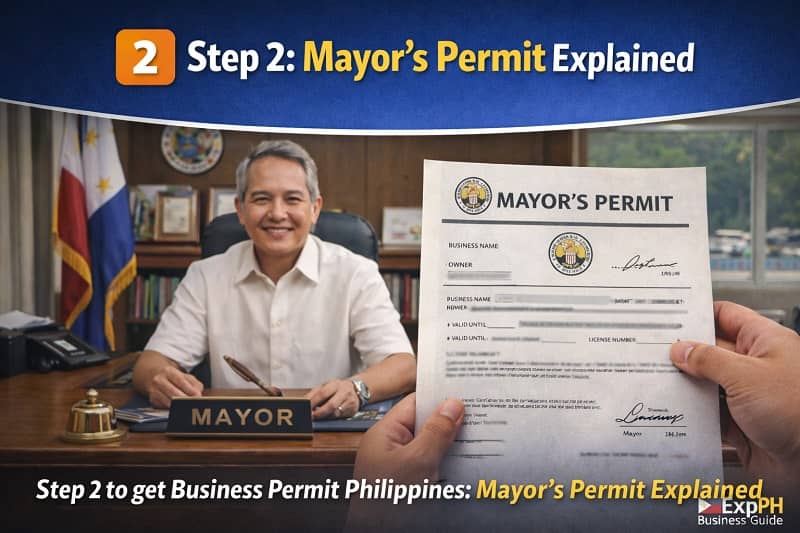
Step 2: Mayor’s Permit Explained
What Is a Mayor’s Permit?
A mayor’s permit, commonly called a business permit, is issued by your city or municipal government. It grants official authorization to operate within that locality. When discussing Business Permit Philippines requirements, this document is considered the primary proof that your enterprise is legally recognized by the local government.
Why Is It Important?
Operating without a mayor’s permit exposes your business to serious consequences such as:
- Fines and penalties
- Business closure
- Legal complications
Beyond compliance, this permit strengthens credibility. Clients, suppliers, and financial institutions often require a valid mayor’s permit before approving transactions, partnerships, or financing applications.
Requirements for Mayor’s Permit
Most local government units require the following documents:
- Barangay clearance
- DTI or SEC registration
- Lease contract or land title
- Occupancy permit
- Sanitary permit
- Fire safety inspection certificate
- Community tax certificate
- Completed application forms
Processing time varies depending on the city or municipality. Some LGUs provide online application systems to streamline submissions and improve efficiency for business owners.
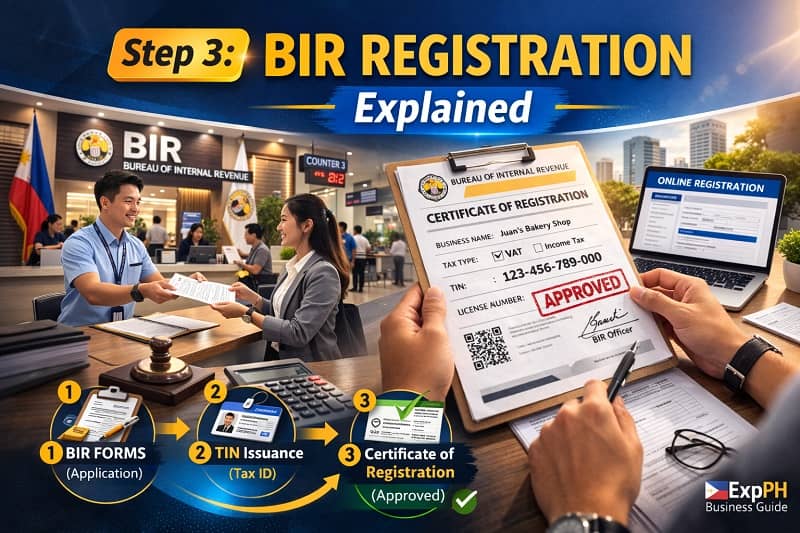
Step 3: BIR Registration Explained
What Is BIR Registration?
After securing your local permits, you must register your business with the Bureau of Internal Revenue. The BIR oversees taxation in the Philippines and ensures businesses comply with national tax laws. Registration allows you to issue official receipts and properly report and pay taxes.
For updated forms and official procedures, you may verify details directly through the Bureau of Internal Revenue website at https://www.bir.gov.ph to ensure accuracy and compliance.
Why BIR Registration Is Critical
Without BIR registration, your business faces serious limitations such as:
- Inability to issue official receipts
- Difficulty opening a business bank account
- Possible tax penalties
Completing this step finalizes your Business Permit Philippines compliance at the national level and confirms your legal status as a registered taxpayer.
Basic BIR Requirements
Common documents required for BIR registration include:
- DTI or SEC registration
- Mayor’s permit
- Valid ID
- Books of accounts
- BIR Form 1901 or 1903
- Payment of registration fee
After successful registration, you will receive:
- Certificate of Registration
- Authority to print receipts
- Official receipts or sales invoices
These documents confirm that your business is authorized to operate and fulfill its tax responsibilities properly.
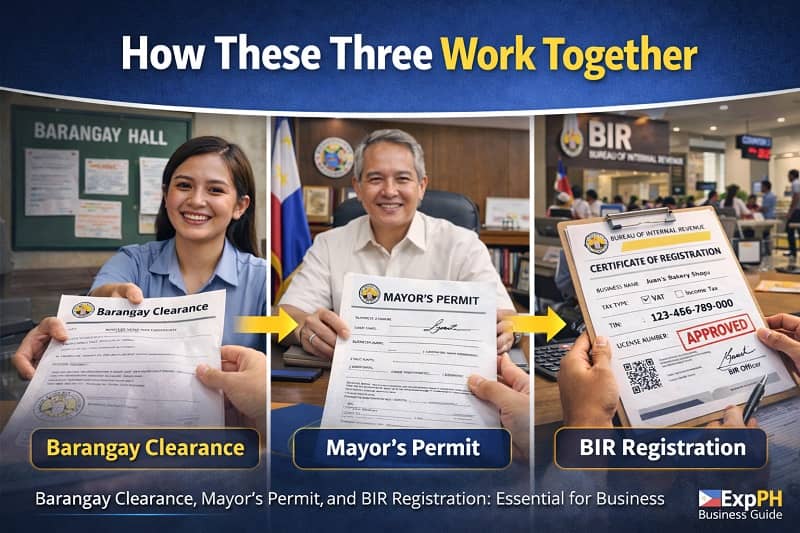
How These Three Work Together
Understanding how these requirements connect makes the Business Permit Philippines process easier to manage. Each step builds on the previous one and ensures full compliance from local approval to national tax registration. Following the proper order prevents delays and avoids unnecessary complications during your application.
To better understand the sequence:
- DTI or SEC registration comes first
- Barangay clearance is secured next
- Mayor’s permit is processed at the city or municipality
- BIR registration completes legal and tax compliance
You can think of this process as moving from business name registration to community approval, then city authorization, and finally national tax registration. Each stage confirms a different level of legitimacy. Skipping any step leaves your Business Permit Philippines compliance incomplete and may expose your business to penalties.
Common Mistakes to Avoid
Starting a business involves several compliance steps, and overlooking key requirements can create unnecessary risks. Many entrepreneurs make avoidable errors during registration and renewal. Understanding these common mistakes helps protect your operations, maintain credibility, and ensure your Business Permit Philippines requirements remain complete and updated.
1. Operating Without Complete Permits
Some small businesses begin operating while their permits are still being processed. Although this may seem practical, inspections can occur at any time. If documents are incomplete, authorities may impose fines or temporary closure, which can disrupt operations and affect your reputation.
2. Ignoring Renewal Deadlines
Business permits must be renewed every year, typically in January. Missing the renewal period often results in penalties and additional charges. Delays may also complicate future transactions with banks or suppliers. Marking renewal schedules early helps maintain uninterrupted legal compliance.
3. Not Understanding Your Tax Type
When registering with the BIR, you must select the appropriate tax classification based on projected income, such as percentage tax or VAT. Choosing incorrectly can lead to reporting errors and compliance issues. If uncertain, consulting an accountant is advisable, especially as your business expands.
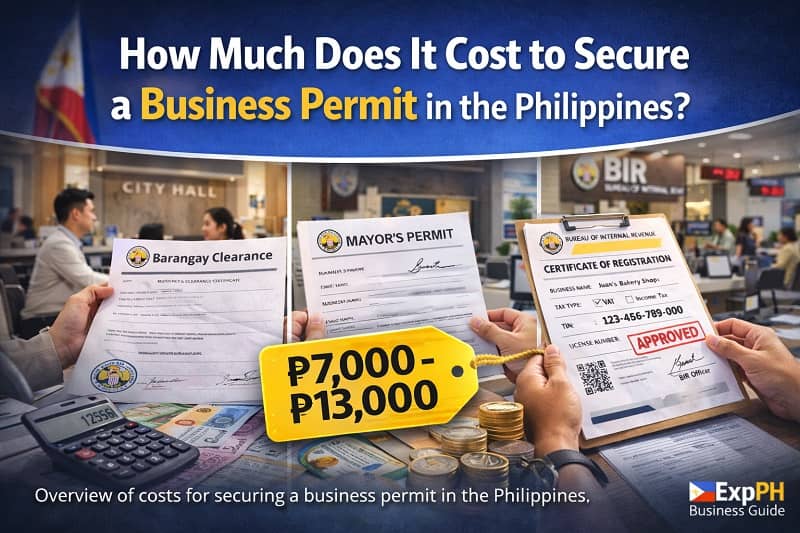
How Much Does It Cost to Secure a Business Permit in the Philippines?
The cost of securing a Business Permit Philippines requirement depends on several practical factors. Local government units calculate fees based on your business profile and operational details. Understanding these variables helps you prepare a realistic budget before starting the registration process.
Costs typically vary depending on:
- Business type
- Capitalization
- Location
- Business size
For small home based businesses, initial expenses may amount to a few thousand pesos. Larger businesses with higher capitalization or commercial spaces can expect higher fees. Since rates differ per city or municipality, always confirm updated fee schedules with your local government unit before applying.

Can You Register a Home Based Business?
Yes, you can legally register a home based business in the Philippines. Many freelancers, online sellers, and consultants operate from their residences while remaining compliant with national and local regulations. Proper registration strengthens credibility and allows you to issue receipts and access formal financial services.
Even if your business operates from home, you must still secure the required permits:
- Barangay clearance
- Mayor’s permit
- BIR registration
Some subdivisions and residential communities impose additional restrictions or zoning rules. Before applying, verify local regulations with your barangay and city government to ensure your home based operation is fully compliant and properly authorized.

FAQs About Business Permit in the Philippines
1. What is the difference between barangay clearance and mayor’s permit?
Barangay clearance confirms local community approval, while the mayor’s permit grants authority from the city or municipality to legally operate your business within their jurisdiction.
2. Do I need a barangay clearance before applying for a mayor’s permit?
Yes, most local government units require barangay clearance first because it verifies your business location and community compliance before city level permit processing begins.
3. Is BIR registration required even for small home-based businesses?
Yes, even small home-based businesses must register with the BIR to issue official receipts, pay proper taxes, and avoid penalties for operating without registration.
4. How long does it take to complete all business permit requirements?
Processing time varies by location, but completing barangay clearance, mayor’s permit, and BIR registration typically takes several days to a few weeks.
5. What happens if I operate without proper permits?
Operating without proper permits can lead to fines, business closure, and legal complications that may damage your credibility and disrupt long term operations.
6. How often should business permits be renewed?
Business permits are generally renewed every year, usually in January, and late renewal may result in penalties or additional compliance requirements.
7. Can I register my business online in the Philippines?
Some cities and municipalities offer online application systems, but availability depends on your local government unit and the type of business registration required.
8. What basic documents are commonly required for permit applications?
Common requirements include DTI or SEC registration, lease contract or property title, valid identification, community tax certificate, and completed application forms.
9. Do freelancers and online sellers need a mayor’s permit?
Yes, freelancers and online sellers operating within a city or municipality must secure a mayor’s permit to comply with local business regulations.
10. Why is completing all permit steps important for business growth?
Completing all permit steps builds credibility, ensures legal protection, enables access to financing options, and supports sustainable growth within the Philippine business environment.
Final Thoughts on Business Permit in the Philippines
Starting a business in the Philippines requires patience and careful planning. While the registration process may seem complex at first, it becomes manageable when approached step by step. Understanding each requirement helps you move forward with confidence and avoid unnecessary delays or compliance issues.
To summarize the key steps:
- Barangay clearance provides local community approval
- Mayor’s permit authorizes operations within your city or municipality
- BIR registration ensures national tax compliance
Completing these requirements properly ensures your Business Permit Philippines process is legally compliant and secure. Each document plays a distinct role in protecting your operations and confirming your legitimacy as a registered business.
If you are serious about building a trusted and sustainable enterprise, securing the correct permits is essential. These approvals form the foundation for stability, growth, and financial credibility. Follow each step carefully, stay organized, and begin your business journey on solid legal ground.
To strengthen your foundation, consider exploring these practical areas:
- Types of Businesses You Can Register in the Philippines
- How to Start a Small Business in the Philippines Step by Step
- How Much Capital Do You Really Need to Start a Business in the Philippines
- Sole Proprietorship vs Partnership vs Corporation in the Philippines
- Common Mistakes First-Time Filipino Entrepreneurs Should Avoid
HD Quiz Hub!
Test your understanding of barangay clearance, mayor’s permit, and BIR registration with this quick quiz.
Results


#1. Which document is usually secured first?
#2. Who issues the mayor’s permit?
#3. What does BIR registration allow?
#4. Which agency handles taxation?
#5. When are business permits usually renewed?
#6. What happens without permits?
#7. Which document proves community approval?
#8. Which is required before BIR registration?
#9. Who can register legally?
#10. Why secure all permits?
Thank you for taking the quiz.
Share your score or experience in the comments and let us know how confident you feel about starting your business journey.