

Starting a business is one of the most effective ways to achieve financial independence in the Philippines. Whether you are an aspiring entrepreneur, an OFW planning to invest your savings locally, or a professional testing a side venture, understanding the business types in the Philippines is a crucial first step. Knowing your options helps you make informed decisions, avoid legal complications, and build a strong foundation for long term stability and growth.
Choosing the right business structure influences how your enterprise operates from day one. It determines your tax obligations, level of personal liability, required capital, registration procedures, and future expansion opportunities. Each structure comes with specific responsibilities and advantages. In this guide, we explain every legal option in clear and practical terms so you can evaluate your situation carefully and select the structure that best aligns with your goals.
Table of Contents
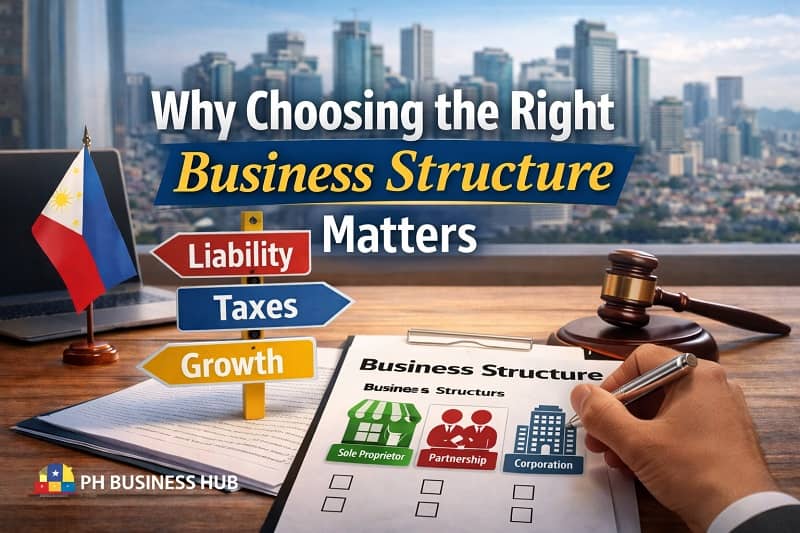
Why Choosing the Right Business Structure Matters
Before exploring the different business types in the Philippines, it is important to understand why selecting the right structure truly matters. Your decision shapes how your business operates legally and financially. It also affects your responsibilities, risks, and long term growth opportunities.
Your chosen structure will determine:
- Personal liability
- Tax obligations
- Required capital
- Registration process
- Compliance requirements
- Ability to attract investors
- Business credibility
For instance, a freelancer running a small service business may not need the formal structure of a corporation. However, a startup planning to secure investors and scale operations will benefit from a corporate setup that supports growth and legal protection.

How to Choose the Right Structure
Choosing among the business types in the Philippines requires careful evaluation of your goals, resources, and risk tolerance. The right structure should match your long term plans, financial capacity, and willingness to manage legal and tax responsibilities.
When deciding, ask yourself:
- Do I want limited liability protection?
- Am I starting alone or with partners?
- Do I plan to attract investors?
- How much capital can I invest?
- How complex am I willing to manage compliance?
For small ventures or side hustles, a sole proprietorship is often enough. For startups planning expansion, corporations or One Person Corporations provide stronger protection and greater flexibility for growth.
Top 5 Business Types You Can Register in the Philippines

1. Sole Proprietorship
A sole proprietorship is the simplest and most common business structure in the Philippines. It is owned and managed by one individual, and there is no legal separation between the owner and the business. This means profits, responsibilities, and risks are directly tied to the owner.
This type of business is registered with the Department of Trade and Industry. Registration is generally straightforward and can be completed online or through authorized offices. For official guidelines and updated procedures, you may visit the DTI website at https://www.dti.gov.ph.
Key Features
- Owned by one individual
- Easy and inexpensive to register
- Full control of decisions
- Unlimited personal liability
- Income taxed as personal income
Best For
- Freelancers
- Online sellers
- Small retail shops
- Home based businesses
- First time entrepreneurs
Advantages
- Simple registration process
- Low cost to start
- Full profit ownership
- Minimal regulatory requirements
Disadvantages
- Personal assets are at risk
- Limited growth potential
- Harder to attract investors
If you are starting small or testing a new idea, this structure is often the most practical entry point among the business types in the Philippines. It allows you to operate legally while keeping setup costs and compliance requirements manageable.

2. Partnership
A partnership is created when two or more individuals agree to contribute money, property, or skills to operate a business and share its profits. This structure allows owners to combine resources and expertise while formally defining responsibilities and profit distribution.
Partnerships must be registered with the Securities and Exchange Commission to gain legal recognition. Registration ensures compliance with national regulations and protects the interests of partners. For official requirements and updated procedures, visit https://www.sec.gov.ph.
2 Types of Partnerships
General Partnership
All partners participate in management and share equal responsibility for debts and obligations. Each partner can bind the business in contracts and decisions.
Limited Partnership
This structure includes general partners who manage operations and limited partners who invest capital. Limited partners are liable only up to the amount they contributed.
Key Features
- At least two partners
- Shared decision making
- Shared profits and losses
- Legal personality separate from partners
Best For
- Professional services such as law or accounting
- Family owned businesses
- Small to medium enterprises with co founders
Advantages
- Combined skills and capital
- Easier funding than sole ownership
- Shared financial risk
Disadvantages
- Potential conflicts among partners
- Shared liability in general partnerships
Partnerships work best when trust, transparency, and clear agreements guide the relationship. Strong communication and defined roles help prevent disputes and support long term stability.

3. Corporation
A corporation is a separate legal entity distinct from its owners. It is registered with the Securities and Exchange Commission and governed by the Revised Corporation Code of the Philippines. This structure establishes formal governance rules and stronger regulatory oversight.
One major benefit of a corporation is limited liability protection. Shareholders are only responsible for debts up to the amount of their investment. Personal assets are generally protected from business obligations, making this structure attractive for growth focused entrepreneurs.
Key Features
- Separate legal entity
- Limited liability for shareholders
- Perpetual existence
- Structured management with board of directors
Best For
- Startups seeking investors
- Medium to large enterprises
- Businesses planning long term expansion
- Companies entering government contracts
Advantages
- Limited personal liability
- Easier to raise capital
- Greater credibility
- Business continuity
Disadvantages
- More complex compliance requirements
- Higher registration and maintenance costs
- Annual reporting obligations
Among the business types in the Philippines, corporations are best suited for scalable ventures. They support structured growth investor participation and long term sustainability while maintaining clear legal protection for shareholders.
4. One Person Corporation (OPC)
The One Person Corporation was introduced under the Revised Corporation Code to allow a single individual to form a corporation without partners. It provides a formal corporate structure while maintaining sole ownership, giving entrepreneurs flexibility and stronger legal protection.
An OPC must be registered with the Securities and Exchange Commission to operate legally. Registration follows corporate requirements but does not require multiple incorporators or a board of directors, making it more accessible for solo business owners.
Key Features
- Only one stockholder
- Limited liability protection
- No need for multiple directors
- Corporate structure benefits
Best For
- Solo entrepreneurs seeking asset protection
- Consultants with growing revenue
- Professionals shifting to corporate setup
Advantages
- Limited liability
- Greater credibility than sole ownership
- Full control retained
Disadvantages
- Higher compliance than sole proprietorship
- Mandatory reporting requirements
If you want legal protection while operating independently, an OPC is one of the most practical modern business types in the Philippines. It balances personal control with corporate benefits and supports long term growth.

5. Cooperative
A cooperative is a business organization owned and managed by its members. Each member participates in decision making and shares in the profits based on agreed rules. This structure focuses on collective benefit rather than individual gain and promotes inclusive economic participation.
Cooperatives must be registered with the Cooperative Development Authority to operate legally in the Philippines. Registration ensures compliance with national cooperative laws and regulations. For official guidelines and updated requirements you may visit https://cda.gov.ph.
Key Features
- Member owned
- Democratic decision making
- Profit sharing among members
- Focus on community benefit
Best For
- Farming groups
- Credit and savings organizations
- Community enterprises
Advantages
- Shared ownership
- Government support programs
- Community driven model
Disadvantages
- Slower decision making
- Strict compliance with cooperative rules
Cooperatives are ideal for groups that value collaboration and shared responsibility. They strengthen communities by pooling resources and distributing benefits fairly among members.
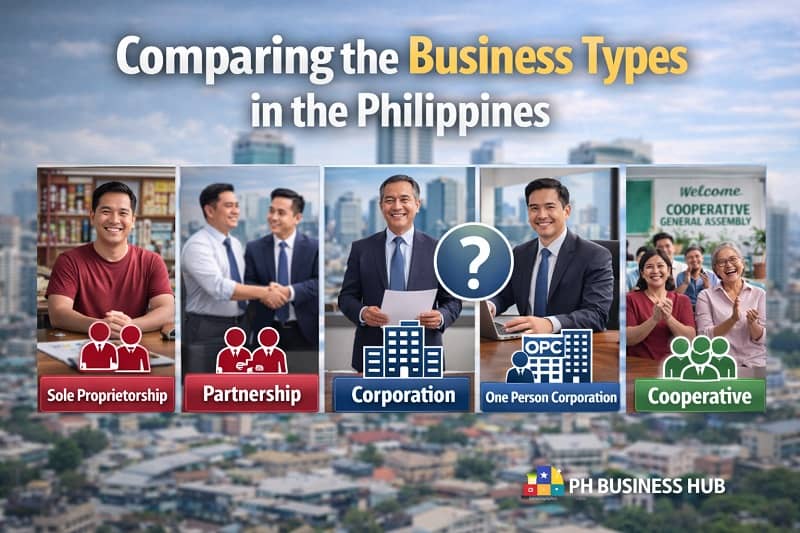
Comparing the Business Types in the Philippines
Choosing the right business structure is important for Filipino entrepreneurs because each option has different ownership rules, liability protection, and registration requirements. The table below provides a simplified comparison to help you understand the key differences between the most common business types in the Philippines.
Here is a simplified overview:
| Structure | Owners | Liability | Registration | Complexity |
|---|---|---|---|---|
| Sole Proprietorship | 1 | Unlimited | DTI | Low |
| Partnership | 2 or more | Shared | SEC | Medium |
| Corporation | 1 or more | Limited | SEC | High |
| One Person Corporation | 1 | Limited | SEC | Medium to High |
| Cooperative | 5 or more members | Limited | CDA | Medium |
Tax and Compliance Considerations
Regardless of the business structure you choose, registration with the Bureau of Internal Revenue is required for legal tax compliance. Proper registration ensures your business can issue receipts, pay taxes correctly, and operate without penalties or legal complications.
All businesses must:
- Secure BIR registration
- Issue official receipts
- Maintain accounting records
- File tax returns regularly
Tax rates and reporting requirements vary depending on your chosen structure and total income. To avoid errors and penalties, consulting a licensed accountant can help ensure accurate filings and full compliance with Philippine tax regulations.
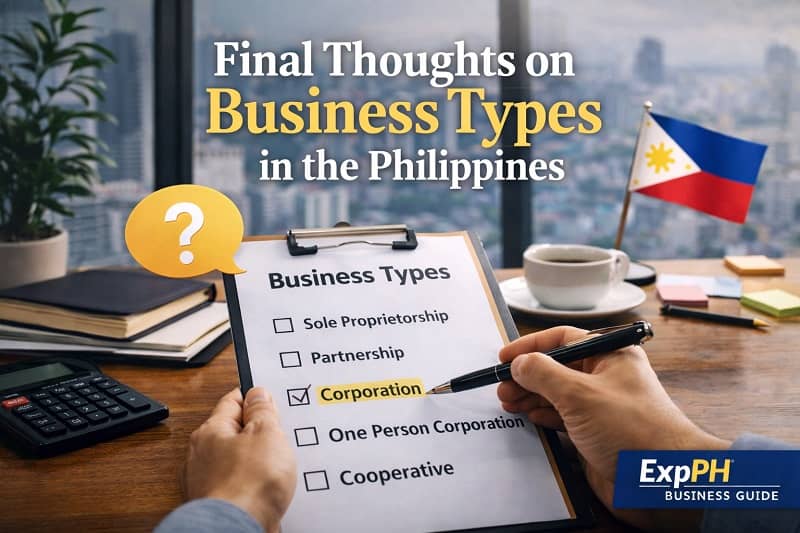
Final Thoughts on Business Types in the Philippines
Understanding the different business types in the Philippines is essential for building a legally compliant and financially sustainable enterprise. Your chosen structure affects taxation, liability, credibility, and growth potential. Taking time to evaluate each option carefully helps you avoid costly mistakes and positions your business for long term stability.
There is no single structure that fits every entrepreneur. The right choice depends on your goals, risk tolerance, available capital, and long term vision. A small home based venture may require a simple setup while a growth oriented startup benefits from stronger legal protection and formal governance.
If you are just starting, begin with a structure that matches your current capacity but allows room for improvement. As your business grows consider upgrading to a structure that protects your assets and supports expansion. With clarity compliance and confidence you are ready to launch your venture responsibly.
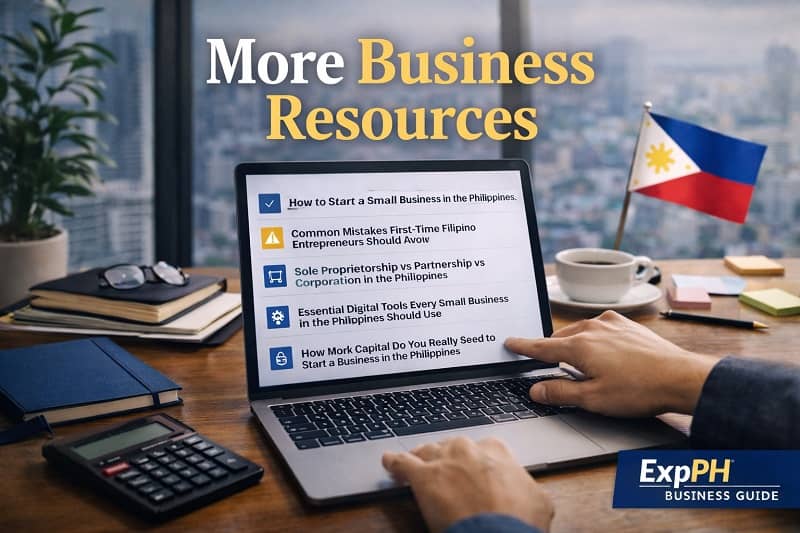
More Business Resources for Filipino Entrepreneurs
If you are planning to start a business or expand your current venture, learning from reliable guides can make the process much easier. ExpPH Business Guide provides practical articles designed to help Filipino entrepreneurs understand business registration, management, and growth strategies in the Philippines.
You may also read our step by step guide on how to register a business in the Philippines for a complete walkthrough. This guide explains the important steps, documents, and government requirements needed to legally start a business.
Here are more helpful resources you can explore to strengthen your knowledge and improve your business planning:
- How to Start a Small Business in the Philippines Step by Step
- Common Mistakes First-Time Filipino Entrepreneurs Should Avoid
- Sole Proprietorship vs Partnership vs Corporation in the Philippines
- Essential Digital Tools Every Small Business in the Philippines Should Use
- How Much Capital Do You Really Need to Start a Business in the Philippines
Exploring these guides can help you better understand business structures, avoid common mistakes, and prepare for long term success. Continue reading ExpPH Business Guide to discover more practical insights that support Filipino entrepreneurs at every stage of their business journey.

FAQs About Business Types in the Philippines
1. What are the main types of businesses you can register in the Philippines?
The main types include sole proprietorship, partnership, corporation, one person corporation, and cooperative, each offering different legal structures, liability protection, ownership requirements, and compliance responsibilities.
2. Which business type is easiest to register in the Philippines?
A sole proprietorship is generally the easiest to register because it requires minimal documentation, lower fees, and straightforward approval through the Department of Trade and Industry.
3. What is the difference between a sole proprietorship and a corporation?
A sole proprietorship does not separate personal and business liabilities, while a corporation is a separate legal entity that protects shareholders from personal financial responsibility.
4. Can one person register a corporation in the Philippines?
Yes, an individual can register a One Person Corporation, which allows single ownership while enjoying limited liability protection and corporate structure benefits under Philippine law.
5. Which business structure offers limited liability protection?
Corporations and One Person Corporations provide limited liability protection, meaning owners are only responsible for debts up to their invested capital, protecting personal assets.
6. How many people are required to form a partnership?
A partnership requires at least two individuals who agree to share capital, responsibilities, and profits, with liability depending on whether it is general or limited.
7. Are cooperatives suitable for small community businesses?
Yes, cooperatives are suitable for community based businesses because members share ownership, decision making, and profits while supporting collective economic and social goals.
8. Do all business types require registration with the BIR?
Yes, regardless of structure, all registered businesses must secure Bureau of Internal Revenue registration to comply with tax laws and issue official receipts.
9. Which business type is best for startups seeking investors?
A corporation is usually best for startups seeking investors because it allows share distribution, structured governance, limited liability protection, and greater credibility in the market.
10. How do I choose the right business structure?
You should evaluate your capital, risk tolerance, growth plans, liability concerns, and management preferences before selecting a structure that aligns with long term business goals.
HD Quiz Hub!
Test your knowledge about the different business types in the Philippines and their key features.
Results


#1. Which agency registers sole proprietorships?
#2. Which structure has unlimited personal liability?
#3. Which structure requires at least two owners?
#4. Which structure provides limited liability?
#5. What does OPC stand for?
#6. Which entity registers cooperatives?
#7. Which structure is best for raising investors?
#8. Which registration body handles corporations?
#9. Which structure allows single ownership with liability protection?
#10. All registered businesses must register with which tax agency?
Thank you for taking the quiz.
Share your score or learning experience in the comments and let us know which business structure fits your plans.