

Growing a business in the Philippines can be both exciting and challenging, especially in a competitive and fast changing market. Many entrepreneurs begin with strong ideas and motivation, yet only a few manage to scale successfully and achieve long term stability and higher profits. If you want a clear and practical guide on how to grow a small business in the Philippines, this article provides proven strategies tailored to local conditions and real business situations.
Whether you are managing a sari-sari store, an online shop, a service based business, or a startup, the principles shared in this guide can help you move beyond daily survival. By applying the right strategies and maintaining consistency, you can build a stronger foundation, improve operations, and transition your business toward sustainable growth and long term success in the Philippine market.
Ready to take your business to the next level?
Read Top 8 Proven Ways to Scale a Small Business and learn the exact strategies you can apply today to increase your profits and expand faster.
Table of Contents
Understanding Growth vs Scaling
Before applying any strategy, it is important to understand the difference between growth and scaling. These two concepts guide how you expand your business. Knowing when to grow and when to scale helps you use resources wisely and achieve sustainable long term success.
Growth
Growth refers to increasing revenue by adding more resources to your business. This often involves higher costs since expansion requires additional investment. While growth can increase income, it also requires careful management to maintain profitability and avoid overextending your operations.
Examples include:
- Hiring more staff
- Opening new branches
- Increasing inventory
Growth helps you expand capacity but must be managed carefully to remain sustainable.
Scaling
Scaling focuses on increasing revenue without significantly increasing costs. This approach improves efficiency and allows your business to grow faster. By using systems and technology, you can reach more customers while maintaining control over expenses and maximizing profitability.
Examples include:
- Automating processes
- Using digital platforms
- Expanding reach without heavy expenses
To succeed in how to grow a small business in the Philippines, you need both growth and scaling strategies working together.
Top 10 Ways to Grow and Scale a Small Business in the Philippines

1. Build a Strong Business Foundation
A strong foundation supports long term growth and reduces the risk of failure. Many small businesses struggle because they skip essential steps during the early stage. Focus on building clear systems, legal compliance, and structured planning to create a stable base for future expansion.
Register and Legalize Your Business
Registering your business with the correct government agencies ensures legal protection and builds credibility with customers and partners. Compliance also allows access to financial services, loans, and support programs that can help your business grow steadily and operate with confidence.
- DTI for sole proprietors
- SEC for corporations
- BIR for tax compliance
You can verify requirements through the official BIR website: https://www.bir.gov.ph
Completing registration improves trust, supports long term operations, and positions your business for partnerships and expansion opportunities within the Philippines.
Create a Clear Business Plan
A clear business plan acts as your roadmap and guides daily decisions. It helps define your direction, manage risks, and set realistic expectations. Without a plan, it becomes difficult to track progress or identify areas that need improvement.
- Target market
- Pricing strategy
- Revenue goals
- Growth plan
Keeping your plan simple and focused allows you to stay organized, make informed decisions, and adjust your strategy as your business grows and market conditions change.

2. Know Your Market and Customers
Understanding your market and customers is essential for consistent business growth. When you clearly know who you serve, you can create better products and communicate more effectively. This leads to stronger customer relationships, higher sales, and more efficient decisions that support long term success.
Identify Your Ideal Customer
Defining your ideal customer helps you focus your efforts and avoid wasting resources. By understanding who buys your product and why, you can tailor your offers to match real needs. This improves customer satisfaction and increases the chances of repeat purchases and long term loyalty.
Ask yourself:
- Who buys your product?
- What problem are you solving?
- Why should they choose you?
For example, OFWs often look for:
- Affordable services
- Reliable online transactions
- Investment opportunities
Align your products or services with these needs to stay relevant and competitive.
Study Your Competitors
Studying your competitors allows you to identify opportunities and improve your strategy. By analyzing what others are doing, you can learn what works and what does not. This helps you position your business more effectively and offer something better to your target market.
Look at:
- Their pricing
- Their marketing style
- Their strengths and weaknesses
Use this information to improve your own approach and provide better value than your competitors.
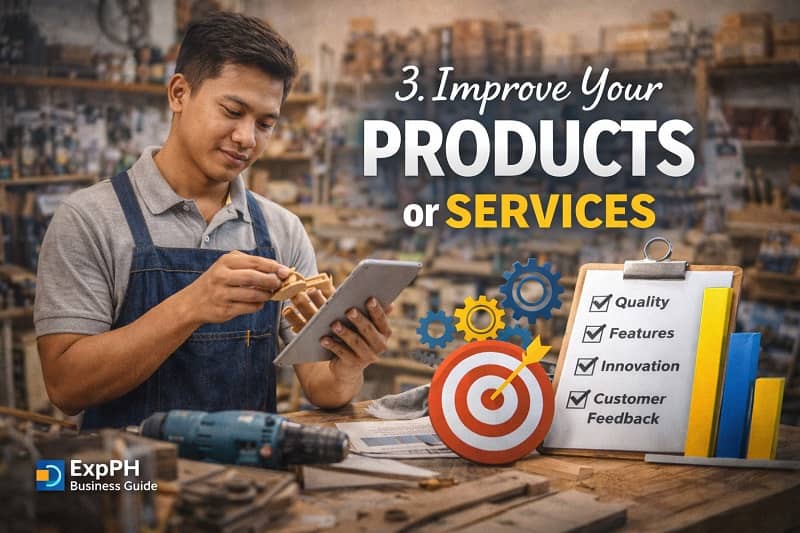
3. Improve Your Products or Services
Business growth depends on how well your product or service meets customer expectations. If quality is inconsistent or value is unclear, customers will not return. Improving what you offer strengthens your reputation and increases your chances of building a loyal and growing customer base.
Focus on Quality and Consistency
Customers in the Philippines prioritize reliability and value when choosing where to spend their money. Delivering consistent results builds trust and encourages repeat purchases. When customers know what to expect, they are more likely to recommend your business to others through positive word of mouth.
Customers value:
- Good quality
- Fair pricing
- Reliable service
Maintaining these standards helps your business grow steadily and strengthens your position in a competitive market.
Add Value to Stand Out
Competing only on price limits your growth and reduces profit margins. Instead, focus on adding value that improves the customer experience. Small enhancements can make your business more appealing and help you stand out from competitors offering similar products or services.
Consider offering:
- Better customer service
- Faster delivery
- Bundled products
These simple improvements can attract more customers and increase satisfaction without significantly increasing your costs.

4. Use Digital Marketing to Expand Reach
Digital marketing is one of the most effective ways to grow and scale a small business in the Philippines. Online platforms allow you to reach more customers without large expenses. With the right strategy, you can increase visibility, attract leads, and build consistent sales over time.
Leverage Social Media
Social media platforms help you connect directly with your target audience and promote your products or services. Regular posting keeps your business visible and builds engagement. Sharing useful and relevant content also strengthens trust and encourages potential customers to choose your brand.
Use platforms like:
- TikTok
Post regularly:
- Product updates
- Customer testimonials
- Helpful tips
Consistent activity improves brand awareness and helps you stay competitive in a crowded online market.
Optimize for Search (SEO)
Search engine optimization helps your business appear in Google results when people look for related topics. Using your focus keyword naturally across your content improves visibility. This allows potential customers to discover your business when searching for how to grow a small business in the Philippines.
Use your keyword in:
- Your title
- Headings
- Your content
Proper SEO increases traffic and supports long term business growth without relying only on paid advertising.

5. Manage Your Finances Properly
Strong financial management is essential for business survival and growth. Many small businesses fail because they lack control over their finances or make poor spending decisions. Managing your money carefully helps maintain stability, supports planning, and ensures your business can grow and scale over time.
Track Your Cash Flow
Tracking cash flow helps you understand your financial position and avoid unexpected shortages. You should always know how much money enters and leaves your business. This allows better planning, smarter spending, and improved decision making that supports consistent and sustainable growth.
Always know:
- How much money is coming in
- How much is going out
Use simple tools like:
- Excel
- Accounting apps
Regular tracking helps prevent financial problems and keeps your operations running smoothly.
Separate Personal and Business Money
Separating personal and business finances helps maintain clear records and prevents confusion. It also improves financial discipline and makes it easier to monitor business performance. Having a dedicated account ensures accurate tracking and supports better financial management as your business grows.
Open a separate business account to keep transactions organized and maintain clear financial records.
Reinvest Profits
Reinvesting profits is a key strategy for scaling your business. Instead of spending all your earnings, allocate funds to areas that support growth. This approach helps improve operations, increase capacity, and strengthen your ability to compete in the market.
Reinvest in:
- Inventory
- Marketing
- Equipment
Smart reinvestment allows your business to expand steadily and build long term success.
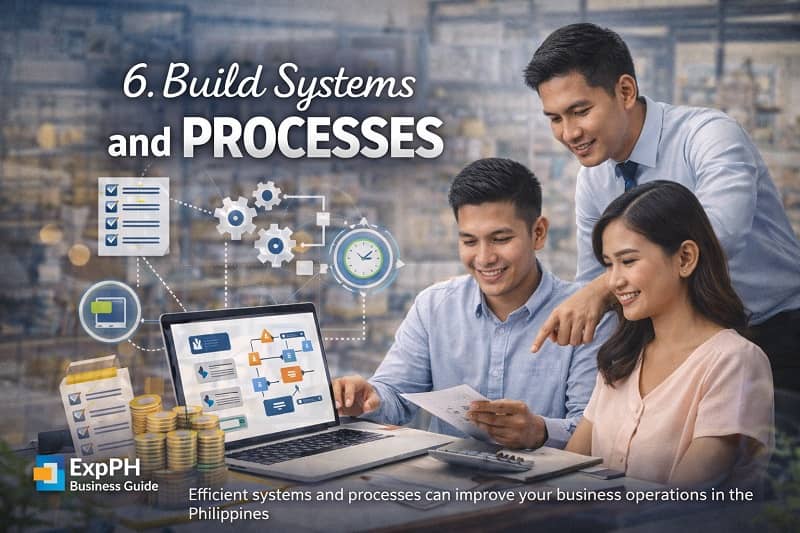
6. Build Systems and Processes
To scale effectively, your business must run smoothly without relying only on your daily involvement. Strong systems improve consistency, reduce mistakes, and support growth. When processes are clear and repeatable, you can handle more customers while maintaining quality and efficiency across operations.
Standardize Operations
Standardizing operations helps ensure tasks are completed correctly every time. Clear processes guide your team and reduce confusion during daily activities. This improves service quality, speeds up workflows, and creates a reliable experience for customers while supporting business growth and long term scalability.
Create clear processes for:
- Order handling
- Customer service
- Inventory management
Well defined systems make it easier to train staff and maintain consistent performance.
Automate When Possible
Automation helps reduce manual work and increases efficiency. Using digital tools allows your business to operate faster and with fewer errors. It also frees up time so you can focus on strategy, growth, and improving your products or services.
Use tools for:
- Online payments
- Scheduling
- Sales tracking
Automation supports scaling by improving accuracy, saving time, and streamlining daily operations.

7. Expand Smartly
Expansion should always be planned carefully to avoid unnecessary risks and losses. Growing too fast without proper preparation can strain resources and reduce efficiency. A strategic approach helps ensure stability, better decision making, and sustainable progress as your business moves into new markets or opportunities.
Start Small, Then Scale
Expanding gradually allows you to test your ideas before committing significant resources. This reduces risk and helps you learn what works in a new location or market. Careful testing improves your chances of success and supports smarter long term expansion decisions.
Instead of opening multiple branches immediately:
- Test one new location
- Validate demand
- Adjust your strategy
This approach helps you refine operations before scaling further.
Explore Online Expansion
Online expansion offers a cost effective way to grow your business in the Philippines. It allows you to reach more customers without the expenses of physical locations. Digital platforms also provide flexibility and scalability that support long term growth and wider market access.
Selling online allows you to:
- Reach customers nationwide
- Reduce overhead costs
This makes online expansion one of the most practical and efficient ways to scale your business.

8. Build a Strong Brand
Your brand shapes how customers see and remember your business. A strong brand creates recognition, builds loyalty, and supports long term growth. When your identity is clear and consistent, customers are more likely to trust your business and choose it over competitors.
Create a Clear Identity
A clear brand identity helps customers understand what your business stands for and what makes it different. Consistency across visuals and messaging strengthens recognition and builds familiarity. This makes it easier for customers to remember your brand and connect with your products or services.
Your brand should have:
- A recognizable logo
- Consistent messaging
- A clear value proposition
These elements create a strong and unified brand presence.
Earn Customer Trust
Trust plays a major role in business success in the Philippines. Customers prefer businesses that are reliable and honest. Building trust encourages repeat purchases and positive recommendations, which are essential for long term growth and maintaining a strong reputation in a competitive market.
Build trust by:
- Delivering on promises
- Being transparent
- Responding to customer concerns
Consistent trust building strengthens customer relationships and supports sustainable growth.

9. Learn, Adapt, and Innovate
The business environment changes quickly, especially with shifting customer needs and new technologies. To stay competitive, you must keep learning and improving. Businesses that adapt faster can respond to challenges, seize opportunities, and maintain steady growth in an evolving market.
Stay Updated
Staying informed helps you make better decisions and identify new opportunities. Learning about trends, customer preferences, and emerging tools allows you to improve your products and strategies. This keeps your business relevant and positions you for continuous growth in a competitive environment.
Keep learning about:
- Market trends
- Customer behavior
- New technologies
Regular learning helps you stay ahead and respond effectively to changes.
Be Open to Change
Being open to change allows your business to grow and improve over time. If your current approach is not working, you must be willing to adjust and try new ideas. Continuous improvement helps you stay efficient and meet customer expectations.
If something is not working:
- Adjust your strategy
- Test new approaches
- Improve continuously
Flexibility supports long term success and helps your business remain competitive.
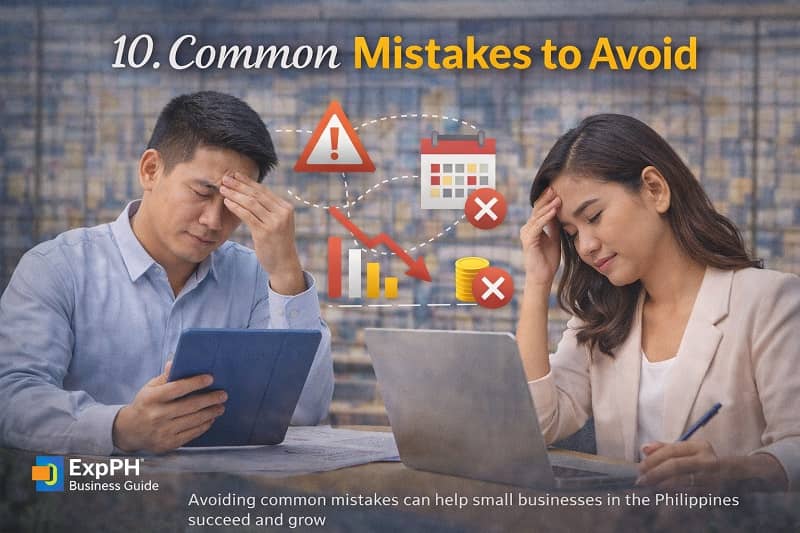
10. Common Mistakes to Avoid
Many small businesses struggle because they repeat common mistakes that could have been prevented with better planning and awareness. Recognizing these issues early helps you avoid losses, improve decision making, and build a stronger path toward sustainable growth and long term success.
Common mistakes include:
- Expanding too fast without proper planning
- Ignoring financial management
- Not understanding the target market
- Relying only on one sales channel
- Avoiding digital tools and technology
Avoiding these mistakes gives your business a strong advantage and improves your chances of steady growth.

Final Thoughts on How to Grow a Small Business in the Philippines
Learning how to grow a small business in the Philippines requires patience, discipline, and consistent effort. There are no shortcuts, but applying the right strategies can help you build a stable and profitable business. Focus on long term progress rather than quick results to achieve sustainable growth.
Build a strong foundation, understand your customers, manage your finances carefully, and use digital tools to improve efficiency. Start with small steps, refine your approach, and expand with clear direction. With commitment and smart planning, your business can grow into a stronger and more successful venture over time.
FAQs About How to Grow a Small Business in the Philippines
1. What is the best way to grow a small business in the Philippines?
Start with a clear plan, understand your target market, improve product quality, and manage finances well. Consistency and customer trust are key to long term business growth.
2. How can I scale my small business without high costs?
Use digital tools, automate simple tasks, and focus on online sales channels. Scaling efficiently means increasing revenue while keeping costs controlled and operations streamlined over time.
3. Why is understanding customers important for business growth?
Knowing your customers helps you create relevant products and services. It improves marketing strategies, increases customer satisfaction, and builds loyalty, which supports steady and sustainable business growth.
4. What are common mistakes small businesses should avoid?
Avoid poor financial management, rushing expansion, ignoring market research, and relying on one sales channel. These mistakes limit growth and can lead to unnecessary losses or business instability.
5. How important is digital marketing for small businesses?
Digital marketing helps reach more customers quickly and cost effectively. It increases visibility, builds brand awareness, and supports consistent sales growth through platforms like social media and search engines.
6. Should I reinvest profits back into my business?
Yes, reinvesting profits helps improve operations and supports growth. Investing in inventory, marketing, or tools strengthens your business and increases your ability to scale effectively over time.
7. How do I know when to expand my business?
Expand when your business shows consistent demand, stable income, and strong systems. Testing new markets first helps reduce risk and ensures your expansion strategy is practical and sustainable.
8. What role does branding play in business growth?
Branding builds recognition and trust among customers. A clear identity and consistent messaging help your business stand out, attract loyal customers, and support long term growth in a competitive market.
9. How can I manage my business finances better?
Track your cash flow regularly, separate personal and business funds, and plan your expenses carefully. Good financial management helps maintain stability and supports smarter business decisions over time.
10. Is it possible to grow a business while working alone?
Yes, but building systems and using automation is important. These help you manage tasks efficiently, reduce workload, and allow your business to grow without depending entirely on your time.
Scaling is just the beginning. Sustainability is what makes a business last.
Read A Practical Guide to Building a Sustainable Business in the Philippines to learn how to protect your growth, manage risks, and build a business that thrives for years.
More Business Resources
- How to Choose the Right Business Location in the Philippines
- When and How to Transition From Small Business to Company
- Simple Marketing Strategies That Work for Philippine Small Businesses
- How Filipino Small Businesses Can Compete With Bigger Companies
- When Should You Hire Your First Employee in the Philippines
HD Quiz Hub!
Test your understanding of the key strategies for growing and scaling a small business in the Philippines. This short quiz will help you review practical concepts and apply what you learned.
Results


#1. What is business growth?
#2. What is scaling in business?
#3. Which agency handles tax compliance?
#4. Why is knowing customers important?
#5. What builds customer trust?
#6. Which platform helps business visibility?
#7. Why track cash flow?
#8. What helps efficient scaling?
#9. What is a smart expansion strategy?
#10. What strengthens branding?
Thank You for Taking the Quiz
We appreciate your time. Share your score or experience in the comments and let others know how you did!