
Running a business in the Philippines today means more than just having a physical store or a Facebook page. Customers expect convenience, speed, and security when paying for products and services. Whether you operate a sari-sari store, an online shop, a freelance service, or a growing SME, choosing the right Online Payment Methods Philippines businesses can accept is no longer optional. It is essential.
In this ExpPH Business Guide, we will break down the most reliable online payment options available in the country, how they work, their advantages, and how to choose the best one for your business model. This guide is designed to help Filipino entrepreneurs make smart, practical decisions that improve cash flow, customer trust, and long term growth.
Table of Contents
Why Online Payment Methods Matter for Filipino Businesses
The Philippine economy is steadily moving toward digital transactions as more consumers rely on mobile wallets, online banking, and payment gateways for daily purchases. The Bangko Sentral ng Pilipinas supports this shift through its Digital Payments Transformation Roadmap, which aims to expand digital usage nationwide. You can review official updates at https://www.bsp.gov.ph.
For businesses, accepting digital payments provides clear operational and competitive advantages:
- Faster transaction processing
- Less physical cash handling
- More accurate financial records
- Access to customers nationwide and overseas
- Stronger brand credibility and professionalism
Businesses that do not offer digital payment options may struggle to meet modern customer expectations. Many consumers now prefer secure and convenient online payment methods, especially for e-commerce, service bookings, and remote transactions. Adopting reliable digital systems helps businesses remain competitive and responsive in today’s Philippine market.
Supporting Your Business Growth with the Right Payment Strategy
Choosing the right Online Payment Methods Philippines businesses accept can directly support revenue growth and operational efficiency. A well planned payment strategy improves customer experience and reduces transaction barriers. Instead of offering every available option, focus on solutions that match your audience and business goals.
Accepting trusted digital payment methods can help:
- Increase conversion rates
- Reduce abandoned carts
- Improve customer satisfaction
- Expand market reach
Start with one or two reliable platforms that suit your current operations. As your business grows, you can gradually add more options based on customer demand. The goal is to provide relevant and convenient payment choices that strengthen long term business performance.
Top 5 Online Payment Methods in the Philippines
1. E-Wallets and Mobile Wallet Payments
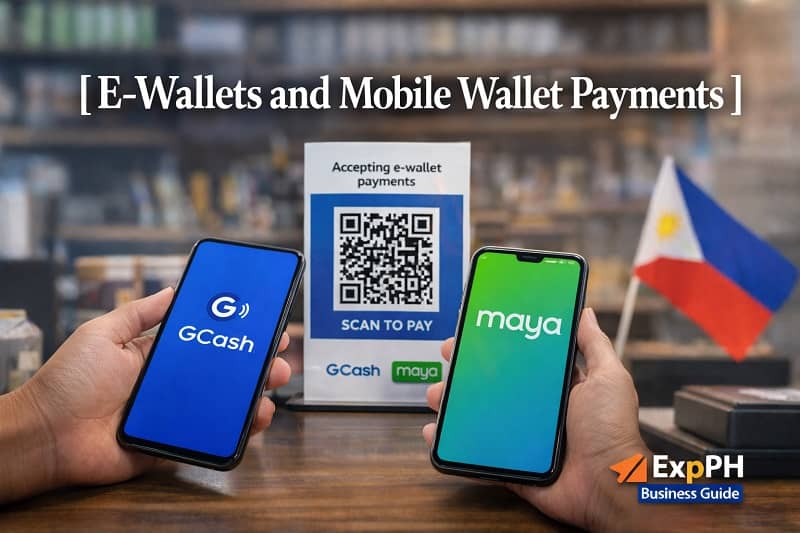
E-wallets are among the most widely used Online payment methods in the Philippines that consumers rely on for daily purchases. From groceries to online shopping, mobile wallets provide fast and secure transactions. For businesses, accepting e-wallet payments increases accessibility and aligns operations with modern customer payment preferences.
GCash
GCash is one of the largest mobile wallet platforms in the Philippines. Customers can complete payments through QR codes, registered mobile numbers, or integrated online checkout systems. Its strong user base makes it a practical option for businesses seeking broader local reach.
Best for:
- Small retail stores
- Online sellers
- Freelancers
- Service providers
Benefits:
- Real-time payment confirmation
- Simple account setup
- No expensive hardware required
- Large active user base
Maya
Maya, formerly PayMaya, provides both consumer digital wallet services and business payment solutions including QR payments, POS terminals, and online checkout integration. It supports digital transactions for physical stores and online platforms, helping businesses streamline collections while offering customers flexible and secure payment options.
Best for:
- Restaurants
- Retail stores
- SMEs needing POS solutions
Benefits:
- Business dashboard for sales tracking
- QR code payments
- Card terminal availability
E-wallets are ideal for businesses that want affordable digital integration without complex technical requirements. They allow faster transactions, reduce cash handling risks, and improve customer convenience, making them a strong foundation for modern payment strategies in the Philippines.

2. Online Payment Gateways
Businesses that operate e-commerce websites need a payment gateway to securely connect their online store to banks and card networks. A gateway processes transactions, verifies payments, and ensures funds move safely from customer accounts to the business. This system is essential for automated and scalable online selling.
PayMongo
PayMongo is a widely used payment gateway among Philippine startups and growing online businesses. It supports multiple digital payment channels, allowing merchants to accept transactions through a single integrated system that works smoothly with modern websites and online platforms.
Supported payments include:
- Credit cards
- Debit cards
- GCash
- Maya
- Bank transfers
Best for:
- Subscription businesses
- Shopify stores
- Custom PHP websites
- WordPress websites
Dragonpay
Dragonpay specializes in alternative payment channels that serve customers who prefer bank based transactions. It enables merchants to reach buyers who may not own credit cards but still want secure digital payment options.
Alternative payment options include:
- Online banking
- Over the counter payments
- ATM transfers
This approach is valuable for businesses targeting customers who rely on traditional banking systems. By offering these alternatives, merchants can expand their market reach while maintaining secure and verified payment processing.
3. Bank Transfers and Online Banking
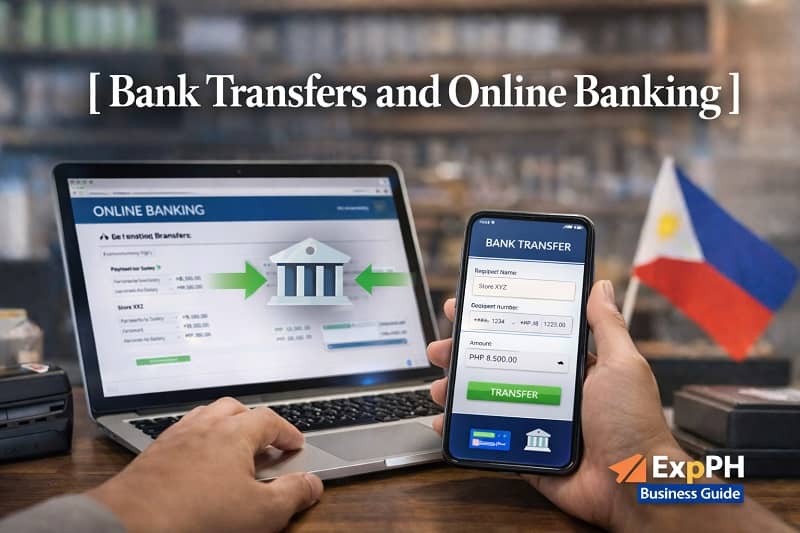
Many Filipino customers continue to prefer direct bank transfers for personal and business payments. Online banking platforms allow customers to send funds securely from their accounts to merchants without using third party wallets. This method remains trusted for formal transactions and documented financial records.
Major Philippine banks that provide online transfer services include:
- BDO
- Bank of the Philippine Islands
- Metrobank
- UnionBank
- LandBank
These banks offer digital platforms that support fund transfers through mobile apps and web portals. Businesses can receive payments directly into their accounts, which simplifies bookkeeping and improves transparency for tax and compliance purposes.
Best for:
- High value transactions
- B2B payments
- Service contracts
Bank transfers work well for structured and higher amount payments where documentation is important. However, businesses may need manual verification unless they use integrated systems that automatically confirm transactions and update order status in real time.
4. Credit and Debit Card Payments
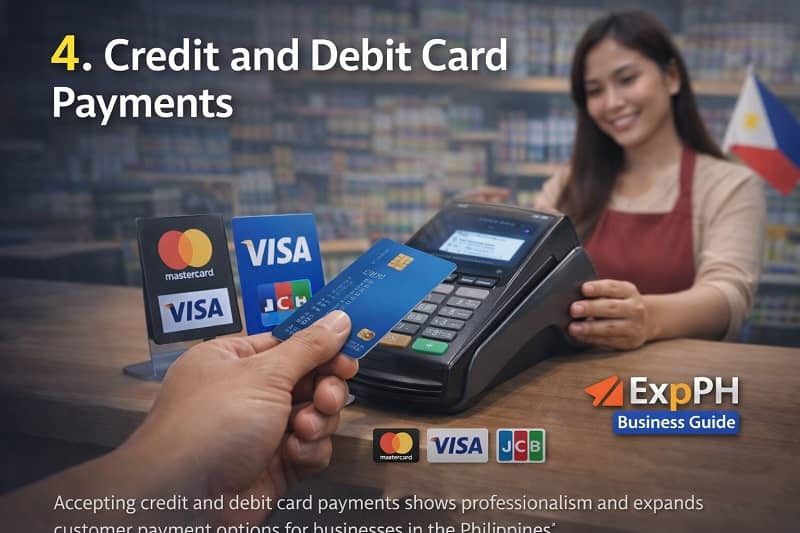
Credit and debit card payments remain one of the most trusted Online Payment Methods Philippines businesses should consider. Many customers prefer paying by card for convenience and added security, especially when making larger purchases or booking services online and in person.
Card payments are particularly suitable for:
- Online stores
- Travel services
- Professional services
- International clients
To start accepting card payments, businesses typically need the following:
- A payment gateway
- A POS terminal
- Merchant account approval from a bank or payment provider
Card acceptance enhances business credibility and signals professionalism to customers. It also allows companies to serve higher spending clients and international buyers who rely on card networks for secure and traceable transactions.
5. Cash on Delivery with Digital Confirmation
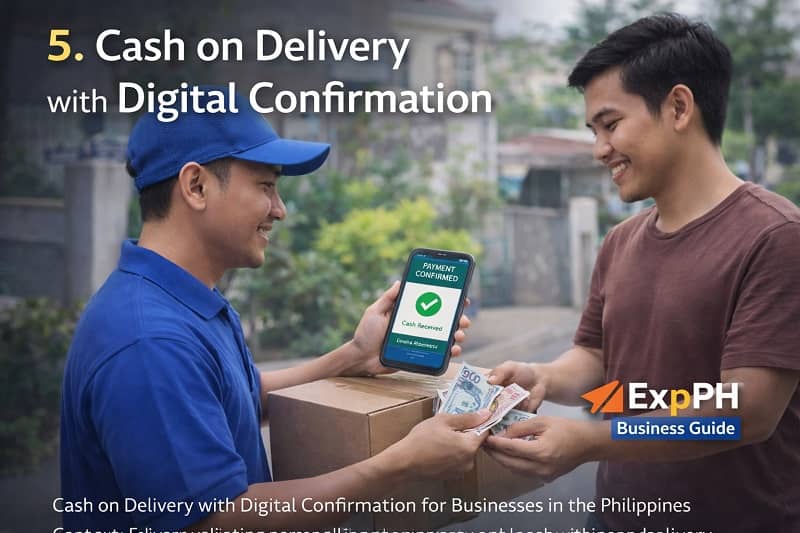
Cash on Delivery remains relevant in the Philippines, particularly for e-commerce transactions. Many online sellers partner with logistics providers that collect payments from customers upon delivery. This approach helps build trust among buyers who prefer paying only after receiving their orders.
Businesses can strengthen COD arrangements by combining them with:
- SMS confirmations
- E-wallet advance deposits
- Partial down payments
These added steps reduce cancellation risks and protect revenue while still accommodating customers who are hesitant to complete full digital payments upfront. By blending traditional and digital practices, businesses can improve reliability without limiting customer choice.

How to Choose the Best Online Payment Methods for Your Business
Not every business needs to accept every available option. The right Online Payment Methods Philippines companies choose should match operations, customers, and growth plans. Evaluating practical factors helps prevent unnecessary costs and ensures your payment system supports daily business activities efficiently.
1. Your Business Model
Your payment setup should reflect how you operate and deliver value to customers. Different models require different systems to ensure smooth transactions and proper tracking.
- Retail stores benefit from QR payments
- E-commerce stores require payment gateways
- Freelancers rely on bank transfers and e-wallets
Selecting methods that align with your structure improves workflow and customer satisfaction.
2. Your Target Market
Understanding your customers helps determine which payment methods will perform best. Payment preferences often vary based on age, profession, and financial habits.
- Students prefer mobile wallets
- Working professionals use cards and e-wallets
- Corporate clients favor bank transfers
- OFWs may use digital remittance linked payments
Matching payment options with customer behavior increases convenience and conversion rates.
3. Transaction Fees
Before committing to a provider, review the full cost structure carefully. Small differences in fees can significantly affect long term profitability.
Compare the following:
- Setup fees
- Per transaction percentage
- Withdrawal charges
- Settlement time
Always review official fee schedules on the provider’s website to avoid hidden costs.
4. Integration Requirements
If you operate a website, your payment solution must integrate smoothly with your existing platform. Technical compatibility ensures automated confirmations and accurate reporting.
Check for:
- Website plugin availability
- API integration options
- Dashboard reporting tools
- Mobile responsiveness
Choosing a compatible system reduces technical issues and supports efficient business management.

Security and Compliance Considerations
When evaluating Online Payment Methods Philippines providers, security and regulatory compliance should be top priorities. A reliable system protects customer data, prevents fraud, and ensures smooth operations. Businesses that prioritize secure transactions build stronger trust and reduce financial and reputational risks.
Before selecting a provider, confirm the following features:
- SSL encryption support
- Two factor authentication
- Fraud detection tools
- BSP registration or regulatory compliance
Choosing lower fees at the expense of security can expose your business to serious problems. Protecting customer information strengthens credibility, supports long term growth, and reinforces your commitment to responsible business practices in the Philippines.

Final Thoughts on Online Payment Methods in the Philippines
Choosing the right Online Payment Methods Philippines businesses can accept is a strategic decision that influences revenue stability, customer trust, and operational efficiency. Payment systems are no longer simple tools for collecting money. They shape the overall customer experience and reflect how professional and reliable your business appears in a competitive market.
Filipino entrepreneurs who adapt to digital payments position themselves for long term growth and resilience. Whether you implement GCash, Maya, PayMongo, Dragonpay, bank transfers, or card payments, success depends on understanding customer behavior and offering secure and convenient options. In today’s business environment, convenience strongly influences loyalty. Companies that simplify payments encourage repeat transactions and strengthen long term customer relationships.
More Business Resources for Philippine Entrepreneurs
If you want to strengthen your business knowledge and make smarter decisions as a Filipino entrepreneur, explore these practical guides from ExpPH Business Guide. Each resource is written to help you build a stable foundation, improve operations, and manage finances with confidence.
- Best Free Software for Small Businesses in the Philippines
- Barangay Clearance, Mayor’s Permit, and BIR Explained Simply
- How to Price Your Products or Services as a Filipino Business Owner
- Business Bank Accounts in the Philippines: What You Need to Know
- How to Keep Simple Business Records Without an Accountant
Take time to review these guides and apply what fits your business stage. The more you understand the fundamentals, the stronger and more sustainable your growth will be.
For a broader look at digital transactions and the rise of cashless technology in the country, you can read Cashless Payments in the Philippines on ExpPH Blog. This guide explains how e-wallets, mobile banking, and digital payment systems are changing how businesses and consumers handle financial transactions.
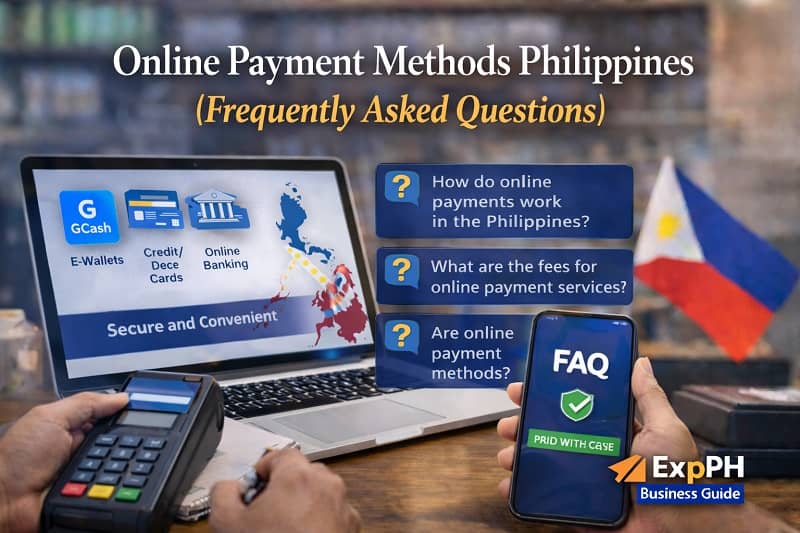
FAQs About Online Payment Methods in the Philippines
What are the most common online payment methods Filipino businesses can accept?
Filipino businesses commonly accept GCash, Maya, bank transfers, credit cards, debit cards, and payment gateways like PayMongo or Dragonpay for secure and convenient digital transactions.
Do small businesses in the Philippines need a payment gateway?
Small businesses need a payment gateway if they operate an e-commerce website, since gateways process card payments securely and automate transaction verification without manual confirmation.
How much do online payment providers usually charge?
Online payment providers typically charge a percentage per transaction, sometimes with fixed fees, depending on the platform, payment method, settlement speed, and business agreement.
Are online payment methods safe for customers?
Online payment methods are generally safe when businesses use reputable providers with encryption, secure authentication, and proper compliance with Philippine financial regulations and industry standards.
Can I accept online payments without a website?
Yes, businesses can accept online payments without a website by using e-wallet QR codes, payment links, or bank transfers shared through social media platforms.
Which payment method is best for retail stores?
Retail stores often benefit from QR-based e-wallet payments because they are easy to set up, affordable, and widely used by Filipino consumers.
Is Cash on Delivery still relevant in the Philippines?
Cash on Delivery remains relevant in the Philippines, especially for e-commerce customers who prefer paying upon receipt, although digital payments continue growing rapidly.
How long does it take to receive funds from online payments?
Fund settlement time depends on the provider, but many platforms release payments within one to three business days after successful transaction processing.
Do online payment methods help increase sales?
Offering multiple payment options can improve customer convenience, reduce abandoned purchases, and increase trust, which may positively impact overall sales performance.
What should businesses consider before choosing a payment method?
Businesses should consider transaction fees, target customers, integration requirements, settlement time, security features, and regulatory compliance before selecting an online payment solution.
HD Quiz Hub!
Test your understanding of the most practical online payment methods available in the Philippines. Let us see how ready you are to modernize your payment system.
Results


#1. Which platform is a popular Philippine e-wallet?
#2. What is the main function of a payment gateway?
#3. Which method is best for e-commerce websites?
#4. Which is a Philippine payment gateway provider?
#5. Why do businesses accept multiple payment options?
#6. Which payment method suits retail stores best?
#7. What should businesses compare before choosing a provider?
#8. Which institution regulates digital payments in Philippines?
#9. What improves customer trust in payments?
#10. Which payment option supports B2B transactions?
Thank you for taking the quiz.
Share your score or experience in the comments and let us know how your business is adapting to digital payments.