

Setting the right price is one of the most important decisions you will make in your business. Whether you sell handmade products, offer freelance services, run a sari-sari store, or manage a small online shop, your pricing strategy directly affects your profit, sustainability, and long-term growth.
In the context of product pricing Philippines, many Filipino entrepreneurs struggle with one common problem. They either price too low because they fear losing customers, or too high without understanding their market. Both mistakes can hurt your business.
This guide will walk you through a practical, Philippines-specific approach to pricing your products or services properly, confidently, and profitably.
Table of Contents

Why Product Pricing Matters in the Philippines
Before calculating numbers, it is important to understand why pricing plays a crucial role in the Philippine business environment. Setting the right price influences profitability, customer trust, and long term growth. A well planned pricing strategy helps Filipino entrepreneurs build stable and competitive businesses.
The Philippines is a price sensitive market where many buyers compare options online before making decisions. Customers often check Shopee or Lazada listings and request discounts in stores. Meanwhile operating expenses such as rent utilities raw materials and delivery costs continue to increase.
If your pricing is wrong:
- You may work hard but earn very little.
- You may struggle with unstable cash flow.
- You may lose customers due to inconsistent pricing.
- You may weaken your brand positioning.
Proper product pricing Philippines strategies help you:
- Cover all business costs.
- Protect your profit margin.
- Stay competitive in your market.
- Build a sustainable long term business.
Now let us break the process down step by step so you can apply these principles with clarity and confidence.
How Technology Can Help with Product Pricing in the Philippines
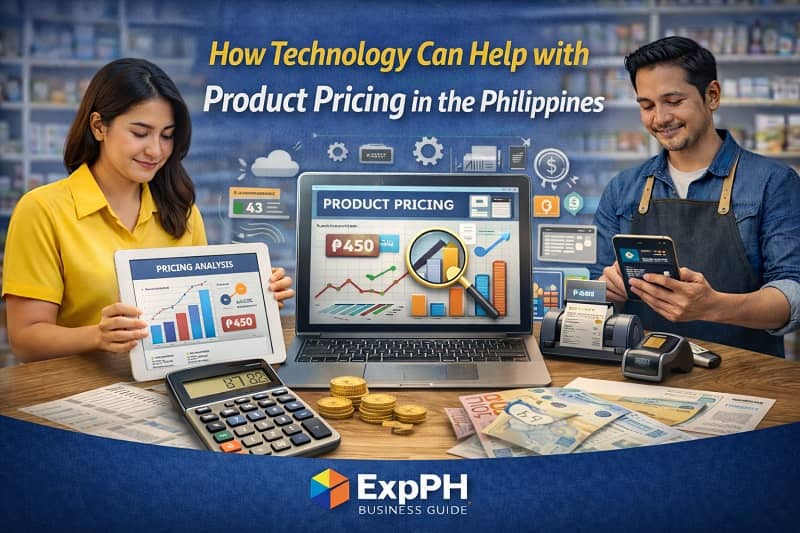
Technology plays an important role in improving product pricing Philippines strategies. Digital tools simplify calculations organize financial data and reduce manual errors. When you use reliable systems you gain better control over costs margins and overall business performance.
You can use the following tools to manage pricing more accurately:
- Excel or Google Sheets for cost tracking
- Accounting software
- POS systems that calculate margins
- Inventory management tools
These tools improve accuracy and provide real time visibility of your profit margins. Clear financial records support better decisions and long term planning.
For online sellers using platforms such as Shopee or Lazada always include platform fees transaction charges and shipping subsidies in your cost computation. Ignoring these deductions can reduce your actual profit significantly.
6 Powerful Ways to Price Your Products or Services

1. Know Your Total Costs
You cannot set accurate prices without understanding your total business costs. Many Filipino entrepreneurs underestimate expenses and later realize their profits are smaller than expected. Clear cost computation ensures your pricing supports sustainability and steady growth rather than short term survival.
Direct Costs
Direct costs are expenses directly connected to producing a product or delivering a service. These costs increase as your sales volume increases. Identifying them clearly helps you determine the minimum amount you must recover from each sale before earning profit.
For products:
- Raw materials
- Packaging
- Labor per unit
- Shipping to warehouse
For services:
- Internet expenses
- Software subscriptions
- Transportation
- Direct labor hours
Example:
If you sell homemade cookies:
- Ingredients per box: ₱120
- Packaging: ₱20
- Labor: ₱60
- Total direct cost: ₱200 per box
This total represents the minimum amount you must cover before adding overhead and profit.
Indirect Costs or Overhead
Indirect costs or overhead are expenses not linked to a single unit of sale. These remain even if sales slow down. Ignoring overhead leads to underpricing and weak cash flow. Every Filipino business owner must allocate these costs properly.
Common overhead expenses include:
- Rent
- Electricity
- Internet
- Marketing
- Equipment
- Permits and registration fees
If you are registered with the Department of Trade and Industry or the Securities and Exchange Commission, include registration compliance and renewal expenses in your annual cost planning.
For tax compliance guidance, refer to the official Bureau of Internal Revenue website at https://www.bir.gov.ph to understand filing requirements and percentage tax or VAT obligations.
To compute overhead cost per unit, divide your total monthly overhead by your expected monthly sales volume. This ensures each product or service carries its fair share of business expenses.
2. Choose the Right Pricing Method
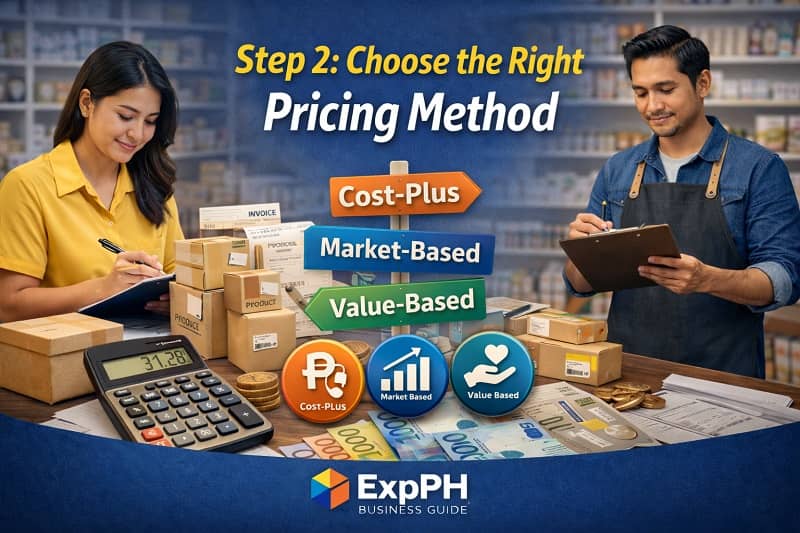
After computing your total costs, the next step is selecting a pricing method that fits your business model and market. In product pricing Philippines, small and medium enterprises commonly use structured approaches to maintain profitability while staying competitive and responsive to customer expectations.
Cost-Plus Pricing
Cost plus pricing is the simplest and most practical method for many Filipino entrepreneurs. You calculate your total cost per unit and then add your desired profit margin. This approach ensures every sale contributes to covering expenses and generating income.
Formula:
Total Cost per Unit + Desired Profit Margin = Selling Price
If your cookie costs ₱200 and you want a 50 percent markup:
₱200 x 1.5 = ₱300 selling price
This method is best for:
- Beginners
- Home based businesses
- Simple product lines
It provides clarity and reduces the risk of underpricing.
Value-Based Pricing
Value based pricing focuses on what customers believe your product or service is worth. Instead of pricing strictly from cost, you consider benefits, uniqueness, expertise, and convenience. This approach works well when differentiation is strong and customers recognize added value.
Examples include:
- Customized cakes
- Graphic design services
- Consulting services
- Premium handmade products
Ask yourself:
- What problem am I solving?
- How much is this solution worth to my customer?
- Is my product premium or budget focused?
Clear answers help you justify higher pricing confidently.
Competitive Pricing
Competitive pricing is effective in saturated markets where customers easily compare options. You review competitor prices in your area or online platforms, then position your offer strategically. The goal is not always to be the cheapest but to remain attractive while protecting your margins.
This method works well for:
- Milk tea shops
- Online reselling
- Basic printing services
Study the market carefully and ensure your final price still supports sustainable profit.

3. Understand Your Target Market
Effective pricing requires a clear understanding of who your customers are. Filipino consumers have different spending capacities preferences and expectations. When you align your pricing with your specific audience you improve sales potential and strengthen your overall product pricing Philippines strategy.
In Metro Manila many customers can accept higher prices because income levels are generally higher. In provincial areas pricing should reflect local purchasing power and economic conditions. Setting uniform prices without considering location may reduce competitiveness and limit growth opportunities.
When analyzing your market consider the following:
- Age group
- Income bracket
- Location
- Buying behavior
- Online or offline market
For example if you are targeting OFWs who send pasalubong packages your pricing may reflect quality and convenience. However if your market includes students or minimum wage earners your pricing must remain affordable and realistic. Understanding these differences helps you position your products correctly and price with confidence.

4. Do Not Forget Taxes and Compliance
If your business is registered in the Philippines you must include taxes when setting prices. Many entrepreneurs forget this step and later discover that their actual profit is lower than expected. Proper tax planning protects your earnings and prevents financial stress.
You may be subject to:
- Percentage tax
- Value Added Tax
- Income tax
Ignoring these obligations when computing your selling price can significantly reduce your net income. Taxes are mandatory business expenses and should be treated as part of your total cost structure.
Always finalize your pricing only after calculating your tax responsibilities. This ensures that your business remains compliant financially stable and prepared for regular filing requirements. Careful planning today prevents unexpected losses tomorrow. If unsure, consult an accountant or review official guidelines from the Bureau of Internal Revenue.

5. Protect Your Profit Margin
Many Filipino entrepreneurs weaken their profits by offering excessive discounts. While promotions can attract buyers, constant price reductions reduce perceived value and shrink margins. A business cannot grow if earnings are inconsistent or too small to support operations.
Promos are effective when used strategically. However frequent discounting trains customers to delay purchases until the next sale. This behavior creates unstable revenue and makes long term financial planning difficult for small and growing businesses.
Instead focus on these smarter strategies:
- Set a clear profit margin target such as 30 percent to 60 percent depending on your industry
- Offer limited time promotions
- Bundle products instead of lowering prices
- Add value instead of cutting price
Your business exists to generate income and provide stability for you and your family. Protecting your profit margin ensures sustainability growth and financial security.

6. Review and Adjust Your Pricing Regularly
Business costs do not remain constant. Prices of raw materials change fuel expenses fluctuate and inflation affects overall operating costs. If you fail to adjust your pricing accordingly your profit margin will slowly shrink and weaken your financial stability.
Review your pricing every six to twelve months or whenever significant cost changes occur. Regular evaluation helps you stay aligned with current expenses market conditions and long term profit goals.
If costs increase consider these steps:
- Adjust prices gradually
- Inform customers professionally
- Emphasize quality and value
Most customers understand reasonable price adjustments when you communicate clearly and honestly. Transparent explanations build trust and help maintain long term customer relationships.
Common Pricing Mistakes Filipino Business Owners Make
Pricing errors can quietly damage your profitability and long term growth. Many small business owners focus on attracting customers but overlook proper computation. Avoiding common mistakes helps you protect your income and build a more stable and financially responsible enterprise.
Avoid these costly errors:
- Copying competitor prices without computing your own costs
- Pricing based on emotion instead of data
- Forgetting overhead expenses
- Ignoring tax obligations
- Undervaluing your skills or expertise
Strong pricing confidence comes from accurate calculations and market understanding. When your decisions are based on clear numbers instead of guesswork you protect your margins and support sustainable business growth.

Final Thoughts on Product Pricing in the Philippines
Pricing is both analytical and strategic. You need accurate numbers to protect profitability and strong market awareness to stay competitive. Successful product pricing Philippines decisions combine financial discipline with customer insight so your business remains sustainable in a changing economic environment.
Effective product pricing Philippines strategies require:
- Accurate cost computation
- Clear profit targets
- Understanding your Filipino customers
- Awareness of taxes and compliance
- Regular review and adjustment
These elements work together to protect margins and support long term stability.
When you price correctly you safeguard your income strengthen brand credibility and create a business that can grow consistently. Sustainable pricing builds trust with customers while ensuring your operations remain financially healthy and prepared for future challenges.
If you are serious about growing your business in the Philippines avoid rushing pricing decisions. Take time to compute analyze and adjust based on real data. Smart pricing today supports stronger cash flow and financial security tomorrow.
Your business deserves to be profitable and sustainable for the long term.
More Business Resources
If you found this guide helpful, continue building your knowledge with more practical Business Philippines resources from ExpPH Business Guide. Strengthening your foundation in registration, capital planning, digital tools, and legal structures will help you make smarter long term decisions and avoid costly beginner mistakes.
Explore these related guides:
- Types of Businesses You Can Register in the Philippines
- Common Mistakes First-Time Filipino Entrepreneurs Should Avoid
- Sole Proprietorship vs Partnership vs Corporation in the Philippines
- Essential Digital Tools Every Small Business in the Philippines Should Use
- How Much Capital Do You Really Need to Start a Business in the Philippines
Keep learning, keep improving, and continue building a business that is financially stable, competitive, and ready for long term growth.

FAQs About Product Pricing in the Philippines
1. How do I know if my product price is too low?
If you struggle to cover expenses, pay yourself fairly, or grow savings, your price may be too low. Review costs, margins, and competitor pricing carefully.
2. What is the safest pricing method for beginners in the Philippines?
Cost plus pricing is safest for beginners because it ensures all expenses are covered. Add a reasonable profit margin after computing total production and overhead costs.
3. Should I match my competitors’ prices exactly?
Matching competitors is not always necessary. Focus on your costs, value, and target market. Compete through quality, service, or branding instead of lowering prices.
4. How do taxes affect my pricing strategy?
Taxes directly reduce your net profit if not included in pricing. Consider percentage tax, VAT, and income tax when computing final selling prices.
5. How often should I review my prices?
Review prices every six to twelve months or when costs increase significantly. Regular evaluation keeps your margins healthy and prevents unexpected financial losses.
6. Is it okay to offer frequent discounts?
Frequent discounts can reduce perceived value and shrink profits. Use promotions strategically, limit duration, and ensure discounted prices still cover total costs.
7. How do I price my services properly?
Calculate your hourly rate based on skills, experience, expenses, and income goals. Research market rates in the Philippines to remain competitive and realistic.
8. What overhead costs should I include in pricing?
Include rent, utilities, internet, marketing, equipment depreciation, permits, and administrative expenses. Divide total monthly overhead by expected sales volume to determine per unit cost.
9. How can I increase prices without losing customers?
Increase prices gradually, explain reasons honestly, and highlight improvements in quality or service. Customers appreciate transparency and are more accepting when communication is clear.
10. Why is understanding my target market important in pricing?
Knowing your target market helps you align pricing with purchasing power, expectations, and buying behavior. This ensures better positioning and stronger long term business sustainability.
HD Quiz Hub!
Test your knowledge with this quick quiz based on our Business Philippines guide.
Results


#1. What should you compute first before setting a price?
#2. Which pricing method adds profit to total cost?
#3. Which expense is considered overhead?
#4. Why must taxes be included in pricing?
#5. Which factor affects pricing in provincial areas?
#6. What happens if prices are too low?
#7. Which tool helps track margins accurately?
#8. When should you review pricing?
#9. What is a safer alternative to heavy discounting?
#10. Value based pricing focuses on what?
Thank you for taking the quiz.
Share your score or experience in the comments and let us know how you are improving your pricing strategy.