

Starting a business in the Philippines is an exciting step for many entrepreneurs. However, many new business owners make a common mistake during the early stages. They mix their personal money with their business funds. This may seem harmless at first, especially for freelancers, online sellers, and small startup businesses. Over time this habit creates accounting problems, tax complications, and confusion about the true financial health of the business. Without clear financial separation it becomes difficult to measure profits, track expenses, and make smart financial decisions.
Whether you run a small sari sari store, manage an online shop, offer freelance services, or operate a growing startup, learning to separate personal and business finances is a critical habit. Clear financial boundaries help entrepreneurs manage income, expenses, and savings more effectively. This practice improves financial organization, simplifies tax preparation, and supports better decision making. When finances are properly separated, business owners gain a clearer view of profitability which helps them plan future investments, growth strategies, and long term stability.
This guide explains practical steps Filipino entrepreneurs can follow to separate personal and business finances, keep records organized, protect their business, and manage money more professionally.
Table of Contents

Why It Is Important to Separate Personal and Business Finances
Many entrepreneurs in the Philippines start a business using personal savings. This approach is common for small startups and freelancers. However mixing personal and business money can quickly create financial confusion. When you separate personal and business finances, you gain clearer control over income, expenses, and overall business performance.
Clear Financial Tracking
When personal and business expenses are combined it becomes difficult to understand how much your business is actually earning. Separate accounts create a clearer picture of financial performance. This helps entrepreneurs monitor transactions accurately and make smarter decisions when managing business costs and planning future growth.
Separate finances allow you to easily track:
- Business income
- Operating expenses
- Profit and losses
- Cash flow
Clear financial tracking allows business owners to review spending habits and identify areas where costs can be reduced. It also helps determine whether the business is profitable or needs adjustments to improve financial stability.
Easier Tax Filing
The Bureau of Internal Revenue (BIR) requires businesses in the Philippines to maintain accurate financial records for tax compliance. When personal and business finances are separated preparing documents for tax filing becomes much easier. Organized records reduce confusion and allow business owners to submit correct financial reports.
You can learn more about tax obligations and registration through the official BIR website:
Proper financial documentation helps prevent reporting errors tax penalties and unnecessary delays during tax filing. Maintaining organized financial records also simplifies audits and ensures that businesses follow the required government regulations.
Better Professionalism
Financial organization reflects how seriously a business owner manages operations. Suppliers lenders and potential investors often review financial records before working with a company. Using separate financial accounts demonstrates professionalism responsibility and transparency which helps build stronger trust with partners clients and financial institutions.
Protection for Your Personal Money
Keeping personal and business finances separate protects your personal savings from business related risks. If the company experiences financial difficulties or unexpected expenses your personal funds remain protected. This separation becomes more important as your business grows and begins handling larger transactions.

Common Mistakes When Mixing Personal and Business Finances
Many entrepreneurs unintentionally create financial confusion when they mix personal and business transactions. This habit is common among new business owners and freelancers. However it makes financial management harder and hides the true performance of the business. Understanding these mistakes helps entrepreneurs build better financial habits.
Using Personal Bank Accounts for Business Transactions
Many small business owners receive payments from customers through their personal bank accounts. While this may seem simple and convenient at first it creates problems later. Mixing transactions makes it difficult to identify business income clearly and complicates expense tracking bookkeeping and financial reporting.
Paying Personal Bills Using Business Money
Some entrepreneurs use business funds to pay personal expenses such as groceries utility bills or travel. This practice blurs the boundary between personal spending and business operations. Over time it creates confusion in financial records and makes it harder to understand the real financial condition of the business.
No Clear Record of Owner Withdrawals
Business owners sometimes withdraw money from the business without recording it properly. Without clear records it becomes difficult to track profits accurately. This lack of documentation can create confusion in accounting and may lead entrepreneurs to misunderstand how much their business is truly earning.
Step by Step Guide to Separate Personal and Business Finances Properly
Separating personal and business finances may sound complicated for new entrepreneurs. In reality the process is simple when you follow clear financial habits. Even freelancers online sellers and small business owners in the Philippines can apply these practical steps to keep finances organized.

1. Open a Dedicated Business Bank Account
The first step to separate personal and business finances is opening a bank account dedicated to your business. Many banks in the Philippines offer accounts designed for entrepreneurs freelancers and small companies. A separate account keeps financial records clearer and improves financial organization.
Benefits include:
- Clear separation of income and expenses
- Professional transactions with clients
- Easier accounting and record keeping
Once the account is active ensure that all business payments from customers go directly into this account. Avoid receiving business income through personal bank accounts to maintain clean and organized financial records.

2. Register Your Business Properly
Proper business registration helps establish clear boundaries between personal finances and business operations. Registration also builds credibility and allows entrepreneurs to operate legally in the Philippines. It makes financial management easier and supports professional transactions with clients suppliers and financial institutions.
Businesses in the Philippines typically register with:
- Department of Trade and Industry (DTI) for sole proprietors
- Securities and Exchange Commission (SEC) for corporations and partnerships
- Bureau of Internal Revenue (BIR) for tax registration
- Local government units for permits
Official registration often helps when opening a business bank account because financial institutions usually require valid business documents.

3. Create a Fixed Salary for Yourself
Many entrepreneurs withdraw money from their business whenever they need personal funds. This habit creates confusion when tracking profits and expenses. A better approach is to treat yourself as an employee of your business and set a fixed salary or owner draw each month.
For example:
- Your business earns ₱80,000 monthly
- You pay yourself ₱30,000 as salary
- The remaining amount stays in the business for expenses and growth
This structure allows business owners to maintain clear financial separation while ensuring the company retains funds for operations investment and future expansion.
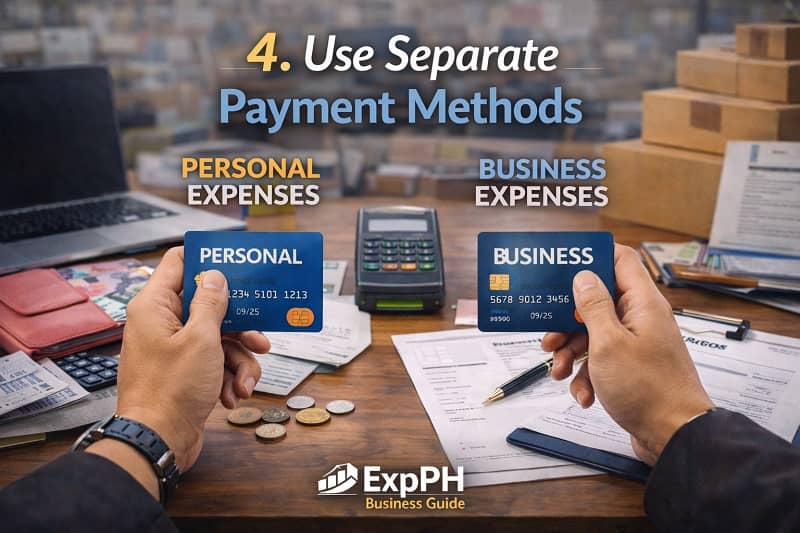
4. Use Separate Payment Methods
Using separate payment methods is a simple but effective way to maintain financial boundaries. When business and personal purchases use different accounts or cards financial records remain organized and easier to track. This habit prevents accidental mixing of transactions.
Business payments should use:
- Business bank account
- Business debit or credit card
- Business digital wallet
Personal expenses should use:
- Personal bank account
- Personal wallet or credit card
Maintaining this separation improves financial clarity and reduces confusion when reviewing expenses or preparing financial reports.

5. Track Business Expenses Properly
Accurate record keeping is essential when you separate personal and business finances. Monitoring expenses helps business owners understand spending patterns manage budgets and maintain reliable financial records. Proper tracking also simplifies accounting tax preparation and financial reporting.
You can track expenses using:
- Accounting software
- Expense tracking apps
- Simple spreadsheets
Common business expenses include:
- Inventory
- Marketing
- Internet and software tools
- Office supplies
- Transportation for business purposes
Organized financial records help entrepreneurs evaluate performance and make better decisions when managing business costs.

6. Build an Emergency Fund for Your Business
Unexpected expenses can affect any business. Many entrepreneurs rely on personal savings when problems occur which mixes personal and business finances again. Creating a dedicated emergency fund for the business helps prevent this situation and improves financial stability.
This fund can cover situations such as:
- Slow sales periods
- Equipment repairs
- Unexpected operational costs
A business emergency fund protects daily operations and prevents business owners from using personal savings during difficult financial periods. It strengthens financial discipline and supports long term business sustainability.

Financial Tools That Can Help Filipino Entrepreneurs
Modern financial tools allow entrepreneurs to manage business finances more efficiently. Technology simplifies expense tracking income monitoring and financial organization. Filipino business owners freelancers and online sellers can use digital platforms to improve accuracy reduce manual work and maintain better financial control.
Digital Banks
Digital banks provide convenient online banking services that allow business owners to monitor transactions anytime. These platforms help entrepreneurs review deposits payments and account balances quickly. Freelancers online sellers and remote workers often prefer digital banks because they simplify financial management and improve transaction tracking.
Accounting Software
Accounting software helps automate essential financial tasks such as recording transactions generating invoices and tracking expenses. These platforms reduce manual bookkeeping work and minimize the risk of financial errors. Business owners can easily review financial reports which helps them understand business performance and manage operations more effectively.
Budgeting Apps
Budgeting apps help entrepreneurs monitor spending and control business expenses more effectively. These tools provide clear insights into where money is being spent each month. Even simple mobile applications can help maintain organized financial records and encourage consistent financial discipline for small businesses.

Signs That Your Business Finances Are Well Organized
When you successfully separate personal and business finances, financial management becomes clearer and more structured. Organized records help entrepreneurs monitor income expenses and profits with confidence. This clarity reduces confusion in bookkeeping and allows business owners to focus more on decision making and business growth.
You will notice several positive improvements including:
- Clear monthly financial reports
- Accurate profit calculations
- Easier tax preparation
- Better control over spending
- Less financial stress
Well organized finances allow business owners to focus on improving products services and operations instead of constantly correcting accounting mistakes. Clear records also support better planning which helps entrepreneurs make smarter financial decisions and maintain stable long term business growth.

FAQs About Separating Personal and Business Finances
Why is it important to separate personal and business finances?
Separating personal and business finances helps entrepreneurs track income and expenses accurately. It improves financial organization, simplifies tax preparation, and protects personal savings from business risks.
Can I use my personal bank account for my business in the Philippines?
Using a personal bank account for business transactions may seem convenient. However it creates confusion in bookkeeping and makes tracking income expenses and profits much harder.
What is the first step to separate personal and business finances?
The first step is opening a dedicated business bank account. This allows entrepreneurs to receive payments track expenses clearly and maintain organized financial records.
Do freelancers need to separate personal and business finances?
Yes freelancers benefit from separating finances. Keeping a dedicated account for business income and expenses helps track earnings manage taxes and maintain organized financial records.
Should small business owners pay themselves a salary?
Small business owners should consider paying themselves a fixed salary or owner draw. This approach keeps personal spending separate and helps maintain consistent business financial records.
How does separating finances help with tax filing?
Separate financial records make tax filing easier because business income and expenses are clearly documented. This reduces errors and helps business owners prepare accurate reports.
What happens if I mix personal and business expenses?
Mixing personal and business expenses creates confusion in bookkeeping and financial tracking. It becomes difficult to measure profits and may complicate tax reporting.
What tools can help manage business finances?
Entrepreneurs can use digital banks accounting software and budgeting apps to track transactions manage expenses and maintain organized financial records for their business.
Is separating finances necessary for small businesses?
Yes even small businesses benefit from financial separation. It improves money management supports accurate bookkeeping and helps entrepreneurs understand the real financial performance.
How can organized finances help my business grow?
Organized finances provide clear insight into profits expenses and cash flow. This helps entrepreneurs make better decisions plan future investments and maintain long term business stability.

Final Thoughts on Why You Should Separate Personal and Business Finances
Successful entrepreneurs understand that financial discipline is essential for long term business stability. One of the most important habits is learning to separate personal and business finances from the beginning. Clear financial boundaries help business owners manage money responsibly and avoid confusion in daily operations.
Opening a dedicated business bank account paying yourself a structured salary and carefully tracking expenses create a solid financial foundation. Maintaining organized financial records simplifies accounting and improves financial clarity. These practices also prepare your business for expansion partnerships and potential investment opportunities in the future.
If you want your company to grow professionally and sustainably in the Philippines learning to separate personal and business finances is a necessary step. Clear financial management builds confidence improves decision making and helps entrepreneurs maintain stability while developing a stronger and more reliable business.
More Business Resources
If you want to strengthen your business knowledge and make smarter financial decisions, explore more helpful guides from ExpPH Business Guide. These resources provide practical advice for Filipino entrepreneurs who want to grow their business, manage finances better, and operate more professionally in the Philippines.
You may also find these guides helpful:
- When Should You Hire Your First Employee in the Philippines
- How to Use a Website to Grow a Small Business in the Philippines
- Cash Flow Management Tips for Small Businesses in the Philippines
- Home-Based Business Rules and Requirements in the Philippines
- Online Payment Methods Filipino Businesses Can Accept
Reading these guides can help you improve your financial management, expand your business operations, and build a stronger foundation for long term business success in the Philippines.
HD Quiz Hub!
Test your understanding of this guide and see how well you know the basics of proper financial management.
Results


#1. Why separate personal and business finances?
#2. What is the first step to separate finances?
#3. Which organization handles tax registration?
#4. What helps track business income?
#5. What should entrepreneurs avoid?
#6. What helps manage expenses effectively?
#7. Why create a fixed salary?
#8. What improves financial professionalism?
#9. Why keep financial records organized?
#10. What protects personal savings?
Thank you for testing your knowledge.
If you found this quiz helpful, feel free to share your score or experience in the comments. Your feedback helps build a stronger learning community for Filipino entrepreneurs.