
Running a small business in the Philippines does not automatically mean you need to hire a full-time accountant. Many sari sari store owners, online sellers, freelancers, home-based food sellers, and service providers successfully manage their finances on their own through simple business record keeping.
If you are just starting out or trying to reduce expenses, learning how to track your income and expenses properly can protect your profits, help you prepare for taxes, and give you better control over your cash flow. This guide will walk you through practical, Philippines-specific steps so you can confidently manage your business records even without an accountant.
Table of Contents
Why Simple Business Record Keeping Matters in the Philippines
Many small entrepreneurs overlook the value of proper documentation. Some depend on memory, loose receipts, or mobile banking history to track transactions. While this may seem manageable at first, it becomes risky and confusing as operations expand and transactions increase over time.
Simple business record keeping is essential because it helps you:
- Keep personal and business funds clearly separated
- Determine if your business is truly profitable or only breaking even
- Prepare accurate information for tax filing with the Bureau of Internal Revenue
- Strengthen credibility when applying for loans or attracting investors
- Make informed pricing and inventory decisions
Under Philippine regulations, registered businesses must maintain official books of accounts for compliance and transparency. You can review bookkeeping and registration requirements directly through the official Bureau of Internal Revenue website.
Even small businesses benefit from organized documentation. Clear records protect you from legal issues, reduce tax errors, and provide reliable financial data that supports smarter decisions and long term stability.

How Record Keeping Helps with Taxes
Even if your business falls under the 8 percent income tax option or the percentage tax system, proper documentation remains essential. Organized records support accurate reporting, reduce filing errors, and help you meet your legal responsibilities as a registered business owner.
The Bureau of Internal Revenue requires businesses to maintain books of accounts and issue official receipts. When your records are complete and organized, you gain important advantages:
- Avoid unnecessary penalties
- Compute the correct tax due
- Respond confidently during audits
Accurate documentation also supports future growth. If you decide to transition from a sole proprietorship to a corporation, well maintained records make registration, compliance, and financial review much easier and more efficient.
4 Basic Business Records Every Small Business Must Keep for Taxes
You do not need advanced accounting software when starting a small business. Focus on clear and consistent fundamentals. Keeping accurate records from the beginning builds discipline, improves financial control, and prepares your business for growth without creating unnecessary complexity or expense.

1. Daily Sales Record
Record all income received from customers every day. A simple daily sales log helps you monitor cash flow and identify problems early. Consistent recording ensures your income records remain accurate and organized, which supports better financial control and prepares your business for tax reporting and future growth.
Your sales record should include:
• Date
• Product or service sold
• Quantity
• Total amount received
• Mode of payment such as cash, GCash, or bank transfer
If you sell through Shopee or Lazada, download weekly sales reports and organize them properly. Keeping these reports with your daily records improves tracking accuracy and provides reliable documentation that supports financial reviews, business analysis, and future tax preparation.
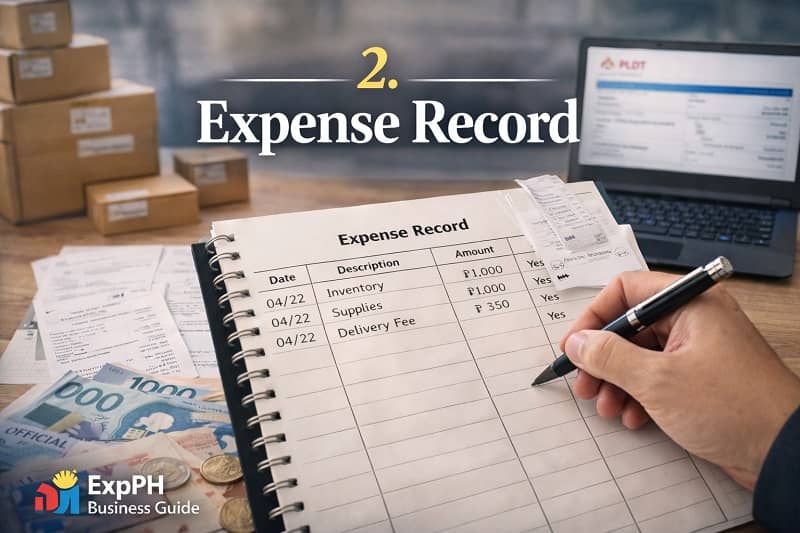
2. Expense Record
Track every business expense carefully to maintain clear financial visibility. Even small expenses affect profitability over time. A consistent expense record helps you understand spending patterns, control unnecessary costs, and maintain accurate documentation that supports financial planning and proper reporting for tax compliance.
Your expense record should include:
• Inventory purchases
• Supplies
• Delivery fees
• Business internet bills
• Rent
• Utilities
Always keep official receipts whenever possible. These documents serve as proof of legitimate business expenses. Organized receipts strengthen your records and support tax compliance, especially if your business records are reviewed during financial checks or government tax audits.
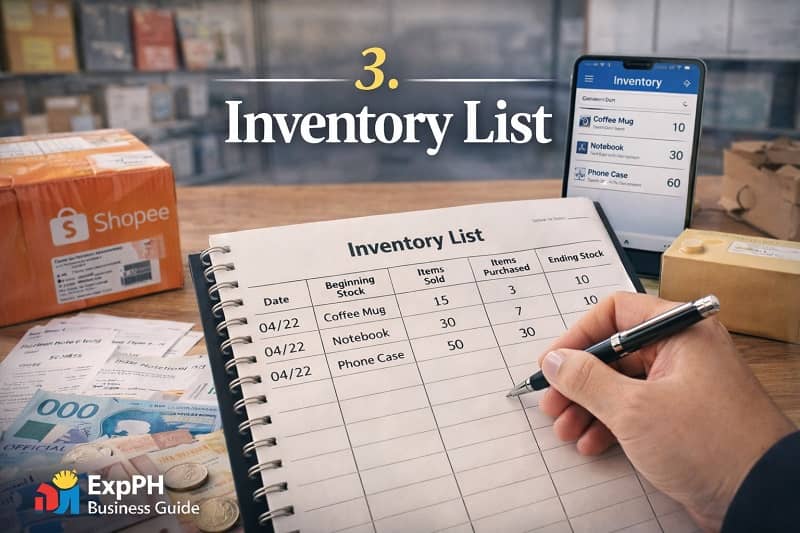
3. Inventory List
If your business sells physical products, maintain a simple inventory list to track stock movement accurately. Proper inventory monitoring helps prevent shortages and overstocking while improving purchasing decisions. Organized inventory records also help you understand product performance and maintain better control over business operations.
Your inventory record should include:
• Beginning stock
• Items sold
• Items purchased
• Ending stock
Consistent tracking ensures you always know your current inventory levels. This practice reduces waste, prevents lost sales caused by stock shortages, and protects your business from financial losses that can occur when inventory management is neglected.

4. Accounts Receivable and Payable
If customers are allowed to pay later, track outstanding balances carefully. Monitoring receivables protects your cash flow and helps prevent collection problems. Clear records allow you to follow up on unpaid accounts and maintain financial stability while ensuring that delayed payments do not disrupt daily business operations.
Your receivable record should include:
• Customer name
• Amount owed
• Due date
You should also maintain a list of suppliers that still need payment. Tracking these obligations helps you avoid late fees, maintain positive supplier relationships, and ensure your business meets its financial commitments on time.
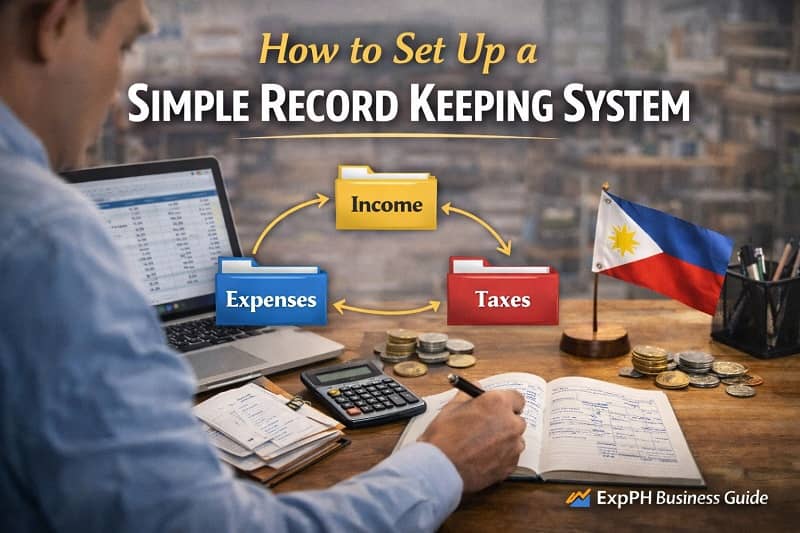
How to Set Up a Simple Record Keeping System
You do not need to be an accounting graduate to manage your business records effectively. The key is choosing a system you can maintain consistently. Start with simple tools that match your skills and business size, then upgrade only when necessary.
Option 1: Notebook System
The notebook method is the simplest form of record keeping and works well for small community businesses. Use separate notebooks to organize transactions clearly:
- Sales
- Expenses
- Utang or receivables
Write entries neatly and update them daily. This system is practical for sari sari stores and small local service providers with manageable transactions.
Option 2: Excel or Google Sheets
Spreadsheets are ideal if you have basic computer knowledge. They allow better organization and make monthly summaries easier to prepare. Create simple columns such as:
- Date
- Description
- Income
- Expense
- Balance
Google Sheets is helpful because it saves data automatically online, which lowers the risk of losing important records.
Option 3: Affordable Accounting Apps
As your business grows, you may consider beginner friendly accounting tools for better automation. Popular options include:
- QuickBooks
- Wave
These tools generate reports, track expenses, and summarize financial data efficiently. However, for micro businesses with limited transactions, spreadsheets usually remain sufficient and cost effective.
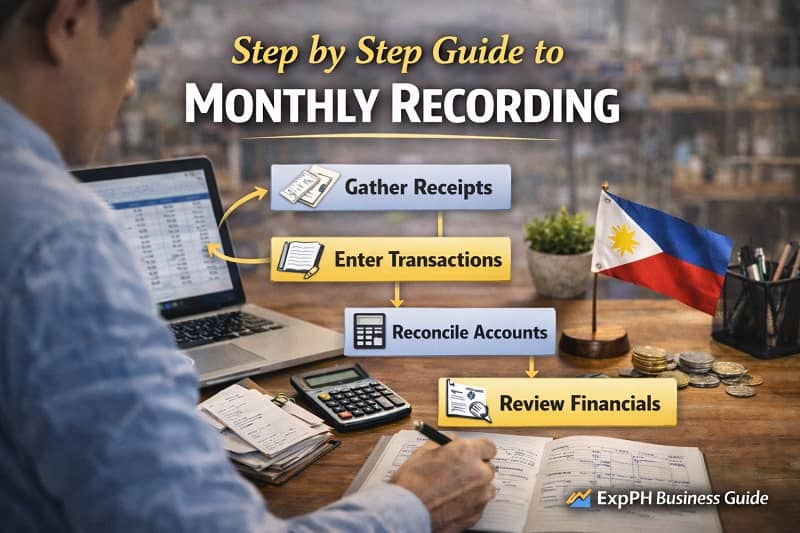
Step by Step Guide to Monthly Recording
Consistency matters more than complicated systems. A clear routine helps you stay organized and confident about your finances. When you follow a simple structure each day, week, and month, you reduce errors and gain better control over your business performance.
Step 1: Record Daily Transactions
Record all income and expenses every day instead of waiting until the weekend. Daily updates prevent forgotten details and reduce mistakes. This habit keeps your financial information accurate and makes weekly and monthly summaries easier to prepare.
Step 2: Separate Personal and Business Money
Open a dedicated bank account or e wallet for your business transactions. Keeping funds separate improves transparency and prevents confusion. This practice strengthens simple business record keeping and allows you to measure real profitability without mixing personal spending.
Step 3: Summarize Weekly
Set time at the end of each week to review your numbers and calculate results. Focus on these key actions:
- Total your sales
- Total your expenses
- Compute your profit
Use this basic formula:
- Profit equals total sales minus total expenses
Weekly summaries help you spot problems early.
Step 4: Review Monthly
At the end of each month, analyze your performance carefully instead of relying on assumptions. Evaluate the following:
- Which products sell the most
- Where spending is excessive
- Whether pricing needs adjustment
A monthly review supports strategic planning and reduces emotional decision making.
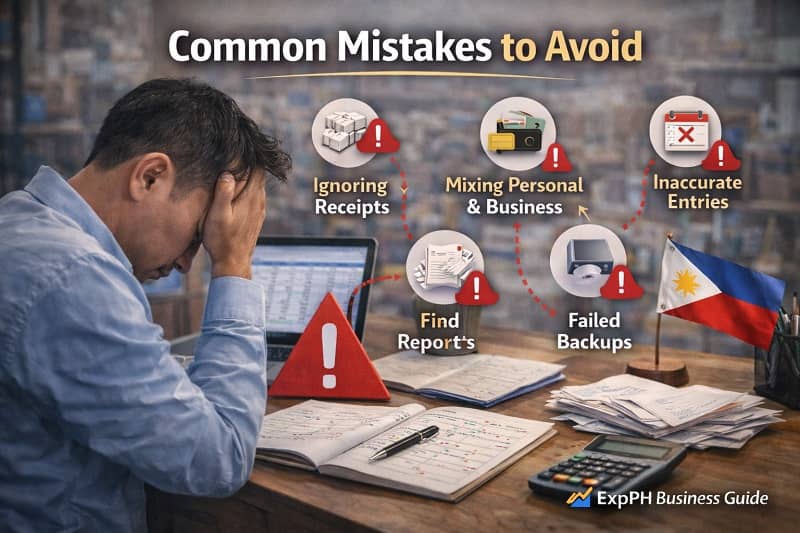
Common Mistakes to Avoid
Many Filipino entrepreneurs face financial stress not because their products lack quality but because their records are incomplete or disorganized. Poor documentation creates confusion about profits, expenses, and obligations. Clear and consistent tracking prevents small errors from becoming serious financial problems.
Avoid these common mistakes:
- Mixing personal groceries with business expenses
- Failing to keep official receipts
- Forgetting to record small daily expenses
- Ignoring unpaid customer balances
- Waiting until tax season to organize records
Strong simple business record keeping reduces pressure during BIR filing periods and helps you stay prepared, accurate, and confident when reviewing your financial responsibilities.

When Should You Hire an Accountant?
Simple business record keeping is often enough for small entrepreneurs who handle straightforward operations. If your transactions are limited and easy to track, you can manage your records confidently without professional assistance while maintaining compliance and financial clarity.
Simple business record keeping works well if:
- You are a sole proprietor
- You have manageable monthly transactions
- You understand basic income and expense tracking
However, professional support becomes valuable as your operations expand and financial requirements grow more complicated.
Consider hiring an accountant if:
- Your transactions become complex
- You handle large supplier contracts
- You are VAT registered
- You require audited financial statements
You may also choose part time accounting services during tax season to ensure accurate filing and compliance.

Building Long Term Financial Discipline
Record keeping goes beyond compliance requirements. It strengthens financial discipline and builds awareness about how your business truly performs. When you consistently review accurate records, you develop responsible habits that protect profits and support steady long term growth.
When you clearly see your real numbers:
- You become more careful with spending
- You set prices based on actual costs
- You plan expansion with confidence
- You prepare funds for emergencies
For OFWs planning to build a negosyo in the Philippines, learning simple business record keeping early reduces the risk of capital loss and financial mismanagement.
This skill reinforces both Business Philippines and Finance Philippines goals by promoting stability, informed decisions, and sustainable growth over time.
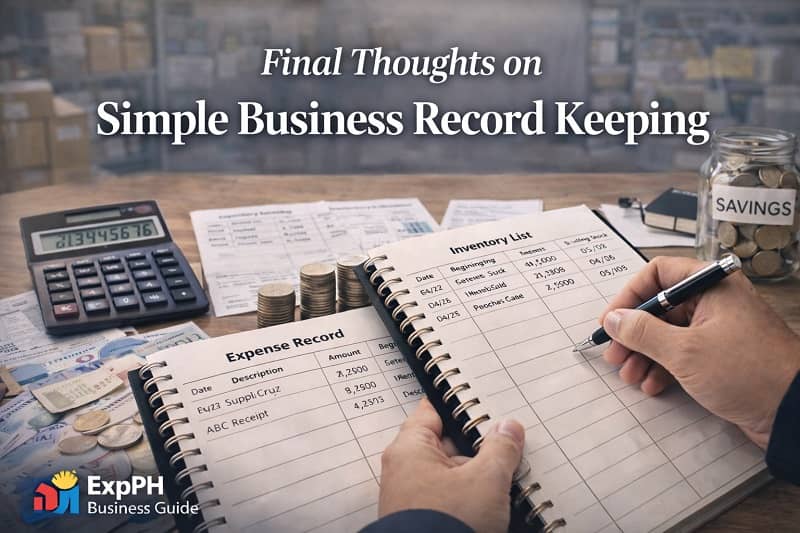
Final Thoughts on Simple Business Record Keeping
You do not need a full time accountant to manage your finances effectively at the start. What matters most is consistency, discipline, and a clear system you can follow. With the right habits, small business owners can maintain control and build confidence over time.
Simple business record keeping allows you to:
- Track real profits
- Stay compliant with Philippine regulations
- Make informed business decisions
- Grow with confidence
Begin with a simple method. Stay consistent with daily updates. Review your records monthly and improve gradually as your business expands.
Your business deserves financial clarity. The habits you build today will strengthen stability, protect your income, and support long term success.
More Business Resources
Building a successful business in the Philippines requires more than just hard work. It requires the right knowledge, clear systems, and informed decisions. Continue strengthening your entrepreneurial foundation by exploring these practical guides from ExpPH Business Guide:
- Common Mistakes First-Time Filipino Entrepreneurs Should Avoid
- Sole Proprietorship vs Partnership vs Corporation in the Philippines
- Essential Digital Tools Every Small Business in the Philippines Should Use
- Online Business Ideas That Work in the Philippine Market
- How to Register a Business Name in the Philippines
Each guide is designed to help Filipino entrepreneurs avoid costly errors, stay compliant, and grow their negosyo with confidence. The more you learn, the stronger and more sustainable your business becomes.
FAQs About Simple Business Record Keeping
1. Is simple business record keeping required for small businesses in the Philippines?
Yes, registered small businesses in the Philippines are required to maintain books of accounts for tax compliance and accurate reporting to authorities.
2. Can I manage my business records without hiring an accountant?
Yes, many small entrepreneurs manage their records independently by tracking daily sales, expenses, and inventory consistently using notebooks, spreadsheets, or beginner-friendly accounting apps.
3. What basic records should I maintain for my small business?
You should record daily sales, business expenses, inventory levels, and any receivables or payables to ensure accurate financial tracking and better decision making.
4. How often should I update my business records?
Ideally, update your records daily to avoid missing transactions, forgetting details, or creating confusion when reviewing financial reports at month end.
5. Is a spreadsheet enough for simple business record keeping?
Yes, a well-organized spreadsheet can effectively track income, expenses, and balances, especially for micro and small businesses with manageable transaction volumes.
6. Why is separating personal and business money important?
Separating funds prevents confusion, improves financial clarity, simplifies tax preparation, and helps you measure the true profitability of your business operations.
7. Do I need official receipts for every expense?
Keeping official receipts for business expenses is strongly recommended because they support tax deductions, validate transactions, and protect you during compliance reviews.
8. How can record keeping help my business grow?
Accurate records help you identify profitable products, control unnecessary expenses, plan investments wisely, and make informed decisions based on real financial data.
9. When should I consider hiring an accountant?
You should consider hiring an accountant when transactions become complex, taxes increase in difficulty, or you require audited financial statements for loans.
10. What is the biggest mistake small business owners make with records?
The most common mistake is inconsistent recording, which leads to inaccurate profit calculations, tax stress, and poor financial decisions over time.
HD Quiz Hub!
Test your knowledge based on the ExpPH Business Guide article.
Results


#1. Why is record keeping important for small businesses?
#2. Which agency requires books of accounts in the Philippines?
#3. What should you record daily?
#4. Why separate personal and business money?
#5. Which tool is suitable for beginners?
#6. What supports tax deductions?
#7. How often should records be updated?
#8. What helps identify profitable products?
#9. When consider hiring accountant?
#10. What is common record keeping mistake?
Thank you for taking the quiz.
Share your score or experience in the comments and let us know how you are applying simple business record keeping in your business.