
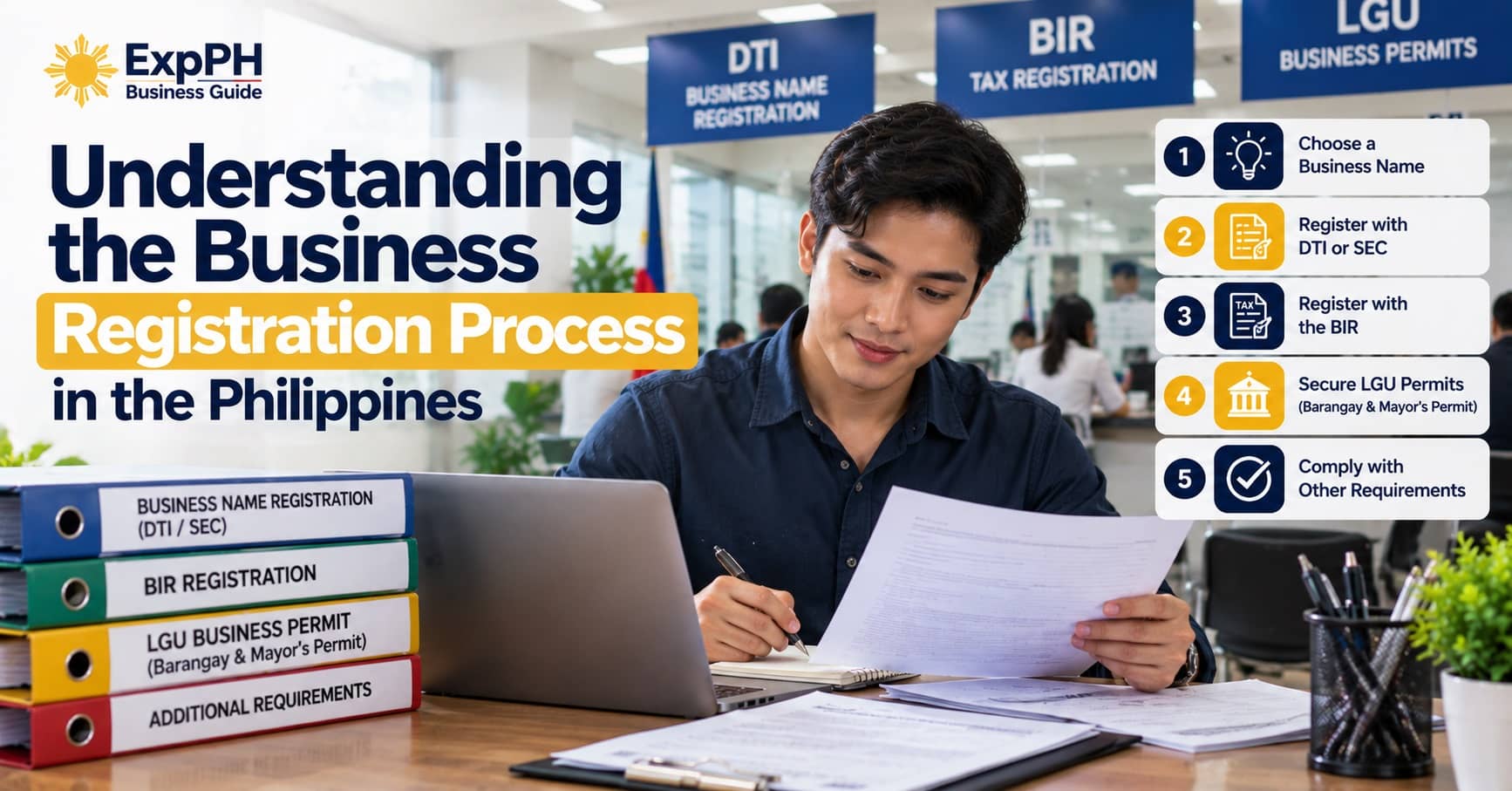
Starting a business can feel complicated when you are unfamiliar with government requirements, permits, and registrations. Understanding the business registration process in the Philippines gives new entrepreneurs a clearer idea of what needs to be completed before they begin operating.
For Filipino entrepreneurs, the key is to approach registration step by step instead of treating it as one single application.
This guide is part of our complete resource on: How to Register a Business in the Philippines (Complete Guide)
Understanding the Business Registration Process in the Philippines
The business registration process in the Philippines generally depends on the type of business you plan to establish. A sole proprietorship follows a different registration path from a partnership or corporation, so identifying your business structure is an important first step.
For a sole proprietorship, the business name registration is generally handled through the Department of Trade and Industry, or DTI. Partnerships and corporations have different requirements and are generally registered through the Securities and Exchange Commission, or SEC.
After completing the appropriate business registration, entrepreneurs may also need to deal with local government requirements and tax registration. This is why understanding the business registration process in the Philippines before submitting applications can help prevent confusion later.
Each government office has its own purpose. Business name or entity registration establishes the business, local permits address requirements for operating within a particular location, and BIR registration covers applicable tax obligations.
Practical Tip for the Business Registration Process in the Philippines
Create a simple registration checklist before you begin. Write down the government office involved, the documents required, the application status, and the next step you need to complete.
Keeping these details organized can make the business registration process in the Philippines easier to follow, particularly when several applications or documents are involved.
It is also useful to keep digital and printed copies of important registration documents. Having organized records can save time when you need to reference information for another application or business requirement.
Know What Comes After Business Name Registration
One important part of the business registration process in the Philippines is understanding that business name registration does not necessarily complete every requirement for operating a business.
Depending on the business structure, location, and nature of operations, additional permits and registrations may apply. Local requirements can involve the barangay and city or municipal government, while tax-related registration involves the BIR.
This means entrepreneurs should not assume that receiving one registration document means everything is finished. Instead, review the requirements that apply to your specific business and location.
The business registration process in the Philippines can also vary depending on whether the business operates from a commercial establishment, office, or home. Checking the applicable requirements before starting operations is a practical way to avoid unnecessary delays.
Common Mistake to Avoid
A common mistake is starting business operations immediately after registering the business name without checking the remaining permits and registrations.
A registered business name does not automatically mean that every required permit has been secured. Before accepting customers, selling products, or providing services, review the applicable requirements for your business.
This is one reason why understanding the complete business registration process in the Philippines is important for beginners. Completing the process properly can help you avoid preventable compliance problems later.
Keep Your Registration Records Organized
Good recordkeeping should be part of the business registration process in the Philippines from the beginning. Keep copies of registration certificates, permits, receipts, applications, and other important documents in an organized folder.
You can use a physical folder for original documents and a secure digital folder for backup copies. Technology can make this easier, but even a simple folder system can work well for a small business.
When requirements, fees, or procedures change, verify the latest information directly with the relevant government office. Do not rely only on older articles, social media posts, or information provided by other business owners because requirements may change over time.
The goal of the business registration process in the Philippines is not simply to collect documents. It is to make sure your business starts with the registrations and permits that apply to its operations.
Conclusion
The business registration process in the Philippines becomes easier to manage when you understand the purpose of each registration and complete the requirements in the right order. Identify your business structure, prepare your documents, check local requirements, complete applicable tax registration, and keep your records organized.
For beginners, taking the business registration process in the Philippines one step at a time can make starting a business much clearer and more manageable.
If you want a complete roadmap for long-term success, read: A Practical Guide to Building a Sustainable Business in the Philippines
Related Guides
- How to Register a Business Name in the Philippines
- Barangay Clearance, Mayor’s Permit, and BIR Explained Simply

A Filipino web developer with a background in Computer Engineering. Founder of ExpPH Blog and ExpPH Business Guide, two Philippines-focused platforms covering OFW guidance, business, finance, freelancing, travel, and lifestyle. Passionate about helping Filipinos grow, he creates practical content that educates, empowers, and inspires readers nationwide.