
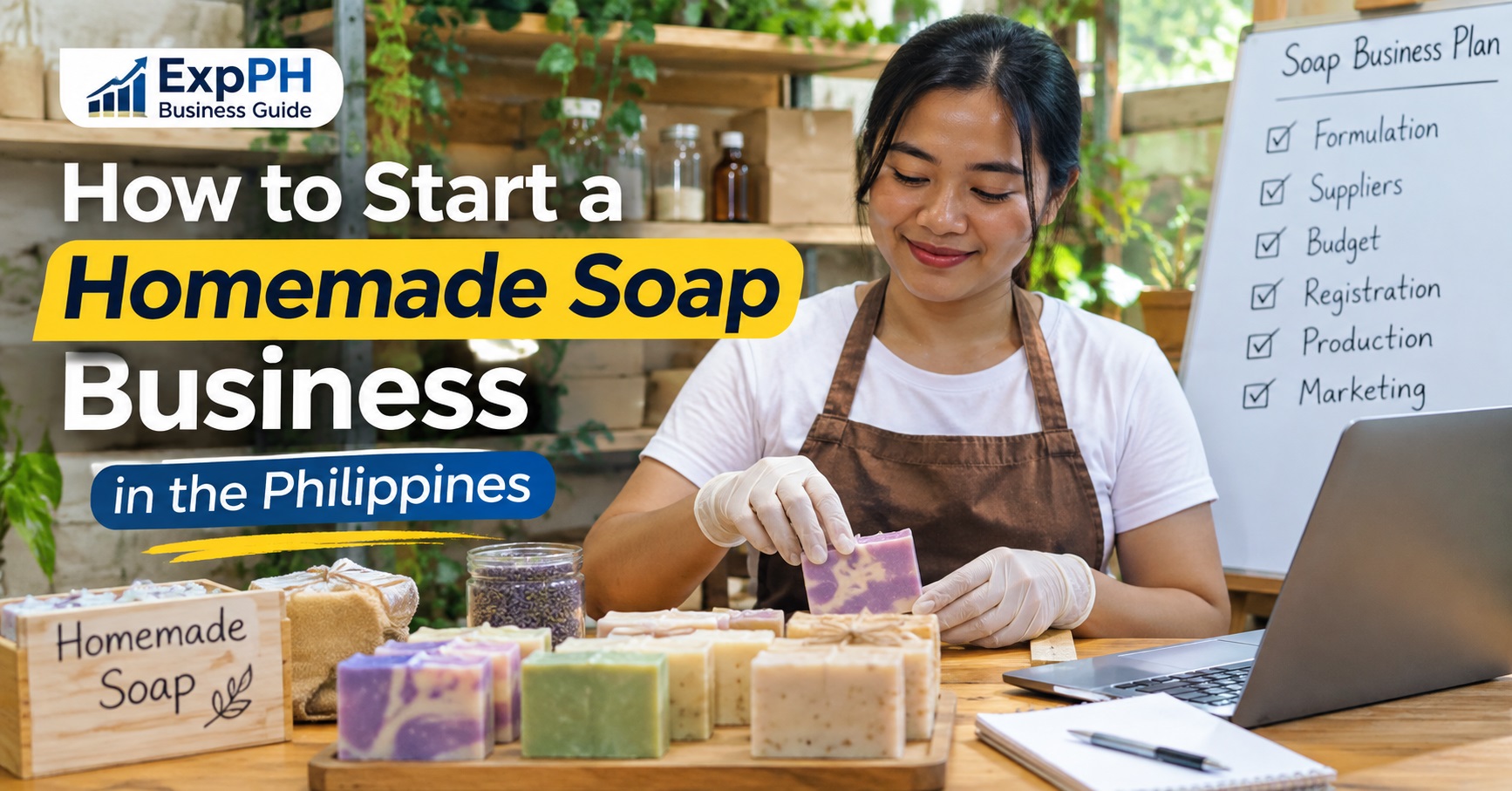
Starting a homemade soap business in the Philippines can be a practical opportunity for aspiring entrepreneurs who enjoy creating personal care products and want to build a small business. Handmade soaps can appeal to customers looking for attractive gifts, locally made products, and different scents, shapes, and formulations.
However, turning a soap-making hobby into a business requires more than learning how to mix ingredients. You need to understand your target market, choose a suitable product range, calculate production costs, maintain consistent quality, and comply with the applicable business and product regulations in the Philippines.
Whether you plan to produce soap at home, sell through social media, supply gift shops, or eventually establish your own brand, careful preparation can help you avoid unnecessary expenses and build a business that can grow over time.
Looking for other affordable business opportunities in the Philippines? Explore our Best Low-Capital Businesses to Start in the Philippines guide to discover practical business ideas, compare startup costs, and find an opportunity that matches your budget, skills, and business goals.
Quick Summary (TL;DR)
A homemade soap business involves producing and selling handmade soap products while managing product quality, costs, marketing, and regulatory requirements. Here are the essential steps:
- Research the market: Understand customer preferences, competing products, and demand in your target area.
- Choose your soap products: Decide whether to make basic bath soaps, scented soaps, decorative soaps, or other suitable varieties.
- Identify your customers: Consider individual buyers, gift shoppers, boutiques, spas, and online customers.
- Prepare your budget: Estimate equipment, ingredients, packaging, utilities, permits, and working capital.
- Find reliable suppliers: Compare ingredient quality, prices, availability, and supplier reliability.
- Set up your production area: Prepare a clean, organized workspace with suitable equipment and storage.
- Develop and test your formulations: Maintain consistent recipes, document batches, and arrange appropriate product safety checks.
- Calculate your selling prices: Include ingredients, packaging, labor, overhead, marketing, and delivery costs.
- Complete business and product requirements: Check DTI or SEC registration, local permits, BIR registration, and applicable FDA requirements before selling.
- Promote and manage your business: Build an online presence, track inventory, record sales, and improve products based on customer feedback.
Key takeaway: Start with a manageable product range, prioritize product safety and consistent quality, understand your regulatory obligations, and expand only when your production and finances can support growth.
Table of Contents
1. Understand the Homemade Soap Business Opportunity in the Philippines
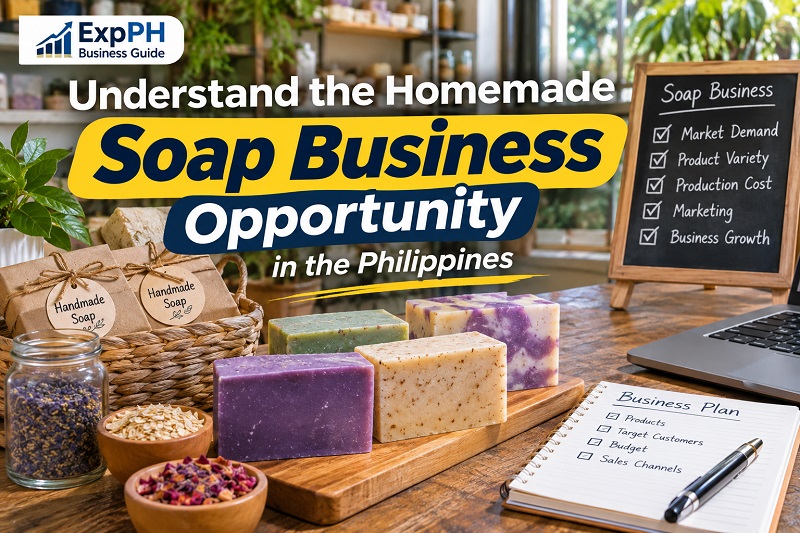
Research the demand for handmade soap by examining customer preferences, competing products, and potential selling opportunities in the Philippine market. Consider your target customers, product quality, pricing, and competition before investing in ingredients and equipment to establish a suitable business.
Why Homemade Soap Can Be a Business Opportunity
Handmade soaps allow small producers to develop products with different colors, shapes, scents, and packaging styles. You can begin with a limited selection and gradually introduce additional varieties after understanding which products customers prefer.
You may also develop a recognizable brand through consistent product quality, attractive presentation, and reliable customer service. These qualities can help distinguish your products from mass-produced alternatives.
Understand the Competition
Before starting production, examine other soap sellers in your area and online. Compare their product varieties, prices, packaging, customer reviews, and selling channels.
Pay attention to what customers appreciate and what they complain about. This research can help you identify opportunities, such as better packaging, convenient gift sets, clear product information, or reliable local delivery.
Avoid competing only through lower prices. A business needs enough margin to cover production costs and maintain product quality.
2. Choose the Type of Homemade Soap You Want to Sell
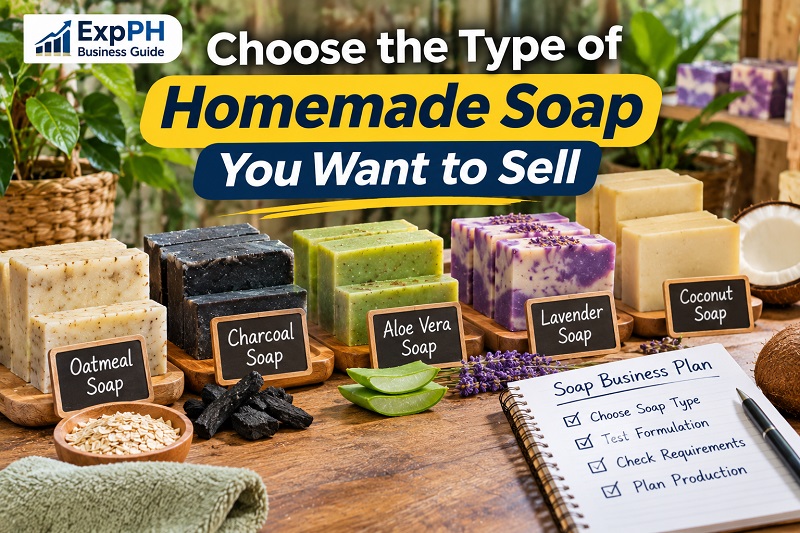
Choose a soap-making method that suits your skills, available resources, and production goals. Consider the differences between melt-and-pour, cold-process, and specialty soaps while prioritizing safe handling, consistent quality, and a manageable product range that meets customer preferences.
Melt-and-Pour Soap
Melt-and-pour soap uses a prepared soap base that you melt, customize with suitable additives or fragrances, and pour into molds. This method can be convenient for beginners because it avoids handling some of the more demanding parts of traditional soap production.
You can experiment with different shapes, colors, and scents while learning about product presentation and customer preferences. However, you still need to follow supplier instructions and ensure that every ingredient is appropriate for its intended use.
Cold-Process Soap
Cold-process soap is made by combining oils or fats with a carefully measured sodium hydroxide solution. The chemical reaction, called saponification, produces soap.
This method offers greater control over the formulation, but it requires proper training, accurate measurements, protective equipment, and careful handling of sodium hydroxide, commonly called lye. The mixture also needs an appropriate curing period before the finished soap is ready for use.
Glycerin and Specialty Soaps
Glycerin-based soaps and decorative varieties may appeal to customers looking for attractive gifts or visually distinctive products. You can explore suitable colors, molds, scents, and packaging while keeping the formulation appropriate for its intended use.
Do not assume that adding natural ingredients automatically makes a soap safer or more effective. Every ingredient should be suitable for the product, used at an appropriate level, and evaluated for quality and safety.
Choose a Manageable Product Range
Start with a small selection that you can produce consistently. For example, you might offer a basic scented soap, an unscented variety, and a decorative gift option.
A focused product range makes it easier to purchase ingredients, manage inventory, test formulations, and understand customer demand before introducing more products.
3. Identify Your Target Customers and Market
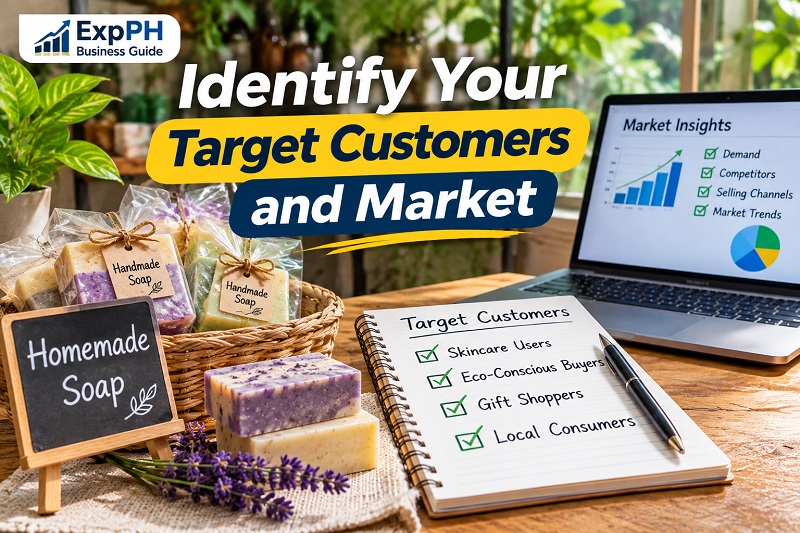
Knowing who will purchase your products helps you make better decisions about formulation, packaging, pricing, and promotion. A soap business targeting gift buyers may need a different product presentation from one serving customers who regularly purchase everyday bath products.
Individual Customers
Individual customers may purchase handmade soap for personal use, household needs, or gifts. Their buying decisions can depend on price, scent, appearance, product information, and convenience.
Ask potential customers what types of soap they prefer and how much they normally spend. Their answers can help you select products that match actual demand.
Gift Buyers and Special Occasions
Decorative soaps and gift sets may appeal to customers preparing presents for birthdays, weddings, holidays, and other occasions.
You can explore customized packaging, coordinated scents, and different product sizes. Make sure that customization remains manageable and that special orders cover the additional materials and labor involved.
Retailers and Small Businesses
Gift shops, boutiques, salons, and other small retailers may be interested in carrying locally made products. However, wholesale arrangements require careful pricing because retailers need room to earn their own margins.
Prepare clear product information, consistent packaging, and reliable supply arrangements before approaching potential business partners.
Research Local and Online Demand
Use customer conversations, community groups, social media, and marketplace listings to understand what people are buying. Compare product prices and read reviews to identify common expectations.
Your research should help answer three important questions:
- Which soap varieties are customers interested in?
- What price range can your target market reasonably afford?
- What makes your product different from competing options?
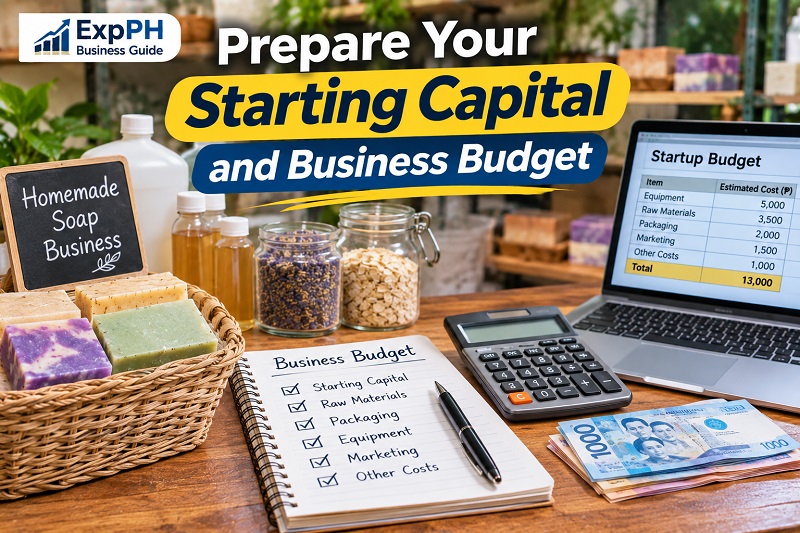
4. Prepare Your Starting Capital and Business Budget
Plan your startup budget by estimating the costs of ingredients, equipment, packaging, permits, and initial inventory. Consider your production needs and workspace while setting aside enough working capital to cover recurring expenses and keep your homemade soap business operating smoothly.
List Your Initial Startup Expenses
Your initial budget may include:
- Soap bases, oils, fats, and other formulation ingredients
- Sodium hydroxide and appropriate protective equipment, if using a lye-based method
- Fragrances, colors, and suitable additives
- Mixing containers, weighing scales, thermometers, and utensils
- Soap molds and cutting tools
- Packaging materials, labels, and product boxes
- Storage containers and workspace improvements
- Business registration and local permit expenses
- Product testing and regulatory expenses, where applicable
- Initial marketing and product photography
Include Recurring Operating Expenses
Your business will also have ongoing costs after production begins. These may include ingredients, packaging, electricity, water, delivery, marketplace fees, advertising, and replacement equipment.
If you hire workers, include their compensation and applicable employer obligations in your financial plan.
Keep Working Capital Available
Working capital helps cover normal expenses while you produce and sell your products. Avoid using your entire budget for equipment or ingredients because you may still need money for packaging, delivery, and replenishment.
A simple spreadsheet can help you record expenses, monitor available funds, and compare actual spending against your original budget.
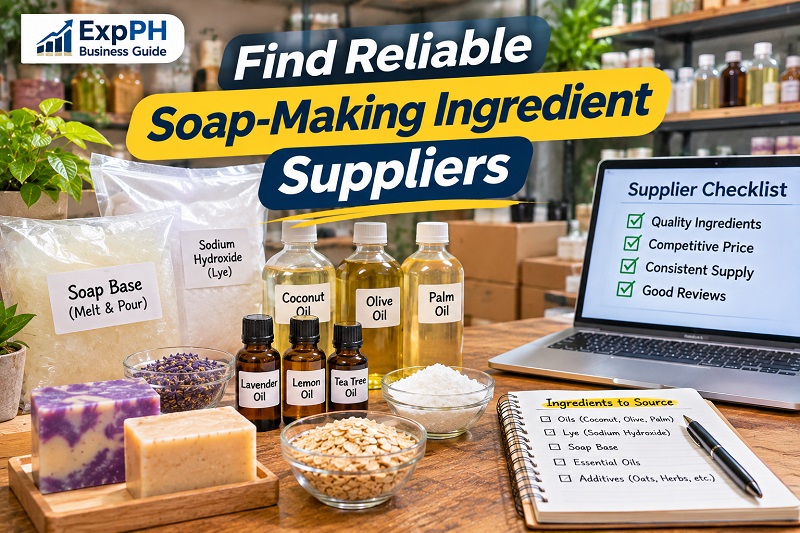
5. Find Reliable Soap-Making Ingredient Suppliers
Choose suppliers that provide quality ingredients, clear product specifications, and reliable availability. Compare their prices, delivery terms, and documentation while keeping purchase records and batch details to maintain consistent soap formulations and trace materials when production or quality issues arise.
Identify the Ingredients You Need
Depending on your chosen soap-making method, materials may include:
- Prepared melt-and-pour soap bases
- Suitable oils and fats
- Sodium hydroxide for cold-process soap
- Fragrance materials intended for the product
- Approved colorants and suitable additives
- Distilled or appropriately treated water, where required
- Packaging and labeling materials
The ingredients you need will depend on your formulation. Do not use materials simply because they are marketed as natural or commonly used in homemade products.
Compare Potential Suppliers
Look for suppliers that provide clear product descriptions, ingredient specifications, handling instructions, and consistent availability.
Compare prices, minimum order quantities, delivery arrangements, and product documentation. Ask questions when ingredient specifications or intended uses are unclear.
Maintain Supplier Records
Keep a record of each supplier, the materials purchased, purchase dates, batch or lot numbers, and relevant product documents.
These records can help you trace ingredients if you encounter quality problems and make it easier to reorder materials that meet your production requirements.
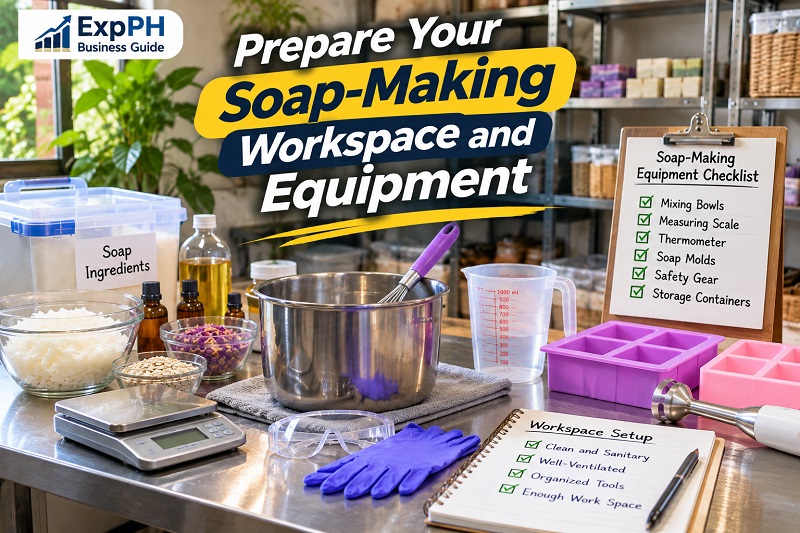
6. Prepare Your Soap-Making Workspace and Equipment
Prepare a clean and well-ventilated production area with suitable equipment and safe storage for ingredients and finished products. Organize your tools and materials properly while keeping soap-making activities separate from household food preparation to support safe and consistent production.
Set Up a Suitable Production Area
Choose a clean, well-ventilated area with adequate lighting, storage, and access to water. Keep ingredients and finished products protected from contamination, excessive heat, moisture, and unsuitable storage conditions.
If you use sodium hydroxide, make sure the workspace has appropriate ventilation and that children, pets, and other household members cannot access the chemicals or production area.
Purchase Essential Equipment
Depending on your method, equipment may include:
- Accurate digital weighing scale
- Heat-resistant mixing containers
- Suitable mixing utensils
- Thermometer
- Soap molds
- Soap cutter
- Protective gloves and safety goggles
- Storage containers
- Cleaning supplies
- Labels and batch-record materials
Use equipment suitable for soap production. Avoid reusing food preparation tools, particularly when handling caustic ingredients.
Organize Ingredients and Finished Products
Store ingredients in clearly labeled containers and follow their handling instructions. Keep finished products separate from raw materials and cleaning chemicals.
An organized workspace can reduce mistakes, improve production consistency, and make it easier to inspect your products before packaging.
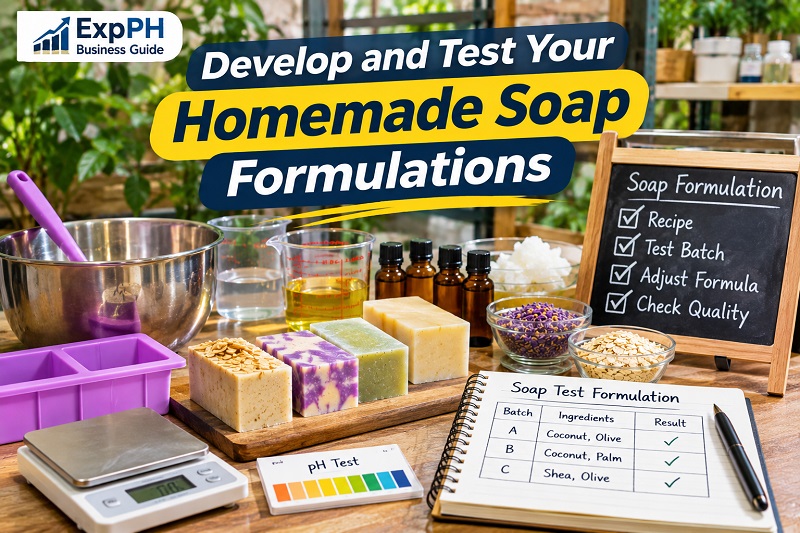
7. Develop and Test Your Homemade Soap Formulations
Develop consistent soap formulations by documenting ingredients, measurements, and production methods. Evaluate ingredient safety and maintain batch records while arranging appropriate quality checks to confirm that your products meet the necessary standards before offering them to customers.
Start With a Documented Formula
Record every ingredient and its exact quantity. Include the production method, mixing sequence, processing conditions, and any special instructions.
For cold-process soap, accurate calculations are especially important because the amount of sodium hydroxide must be appropriate for the oils and fats used. Never estimate lye quantities or substitute ingredients without recalculating the formulation.
Understand Ingredient Safety
Some ingredients can cause irritation or allergic reactions, even when they are commonly used in personal care products. Fragrances, colorants, essential oils, and botanical additives should be evaluated for suitability and used according to reliable technical guidance.
Avoid making medical or therapeutic claims without the appropriate evidence and regulatory authorization. Do not describe a product as treating acne, eczema, infection, or other medical conditions unless the relevant requirements have been met.
Keep Batch Records
Record the date, formulation, ingredient suppliers, lot numbers, production quantities, and observations for each batch.
Keep representative samples where appropriate and establish a process for reviewing product quality. If a batch does not meet your standards, investigate the cause instead of selling it simply to avoid a loss.
Arrange Appropriate Product Safety Checks
Before selling, determine which quality and safety assessments are appropriate for your formulation and intended use. Depending on the product, this may involve stability, microbiological, or other relevant testing.
A product that looks and smells acceptable is not automatically safe. Consider consulting a qualified cosmetic chemist or an appropriate testing laboratory when developing products for commercial sale.

8. Design Your Soap Packaging and Product Labels
Choose packaging that protects your soap and presents your brand professionally. Include accurate product information and follow applicable labeling requirements in the Philippines. Use consistent designs across your products and promotional materials while avoiding unsupported claims about safety or benefits.
Choose Practical Packaging
Select packaging that protects the soap during storage, handling, and delivery. Consider moisture exposure, product shape, packaging durability, and transportation conditions.
You may use suitable paper wraps, boxes, sleeves, or other packaging materials depending on your product. Make sure the packaging does not negatively affect the soap or conceal product deterioration.
Include Clear Product Information
Your label should provide the information required for your product category and applicable Philippine regulations. Cosmetic products are subject to specific labeling and product information requirements under the applicable ASEAN and Philippine framework.
Depending on the product and applicable rules, information may include the product name, ingredients, net contents, manufacturer or responsible company details, batch identification, and directions or warnings.
Check the current FDA requirements before printing labels in large quantities. Do not assume that a decorative label alone satisfies regulatory requirements.
Build a Recognizable Brand
Choose a business name, logo, and packaging style that customers can easily recognize. Keep the design consistent across your products, social media pages, and promotional materials.
Avoid unsupported claims such as guaranteed results, medical benefits, or statements that a product is completely safe for everyone.
9. Set Your Homemade Soap Selling Prices
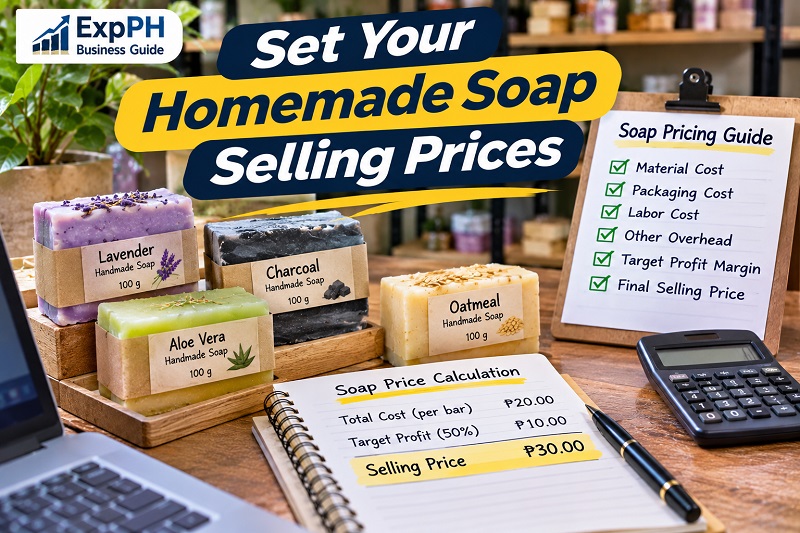
Calculate your production costs by accounting for ingredients, packaging, labor, utilities, and other expenses. Compare similar products in the market before setting retail or wholesale prices that cover your costs and provide a reasonable profit margin.
Calculate the Cost Per Soap
Include the following expenses:
- Ingredients used in each batch
- Packaging and labels
- Direct labor
- Electricity and water
- Equipment depreciation or replacement allowance
- Production waste
- Delivery and transaction costs, where applicable
Divide the total batch cost by the number of saleable soap bars to estimate the production cost per unit.
For example, if a batch costs ₱1,500 to produce and provides 50 saleable bars, the estimated production cost is ₱30 per bar. This is only a sample calculation, not a recommended market price.
Research Competitor Prices
Compare similar soaps based on size, ingredients, packaging, quality, and positioning. A smaller handmade product should not automatically be compared with a larger commercial soap bar.
Use competitor prices as a reference, but do not copy them without calculating your own costs.
Set Prices for Retail and Wholesale
Retail pricing should cover your costs and desired profit margin. If you plan to supply retailers, calculate a separate wholesale price that allows both your business and the retailer to earn a reasonable margin.
Review your prices whenever ingredient, packaging, delivery, or operating costs change.
10. Register Your Homemade Soap Business in the Philippines
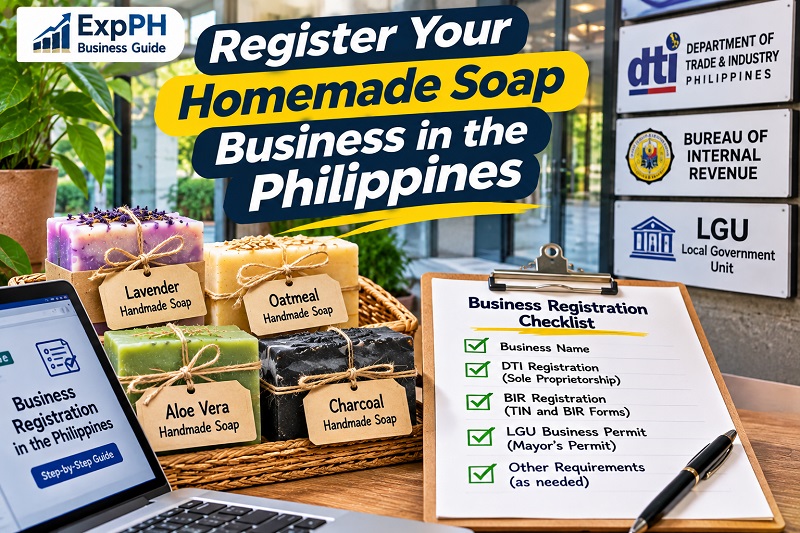
Understand the registration requirements for your business structure and location before starting commercial operations. Check the necessary DTI or SEC registration, local permits, BIR obligations, and applicable FDA requirements to ensure your soap products and business activities comply with Philippine regulations.
Choose Your Business Structure
A sole proprietorship may be suitable for an individual starting a small business. If you plan to operate with partners or establish a corporation, you may need to register through the Securities and Exchange Commission (SEC).
For a sole proprietorship using a business name different from the owner’s true name, DTI business name registration is generally required. DTI registration alone does not replace the permits needed to operate.
You can check the DTI Business Name Registration System for the current application process.
Secure Local Business Permits
Check with your city or municipal Business Permits and Licensing Office (BPLO) for the permits and clearances applicable to your location.
Requirements may include barangay clearance, zoning or location approval, and other local documents. Home-based production does not automatically exempt a business from local requirements.
Register With the BIR
Register your business with the Bureau of Internal Revenue (BIR) and comply with applicable tax, invoicing, and recordkeeping requirements.
The BIR provides online registration services through its Online Registration and Update System (ORUS). Review the current requirements for your business structure and registration circumstances.
Check FDA Requirements Before Selling
This is especially important for homemade soap intended for use on the skin.
Products marketed for cleansing or personal care may fall under the cosmetic regulatory framework, depending on their formulation, composition, intended purpose, and claims. The requirements can include an appropriate FDA License to Operate (LTO) for the establishment and a Cosmetic Product Notification (CPN) for the product.
The FDA’s published procedure for cosmetic product notification identifies licensed cosmetic establishments, including manufacturers, as applicants. Review the FDA procedure for Cosmetic Product Notification and confirm the current requirements directly with the agency.
Do not assume that a small home-based operation or handmade product is automatically exempt from FDA rules. Also, avoid treating a cosmetic notification as permission to make medicinal claims. Medicated or disinfectant soaps may be subject to different requirements.
11. Establish a Consistent Soap Production Process
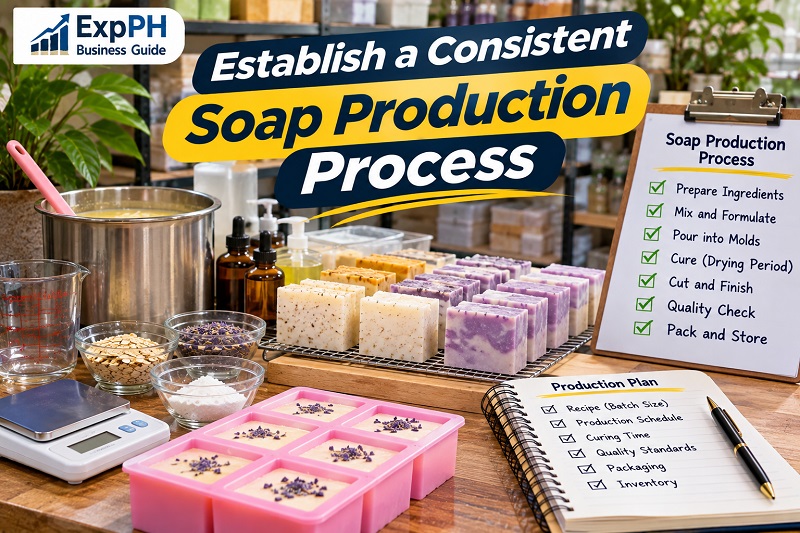
Follow a documented production routine to maintain consistent soap quality and efficient operations. Prepare ingredients and equipment carefully before each batch, use approved formulations, and inspect finished products while recording production issues to improve safety and reliability.
Prepare Before Each Production Batch
Check your ingredient quantities, equipment, workspace, and production records before starting. Confirm that the materials are correctly identified and suitable for the formulation.
For cold-process production, follow appropriate chemical handling procedures and use the required protective equipment. Sodium hydroxide is caustic and can cause serious burns if mishandled.
Follow Your Documented Production Method
Use the same approved formulation and process for each batch. Record any changes and evaluate them before introducing a revised product.
Do not make untested adjustments to ingredients, fragrances, or processing methods simply to reduce costs or speed up production.
Inspect Finished Products
Check each batch for appearance, weight, packaging condition, and other relevant quality specifications. For cold-process soap, follow the appropriate curing requirements before release.
Keep records of rejected products, production issues, and corrective actions. These records can help you identify recurring problems and improve your process.
12. Create an Inventory and Stock Management System
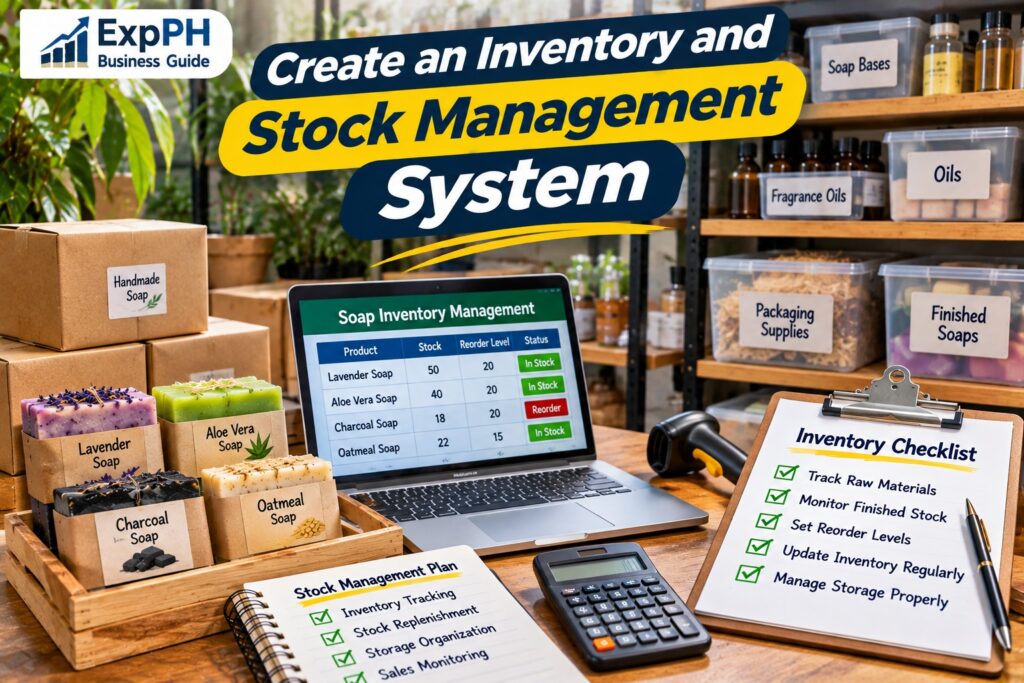
Good inventory management helps prevent shortages, unnecessary purchases, and product waste. It is particularly important for a homemade soap business because ingredients and finished products may have different storage and shelf-life considerations.
Track Ingredients and Supplies
Record the names, quantities, purchase dates, suppliers, costs, and lot numbers of your materials. Monitor stock levels and reorder supplies based on production needs.
Follow supplier storage instructions and use a suitable stock rotation system to avoid keeping materials beyond their recommended period.
Monitor Finished Soap Products
Keep records of product names, batch numbers, production dates, quantities, and sales. Track which varieties sell quickly and which remain in storage longer.
Do not continue producing large quantities of slow-moving products without reviewing customer demand.
Use a Spreadsheet or Inventory Tool
A simple spreadsheet can help you monitor stock, production costs, and sales. As the business expands, you may consider inventory software that supports batch tracking and more detailed reports.
The goal is to maintain accurate records without making your daily operations unnecessarily complicated.

13. Choose Your Payment and Sales Channels
Choose sales channels that make purchasing convenient for your target customers. Explore social media, online marketplaces, and local retail partnerships while providing clear product information, reliable ordering options, and convenient payment methods to manage transactions effectively.
Sell Through Social Media
Facebook, Instagram, and TikTok can help you display product photographs, introduce new varieties, and communicate with potential customers.
Provide clear product details, prices, available quantities, and ordering instructions. Respond professionally to questions and avoid making claims that your products cannot support.
Explore Online Marketplaces
Online marketplaces can give your business access to customers beyond your immediate community. Before joining, review seller fees, product policies, shipping arrangements, and requirements for personal care products.
Make sure your listings accurately describe the products and comply with platform rules and applicable Philippine regulations.
Consider Local Retail Partnerships
You may approach gift shops, boutiques, and other suitable retailers after establishing consistent production and reliable supply.
Prepare product samples, wholesale pricing, and clear business information. Confirm payment arrangements, order quantities, and delivery responsibilities before accepting wholesale orders.
Offer Convenient Payment Options
Depending on your business setup, you may accept cash, bank transfers, and supported e-wallet payments. Keep records of every transaction and reconcile your sales regularly.
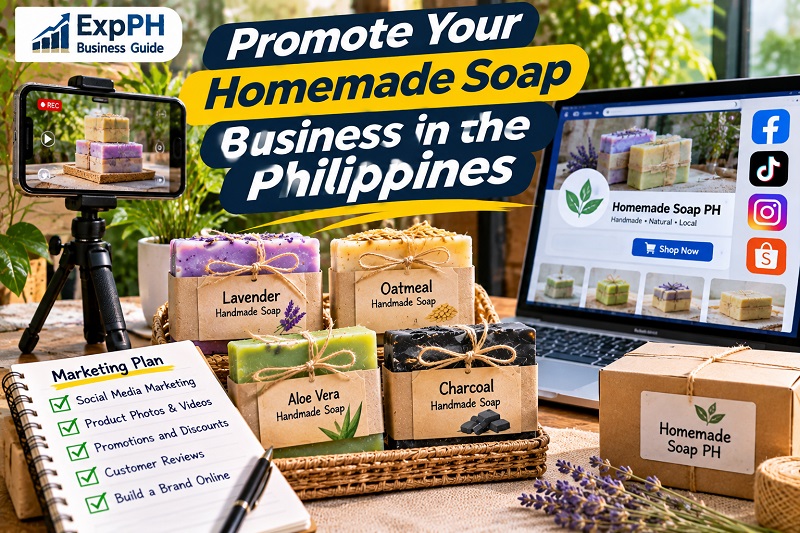
14. Promote Your Homemade Soap Business in the Philippines
Use clear product photographs and useful social media content to introduce your soap varieties and attract potential customers. Build trust through accurate descriptions, honest customer feedback, and reliable service while exploring local partnerships to expand your reach.
Create Product Photography
Use clear photographs that show the soap’s actual appearance, size, packaging, and available varieties. Natural lighting and a clean background can make product images more appealing.
Avoid editing photographs in ways that misrepresent the actual product.
Share Useful Content on Social Media
You can publish content such as:
- Product introductions and available varieties
- Packaging and gift set ideas
- Behind-the-scenes production activities
- Proper soap storage information
- Customer feedback, with permission
- New product announcements and promotions
Educational content can help customers understand your products while giving your brand a more consistent online presence.
Build Customer Trust
Provide accurate descriptions, clear prices, and realistic delivery expectations. Handle complaints professionally and investigate product concerns rather than dismissing them.
Encourage satisfied customers to share honest feedback. Never purchase fake reviews or misrepresent customer experiences.
Develop Local Partnerships
You can explore partnerships with gift shops, event suppliers, and other suitable businesses. Local collaborations may help you reach customers who prefer to purchase from nearby sellers.
Make sure any partnership arrangement has clear pricing, payment, product handling, and delivery terms.
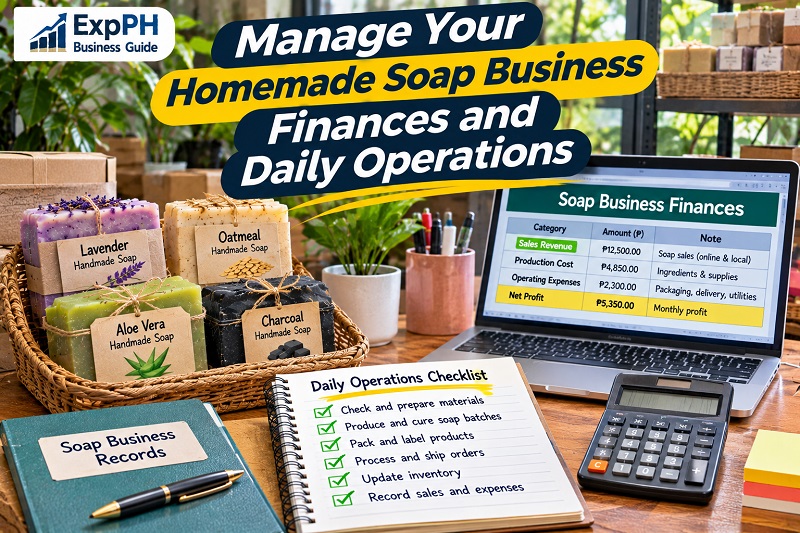
15. Manage Your Homemade Soap Business Finances and Daily Operations
Monitor your business finances by separating personal and business funds and recording all income and expenses. Calculate your break-even point and review monthly performance to understand profitability, control operating costs, and make informed decisions about production and daily operations.
Separate Personal and Business Money
Keep business income and expenses separate from your personal spending. This makes it easier to understand your actual business performance and maintain accurate records.
Use a dedicated bank account or another appropriate system where practical.
Record Sales and Expenses
Track every transaction, including ingredient purchases, packaging, utilities, delivery, advertising, and other operating costs.
Review your records regularly to identify unnecessary spending and understand which products contribute most to your revenue.
Calculate Your Break-Even Point
Your break-even point is the sales level needed to cover your fixed and variable costs.
Understanding this figure can help you set realistic sales targets and evaluate whether your current prices and production volume are sufficient.
Review Business Performance
At the end of each month, review sales, expenses, inventory, customer feedback, and production issues. Use the information to decide which products to maintain, improve, or discontinue.
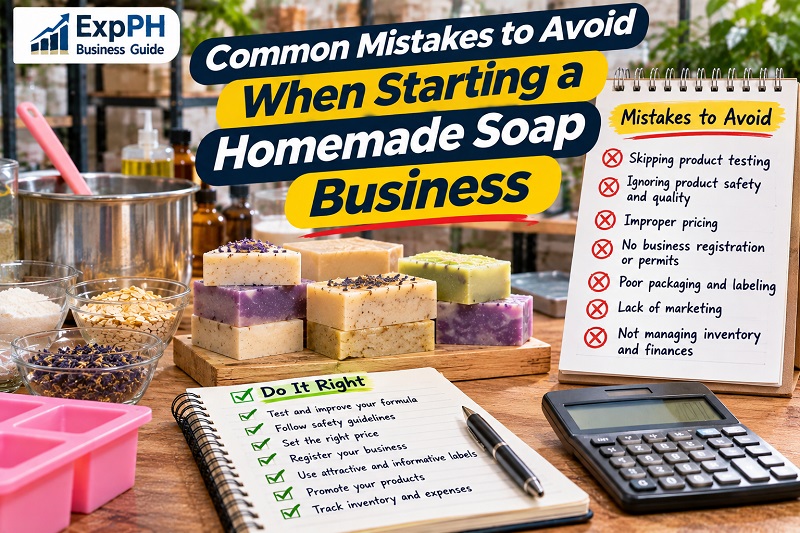
16. Common Mistakes to Avoid When Starting a Homemade Soap Business
Avoid common mistakes that can affect product quality, customer trust, and business finances. Start with manageable product varieties, follow proper safety practices, test your formulations, calculate costs accurately, meet regulatory requirements, and maintain reliable business records.
Producing Too Many Varieties Too Early
Launching too many products can increase ingredient costs and make inventory difficult to manage. Start with a small range and introduce new varieties when customer demand supports them.
Ignoring Ingredient Safety
Incorrect measurements, unsuitable additives, and poor chemical handling can create serious product and workplace risks. Follow reliable formulation guidance and appropriate safety procedures.
Skipping Product Testing
A good-looking soap is not automatically a properly developed product. Establish suitable quality checks and obtain relevant testing or professional advice before commercial distribution.
Setting Prices Without Calculating Costs
Ignoring labor, packaging, overhead, and delivery can result in prices that do not support the business. Calculate your full costs before setting retail or wholesale prices.
Neglecting Business and FDA Requirements
Business registration and product compliance are separate responsibilities. Check both before selling, particularly when your products fall under the cosmetic regulatory framework.
Failing to Keep Records
Without accurate records, it becomes difficult to identify production problems, trace ingredients, monitor stock, or calculate profit. Maintain batch, inventory, sales, and expense records from the beginning.
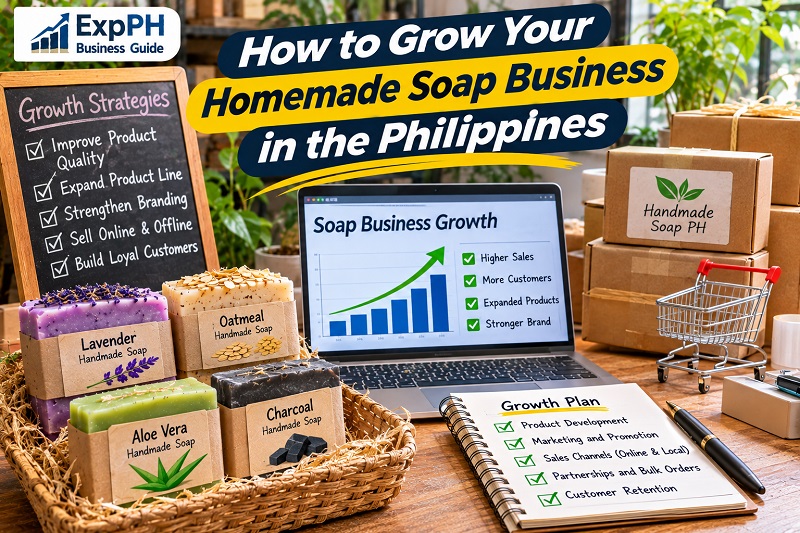
17. How to Grow Your Homemade Soap Business in the Philippines
Expand your business gradually by introducing products that match customer demand and improving your online sales channels. Strengthen retail partnerships and invest in suitable equipment while maintaining product quality, reliable service, and financial stability as your homemade soap business grows.
Introduce New Products Gradually
Use customer feedback and sales records to identify products worth developing. You might explore additional scents, packaging options, or gift sets, provided each new formulation and product meets applicable requirements.
Improve Your Online Selling Strategy
Build a consistent presence on social media and suitable marketplaces. Improve product photographs, descriptions, customer communication, and order management as your customer base increases.
Develop Wholesale Opportunities
Consider supplying suitable retailers, gift shops, or event suppliers. Before accepting larger orders, confirm that your production capacity, pricing, inventory, and compliance arrangements can support them.
Invest in Better Production Equipment
As sales increase, you may need additional molds, weighing equipment, storage, or production facilities. Compare the cost of each investment with the expected improvement in capacity and efficiency.
Build Long-Term Customer Relationships
Reliable products, honest communication, and professional service can encourage repeat purchases. Listen to customer feedback and address concerns promptly.
Expand only when your finances, production systems, and regulatory requirements can support the next stage of the business.
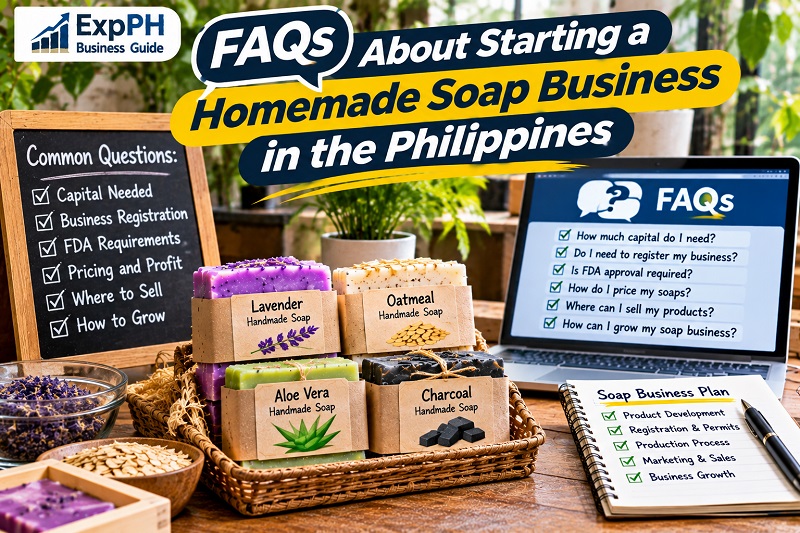
FAQs About Starting a Homemade Soap Business in the Philippines
1. Is a homemade soap business profitable in the Philippines?
Profitability depends on product demand, production costs, selling prices, competition, and customer retention. Careful budgeting and consistent quality can support sustainable business operations.
2. Do I need DTI registration to sell homemade soap?
DTI registration is generally required for sole proprietors using a business name different from their true name. You also need applicable local permits.
3. Do homemade soap products need FDA authorization in the Philippines?
Skin-cleansing soaps may fall under cosmetic regulations. Applicable FDA requirements can include establishment licensing and product notification before commercial distribution.
4. Can I make homemade soap in my house?
Home production may be possible, but you must check local zoning, business permits, workspace suitability, safety practices, and applicable FDA requirements before operating commercially.
5. What ingredients do I need to make homemade soap?
Ingredients depend on your method and formulation. Common materials include soap bases, oils, fats, fragrances, colorants, and sodium hydroxide for traditional soapmaking.
6. How much capital do I need to start a homemade soap business?
Your starting capital depends on equipment, ingredients, packaging, workspace, permits, testing, and inventory. Prepare a budget based on your planned production volume.
7. Can beginners start a homemade soap business?
Yes. Beginners can start by learning a suitable soapmaking method, practicing carefully, understanding ingredient safety, and developing a small product range before commercial production.
8. Where can I sell homemade soap in the Philippines?
You can explore social media, online marketplaces, local gift shops, boutiques, and direct orders. Check platform policies and product regulations before selling.
9. What information should homemade soap labels include?
Label requirements depend on product classification. Check applicable rules for product identity, ingredients, net contents, responsible business details, batch identification, directions, and warnings.
10. How can I grow my homemade soap business?
Expand gradually by improving product quality, monitoring sales, developing suitable varieties, strengthening customer relationships, and increasing production only when demand supports growth.
Conclusion: How to Start a Homemade Soap Business in the Philippines
Starting a homemade soap business in the Philippines requires careful planning, product knowledge, reliable suppliers, and consistent quality management. From choosing your soap-making method and preparing a production area to calculating prices and promoting your products, every step contributes to building a sustainable operation.
Pay particular attention to ingredient safety and regulatory compliance. If your soap is intended for personal care, determine the applicable FDA requirements before placing it on the market. Complete the necessary business registrations, maintain accurate records, and avoid unsupported product claims.
You do not need to launch a large product line immediately. Begin with a manageable selection, understand your customers, and use your sales and production experience to guide future decisions. With responsible preparation and steady improvement, your homemade soap business can develop into a more established local brand.
Ready to take your entrepreneurial journey further? Explore our Complete Guide to Starting a Business in the Philippines for practical advice on business planning, registration, budgeting, product development, daily operations, and growth strategies to help you build a sustainable business.
Test your knowledge with this 10-question homemade soap business quiz
Results


#1. What should you research before starting a homemade soap business?
#2. Which soap-making method uses a prepared soap base?
#3. What chemical is used in cold-process soapmaking?
#4. Why should you prepare a startup budget?
#5. What should you check when choosing ingredient suppliers?
#6. What should you maintain for every soap production batch?
#7. Which agency handles cosmetic product notification in the Philippines?
#8. What should be included when calculating soap production costs?
#9. Which platform can help promote your homemade soap products online?
#10. When should you consider expanding your soap business?
We appreciate your time and participation
Share your homemade soap business experience in the comments. Your insights may help other aspiring entrepreneurs in the ExpPH community!

A Filipino web developer with a background in Computer Engineering. Founder of ExpPH Blog and ExpPH Business Guide, two Philippines-focused platforms covering OFW guidance, business, finance, freelancing, travel, and lifestyle. Passionate about helping Filipinos grow, he creates practical content that educates, empowers, and inspires readers nationwide.