

Starting a business is an exciting step, but before you begin operations, you need to register a business in the Philippines properly. This process makes your business legal and protects you from penalties or closure. It also allows you to operate with confidence, build trust with customers, and access essential services such as banking and official transactions. Completing your registration early helps you avoid delays and gives your business a strong and stable foundation for long term growth.
In this complete guide, you will learn the exact steps, requirements, and practical tips to help you register your business smoothly. Each step is explained in a clear and simple way so beginners can follow without confusion. Whether you are starting a small business or planning to expand, this guide will help you understand the process and prepare the documents needed. By following this guide, you can move forward with clarity and confidence.
Planning to start your own business?
Don’t stop at registration. Learn the full process, costs, and smart strategies in our step-by-step guide: Complete Guide to Starting a Business in the Philippines (Registration, Costs, and Steps 2026).
Table of Contents

Why You Need to Register a Business in the Philippines
Registering your business is not just a legal requirement, it is an important step that supports long term growth and stability. When you properly register a business in the Philippines, you gain access to essential services and build a strong foundation that helps your business operate smoothly and grow with confidence.
Here are the main reasons:
- You can legally operate your business
- You can open a business bank account
- You can issue official receipts
- You gain customer trust and credibility
- You avoid penalties and legal issues
Skipping registration can lead to fines, operational problems, or even closure, which can affect your business reputation and future opportunities.
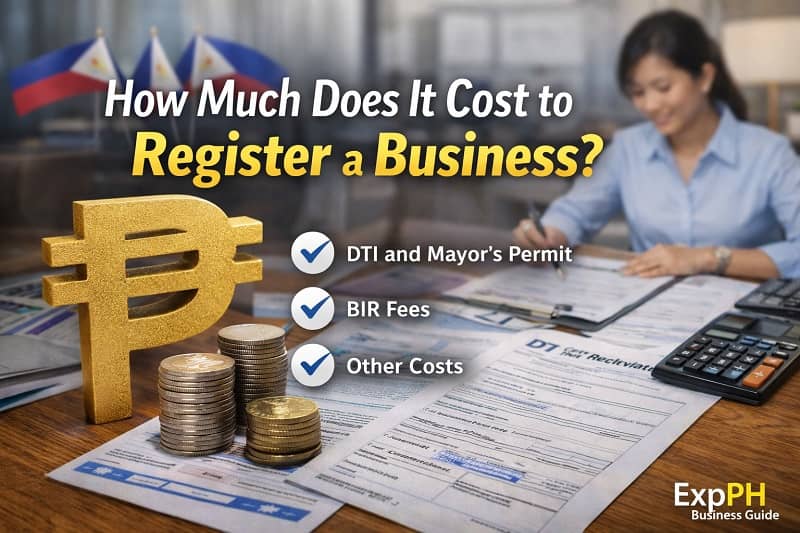
How Much Does It Cost to Register a Business?
The cost to register a business in the Philippines depends on your business type, size, and location. Fees may vary by city or municipality, but understanding the common expenses helps you prepare your budget and avoid unexpected costs during the registration process.
Estimated costs:
- DTI registration: ₱200 to ₱2,000
- Barangay clearance: ₱500 to ₱1,500
- Mayor’s permit: ₱3,000 to ₱10,000+
- BIR registration: around ₱500 to ₱2,000
The total estimated cost ranges from ₱5,000 to ₱15,000 or more, depending on your business setup and local requirements.
8 Steps to Register a Business in the Philippines

Step 1: Choose Your Business Structure
Before you register a business in the Philippines, choose the structure that fits your goals, budget, and level of risk. This decision affects your registration process, legal responsibilities, and future growth. Understanding each option helps you avoid problems and choose the best setup for your business.
Sole Proprietorship
- Owned by one person
- Easy and low cost
- Best for small businesses
Partnership
- Two or more owners
- Shared responsibility and profits
Corporation
- Separate legal entity
- Suitable for larger businesses
- More complex but offers protection
Choosing the right structure will guide your entire registration process and future business decisions.

Step 2: Register Your Business Name
To register a business in the Philippines as a sole proprietor, secure your business name through the Department of Trade and Industry. This step confirms your chosen name is unique and legally recognized. Completing this process early helps prevent delays and ensures your business identity is protected.
Requirements:
- Valid ID
- Proposed business name
- Registration fee
After approval, you will receive your DTI Certificate of Business Name Registration, which you will use for the next steps.

Step 3: Secure Barangay Clearance
After registering your business name, visit the barangay where your business will operate to secure clearance. This confirms that your business complies with local rules and is approved within the community. It is an important requirement before applying for city or municipal permits.
Requirements:
- DTI or SEC registration
- Valid ID
- Proof of location
This step ensures your business is recognized and allowed to operate within your local area.

Step 4: Apply for Mayor’s Permit
Next, apply for a Mayor’s Permit at your city or municipal hall. This permit allows you to legally operate your business within your chosen location. Completing this step ensures compliance with local regulations and helps you avoid penalties or interruptions in your operations.
Requirements:
- Barangay clearance
- DTI or SEC registration
- Lease contract or proof of location
- Valid ID
Securing this permit confirms that your business meets all local government requirements.
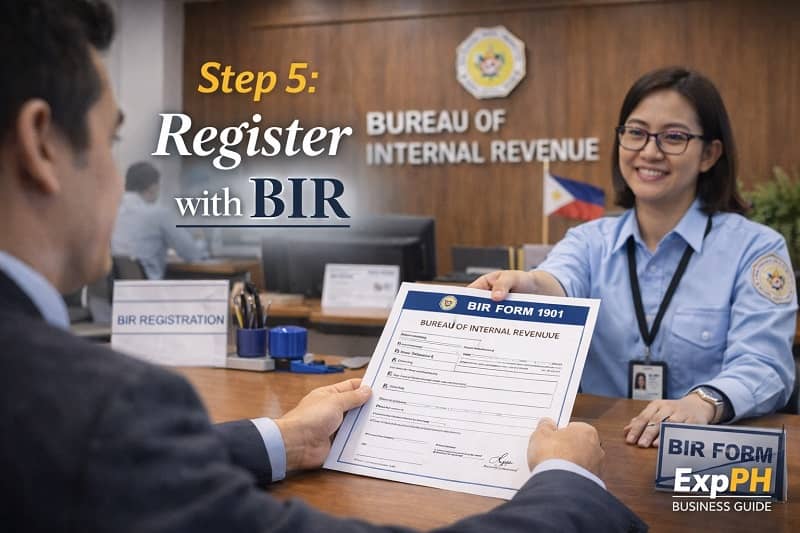
Step 5: Register with BIR
Register with the Bureau of Internal Revenue to formalize your tax responsibilities. This step allows you to issue official receipts, pay taxes correctly, and avoid penalties. It is one of the most important requirements when you register a business in the Philippines.
Requirements:
- DTI or SEC registration
- Mayor’s permit
- Valid ID
- Books of accounts
You will receive:
- BIR Certificate of Registration (Form 2303)
- Authority to print receipts
This step makes your business fully compliant with tax regulations in the Philippines.

Step 6: Register with SSS, PhilHealth, and Pag-IBIG
If you plan to hire employees, you must register your business with SSS, PhilHealth, and Pag-IBIG. This ensures compliance with labor laws and provides proper benefits for your workers. Registering early helps you avoid legal issues and builds trust with your employees.
- SSS
- PhilHealth
- Pag-IBIG
Completing these registrations ensures your employees receive the required government benefits.
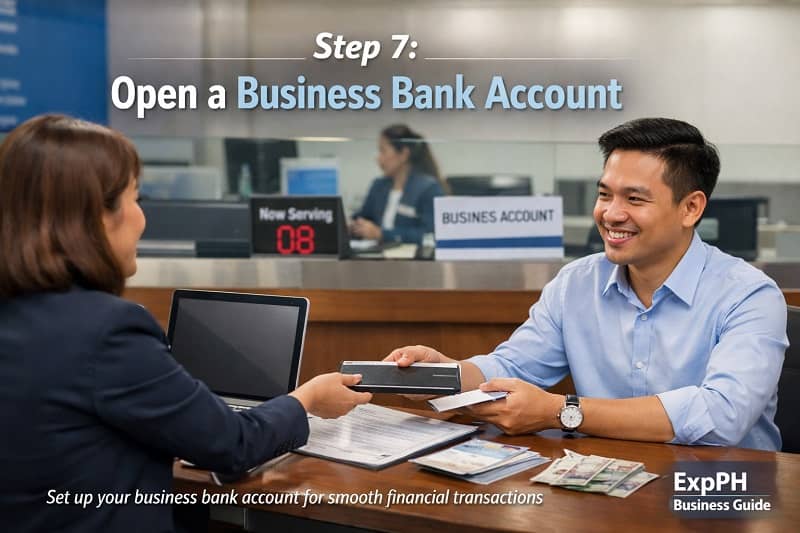
Step 7: Open a Business Bank Account
Opening a business bank account helps separate your personal and business finances. This improves financial tracking, simplifies transactions, and presents a more professional image. It also makes it easier to manage expenses, monitor income, and prepare financial records for reporting.
Benefits:
- Clear financial tracking
- Professional transactions
- Better financial management
Having a dedicated account helps you manage your business finances more effectively.
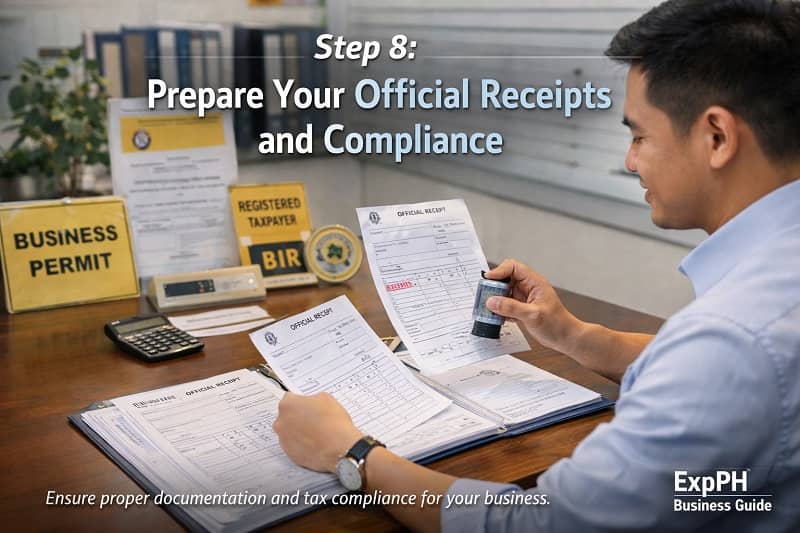
Step 8: Prepare Your Official Receipts and Compliance
Before starting operations, make sure your business meets all compliance requirements. Preparing official receipts, maintaining proper records, and setting up your tax system ensures smooth operations. This step helps you stay organized, avoid penalties, and operate your business legally from the beginning.
You need:
- Printed official receipts (BIR approved)
- Books of accounts
- Proper tax setup
This final step ensures your business is fully prepared for legal and smooth daily operations.
Common Mistakes to Avoid
Many beginners make avoidable mistakes when they try to register a business in the Philippines. These errors can delay approval, increase costs, or create legal issues later. Understanding these common problems helps you prepare better and complete the process smoothly without unnecessary stress.
Avoid these:
- Skipping permits to save money
- Using incomplete documents
- Choosing the wrong business structure
- Not registering with BIR immediately
- Mixing personal and business finances
Fixing these mistakes later can take more time, require extra effort, and increase your overall business expenses.
How Long Does Business Registration Take?
The time required to register a business in the Philippines depends on your location, document readiness, and processing speed of each office. Preparing your requirements in advance can help reduce delays and make the entire process faster and more efficient.
Estimated timeline:
- DTI registration: 1 day
- Barangay clearance: 1 to 3 days
- Mayor’s permit: 3 to 7 days
- BIR registration: 1 to 2 weeks
The full process usually takes around 1 to 3 weeks, depending on how quickly each step is completed.

Final Thoughts on Registering a Business in the Philippines
Learning how to register a business in the Philippines is one of the most important steps in your entrepreneurial journey. While the process may seem complex at first, understanding each requirement and following the correct steps will make it easier to complete. Proper registration gives your business a strong legal foundation and helps you operate with confidence.
Take the process one step at a time, prepare all required documents, and stay organized throughout each stage. Once your business is fully registered, you can shift your focus to growth, marketing, and daily operations. A well registered business allows you to build credibility, manage finances properly, and achieve long term success.
Starting strong with proper registration sets the direction for your business and helps you avoid common problems in the future.
FAQs About Registering a Business in the Philippines
What is the first step to register a business in the Philippines?
The first step is choosing your business structure. This determines your registration process, legal responsibilities, and required documents, making it important to select the most suitable option.
Do I need to register my business name before anything else?
Yes, registering your business name is required for sole proprietors. It ensures your name is legally recognized and allows you to proceed with other registration steps.
Where can I register my business name in the Philippines?
You can register your business name through the Department of Trade and Industry online system. This process confirms your chosen name and provides an official registration certificate.
Is barangay clearance required for all businesses?
Yes, barangay clearance is required for most businesses. It confirms your business complies with local community rules and is necessary before applying for city or municipal permits.
What is the purpose of a Mayor’s Permit?
A Mayor’s Permit allows your business to operate legally within your city or municipality. It ensures compliance with local regulations and is required before starting operations.
Why is BIR registration important for businesses?
BIR registration is important because it allows you to pay taxes properly and issue official receipts. It also helps you avoid penalties and maintain compliance.
How long does it take to register a business in the Philippines?
The process usually takes one to three weeks, depending on your preparation and location. Completing requirements early can help reduce delays and speed up approval.
How much does it cost to register a business in the Philippines?
Costs vary based on business type and location, but most small businesses spend between five thousand and fifteen thousand pesos for complete registration and permits.
Do I need to register with SSS, PhilHealth, and Pag-IBIG?
Yes, if you have employees, you must register with these agencies. This ensures compliance with labor laws and provides required benefits for your workers.
Can I operate a business without registering in the Philippines?
Operating without registration is not allowed and can lead to penalties or closure. Registering your business ensures legal protection and allows you to operate properly.
Ready to go beyond registration and build a lasting business?
Explore our complete guide, A Practical Guide to Building a Sustainable Business in the Philippines, and learn how to manage, grow, and sustain your business for long-term success.
Explore More Business Guides in the Philippines
- Home-Based Business Rules and Requirements in the Philippines
- Business Permits You Must Renew Every Year in the Philippines
- Barangay Clearance, Mayor’s Permit, and BIR Explained Simply
- How to Register a Business Name in the Philippines
HD Quiz Hub!
Test your knowledge and see how ready you are to register your business in the Philippines.
Results


#1. What is the first step in business registration?
#2. Where do you register a business name?
#3. What document comes after DTI registration?
#4. Which permit allows city operation?
#5. Why is BIR registration required?
#6. What do you receive from BIR?
#7. Which agency handles employee benefits?
#8. Why open a business bank account?
#9. What must you prepare before operating?
#10. How long does registration usually take?
Thanks for taking the quiz.
Share your score or experience in the comments and help others learn from your journey.

A Filipino web developer with a background in Computer Engineering. Founder of ExpPH Blog and ExpPH Business Guide, two Philippines-focused platforms covering OFW guidance, business, finance, freelancing, travel, and lifestyle. Passionate about helping Filipinos grow, he creates practical content that educates, empowers, and inspires readers nationwide.