

Starting a cleaning services business in the Philippines can be a practical opportunity for aspiring entrepreneurs who want to provide useful services to households, offices, commercial establishments, and other clients. Clean and well-maintained spaces are important for homes and businesses, creating demand for reliable cleaning providers.
You can begin with a small operation offering basic home cleaning and gradually expand into office cleaning, deep cleaning, move-in and move-out cleaning, or specialized services. However, building a sustainable business requires more than cleaning skills. You also need proper planning, suitable equipment, competitive pricing, customer service, and an understanding of business registration requirements.
This guide explains how to start a Cleaning Services Business in the Philippines, from choosing your services and estimating startup costs to finding customers, managing operations, and growing your business.
Starting a cleaning services business is one practical way to enter the Philippine business market without immediately investing in expensive equipment or facilities. If you are exploring other affordable opportunities, read our guide to Best Low-Capital Businesses to Start in the Philippines for more business ideas that match different budgets, skills, and resources.
Quick Summary (TL;DR)
Starting a cleaning services business in the Philippines can be a practical opportunity if you choose the right services and plan your expenses carefully. Whether you want to serve households, offices, or commercial establishments, understanding your startup costs and operating requirements can help you manage your budget and reduce financial risks.
- Choose your cleaning services: Decide whether to offer residential cleaning, office cleaning, deep cleaning, move-in cleaning, or specialized services.
- Identify your target customers: Research local demand and focus on households, offices, property owners, and commercial establishments.
- Prepare your startup capital: Budget for cleaning equipment, supplies, protective gear, transportation, registration, and marketing.
- Purchase essential equipment: Invest in reliable cleaning tools, appropriate chemicals, storage containers, and protective equipment.
- Follow proper cleaning and safety practices: Learn effective cleaning methods and safe handling, storage, and use of cleaning chemicals.
- Calculate your service prices: Include labor, cleaning supplies, transportation, equipment maintenance, overhead, and desired profit.
- Include business registration costs: Set aside funds for applicable DTI or SEC registration, local permits, BIR registration, and other requirements.
- Plan your operating expenses: Account for employee wages, transportation, utilities, equipment maintenance, and regular supply purchases.
- Start small when possible: Begin with manageable cleaning jobs, build customer relationships, and expand your services as demand increases.
- Track your business finances: Monitor income, expenses, customer bookings, and service performance to understand your actual costs and profitability.
Key takeaway: Starting a cleaning services business requires careful budgeting, suitable equipment, proper registration, and consistent service quality. By starting within your budget, understanding customer needs, and controlling operating costs, you can reduce financial risks and build a sustainable cleaning business.
Ready to start your cleaning services business? Plan your budget, choose your services, and take your first steps toward becoming an entrepreneur today!
Table of Contents

1. Understand the Cleaning Services Business Opportunity in the Philippines
Starting a cleaning services business in the Philippines allows you to serve households, offices, shops, and rental properties that need reliable cleaning assistance. You can begin as a solo operator or with a small team, then gradually expand your equipment, workforce, and services as your customer base grows.
Why Consider Starting a Cleaning Business?
Cleaning is a recurring need in many households and workplaces. Some customers prefer to hire cleaning providers because they have limited time, need specialized assistance, or want regular maintenance for their properties.
Potential opportunities include:
- Households that need scheduled home cleaning.
- Office owners who require regular workplace maintenance.
- Landlords preparing rental properties for new tenants.
- Property managers maintaining shared spaces.
- Small businesses that need cleaning after operating hours.
- Customers requesting deep cleaning before or after moving.
However, demand varies by location, customer budget, competition, and service quality. Research your intended market before investing heavily in equipment or hiring employees.
Start Small and Build Gradually
You do not need to offer every cleaning service immediately. Starting with a manageable service area and a limited list of services can help you control expenses and understand customer expectations.
For example, you could initially serve nearby households and small offices. Once you develop reliable procedures and regular customers, you can consider expanding into larger properties or specialized cleaning work.
2. Choose the Right Cleaning Services to Offer
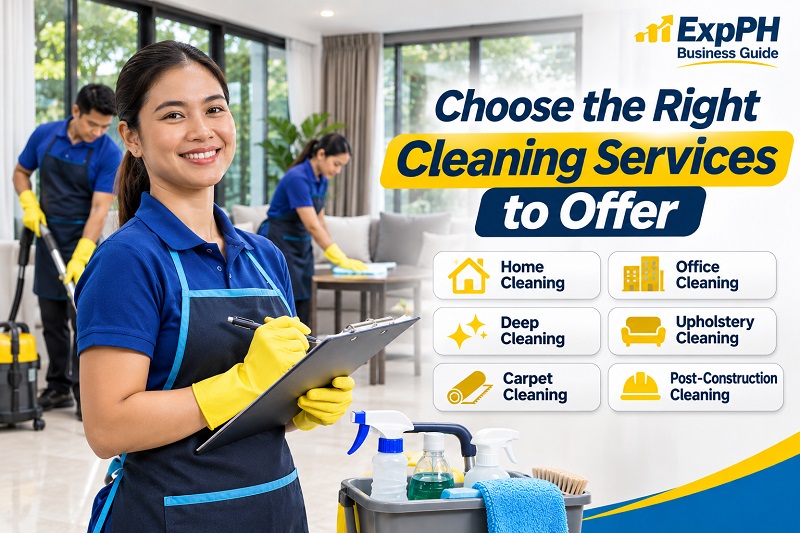
Choosing suitable cleaning services helps you match customer needs with your skills, budget, and available equipment. You can offer residential cleaning, office maintenance, deep cleaning, and move-in or move-out services. As your experience grows, consider specialized cleaning options that require additional tools and training.
Residential Cleaning Services
Residential cleaning focuses on houses, apartments, condominiums, and other living spaces.
Common tasks include:
- Sweeping and mopping floors.
- Dusting furniture and surfaces.
- Cleaning kitchens and bathrooms.
- Washing sinks and fixtures.
- Wiping windows and accessible glass surfaces.
- Removing household waste.
- General room organization.
You can offer one-time cleaning appointments or scheduled weekly and monthly services.
Office and Commercial Cleaning
Office cleaning involves maintaining workplaces and commercial properties. Potential customers include small offices, retail stores, clinics, and other establishments.
Typical services include:
- Cleaning workstations and common areas.
- Sweeping and mopping floors.
- Sanitizing frequently touched surfaces.
- Cleaning restrooms.
- Emptying trash bins.
- Maintaining meeting rooms and reception areas.
Commercial cleaning may provide opportunities for recurring contracts. However, consider the required staffing, schedules, supplies, and service expectations before accepting larger projects.
Deep Cleaning Services
Deep cleaning involves more detailed cleaning than routine maintenance. Depending on the property, it may include cleaning difficult-to-reach areas, removing built-up dirt, and thoroughly cleaning kitchens and bathrooms.
You may charge differently for deep cleaning because it often requires additional labor, materials, and time.
Move-In and Move-Out Cleaning
Property owners, tenants, landlords, and real estate professionals may need cleaning services before a property is occupied or after someone moves out.
This service can include cleaning cabinets, floors, bathrooms, kitchen surfaces, windows, and other accessible areas.
Specialized Cleaning Services
You may eventually offer specialized services such as:
- Upholstery cleaning.
- Carpet cleaning.
- Mattress cleaning.
- Post-renovation cleaning.
- Floor polishing.
- Exterior glass cleaning.
Some specialized services require additional equipment, training, or safety procedures. Do not advertise services that your team is not properly equipped or trained to perform.

3. Identify Your Target Customers and Service Area
Identifying your target customers helps you understand who needs your cleaning services and where to find them. Research local households, offices, small businesses, and property owners. Choose a manageable service area based on customer demand, transportation costs, travel time, and available workers.
Identify Potential Customers
Consider focusing on one or two customer groups when starting.
- Residential customers: Homeowners, apartment residents, and condominium occupants who need regular or occasional cleaning.
- Small businesses: Shops, salons, restaurants, and other establishments that need cleaning support.
- Office administrators: Businesses looking for scheduled cleaning of workstations, floors, restrooms, and common areas.
- Property owners and managers: Landlords and property managers who need turnover cleaning between tenants.
- Real estate professionals: Agents and property sellers who may need properties cleaned before viewing or turnover.
Research Your Local Market
Study the neighborhoods and commercial areas where you plan to operate. Observe existing cleaning providers, their advertised services, customer feedback, and service coverage.
You can also ask potential customers about their cleaning needs, preferred schedules, and expected service arrangements.
Choose a Manageable Service Area
Your initial service area should be practical to reach. Consider traffic, transportation costs, travel time, and the availability of workers.
Serving nearby customers can reduce transportation expenses and help you schedule more appointments efficiently.

4. Determine Your Starting Capital and Equipment Needs
Planning your starting capital helps you estimate the investment needed to launch a cleaning services business. Consider your equipment, cleaning supplies, protective gear, transportation, registration, and working capital. Choose purchases based on your initial services and expand your equipment as customer demand grows.
Estimate Your Initial Expenses
Prepare a list of possible startup costs before purchasing equipment.
| Expense | Examples |
|---|---|
| Cleaning equipment | Vacuum, mop, broom, buckets |
| Cleaning supplies | Detergents, disinfectants, glass cleaners |
| Protective equipment | Gloves, masks, safety footwear |
| Uniforms | Shirts, aprons, identification |
| Transportation | Public transport, fuel, delivery costs |
| Marketing | Flyers, business cards, online promotion |
| Registration | Applicable registration and permit fees |
| Working capital | Wages, utilities, replacement supplies |
These expenses vary depending on your business model and location. Check current supplier prices and local government fees before finalizing your budget.
Sample Starting Budget
The following is an illustrative budget for a small cleaning operation. Actual costs may be lower or higher depending on equipment quality, supplier prices, and the services offered.
| Startup item | Estimated budget |
|---|---|
| Basic cleaning equipment | ₱8,000 |
| Cleaning chemicals and supplies | ₱4,000 |
| Protective equipment | ₱2,000 |
| Uniforms and identification | ₱1,500 |
| Marketing materials | ₱2,000 |
| Transportation allowance | ₱3,000 |
| Registration and permit allowance | ₱5,000 |
| Working capital | ₱5,500 |
| Estimated total | ₱31,000 |
Illustrative planning figures only, not official fees or current supplier quotations.
Avoid Unnecessary Purchases
Do not immediately purchase expensive machines if your initial services only require basic cleaning tools. Start with reliable equipment that matches your actual customer requirements.
You can reinvest part of your earnings into better equipment as your business develops.
5. Purchase the Essential Cleaning Equipment and Supplies
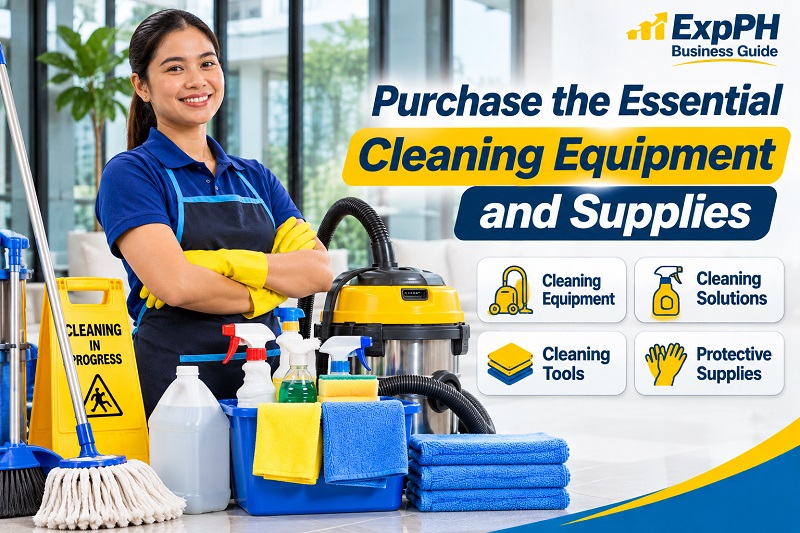
Purchasing suitable cleaning equipment and supplies helps your team handle different cleaning tasks efficiently while maintaining consistent service quality. Choose tools based on the services you offer and provide appropriate cleaning chemicals and protective equipment to support safe and effective cleaning operations.
Basic Cleaning Equipment
Consider purchasing:
- Brooms and dustpans.
- Mops and mop buckets.
- Microfiber cloths.
- Scrub brushes.
- Cleaning sponges.
- Spray bottles.
- Buckets and storage containers.
- Vacuum cleaner, when required.
- Window cleaning tools.
- Wet floor signs.
Cleaning Chemicals and Supplies
Common supplies include:
- General-purpose cleaners.
- Dishwashing liquid.
- Glass cleaners.
- Bathroom cleaners.
- Appropriate disinfectants.
- Degreasers.
- Floor cleaning solutions.
- Trash bags.
Always follow product labels and safety instructions. Never mix cleaning chemicals unless the manufacturer specifically confirms that the combination is safe. In particular, mixing bleach with acids or ammonia can release dangerous gases.
Protective Equipment
Depending on the task, workers may need:
- Reusable or disposable gloves.
- Protective masks or respirators appropriate to the exposure.
- Safety footwear.
- Protective eyewear.
- Aprons or work clothing.
Provide equipment that matches the hazards involved in each job. Train workers on proper use, storage, and replacement.

6. Set Your Cleaning Service Prices
Setting appropriate rates helps you cover operating expenses while maintaining a reasonable profit. Consider labor, cleaning supplies, transportation, equipment maintenance, and other business costs. Choose a pricing method that matches each service and adjust your quotations based on the property’s size and cleaning requirements.
Calculate Your Operating Costs
Include the following when estimating your service costs:
- Cleaner wages or your own labor allowance.
- Cleaning chemicals and consumable supplies.
- Transportation expenses.
- Equipment maintenance.
- Protective equipment.
- Marketing and administrative costs.
- Applicable taxes and other business expenses.
Choose a Pricing Method
You can use different pricing methods depending on your service.
- Per-visit pricing: Charge a fixed amount for a defined cleaning service.
- Hourly pricing: Charge based on the number of hours required.
- Per-square-meter pricing: Useful for certain commercial or larger-property cleaning jobs, provided the scope is clearly defined.
- Contract pricing: Agree on a recurring fee for scheduled cleaning services.
Before quoting, ask about the property size, number of rooms, cleaning condition, requested tasks, location, and schedule.
Example of a Cleaning Service Cost Calculation
Suppose a small residential cleaning appointment has the following estimated expenses:
| Cost item | Amount |
|---|---|
| Labor | ₱600 |
| Cleaning supplies | ₱150 |
| Transportation | ₱100 |
| Equipment and overhead allowance | ₱100 |
| Total estimated cost | ₱950 |
If you charge ₱1,250, the estimated amount remaining before other applicable taxes and expenses is ₱300.
This is an example, not a recommended market rate. Your actual price should reflect the job’s requirements and local customer expectations.
7. Develop Proper Cleaning Procedures and Safety Practices
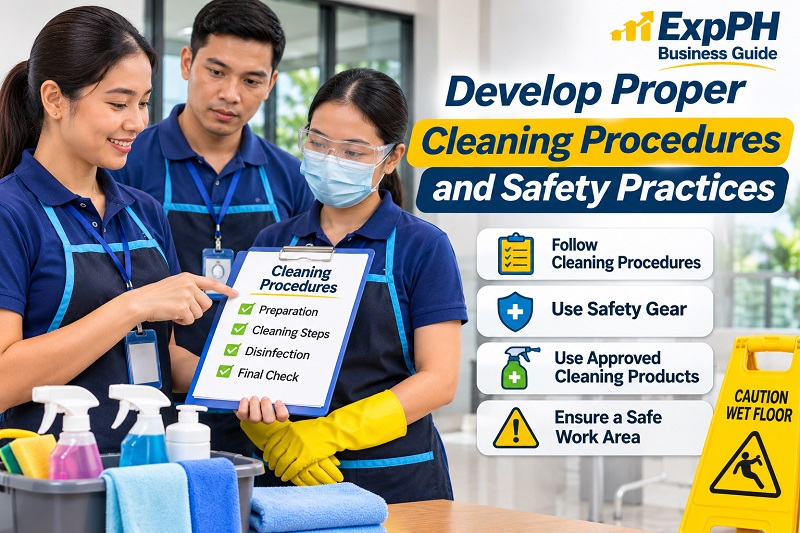
Developing clear cleaning procedures helps your team deliver consistent results while reducing safety risks. Establish standard checklists for each service and train workers to handle cleaning chemicals properly. Use appropriate protective equipment and safe work practices to protect employees, customers, and the properties you service.
Create a Standard Cleaning Checklist
A checklist helps cleaners follow consistent procedures and reduces the possibility of missed tasks.
For residential cleaning, a checklist might include:
- Inspect the area before starting.
- Remove waste and loose debris.
- Dust accessible surfaces.
- Clean kitchen surfaces and fixtures.
- Clean bathrooms using suitable products.
- Sweep and mop floors.
- Check completed areas.
- Return equipment and supplies to storage.
Adjust the checklist based on the customer’s requested service.
Handle Cleaning Chemicals Properly
Read product labels and safety information before using cleaning chemicals. Store products in their original or properly labeled containers, away from food, children, and unauthorized users.
Provide appropriate ventilation and protective equipment. Never transfer chemicals into drinking containers or leave them in unlabeled bottles.
Protect Workers and Customers
Use wet floor signs when cleaning public or shared areas. Keep electrical equipment away from water and inspect tools before use.
For workplace safety guidance, consult the Philippine Department of Labor and Employment (DOLE) and its occupational safety and health resources: DOLE official website.
8. Register Your Cleaning Services Business in the Philippines
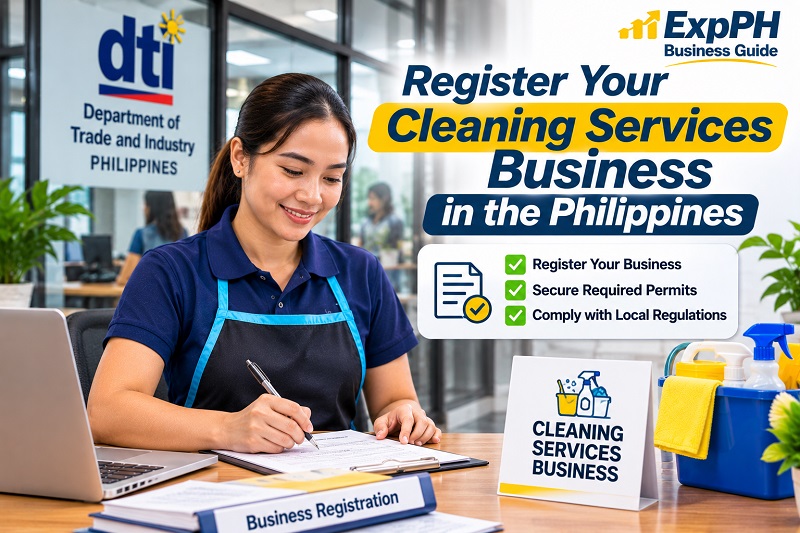
Understanding registration requirements helps you establish your cleaning services business and prepare for lawful operations. Choose a suitable business structure and complete the necessary registrations. Check local permits, BIR tax obligations, and applicable employee requirements to ensure your business meets Philippine regulations.
Choose Your Business Structure
Common options include:
- Sole proprietorship: An individual owns and manages the business. Business name registration is generally handled through the Department of Trade and Industry (DTI).
- Partnership: Two or more individuals operate a business under a partnership arrangement. Registration requirements involve the Securities and Exchange Commission (SEC).
- Corporation: A separate legal entity established under applicable corporate rules, with registration through the SEC.
- Cooperative: A member-owned organization that follows cooperative registration and regulatory requirements.
Choose a structure based on ownership, liability considerations, capital, and long-term plans. Professional advice can help you assess the most suitable option.
Register Your Business Name or Entity
For sole proprietors, the DTI provides the Business Name Registration System:
DTI Business Name Registration System
For partnerships and corporations, consult the SEC:
SEC official website
Secure Applicable Local Permits
Depending on your location and business setup, you may need to obtain:
- Barangay clearance.
- Mayor’s permit or business permit.
- Zoning or location clearance, when applicable.
- Fire safety inspection clearance, when required.
- Other local requirements based on your activities and premises.
Visit your city or municipal Business Permits and Licensing Office (BPLO) to confirm the current requirements, fees, and application process.
Register With the BIR
Businesses must comply with applicable Bureau of Internal Revenue (BIR) registration and tax requirements. These may include registration of the business, proper invoicing, books of accounts, and tax filing obligations.
Review the latest requirements through the BIR official website.
Understand Employer Requirements
If you hire employees, additional obligations may apply, including labor standards, payroll compliance, and employer registration with the relevant government agencies.
Depending on your employment arrangements, check the requirements of:
- Social Security System (SSS).
- PhilHealth.
- Pag-IBIG Fund.
- DOLE.
Confirm the current rules before hiring workers.
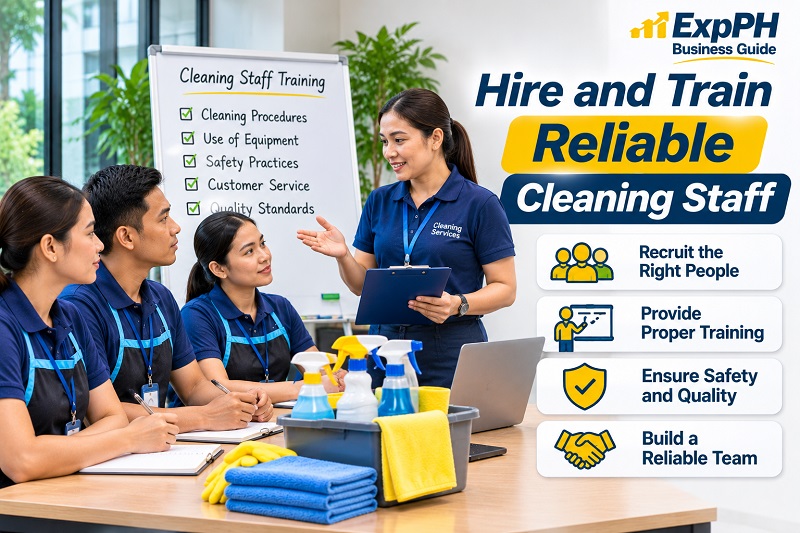
9. Hire and Train Reliable Cleaning Staff
Hiring dependable cleaners helps you manage more appointments and maintain consistent service quality. Look for workers with good communication skills and attention to detail. Provide practical training on cleaning techniques, equipment use, chemical safety, and customer service while establishing clear schedules and responsibilities.
Identify the Skills You Need
Look for workers who demonstrate:
- Attention to detail.
- Reliability and punctuality.
- Good communication.
- Ability to follow instructions.
- Careful handling of customer property.
- Willingness to follow safety procedures.
Previous cleaning experience can be helpful, but proper training and supervision are also important.
Provide Practical Training
Train your team on equipment use, cleaning techniques, chemical safety, customer interaction, and job checklists.
Explain how to handle delicate surfaces and materials. Different surfaces may require different products and cleaning methods.
Establish Clear Work Responsibilities
Create schedules and assign tasks before each appointment. Make sure employees understand their responsibilities, expected work hours, compensation arrangements, and reporting procedures.
If you are starting alone, document your own procedures so they can be used when you eventually hire additional workers.
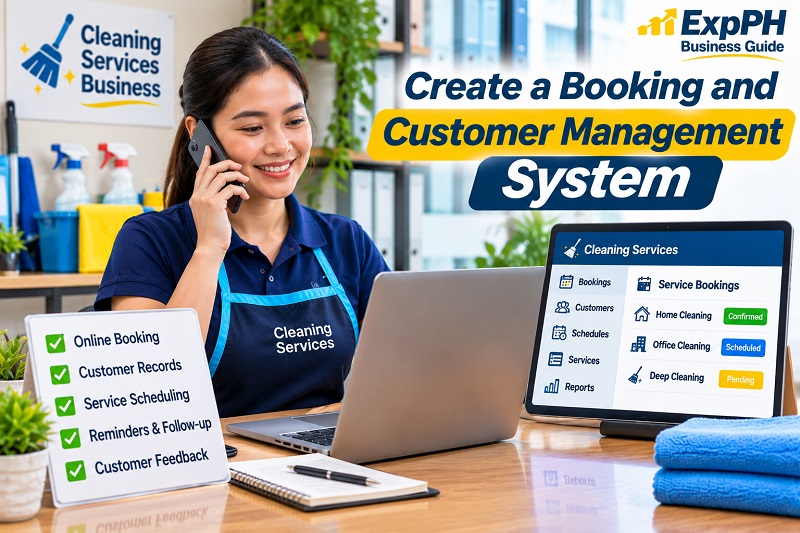
10. Create a Booking and Customer Management System
A well-organized appointment process helps you manage customer requests and avoid scheduling conflicts. Keep accurate records of contact details, property information, requested services, and payment status. Use simple digital tools to confirm bookings, communicate service arrangements, and provide a reliable experience for every customer.
Collect Important Customer Information
When receiving a booking, record:
- Customer name and contact details.
- Property address.
- Type of cleaning service.
- Property size or number of rooms.
- Requested date and time.
- Special instructions.
- Quoted price.
- Payment status.
Ask customers to confirm the agreed service scope and price before the appointment.
Use Digital Tools to Stay Organized
You can use spreadsheets to monitor appointments, expenses, customer details, and employee schedules. Calendar applications can help prevent booking conflicts.
As the business grows, consider customer management or scheduling software that supports reminders, job assignments, invoices, and payment tracking.
Confirm Appointments and Service Details
Send customers a confirmation containing the appointment date, arrival window, agreed services, price, and any preparation instructions.
After completing the job, request feedback and ask whether they would like to schedule another appointment.

11. Promote Your Cleaning Services Business
Using affordable marketing methods helps potential customers discover your services and learn what your business offers. Build trust by sharing useful cleaning tips, service information, customer feedback, and promotional offers through social media, local community groups, and referrals.
Create a Facebook Business Page
Facebook can help you reach households and small businesses in your service area. Include your business name, contact details, service coverage, operating hours, and list of cleaning services.
Post useful content such as:
- Cleaning service descriptions.
- Before-and-after photos, with customer permission.
- Cleaning tips.
- Service packages.
- Customer testimonials, with permission.
- Booking instructions.
Use Local Community Groups
Local Facebook groups and community pages can help you reach potential customers in nearby neighborhoods.
Follow each group’s rules and avoid repeatedly posting unsolicited advertisements. Share clear information about your services and respond professionally to inquiries.
Build a Professional Online Presence
As your business grows, consider creating a simple website with service details, pricing guidelines, contact information, customer reviews, and a booking form.
A professional online presence makes it easier for customers to learn about your services before contacting you.
Encourage Customer Referrals
Satisfied customers can recommend your services to relatives, friends, neighbors, and colleagues.
You may offer a reasonable referral incentive, provided the cost is included in your marketing budget and the arrangement remains transparent.

12. Offer Packages and Recurring Cleaning Contracts
Offering clearly defined service packages helps customers compare cleaning options and understand the value of each service. Create flexible arrangements based on property size and cleaning frequency. Recurring contracts can encourage repeat bookings while providing more predictable income for your business.
Sample Cleaning Packages
| Package | Possible inclusions |
|---|---|
| Basic Home Cleaning | Sweeping, mopping, dusting |
| Standard Home Cleaning | Basic cleaning plus kitchen and bathroom |
| Deep Cleaning | More detailed cleaning of selected areas |
| Office Cleaning | Workstations, floors, restrooms |
| Move-Out Cleaning | Detailed cleaning before property turnover |
Clearly explain what each package includes and excludes. Specify whether supplies, transportation, and additional tasks are included in the quoted price.
Build Recurring Customer Relationships
You can offer weekly, twice-monthly, or monthly cleaning arrangements based on customer needs.
Recurring agreements should specify the cleaning schedule, service scope, payment terms, cancellation policy, and responsibilities of both parties.
Do not accept more contracts than your team can reliably handle.

13. Manage Your Business Finances and Daily Operations
Keeping accurate financial records helps you monitor income and control operating expenses. Track customer payments, employee wages, equipment purchases, and daily costs. Regularly review your business performance and service profitability to identify areas for improvement and make informed decisions about future operations and growth.
Separate Personal and Business Money
Use a dedicated business account or clearly separated financial records. Avoid mixing personal purchases with business expenses.
This makes it easier to track income, monitor spending, and prepare financial reports.
Record Every Transaction
Track important financial information, including:
- Customer payments.
- Employee wages.
- Cleaning supplies.
- Transportation costs.
- Equipment purchases.
- Marketing expenses.
- Registration and permit costs.
- Maintenance expenses.
Review your records regularly to identify unnecessary spending and services that may need price adjustments.
Monitor Your Business Performance
Measure simple indicators such as:
- Number of completed cleaning appointments.
- Monthly revenue.
- Total operating expenses.
- Profit per service.
- Repeat customer rate.
- Customer complaints.
- Employee productivity.
These figures can help you make better decisions about pricing, staffing, and service expansion.
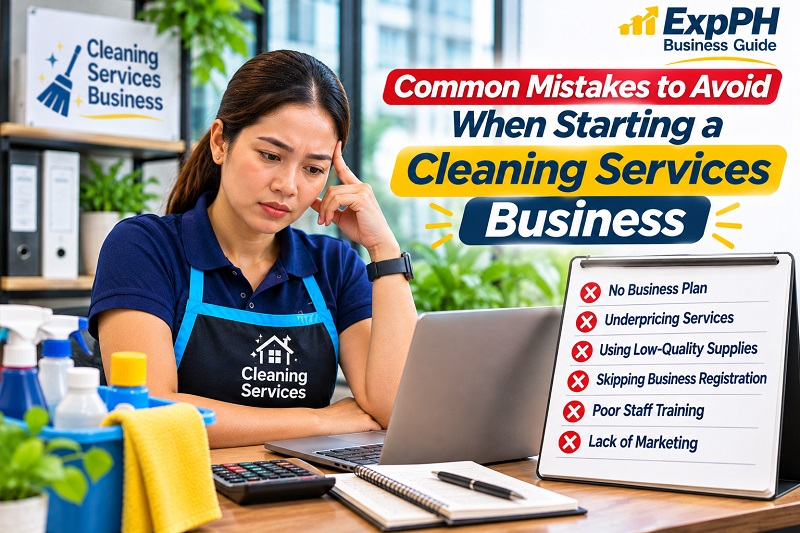
14. Common Mistakes to Avoid When Starting a Cleaning Services Business
Avoiding common business mistakes helps you control expenses and maintain reliable cleaning services. Pay attention to pricing, equipment purchases, workplace safety, and customer expectations. Establish clear service agreements and maintain accurate financial records to prevent unnecessary losses and support better business decisions as your operation develops.
Offering Too Many Services Immediately
Specialized cleaning services may require additional equipment and training. Start with services you can perform properly before expanding your offerings.
Setting Prices Too Low
Low prices may attract initial customers, but they can create financial problems if they do not cover labor, transportation, supplies, and overhead.
Calculate your costs before preparing quotations.
Buying Expensive Equipment Too Early
Purchasing equipment without confirmed demand can tie up your starting capital. Buy according to the services you actually provide and upgrade when necessary.
Ignoring Cleaning Safety
Incorrect chemical use, inadequate protective equipment, and poor cleaning procedures can create risks for workers and customers.
Provide clear instructions and follow product safety guidance.
Failing to Confirm the Service Scope
Misunderstandings can occur when customers expect tasks that were not included in the original quotation.
Provide a written list of included services, exclusions, and additional charges before beginning work.
Neglecting Customer Service
Late arrivals, poor communication, and inconsistent results can damage your reputation. Respond promptly, respect customer property, and address complaints professionally.
Failing to Maintain Financial Records
Without accurate records, you may struggle to determine whether your business is profitable. Record income and expenses consistently, even when transactions are small.
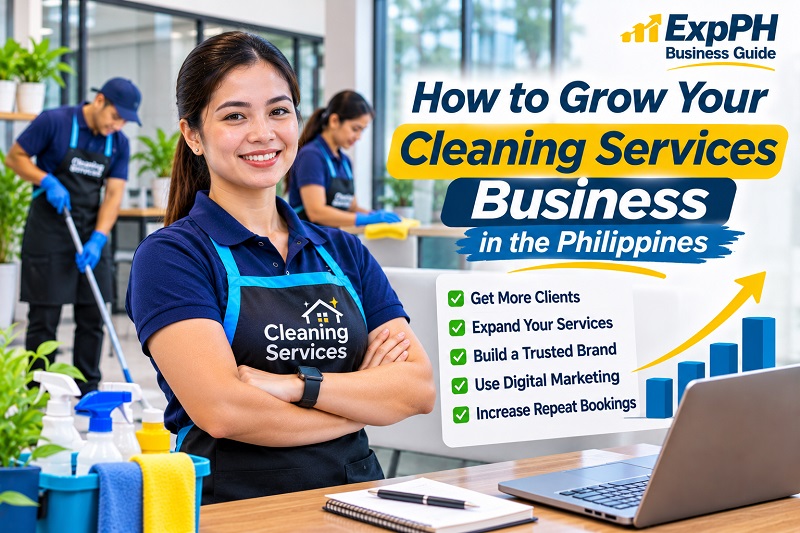
15. How to Grow Your Cleaning Services Business in the Philippines
Building on your existing customer base creates opportunities to expand your cleaning services and reach new markets. Introduce specialized services gradually, develop commercial partnerships, and invest in suitable equipment. Strengthen your online presence while maintaining consistent service quality to encourage repeat bookings and long-term business growth.
Expand Your Service Offerings Gradually
You may add specialized cleaning services such as carpet cleaning, upholstery cleaning, floor maintenance, or post-construction cleaning.
Before introducing a new service, assess its equipment requirements, training needs, safety procedures, and expected profitability.
Build Relationships With Commercial Clients
Approach offices, property managers, rental operators, and small commercial establishments that may need recurring cleaning.
Prepare a professional service proposal explaining your scope of work, schedule, pricing, and quality standards.
Invest in Better Equipment
As revenue grows, consider purchasing equipment that improves productivity and supports additional services.
Compare the purchase price, maintenance requirements, expected usage, and potential savings before investing.
Strengthen Your Online Marketing
Update your business page and website with accurate service information, recent customer feedback, and clear booking instructions.
You can also explore local search visibility so customers looking for cleaning services in your area can discover your business.
Maintain Consistent Service Quality
Growth is sustainable only when you can maintain reliable results. Review customer feedback, inspect completed jobs, train employees, and improve procedures when problems occur.
A strong reputation can support repeat bookings and referrals over time.

FAQs About Starting a Cleaning Services Business in the Philippines
1. How much capital do I need to start a cleaning services business in the Philippines?
You can start with a modest budget for basic equipment, cleaning supplies, protective gear, transportation, registration, marketing, and working capital, depending on services.
2. Do I need to register my cleaning services business?
Yes. Requirements depend on your structure and location. You may need business registration, barangay clearance, a mayor’s permit, and BIR registration before operating your cleaning service.
3. What cleaning services can I offer when starting?
You can offer residential cleaning, office cleaning, bathroom cleaning, kitchen cleaning, deep cleaning, move-in cleaning, and move-out cleaning based on your equipment and experience.
4. What equipment do I need for a cleaning services business?
Basic equipment includes brooms, mops, buckets, microfiber cloths, scrub brushes, spray bottles, vacuum cleaners, cleaning solutions, gloves, and other appropriate protective equipment.
5. How do I find customers for my cleaning services business?
Promote your services through Facebook, local community groups, referrals, business networks, and a professional website. Share clear service details and customer testimonials with permission.
6. How should I price my cleaning services?
Calculate labor, cleaning supplies, transportation, equipment maintenance, overhead, and other expenses. Set prices that cover your costs while remaining competitive within your local market.
7. Can I start a cleaning business without hiring employees?
Yes. You can initially operate alone, handle customer bookings, and complete cleaning appointments yourself. Hire additional workers when customer demand and available finances justify expansion.
8. Is office cleaning more profitable than residential cleaning?
Profitability depends on service prices, operating expenses, contract terms, labor requirements, and customer demand. Compare both markets before choosing your primary cleaning business specialization.
9. How can I make my cleaning services business stand out?
Provide reliable service, transparent pricing, trained cleaners, proper equipment, punctual appointments, and professional communication. Consistent customer experiences can encourage repeat bookings and referrals.
10. How can I expand my cleaning services business?
Expand gradually by accepting recurring contracts, hiring trained employees, purchasing suitable equipment, introducing specialized services, and strengthening your marketing while maintaining consistent service quality.
Conclusion
Starting a Cleaning Services Business in the Philippines can be a practical opportunity for entrepreneurs who are willing to provide dependable service and manage their operations carefully. You can begin with basic residential cleaning, develop a reliable customer base, and gradually expand into office cleaning, deep cleaning, and other services.
Focus on understanding your market, preparing a realistic startup budget, purchasing suitable equipment, setting profitable prices, and following proper safety practices. Register your business and comply with applicable local and national requirements before operating.
Most importantly, build your reputation through consistent cleaning quality, honest communication, and professional customer service. With careful planning and responsible financial management, your cleaning services business can develop into a sustainable operation.
Starting a cleaning services business requires careful planning, proper registration, and effective financial management. If you want to explore the complete process of launching and managing a business in the country, read our Complete Guide to Starting a Business in the Philippines for practical guidance, essential requirements, and helpful tips for aspiring Filipino entrepreneurs.
Test your knowledge of starting and managing a cleaning services business in the Philippines
Results


#1. What is a practical way to start a cleaning services business?
#2. Which customers can benefit from cleaning services?
#3. Which expense should be included in your startup budget?
#4. Which equipment is essential for basic cleaning services?
#5. What should determine your cleaning service prices?
#6. What should you do before using cleaning chemicals?
#7. Which agency handles business name registration for sole proprietors?
#8. What information should you record when accepting bookings?
#9. What is a benefit of offering recurring cleaning contracts?
#10. What is a sensible way to grow your cleaning business?
We appreciate your time and interest in learning about the cleaning services industry
Share your experience in the comments. We’d love to hear what you learned!

A Filipino web developer with a background in Computer Engineering. Founder of ExpPH Blog and ExpPH Business Guide, two Philippines-focused platforms covering OFW guidance, business, finance, freelancing, travel, and lifestyle. Passionate about helping Filipinos grow, he creates practical content that educates, empowers, and inspires readers nationwide.