

Starting a business from home is one of the most practical ways to earn in the Philippines today. It allows flexibility, lower costs, and easier management compared to traditional setups. Whether you are an OFW planning to return, a freelancer expanding your services, or someone building an extra income stream, understanding home-based business registration Philippines is important. Proper registration ensures your business is legal, builds credibility with customers, and prepares your venture for long term growth and stability.
This guide explains the exact steps, requirements, and practical tips you need to follow when registering a home-based business in the Philippines. It is designed to help beginners understand the process clearly while avoiding common mistakes that can cause delays or penalties. By following this guide, you can complete your registration more efficiently, stay compliant with government rules, and build a strong foundation for a sustainable and scalable home-based business.
Before focusing on home-based setups,
read our full guide on How to Register a Business in the Philippines to understand all requirements, steps, and legal processes for starting any type of business.
Table of Contents

Why You Should Register Your Home-Based Business
Many home-based businesses in the Philippines begin informally, especially among freelancers and online sellers testing their ideas. However, completing your home-based business registration Philippines provides clear legal protection, strengthens your credibility, and creates a solid foundation that supports long term growth and sustainable income opportunities.
- You can legally operate and avoid penalties
- You can open a business bank account
- You gain customer trust and credibility
- You can apply for loans or funding
- You can issue official receipts
Overall, completing your home-based business registration Philippines is more than a legal requirement. It positions your business for stability, improves financial access, and builds stronger trust with customers, partners, and institutions that support business growth in the Philippines.

Types of Home-Based Businesses You Can Register
Before starting the home-based business registration Philippines process, you need to identify your business structure. Your choice affects requirements, costs, and legal responsibilities. Understanding each option helps you register correctly and avoid delays, especially if you plan to grow or add partners later.
Sole Proprietorship
- Best for freelancers, online sellers, and small service providers
- Owned and managed by one individual
- Easiest and fastest business structure to register
A sole proprietorship is ideal for beginners who want a simple and low-cost way to start. It offers full control and fewer requirements, making it the most practical choice for most home-based entrepreneurs in the Philippines.
Partnership or Corporation
- Suitable for businesses with multiple owners or investors
- Requires more documents and formal agreements
- Registered with the Securities and Exchange Commission
Partnerships and corporations are better for larger or shared businesses. They provide structured ownership and legal protection but involve more complex registration steps, higher costs, and ongoing compliance requirements compared to sole proprietorships.
For most home-based entrepreneurs, especially beginners, choosing a sole proprietorship remains the most practical and efficient option when completing home-based business registration Philippines.
Step-by-Step Guide to Home-Based Business Registration in the Philippines
Understanding the full home-based business registration Philippines process helps you avoid delays and costly mistakes. Each step builds on the previous one, so preparation is important. Follow this six-step guide to ensure your business becomes fully legal, compliant, and ready for long term operations.

Step 1: Register Your Business Name (DTI)
If you plan to operate as a sole proprietor, your first step is registering your business name with the Department of Trade and Industry. This secures your business identity and allows you to operate legally under a chosen name.
What You Need:
- Valid ID
- Proposed business name
- Payment for registration fee
How to Register:
You can register online through the official DTI Business Name Registration System:
https://bnrs.dti.gov.ph
Important Tips:
- Choose a unique and simple business name
- Avoid restricted or misleading words
- Ensure the name reflects your business activity
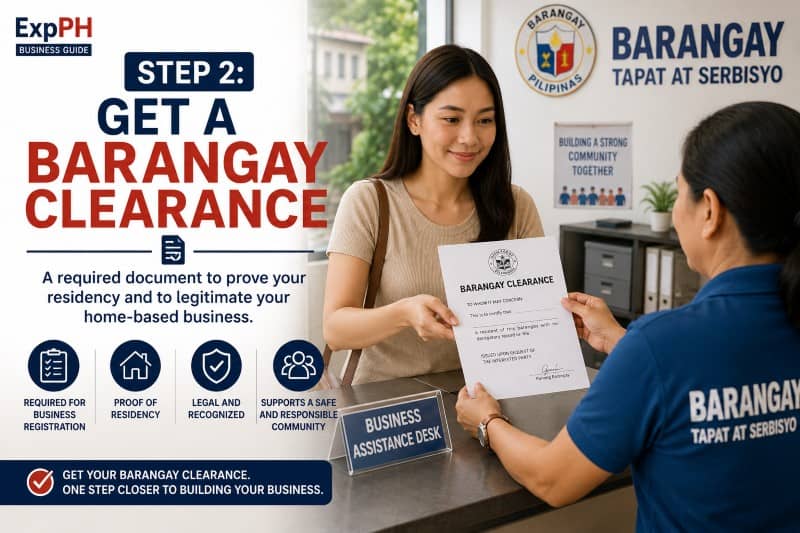
Step 2: Get a Barangay Clearance
After securing your business name, you need a barangay clearance to confirm your business is allowed in your residential area. This is required even for home-based businesses and is usually a quick process handled at your local barangay office.
Requirements:
- DTI Certificate
- Valid ID
- Proof of residence
What to Expect:
- Minimal processing fee
- Same day release in most cases
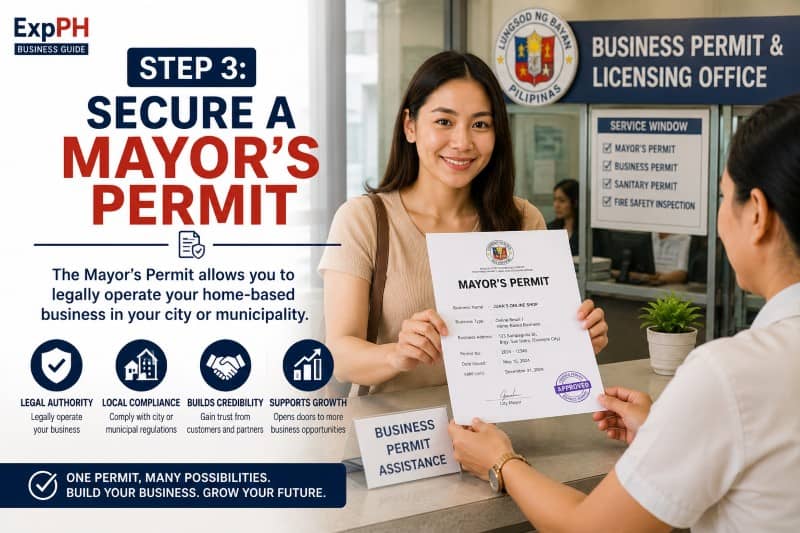
Step 3: Secure a Mayor’s Permit
Next, apply for a business permit from your local government unit. This step confirms that your business complies with local regulations. Requirements and procedures may vary depending on your city or municipality, so always check with your local city hall.
Requirements:
- DTI Certificate
- Barangay Clearance
- Valid ID
- Lease contract or proof of home ownership
Notes:
- Some areas may conduct home inspections
- Zoning rules may affect approval
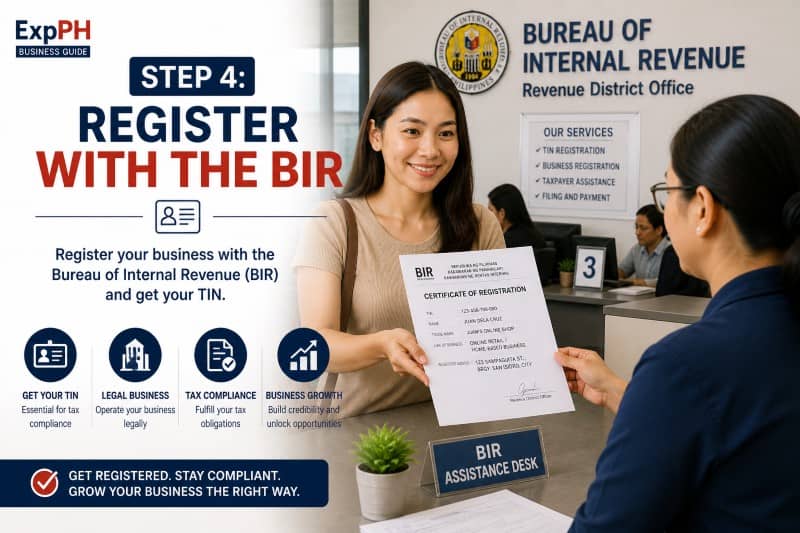
Step 4: Register with the BIR
Registering with the Bureau of Internal Revenue is essential for tax compliance. This step allows you to operate legally as a taxpayer and issue official receipts. It is one of the most important parts of home-based business registration Philippines.
Requirements:
- DTI Certificate
- Valid ID
- Mayor’s Permit
- Barangay Clearance
What You Will Get:
- Certificate of Registration (Form 2303)
- Authority to print receipts
- Books of accounts
You can visit the official BIR website for guidance:
https://www.bir.gov.ph
Important Reminder:
- File taxes regularly even with low or no income
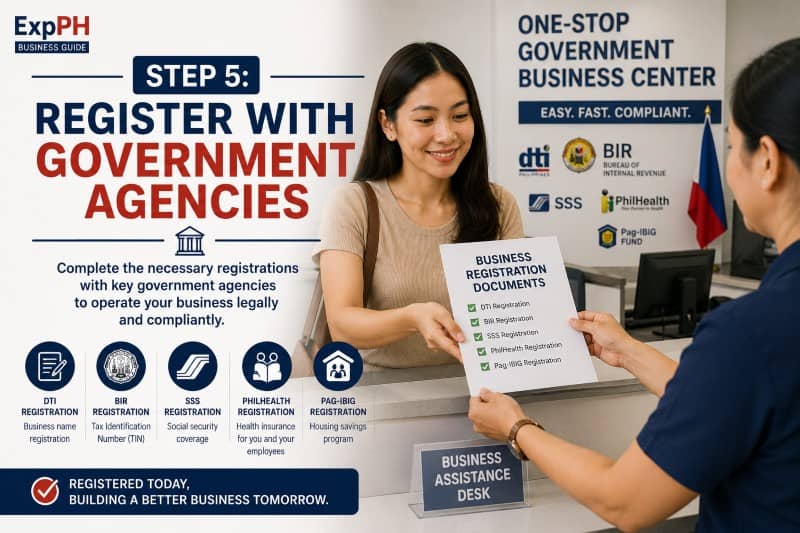
Step 5: Register with Government Agencies
If you plan to hire employees, you must register with the required government agencies to comply with labor and social protection laws. Even if you are self-employed, voluntary registration provides access to benefits and helps strengthen your long term financial security as a business owner.
Required Agencies:
- Social Security System
Official website: https://www.sss.gov.ph - PhilHealth
Official website: https://www.philhealth.gov.ph - Pag-IBIG Fund
Official website: https://www.pagibigfund.gov.ph
Registering with these agencies ensures compliance with government requirements while giving you and your employees access to healthcare, housing loans, and social security benefits that support long term financial stability.

Step 6: Set Up Your Business Records and Compliance
After completing registration, organize your business documents and ensure ongoing compliance. This includes maintaining proper records, tracking income and expenses, and following tax deadlines. Staying organized helps you avoid penalties and prepares your business for future growth.
What to Prepare:
- Books of accounts
- Official receipts and invoices
- Tax filing schedule
Best Practices:
- Keep both digital and printed records
- Monitor deadlines and renewals
- Review local compliance requirements regularly
Completing these six steps ensures your home-based business registration Philippines is fully compliant and ready for long term success.
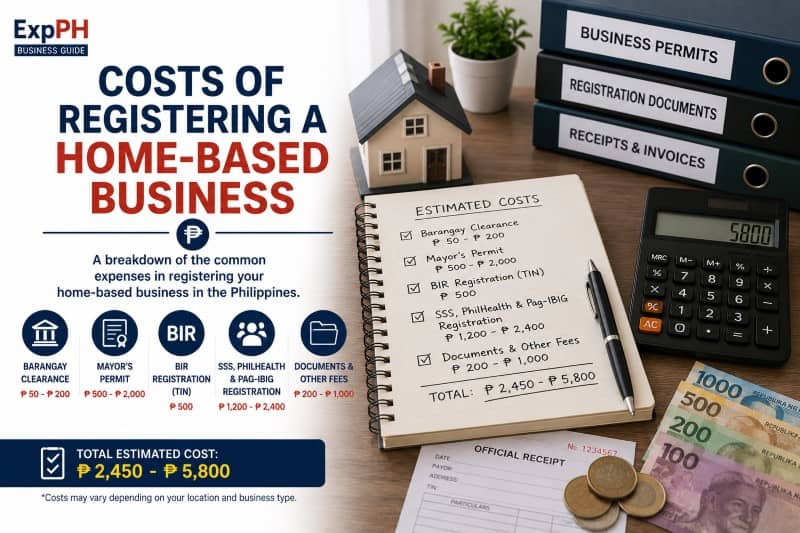
Costs of Registering a Home-Based Business in the Philippines
Understanding the expected costs helps you prepare your budget before starting the home-based business registration Philippines process. Fees are generally affordable for small entrepreneurs, but actual expenses depend on your location, business scope, and local government requirements, which may vary across cities and municipalities.
Estimated Costs:
- DTI Registration: ₱200 to ₱2,000 depending on scope
- Barangay Clearance: ₱200 to ₱1,000
- Mayor’s Permit: ₱1,000 to ₱5,000
- BIR Registration Fee: ₱500
In total, you can expect to spend around ₱2,000 to ₱8,000 for complete registration. Costs may increase slightly in highly urbanized areas or regulated zones, so it is best to confirm exact fees with your local offices before starting the process.
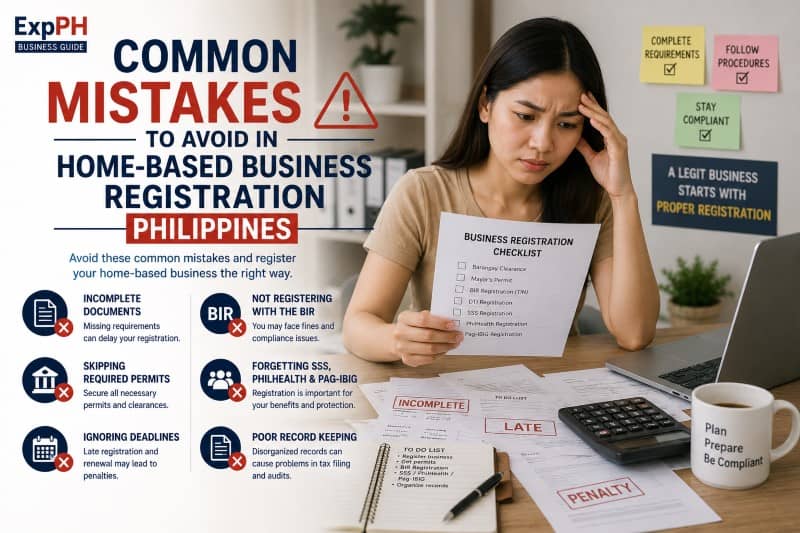
Common Mistakes to Avoid in Home-Based Business Registration Philippines
Even small home-based businesses can face serious issues when important steps are skipped or misunderstood. Avoiding these common mistakes helps you stay compliant, manage finances properly, and protect your business from penalties that could disrupt operations or limit future growth opportunities.
Not Registering Properly
Operating without completing the full home-based business registration Philippines process can result in penalties, fines, or even closure. Proper registration ensures your business is legally recognized, builds credibility with customers, and allows you to access financial services and opportunities for long term growth.
Ignoring Tax Obligations
Many small business owners overlook tax responsibilities, especially when income is still low. However, all registered businesses must comply with Bureau of Internal Revenue requirements. Filing taxes regularly helps you avoid penalties and keeps your business in good standing with government authorities.
Using a Personal Bank Account
Mixing personal and business finances can create confusion and make it difficult to track income and expenses accurately. Opening a dedicated business bank account improves financial organization, simplifies bookkeeping, and helps present a more professional image when dealing with clients or partners.
Choosing the Wrong Business Structure
Selecting the wrong structure can lead to unnecessary complexity or higher costs. Most beginners should start with a sole proprietorship because it is simple and easier to manage. You can always upgrade your structure later as your business grows and becomes more established.
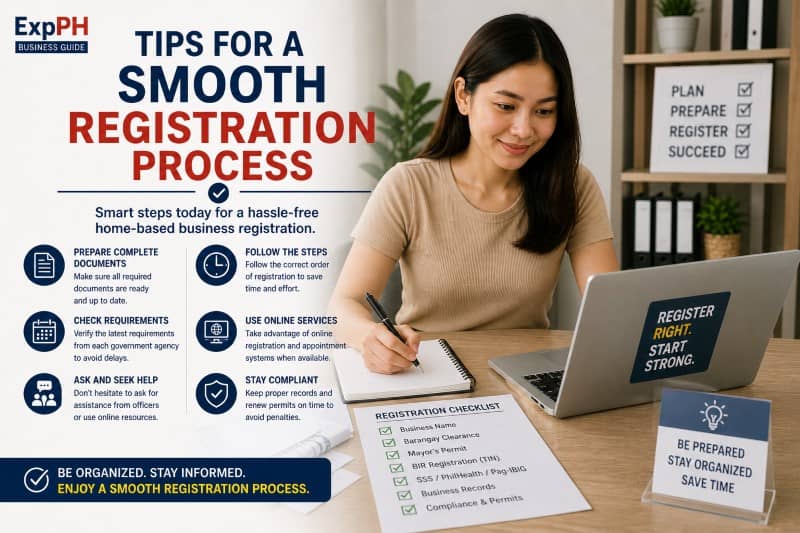
Tips for a Smooth Registration Process
Preparing ahead makes the home-based business registration Philippines process easier and more efficient. Staying organized helps you avoid delays, reduce errors, and complete each step with confidence. Following simple best practices ensures your application moves smoothly and keeps your business compliant from the start.
- Prepare all required documents before starting to avoid repeated visits and delays
- Use online registration systems when available to save time and simplify submission
- Keep both digital and printed copies of permits for easy access and verification
- Track deadlines carefully, especially tax filing schedules and renewals
- Stay updated with local government rules since requirements may change
These practical steps help make your home-based business registration Philippines process faster, more organized, and less stressful while ensuring you meet all legal requirements without unnecessary complications.

How Registration Helps You Grow Your Business
Completing your home-based business registration Philippines opens more opportunities and strengthens your position in the market. A registered business gains legal recognition, builds trust with clients, and allows you to expand confidently while meeting requirements needed for partnerships, platforms, and financial support.
- You can partner with larger clients and secure more stable contracts
- You can sell on major online platforms legally and without restrictions
- You can access business loans and financial assistance programs
- You build long term credibility and stronger customer trust
For OFWs and aspiring entrepreneurs, proper registration creates a reliable foundation for financial stability. It supports sustainable growth, improves access to opportunities, and helps transform a small home-based business into a more secure and scalable source of income.

Final Thoughts on Registering a Home-Based Business in the Philippines
Registering your business may feel challenging at first, especially if you are new to the process. However, it is a necessary step toward long term success and stability. With proper preparation and clear guidance, each requirement becomes manageable and helps you build confidence as you move forward with your business journey.
By completing your home-based business registration Philippines, you are not only complying with legal requirements but also creating a strong foundation for growth. A registered business allows you to operate with credibility, access more opportunities, and develop a system that supports expansion and long term financial goals.
Taking action today puts you closer to financial independence and a more secure livelihood. Each step you complete moves your business forward and reduces future risks. With consistency and proper planning, your home-based business can grow into a stable and reliable source of income over time.

FAQs About Home-Based Business Registration in the Philippines
1. Do I need to register a home-based business in the Philippines?
Yes, registration is required to operate legally, avoid penalties, and access financial services. It also builds trust with customers and allows you to issue official receipts.
2. What is the easiest business structure for beginners?
A sole proprietorship is the easiest option for beginners because it has simple requirements, low costs, and full control, making it ideal for small home-based businesses.
3. Where do I register my business name in the Philippines?
You must register your business name with the Department of Trade and Industry if you are a sole proprietor, usually through their official online registration system.
4. Do I still need a barangay clearance for a home-based business?
Yes, a barangay clearance is required to confirm your business is allowed in your residential area, even if you operate from home with minimal setup.
5. Is a Mayor’s Permit required for home-based businesses?
Yes, a Mayor’s Permit is required to ensure your business complies with local regulations, zoning rules, and safety standards set by your city or municipality.
6. Why do I need to register with the BIR?
Registration with the Bureau of Internal Revenue is required for tax compliance, allowing you to issue receipts and file taxes properly as a legal business.
7. How much does it cost to register a home-based business?
Costs usually range from ₱2,000 to ₱8,000 depending on your location, permits, and business scope, making it affordable for most small entrepreneurs starting from home.
8. Can I run a home-based business without paying taxes?
No, all registered businesses must comply with tax regulations. Even small or low income businesses are required to file taxes regularly with the government.
9. Do I need to register with SSS, PhilHealth, and Pag-IBIG?
Yes, registration is required if you have employees. If self-employed, you can voluntarily contribute to access benefits like healthcare, savings, and financial assistance.
10. How long does the registration process take?
The process can take a few days to several weeks depending on your location, document readiness, and processing time of each government office involved.
Ready to Go Beyond Home-Based Business?
If you want a complete step-by-step roadmap, read our full guide: Complete Guide to Starting a Business in the Philippines (Registration, Costs, and Steps 2026). Learn everything from setup to scaling your business the right way.
Related guides
- How to Register a Food Business in the Philippines (Complete Legal Requirements)
- How to Register an Online Business in the Philippines (BIR + DTI Guide)
Home-Based Business Registration Philippines Quiz
Test your knowledge about registering a home-based business in the Philippines. This quick quiz will help you review key steps, requirements, and best practices. It is perfect for beginners who want to ensure they understand the process before starting.
Results


#1. Where do you register your business name?
#2. What is the easiest business structure?
#3. Which document confirms residential approval?
#4. Which agency handles taxes?
#5. What permit comes from city hall?
#6. What must you issue to customers?
#7. Which agency provides social security?
#8. What is a key registration benefit?
#9. What should you prepare first?
#10. What is a common mistake?
We appreciate your time and effort in completing this quiz
Feel free to share your score or experience in the comments and let others learn from your journey.

A Filipino web developer with a background in Computer Engineering. Founder of ExpPH Blog and ExpPH Business Guide, two Philippines-focused platforms covering OFW guidance, business, finance, freelancing, travel, and lifestyle. Passionate about helping Filipinos grow, he creates practical content that educates, empowers, and inspires readers nationwide.