
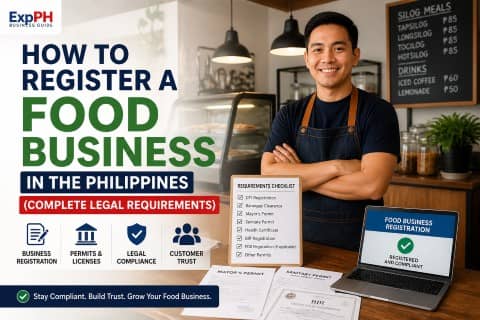
Starting a food business is one of the most practical ways to earn in the Philippines, whether you plan to operate a food cart, a home based kitchen, or a small restaurant. Before selling your first product, you need to complete the food business registration Philippines process. This ensures your business follows local laws, avoids penalties, and builds trust with customers. Proper registration also helps create a stable foundation that supports long term growth and protects your operations from unexpected legal issues.
This guide explains the complete legal requirements, permits, and step by step process for registering a food business in the Philippines. It is designed for beginners and small entrepreneurs who want clear and practical instructions. By following this guide, you will understand each requirement, avoid common mistakes, and move through the registration process with confidence while preparing your business for legal operation and future expansion.
Planning to start a food cart,
don’t miss our complete step by step guide on how to set up your business, from choosing a concept to daily operations.
Read: How to Start a Food Cart Business in the Philippines (Step-by-Step)
Table of Contents
Why Food Business Registration Matters in the Philippines
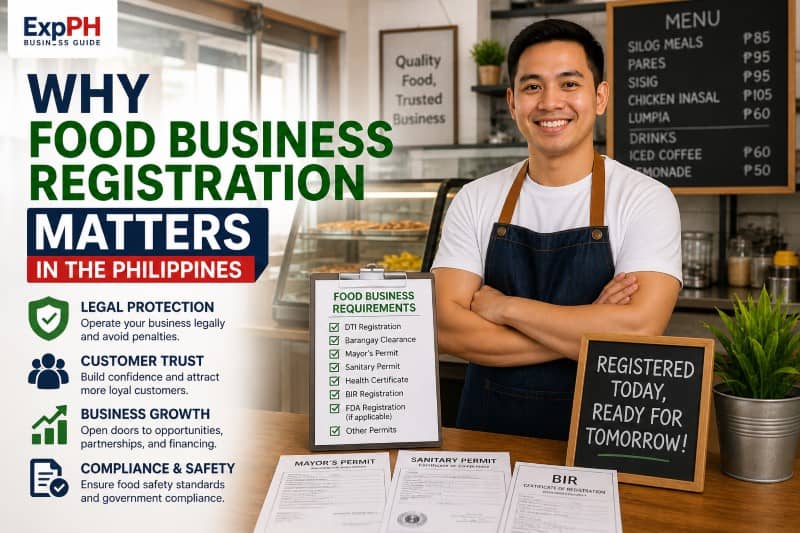
Registering your food business in the Philippines goes beyond basic compliance. It lays the foundation for long term stability and growth. When you complete the proper legal steps early, you protect your operations, strengthen credibility, and avoid disruptions that can affect your income and reputation.
Here’s why it matters:
- Avoid penalties and closures from local authorities
- Build customer trust by showing your business is legitimate
- Qualify for delivery platforms like GrabFood or Foodpanda
- Access business loans and financial support
- Scale your operations legally
Skipping the food business registration Philippines process can lead to serious consequences. Even small stalls or home based sellers may face inspections and sudden shutdowns. Without proper permits, your business becomes vulnerable, making it harder to grow, earn consistently, and operate with confidence.
Practical Tips for Faster Food Business Registration in the Philippines
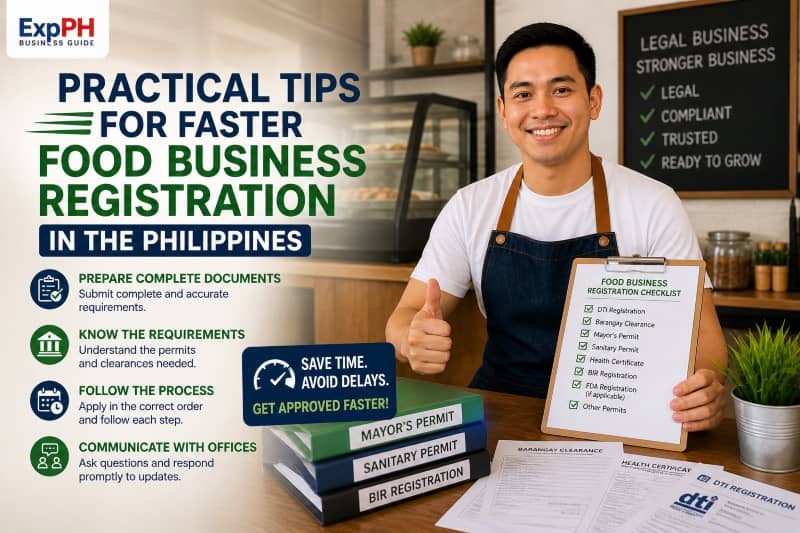
Completing the food business registration Philippines process becomes easier when you stay organized and plan ahead. Simple preparation steps can reduce delays, prevent repeat visits, and help you move through each requirement faster while avoiding common issues faced by new business owners.
Practical tips:
- Prepare multiple copies of all required documents
- Choose a clean and compliant business location
- Start with Department of Trade and Industry and barangay clearance first
- Visit your local government unit early to avoid long lines
- Ask for a complete checklist from your city hall
Staying organized and proactive can save valuable time during registration. When your documents are complete and your schedule is planned well, you can avoid unnecessary delays. This approach helps you finish the process faster and start operating your food business with confidence.

Step 1: Choose Your Business Structure
Before starting the food business registration Philippines process, choose the structure that fits your goals and budget. This decision affects registration steps, taxes, and daily operations. Selecting the right structure early helps avoid complications and ensures your food business runs smoothly as it grows.
Sole Proprietorship (Best for beginners)
- Registered under Department of Trade and Industry
- Simple and affordable
- Ideal for food carts, online sellers, and home kitchens
Partnership or Corporation
- Registered under Securities and Exchange Commission
- Suitable for multiple owners or larger ventures
For most beginners, especially small food stalls or home based businesses, a sole proprietorship is the most practical and manageable option.

Step 2: Register Your Business Name (DTI or SEC)
Once you choose your structure, register your business name to make it official. This step secures your brand identity and prevents others from using the same name. It is required before moving forward with permits and licenses.
For Sole Proprietors
Register through the Department of Trade and Industry:
https://bnrs.dti.gov.ph
Requirements:
- Valid ID
- Chosen business name
- Payment for registration fee
For Corporations or Partnerships
Register with the Securities and Exchange Commission to legally establish your business entity and ownership structure.
Step 3: Secure Barangay Clearance
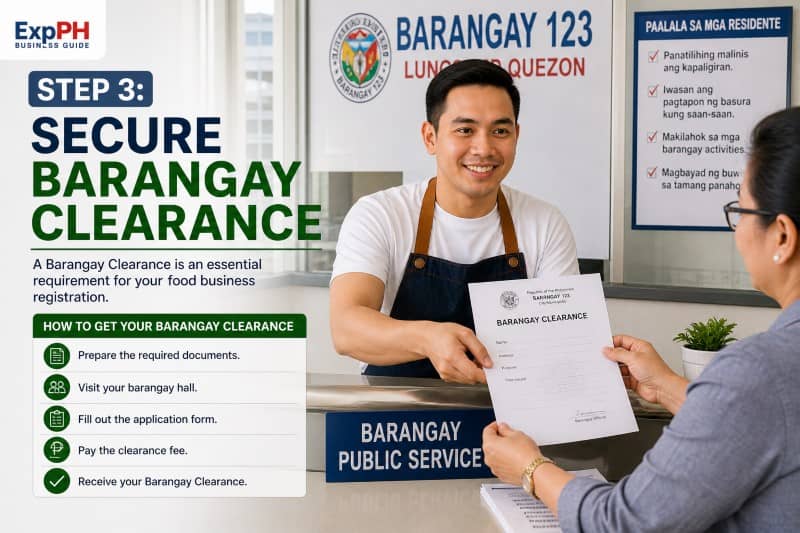
After registering your business name, visit your local barangay office to secure a clearance. This document confirms that your business complies with community regulations and is allowed to operate in your chosen location within the barangay.
Requirements:
- DTI or SEC Certificate
- Valid ID
- Proof of address
Barangay clearance is one of the first local approvals required and is necessary before applying for higher level permits such as the Mayor’s Permit.
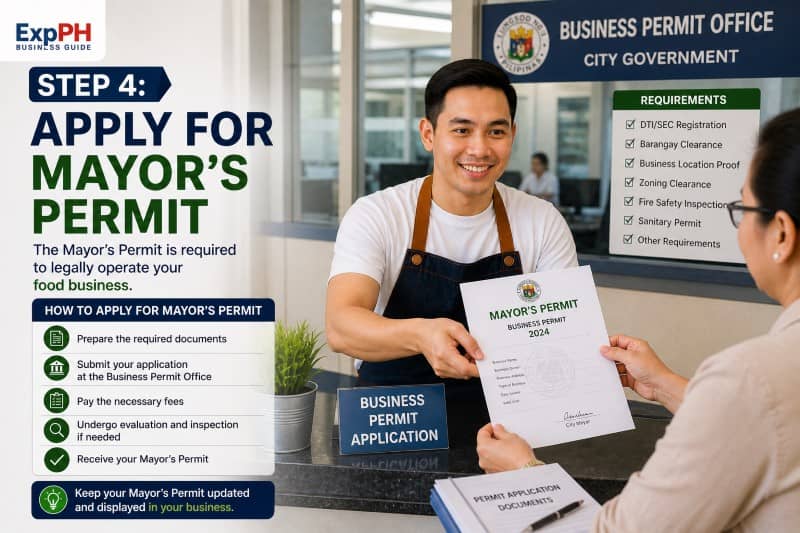
Step 4: Apply for Mayor’s Permit
The Mayor’s Permit is a key requirement in the food business registration Philippines process. It gives you legal authority to operate within your city or municipality. Without this permit, your business cannot legally run or serve customers.
Where to apply:
- City or Municipal Hall
Requirements may include:
- Barangay Clearance
- DTI or SEC Registration
- Lease contract or proof of location
- Community Tax Certificate (Cedula)
This permit ensures your business complies with local regulations and operational standards.
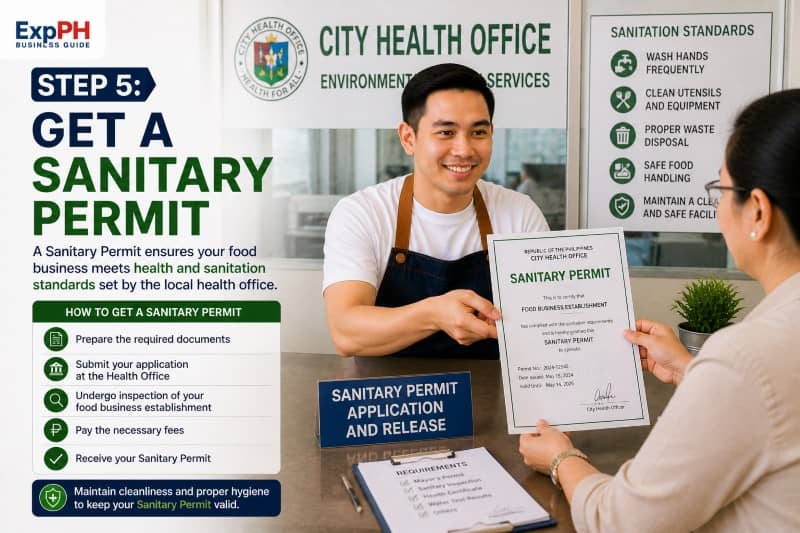
Step 5: Get a Sanitary Permit
Food businesses must meet strict sanitation standards to protect public health. A sanitary permit confirms that your food preparation area follows proper hygiene practices. This is required before opening your business and serving customers.
Requirements:
- Clean and inspected food preparation area
- Proper waste disposal system
- Pest control measures
Your local health office will inspect your setup before issuing approval. Compliance helps prevent health risks and builds customer trust.
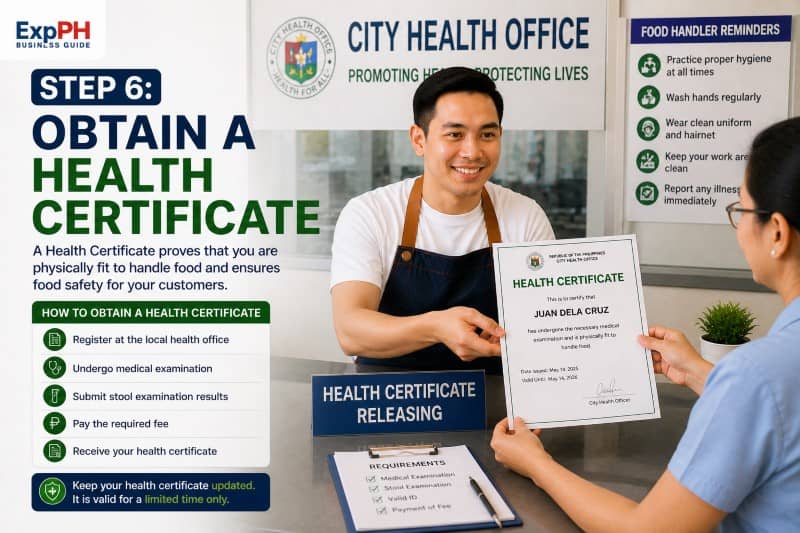
Step 6: Obtain a Health Certificate
All individuals handling food must have a valid health certificate. This ensures that your staff are physically fit and do not carry illnesses that can affect customers. It is a mandatory requirement for operating a food related business.
Who needs this:
- Food cooks
- Servers
- Kitchen staff
Requirements:
- Medical check-up
- Laboratory tests (depending on LGU)
This step promotes food safety and protects your business from violations.
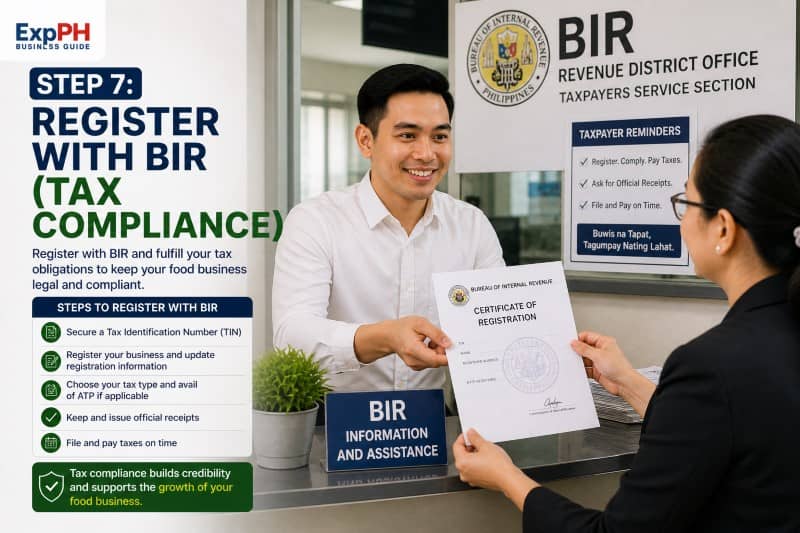
Step 7: Register with BIR (Tax Compliance)
To fully legalize your business, register with the Bureau of Internal Revenue. This step allows you to issue official receipts and comply with tax obligations. Proper registration also helps build credibility with customers and partners.
Requirements:
- DTI or SEC Certificate
- Valid ID
- Mayor’s Permit
- Barangay Clearance
What you will get:
- Certificate of Registration (BIR Form 2303)
- Authority to print receipts
- Official books of accounts
This is essential for lawful operations and financial tracking.
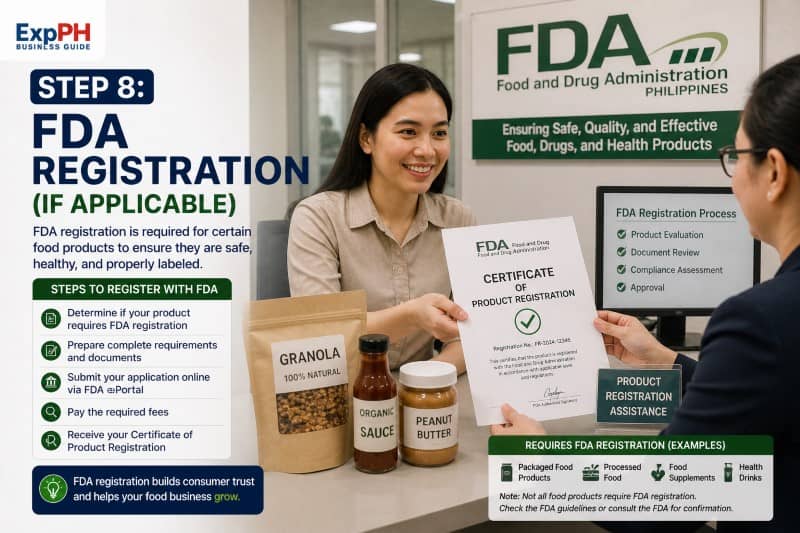
Step 8: FDA Registration (If Applicable)
Not all food businesses require FDA registration, but it is necessary for certain products. If your business involves processed or packaged food, you must comply with regulations from the Food and Drug Administration.
Required if you:
- Manufacture packaged food products
- Sell bottled or processed food
- Distribute food products at scale
FDA approval increases credibility and allows your products to enter larger markets such as supermarkets and retail stores.
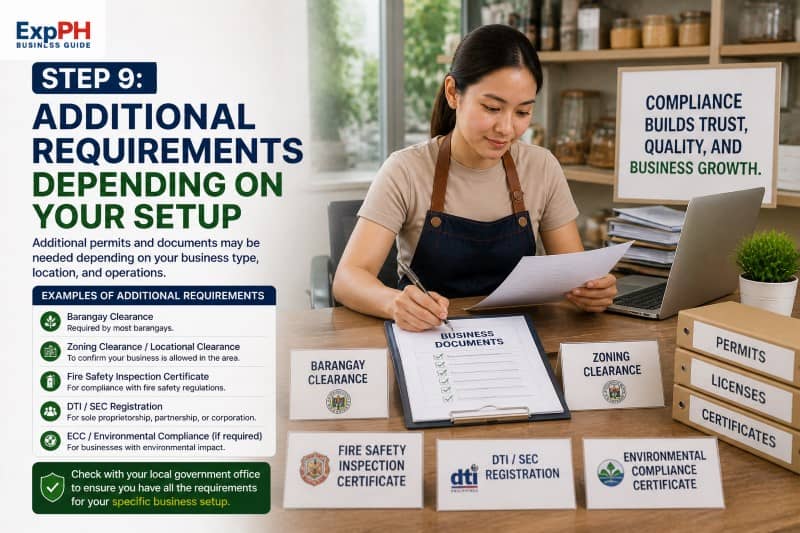
Step 9: Additional Requirements Depending on Your Setup
Some food businesses require additional permits depending on their size and operations. These ensure safety, environmental compliance, and proper regulation based on your business activities and location.
Examples:
- Fire Safety Inspection Certificate
- Environmental Clearance for larger operations
- Special permits for alcohol sales
Always check with your local government unit for updated requirements. Rules may vary depending on your city or municipality.
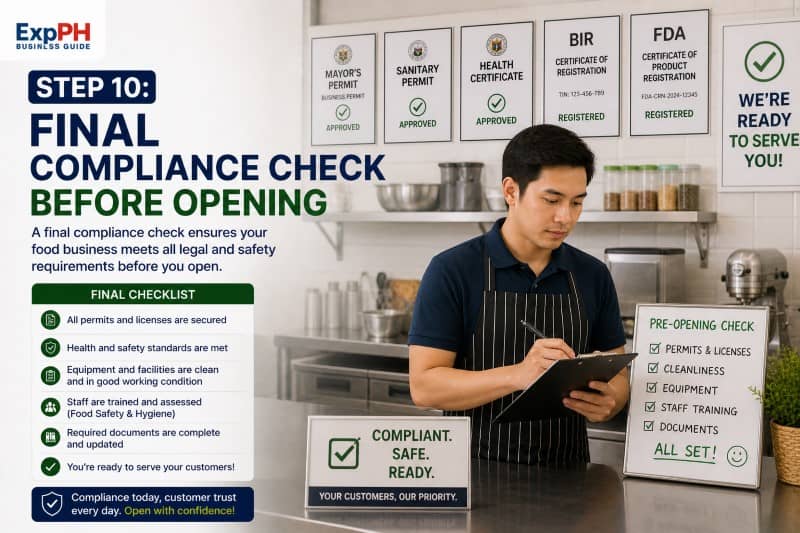
Step 10: Final Compliance Check Before Opening
Before launching your food business, review all your documents to ensure everything is complete and valid. This final step helps avoid delays, penalties, or unexpected inspections that could interrupt your operations once you start serving customers.
Checklist:
- Complete business registration documents
- All permits and certificates secured
- Tax registration completed
- Staff health certificates ready
A complete compliance check ensures your food business operates legally and confidently from day one.
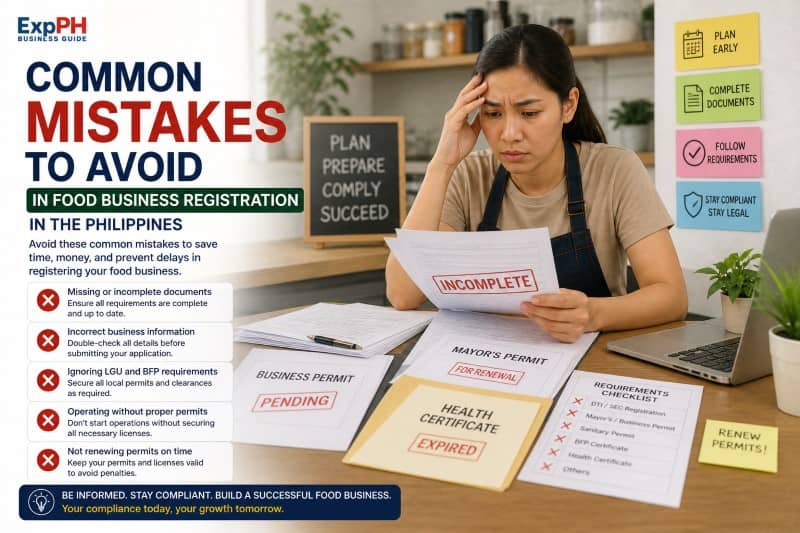
Common Mistakes to Avoid in Food Business Registration in the Philippines
Many new entrepreneurs face delays and penalties during the food business registration Philippines process because of avoidable mistakes. These errors often come from rushing, lack of preparation, or trying to reduce costs. Understanding these issues early helps ensure smoother registration and long term business stability.
1. Skipping permits to save money
Some entrepreneurs skip required permits to reduce initial expenses, but this decision often leads to higher costs later. Penalties, fines, or forced closure can occur during inspections. Completing all legal requirements from the start protects your business and prevents unnecessary financial setbacks.
2. Incomplete documents
Submitting incomplete or incorrect documents is a common reason for delays in approval. Missing paperwork can force you to repeat steps or return multiple times to government offices. Preparing all requirements in advance helps speed up the process and reduces frustration during registration.
3. Ignoring sanitation standards
Failing to meet sanitation requirements can lead to failed inspections or immediate closure. Food businesses must follow strict hygiene rules to protect public health. Maintaining a clean preparation area and proper waste management ensures compliance and builds trust with customers.
4. Not registering with BIR
Operating without registering with the Bureau of Internal Revenue can result in serious legal and financial penalties. Without proper tax registration, you cannot issue official receipts or comply with tax laws. This can limit your business growth and damage your credibility.
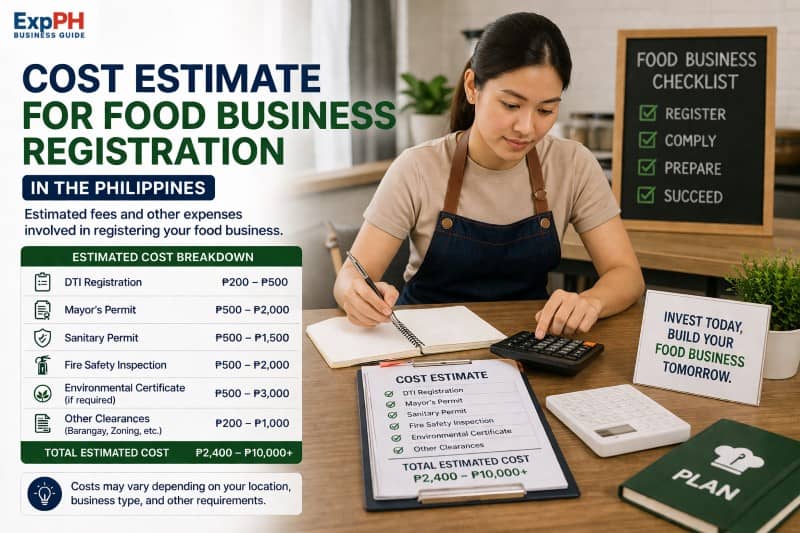
Cost Estimate for Food Business Registration in the Philippines
The total cost of food business registration Philippines depends on your location, business size, and local government fees. While exact amounts vary, preparing a realistic budget helps you avoid delays and complete all requirements without financial stress during the registration process.
Estimated costs:
- DTI Registration: ₱200 to ₱2,000
- Barangay Clearance: ₱200 to ₱1,000
- Mayor’s Permit: ₱1,000 to ₱5,000+
- Sanitary Permit: ₱500 to ₱1,500
- Health Certificate: ₱100 to ₱500 per person
- BIR Registration: around ₱500
These costs are general estimates and may change depending on your city or municipality. Some areas charge higher fees based on business size or location. It is best to confirm exact amounts with your local government unit before starting your registration process.
Overall, the total estimated cost ranges from ₱2,500 to ₱10,000 or more. Budgeting ahead ensures you can complete each step without interruption. Having enough funds prepared allows you to focus on compliance and start your food business smoothly and legally.

Final Thoughts on Food Business Registration in the Philippines
Completing the food business registration Philippines process may feel overwhelming at first, especially for new entrepreneurs, but it is an essential step toward building a stable and trusted business. Following the correct legal process protects your operations and creates a strong foundation for long term success.
Once you secure all permits, you gain:
- Legal protection
- Customer confidence
- Opportunities for growth
If your business idea is ready, the next step is to begin registration one step at a time. Completing your legal requirements early allows you to operate with confidence, avoid risks, and position your food business for steady growth in the Philippines.
FAQs About Food Business Registration in the Philippines
What are the basic requirements to register a food business in the Philippines?
You must register your business name, secure barangay clearance, obtain a Mayor’s Permit, sanitary permit, health certificate, and complete BIR registration for full legal compliance.
How much does food business registration cost in the Philippines?
Food business registration costs vary by location, but small businesses spend between two thousand five hundred and ten thousand pesos depending on permits and requirements.
What is the difference between DTI and SEC registration?
DTI is for sole proprietors who want simple registration, while SEC is required for partnerships or corporations with multiple owners and more structured business operations.
How long does it take to register a food business?
Processing time depends on your local government, but completing permits usually takes days to a few weeks if documents are complete and requirements are met.
Can I start a home based food business legally?
Yes, home based food businesses are allowed, but you must comply with local permits, sanitation rules, and zoning requirements set by your barangay and city.
Do I need FDA registration for my food business?
FDA registration is required if you manufacture, package, or distribute processed food products, especially those sold in local stores or at a larger commercial scale.
What happens if I operate without proper registration?
Operating without proper registration can lead to fines, closure, or legal action from authorities, especially during inspections conducted by your local government and health office.
Do online food sellers need to register their business?
Yes, online food sellers must follow the same registration rules, including permits and tax registration, because selling food to the public still requires legal compliance.
Can I start my food business before completing permits?
Starting before completing registration is risky, as authorities may issue penalties or closure notices, so it is better to secure permits before opening your business.
Do I need to renew my business permits every year?
Most permits Mayor’s Permit and barangay clearance must be renewed annually, while BIR registration remains active as long as you continue operating your business properly.
Want the full roadmap to starting a business in the Philippines, from registration to costs and execution, explore these complete guides:
- How to Register a Business in the Philippines (Complete Guide)
- Complete Guide to Starting a Business in the Philippines (Registration, Costs, and Steps 2026)
Food Business Registration Philippines Quiz
Test your understanding of the legal steps and requirements for registering a food business in the Philippines. This quick quiz will help you review key concepts and ensure you are ready to apply them in real situations.
Results


#1. What is the first step in registering a food business?
#2. Which agency handles sole proprietorship registration?
#3. What document proves local approval to operate?
#4. Where do you apply for a Mayor’s Permit?
#5. Why is a sanitary permit required?
#6. Who needs a health certificate?
#7. What does BIR registration provide?
#8. When is FDA registration required?
#9. What happens if you skip registration?
#10. How often are most permits renewed?
Thanks for taking the quiz
Share your score or experience in the comments and let others know how you did. Your feedback helps build a stronger learning community for Filipino entrepreneurs.

A Filipino web developer with a background in Computer Engineering. Founder of ExpPH Blog and ExpPH Business Guide, two Philippines-focused platforms covering OFW guidance, business, finance, freelancing, travel, and lifestyle. Passionate about helping Filipinos grow, he creates practical content that educates, empowers, and inspires readers nationwide.
1 thought on “How to Register a Food Business in the Philippines (Complete Legal Requirements)”