

Starting an online business is one of the most practical ways to earn in today’s digital economy, especially in the Philippines where digital platforms continue to grow. If you are serious about building a long term and trusted brand, learning how to register online business Philippines is an essential first step. Registration makes your business legal and helps you gain credibility, access payment solutions, and avoid penalties that can affect your growth later.
This guide explains the full process of registering your online business with the Department of Trade and Industry (DTI) and the Bureau of Internal Revenue (BIR). Each step is presented in a clear and practical way that fits the Philippine setting, so you can follow it with confidence and complete your registration without confusion or unnecessary delays.
Planning to start selling online first.
Before completing your business registration, you can learn how to set up your store, choose the right platform, and get your first sales through How to Start an Online Selling Business in the Philippines (Shopee, Lazada, Facebook).
Table of Contents
Practical Tips for First-Time Online Entrepreneurs
Starting your online business can feel overwhelming, but applying simple and practical habits early can make a big difference. As you learn how to register online business Philippines, focus on building systems that keep your operations organized, efficient, and ready for growth.
Follow these practical tips:
- Start with a simple setup, then expand as your business grows
- Keep both digital and physical copies of all important documents
- Record every sale and expense from the very beginning
- Use GCash, Maya, or bank transfers with proper transaction records
- Consider using basic accounting tools to manage your finances
These habits help you stay compliant and reduce errors. They also make it easier to track your progress, manage taxes, and build a more professional and sustainable online business over time.
Why You Need to Register Your Online Business
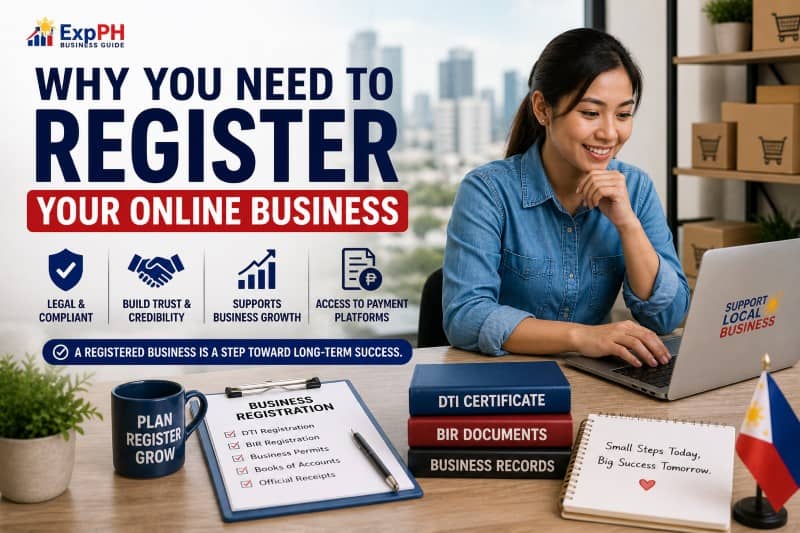
Many beginners start selling products or services online through social media or marketplaces without registering their business. This may seem convenient at first, but it exposes you to legal risks, financial issues, and limitations that can slow down your growth later.
Here is why registration matters:
- You operate legally and avoid fines or penalties
- You can issue official receipts and invoices
- You build trust with customers and business partners
- You can open a dedicated business bank account
- You can grow and scale your business with confidence
If you are learning how to register online business Philippines, treat it as an investment in your future. Registration is not just about following rules, it helps you build a stable and professional business that customers can trust.
Who Needs to Register an Online Business?
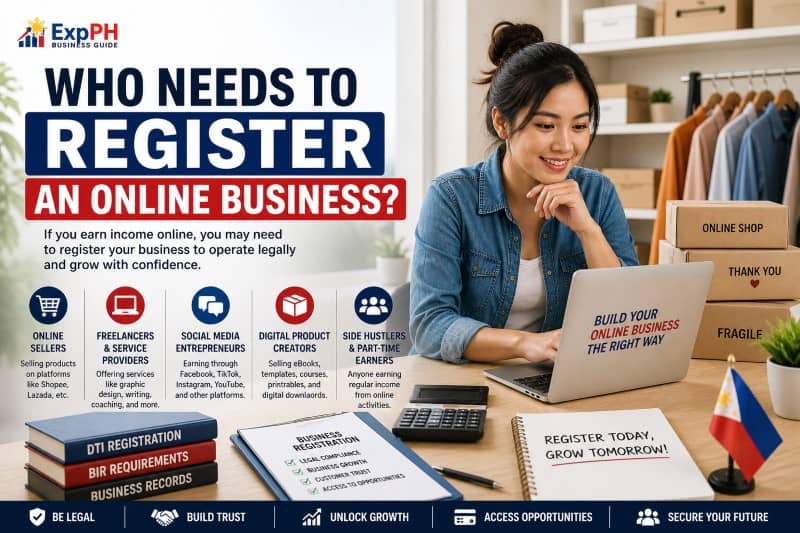
Anyone earning income through online activities should consider registering their business to stay compliant with Philippine regulations. Even small or home-based operations are covered once they generate consistent income, especially if transactions are regular and customers rely on your services or products.
If you are doing any of the following, you should register:
- Selling products on Facebook, TikTok, Shopee, or Lazada
- Offering freelance or digital services to local or international clients
- Running an e-commerce website or online store
- Earning regularly from online transactions or digital platforms
If you are exploring how to register online business Philippines, remember that registration applies to both full-time entrepreneurs and side hustlers who earn consistently online.

Step 1: Register Your Business Name with DTI
For sole proprietors, the first step in how to register online business Philippines is securing a business name through DTI. This step gives your brand a legal identity and allows you to operate under a name that customers can recognize and trust.
What is DTI Registration?
DTI registration provides your business with an official name recognized by the government. It allows you to use a brand name instead of your personal name when dealing with customers, suppliers, and platforms, helping establish credibility and a more professional business presence.
How to Register with DTI Online
- Go to the official DTI Business Name Registration System
https://bnrs.dti.gov.ph - Create an account using your email
- Search and confirm your preferred business name
- Complete the online application form carefully
- Pay the registration fee through available payment options
- Download and save your DTI certificate
DTI Fees (Approximate)
- Barangay level: PHP 200
- City or municipal: PHP 500
- Regional: PHP 1,000
- National: PHP 2,000
Important Tips
- Choose a business name that is unique and easy to remember
- Avoid using restricted words or existing trademarks
- Make sure the name reflects your product, service, or target market clearly

Step 2: Secure Barangay Clearance
After completing your DTI registration, the next step in how to register online business Philippines is obtaining a Barangay Clearance. This requirement confirms that your business is recognized by your local community and allowed to operate within your residential or business address.
Requirements
- DTI Certificate
- Valid government-issued ID
- Proof of address such as a utility bill or lease agreement
What to Expect
- Visit your barangay hall and complete the application form
- Submit your documents for verification
- Pay a small processing fee
- Receive your Barangay Clearance on the same day or shortly after
This step ensures your business complies with local regulations and helps build legitimacy within your area before moving on to national registration requirements.
Step 3: Register with the BIR
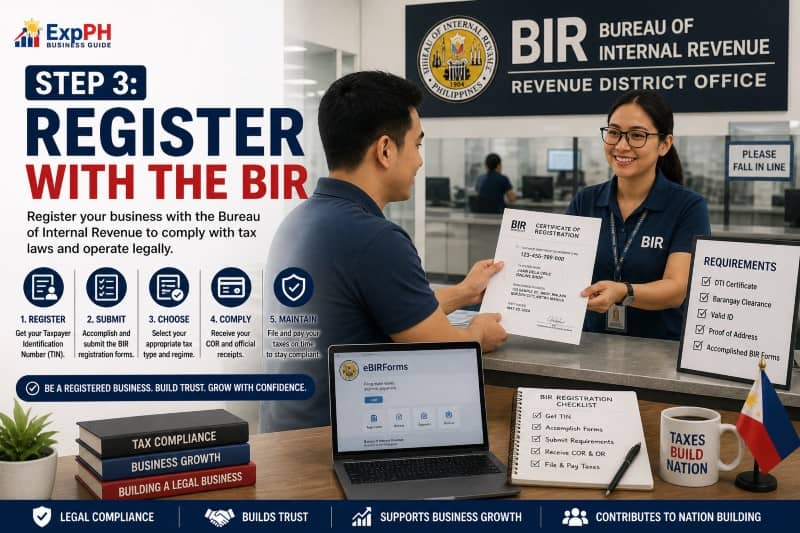
The most important step in how to register online business Philippines is completing your BIR registration. This process officially records your business for tax purposes and allows you to operate legally. It also ensures you meet national requirements for reporting income and issuing receipts.
Why BIR Registration is Important
- You receive a Tax Identification Number (TIN) for your business
- You can issue official receipts to customers
- You avoid penalties for operating without proper registration
How to Register with BIR
- Go to your assigned Revenue District Office (RDO) based on your address
- Submit the following documents:
- DTI Certificate
- Barangay Clearance
- Valid government-issued ID
- Proof of address
- Fill out BIR Form 1901 for sole proprietors
- Pay the registration fee of PHP 500
- Attend the required taxpayer briefing for new business owners
For official guidance and updates, visit the BIR website:
https://www.bir.gov.ph
What You Will Receive
- Certificate of Registration (COR or BIR Form 2303)
- Authority to print official receipts or invoices
- Registered books of accounts for tracking your finances
Completing this step ensures your business is fully compliant and ready to operate legally within the Philippine tax system.
Step 4: Register Your Books of Accounts
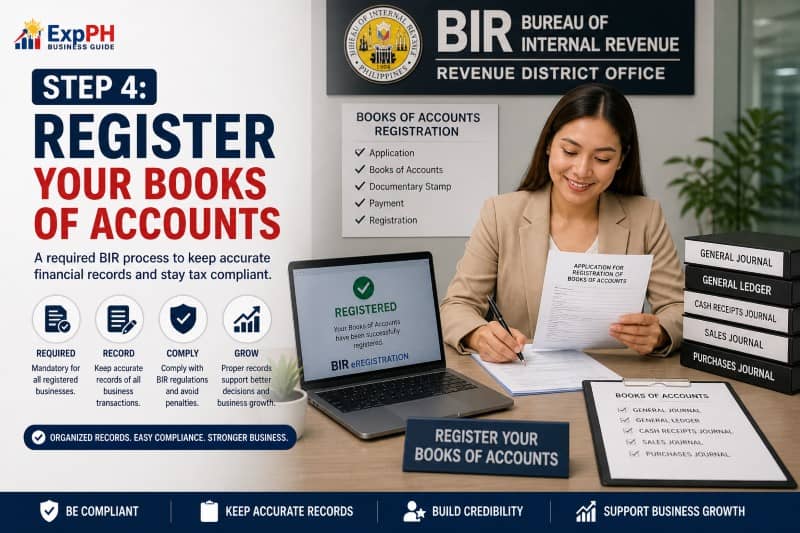
As part of how to register online business Philippines, you are required to maintain records of your income and expenses. Proper bookkeeping helps you monitor your finances, prepare accurate tax filings, and stay compliant with BIR requirements throughout your business operations.
Types of Books
- Manual books such as columnar notebooks
- Loose-leaf books for printed records
- Computerized accounting systems
Most beginners choose manual books because they are simple to use and affordable. As your business grows, you can shift to digital systems for better tracking and efficiency in managing your financial records.
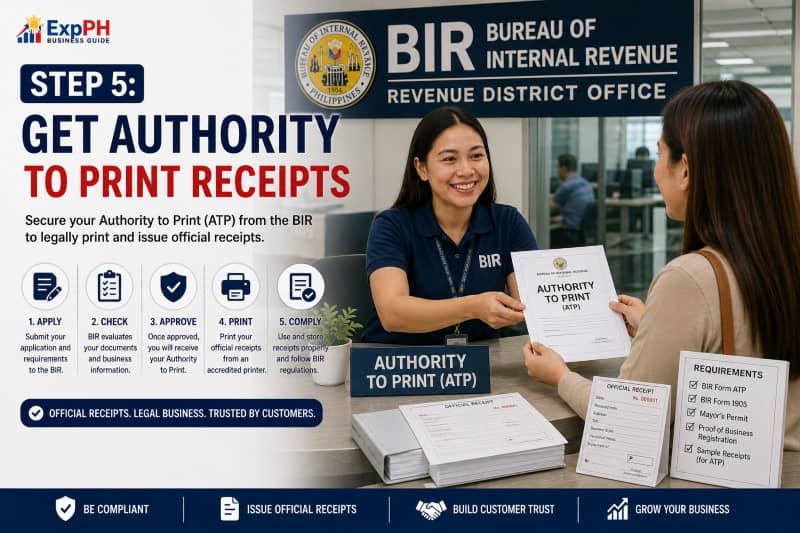
Step 5: Get Authority to Print Receipts
As part of how to register online business Philippines, you must secure permission to issue official receipts for every transaction. This requirement ensures your sales are properly documented and recognized by the BIR, while also strengthening customer confidence in your business.
Options
- Apply for Authority to Print (ATP) through the BIR
- Work with BIR-accredited printers for your receipts
Official receipts are essential for tax compliance and professional operations. They serve as proof of transactions and help maintain accurate records, which are necessary when filing taxes or resolving any financial concerns in the future.
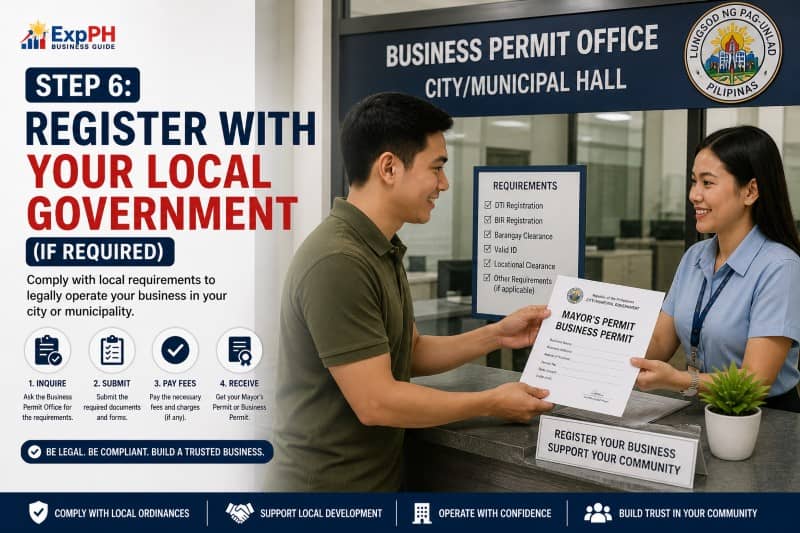
Step 6: Register with Your Local Government (If Required)
As part of how to register online business Philippines, some cities or municipalities require a Mayor’s Permit even for home-based online businesses. This step confirms that your business follows local regulations and is allowed to operate within your city or municipality.
Requirements May Include
- DTI Certificate
- Barangay Clearance
- Lease contract or proof of home address
Requirements may vary depending on your location, so it is best to check with your local city hall. Completing this step helps avoid compliance issues and ensures your business operates smoothly within local government rules.
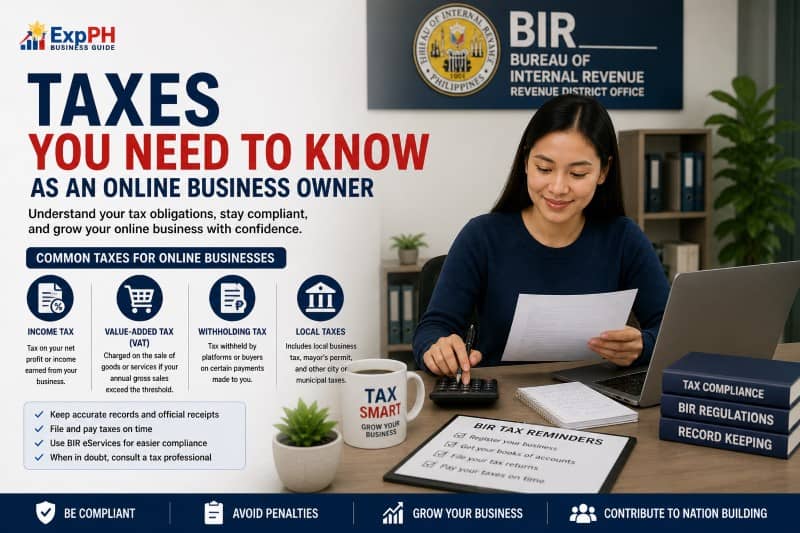
Taxes You Need to Know as an Online Business Owner
Understanding your tax responsibilities is a key part of how to register online business Philippines. Once registered, you are expected to file and pay taxes correctly. This helps you stay compliant, avoid penalties, and maintain a professional and trustworthy business.
Common Taxes
- Percentage Tax, usually 3 percent for non-VAT businesses
- Income Tax based on your earnings
- Value Added Tax (VAT), if your business exceeds the VAT threshold
Optional Tax Option
- You may qualify for the 8 percent income tax rate, which simplifies tax filing for small businesses
Choosing the right tax type depends on your income level and business setup. It is important to understand your obligations early so you can manage your finances properly and avoid issues with the BIR later.
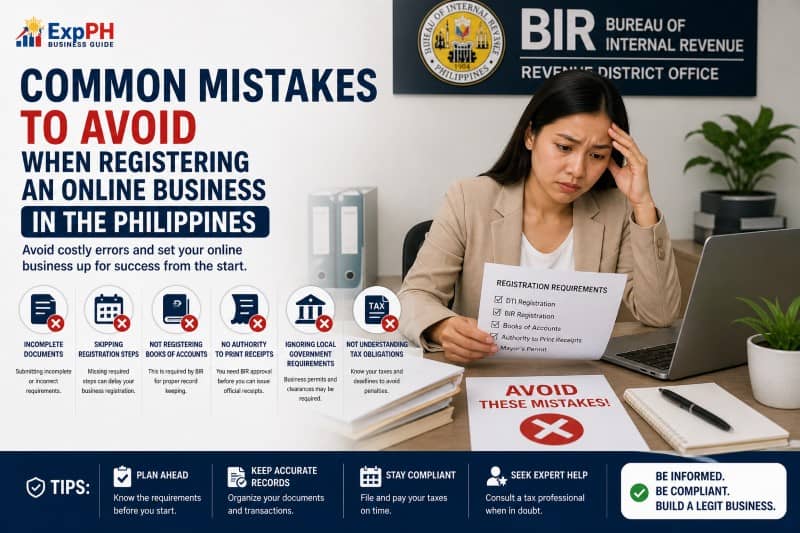
Common Mistakes to Avoid When Registering an Online Business in the Philippines
Starting your business correctly can save you time, money, and unnecessary stress. Many beginners overlook key requirements when learning how to register online business Philippines, which can lead to penalties or operational issues that are harder to fix later.
Avoid these:
- Delaying registration while already earning income
- Ignoring BIR requirements and deadlines
- Not issuing official receipts for transactions
- Mixing personal and business finances in one account
- Forgetting to file taxes regularly and on time
Avoiding these common mistakes helps you build a stable and compliant business. Staying organized from the beginning makes it easier to manage your operations and focus on long-term growth.

Final Thoughts on How to Register an Online Business in the Philippines
Learning how to register online business Philippines is one of the smartest steps you can take as an aspiring entrepreneur. The process may feel confusing at first, but it becomes clear and manageable when you follow each requirement step by step and stay organized throughout your registration journey.
Registering your business goes beyond simple compliance with government rules. It helps you build customer trust, protect your income, and prepare for long term growth. Whether you sell products, offer services, or manage a digital brand, registration supports a more stable and professional business path.
If you treat your online business as a real business from the beginning, you improve your chances of long term success. A strong legal foundation allows you to grow confidently, compete effectively, and build a reliable presence in the Philippine market.

FAQs About How to Register an Online Business in the Philippines
What are the basic steps to register an online business in the Philippines?
You can register your online business in the Philippines by securing a DTI business name, obtaining barangay clearance, and completing BIR registration requirements for taxes.
What is the purpose of DTI registration for online businesses?
DTI registration provides your business with a legal name, allowing you to operate under a brand instead of your personal name when dealing with customers.
Why is BIR registration required for online businesses?
BIR registration is required to make your business tax compliant, issue official receipts, and avoid penalties while operating legally and reporting income to the government.
Do small or home-based online sellers need to register?
Yes, even small or home based online sellers must register their business once they earn income regularly, as required by Philippine laws and local regulations.
What documents are needed for barangay clearance?
You need a DTI certificate, valid ID, and proof of address when applying for barangay clearance, which confirms your business can operate within your area.
How much is the BIR registration fee?
The BIR registration fee for most small businesses is PHP 500, which is paid annually along with documentary stamp tax and other applicable compliance requirements.
What are books of accounts and why are they important?
Books of accounts are used to record your income and expenses, helping you track finances accurately and prepare correct tax filings required by the BIR.
What is Authority to Print receipts?
Authority to Print receipts allows you to issue official transaction records to customers, which is required for tax compliance and helps build trust with buyers.
What is the 8 percent income tax option?
The 8 percent tax rate is a simplified option for small businesses, allowing easier filing instead of paying percentage tax and the graduated income tax.
Why is registering your online business important?
Registering your business builds credibility, ensures legal compliance, and prepares you for growth, making it easier to access banking services and work with larger clients.
Want to go beyond online business registration?
Start with How to Register a Business in the Philippines (Complete Guide) for a deeper look at registration, then continue with Complete Guide to Starting a Business in the Philippines (Registration, Costs, and Steps 2026) for a complete step by step roadmap from idea to launch.
Quiz: How to Register an Online Business in the Philippines
Test your understanding of the business registration process in the Philippines. This short quiz will help you review the key steps, requirements, and important concepts you need to know before starting your online business journey.
Results


#1. Which agency handles business name registration?
#2. What does DTI registration provide?
#3. Which document proves local approval?
#4. Which agency handles taxes?
#5. What form is used for sole proprietors?
#6. What must businesses issue customers?
#7. What tracks income and expenses?
#8. What is the BIR registration fee?
#9. Which tax option simplifies filing?
#10. Why is registration important?
We appreciate your time and effort in completing this quiz
Feel free to share your score or experience in the comments and help others learn from your journey.

A Filipino web developer with a background in Computer Engineering. Founder of ExpPH Blog and ExpPH Business Guide, two Philippines-focused platforms covering OFW guidance, business, finance, freelancing, travel, and lifestyle. Passionate about helping Filipinos grow, he creates practical content that educates, empowers, and inspires readers nationwide.