

Starting a new enterprise brings incredible excitement and endless possibilities for growth. Many passionate entrepreneurs make the critical mistake of ignoring their recurring monthly bills. Failing to monitor these regular financial obligations can quickly destroy your cash flow and threaten your survival. You must understand exactly where your money goes each month to keep your operations running smoothly.
Whether you operate a small neighborhood sari-sari store or manage a rapidly growing digital agency, tracking your small business expenses in the Philippines remains absolutely essential. This consistent financial monitoring allows you to build a highly realistic budget for the future. It also protects your hard-earned revenue and helps you avoid stressful financial surprises during unexpected economic downturns.
Tracking your monthly expenses is just one piece of the puzzle.
If you want to take full control of your company’s money—from handling taxes to securing funding—be sure to read our ultimate resource: Business Finances in the Philippines (Complete Guide).
Table of Contents
Quick Summary (TL;DR)
- Monthly business expenses vary depending on industry, size, and location.
- Common costs include rent, utilities, employee salaries, internet, inventory, marketing, taxes, and software subscriptions.
- Home-based businesses generally have lower operating costs than physical stores.
- Tracking expenses regularly helps improve cash flow and profitability.
- Using digital tools can simplify expense management and financial reporting.

1. Why Understanding Monthly Business Expenses Matters
Many great businesses close their doors not because they lack customers, but because they severely underestimate their daily operating costs. Your monthly bills directly impact your pricing strategies, cash flow stability, and long-term survival in a highly competitive market, making expense tracking absolutely essential.
By identifying and monitoring your recurring expenses, you can:
- Set realistic revenue goals
- Improve profitability
- Avoid unnecessary spending
- Prepare for slow business periods
- Make informed investment decisions
A clear understanding of your monthly expenses also helps when applying for loans, attracting investors, or planning business expansion.
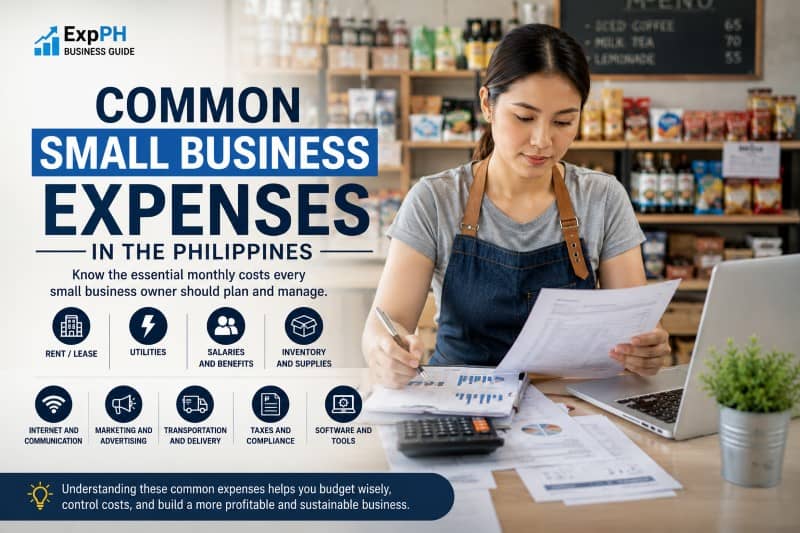
2. Common Small Business Expenses in the Philippines
Every local enterprise faces a standard set of recurring bills that must be paid to keep operations running smoothly. From securing a physical location to compensating your hardworking team, understanding these common monthly financial obligations is essential for maintaining a healthy and highly profitable business.
Business Rent or Lease
For businesses operating from commercial spaces, rent is often one of the largest monthly expenses.
Rental costs vary significantly depending on location:
- Provincial areas: ₱3,000 to ₱15,000 monthly
- Small city locations: ₱10,000 to ₱30,000 monthly
- Prime commercial districts: ₱30,000 or more monthly
Businesses located in malls or high-traffic areas may also pay association dues and common area maintenance fees.
Utilities
Utility expenses are necessary for daily operations.
Typical utility costs include:
- Electricity
- Water
- Waste disposal
- Air conditioning
Small businesses may spend anywhere from ₱1,500 to ₱20,000 monthly depending on operations and equipment usage.
Restaurants, salons, and manufacturing businesses often have significantly higher electricity consumption than online-based businesses.
Employee Salaries and Benefits
Labor costs are usually among the highest recurring expenses.
Monthly employee-related expenses may include:
- Basic salary
- Overtime pay
- Holiday pay
- Incentives and commissions
- Employer contributions
Employers are generally required to contribute to government-mandated benefits such as those administered by the Social Security System (SSS), PhilHealth, and Pag-IBIG Fund.
For many small businesses, payroll represents the largest portion of monthly operating expenses.
Inventory and Supplies
Retail and product-based businesses must regularly replenish inventory.
Examples include:
- Merchandise
- Raw materials
- Packaging materials
- Office supplies
- Cleaning supplies
Inventory costs fluctuate depending on sales volume, supplier pricing, and seasonal demand.
Maintaining proper inventory control helps prevent overstocking and cash flow problems.
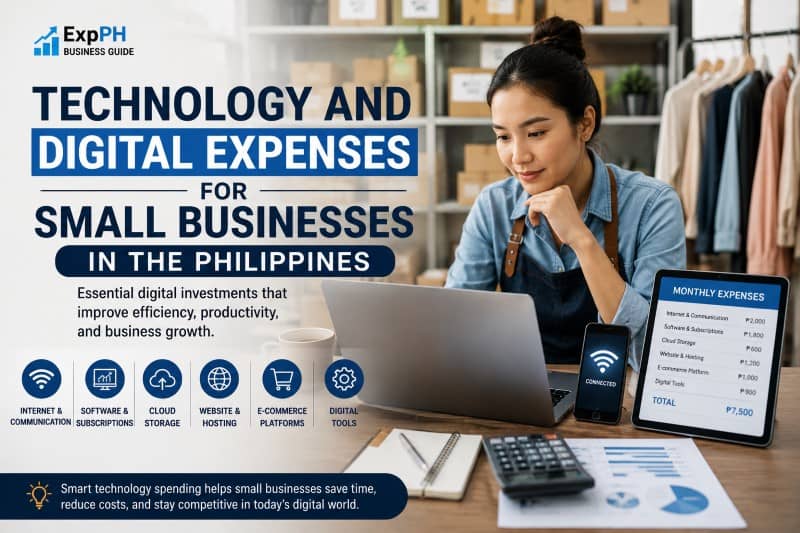
3. Technology and Digital Expenses for Small Businesses in the Philippines
Technology is no longer optional for modern businesses wanting to stay competitive. Investing in reliable internet connections, essential software subscriptions, and e-commerce platforms streamlines your daily operations, enhances customer experiences, and ultimately saves you countless hours of tedious manual administrative work every single month.
Internet and Communication Services
Reliable internet is critical for many businesses today.
Monthly expenses may include:
- Fiber internet plans
- Mobile data plans
- Business phone services
- Cloud communication tools
Typical costs range from ₱1,000 to ₱5,000 monthly depending on service requirements.
Software and Digital Tools
Many businesses use software subscriptions to improve productivity.
Common examples include:
- Accounting software
- Customer relationship management (CRM) systems
- Graphic design tools
- Project management platforms
- Cloud storage services
While individual subscriptions may seem inexpensive, multiple tools can significantly increase monthly operating costs.
Website and E-commerce Costs
Businesses operating online often incur expenses related to:
- Domain renewal
- Web hosting
- Website maintenance
- Security services
- E-commerce platform subscriptions
These expenses are important investments that support online visibility and customer acquisition.

4. Marketing and Advertising Costs for Small Businesses
You have to spend money to make money, and marketing is how you consistently bring people through the door. Allocating a monthly budget for social media advertisements and high-quality content creation builds brand awareness, establishes customer trust, and drives long-term sales growth for your business.
Social Media Advertising
Many Filipino businesses use:
- Facebook Ads
- Instagram Ads
- TikTok Ads
- YouTube Ads
Monthly advertising budgets vary widely, from a few thousand pesos to tens of thousands depending on business goals.
Content Creation
Marketing content may require spending on:
- Graphic design
- Photography
- Video production
- Copywriting
- Social media management
Consistent content marketing can improve brand awareness and customer trust over time.
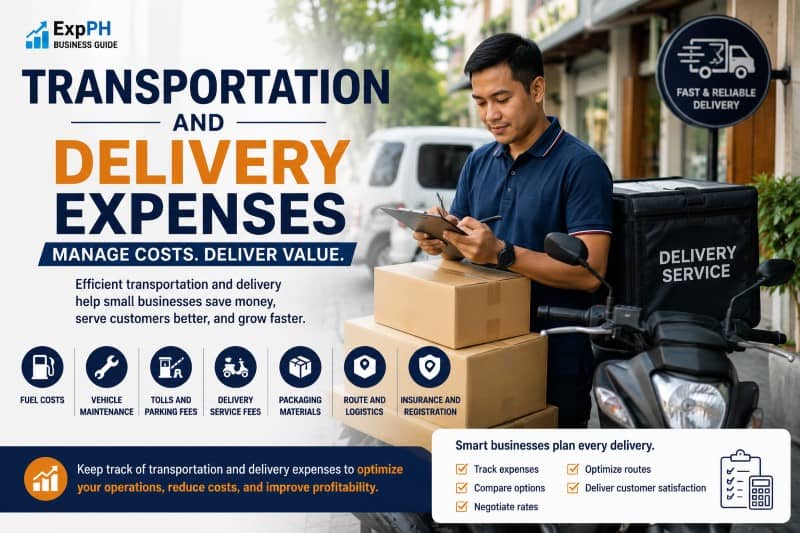
5. Transportation and Delivery Expenses
Moving goods and people around can get expensive quickly if not monitored closely. Whether you are paying for daily fuel, vehicle maintenance, or nationwide courier services, tracking your logistics and delivery costs ensures these necessary expenses do not silently eat into your profit margins.
Examples include:
- Fuel
- Vehicle maintenance
- Parking fees
- Delivery charges
- Courier services
Businesses offering nationwide shipping should carefully monitor logistics expenses because these can directly impact profit margins.
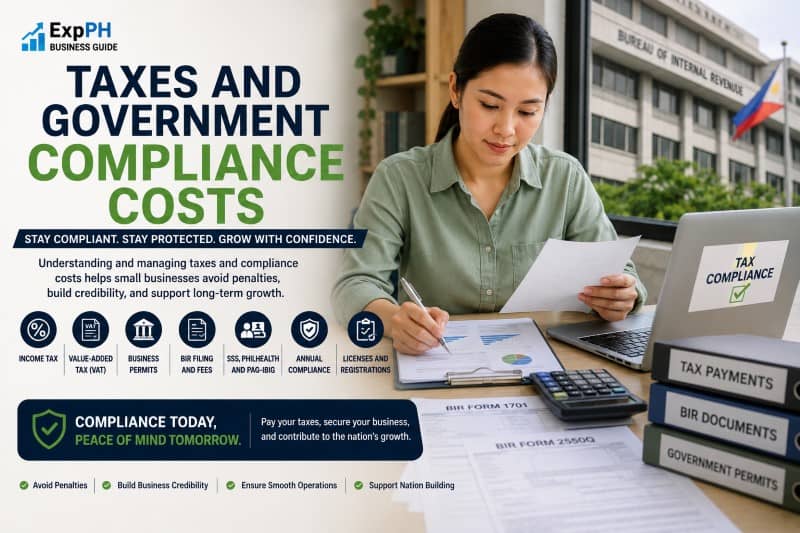
6. Taxes and Government Compliance Costs
Staying compliant with government regulations is a non-negotiable part of doing business properly. Setting aside monthly funds for accounting services, bookkeeping, and permit renewals ensures you meet all Bureau of Internal Revenue requirements, saving you from massive headaches and expensive financial penalties later on.
Possible recurring expenses include:
- Accounting services
- Bookkeeping services
- Tax filing assistance
- Permit renewals
Business owners should stay informed about tax requirements through the official website of the Bureau of Internal Revenue (BIR).
Proper compliance helps avoid penalties and disruptions to business operations.
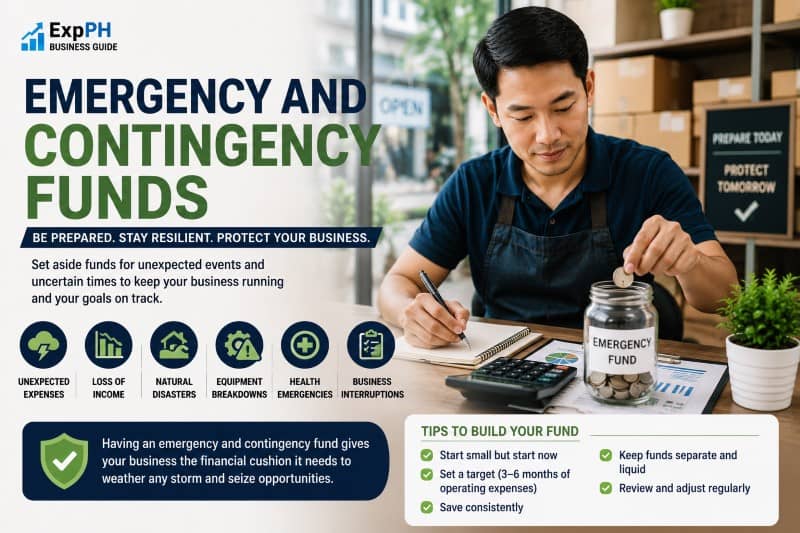
7. Emergency and Contingency Funds
Business is unpredictable, and surprise expenses like equipment repairs or economic downturns will inevitably happen. Maintaining a dedicated emergency fund acts as a vital financial safety net, ensuring your operations continue running smoothly even when you face unexpected challenges or temporary sales drops.
Examples include:
- Equipment repairs
- Emergency purchases
- Inventory shortages
- Utility increases
- Economic downturns
A contingency fund provides financial protection and helps maintain business stability during challenging periods.
Many financial experts recommend setting aside a percentage of monthly revenue for emergencies.
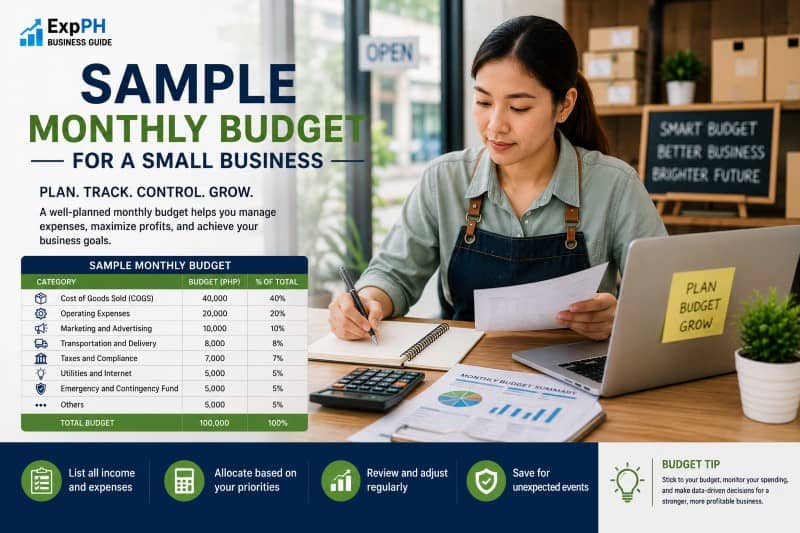
8. Sample Monthly Budget for a Small Business
Creating a clear financial plan helps you visualize exactly where your money goes. Below is a sample monthly budget for a small retail shop, illustrating typical expenses. Keep in mind that your actual numbers will vary based on your specific industry, size, and location.
| Expense Category | Estimated Monthly Cost |
|---|---|
| Rent | ₱12,000 |
| Utilities | ₱4,000 |
| Internet | ₱1,500 |
| Salaries | ₱25,000 |
| Inventory | ₱20,000 |
| Marketing | ₱5,000 |
| Transportation | ₱3,000 |
| Software Tools | ₱1,500 |
| Miscellaneous | ₱3,000 |
| Total | ₱75,000 |
Actual expenses will vary depending on business size, location, and industry.

9. Tips for Managing Small Business Expenses in the Philippines
Taking control of your finances requires discipline and the right strategies. By tracking every transaction, separating personal and business bank accounts, reviewing costs monthly, negotiating with suppliers, and investing in automation, you can significantly reduce overhead and maximize your overall business profitability over time.
Track Every Expense
Record all business transactions regularly.
Even small purchases can accumulate into significant costs over time.
Separate Business and Personal Finances
Maintaining separate accounts helps improve financial accuracy and simplifies bookkeeping.
Review Expenses Monthly
Regular expense reviews help identify wasteful spending and opportunities for savings.
Negotiate with Suppliers
Building strong supplier relationships can lead to better pricing and payment terms.
Invest in Automation
Technology solutions can reduce manual work and improve operational efficiency.
Many affordable digital tools now help small businesses manage accounting, inventory, customer relationships, and reporting.
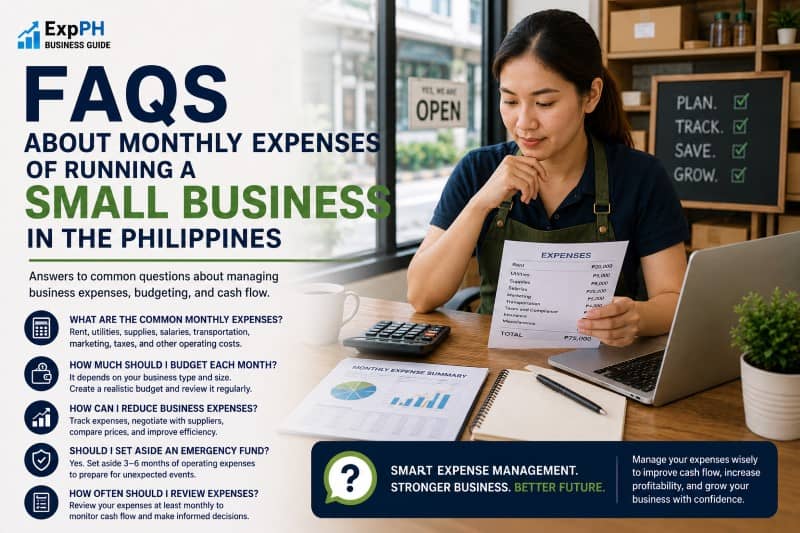
10. FAQs About Monthly Expenses of Running a Small Business in the Philippines
What are the most common monthly expenses for small businesses?
Rent, employee salaries, utilities, and inventory usually make up the largest monthly expenses for most traditional small businesses operating across the Philippines every single month.
How much does commercial rent cost in the Philippines?
Commercial rent varies widely depending on your exact location. Provincial spaces cost significantly less than prime commercial districts located inside busy Metro Manila business hubs.
Are employee benefits mandatory every single month?
Yes, employers must pay mandatory government contributions every month. These regular payments cover Social Security System, PhilHealth, and Pag-IBIG benefits for all your eligible workers.
Do home businesses have lower monthly operating costs?
Home businesses generally enjoy much lower monthly expenses because owners completely avoid paying expensive commercial rent and separate utility bills for a physical storefront location.
Why should I track my business expenses regularly?
Tracking your expenses helps you identify wasteful spending quickly. This consistent financial habit protects your cash flow and ensures your business remains profitable over time.
Are software subscriptions considered valid monthly business expenses?
Yes, software subscriptions are valid business expenses. Digital tools for accounting, inventory management, and customer relations help streamline your daily operations and improve overall efficiency.
How much should a small business spend on marketing?
Many financial experts recommend allocating around five to ten percent of your gross monthly revenue toward marketing campaigns to attract new customers and drive sales.
Do I need to pay business taxes every month?
Yes, business owners must file specific taxes monthly. Percentage taxes and withholding taxes require regular monthly settlements with the Bureau of Internal Revenue regional offices.
Why is an emergency fund important for small businesses?
An emergency fund provides a vital financial safety net. It ensures you can still pay rent and salaries even when your monthly sales drop unexpectedly.
How can I reduce my monthly business operating costs?
You can lower costs by negotiating better deals with suppliers, adopting energy efficient appliances, utilizing free marketing channels, and shifting to remote work setups today.
Final Thoughts on Small Business Expenses in the Philippines
Taking complete control of your finances is one of the most powerful steps you can take as an entrepreneur. When you fully understand your small business expenses in the Philippines you create a solid foundation for long-term success. This deep financial awareness allows you to make smarter daily decisions and confidently navigate the unpredictable challenges of running a local enterprise.
You can actively protect your hard-earned cash flow by tracking every transaction and strictly following a realistic monthly budget. Leveraging modern digital tools makes this entire financial process much easier and highly efficient. These consistent habits ultimately help you build a highly profitable business that thrives and remains remarkably resilient for many years to come.
Ready to turn your business idea into reality?
Now that you know exactly what it costs to keep the lights on every month, it is time to take the big leap. Read our master resource, the Complete Guide to Starting a Business in the Philippines (Registration, Costs, and Steps 2026), for a step-by-step roadmap on getting your permits, handling initial startup costs, and launching successfully.
Related Articles
- Startup Cost of an Online Business in the Philippines (Low Budget Guide)
- How Much Does It Cost to Start a Food Business in the Philippines
Quiz: Monthly Expenses of Running a Small Business in the Philippines
Test your knowledge on managing cash flow and understanding the true costs of running a local enterprise. This quick quiz will help you identify key financial obligations every Filipino entrepreneur must know. Let’s see how well you understand small business expenses!
Results


#1. What is often the largest fixed monthly expense for physical stores?
#2. Which of the following is a mandatory employee benefit contribution?
#3. Why do home-based businesses have lower operating costs?
#4. What is a common variable expense that fluctuates with sales?
#5. Which digital tool helps streamline daily business operations?
#6. How much of gross revenue is recommended for marketing?
#7. What protects a business during unexpected economic downturns?
#8. Which government agency handles business tax compliance?
#9. What is the best way to handle business and personal finances?
#10. How can a business lower its monthly operating costs?
Thank you for taking the quiz!
We would love to hear how you did, so please share your score or your own business experience in the comments below.

A Filipino web developer with a background in Computer Engineering. Founder of ExpPH Blog and ExpPH Business Guide, two Philippines-focused platforms covering OFW guidance, business, finance, freelancing, travel, and lifestyle. Passionate about helping Filipinos grow, he creates practical content that educates, empowers, and inspires readers nationwide.