

Starting a small business is an exciting journey, but one of the most important decisions you will make happens before you even open your doors. Choosing the right location can influence your customer reach, operating costs, growth potential, and overall profitability. While some entrepreneurs prefer the opportunities available in major cities, others find success in provincial areas where expenses are lower and competition is less intense.
The Philippines offers business opportunities in both urban and provincial locations. However, understanding the advantages and challenges of each option can help you make a smarter decision based on your goals, budget, and target market.
Planning to start a business in the Philippines?
Check out our Complete Guide to Starting a Business in the Philippines (Registration, Costs, and Steps 2026) to learn about registration, permits, startup costs, and the essential steps before choosing your business location.
Quick Summary (TL;DR)
- Cities offer larger customer markets, stronger infrastructure, and greater access to skilled workers.
- Provinces provide lower operating costs, less competition, and emerging business opportunities.
- Technology, retail, and professional service businesses often thrive in cities.
- Agriculture, tourism, and community-focused businesses can perform well in provinces.
- E-commerce allows provincial businesses to reach customers nationwide.
- Hybrid business models help entrepreneurs combine the advantages of both city and provincial locations.
- The best small business locations in the Philippines depend on your industry, budget, and long-term goals.
Table of Contents

1. Why Business Location Matters
Choosing the right location is one of the most important decisions a business owner can make. A great product or service may still struggle if it is offered in an area with limited demand, high costs, or poor accessibility. Understanding how location affects daily operations can help entrepreneurs make smarter business decisions.
Location affects almost every aspect of a business operation. It influences customer accessibility, employee availability, transportation costs, supplier relationships, and overall profitability.
A good location can help attract customers naturally, while a poor location may require additional spending on marketing and logistics.
Before launching a business, entrepreneurs should evaluate the following:
- Population size
- Consumer spending power
- Competition level
- Infrastructure quality
- Transportation access
- Availability of skilled workers
- Rental and operating expenses
These factors help determine whether a city or provincial setting is more suitable.

2. City vs Province at a Glance
Before diving deeper into the advantages and challenges of each location, it helps to compare the key factors side by side. Cities and provinces offer different opportunities for entrepreneurs, and understanding these differences can make it easier to determine which environment best matches your business goals and budget.
The table below provides a quick comparison of key business factors.
| Factor | City | Province |
|---|---|---|
| Customer Base | Larger | Smaller |
| Competition | Higher | Lower |
| Rental Costs | Higher | Lower |
| Labor Costs | Higher | Generally Lower |
| Infrastructure | More Developed | Varies by Area |
| Internet Connectivity | Usually Better | Improving Rapidly |
| Growth Potential | Faster Scaling | Steady Long-Term Growth |
| Best For | Tech, Retail, Services | Agriculture, Tourism, Local Services |

3. Understanding Business Opportunities in Cities
Many entrepreneurs choose to start their businesses in major cities because of the wider market reach and stronger economic activity. Urban areas provide access to more customers, better infrastructure, and a larger talent pool. However, these advantages often come with higher costs and increased competition, making careful planning essential.
Major cities such as Manila, Quezon City, Cebu City, and Davao City continue to attract entrepreneurs because of their strong economies, large populations, and developed infrastructure.
Larger Customer Base
One of the biggest advantages of operating in a city is access to more potential customers.
Urban areas have higher population density, making it easier for businesses to attract foot traffic and generate sales. A larger customer base can also help businesses scale more quickly.
Businesses that often perform well in cities include:
- Restaurants and cafés
- Retail stores
- Professional service firms
- Technology companies
- Digital agencies
- Educational centers
- Fitness businesses
Better Infrastructure
Cities generally offer:
- Faster internet connections
- Better transportation networks
- Reliable utilities
- Easier access to suppliers
These advantages can improve efficiency and customer satisfaction while reducing operational challenges.
Access to Skilled Workers
Urban centers typically have a larger pool of qualified professionals.
Businesses that require specialized skills in accounting, software development, engineering, digital marketing, customer service, and management often find recruitment easier in cities.
Challenges of City-Based Businesses
Despite the advantages, city locations also come with challenges.
Higher Operating Costs
Business owners often face:
- Expensive commercial rent
- Higher salaries
- Increased utility expenses
- Higher marketing costs
These expenses can reduce profit margins, especially during the startup phase.
Intense Competition
Most major industries already have established competitors in cities.
New businesses must invest in branding, customer service, and marketing to stand out from the crowd.
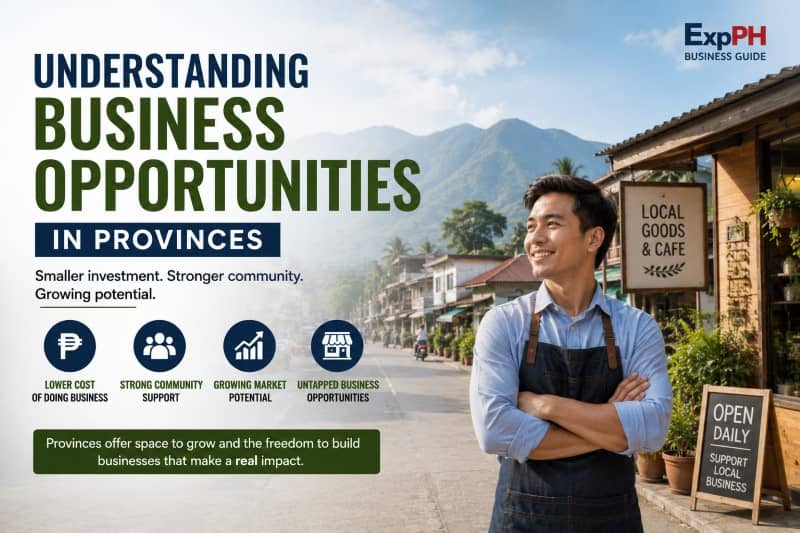
4. Understanding Business Opportunities in Provinces
Provincial areas are becoming increasingly attractive to entrepreneurs who want to start or expand a business without the high costs often associated with major cities. Lower expenses, growing local economies, and improving infrastructure have created new opportunities for business owners looking to build sustainable operations and serve emerging markets.
Many entrepreneurs are now exploring provincial locations because of lower costs and growing local economies.
Infrastructure improvements and increased internet access have opened new opportunities for small businesses outside major cities.
Lower Operating Expenses
One of the biggest advantages of operating in a province is cost savings.
Business owners often benefit from:
- Lower rental costs
- Affordable labor
- Reduced utility expenses
- Lower overhead costs
These savings can significantly improve profitability.
Less Competition
Many provincial markets have fewer businesses serving local demand.
This allows entrepreneurs to establish a strong presence before competitors enter the market.
Growing Consumer Markets
Many provinces are experiencing economic growth due to:
- Infrastructure development
- Tourism expansion
- Increased investments
- Rising household incomes
The Philippine government continues to improve roads, bridges, and transportation networks through national infrastructure programs. Entrepreneurs can learn more through the official Department of Public Works and Highways website: https://www.dpwh.gov.ph
Challenges of Provincial Businesses
Provincial businesses may also face limitations that entrepreneurs should consider.
Smaller Customer Base
Most provinces have smaller populations compared to major cities.
Businesses that depend heavily on high customer volume may require more time to grow.
Limited Access to Specialized Talent
Finding highly specialized workers may be more difficult in some areas.
Business owners may need to provide training or hire remote workers.
How E-Commerce Helps Provincial Businesses Grow
While provincial businesses may have fewer local customers, e-commerce has significantly expanded their market reach.
Today, entrepreneurs can sell products nationwide through platforms such as Shopee, Lazada, TikTok Shop, Facebook Marketplace, and their own websites. Combined with courier services and digital payment solutions, provincial businesses can reach customers across the Philippines without opening physical branches in major cities.
This means a business located in a small town can compete in larger markets while still benefiting from lower operating costs.

5. Best Types of Businesses for Cities
Not all businesses perform the same in every location. Cities often provide the ideal environment for businesses that rely on large customer markets, skilled workers, and modern infrastructure. Entrepreneurs who understand these advantages can choose business models that are more likely to grow and remain competitive in urban areas.
Certain business models naturally benefit from urban environments.
Technology and Digital Services
Examples include:
- Web development
- Mobile app development
- IT consulting
- Digital marketing
- Software services
These businesses benefit from strong internet infrastructure and access to skilled professionals.
Food and Beverage Businesses
Cities often provide strong demand for:
- Coffee shops
- Restaurants
- Food delivery businesses
- Specialty food stores
Large populations create consistent opportunities for customer growth.
Professional Services
Urban areas are ideal for:
- Accounting firms
- Law offices
- Financial advisors
- Business consultants
A larger concentration of businesses creates ongoing demand for professional services.
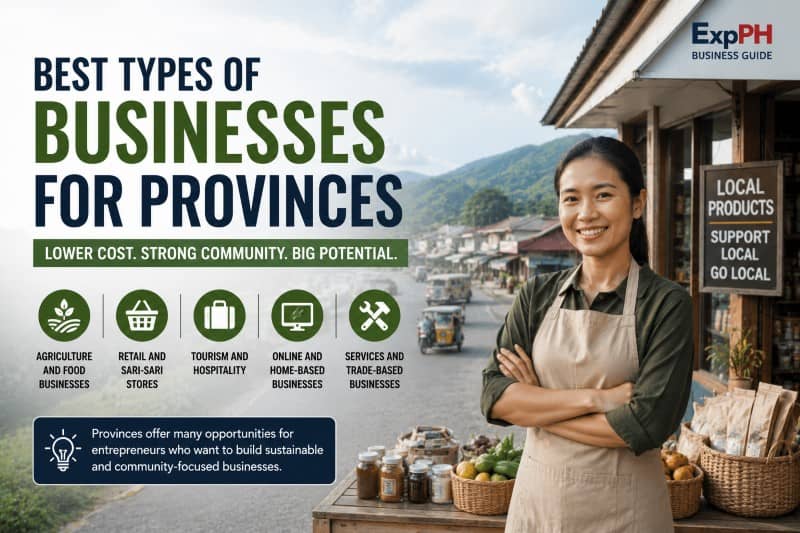
6. Best Types of Businesses for Provinces
Provincial areas offer unique opportunities for entrepreneurs who want to serve local communities or take advantage of resources that may not be as accessible in major cities. Businesses that match the needs of the local market often have a better chance of building a loyal customer base and achieving long-term growth.
Several industries can thrive in provincial locations.
Agriculture and Agribusiness
Examples include:
- Crop production
- Livestock farming
- Food processing
- Agricultural supply businesses
These businesses often benefit from proximity to raw materials and lower land costs.
Tourism-Related Businesses
Many provinces attract local and international visitors.
Opportunities include:
- Resorts
- Homestays
- Tour services
- Local souvenir shops
- Food businesses
Community-Based Services
Provincial communities often need:
- Hardware stores
- Pharmacies
- Convenience stores
- Repair services
- Learning centers
These businesses can enjoy steady demand from local residents.

7. The Rise of Hybrid Business Models
As business operations become more flexible, many entrepreneurs are finding ways to benefit from both city and provincial locations. Rather than limiting themselves to one area, they strategically divide operations to reduce costs, improve efficiency, and reach a larger customer base without sacrificing growth opportunities.
Many successful entrepreneurs no longer view the decision as choosing between a city or a province.
Instead, they combine the advantages of both.
For example, a business may keep its warehouse, production facility, or administrative operations in a province where costs are lower. At the same time, it may maintain a sales office, showroom, or fulfillment center in a major city to stay close to customers.
Technology has made this approach easier than ever. Cloud-based software, video conferencing, online banking, and digital collaboration tools allow businesses to operate efficiently across multiple locations.
For growing businesses, a hybrid model can offer the best balance between cost savings and market access.

8. Key Factors to Consider Before Choosing a Location
Selecting a business location should involve more than simply choosing the most affordable or convenient option. Taking time to evaluate market conditions, competition, regulations, and future growth opportunities can help you make a more informed decision and reduce potential risks as your business develops.
Regardless of where you plan to operate, careful research is essential.
Study the Market
Understand:
- Who your customers are
- What they need
- How much they are willing to spend
Market research helps reduce risk and identify business opportunities.
Analyze Competition
Study:
- Existing competitors
- Their strengths
- Their weaknesses
- Gaps you can fill
This information can help you develop a stronger business strategy.
Review Local Regulations
Before starting operations, understand local permits, registration requirements, and compliance obligations.
Official business registration information is available through the Department of Trade and Industry Business Name Registration System: https://bnrs.dti.gov.ph
Evaluate Future Growth Potential
Think beyond your first year of operations.
Consider:
- Future population growth
- Economic development
- Infrastructure projects
- Expanding customer demand
A location with long-term growth potential can support your business for years to come.
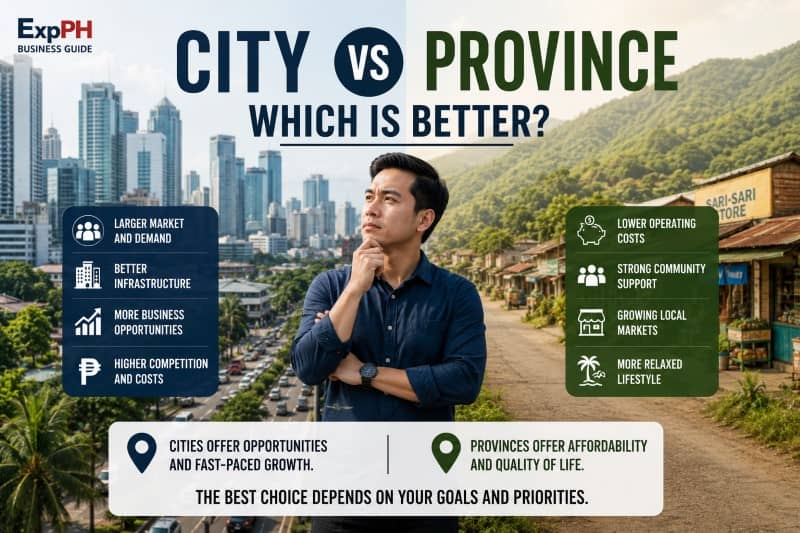
9. City vs Province: Which Is Better?
The decision between a city and a province ultimately depends on what your business needs to succeed. Each location offers distinct advantages and challenges, and the right choice will vary from one entrepreneur to another. Evaluating your goals, resources, and target market can help you determine the most suitable option.
There is no single answer that applies to every entrepreneur.
Cities are often ideal for businesses that need large markets, specialized talent, and fast growth opportunities.
Provinces may be better for entrepreneurs seeking lower costs, less competition, and opportunities in developing local economies.
In many cases, the best choice depends on your industry, business model, available capital, and target customers.

10. FAQs About Small Business Locations in the Philippines
Is it better to start a small business in a city or a province?
The better choice depends on your business goals, target customers, budget, and industry. Both cities and provinces offer unique opportunities and challenges today.
Why do many entrepreneurs choose cities for their businesses?
Cities provide access to larger customer markets, better infrastructure, and skilled workers. These advantages can help businesses grow faster and reach more people.
What are the main advantages of starting a business in a province?
Provincial locations often offer lower rental costs, reduced competition, and affordable labor. These factors can help entrepreneurs manage expenses more effectively.
Which businesses are most suitable for city locations?
Technology services, restaurants, retail stores, and professional firms often perform well in cities because they benefit from larger markets and demand.
What types of businesses thrive in provincial areas?
Agribusinesses, tourism ventures, local service providers, and community-focused stores often succeed in provinces because they meet local needs consistently.
Does e-commerce help businesses located in provinces?
Yes, e-commerce allows provincial businesses to sell products nationwide. Online platforms and delivery services help expand their reach beyond local customers.
Are business operating costs usually higher in cities?
Cities generally have higher expenses, including rent, salaries, utilities, and marketing costs. These factors can affect profitability, especially for startups.
How important is market research when choosing a location?
Market research helps identify customer demand, spending habits, and competition. Understanding these factors can reduce risks and improve business planning.
Can a business operate in both a city and a province?
Yes, many businesses use a hybrid model. They keep operations in provinces while maintaining sales, distribution, or customer support in cities.
What should entrepreneurs consider before selecting a business location?
Entrepreneurs should evaluate customer demand, competition, operating costs, regulations, infrastructure, and growth potential before making a final business decision.
Final Thoughts on Best Small Business Locations in the Philippines
Finding the best small business locations in the Philippines requires careful planning and realistic expectations. Both cities and provinces offer unique advantages, and each comes with challenges that entrepreneurs must evaluate.
Cities provide larger markets, stronger infrastructure, and access to skilled professionals. Provinces offer lower operating costs, reduced competition, and emerging opportunities for growth. Thanks to e-commerce and modern business technology, entrepreneurs are no longer limited by geography alone.
By researching your target market, understanding local conditions, and considering your long-term goals, you can choose a location that supports sustainable business growth and long-term success in the Philippines.
Ready to take your business to the next level?
Read our How to Grow and Scale a Small Business in the Philippines (2026 Guide) to discover practical strategies for increasing sales, attracting more customers, and expanding your business successfully.
Related Articles
- How to Start an Online Selling Business in the Philippines (Shopee, Lazada, Facebook)
- Top 8 Proven Ways to Scale a Small Business in the Philippines
- How to Choose the Right Business Location in the Philippines
Thinking about where to start a business in the Philippines?
Test your knowledge with this quick quiz and see how well you understand the advantages and challenges of operating in cities and provinces.
Results


#1. Which location typically has a larger customer base?
#2. Which location usually offers lower rental costs?
#3. What is a common advantage of city locations?
#4. Which business is often suitable for provincial areas?
#5. What challenge do many city businesses face?
#6. How can provincial businesses reach more customers?
#7. Which factor should entrepreneurs study before choosing a location?
#8. What is a benefit of provincial business locations?
#9. What does a hybrid business model combine?
#10. Which business often performs well in cities?
We appreciate you taking the time to test your knowledge
Share your score or experience in the comments and let other readers know how you did.

A Filipino web developer with a background in Computer Engineering. Founder of ExpPH Blog and ExpPH Business Guide, two Philippines-focused platforms covering OFW guidance, business, finance, freelancing, travel, and lifestyle. Passionate about helping Filipinos grow, he creates practical content that educates, empowers, and inspires readers nationwide.