

Starting a food business is one of the most popular ways Filipinos dive into entrepreneurship. From home-based kitchens to bustling food carts and cozy neighborhood cafés, the local food scene is always growing. It’s an appealing path because it offers flexibility and a real chance to scale your income.
But the biggest question for most beginners is figuring out the exact food business startup cost in the Philippines. The truth is, startup costs vary wildly depending on your concept, location, equipment, and daily operational needs.
Your total investment will depend on what you’re selling and how you plan to operate. A small home-based setup might cost less than ₱10,000 to launch, while a full-scale restaurant could easily require hundreds of thousands or even millions of pesos.
In this guide, we’ll break down the realistic costs of starting a food business in the Philippines for 2026. We’ll also look at permits, hidden expenses, budgeting tips, and practical ways to keep your startup costs low without sacrificing quality.
Planning to start a food business?
Read our guide on How to Register a Food Business in the Philippines (Complete Legal Requirements) to learn the permits and legal steps needed to operate your business properly.
Table of Contents
Quick Summary (TL;DR)
- Small home-based food businesses can start at around ₱5,000 to ₱30,000.
- Food carts usually require ₱50,000 to ₱250,000.
- Small restaurants or cafés may need ₱300,000 to ₱1 million or more.
- Major startup costs include permits, ingredients, kitchen equipment, rent, utilities, and marketing.
- Registering your business legally is important for long-term growth and customer trust.
- Budget planning helps reduce financial risks during the first few months of operation.

1. Why Food Businesses Are Popular in the Philippines
Food businesses thrive here because eating is such a huge part of Filipino culture. Whether it’s grabbing a quick street food snack, ordering milk tea, or getting meals delivered, there’s always a steady demand. This makes the food industry incredibly attractive for both new and seasoned entrepreneurs.
Several factors make this industry stand out:
- Strong local demand across different markets
- Lower startup costs compared to many industries
- Flexible business models for various budgets
- Growing food delivery and online ordering platforms
- Opportunities for home-based business operations
Even the smallest food stall can grow into a beloved local brand if they consistently serve great food and treat their customers well. With the right budget and a commitment to quality, small businesses can definitely compete in the Philippine market.
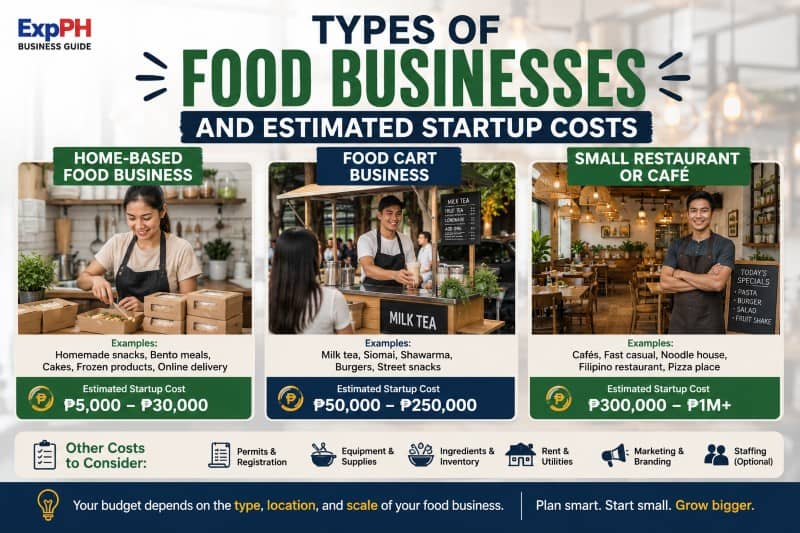
2. Types of Food Businesses and Estimated Startup Costs
The amount you need to prepare depends entirely on the type of food business you want to run. Expenses shift based on your equipment, location, and scale. Knowing these differences will help you set a realistic budget.
Home-Based Food Business
This is usually the safest and most affordable starting point. Operating from home lets you test your recipes and gauge customer interest without the pressure of commercial rent or hiring staff.
Common examples of home-based food businesses include:
- Homemade snacks
- Bento meals
- Cakes and pastries
- Frozen products
- Online food delivery
Estimated Startup Cost
- ₱5,000 to ₱30,000
Common Expenses
- Basic cooking equipment
- Ingredients
- Food packaging
- Logo and branding
- Delivery fees
- Social media marketing
This setup is perfect if you want to start small. In fact, many of the country’s most successful food brands started right in someone’s home kitchen before expanding to physical stores.
Food Cart Business
Food carts are a staple in malls, terminals, and busy streets. They require less capital than a full restaurant but still get you in front of a lot of daily foot traffic. It’s a flexible model with manageable operating costs.
Popular food cart business examples include:
- Siomai carts
- Milk tea stands
- Burger stalls
- Shawarma kiosks
- Street snacks
Estimated Startup Cost
- ₱50,000 to ₱250,000
Common Expenses
- Cart or kiosk construction
- Franchise fees (if applicable)
- Initial inventory
- Permits
- Rent
- Staff salary
Keep in mind that franchised carts usually cost more upfront because you’re paying for an established brand and training. If you build your own cart, you’ll save money initially, but you’ll need to work harder to build brand recognition.
Small Restaurant or Café
Opening a physical dining space is a much bigger commitment. You’ll need commercial-grade equipment, a dining area, staff, and interior design. While the startup costs are steep, the earning potential is also much higher if managed well.
Estimated Startup Cost
- ₱300,000 to ₱1 million or more
Common Expenses
- Commercial kitchen equipment
- Renovation and interior setup
- Tables and chairs
- Rent deposits
- Employee salaries
- POS systems
- Utility installation
Location plays a massive role here. Renting a commercial space in Metro Manila will require significantly more capital than setting up in a provincial area due to higher rent, labor, and utility rates.
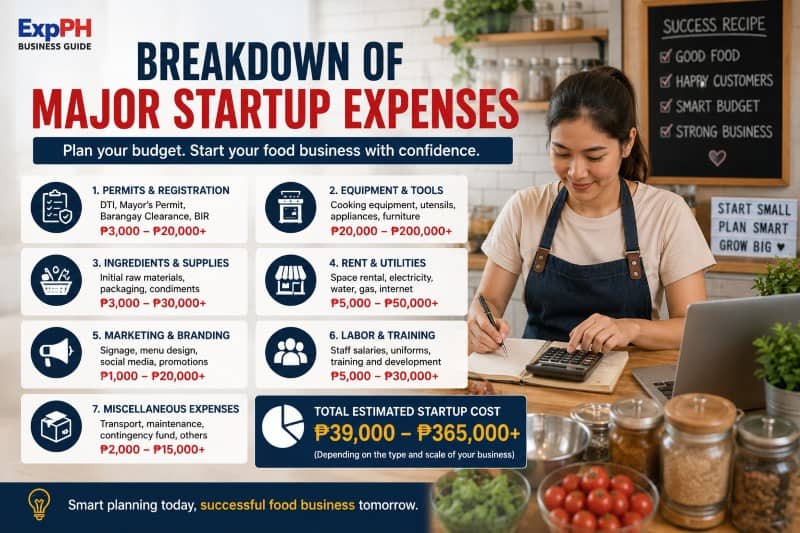
3. Breakdown of Major Startup Expenses
Knowing exactly where your money is going is crucial. A solid budget prepares you for both expected and surprise expenses, keeping your cash flow healthy during those critical early months.
Business Registration and Permits
Getting legally registered builds trust with your customers and opens doors for future expansion. It also keeps you out of trouble with local authorities.
Common registration requirements usually include:
- DTI registration for sole proprietors
- SEC registration for corporations
- Barangay clearance
- Mayor’s permit
- BIR registration
- Sanitary permit
- Food safety certificates
You can learn more about official registration procedures through the Department of Trade and Industry (DTI) and the Bureau of Internal Revenue (BIR).
Estimated Cost
- ₱3,000 to ₱20,000+
Costs vary depending on your city and business size. Always set aside extra funds for processing fees and any unexpected local compliance requirements.
Equipment and Kitchen Tools
This will likely be one of your biggest expenses. Your kitchen tools need to be reliable, and what you buy depends heavily on your menu and expected volume.
Basic equipment commonly includes:
- Stove or oven
- Refrigerator
- Cooking utensils
- Blender or mixer
- Storage containers
- Freezer
- Exhaust system
Estimated Cost
- ₱10,000 to ₱300,000+
Commercial kitchens need heavy-duty appliances that can handle continuous use. If you’re opening a café or restaurant, expect this part of your budget to be quite high.
Ingredients and Initial Inventory
You need enough supplies to get through your first few weeks smoothly. Planning this out prevents food waste and ensures you don’t run out of your bestsellers.
Estimated Cost
- ₱3,000 to ₱100,000+
Several factors affect ingredient and inventory costs, including:
- Product type
- Supplier pricing
- Menu size
- Shelf life of ingredients
Finding good wholesale suppliers early on can save you a lot of money and keep your inventory stable.
Rental and Location Costs
Rent can eat up your budget fast, especially in prime commercial spots. You have to weigh the cost of the space against the amount of foot traffic it brings in.
Typical rental costs may include:
- Small stall: ₱5,000 to ₱20,000 monthly
- Commercial space: ₱20,000 to ₱100,000+ monthly
Most landlords also require additional payments before move-in, such as:
- Advance payment
- Security deposits
Don’t just jump at the cheapest location. A cheap spot with zero visibility might end up costing you more in lost sales than a slightly pricier, high-traffic area.
Packaging and Branding
Good branding makes you look professional and helps customers remember you. It’s an expense that pays off by building trust and encouraging repeat orders.
Common branding expenses usually include:
- Logo design
- Packaging materials
- Stickers and labels
- Tarpaulins
- Menu printing
Estimated Cost
- ₱2,000 to ₱30,000
Even a simple, clean logo and nice packaging can make a home-based business look like a premium brand.
Marketing and Online Presence
In 2026, if you aren’t online, you’re missing out. Social media and delivery apps are the fastest ways to reach new customers.
Important marketing channels commonly include:
- TikTok
- Food delivery apps
- Google Business Profile
Estimated Cost
- ₱1,000 to ₱20,000+
You can start with free, organic posts, but putting a little money behind targeted ads can really help get your name out there in the beginning.
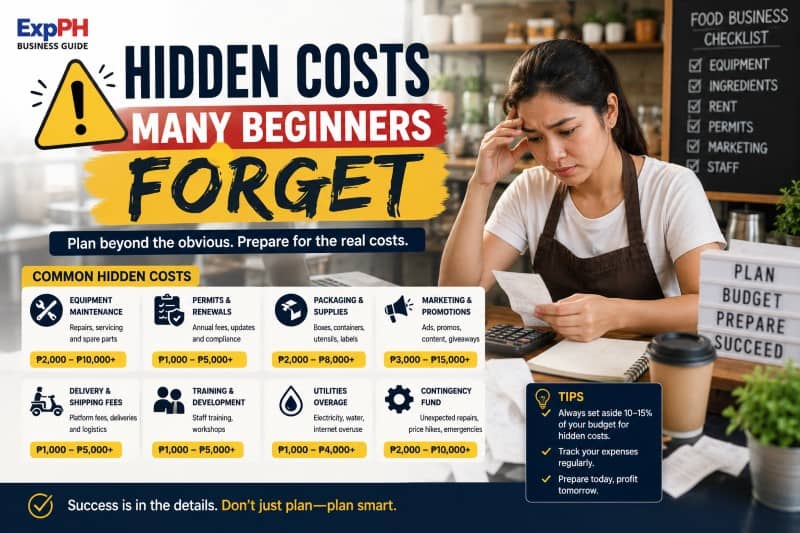
4. Hidden Costs Many Beginners Forget
It’s easy to budget for the big things and forget the day-to-day expenses. These hidden costs can drain your profits if you aren’t prepared for them.
Common hidden expenses often include:
- Electricity and water bills
- Delivery charges
- Gas refills
- Employee meals
- Equipment repairs
- Food spoilage
- Unexpected permit fees
Always keep an emergency fund. Appliances break, ingredient prices jump, and having a financial cushion will save you a lot of stress.
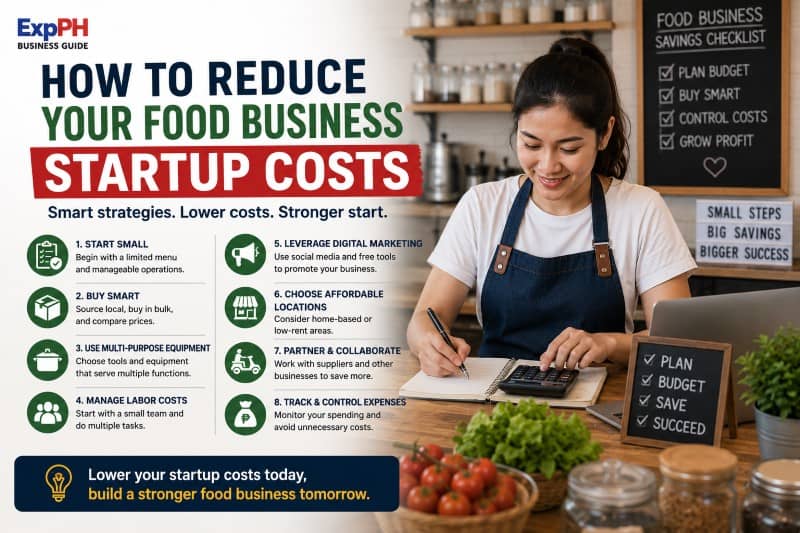
5. How to Reduce Your Food Business Startup Costs
You don’t need millions to start. Smart planning and practical choices can keep your initial expenses low.
Start Small First
Test the waters from home before signing a commercial lease. It lets you perfect your recipes and build a loyal following without the massive financial risk.
Starting small allows you to:
- Test recipes
- Build loyal customers
- Improve operations
- Reduce risk
Focus on a Simple Menu
A massive menu means massive inventory costs and more food waste. Keep it simple.
A smaller menu means:
- Lower ingredient waste
- Faster preparation
- Easier inventory management
Use Social Media Marketing
You don’t need a huge ad budget. Consistent, engaging posts on Facebook, TikTok, and Instagram can build your brand organically.
Buy Second-Hand Equipment Carefully
You can find great deals on slightly used commercial equipment. Just make sure to inspect everything thoroughly so you don’t end up paying for expensive repairs later.
Build Supplier Relationships
Treat your suppliers well. A good relationship can lead to better prices, flexible payment terms, and priority service when supplies are tight.
Reliable suppliers can offer:
- Better pricing
- Flexible payment terms
- Bulk discounts
6. Is Starting a Food Business Worth It?
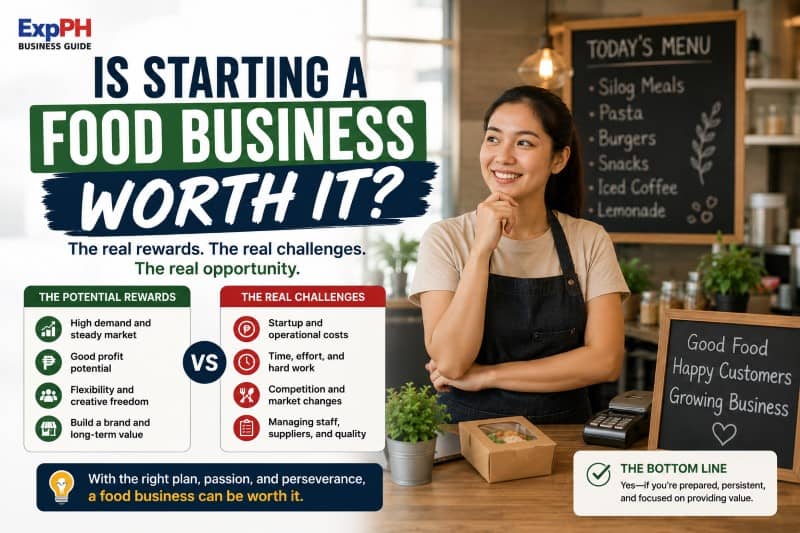
Absolutely. Food is a staple of Filipino life, and there will always be room for businesses that serve great meals. Success comes down to understanding your market, managing your costs, and staying consistent.
Food businesses are more likely to succeed when entrepreneurs can:
- Understand their target market
- Control expenses carefully
- Maintain food quality
- Adapt to customer trends
It’s a competitive industry, but if you start with a realistic budget and focus on sustainable growth, you can build a highly profitable business.
Final Thoughts on Food Business Startup Costs in the Philippines
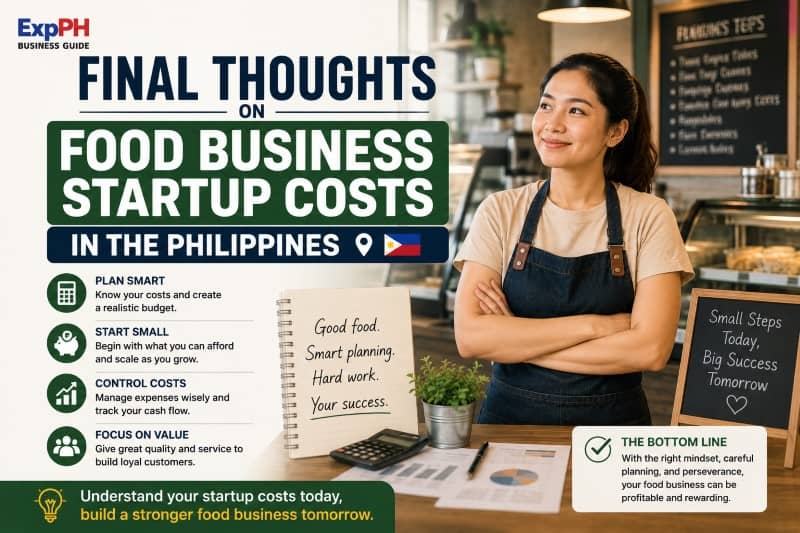
The cost to start a food business in the Philippines really comes down to your vision. A home kitchen setup is highly affordable, while a full café requires serious capital.
Do your research, plan your budget, and prepare for the unexpected. Starting small is often the smartest move, allowing you to grow at a manageable pace. With financial discipline and great food, your business can become a lasting success.
FAQs About Food Business Startup Cost in the Philippines
How much money do I need to start a small food business in the Philippines?
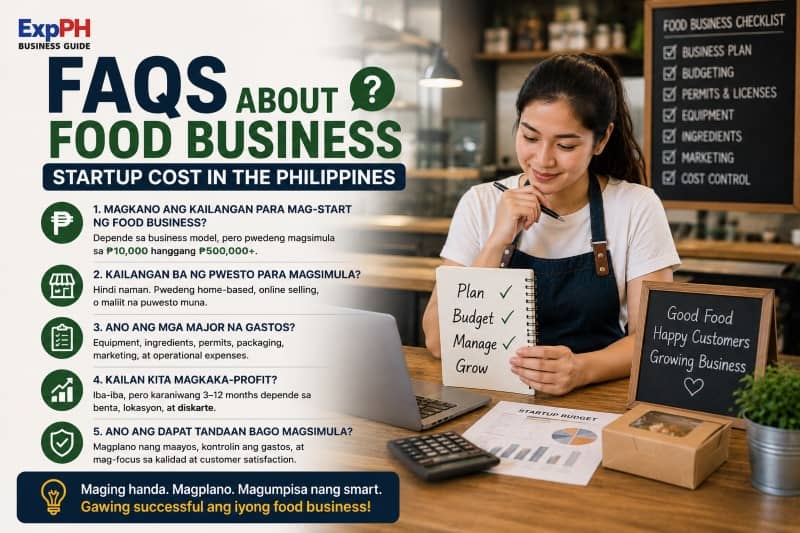
Small home-based food businesses can start with around ₱5,000 to ₱30,000, depending on your equipment, ingredients, and packaging needs.
What is the cheapest food business to start in the Philippines?
A home-based food business is usually the cheapest option since you can use your existing kitchen and avoid commercial rent and extra utility expenses.
Do I need permits before selling food in the Philippines?
Yes, you generally need permits like DTI registration, a barangay clearance, a mayor’s permit, and BIR registration to operate legally.
How much does a food cart business usually cost?
Food carts typically require ₱50,000 to ₱250,000, depending on the location, equipment, and whether you are paying franchise fees.
Why is budgeting important when starting a food business?
A solid budget helps you control expenses, prepare for hidden costs, and maintain a healthy cash flow during your crucial first few months.
Can I start a food business from home legally?
Yes, many entrepreneurs legally operate from home after securing the necessary local permits and following food safety guidelines.
What are the common hidden costs of food businesses?
Hidden expenses often include utility bills, food spoilage, delivery app fees, equipment repairs, and gas refills.
How can I reduce food business startup costs?
You can keep costs down by starting small, keeping your menu simple, buying second-hand equipment, and utilizing free social media marketing.
Is social media important for food businesses in the Philippines?
Definitely. Social media is one of the most effective ways to attract customers, build brand awareness, and promote your products locally.
Is starting a food business in the Philippines worth it?
Yes, with proper planning, consistent quality, and careful budgeting, a food business can be a highly rewarding and profitable venture.
Want to improve your budgeting and money management skills as an entrepreneur?
Explore our Business Finances in the Philippines (Complete Guide) for practical budgeting and financial planning tips, and read our Complete Guide to Starting a Business in the Philippines (Registration, Costs, and Steps 2026) for step-by-step advice on registration, startup costs, legal requirements, and business setup in the Philippines.
Quiz: Food Business Startup Costs in the Philippines
Planning to open a food business in the Philippines? Before you launch, take this quick quiz to test your knowledge on startup costs, permits, and budgeting. It’s a great way to see if you’re truly ready for the financial side of running a food business.
Results


#1. What is usually the cheapest food business to start?
#2. What is a common startup cost for a food cart business?
#3. Which expense is often forgotten by beginners?
#4. Which permit is commonly required for food businesses?
#5. Why do many beginners start small?
#6. Which platform helps promote food businesses online?
#7. What helps reduce ingredient waste?
#8. Why are supplier relationships important?
#9. Which business usually needs the highest capital?
#10. What is important before investing money?
Thank you for taking the quiz!
Feel free to share your score or your food business experience in the comments and help inspire future Filipino entrepreneurs.

A Filipino web developer with a background in Computer Engineering. Founder of ExpPH Blog and ExpPH Business Guide, two Philippines-focused platforms covering OFW guidance, business, finance, freelancing, travel, and lifestyle. Passionate about helping Filipinos grow, he creates practical content that educates, empowers, and inspires readers nationwide.