

Starting a business can be both exciting and challenging. One of the most common questions new entrepreneurs ask is how long it takes before a small business becomes profitable in the Philippines. Understanding Small Business Profitability in the Philippines can help business owners set realistic expectations and make informed financial decisions. While every business follows a different path, knowing the typical profitability timeline can help entrepreneurs prepare for the challenges of the early growth stages.
Many first-time business owners expect to see profits within a few months of launching. However, building a profitable business often takes more time than expected. Most businesses need to attract customers, establish consistent sales, build brand awareness, and recover their initial investment before generating reliable profits. Achieving long-term profitability usually requires patience, persistence, and a commitment to continuous improvement.
The good news is that profitability is attainable for businesses that plan carefully and manage their finances responsibly. Setting realistic goals and understanding the factors that influence business performance can help entrepreneurs make smarter decisions. With the right strategy and mindset, business owners can overcome challenges, strengthen their operations, and build a solid foundation for long-term success.
Planning to start a business?
Read our Complete Guide to Starting a Business in the Philippines (Registration, Costs, and Steps 2026) for a step-by-step walkthrough of registration, costs, permits, and business setup.
Table of Contents
Quick Summary (TL;DR)
- Most small businesses in the Philippines become profitable within 1 to 3 years.
- Service-based businesses often reach profitability faster than product-based businesses.
- Startup costs, operating expenses, location, competition, and customer demand affect profitability timelines.
- Effective financial management can significantly shorten the path to profit.
- Business owners should focus on cash flow, customer retention, and gradual growth rather than expecting immediate returns.

1. Understanding Business Profitability
Before looking at how long it takes for a business to become profitable, it is important to understand what profitability actually means. A business is profitable when it consistently earns more revenue than it spends on operating expenses, taxes, loans, inventory, salaries, marketing, rent, utilities, and other costs required to keep the business running.
A business is considered profitable when its total revenue exceeds all expenses, including:
- Startup costs
- Rent and utilities
- Employee salaries
- Inventory costs
- Marketing expenses
- Taxes and government fees
- Loan repayments
Many entrepreneurs confuse positive cash flow with profitability. A business may have money coming in regularly, but if its total expenses remain higher than its earnings, it has not yet achieved true profitability.
2. The Average Timeline for Small Business Profitability in the Philippines
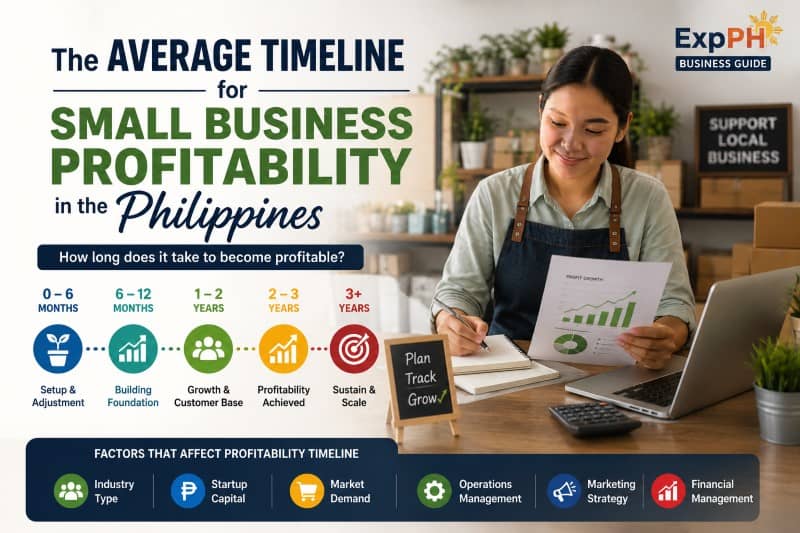
There is no fixed timeline for when a business becomes profitable because every industry, market, and business model is different. However, many small businesses in the Philippines follow a similar growth pattern. Understanding these stages can help entrepreneurs set realistic expectations and measure progress more effectively during the early years of operation.
First 6 Months
During the first six months, most businesses focus on building a strong foundation. This often includes:
- Building brand awareness
- Acquiring customers
- Refining products or services
- Establishing operational systems
At this stage, losses are common because startup costs, equipment purchases, marketing expenses, and other initial investments are still being recovered.
6 Months to 1 Year
Some businesses begin reaching the break-even point during this period. Breaking even means that total income is equal to total expenses. While the business may not yet generate substantial profits, it is no longer operating at a loss. Service-based businesses often achieve this milestone faster because they generally require lower startup and operating costs.
1 to 3 Years
Many successful small businesses achieve sustainable profitability within one to three years. By this stage, owners often have a stable customer base, stronger brand recognition, improved pricing strategies, and more efficient operations. Financial experts frequently view the first three years as a critical period because it often determines a business’s long-term stability and success.
3. Factors That Affect Small Business Profitability in the Philippines
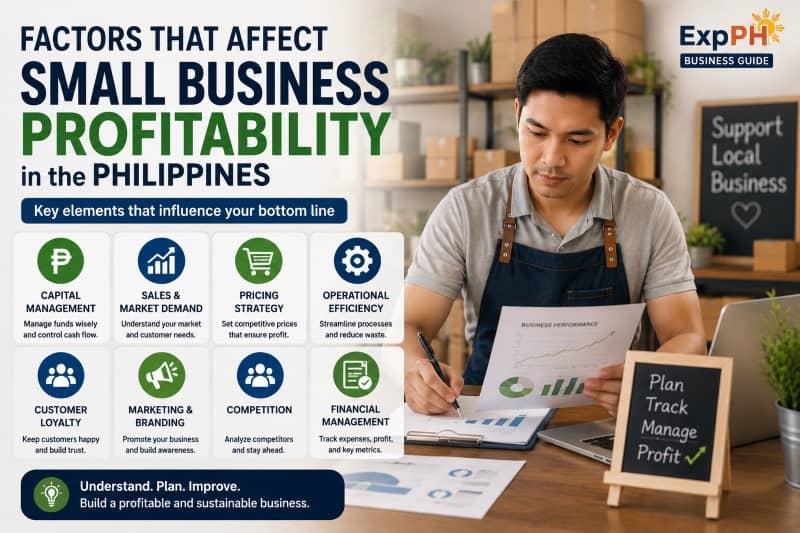
The time it takes for a business to become profitable depends on several important factors. While some businesses generate profits relatively quickly, others may take years to achieve consistent earnings. Understanding these factors can help entrepreneurs make better decisions, manage expectations, and improve their chances of building a successful and financially sustainable business.
Startup Capital
Having enough startup capital can significantly improve a business’s chances of becoming profitable. Adequate funding allows owners to cover operating expenses, invest in marketing, purchase necessary equipment, and handle unexpected costs. Businesses with limited capital often struggle to maintain daily operations, which can slow growth and delay profitability.
Type of Business
The type of business you operate can have a major impact on how quickly profits are generated. Different industries have different startup costs, operating expenses, and customer acquisition timelines, all of which influence the path to profitability.
Service-Based Businesses
Service-based businesses often require less capital because they do not depend heavily on inventory or physical products. Examples include:
- Virtual assistant agencies
- Accounting services
- Graphic design services
- Web development services
Because of their lower startup costs, these businesses can often reach profitability faster than many other business types.
Retail Businesses
Retail businesses usually require a larger investment in inventory, storage, and day-to-day operations. Common examples include:
- Sari-sari stores
- Convenience stores
- Online shops
Since inventory must be purchased before products can be sold, profitability may take longer to achieve compared to service-based businesses.
Food Businesses
Food-related businesses often face higher operating expenses due to rent, equipment, ingredients, utilities, and labor costs. Restaurants, cafés, and food stalls must also maintain consistent product quality and customer service. These additional expenses can make the journey to profitability longer than in many service-oriented industries.
Location
Location plays a significant role in business success throughout the Philippines. Businesses situated in busy commercial areas often benefit from higher customer traffic and greater visibility. However, these advantages usually come with higher rental costs. Businesses in lower-cost locations may save money but often need stronger marketing efforts to attract customers.
Competition
The level of competition within an industry can influence how quickly a business becomes profitable. Entering a crowded market often requires additional investment in marketing and customer acquisition. Businesses may need to spend more on:
- Advertising
- Promotions
- Customer acquisition
- Brand development
Understanding competitors and offering something unique can help attract customers and improve profitability over time.
Marketing Strategy
A well-planned marketing strategy can help businesses reach profitability faster by increasing visibility and attracting more customers. Today, many Philippine businesses use digital platforms to promote their products and services, including:
- TikTok
- Google Search
- YouTube
Businesses that consistently market their offerings and engage with their target audience often grow faster than those that rely solely on referrals and word-of-mouth recommendations.
4. Why Many Small Businesses Struggle to Become Profitable
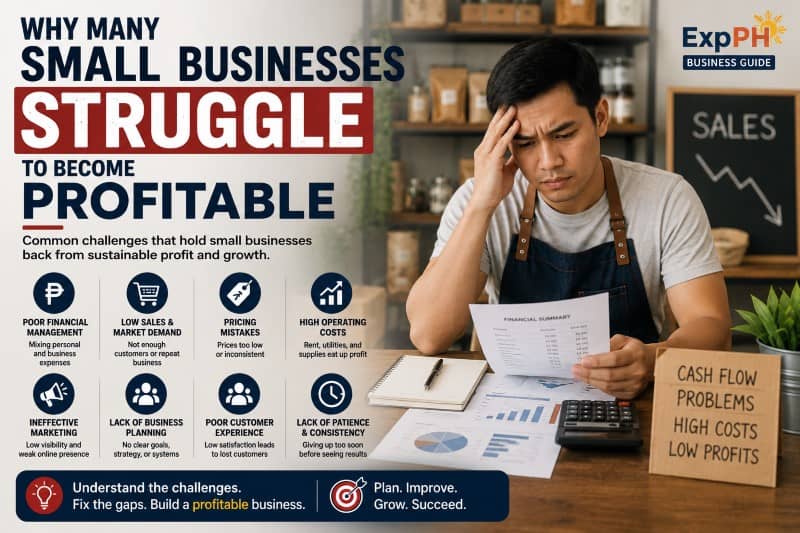
Many small businesses have the potential to succeed but face challenges that delay profitability. In many cases, the issue is not a lack of customers or demand but avoidable mistakes in financial management, pricing, planning, and daily operations. Identifying these common problems early can help business owners make better decisions and improve long-term business performance.
Poor Financial Management
One of the most common reasons businesses struggle is poor financial management. Many entrepreneurs fail to monitor expenses closely or keep accurate financial records. Without proper bookkeeping, it becomes difficult to identify unnecessary spending, measure profitability, and make informed decisions.
Proper record-keeping is essential for monitoring profitability and complying with tax regulations. The Bureau of Internal Revenue (BIR) provides guidelines on bookkeeping and tax compliance for businesses in the Philippines.
Underpricing Products and Services
Some new business owners set their prices too low in an effort to attract customers and compete with established businesses. While lower prices may increase sales initially, they can also reduce profit margins and make it harder to cover operating costs. Sustainable pricing should balance competitiveness with profitability to support long-term growth.
Lack of Business Planning
Businesses without a clear plan often find it difficult to manage growth and respond to challenges. A well-structured business plan serves as a roadmap and helps entrepreneurs stay focused on their goals. A strong business plan should include:
- Revenue projections
- Expense estimates
- Marketing strategies
- Growth objectives
Having a clear direction can improve decision-making and increase the chances of achieving profitability.
Ignoring Cash Flow
Even profitable businesses can experience financial difficulties if cash flow is not managed properly. Business owners need to monitor how much money is coming in and going out regularly. Effective cash flow management helps ensure that expenses such as rent, salaries, utilities, supplier payments, and other obligations are paid on time without disrupting operations.

5. Practical Ways to Reach Profitability Faster
While there is no guaranteed shortcut to profitability, business owners can take practical steps to improve their chances of achieving it sooner. Focusing on efficient operations, strong customer relationships, smart financial management, and the right technology can help reduce costs, increase revenue, and support long-term business growth.
Focus on High-Margin Products or Services
Not all products or services contribute the same amount to a business’s bottom line. Some generate significantly higher profits than others. By identifying which offerings deliver the best returns, business owners can focus their marketing efforts and resources on the areas that have the greatest impact on overall profitability.
Build Customer Loyalty
Keeping existing customers is often more cost-effective than constantly finding new ones. Loyal customers are more likely to make repeat purchases, recommend your business to others, and contribute to steady revenue growth. Businesses can strengthen customer loyalty through:
- Excellent customer service
- Consistent product quality
- Loyalty programs
- Personalized communication
Building trust and maintaining positive customer experiences can lead to stronger long-term profitability.
Leverage Technology
Technology can help businesses operate more efficiently while reducing costs and saving time. Modern tools can automate routine tasks, improve accuracy, and provide valuable insights for decision-making. Some useful solutions include:
- Accounting software
- Inventory management systems
- Customer relationship management platforms
- Digital payment solutions
Using the right technology can streamline daily operations and create more opportunities for business growth.
Monitor Key Financial Metrics
Successful entrepreneurs regularly review financial data to understand how their business is performing. Monitoring important metrics helps identify strengths, weaknesses, and opportunities for improvement. Key indicators include:
- Gross profit margin
- Net profit margin
- Customer acquisition cost
- Monthly recurring revenue
- Cash flow
Tracking these figures consistently can support better decisions and help businesses stay on the path toward sustainable profitability.

6. Signs Your Business Is Moving Toward Profitability
A business does not need to be fully profitable before showing signs of success. In many cases, positive financial and operational improvements appear long before profits become consistent. Recognizing these indicators can help business owners stay motivated, measure progress accurately, and make informed decisions while working toward long-term profitability.
Some common signs that a business is moving in the right direction include:
- Increasing monthly sales
- Growing customer retention rates
- Improved cash flow
- Reduced operational waste
- Consistent revenue growth
These positive developments often indicate that the business is building a stronger foundation and moving closer to sustainable profitability.
Setting Realistic Expectations
Many entrepreneurs start a business with high hopes and expectations. However, one of the most common mistakes is expecting profits to appear immediately. Building a successful business usually takes time, effort, and consistent improvement. Understanding this reality can help business owners remain focused and avoid unnecessary disappointment during the early stages of growth.
Some businesses may become profitable within months, while others require several years to reach that point. Rather than focusing solely on quick profits, entrepreneurs should prioritize sustainable growth, customer satisfaction, and sound financial management. Patience, continuous learning, and financial discipline are often the qualities that help successful businesses thrive over the long term.

Final Thoughts on Small Business Profitability in the Philippines
Understanding Small Business Profitability in the Philippines can help entrepreneurs set realistic expectations and make informed decisions as they grow their businesses. While some businesses may become profitable within their first year, many need one to three years to build a stable customer base, recover startup costs, improve operations, and generate consistent earnings that support long-term success.
Rather than focusing solely on how quickly profits are earned, business owners should prioritize sustainable growth and sound business practices. Effective financial management, strategic marketing, customer retention, and operational efficiency all play important roles in long-term success. With patience, proper planning, and consistent effort, entrepreneurs can improve their chances of achieving lasting profitability and business growth in the Philippines.

FAQs About Small Business Profitability in the Philippines
How long does it usually take for a small business to become profitable in the Philippines?
Most small businesses become profitable within one to three years. The timeline depends on startup costs, industry, customer demand, competition, and management practices.
Can a small business become profitable within its first year?
Yes, some businesses reach profitability within their first year. Service-based businesses often achieve this faster because they usually require lower startup investments.
What is the difference between profitability and cash flow?
Profitability means revenue exceeds all expenses. Cash flow refers to money moving in and out of the business during operations.
Which business types typically become profitable faster?
Service-based businesses often become profitable sooner because they generally have lower operating costs and fewer inventory requirements than retail or food businesses.
Why is startup capital important for profitability?
Adequate startup capital helps cover operating expenses, marketing, equipment, and unexpected costs. This allows businesses to grow without frequent financial difficulties.
How does competition affect business profitability?
High competition can increase marketing and customer acquisition costs. Businesses that offer unique value often improve their chances of achieving profitability.
What are signs that a business is moving toward profitability?
Common signs include increasing sales, stronger customer retention, improved cash flow, reduced waste, and consistent revenue growth over time.
Can poor financial management delay profitability?
Yes, poor financial management can delay profitability. Inaccurate record-keeping and uncontrolled expenses make it harder to monitor performance and manage resources.
How can technology help improve business profitability?
Technology improves efficiency by automating tasks, reducing errors, and providing useful business insights. It can also help lower operating costs.
What should entrepreneurs focus on instead of quick profits?
Entrepreneurs should focus on sustainable growth, customer satisfaction, financial discipline, and efficient operations to build a stronger long-term business.
Want to strengthen your business finances?
Explore our Business Finances in the Philippines (Complete Guide) for practical tips on budgeting, cash flow, financial planning, and long-term business growth.
Related Articles
- Monthly Expenses of Running a Small Business in the Philippines
- Startup Cost of an Online Business in the Philippines (Low Budget Guide)
Quiz: How Long Before a Small Business Becomes Profitable in the Philippines?
Starting a business requires patience, planning, and realistic expectations. Test your knowledge about business profitability timelines, common challenges, and growth strategies in the Philippines with this quick and informative quiz.
Results


#1. How long do many small businesses take to achieve sustainable profitability?
#2. What does it mean when a business breaks even?
#3. Which type of business often becomes profitable faster?
#4. Why is startup capital important?
#5. Which factor can delay profitability?
#6. Which platform is commonly used for digital marketing?
#7. Which sign suggests a business is moving toward profitability?
#8. How can businesses improve customer loyalty?
#9. Which technology can improve business efficiency?
#10. What should entrepreneurs focus on for long-term success?
We appreciate you taking the time to complete this quiz
Share your score or business experience in the comments and join the discussion with fellow entrepreneurs.

A Filipino web developer with a background in Computer Engineering. Founder of ExpPH Blog and ExpPH Business Guide, two Philippines-focused platforms covering OFW guidance, business, finance, freelancing, travel, and lifestyle. Passionate about helping Filipinos grow, he creates practical content that educates, empowers, and inspires readers nationwide.