
Starting a Pet Supplies Business in the Philippines can be a practical opportunity for entrepreneurs who want to serve the growing needs of pet owners. From dog and cat food to grooming products, toys, accessories, and everyday essentials, pet supplies stores provide products that customers regularly need for their animals.
You can start with a small neighborhood shop, operate an online store, or combine physical and digital selling channels. The right approach depends on your available capital, target customers, product selection, and ability to manage inventory.
However, opening a pet supplies business involves more than purchasing products and displaying them for sale. You need to understand your market, find dependable suppliers, set competitive prices, comply with registration requirements, and maintain proper inventory and financial records.
This guide explains how to plan, register, launch, and grow a pet supplies business in the Philippines with practical steps for first-time entrepreneurs.
Looking for other affordable business opportunities? Explore our Best Low-Capital Businesses to Start in the Philippines guide to discover practical business ideas, compare startup costs, and find an opportunity that matches your budget and goals.
Quick Summary (TL;DR)
Starting a pet supplies business requires careful planning, suitable products, reliable suppliers, and effective daily management. Here are the essential steps:
- Choose your business model: Decide whether to operate a physical pet supplies shop, an online store, or both.
- Research your target market: Understand the needs of local dog owners, cat owners, and other pet owners.
- Prepare your startup budget: Account for inventory, rent, shelves, permits, utilities, packaging, and working capital.
- Select products carefully: Start with essential pet food, treats, grooming products, toys, accessories, and cleaning supplies.
- Find reliable suppliers: Compare wholesale prices, product quality, delivery schedules, and minimum order requirements.
- Set competitive prices: Calculate product costs, operating expenses, and suitable profit margins before setting retail prices.
- Register your business: Complete the applicable business registration, local permits, and tax requirements.
- Organize your inventory: Track product quantities, expiration dates, sales, and restocking schedules.
- Promote your store: Use social media, local partnerships, online listings, and customer referrals to attract buyers.
- Monitor your finances: Record sales, expenses, inventory purchases, and cash flow to understand business performance.
Key takeaway: A successful pet supplies business starts with products that customers actually need, dependable suppliers, and careful financial management. Begin with a manageable inventory, understand your local market, and expand your product selection as customer demand becomes clearer.
Table of Contents

1. Understand the Pet Supplies Business Opportunity in the Philippines
Local demand for pet products can create opportunities for entrepreneurs who understand what animal owners need. Research customer preferences, study nearby competitors, and identify frequently purchased items to determine how your store can offer convenient products, reasonable prices, and dependable service that encourages repeat purchases.
Identify Products With Regular Demand
Start by understanding which products pet owners frequently purchase. These may include:
- Dog and cat food.
- Pet treats and snacks.
- Food and water bowls.
- Collars, leashes, and harnesses.
- Grooming shampoos and brushes.
- Pet toys.
- Litter and litter accessories.
- Cleaning and hygiene products.
- Pet beds and carriers.
- Basic pet care accessories.
Products with regular customer demand can help generate repeat purchases. However, avoid assuming that every item will sell quickly. Study local buying habits before committing too much capital to inventory.
Understand Your Local Market
Visit nearby pet shops and observe their product selection, pricing, store arrangement, and customer activity.
You can also talk to pet owners in residential communities to understand what they regularly purchase and which products are difficult to find locally.
This research can help you identify opportunities to offer better product availability, convenient ordering, or more suitable price options.
Identify Your Competitive Advantage
A new pet supplies store needs a clear reason for customers to choose it over existing sellers.
You might compete through:
- Convenient store location.
- Affordable product options.
- Reliable product availability.
- Friendly customer service.
- Convenient delivery arrangements.
- Organized online ordering.
- Carefully selected pet products.
Focus on serving customers consistently rather than trying to stock every available product from the beginning.

2. Choose the Right Pet Supplies Business Model
Your business setup affects how customers shop, how products are stored, and how orders are handled. Consider your available capital, operating space, inventory requirements, and preferred sales channels before choosing an arrangement that supports your daily operations and customer needs.
Physical Pet Supplies Store
A physical shop allows customers to inspect products and purchase items directly.
This setup may work well in residential communities, commercial areas, and locations near veterinary clinics or pet grooming establishments.
However, you need to consider rent, utilities, store improvements, shelves, security, and inventory requirements.
Online Pet Supplies Store
An online store allows you to sell products through social media, marketplaces, or your own website.
You may operate from home or a small storage area if local requirements and your property arrangements allow it.
An online setup can reduce the need for commercial retail space, but you still need to manage packaging, delivery, customer inquiries, product availability, and online selling fees.
Hybrid Pet Supplies Business
A hybrid model combines a physical store with online selling.
Customers can visit your shop, place orders through messaging platforms, or arrange delivery when available.
This approach provides several ways to reach customers, although it requires organized inventory records to prevent overselling and scheduling problems.
Compare Your Options Before Deciding
Consider the following factors:
| Business model | Main advantage | Important consideration |
|---|---|---|
| Physical store | Direct customer access | Rent and operating expenses |
| Online store | Wider selling reach | Delivery and platform costs |
| Hybrid store | Multiple sales channels | More complex management |
Choose the model you can manage consistently with your available resources.
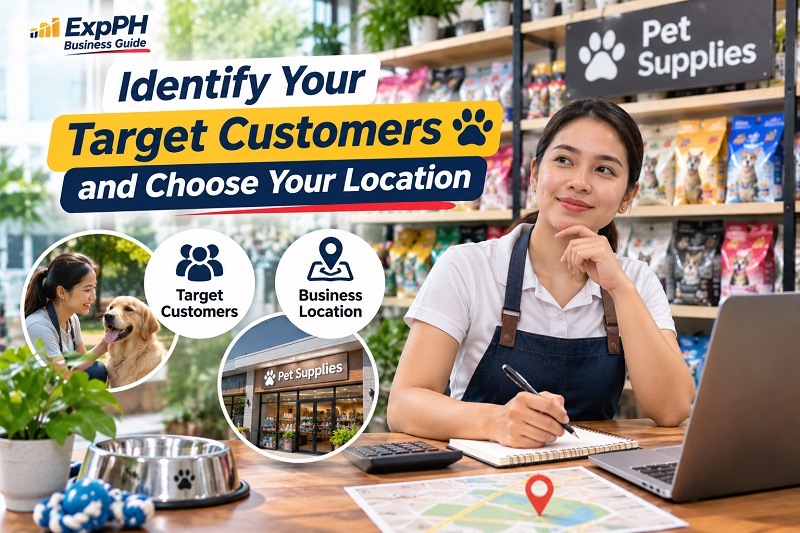
3. Identify Your Target Customers and Choose Your Location
Understanding local demand helps you identify the customers most likely to buy your products and choose a suitable store location. Consider nearby pet owners, animal care establishments, accessibility, rental costs, and existing competitors before deciding where to operate your business.
Identify Your Target Customers
Potential customers include:
- Dog owners.
- Cat owners.
- Owners of birds and other small pets.
- Multi-pet households.
- Pet boarding facilities.
- Pet grooming businesses.
- Animal care establishments.
Different customers have different purchasing needs. Some prioritize affordable pet food, while others look for specialized accessories, grooming supplies, or convenient delivery.
Choose a Suitable Business Location
If you plan to operate a physical store, consider locations with:
- Nearby residential communities.
- Regular pedestrian or vehicle traffic.
- Convenient customer access.
- Suitable commercial space.
- Reasonable rental costs.
- Adequate storage facilities.
- Reliable utilities and security.
Being near veterinary clinics or grooming establishments may also help you reach customers who already purchase pet-related products.
Evaluate the Competition
Check existing pet shops in your target area.
Compare their product selection, prices, store accessibility, customer service, and online presence. Look for products or services that customers frequently request but cannot easily find.
Avoid choosing a location based only on low rent. A more affordable property may not provide enough customer access to support your expected sales.

4. Prepare Your Starting Capital and Business Budget
Estimate the funds needed to open and operate your store based on its size, location, and business model. Account for registration, inventory, equipment, and daily expenses, then reserve enough working capital to support restocking and unexpected costs while sales grow.
List Your Initial Startup Expenses
Consider the following expenses:
- Business registration and applicable permits.
- Initial inventory purchases.
- Store rental deposit and advance payment.
- Shelves, display racks, and storage cabinets.
- Counter and point-of-sale equipment.
- Computer or smartphone.
- Packaging materials.
- Store signage.
- Utilities and internet connection.
- Initial marketing expenses.
- Delivery and transportation costs.
An online business may have lower facility expenses but still requires inventory, packaging, advertising, platform fees, and delivery arrangements.
Prepare Working Capital
Working capital helps cover regular expenses while your business establishes consistent sales.
Set aside funds for restocking, rent, utilities, transportation, employee wages, and unexpected operating costs.
Do not spend your entire budget on opening inventory. You need enough available cash to purchase products again when popular items sell out.
Create a Simple Startup Budget
You can organize your planned expenses in a spreadsheet.
| Expense category | What to include |
|---|---|
| Registration | Business registration and permits |
| Inventory | Food, treats, toys, accessories |
| Store setup | Shelves, counter, signage |
| Equipment | Computer, POS, printer |
| Operations | Rent, utilities, internet |
| Marketing | Advertising and promotions |
| Working capital | Restocking and daily expenses |
Use actual supplier quotations and local rental rates when estimating costs. Avoid relying on generic figures that may not reflect your location.
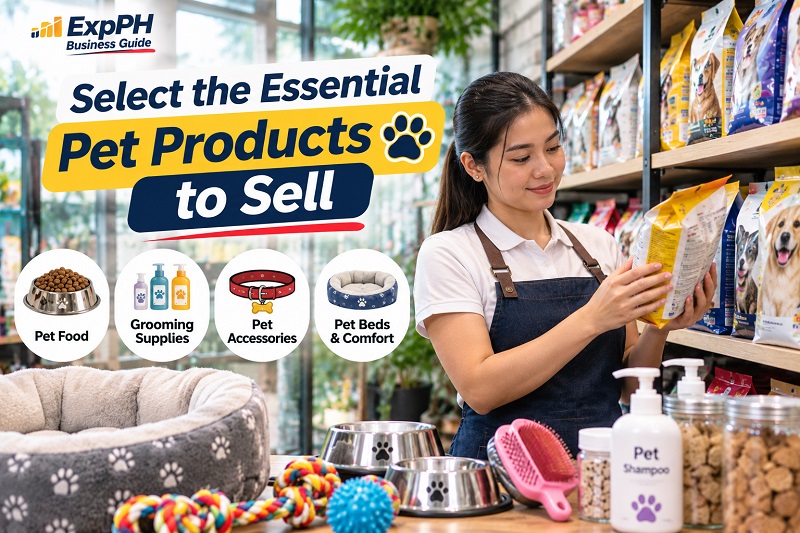
5. Select the Essential Pet Products to Sell
Choose products that meet the everyday needs of your target customers while keeping inventory costs manageable. Focus on essential food, accessories, grooming supplies, and toys, then monitor sales and customer preferences to determine which items deserve restocking or expansion.
Start With Everyday Pet Essentials
Consider offering the following product categories:
Pet food and treats
- Dry dog food.
- Wet dog food.
- Dry cat food.
- Wet cat food.
- Pet treats.
- Training rewards.
Feeding accessories
- Food bowls.
- Water bowls.
- Feeding mats.
- Food storage containers.
Grooming and hygiene products
- Pet shampoos.
- Brushes and combs.
- Nail clippers.
- Pet wipes.
- Waste bags.
- Litter and litter scoops.
Toys and accessories
- Chew toys.
- Balls.
- Cat toys.
- Collars and leashes.
- Harnesses.
- Pet beds.
- Carriers.
Choose Products Based on Customer Demand
Do not purchase large quantities simply because a supplier offers discounts.
Check which brands, sizes, flavors, and product types customers actually prefer. A store serving mostly cat owners, for example, may need more cat food and litter than dog accessories.
Start with a manageable selection and adjust your inventory based on actual sales records.
Check Product Quality and Suitability
Purchase products from dependable sources and review their packaging, labels, intended use, and storage instructions.
For pet food and other regulated products, verify applicable requirements and avoid selling items with damaged packaging, questionable origins, or unclear product information.
Do not sell products that are expired or unsuitable for their intended use.

6. Find Reliable Pet Supplies Suppliers and Wholesalers
Choosing dependable suppliers helps you maintain consistent stock and control purchasing expenses. Compare wholesale prices, order requirements, delivery schedules, and product quality before committing. Keep clear transaction records and build relationships with multiple suppliers to support reliable inventory and smooth daily operations.
Research Potential Suppliers
You can look for suppliers through:
- Authorized brand distributors.
- Local pet product wholesalers.
- Established manufacturers.
- Official brand representatives.
- Verified business-to-business suppliers.
- Trade fairs and industry events.
Ask whether they provide wholesale pricing, product catalogs, delivery services, and minimum order quantities.
Compare Supplier Terms
Review important details before choosing a supplier:
- Wholesale prices.
- Minimum purchase requirements.
- Payment terms.
- Delivery schedules.
- Return and replacement policies.
- Product authenticity.
- Expiration dates.
- Availability of popular items.
A supplier with lower prices may not always be the best choice if deliveries are unreliable or product quality is inconsistent.
Maintain Good Supplier Relationships
Communicate regularly with your suppliers and monitor product availability.
Keep records of purchase orders, invoices, delivery dates, and payment transactions. This makes it easier to resolve discrepancies and plan future purchases.
Avoid depending entirely on one supplier for products that are essential to your daily sales.
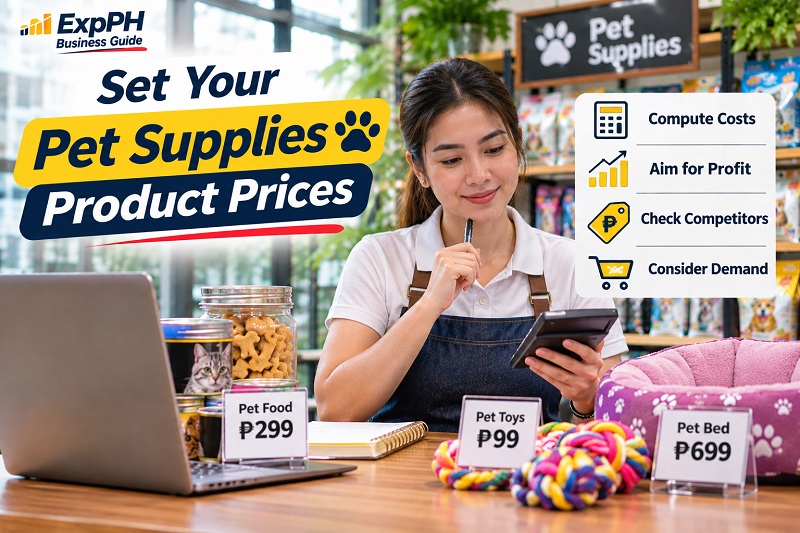
7. Set Your Pet Supplies Product Prices
Set prices that cover your purchasing and operating expenses while remaining competitive in the market. Calculate the full cost of each product, compare similar items from other sellers, and establish clear prices that protect your profit without discouraging customers.
Calculate Your Product Costs
Include the following when determining your selling prices:
- Wholesale purchase price.
- Delivery and transportation costs.
- Packaging expenses.
- Marketplace or payment fees.
- Applicable taxes.
- Storage and handling costs.
- Other relevant operating expenses.
For example, if a product costs more to purchase and deliver than expected, selling it at a competitor’s price may leave you with a very small margin.
Research Competitor Prices
Compare similar products sold by nearby pet shops and online retailers.
Check whether the products have the same brand, size, packaging, and specifications. Comparing different product sizes can lead to inaccurate pricing decisions.
Use competitor prices as a market reference, but calculate your own costs before setting retail prices.
Create Clear Product Pricing
Display prices clearly and make sure customers understand the product size, quantity, and included items.
If you offer bundles or discounts, calculate their effect on your profit before introducing them.
Review your prices regularly when supplier costs, delivery fees, or other expenses change.

8. Register Your Pet Supplies Business in the Philippines
Complete the required registrations and permits before opening your store to ensure your operations meet legal requirements. Your business structure, location, and product activities will determine which government agencies you need to approach and which documents you must secure.
Choose Your Business Structure
Common business structures include:
- Sole proprietorship: Usually suitable for an individual who owns and manages the business.
- Partnership: An option for two or more people operating a business together.
- Corporation: A separate legal entity with a more formal ownership and management structure.
Consider your ownership arrangements, responsibilities, and long-term business plans before selecting a structure.
Register Your Business Name or Entity
For a sole proprietorship, you can register your business name through the Department of Trade and Industry (DTI).
Partnerships and corporations generally register with the Securities and Exchange Commission (SEC).
Business name or entity registration does not replace local permits or tax registration.
Secure Local Business Permits
Visit your city or municipal Business Permits and Licensing Office (BPLO) to confirm the requirements for your business location.
Depending on your premises and local regulations, requirements may include:
- Barangay clearance.
- Mayor’s or business permit.
- Zoning or locational clearance.
- Fire safety inspection requirements.
- Other applicable local clearances.
Confirm the requirements with your local government before opening.
Register With the BIR
You must also comply with applicable tax registration, invoicing, and recordkeeping requirements through the Bureau of Internal Revenue (BIR).
Keep copies of your registration documents and monitor filing and renewal deadlines.
Check Requirements for Your Products
Pet supplies businesses may sell different types of products, and some product categories have additional regulatory requirements.
For example, pet food and certain animal-related products may be subject to applicable rules administered by the Bureau of Animal Industry (BAI).
Verify the requirements for the specific products you intend to sell, particularly if you plan to import, manufacture, distribute, or repackage them.
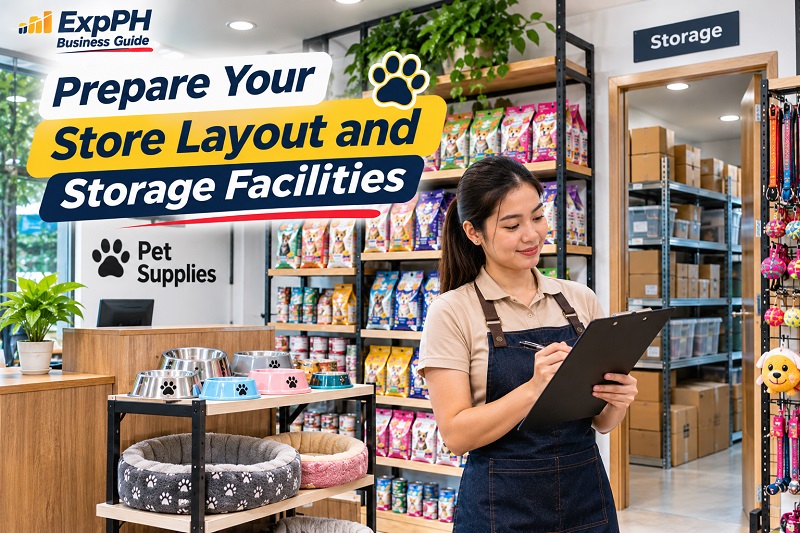
9. Prepare Your Store Layout and Storage Facilities
Organize your store to make products easy to find while keeping daily operations efficient. Plan suitable areas for product displays, checkout, and inventory storage, then use clear labels and proper storage practices to protect product quality and maintain a clean shopping environment.
Arrange Products by Category
Group similar products together to make shopping more convenient.
For example:
- Dog food and treats.
- Cat food and litter.
- Grooming supplies.
- Toys and accessories.
- Feeding equipment.
- Pet cleaning products.
Use clear labels and price displays to help customers compare items.
Prepare Proper Storage Areas
Keep products in clean and organized storage spaces.
Pet food and treats should be stored according to their packaging instructions. Protect products from excessive heat, moisture, pests, and direct sunlight when required.
Separate cleaning chemicals from food and treats to reduce the risk of contamination.
Maintain Store Cleanliness
Clean shelves, counters, floors, and storage areas regularly.
Check product packaging for damage and organize items so older stock can be monitored and sold before newer deliveries when appropriate.
A clean and orderly store helps create a more professional shopping experience.
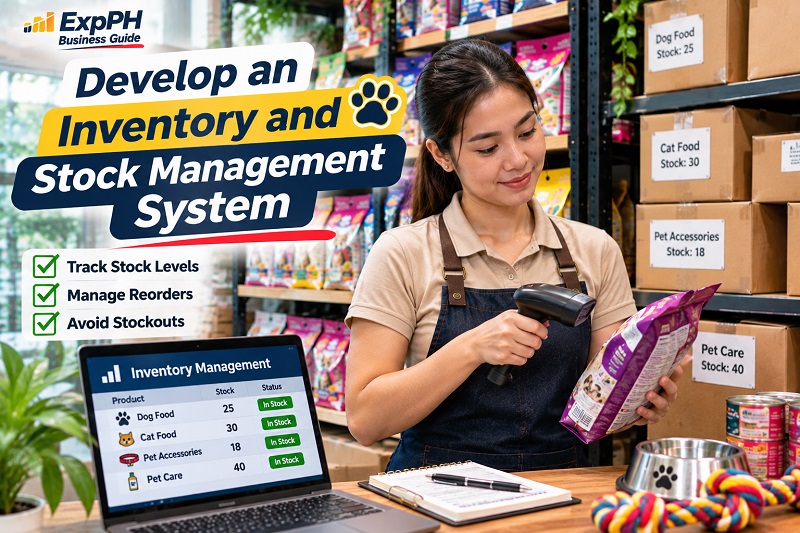
10. Develop an Inventory and Stock Management System
Accurate stock records help you track product availability and make informed purchasing decisions. Monitor quantities, sales, and expiration dates to identify items that need restocking. Reviewing fast-moving and slow-moving products also helps prevent excess inventory and keeps your available capital from being tied up unnecessarily.
Record Your Inventory
Maintain records containing:
- Product name and brand.
- Product size or variant.
- Supplier.
- Purchase cost.
- Selling price.
- Quantity received.
- Quantity sold.
- Current stock.
- Expiration date, when applicable.
These records help you understand which products sell quickly and which remain on your shelves for longer periods.
Monitor Expiration Dates
Pet food, treats, and other products with expiration dates require careful monitoring.
Use a stock rotation system that prioritizes products with earlier expiration dates, provided they remain safe and suitable for sale.
Never sell expired products or items with questionable packaging integrity.
Identify Fast-Moving and Slow-Moving Products
Review your sales records to identify products customers purchase frequently.
Restock popular items based on demand and available cash. Reduce purchases of slow-moving products until you understand why they are not selling.
Avoid tying up too much capital in inventory that may remain unsold.
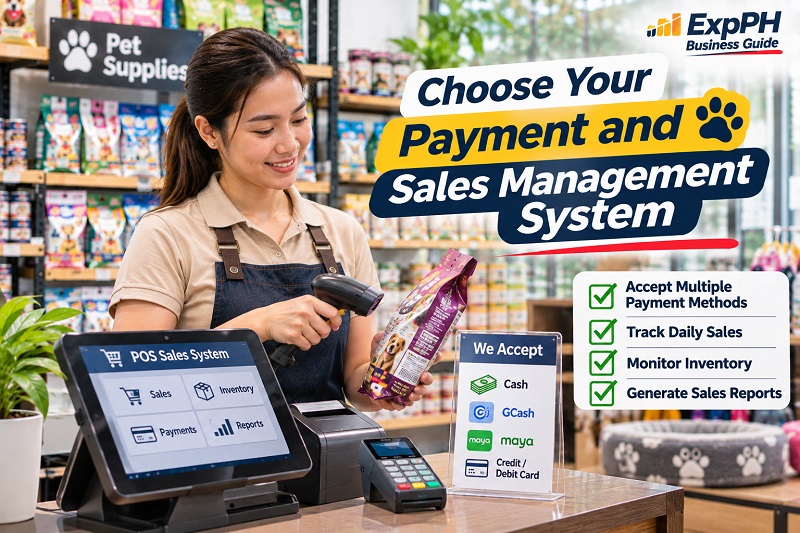
11. Choose Your Payment and Sales Management System
Select payment options and sales tools that make transactions convenient and help you monitor business performance. Keep accurate records of daily payments, revenue, and expenses, then upgrade your system as needed to support growing sales and more efficient inventory management.
Offer Convenient Payment Methods
Depending on your business setup, you may accept:
- Cash payments.
- Bank transfers.
- Supported e-wallet payments.
- Debit or credit card payments.
- Approved online payment options.
Display accepted payment methods clearly and confirm payments before releasing orders.
Use a POS or Sales Tracking System
A point-of-sale system can help record transactions and monitor product sales.
For a small store, a spreadsheet or basic sales application may be sufficient initially.
As your operations expand, consider a POS system with inventory tracking, sales reports, and receipt management.
Maintain Accurate Sales Records
Record daily transactions and reconcile sales with your actual cash and digital payments.
Keep receipts, invoices, supplier records, and other business documents organized.
Accurate records help you understand revenue, monitor expenses, and prepare for applicable tax obligations.

12. Promote Your Pet Supplies Business in the Philippines
Use online platforms and local connections to make your store more visible to potential customers. Share accurate product information, update your business details, and encourage honest feedback while building relationships with nearby pet-related establishments to attract customers and strengthen trust.
Create a Social Media Business Page
Set up a business page with your store name, location, operating hours, contact information, and product categories.
You can publish:
- New product announcements.
- Pet food and accessory selections.
- Product availability updates.
- Store promotions.
- Shopping tips for pet owners.
- Customer feedback with permission.
- Delivery and ordering instructions.
Use accurate product photographs and avoid misleading descriptions.
Improve Your Local Online Visibility
Create a listing through Google Business Profile so nearby customers can find your store location, contact information, and operating hours.
Keep your details updated and respond professionally to customer questions and reviews.
Build Local Partnerships
Connect with nearby veterinary clinics, pet grooming businesses, boarding facilities, and pet-owner communities.
You can introduce your products through appropriate local channels and discuss transparent referral arrangements where suitable.
Encourage Customer Reviews
Ask satisfied customers to share honest feedback about their shopping experience.
Respond politely to complaints and use constructive comments to improve your product selection, delivery arrangements, and customer service.
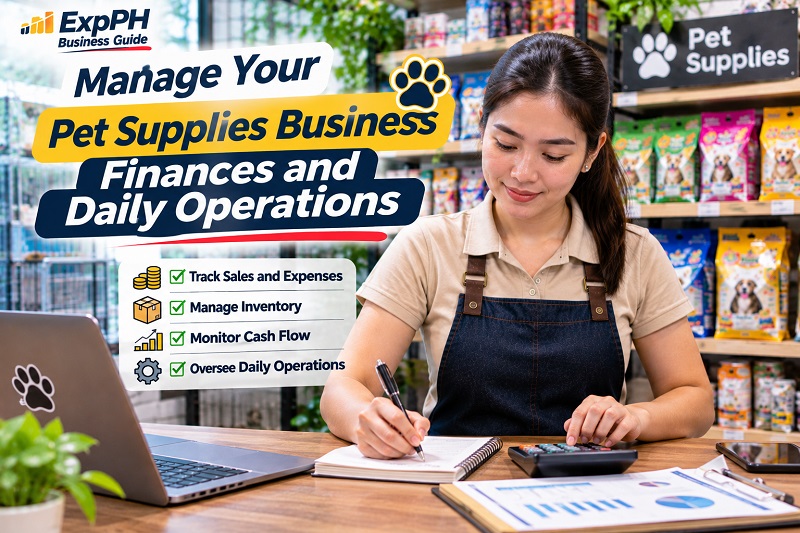
13. Manage Your Pet Supplies Business Finances and Daily Operations
Track your income and expenses to understand how well your business is performing. Keep business funds separate from personal money, review daily sales, and calculate your break-even point. Use accurate financial records to guide purchasing decisions, control operating costs, and maintain sustainable operations.
Separate Business and Personal Money
Use a dedicated account or clearly separated records for business transactions.
Avoid mixing personal spending with business funds because it makes it harder to determine your actual income and expenses.
Record sales, supplier payments, rent, utilities, wages, delivery costs, and other business expenses.
Monitor Daily Sales and Expenses
At the end of each working day, record:
- Total sales collected.
- Number of customer transactions.
- Products sold.
- Inventory purchases.
- Delivery and transportation costs.
- Operating expenses.
- Customer concerns and feedback.
These records help you identify sales patterns and monitor changes in operating costs.
Calculate Your Break-Even Point
Your break-even point is the sales level needed to cover your business expenses.
Identify your fixed costs and calculate how much each product contributes after its purchase and other variable costs.
For example, a store with high monthly rental expenses may need greater sales volume or better product margins to cover its operating costs.
Use your actual financial records when reviewing your break-even point.
Review Your Business Performance
Check your sales reports, inventory records, and expenses regularly.
Identify products that generate consistent sales and those that use too much storage space or working capital.
Use this information to adjust purchasing decisions, pricing, and promotional activities.
14. Common Mistakes to Avoid When Starting a Pet Supplies Business
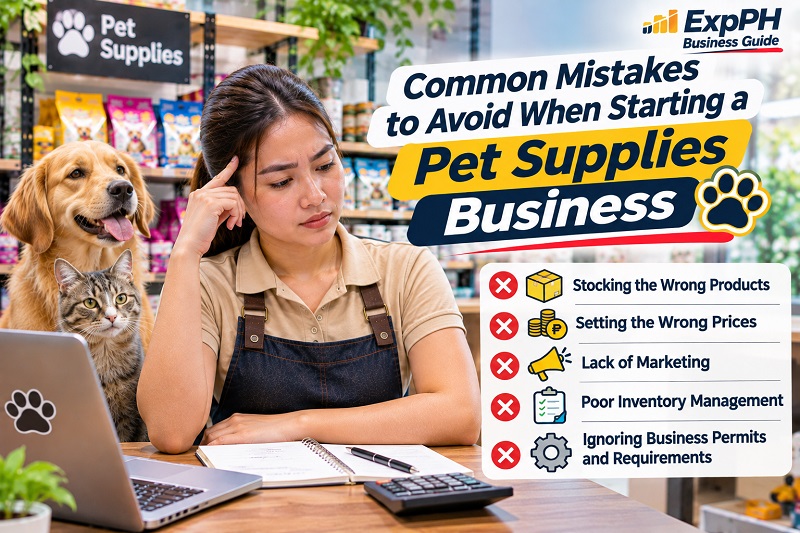
Avoiding preventable mistakes helps protect your investment and build a dependable business. Plan inventory purchases carefully, evaluate your location, verify supplier reliability, monitor product expiration dates, calculate prices accurately, and maintain complete financial records to support informed decisions and long-term operations.
Buying Too Much Inventory
Purchasing large quantities before understanding customer demand can tie up your available capital.
Start with essential products and increase stock based on actual sales records.
Choosing an Unsuitable Location
A shop may have affordable rent but insufficient customer access or storage space.
Study the area, nearby competitors, and customer activity before signing a lease.
Working With Unreliable Suppliers
Unreliable deliveries and questionable product quality can affect customer satisfaction.
Check supplier backgrounds, invoices, product packaging, and purchasing terms before placing large orders.
Ignoring Expiration Dates
Selling expired pet food or treats can create safety concerns and damage your reputation.
Monitor expiration dates and use a consistent inventory rotation system.
Setting Prices Without Calculating Costs
Copying competitor prices without checking your own expenses can reduce your profit margins.
Calculate purchase costs, delivery expenses, operating costs, and applicable fees before setting prices.
Failing to Track Business Finances
Without accurate records, you may not know which products generate sales or whether your business is profitable.
Review transactions, inventory purchases, and operating expenses regularly.

15. How to Grow Your Pet Supplies Business in the Philippines
Expand your operations gradually as customer demand and available capital allow. Introduce products that meet customer needs, improve online selling and delivery options, and strengthen customer relationships. Consider larger premises or additional branches only when your existing business can support the added costs and responsibilities.
Expand Your Product Selection
Introduce additional products based on customer requests and sales records.
Possible additions include:
- Specialized pet food.
- Additional grooming products.
- Pet carriers and travel accessories.
- Training supplies.
- Cat furniture and scratching posts.
- Pet beds and comfort products.
Research product quality, supplier reliability, and storage requirements before expanding your inventory.
Improve Your Online Selling Channels
If you started with a physical store, consider adding online ordering through social media or an e-commerce platform.
If you already sell online, improve product listings, customer communication, and order tracking.
Make sure your inventory records remain updated across all selling channels.
Introduce Delivery and Convenient Ordering
Customers may appreciate delivery options, especially when purchasing bulky pet food or frequently used supplies.
Consider your delivery costs, service coverage, packaging, and available staff before offering this service.
Set clear delivery schedules and communicate any additional charges before confirming orders.
Build Stronger Customer Relationships
Maintain communication with regular customers and provide helpful product information.
You can introduce loyalty rewards, repeat-purchase offers, or product bundles when the costs are financially reasonable.
Avoid promotions that reduce your earnings below the level needed to cover operating expenses.
Consider a Larger Store or Additional Location
A larger shop or second branch may become an option when your current business has consistent sales and sufficient working capital.
Before expanding, calculate additional rental expenses, inventory requirements, employee wages, utilities, and management costs.
Make sure your existing operation can maintain product quality and customer service while taking on new responsibilities.

FAQs About Starting a Pet Supplies Business in the Philippines
1. How much capital do I need to start a pet supplies business?
Your starting capital depends on inventory, location, equipment, permits, and operating expenses. Prepare a realistic budget and reserve funds for restocking and unexpected costs.
2. Do I need to register my pet supplies business?
Yes. Register your business with the appropriate government agency, secure applicable local permits, and complete BIR registration before beginning your business operations.
3. What products should I sell in a pet supplies store?
Start with essential products such as pet food, treats, grooming supplies, toys, collars, leashes, feeding bowls, litter, and cleaning accessories.
4. Where is the best location for a pet supplies business?
Choose an accessible location near residential communities with many pet owners. Consider customer traffic, rental costs, nearby competitors, parking, and available storage space.
5. Where can I find reliable pet supplies wholesalers?
Look for authorized distributors, established wholesalers, and verified manufacturers. Compare wholesale prices, product quality, delivery schedules, minimum orders, and supplier policies before purchasing.
6. How do I price pet supplies products?
Calculate purchase costs, delivery expenses, packaging, applicable fees, and operating expenses. Compare similar products before setting reasonable retail prices that support sustainable profit margins.
7. Can I start a pet supplies business online?
Yes. You can sell through social media, online marketplaces, or your own website. Organize inventory, payment processing, packaging, customer communication, and delivery arrangements.
8. How should I manage pet supplies inventory?
Record product quantities, purchases, sales, and expiration dates. Monitor fast-moving items, rotate stock properly, and schedule restocking based on actual customer demand.
9. How can I attract customers to my pet supplies store?
Promote your products through social media, local business listings, customer reviews, community partnerships, and convenient ordering options. Maintain competitive prices and dependable customer service.
10. How can I grow my pet supplies business?
Expand gradually by introducing requested products, improving online selling channels, offering delivery, strengthening customer relationships, and investing in additional inventory when financially sustainable.
Conclusion
Starting a Pet Supplies Business in the Philippines requires more than choosing products and opening a store. You need to understand your target customers, prepare a realistic budget, find reliable suppliers, and maintain proper inventory and financial records.
Begin with essential products that match local demand rather than purchasing a large inventory immediately. Pay attention to product quality, expiration dates, supplier reliability, and applicable business requirements.
As your customer base grows, you can expand your product selection, improve your online selling channels, and introduce convenient ordering or delivery options.
With careful planning, responsible product sourcing, and consistent customer service, your pet supplies business can develop into a sustainable retail operation that serves the needs of pet owners in your community.
Ready to take the next step toward entrepreneurship? Explore our Complete Guide to Starting a Business in the Philippines for practical advice on business planning, registration, financing, and building a sustainable business.
Test your knowledge of starting and managing a pet supplies business in the Philippines
Results


#1. What should you identify before selecting products for your pet supplies store?
#2. Which expense should be included in your startup budget?
#3. Which supplier is generally a suitable source for authentic pet products?
#4. What should you consider when setting product prices?
#5. Which agency handles sole proprietorship business name registration?
#6. How should pet food and treats be stored?
#7. What information should an inventory system record?
#8. What is the main purpose of a POS system?
#9. Which practice helps prevent selling expired pet products?
#10. When should you consider opening another store location?
Share your score or learning experience in the comments. We’d love to know how you did!

A Filipino web developer with a background in Computer Engineering. Founder of ExpPH Blog and ExpPH Business Guide, two Philippines-focused platforms covering OFW guidance, business, finance, freelancing, travel, and lifestyle. Passionate about helping Filipinos grow, he creates practical content that educates, empowers, and inspires readers nationwide.