

Starting a small neighborhood store remains one of the most practical business opportunities for many Filipinos in 2026. A sari-sari store can provide steady daily income, help cover household expenses, and eventually grow into a long-term family livelihood. With proper management, consistent inventory, and good customer relationships, even a small home-based store can become a reliable and sustainable source of financial support.
Many first-time business owners underestimate the actual expenses involved in opening a sari-sari store. Some prepare money only for inventory while overlooking permits, shelves, electricity, emergency funds, and other operational costs. Before starting your business, it is important to understand the complete sari-sari store startup cost philippines entrepreneurs should realistically prepare to avoid financial problems and improve long-term stability.
This guide explains the expected startup expenses, practical budgeting strategies, and important factors that influence the total capital needed to open a sari-sari store in the Philippines this 2026. Whether you plan to start a small home-based setup or a larger neighborhood store, understanding these costs can help you prepare smarter financial decisions and build a stronger business foundation.
If you want a complete step-by-step guide beyond budgeting, read our full article on How to Start a Sari-Sari Store in the Philippines (Complete 2026 Beginner Guide) to learn about permits, inventory planning, supplier sourcing, pricing strategies, and practical tips for building a successful neighborhood business.
Table of Contents
Quick Summary (TL;DR)
- Small sari-sari stores in the Philippines can start from around ₱15,000 to ₱30,000
- Mid-sized neighborhood stores may require ₱50,000 to ₱100,000
- Larger stores with freezers, GCash services, and wider inventory may need ₱150,000 or more
- Major expenses include inventory, shelves, permits, freezer, signage, and working capital
- Location and product selection greatly affect profitability
- Smart inventory management helps avoid dead stock and cash flow problems
- Adding digital services like e-wallet cash in and bills payment can increase income opportunities
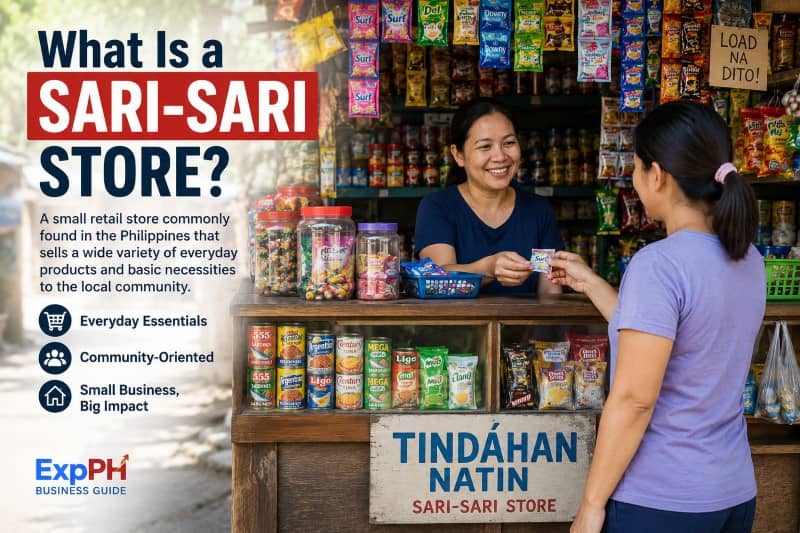
1. What Is a Sari-Sari Store?
A sari-sari store is a small neighborhood retail business commonly found across the Philippines. It provides affordable daily necessities that residents can quickly buy near their homes. Many stores operate from the owner’s house, making them one of the most accessible small business opportunities for Filipino families with limited startup capital.
Common products sold in sari-sari stores include:
- Instant noodles
- Canned goods
- Rice
- Coffee
- Soft drinks
- Shampoo sachets
- Cigarettes
- Snacks
- Mobile load credits
Many Filipinos choose this business because it can start small and grow over time through consistent daily sales. A sari-sari store also offers flexible operations, manageable capital requirements, and steady demand from nearby customers who prefer convenience and easy access to essential household products.
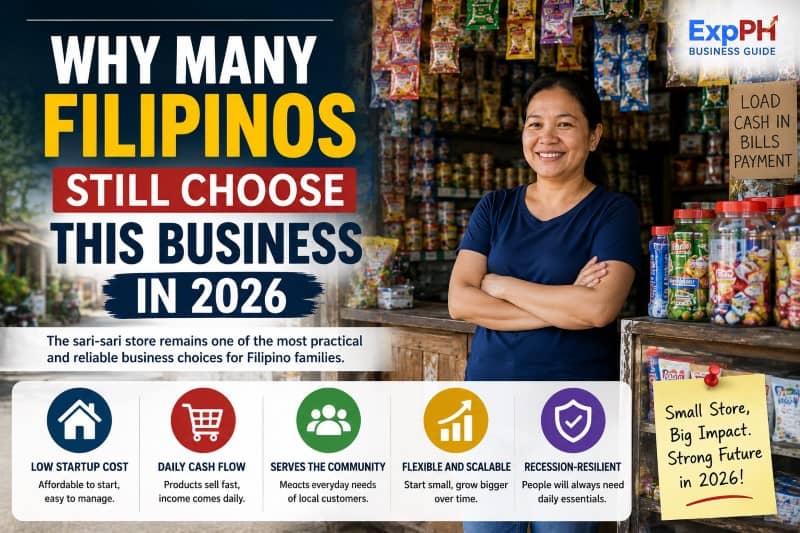
2. Why Many Filipinos Still Choose This Business in 2026
Despite the growth of supermarkets, convenience stores, and online shopping platforms, sari-sari stores remain popular in many Filipino communities. Their accessibility, affordable pricing, and convenient location continue to attract regular customers. For many families, this small business still provides a practical way to earn daily income while serving nearby residents.
Small Startup Capital
One reason many Filipinos choose this business is the relatively low startup cost compared to larger ventures. Entrepreneurs can begin with a small inventory and gradually expand as profits grow. This flexibility allows families with limited savings to start a business without needing large loans or expensive commercial spaces.
Daily Cash Flow
A sari-sari store generates income through frequent daily purchases from nearby customers. Even small transactions can build consistent cash flow throughout the day. This steady movement of money helps store owners restock products regularly and manage household expenses more effectively over time.
Home-Based Setup
Many sari-sari stores operate directly from the owner’s home, making the business easier and cheaper to manage. Running a home-based store helps reduce rental expenses and transportation costs. It also allows owners to monitor the business closely while handling household responsibilities at the same time.
Community Trust
Neighborhood customers often support nearby sari-sari stores because of familiarity and convenience. Many residents prefer buying from trusted local stores where they already know the owner. This strong community connection helps build loyal customers and encourages repeat purchases throughout the year.
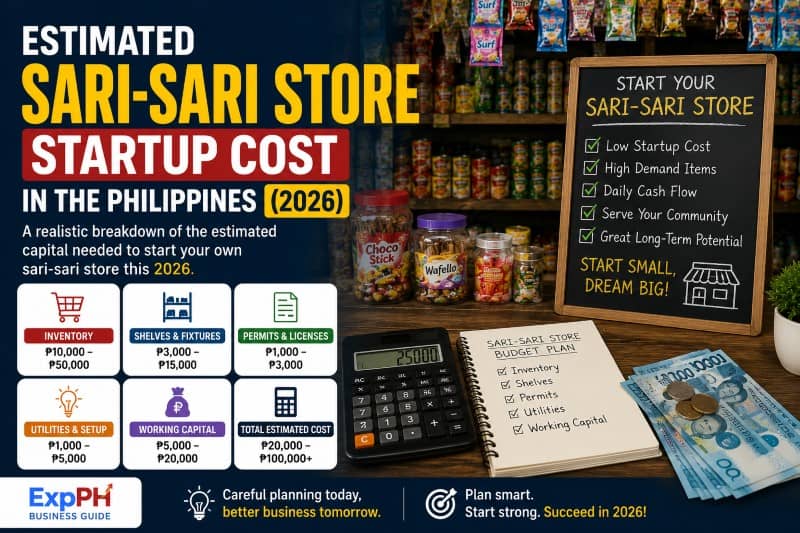
3. Estimated Sari-Sari Store Startup Cost in the Philippines (2026)
The total sari-sari store startup cost philippines entrepreneurs should prepare depends on several factors, including store size, inventory selection, location, and available equipment. Some small home-based stores can begin with a limited budget, while larger neighborhood stores may require higher capital for additional products and business improvements.
| Expense Category | Estimated Cost |
|---|---|
| Initial Inventory | ₱8,000 to ₱80,000 |
| Shelves and Display | ₱3,000 to ₱15,000 |
| Store Renovation | ₱5,000 to ₱30,000 |
| Permits and Registration | ₱2,000 to ₱10,000 |
| Refrigerator or Freezer | ₱10,000 to ₱25,000 |
| Signage and Branding | ₱1,000 to ₱5,000 |
| Working Capital | ₱5,000 to ₱20,000 |
| Miscellaneous Expenses | ₱2,000 to ₱8,000 |
Estimated Total Capital
The overall budget for opening a sari-sari store varies depending on your business goals and setup. Small home-based stores may start with lower capital, while larger stores with more products and equipment naturally require bigger investments for inventory, operations, and long-term business sustainability.
- Small setup: ₱15,000 to ₱30,000
- Standard setup: ₱50,000 to ₱100,000
- Larger setup: ₱150,000+
Your actual startup expenses may increase or decrease based on your location, customer demand, product variety, and supplier pricing. Careful budgeting and proper planning can help reduce unnecessary spending while improving your chances of building a stable and profitable sari-sari store business in 2026.
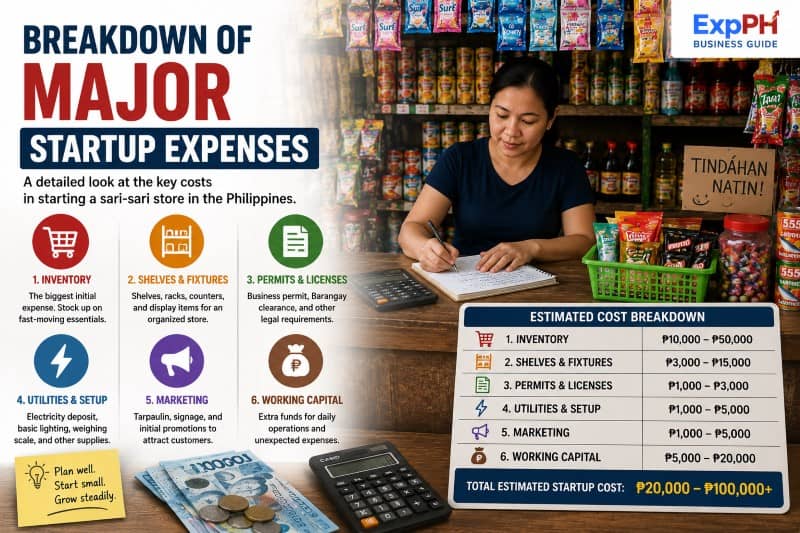
4. Breakdown of Major Startup Expenses
Understanding the major expenses involved in opening a sari-sari store helps business owners prepare a more realistic budget. Proper planning reduces financial stress and helps prevent overspending during the first few months of operation. Below are the most common startup costs many sari-sari store owners encounter in the Philippines.
Initial Inventory
Inventory usually takes the largest portion of the total startup budget because products are the foundation of daily sales. New store owners should prioritize affordable fast-moving items that customers regularly buy. Starting with essential products helps improve cash flow while reducing the risk of unsold inventory during the early stages.
Common fast-moving products include:
- Instant coffee
- Eggs
- Rice
- Soft drinks
- Bread
- Soap
- Shampoo sachets
- Snacks
- Canned goods
Avoid purchasing excessive quantities of slow-moving products during your first month. Focus on observing customer demand before expanding your inventory. Careful product selection can help maintain healthy cash flow and reduce losses caused by expired or rarely purchased items inside your sari-sari store.
Shelves and Store Fixtures
Proper store organization improves customer experience and makes products easier to locate. Clean and organized displays can also encourage repeat purchases and improve daily operations. Even small sari-sari stores benefit from simple fixtures that maximize limited space while keeping products properly arranged and accessible for customers.
You may need:
- Wooden shelves
- Plastic containers
- Product racks
- Counter tables
- Storage cabinets
Some business owners lower their startup expenses by purchasing secondhand shelves or using recycled materials. This practical approach helps reduce initial costs without affecting store functionality. Investing in durable fixtures also helps maintain a cleaner and more professional-looking store environment for customers.
Refrigerator or Freezer
Cold beverages remain one of the most profitable product categories for many sari-sari stores across the Philippines. Customers often buy chilled drinks daily, especially during hot weather. Adding a refrigerator or freezer can increase sales opportunities while attracting more customers looking for convenient cold refreshments nearby.
A basic freezer may cost around ₱10,000 to ₱25,000 depending on the brand, size, and features included. Although this adds to the startup budget, many store owners consider it a worthwhile investment because cold drinks often produce steady daily sales and encourage repeat customer visits.
Permits and Business Registration
Business registration requirements may differ depending on your municipality or city. Completing the necessary permits helps ensure legal operation and avoids possible penalties in the future. Registered businesses may also gain better credibility with suppliers, customers, and financial institutions when applying for additional services or support.
Common permits include:
- Barangay clearance
- Mayor’s permit
- DTI registration
- BIR registration
You can confirm updated registration requirements through Department of Trade and Industry (DTI) and Bureau of Internal Revenue (BIR). Requirements and fees may vary depending on your local government unit and the size of your sari-sari store business.
Working Capital
Many first-time entrepreneurs make the mistake of spending their entire budget on inventory and equipment. Leaving enough working capital is important because unexpected expenses can happen anytime. Emergency funds help businesses continue operating smoothly even during slow sales periods or sudden financial challenges.
Reserve extra cash for:
- Restocking
- Utility bills
- Supplier payments
- Unexpected repairs
Maintaining sufficient working capital improves business stability and helps avoid disruptions in daily operations. It also gives store owners flexibility when responding to customer demand, supplier price changes, or emergency expenses that may affect the normal flow of business activities.
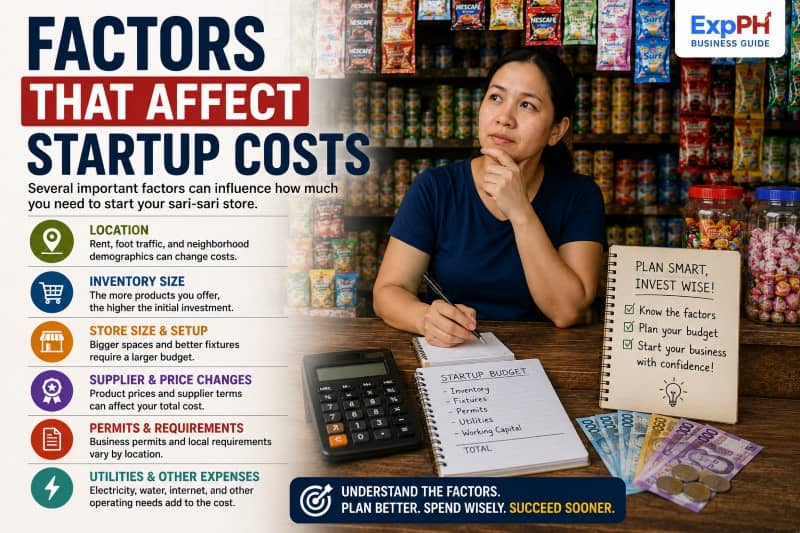
5. Factors That Affect Sari-Sari Store Startup Costs in the Philippines
Several factors can influence the total amount needed to open a sari-sari store in the Philippines. Some businesses require only basic inventory and equipment, while others need larger investments depending on location, services, and target customers. Understanding these factors helps entrepreneurs prepare a more accurate and realistic startup budget.
Location
The location of your sari-sari store plays a major role in determining startup costs and potential income. Stores near schools, terminals, markets, or densely populated communities often require larger inventories because customer demand tends to be higher throughout the day.
However, these locations may also involve:
- Higher competition
- Higher rental costs
- Faster inventory turnover
Although busy locations may require larger capital, they can also generate stronger daily sales when managed properly. Choosing the right location involves balancing customer demand, operating costs, and competition within the surrounding community before opening the business.
Product Variety
The number and type of products you sell can significantly affect your required startup capital. Offering more items may attract additional customers, but it also increases inventory expenses. New business owners should focus first on essential products before gradually expanding into other categories based on local demand.
Some sari-sari stores now include:
- Frozen foods
- Rice retailing
- LPG services
- Mobile accessories
- School supplies
Adding more product categories can improve sales opportunities and customer convenience. However, expanding too quickly without proper demand analysis may lead to slow-moving inventory and unnecessary financial pressure during the early stages of the business.
Store Size
The physical size and setup of your store also influence overall startup expenses. A simple window-type sari-sari store usually costs much less than a fully renovated mini-store with larger shelves, additional equipment, and expanded product displays for customers.
Larger stores may require:
- More inventory
- Bigger storage space
- Additional fixtures
- Higher utility costs
Many successful sari-sari stores begin with a small setup and gradually expand over time. Starting within your budget can help reduce financial risk while allowing the business to grow based on actual customer demand and available capital.
Digital Services
Modern sari-sari stores increasingly earn additional income by offering digital payment and financial services within their communities. These services attract more customers and create extra revenue opportunities beyond traditional product sales, especially in areas where digital transactions continue to grow rapidly.
Common digital services include:
- GCash cash in
- Maya transactions
- Bills payment
- Mobile load retailing
Digital services can increase customer traffic and encourage repeat visits because many residents prefer convenient payment and loading options near their homes. Adding these services may require minimal extra investment while helping improve overall business profitability and customer engagement.

6. Sample Budget Plans for Sari-Sari Store Startups
The ideal startup budget for a sari-sari store depends on your business goals, available capital, and target market. Some entrepreneurs begin with a small home-based setup, while others invest in larger stores with expanded inventory and additional services. Below are sample budget plans commonly used by many Filipino business owners.
₱20,000 Small Home-Based Setup
A small home-based sari-sari store is often the most practical option for beginners with limited capital. This setup focuses on essential fast-moving products and basic store fixtures. It allows new entrepreneurs to test customer demand while minimizing financial risk during the early stages of the business.
Possible allocation:
- Inventory: ₱10,000
- Shelves: ₱3,000
- Permits: ₱2,000
- Working capital: ₱5,000
Best for:
- Rural areas
- Small neighborhoods
- Beginners testing the market
This setup works well for families who want to start a simple business from home without spending a large amount of money. Store owners can gradually expand inventory and services as customer demand and daily sales continue to increase over time.
₱50,000 Standard Neighborhood Store
A mid-sized neighborhood sari-sari store usually offers a wider selection of products and improved equipment compared to smaller setups. This budget provides enough capital for additional inventory and basic cooling equipment, helping attract more customers and improve the overall shopping experience within the community.
Possible allocation:
- Inventory: ₱25,000
- Freezer: ₱12,000
- Shelves and renovation: ₱8,000
- Permits and reserve funds: ₱5,000
Best for:
- Medium-sized barangays
- Family-operated stores
This type of setup is suitable for areas with moderate customer demand and regular foot traffic. It also gives business owners more flexibility to expand product categories while maintaining enough reserve funds for restocking and operational expenses.
₱100,000 Expanded Setup
An expanded sari-sari store setup is designed for entrepreneurs planning to build a larger and more competitive neighborhood business. This budget supports wider product selection, improved storefront appearance, and additional customer services that can increase sales opportunities and long-term profitability.
Possible allocation:
- Larger inventory
- Additional freezer
- Digital payment services
- Rice retailing
- Better storefront design
Best for:
- High-traffic communities
- Long-term expansion plans
This setup may require higher initial capital, but it also creates more opportunities for stronger daily income and customer retention. Larger stores often perform better in busy areas where residents prefer convenient access to multiple products and services within one location.
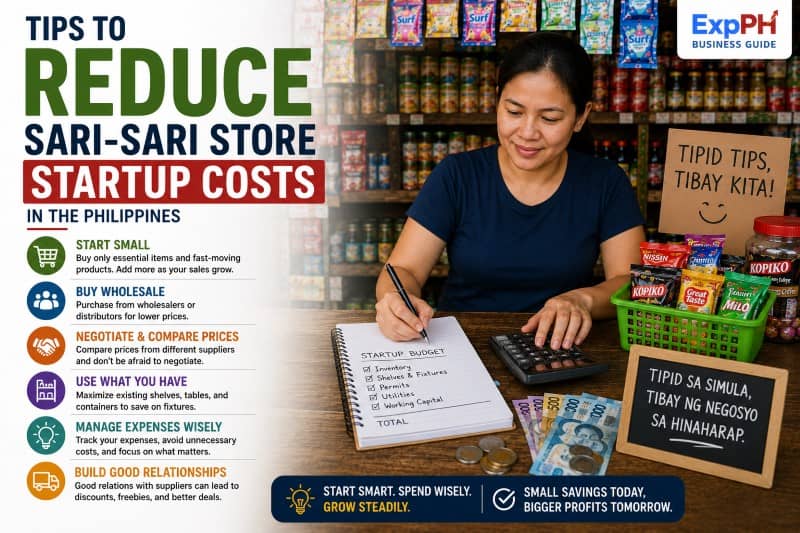
7. Tips to Reduce Sari-Sari Store Startup Costs in the Philippines
Managing your startup budget carefully can help reduce financial pressure during the first few months of operating a sari-sari store. Many successful business owners begin with simple setups and gradually expand over time. Smart spending decisions and proper financial discipline can improve long-term stability and overall profitability.
Start Small First
Many successful sari-sari store owners started with a limited inventory and gradually expanded their business as customer demand increased. Beginning with a smaller setup allows entrepreneurs to understand local buying behavior while reducing the risk of overspending on products that may not sell consistently.
Starting small also helps business owners gain experience in inventory management, pricing, and customer service before investing larger amounts of money. This practical approach makes it easier to adjust business strategies and improve operations without facing excessive financial pressure during the early stages.
Buy From Wholesale Suppliers
Purchasing products from wholesale suppliers can help sari-sari store owners reduce costs and improve profit margins. Lower product prices allow businesses to earn more from each sale while keeping prices affordable for customers within the community.
Compare prices from:
- Public markets
- Warehouse distributors
- Cash and carry stores
Checking multiple suppliers before purchasing inventory helps identify better deals and avoid unnecessary expenses. Building good relationships with trusted suppliers may also provide access to discounts, flexible payment arrangements, and more reliable product availability throughout the year.
Track Fast-Moving Products
Monitoring fast-selling products is important for maintaining healthy cash flow and preventing unnecessary inventory losses. Products with strong daily demand should receive higher restocking priority because they contribute more consistently to regular sales and business income.
Avoid overstocking slow-moving products that consume capital and storage space. Carefully observing customer buying habits helps store owners make smarter inventory decisions while reducing the chances of expired products or unsold items remaining on shelves for long periods.
Separate Personal and Business Money
Poor financial management is one of the most common reasons small businesses struggle or fail. Mixing personal expenses with business funds can make it difficult to monitor profits, track expenses, and maintain enough money for daily store operations.
Maintain separate budgets for:
- Household expenses
- Inventory funds
- Business savings
Separating business and personal finances improves budgeting discipline and helps store owners understand the actual financial performance of their sari-sari store. This habit also makes it easier to prepare for emergencies, future expansion, and long-term business growth.
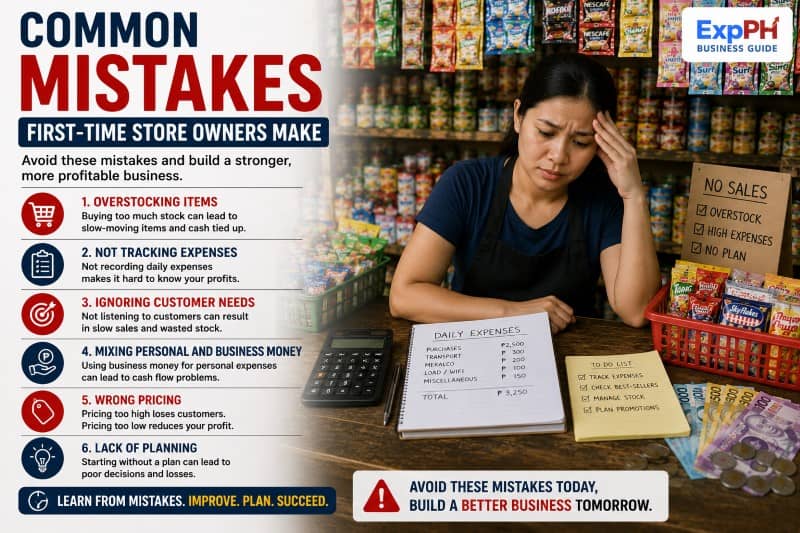
8. Common Mistakes First-Time Store Owners Make
Many first-time sari-sari store owners experience challenges during the early stages of their business because of avoidable mistakes. Understanding these common problems can help entrepreneurs manage their stores more effectively, protect their capital, and improve long-term profitability within their local community.
Excessive Credit or “Utang”
Allowing too much unpaid customer credit can quickly damage the cash flow of a sari-sari store. Although offering “utang” may help maintain good relationships with neighbors, excessive unpaid balances can reduce available funds needed for restocking products and covering daily operating expenses.
Setting clear payment rules early helps prevent misunderstandings and protects the business from financial problems. Store owners should carefully monitor customer balances and avoid extending large amounts of credit that may become difficult to collect in the future.
Poor Inventory Tracking
Failing to monitor inventory properly can create serious operational and financial problems for sari-sari store owners. Without regular stock checking, businesses may struggle to identify fast-moving products, maintain proper inventory levels, or notice items that are no longer selling well.
Common inventory problems include:
- Product shortages
- Expired items
- Profit loss
Maintaining accurate inventory records helps improve purchasing decisions and reduces unnecessary losses. Even simple tracking methods can help store owners monitor product movement, manage restocking schedules, and avoid wasting money on excess or expired inventory.
Ignoring Competition
Successful sari-sari store owners pay close attention to nearby competitors and changing customer preferences within their community. Ignoring competing stores may lead to missed opportunities for improving product selection, pricing, and customer service strategies.
Study nearby competitors carefully, including:
- Their best-selling products
- Pricing strategy
- Store hours
- Customer behavior
Understanding how nearby stores operate can help business owners identify gaps in the market and improve their own services. Careful observation also helps entrepreneurs adapt more effectively to customer needs and local buying patterns.
Spending Profits Too Early
Many small business owners make the mistake of spending profits immediately instead of reinvesting them into the business. During the first few months, sari-sari stores often need additional funds for restocking inventory, improving displays, and handling unexpected operational expenses.
Reinvesting profits early helps strengthen cash flow and supports gradual business growth. This disciplined approach allows store owners to expand product offerings, improve store operations, and build a more stable financial foundation for long-term success.
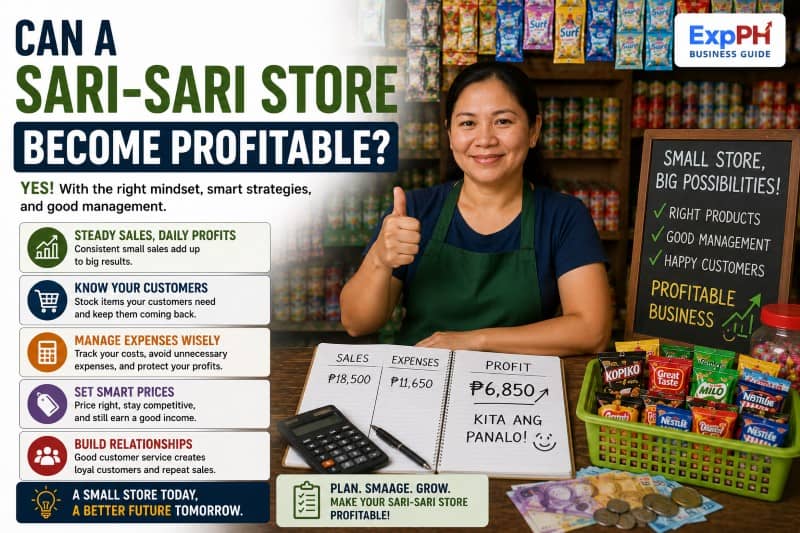
9. Can a Sari-Sari Store Become Profitable?
Yes, a sari-sari store can become profitable when managed properly and supported by consistent customer demand. Although profit margins for individual products are often small, regular daily sales can gradually produce stable income over time for many Filipino families and small business owners.
The profitability of a sari-sari store usually depends on several important factors, including:
- Location
- Inventory management
- Customer demand
- Daily discipline
Stores located in busy communities with strong customer traffic often perform better because they generate more frequent daily sales. Proper inventory management also helps reduce unnecessary losses while ensuring fast-moving products remain available for customers throughout the day.
Customer demand plays a major role in determining which products should receive higher stocking priority. Store owners who carefully observe buying habits can adjust their inventory more effectively and avoid spending too much money on slow-moving or rarely purchased items.
Daily discipline is equally important for maintaining long-term profitability. Successful sari-sari store owners regularly monitor expenses, control unnecessary spending, and maintain organized inventory systems. Consistent financial management helps improve cash flow and supports steady business growth over time.
Many modern sari-sari stores now increase earnings by offering additional products and services beyond traditional grocery items. Stores that include digital payment services, frozen products, and reliable customer service often attract more customers and perform better than basic traditional setups alone.
Additional services may include:
- GCash cash in
- Bills payment
- Mobile load retailing
- Frozen food products
Combining convenience, good customer relationships, and smart inventory decisions can help sari-sari store owners build a more stable and profitable business in the Philippines this 2026.
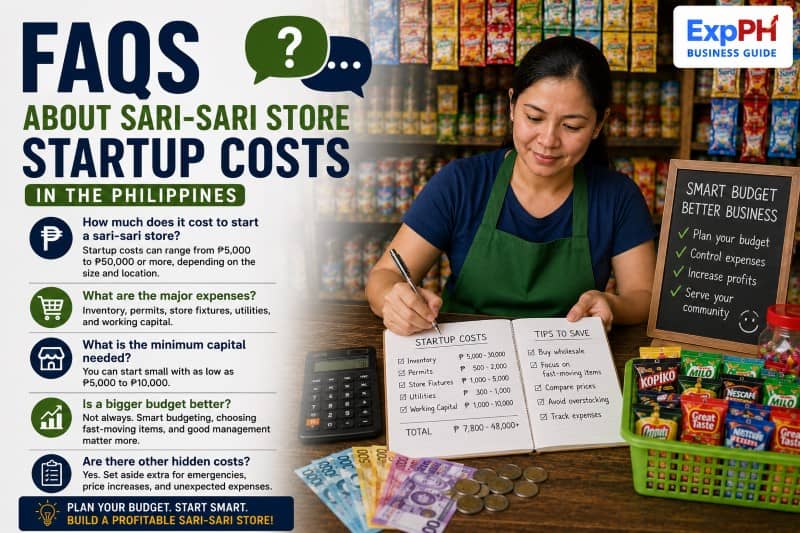
10. FAQs About Sari-Sari Store Startup Costs in the Philippines
How much capital is needed to start a sari-sari store in the Philippines?
Most small sari-sari stores in the Philippines can begin with around ₱15,000 to ₱30,000, depending on inventory size, location, equipment, and customer demand today overall.
Can I start a sari-sari store from home?
A home-based sari-sari store reduces rental expenses because owners operate directly from their property, helping lower startup costs and improve financial flexibility initially for beginners.
What products should beginners prioritize in a sari-sari store?
Fast-moving products include coffee, canned goods, rice, snacks, soft drinks, and shampoo sachets because these items are commonly purchased daily by nearby customers in communities.
What permits are required for a sari-sari store business?
Permits commonly required for sari-sari stores include barangay clearance, mayor’s permit, DTI registration, and BIR registration, depending on local government requirements within your area today.
Can digital services increase sari-sari store income?
Yes, adding GCash services and mobile load retailing can increase customer visits while providing additional income opportunities for sari-sari store owners nationwide in the Philippines.
Why should sari-sari store owners buy from wholesale suppliers?
Buying inventory from wholesale suppliers may improve profit margins because products usually cost less compared to regular retail pricing from neighborhood stores and markets nearby.
What happens if inventory is not managed properly?
Poor inventory management may lead to product shortages, expired goods, unnecessary expenses, and lower profits, especially during the first months of operations for new owners.
Is a freezer necessary for a sari-sari store?
A freezer is not always required initially, but selling cold drinks often helps attract customers and increases daily sales in many Philippine communities today alone.
Why is separating personal and business money important?
Separating personal and business money helps store owners track profits properly, manage expenses responsibly, and maintain enough capital for regular inventory restocking throughout the year.
Can a sari-sari store become profitable long-term?
A sari-sari store can become profitable over time when owners maintain consistent inventory, control expenses carefully, and provide reliable customer service daily to nearby families.
Final Thoughts on Sari-Sari Store Startup Costs in the Philippines
Opening a sari-sari store remains one of the most practical and accessible business opportunities for Filipinos in 2026. Understanding the real sari-sari store startup cost philippines entrepreneurs may face helps prevent costly mistakes and supports better financial planning. Careful preparation allows new business owners to manage expenses properly while building a stronger foundation for long-term stability and business growth.
Instead of rushing into the business with limited planning, focus on creating a realistic budget and choosing products with strong daily demand. Maintaining disciplined cash management and monitoring inventory carefully can help improve profitability over time. Even a small home-based sari-sari store can eventually become a stable and reliable source of income when managed consistently and responsibly.
For many Filipinos, a sari-sari store represents more than just an additional source of earnings. It provides an opportunity to support household needs, serve the local community, and achieve greater financial independence. With patience, smart decision-making, and proper business management, a simple neighborhood store can grow into a sustainable long-term livelihood for the entire family.
Ready to explore business opportunities beyond sari-sari stores?
Read our guide on Business Finances in the Philippines (Complete Guide) and learn the complete process of launching a legal business through our Complete Guide to Starting a Business in the Philippines (Registration, Costs, and Steps 2026).
Related guide
Sari-Sari Store Startup Cost Quiz (2026)
Planning to open a sari-sari store in the Philippines? Test your knowledge with this quick quiz based on startup costs, budgeting, inventory management, and practical business tips for beginners. This quiz is designed to help aspiring entrepreneurs better understand small business preparation in 2026.
Results


#1. What is usually the biggest startup expense for a sari-sari store?
#2. Which product is considered fast-moving in sari-sari stores?
#3. Why do many Filipinos start sari-sari stores from home?
#4. Which permit is commonly required for registration?
#5. What service can increase store income today?
#6. What should owners avoid during the first month?
#7. What helps improve sari-sari store profit margins?
#8. Why is working capital important?
#9. What can happen without inventory tracking?
#10. Which factor strongly affects startup costs?
Thank you for taking the quiz!
Feel free to share your score or sari-sari store experience in the comments and help other aspiring Filipino entrepreneurs learn from your journey.

A Filipino web developer with a background in Computer Engineering. Founder of ExpPH Blog and ExpPH Business Guide, two Philippines-focused platforms covering OFW guidance, business, finance, freelancing, travel, and lifestyle. Passionate about helping Filipinos grow, he creates practical content that educates, empowers, and inspires readers nationwide.