

Starting a Plant Nursery Business in the Philippines can be a practical opportunity for aspiring entrepreneurs who enjoy gardening and want to turn their interest in plants into a source of income. With growing interest in home gardening, landscaping, ornamental plants, and food production, plant nurseries can serve different types of customers.
You can start with a small growing area at home or develop a larger nursery with dedicated spaces for seedlings, ornamental plants, fruit trees, and gardening supplies. The right approach depends on your available capital, location, plant selection, and ability to care for your inventory.
However, running a nursery involves more than growing and selling plants. You also need to understand customer demand, choose suitable growing conditions, find dependable sources of planting materials, manage operating expenses, and comply with applicable business and agricultural requirements.
This guide explains how to plan, establish, and manage a plant nursery while building a business that can grow with your experience and available resources.
Looking for an affordable business to start in the Philippines? Explore our guide to Best Low-Capital Businesses to Start in the Philippines and discover practical business ideas that can help you start with a manageable investment and build a sustainable source of income.
Quick Summary (TL;DR)
Starting a plant nursery business requires careful planning, suitable growing conditions, healthy plants, reliable suppliers, and effective daily management. Here are the essential steps:
- Understand the business opportunity: Research local demand, identify popular plant categories, study competitors, and determine what makes your nursery different.
- Choose your business model: Decide whether to operate a home-based nursery, retail nursery, wholesale nursery, online store, or a combination.
- Identify your target customers and location: Understand the needs of gardeners, homeowners, farmers, plant collectors, and landscaping businesses. Choose a location with adequate space, sunlight, water, and drainage.
- Prepare your startup budget: Account for registration, land preparation, seeds, seedlings, pots, soil, equipment, nursery structures, utilities, transportation, and working capital.
- Select suitable plants and growing materials: Start with ornamental plants, fruit seedlings, vegetable seedlings, and herbs that match local demand and growing conditions.
- Find reliable suppliers: Compare plant quality, prices, availability, delivery arrangements, and purchasing terms. Check applicable requirements before importing planting materials.
- Prepare your nursery facilities and plant care system: Organize growing areas, provide suitable shade and sunlight, install proper watering and drainage systems, and establish regular plant maintenance routines.
- Set competitive prices and manage inventory: Calculate production costs and profit margins. Track plant varieties, quantities, growing conditions, sales, and restocking needs.
- Register and promote your nursery: Complete applicable business registrations, local permits, and agricultural requirements. Use social media, online listings, local partnerships, and customer referrals to attract buyers.
- Manage your sales, finances, and business growth: Offer convenient payment methods, maintain accurate financial records, monitor business performance, avoid common mistakes, and expand your plant selection as demand increases.
Key takeaway: A successful plant nursery business starts with healthy plants, suitable growing conditions, reliable suppliers, and a clear understanding of customer demand. Begin with manageable inventory, maintain accurate records, and expand your operations as your experience and customer base grow.
Table of Contents

1. Understand the Plant Nursery Business Opportunity in the Philippines
Explore the potential of growing and selling different types of plants to local customers. Consider the demand for ornamental plants, fruit-bearing plants, vegetable seedlings, herbs, and landscaping plants while studying local preferences, seasonal conditions, and competing nurseries to identify suitable products and business opportunities.
Identify the Types of Plants You Can Sell
Before investing in inventory, understand the plant categories that potential customers may purchase.
Common nursery products include:
Ornamental plants
- Indoor foliage plants.
- Flowering plants.
- Succulents and cacti.
- Decorative shrubs.
- Hanging plants.
Fruit-bearing plants
- Calamansi seedlings.
- Mango seedlings.
- Guava seedlings.
- Papaya seedlings.
- Other locally suitable fruit trees.
Vegetable seedlings
- Tomato seedlings.
- Chili seedlings.
- Eggplant seedlings.
- Pechay seedlings.
- Lettuce seedlings.
Herbs and culinary plants
- Basil.
- Mint.
- Rosemary.
- Lemongrass.
- Oregano.
Landscaping plants
- Ground covers.
- Hedges.
- Decorative palms.
- Flowering shrubs.
- Suitable native plants.
You do not need to sell every category when starting. Choose products that match your available space, growing experience, and local customer demand.
Study the Local Market
Observe what people in your area commonly grow and purchase. Residential communities may have customers looking for ornamental plants, while agricultural communities may have stronger demand for vegetable seedlings and fruit-bearing plants.
Visit existing nurseries and gardening shops to compare their products, prices, presentation, and customer service.
You can also ask potential customers which plants they regularly purchase and what varieties are difficult to find locally.
Identify Your Competitive Advantage
A new nursery needs a clear reason for customers to choose it over established sellers.
Possible advantages include:
- Healthy and well-maintained plants.
- Affordable seedlings.
- Locally suitable plant varieties.
- Helpful growing instructions.
- Convenient delivery arrangements.
- Consistent product availability.
- Specialized plant selections.
A nursery that provides reliable products and useful customer guidance can build repeat business over time.
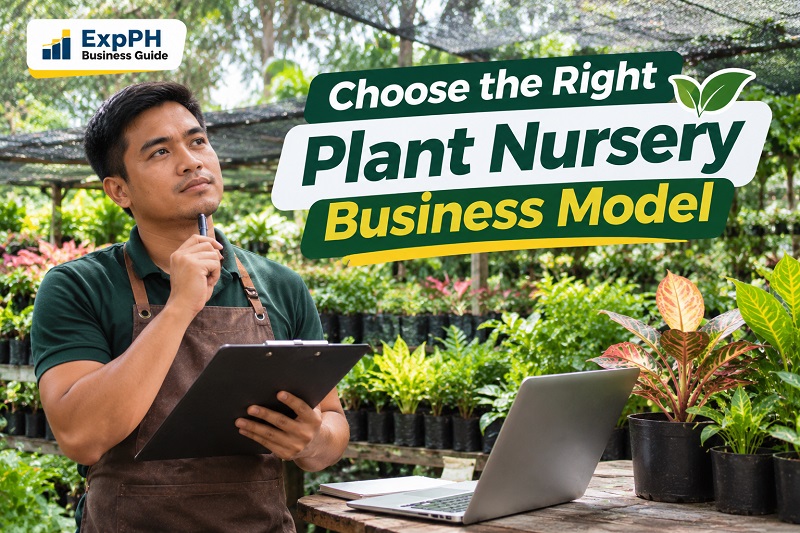
2. Choose the Right Plant Nursery Business Model
Choose a business setup that suits your available capital, growing space, and resources. Consider whether a home-based, retail, wholesale, online, or hybrid operation best supports your plans while keeping startup expenses manageable and allowing you to handle plant production, customer access, and daily nursery activities effectively.
Home-Based Plant Nursery
A home-based nursery can be a practical starting point if you have enough outdoor space, sunlight, water, and suitable growing conditions.
You can use part of your backyard or another appropriate area to grow seedlings and maintain potted plants.
This setup may reduce rental expenses, although you still need to consider plant containers, growing materials, shade structures, water consumption, and other operating costs.
Retail Plant Nursery
A retail nursery focuses on displaying and selling plants directly to customers.
You can arrange plants by category and provide a convenient shopping area for homeowners, gardeners, and landscaping customers.
This model may require more investment in rental space, display facilities, signage, and customer access.
Wholesale Plant Nursery
A wholesale nursery grows or sources plants in larger quantities and supplies other businesses.
Potential buyers include:
- Garden centers.
- Landscaping contractors.
- Plant retailers.
- Agricultural supply stores.
- Other nursery operators.
Wholesale operations require reliable production schedules, consistent plant quality, and sufficient growing capacity.
Online Plant Nursery
An online nursery sells plants through social media, e-commerce platforms, or direct customer inquiries.
This approach can help you reach buyers outside your immediate neighborhood. However, you must consider packaging, plant handling, delivery arrangements, and the condition of plants when they arrive.
Hybrid Plant Nursery
A hybrid model combines a physical growing or retail location with online selling.
Customers can visit your nursery while others browse available products through your online channels.
This arrangement can increase your selling opportunities, provided you can maintain accurate inventory records and handle orders properly.

3. Identify Your Target Customers and Choose Your Location
Identify the customers most likely to purchase your plants and choose a location that supports their needs. Consider the preferences of homeowners, gardeners, farmers, and landscaping businesses while evaluating growing conditions, accessibility, rental costs, available space, and nearby competitors before establishing your nursery.
Identify Your Target Customers
Potential customers include:
- Home gardeners.
- Plant collectors.
- Homeowners.
- Vegetable growers.
- Small-scale farmers.
- Landscaping contractors.
- Garden centers.
- Schools and community gardening groups.
- Commercial property managers.
Different customers have different purchasing priorities. Some want affordable vegetable seedlings, while others prefer decorative plants or larger fruit-bearing trees.
Choose a Suitable Nursery Location
If you plan to operate a physical nursery, consider these factors:
- Reliable water supply.
- Suitable sunlight and shade.
- Good drainage.
- Adequate growing space.
- Convenient customer access.
- Reasonable rental or land costs.
- Protection from strong winds and flooding.
- Space for storage and plant preparation.
Your location should also provide suitable growing conditions for the plant varieties you intend to sell.
Evaluate Local Competition
Visit other nurseries and gardening businesses in your target area.
Compare their plant selection, prices, quality, accessibility, and customer service. Look for products that customers regularly request but cannot easily find.
Avoid selecting a location based only on affordable rent. A property with poor drainage, insufficient sunlight, or limited customer access may create operational difficulties.
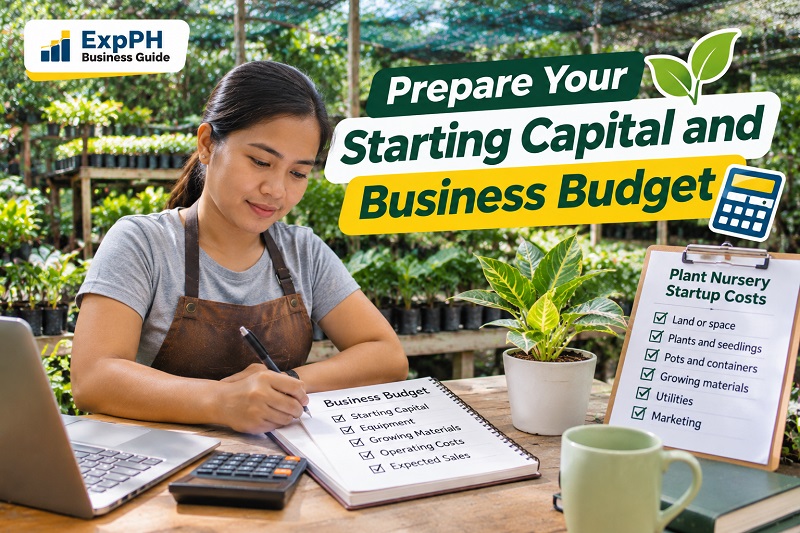
4. Prepare Your Starting Capital and Business Budget
Estimate the funds needed to establish and operate your nursery based on its size, growing method, location, and plant selection. Account for initial setup costs, equipment, planting materials, and recurring expenses while keeping enough working capital to maintain healthy plants and cover unexpected costs as your business develops.
List Your Initial Startup Expenses
Consider the following costs:
- Business registration and applicable permits.
- Land rental or site preparation.
- Seeds and initial planting materials.
- Pots, trays, and seedling bags.
- Soil, compost, and growing media.
- Fertilizers and suitable plant care supplies.
- Watering equipment and hoses.
- Shade nets and nursery structures.
- Shelves, tables, and display racks.
- Gardening tools and equipment.
- Packaging and labeling materials.
- Initial marketing expenses.
- Transportation and delivery costs.
A home-based nursery may have lower facility expenses, but you still need money for growing materials, plant care, equipment, and working capital.
Prepare Working Capital
Working capital helps cover recurring expenses while your nursery develops regular customers.
Set aside money for water, electricity, replacement plants, growing materials, transportation, and other daily expenses.
Remember that plants take time to grow. Some products may require several weeks or months before they are ready for sale.
Avoid spending your entire budget on initial planting materials. Keep enough available cash to maintain your plants and handle unexpected operating costs.
Create a Simple Startup Budget
You can organize your expected expenses in a spreadsheet.
| Expense category | What to include |
|---|---|
| Registration | Business registration and permits |
| Plant inventory | Seeds, seedlings, and starter plants |
| Growing materials | Soil, compost, and fertilizer |
| Nursery setup | Shade nets, tables, and growing areas |
| Equipment | Hoses, watering tools, and gardening supplies |
| Operations | Water, electricity, and transportation |
| Marketing | Signage and online promotions |
| Working capital | Daily expenses and replacement plants |
Use actual supplier quotations and local rental rates when estimating your expenses. Avoid relying on generic startup figures that may not reflect your location.

5. Select the Right Plants and Growing Materials to Sell
Choose plant varieties that suit your local growing conditions and match customer demand. Consider ornamental plants, fruit tree seedlings, vegetable seedlings, and herbs while evaluating their quality, care requirements, and selling potential to maintain healthy inventory and offer products that customers are more likely to purchase.
Start With Popular Plant Categories
Consider offering the following products:
Ornamental plants
- Snake plants.
- Pothos.
- Peace lilies.
- Anthuriums.
- Bougainvillea.
- Succulents.
Fruit tree seedlings
- Calamansi.
- Mango.
- Guava.
- Avocado.
- Papaya.
- Guyabano.
Vegetable seedlings
- Tomatoes.
- Eggplants.
- Chili peppers.
- Pechay.
- Lettuce.
- Cabbage.
Herbs and culinary plants
- Basil.
- Mint.
- Oregano.
- Rosemary.
- Lemongrass.
Choose varieties based on growing conditions and the preferences of customers in your area. Not every plant will thrive in every location.
Choose Plants Based on Customer Demand
Avoid growing large quantities simply because a particular plant is popular on social media.
Ask customers what they want to purchase and observe which products sell consistently. A nursery near residential communities may benefit from ornamental plants, while an area with active vegetable growers may have stronger demand for vegetable seedlings.
Start with manageable quantities and expand your selection based on actual sales.
Check Plant Health and Quality
Healthy planting materials help establish customer confidence.
Before purchasing or selling plants, check for:
- Healthy roots and growing conditions.
- Strong stems and leaves.
- Signs of pests or disease.
- Suitable growing containers.
- Proper labeling and plant identification.
- Appropriate watering and care requirements.
Separate unhealthy plants from saleable inventory. Avoid selling plants with serious pest infestations or conditions that could affect other stock.
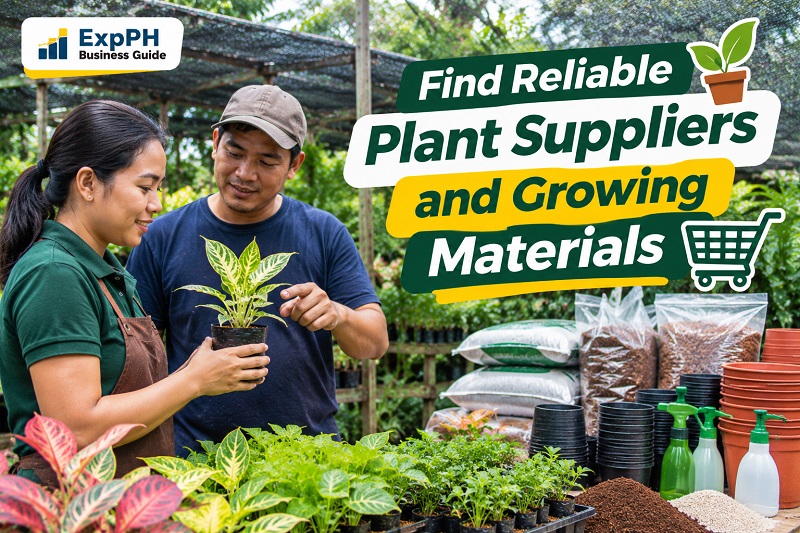
6. Find Reliable Plant Suppliers and Growing Materials
Compare potential suppliers based on plant quality, prices, availability, and delivery terms before making large purchases. Consider producing some plants through propagation methods while maintaining dependable supplier relationships and checking applicable import requirements to ensure your nursery has a consistent supply of healthy planting materials.
Research Potential Plant Suppliers
You can source planting materials through:
- Established plant nurseries.
- Seed companies.
- Agricultural supply stores.
- Authorized distributors.
- Local plant growers.
- Horticultural producers.
- Agricultural cooperatives.
You may also produce some plants yourself through seeds, cuttings, division, grafting, or other suitable propagation methods.
Compare Supplier Terms
Review important details before choosing a supplier:
- Purchase prices.
- Minimum order quantities.
- Plant varieties and availability.
- Delivery arrangements.
- Payment terms.
- Replacement policies.
- Plant health and quality.
- Source and variety information.
A supplier offering lower prices may not always be the best choice if the plants arrive damaged or are unsuitable for your growing conditions.
Maintain Good Supplier Relationships
Communicate regularly with suppliers and plan purchases according to your production schedule.
Keep records of invoices, purchase orders, delivery dates, plant varieties, and quantities received. These records make it easier to monitor costs and resolve delivery problems.
Avoid depending entirely on one supplier for important plant varieties.
Check Requirements for Imported Plant Materials
If you plan to import living plants, nursery stocks, or planting materials, check the applicable requirements before placing an order.
The Bureau of Plant Industry’s National Plant Quarantine Services Division requires applicable clearances for regulated plant imports. Commercial imports may require a Sanitary and Phytosanitary Import Clearance (SPSIC) before importation. Review the BPI import requirements before proceeding.
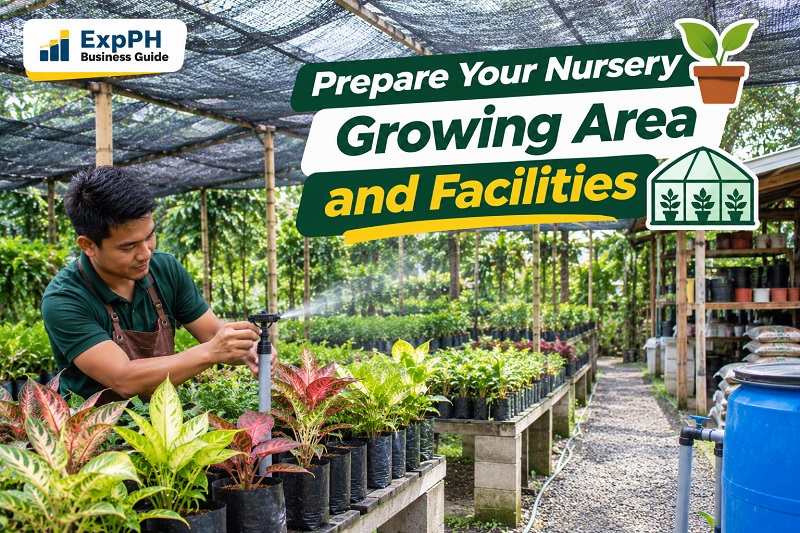
7. Prepare Your Nursery Growing Area and Facilities
Prepare a growing environment that supports healthy plant development and efficient nursery operations. Organize suitable areas for different plant varieties while providing proper sunlight, shade, watering systems, and drainage to make plant care easier and protect your inventory from unsuitable growing conditions.
Establish Suitable Growing Areas
Organize your nursery into sections based on plant requirements.
For example:
- Seed germination area.
- Seedling growing area.
- Ornamental plant section.
- Fruit tree section.
- Shade-loving plant area.
- Customer display section.
- Storage and preparation area.
This arrangement makes it easier to monitor different plant varieties and perform routine maintenance.
Provide Proper Shade and Sunlight
Different plants have different sunlight requirements.
Some varieties grow well under direct sunlight, while others require partial shade. Use suitable shade nets or structures when necessary to protect sensitive plants.
Arrange plants according to their growing needs rather than placing every variety in the same area.
Install a Reliable Watering System
Plants need consistent watering, but excessive moisture can damage roots and encourage plant diseases.
Depending on your nursery size, you can use:
- Watering cans.
- Garden hoses.
- Sprinklers.
- Drip irrigation.
- Other suitable irrigation equipment.
Check soil moisture before watering and adjust your schedule according to plant requirements and weather conditions.
Prepare Proper Drainage
Poor drainage can cause waterlogging and root problems.
Use suitable growing containers, raised beds, drainage channels, or other arrangements that allow excess water to flow away from plants.
Inspect the growing area regularly, especially during periods of heavy rainfall.
8. Set Your Plant Nursery Product Prices
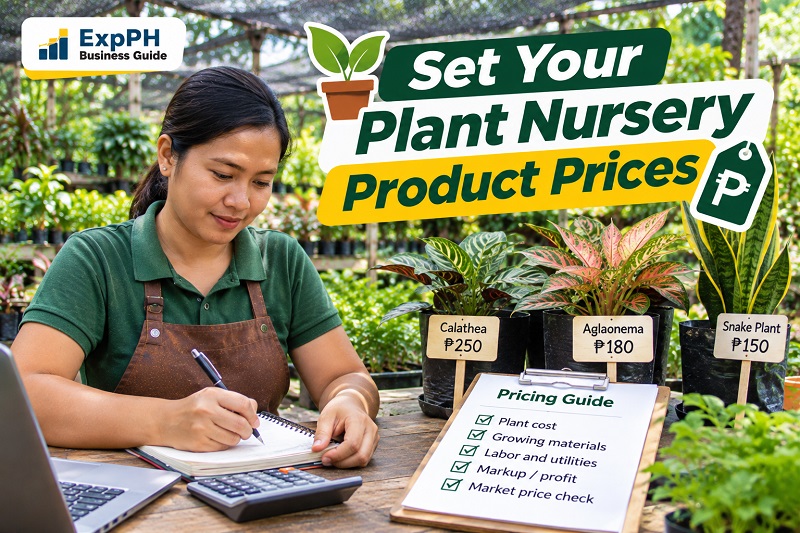
Set prices that cover your plant production or purchasing costs while remaining competitive for customers. Consider each plant’s variety, size, growing time, and maintenance requirements. Calculate your expenses carefully and compare similar products in the market to establish reasonable selling prices that support sustainable profit margins.
Calculate Your Plant Production Costs
Include the following when determining your selling prices:
- Seeds or starter plants.
- Pots and seedling bags.
- Soil and growing media.
- Compost and fertilizer.
- Water and electricity.
- Labor and maintenance.
- Packaging and labeling.
- Transportation expenses.
- Other operating costs.
For plants you grow yourself, include the materials and time required to produce saleable inventory.
Research Competitor Prices
Compare similar plants sold by nearby nurseries and online sellers.
Check whether the plants have comparable varieties, sizes, growing conditions, and quality. A small seedling should not be compared directly with an established plant in a larger container.
Use competitor prices as a market reference while calculating your own expenses.
Create Clear Product Pricing
Display prices clearly and identify plant varieties accurately.
Include useful information such as:
- Plant name.
- Variety, when known.
- Current size.
- Selling price.
- Basic care instructions.
If you offer bundles or discounts, calculate their effect on your profit before introducing them.
Review your prices regularly when growing materials, transportation, and other operating expenses change.

9. Register Your Plant Nursery Business in the Philippines
Understand the registrations, permits, and tax requirements needed to operate your nursery legally in the Philippines. Consider your business structure, location, and nursery activities when completing DTI or SEC registration, securing local permits, registering with the BIR, and checking applicable agricultural accreditation requirements.
Choose Your Business Structure
Common business structures include:
- Sole proprietorship: Usually suitable for an individual who owns and manages the business.
- Partnership: An option for two or more people operating a business together.
- Corporation: A separate legal entity with a more formal ownership and management structure.
Consider your ownership arrangements, responsibilities, and long-term plans before selecting a structure.
Register Your Business Name or Entity
For a sole proprietorship, you can register your business name through the Department of Trade and Industry (DTI).
Partnerships and corporations generally register with the Securities and Exchange Commission (SEC).
Business name registration does not replace local permits or tax registration.
Secure Local Business Permits
Visit your city or municipal Business Permits and Licensing Office (BPLO) to confirm the requirements for your nursery location.
Depending on your premises and local regulations, requirements may include:
- Barangay clearance.
- Mayor’s or business permit.
- Zoning or locational clearance.
- Fire safety requirements.
- Other applicable local clearances.
Ask your local government whether your proposed growing and selling activities are permitted at your chosen location.
Register With the BIR
You must also comply with applicable tax registration, invoicing, and recordkeeping requirements through the Bureau of Internal Revenue (BIR).
The BIR provides registration options through its Online Registration and Update System (ORUS) and other available registration channels. Keep your registration documents and monitor applicable filing deadlines.
Check Plant Nursery Accreditation Requirements
Some nursery operations may need additional agricultural accreditation or certification.
The Department of Agriculture and Bureau of Plant Industry have plant nursery accreditation processes intended to support the production of quality planting materials, particularly for fruit and plantation crops.
Requirements can depend on the type of plants produced and the nursery’s activities. Contact your nearest DA Regional Field Office or the BPI to confirm whether accreditation applies to your operation. DA-Regional Field Office III+1
If you intend to import planting materials or sell regulated products, verify the relevant permits and requirements before conducting those activities.
10. Develop a Plant Care and Maintenance Schedule
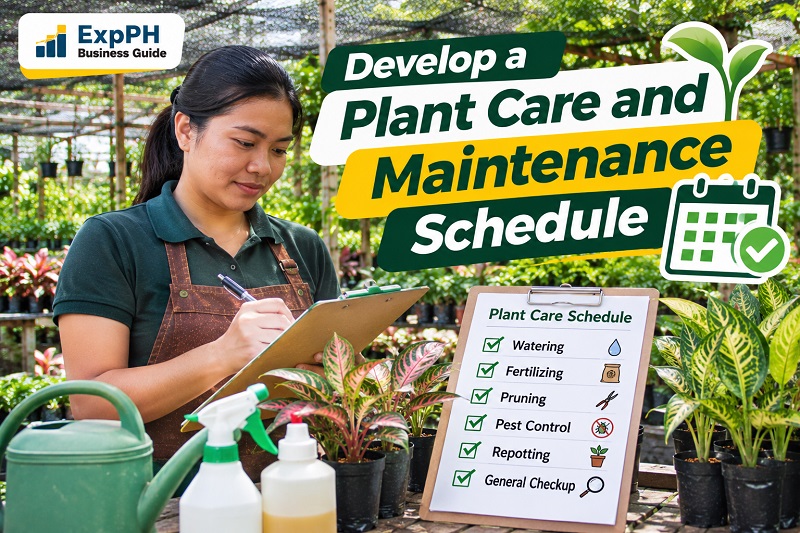
Establish a consistent routine to maintain plant health and protect your nursery inventory. Organize watering, fertilizing, pruning, and cleaning activities according to each plant’s needs. Include regular inspections to identify pests, diseases, and other problems before they affect the quality of your plants.
Establish a Watering Schedule
Group plants according to their watering requirements.
Check soil moisture before watering and avoid applying the same amount of water to every plant variety.
Record watering activities when necessary, particularly if several people help maintain the nursery.
Monitor Plant Health
Inspect plants regularly for:
- Discolored leaves.
- Wilting.
- Root problems.
- Insect activity.
- Fungal growth.
- Damaged stems.
- Unusual growth patterns.
Separate affected plants when appropriate and identify the possible cause before taking action.
Maintain Clean Growing Areas
Remove dead leaves, weeds, and unnecessary debris from your nursery.
Clean containers and tools when needed. Keep growing materials organized and prevent standing water from accumulating around plant displays.
A clean growing environment helps you monitor plants more effectively and provides customers with a better shopping experience.
11. Develop an Inventory and Stock Management System
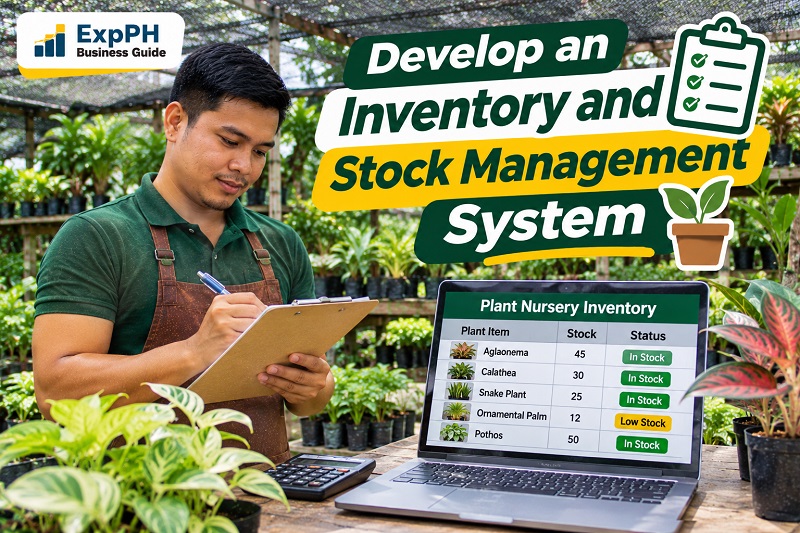
Maintain accurate records of your plant varieties, quantities, suppliers, growing dates, costs, and selling prices. Monitor plant growth and condition while reviewing sales to identify fast-moving and slow-moving products. This helps you manage stock levels, avoid unnecessary production, and make informed restocking decisions.
Record Your Plant Inventory
Maintain records containing:
- Plant name and variety.
- Supplier or propagation source.
- Date planted or received.
- Growing location.
- Purchase or production cost.
- Selling price.
- Available quantity.
- Plant condition.
- Expected selling period.
These records help you understand which varieties are ready for sale and which still require growing time.
Monitor Plant Growth and Condition
Unlike ordinary retail products, living plants require ongoing care while they remain in inventory.
Record important changes in plant condition and identify plants that need additional attention.
Remove dead or severely damaged plants from saleable stock and update your inventory records.
Identify Fast-Moving and Slow-Moving Plants
Review sales records to identify which varieties customers purchase frequently.
Increase production of popular plants when demand supports it. Reduce production of slow-moving varieties until you understand why they are not selling.
Avoid producing more plants than your growing area, available capital, and customer demand can support.

12. Choose Your Payment and Sales Management System
Choose payment methods and sales tools that make customer transactions convenient and help you monitor business performance. Consider cash, bank transfers, e-wallets, and other suitable options. Maintain accurate transaction records and use a POS system or spreadsheet to track sales, revenue, and expenses as your nursery grows.
Offer Convenient Payment Methods
Depending on your business setup, you may accept:
- Cash payments.
- Bank transfers.
- Supported e-wallet payments.
- Debit or credit card payments.
- Approved online payment options.
Display accepted payment methods clearly and confirm payments before releasing orders.
Use a POS or Sales Tracking System
A point-of-sale system can help record transactions and monitor product sales.
For a small nursery, a spreadsheet or basic sales application may be sufficient initially.
As your operations expand, consider a system that supports inventory records, sales reports, and receipt management.
Maintain Accurate Sales Records
Record daily transactions and reconcile sales with actual cash and digital payments.
Keep receipts, invoices, supplier records, and other business documents organized.
Accurate records help you understand revenue, monitor expenses, and prepare for applicable tax obligations.

13. Promote Your Plant Nursery Business in the Philippines
Use social media, online business listings, and local partnerships to make your nursery more visible to potential customers. Share clear plant photographs, accurate product descriptions, prices, and helpful care tips while encouraging customer feedback to build trust, attract new buyers, and generate repeat orders.
Create a Social Media Business Page
Set up a business page with your nursery name, location, operating hours, contact information, and available plant categories.
You can publish:
- New plant arrivals.
- Available seedlings.
- Plant care tips.
- Product photographs.
- Price lists.
- Nursery updates.
- Customer feedback with permission.
- Ordering and delivery instructions.
Use clear photographs and provide accurate descriptions of plant varieties and sizes.
Improve Your Local Online Visibility
Create a listing through Google Business Profile so nearby customers can find your nursery location, contact information, and operating hours.
Keep your business details updated and respond professionally to customer questions and reviews.
Build Local Partnerships
Connect with:
- Landscaping businesses.
- Gardening groups.
- Agricultural cooperatives.
- Homeowners’ associations.
- Local farmers.
- Garden centers.
- Community gardening organizations.
These relationships can introduce your products to potential customers and create opportunities for repeat orders.
Encourage Customer Reviews
Ask satisfied customers to share honest feedback about their experience.
Respond politely to complaints and use constructive comments to improve plant quality, product selection, delivery arrangements, and customer service.
14. Manage Your Plant Nursery Business Finances and Daily Operations
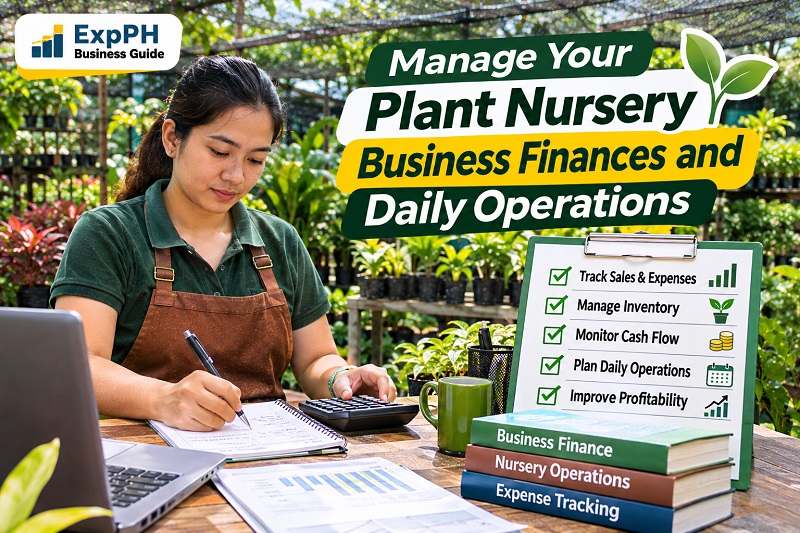
Monitor your nursery’s income and expenses to understand its financial performance and daily operations. Keep business and personal funds separate while recording sales, purchases, and operating costs. Calculate your break-even point and review inventory and sales records regularly to make informed decisions about pricing, production, and expenses.
Separate Business and Personal Money
Use a dedicated account or clearly separated records for business transactions.
Avoid mixing personal spending with business funds because it makes it harder to determine your actual income and expenses.
Record sales, supplier payments, growing materials, transportation, utilities, and other business expenses.
Monitor Daily Sales and Expenses
At the end of each working day, record:
- Total sales collected.
- Number of customer transactions.
- Plants sold.
- Inventory purchases.
- Growing material expenses.
- Water and electricity costs.
- Transportation expenses.
- Customer concerns and feedback.
These records help you identify sales patterns and monitor operating costs.
Calculate Your Break-Even Point
Your break-even point is the sales level needed to cover your business expenses.
Identify your fixed costs and calculate how much each plant contributes after its production or purchase costs.
Remember that growing plants requires time and resources before they become saleable. Include these costs when reviewing your financial performance.
Review Your Business Performance
Check your sales reports, inventory records, and expenses regularly.
Identify plant varieties that generate consistent sales and those that require too much space or maintenance.
Use this information to adjust production schedules, pricing, purchasing decisions, and marketing activities.
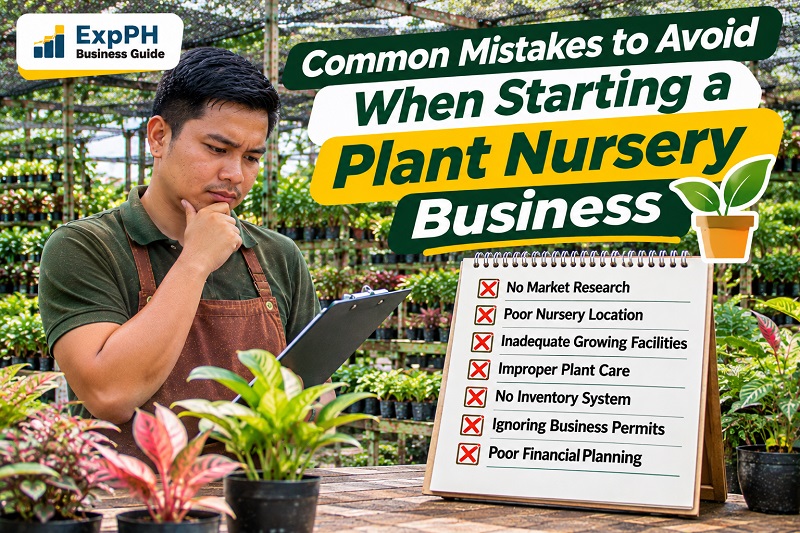
15. Common Mistakes to Avoid When Starting a Plant Nursery Business
Avoid mistakes that can damage your plants, increase operating costs, or affect customer trust. Pay attention to production quantities, plant suitability, watering, drainage, supplier reliability, and pest control. Calculate selling prices carefully and maintain accurate financial records to protect your investment and support sustainable nursery operations.
Growing Too Many Plants Too Soon
Producing large quantities before understanding customer demand can tie up your capital and growing space.
Start with manageable quantities and increase production based on actual sales records.
Choosing Unsuitable Plant Varieties
Not every plant is suitable for your local climate, available sunlight, or growing conditions.
Research each variety before purchasing seeds or planting materials.
Ignoring Watering and Drainage Requirements
Incorrect watering and poor drainage can damage plants and increase losses.
Establish suitable watering practices and inspect growing areas regularly.
Working With Unreliable Suppliers
Poor-quality planting materials can affect plant growth and customer satisfaction.
Check supplier backgrounds, plant condition, variety information, and purchasing terms before placing large orders.
Failing to Monitor Pests and Diseases
Unnoticed plant health problems can spread and affect other inventory.
Inspect plants regularly and address problems promptly using appropriate plant care practices.
Setting Prices Without Calculating Costs
Copying competitor prices without checking your own expenses can reduce your profit margins.
Include growing materials, labor, containers, utilities, and transportation when calculating selling prices.
Failing to Track Business Finances
Without accurate records, you may not know which plants generate sales or whether your nursery is profitable.
Review transactions, production costs, inventory, and operating expenses regularly.

16. How to Grow Your Plant Nursery Business in the Philippines
Expand your nursery gradually as customer demand and available capital allow. Introduce additional plant varieties, improve online selling and delivery options, and strengthen customer relationships. Consider a larger growing area or another location only when your existing operations can support the added expenses while maintaining plant quality and reliable service.
Expand Your Plant Selection
Introduce additional varieties based on customer requests and sales records.
Possible additions include:
- More ornamental plants.
- Additional fruit tree varieties.
- Vegetable seedlings.
- Culinary herbs.
- Landscaping plants.
- Gardening supplies.
Research growing requirements, supplier reliability, and available space before expanding your inventory.
Improve Your Online Selling Channels
If you started with a physical nursery, consider adding online ordering through social media or an e-commerce platform.
Publish clear photographs, plant descriptions, sizes, prices, and care information.
Keep inventory records updated so customers do not order plants that are no longer available.
Introduce Delivery and Convenient Ordering
Customers may appreciate delivery options, especially when purchasing large plants or multiple seedlings.
Consider transportation costs, packaging, delivery coverage, and plant handling before offering this service.
Use suitable packaging to protect plants during transportation and communicate delivery arrangements clearly.
Build Stronger Customer Relationships
Maintain communication with regular customers and provide helpful plant care information.
You can introduce loyalty rewards, seasonal offers, or plant bundles when the costs are financially reasonable.
Good customer service can encourage repeat purchases and recommendations.
Consider a Larger Nursery or Additional Location
A larger growing area or second location may become an option when your current business has consistent sales and sufficient working capital.
Before expanding, calculate additional land or rental expenses, growing materials, equipment, labor, utilities, and management costs.
Make sure your existing operation can maintain plant quality and customer service while taking on new responsibilities.

Conclusion: How to Start a Plant Nursery Business in the Philippines
Starting a Plant Nursery Business in the Philippines requires careful planning, suitable growing conditions, and a clear understanding of local customer demand. You do not need to establish a large nursery immediately. Beginning with manageable plant varieties and gradually expanding your operations can help you understand the market while controlling your expenses.
Focus on producing or sourcing healthy plants, maintaining reliable suppliers, organizing your growing area, and keeping accurate financial records. Business registration and any applicable agricultural requirements should also be part of your preparation.
As your experience grows, you can introduce additional plant varieties, improve your selling channels, and build stronger relationships with customers. With consistent plant care and responsible financial management, your nursery can develop into a sustainable business that serves gardeners, homeowners, farmers, and landscaping customers across the Philippines.
FAQs About Starting a Plant Nursery Business in the Philippines
1. How much capital do I need to start a plant nursery business in the Philippines?
Your starting capital depends on nursery size, location, plant varieties, equipment, and growing materials. Begin with a realistic budget and sufficient working capital.
2. Can I start a plant nursery business at home?
Yes, you can start at home if you have suitable growing space, sunlight, water, drainage, and enough room to maintain healthy plants.
3. What plants should I sell in my nursery?
Consider ornamental plants, fruit seedlings, vegetable seedlings, herbs, and landscaping plants. Choose varieties based on local demand and suitable growing conditions.
4. Where can I buy plants and seeds for my nursery?
You can source planting materials from established nurseries, seed companies, agricultural suppliers, local growers, and authorized distributors with dependable product quality.
5. Do I need to register my plant nursery business?
Yes, register your business with the appropriate government agencies and secure applicable local permits before operating. Requirements depend on your business structure.
6. Does a plant nursery need agricultural accreditation in the Philippines?
Some nursery operations require additional accreditation, particularly those producing certain fruit and plantation planting materials. Confirm applicable requirements with your regional agriculture office.
7. How do I maintain healthy plants in my nursery?
Provide suitable sunlight, proper watering, good drainage, and regular inspections. Monitor pests and diseases while maintaining clean and organized growing areas.
8. How can I attract customers to my plant nursery?
Promote available plants through social media, clear photographs, helpful gardening tips, local partnerships, customer referrals, and accurate product information.
9. Can I sell plants online in the Philippines?
Yes, you can sell plants through social media and e-commerce platforms. Prepare suitable packaging and delivery arrangements to protect plants during transportation.
10. How can I make my plant nursery business profitable?
Monitor production costs, select plants with consistent demand, maintain healthy inventory, establish reasonable prices, and review sales records to guide business decisions.
Explore the Complete Guide to Starting a Business in the Philippines
Ready to take your business journey further? Explore our Complete Guide to Starting a Business in the Philippines for practical advice on business planning, registration, budgeting, operations, and growth strategies to help you build a sustainable business.
Test your knowledge with this 10-question plant nursery business quiz
Results


#1. What is the first step when planning a plant nursery business?
#2. Which business model allows you to grow plants in your backyard?
#3. Which of the following is an example of a fruit tree seedling?
#4. Why should you prepare working capital for your nursery?
#5. Which government agency handles applicable plant import clearances in the Philippines?
#6. What helps prevent waterlogging and root problems in a nursery?
#7. Which information should be included in plant inventory records?
#8. What should you consider when setting plant selling prices?
#9. Which platform can help nearby customers find your nursery online?
#10. When should you consider expanding your plant nursery?
We appreciate your time and interest in learning
Share your quiz score or experience in the comments. We would love to hear how you did!

A Filipino web developer with a background in Computer Engineering. Founder of ExpPH Blog and ExpPH Business Guide, two Philippines-focused platforms covering OFW guidance, business, finance, freelancing, travel, and lifestyle. Passionate about helping Filipinos grow, he creates practical content that educates, empowers, and inspires readers nationwide.