
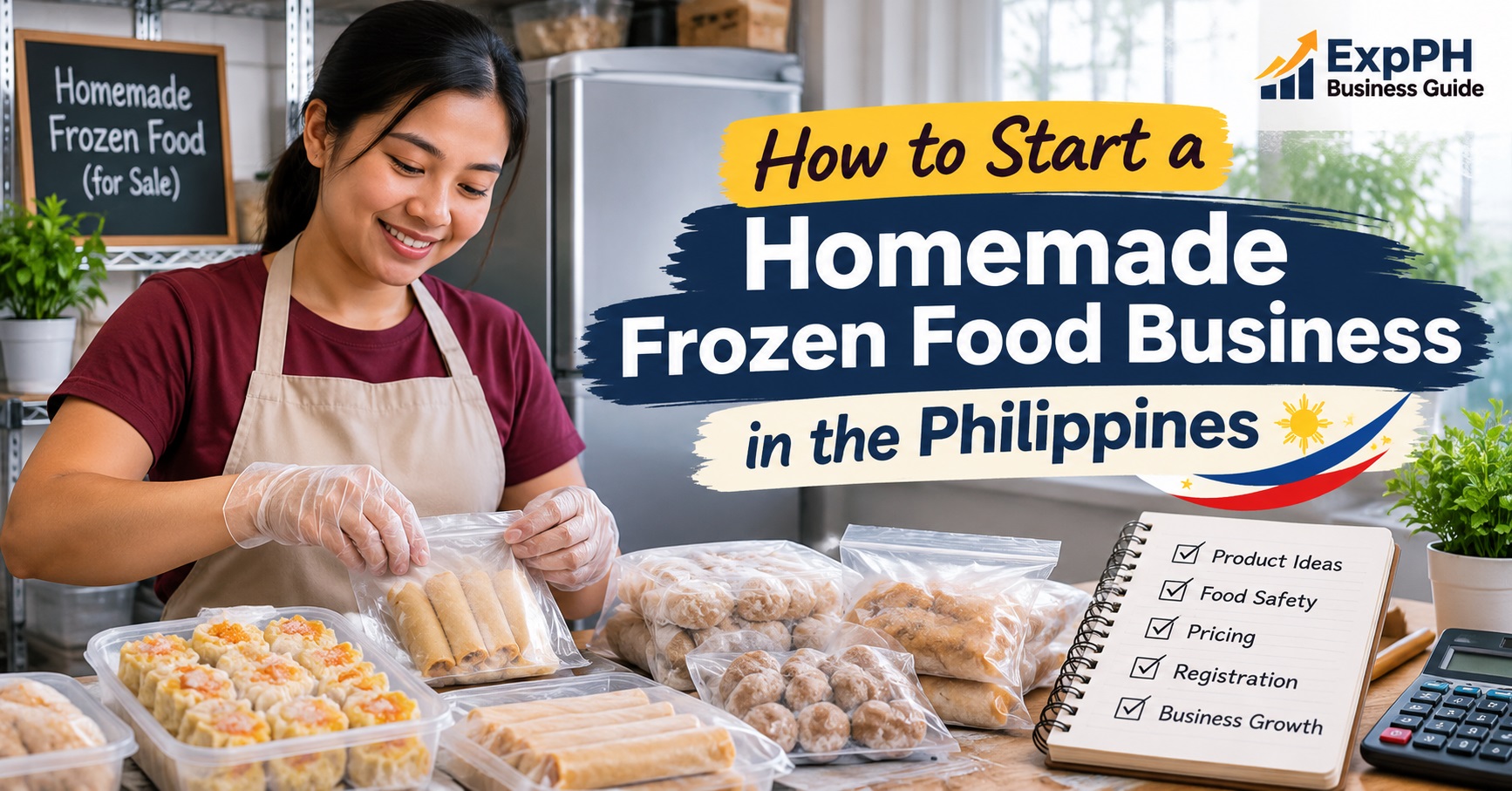
Starting a homemade frozen food business in the Philippines can be a practical opportunity for aspiring entrepreneurs who enjoy preparing food and want to build a business from home. Frozen products such as siomai, lumpia, marinated meat, longganisa, ready-to-cook meals, and homemade desserts can serve customers looking for convenient food options.
However, running this type of business involves more than preparing delicious recipes. You need to choose products carefully, calculate your costs, maintain proper food handling and freezing practices, use suitable packaging, and organize orders and deliveries. You also need to understand the permits and food regulations that may apply to your operation.
Whether you plan to sell to neighbors, accept orders through social media, or supply local stores, this guide explains the practical steps to help you start and manage a homemade frozen food business in the Philippines.
Looking for more business opportunities? Explore our guide to the Best Low-Capital Businesses to Start in the Philippines and discover practical business ideas you can launch with a limited budget.
Quick Summary (TL;DR)
Starting a homemade frozen food business in the Philippines can be a practical way to earn income without immediately renting a commercial space. With suitable kitchen equipment, carefully selected products, and proper planning, you can start small and gradually build a customer base.
- Starting capital: Estimate your expenses for ingredients, freezer capacity, kitchen tools, packaging, and other business requirements.
- Products to sell: Consider siomai, lumpia, longganisa, chicken nuggets, marinated meats, burger patties, and ready-to-cook meals.
- Target customers: Start with neighbors, friends, relatives, families, office workers, and small food businesses.
- Pricing: Calculate ingredient costs, packaging, electricity, labor, and other operating expenses before setting your selling prices.
- Promotion: Use Facebook, community groups, customer referrals, and attractive product photographs to reach potential buyers.
- Business requirements: Check the applicable DTI, BIR, local business permit, sanitary, and food-related requirements before operating.
- Growth strategy: Start with a manageable product selection, maintain food safety and product quality, and expand when customer demand becomes consistent.
Key takeaway: A successful homemade frozen food business does not require a large production facility or an extensive product menu from the beginning. Focus on manageable startup costs, safe food handling, proper freezing and storage, accurate pricing, and customer satisfaction to build a sustainable business.
Ready to start your frozen food business? Choose a few frozen food products you can prepare consistently, calculate your startup costs, and begin introducing your products to potential customers.
Table of Contents
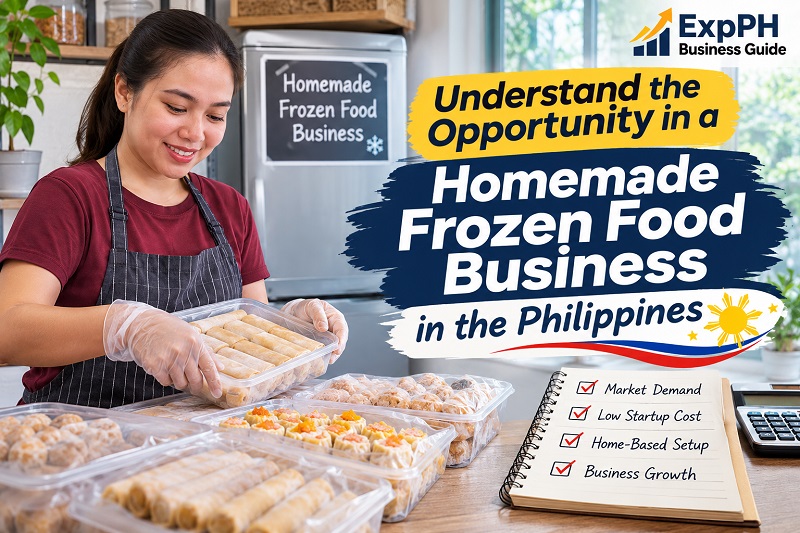
1. Understand the Opportunity in a Homemade Frozen Food Business in the Philippines
Starting a homemade frozen food business in the Philippines allows you to serve customers looking for convenient ready-to-cook meals. You can begin with a small product selection, manage preparation and storage from home, and gradually expand based on customer demand and feedback.
Why Frozen Food Products Can Be Practical to Sell
Frozen products can offer convenience to customers because they can be stored and prepared later. This makes them suitable for households that prefer to plan meals ahead or keep food available for busy days.
Some products can also be prepared in batches, allowing you to organize production schedules. However, batch preparation should only be done when you can maintain proper hygiene, freezing conditions, and product quality throughout the process.
Start Small Before Expanding
You do not need to launch with a large product catalog. Starting with two or three products can make it easier to monitor ingredient costs, production time, storage capacity, and customer preferences.
For example, you might begin with homemade siomai, lumpia, and marinated chicken. Once you understand which products sell consistently, you can consider adding other items.
2. Choose the Right Frozen Food Products to Sell
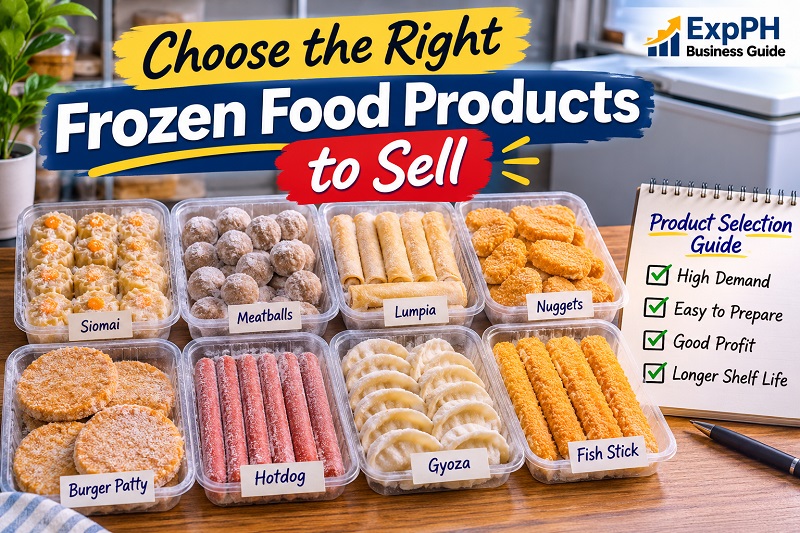
Selecting suitable frozen food products helps you manage production costs and meet customer preferences. Focus on items that match your cooking skills and available equipment. Consider ingredient availability, preparation time, and freezer capacity before deciding which products to offer.
Popular Homemade Frozen Food Ideas
Here are some products you may consider offering:
| Frozen food product | Possible customers |
|---|---|
| Homemade siomai | Families and office workers |
| Lumpiang Shanghai | Households and party buyers |
| Chicken nuggets | Families with children |
| Marinated chicken | Busy households |
| Marinated pork | Home cooks and families |
| Homemade longganisa | Breakfast customers |
| Embutido | Families and special occasions |
| Ready-to-cook meatballs | Busy households |
| Frozen burger patties | Families and small food businesses |
| Homemade spring rolls | Snack buyers and households |
These are product ideas, not guaranteed bestsellers. Actual demand will depend on your location, pricing, taste, product quality, and competition.
Consider Your Skills and Equipment
Choose products you already know how to prepare or can learn to produce reliably. If you are experienced in making siomai, for example, you may find it easier to start with that product than to introduce several unfamiliar recipes.
Also consider whether your kitchen tools and freezer can support the production process. Products that require special equipment, extensive preparation, or more complicated storage arrangements may increase your startup expenses.
Test Your Products Before Selling
Prepare small test batches before accepting regular orders. Ask a few people to evaluate the taste, texture, portion size, packaging, and value for money.
You should also test how the product performs after freezing and cooking. A product that tastes good immediately after preparation may have a different texture or appearance after storage. Keep notes about recipe measurements, preparation methods, and customer feedback so you can improve consistency.
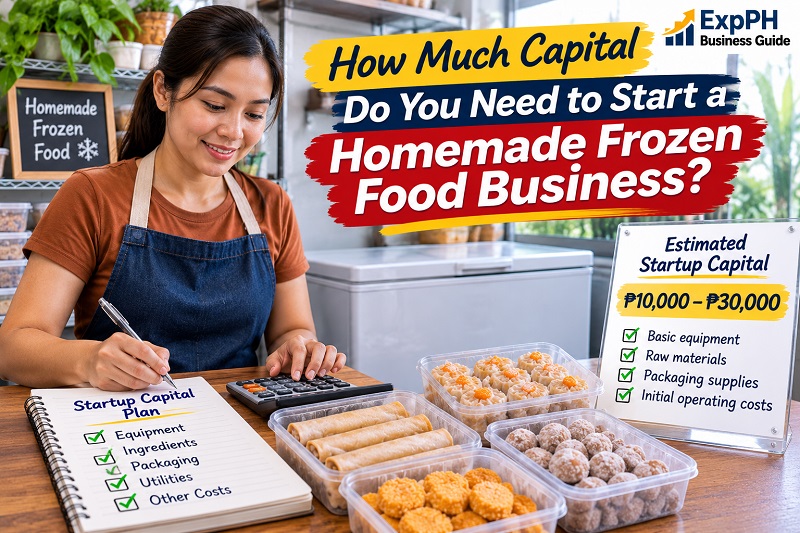
3. How Much Capital Do You Need to Start a Homemade Frozen Food Business?
Planning your startup capital helps you prepare for the expenses involved in launching your frozen food business. Consider the cost of ingredients, equipment, packaging, electricity, and permits. Assess the tools you already own to determine how much additional investment you need.
Estimate Your Initial Startup Expenses
Your initial budget may include the following:
| Startup requirement | What to consider |
|---|---|
| Ingredients | Meat, vegetables, seasonings, flour, and other recipe components |
| Freezer | Suitable capacity for your expected inventory |
| Food preparation tools | Knives, chopping boards, weighing scale, trays, and mixing bowls |
| Packaging materials | Food-safe containers, pouches, and sealing materials |
| Labels | Product names, ingredients, dates, and storage instructions |
| Sanitation supplies | Cleaning materials, soap, and food-safe sanitizing products |
| Electricity | Additional power consumption from freezing and storage |
| Marketing | Product photos, promotional materials, and online listings |
| Registration and permits | Applicable government fees and compliance expenses |
Use Equipment You Already Own
If your existing freezer and kitchen equipment are suitable for food production, you may be able to reduce your initial expenses. However, do not use equipment that cannot maintain appropriate storage conditions or be cleaned properly.
Before purchasing a new freezer, estimate your expected inventory and determine how much storage space you actually need. Avoid spending too much on equipment before confirming that customers are interested in your products.
Keep Emergency Funds
Set aside money for unexpected expenses such as ingredient price increases, equipment repairs, packaging replacements, and unsold inventory. Frozen food businesses depend on reliable storage, so a freezer problem can affect both your products and your finances.
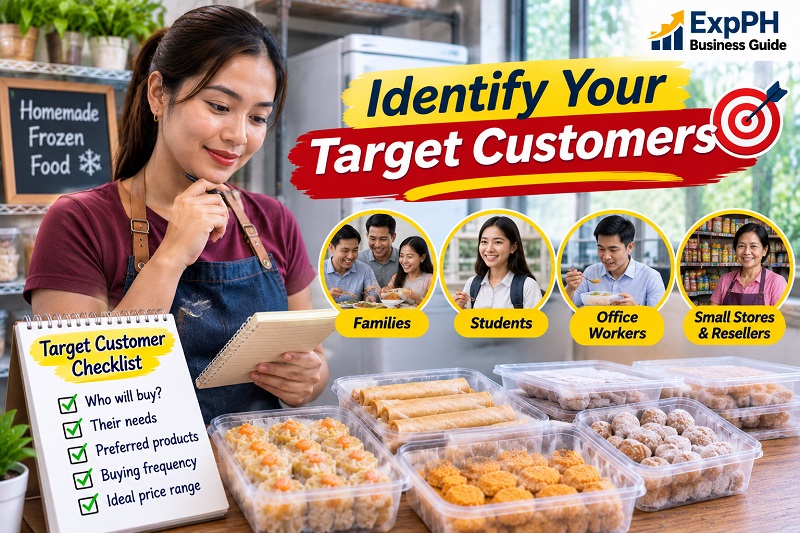
4. Identify Your Target Customers
Identifying your target customers helps you understand who is most likely to buy your frozen food products. Consider the needs and buying preferences of families, working professionals, students, and small food businesses. This allows you to choose suitable products and focus your marketing efforts effectively.
Focus on Your Local Community
Your neighborhood can be a practical starting point because nearby customers may be easier to reach and serve. You can introduce your products to residents, coworkers, friends, and community groups.
Pay attention to the types of frozen food people already purchase. Ask what products they prefer, how much they usually spend, and whether they would consider buying homemade alternatives.
Consider Different Customer Needs
Different customers may look for different product qualities.
- Families: Convenient products that are easy to prepare and suitable for shared meals.
- Working professionals: Ready-to-cook options that save preparation time.
- Students: Affordable portions that fit smaller food budgets.
- Small food businesses: Consistent products, dependable supply, and suitable bulk pricing.
- Event organizers: Frozen items that can be prepared for gatherings and celebrations.
Understanding these needs can help you decide which products deserve priority.
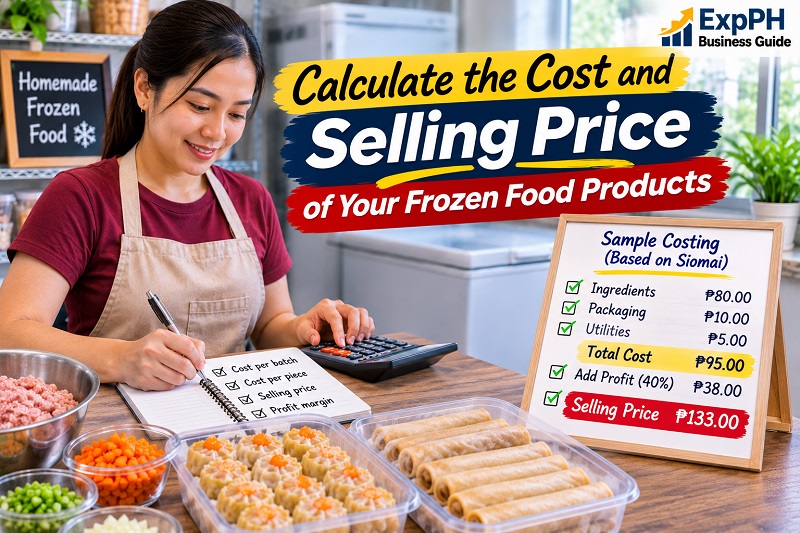
5. Calculate the Cost and Selling Price of Your Frozen Food Products
Calculating your production costs helps you set selling prices that cover your expenses and provide a reasonable profit. Consider ingredients, packaging, electricity, labor, and transportation. Proper costing also helps you avoid underpricing and maintain a financially sustainable frozen food business.
Calculate the Total Production Cost
For each product, record the amount spent on ingredients and other materials. Include the cost of packaging and estimate the share of utilities and labor used during production.
For example, suppose you prepare 20 packages of homemade siomai. Your sample production costs might look like this:
| Expense | Sample cost |
|---|---|
| Meat and other ingredients | ₱700 |
| Seasonings and additional ingredients | ₱100 |
| Packaging and labels | ₱100 |
| Estimated electricity and other costs | ₱100 |
| Total production cost | ₱1,000 |
The sample production cost per package is ₱50 because ₱1,000 is divided by 20 packages. This is only an illustration. Your actual cost will depend on your recipe, supplier prices, package size, and operating expenses.
Set a Reasonable Selling Price
After calculating your cost per package, decide on a selling price that provides a reasonable margin while remaining competitive.
For example, if one package costs ₱50 to produce and you sell it for ₱70, the difference is ₱20 before accounting for any additional expenses not included in your calculation.
Review your prices regularly because meat, vegetables, cooking ingredients, packaging, and electricity costs can change. Avoid lowering prices simply to compete with other sellers if doing so makes your business unprofitable.
Monitor Waste and Unsold Inventory
Record damaged packages, spoiled ingredients, returned orders, and products that remain unsold. These losses should be considered when reviewing your actual business performance.
Producing smaller batches based on confirmed orders can help reduce unnecessary inventory, especially when your business is still building a customer base.
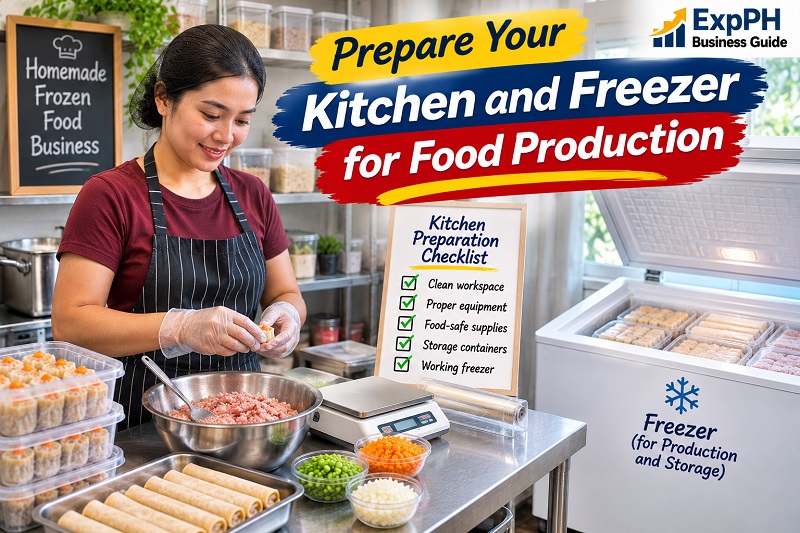
6. Prepare Your Kitchen and Freezer for Food Production
Preparing your kitchen and freezer properly helps maintain a clean and organized food production area. Arrange your equipment, separate raw ingredients from finished products, and ensure adequate freezer capacity. Proper organization also helps prevent contamination and makes inventory management easier.
Organize Your Food Preparation Area
Arrange your kitchen tools and ingredients so that you can work efficiently. Keep preparation surfaces clean, use suitable chopping boards, and separate raw ingredients from ready-to-eat foods.
Wash your hands before handling ingredients and after performing activities that may contaminate them. Clean and sanitize food-contact equipment according to appropriate food safety practices.
Choose a Suitable Freezer
Your freezer should be capable of maintaining the storage conditions required for your products. Consider its capacity, reliability, energy consumption, and available space before purchasing one.
Use a suitable appliance thermometer to monitor the freezer temperature. Do not rely only on the appliance’s control setting because the actual temperature may vary.
Organize Your Frozen Inventory
Keep products properly sealed and arranged so that older inventory can be identified and used or sold first, provided it remains safe and within its established storage period.
Use a simple inventory record showing:
- Product name
- Production date
- Batch number or identifier
- Quantity prepared
- Quantity sold
- Remaining stock
- Storage condition
This system can help you track inventory and identify products that need attention.
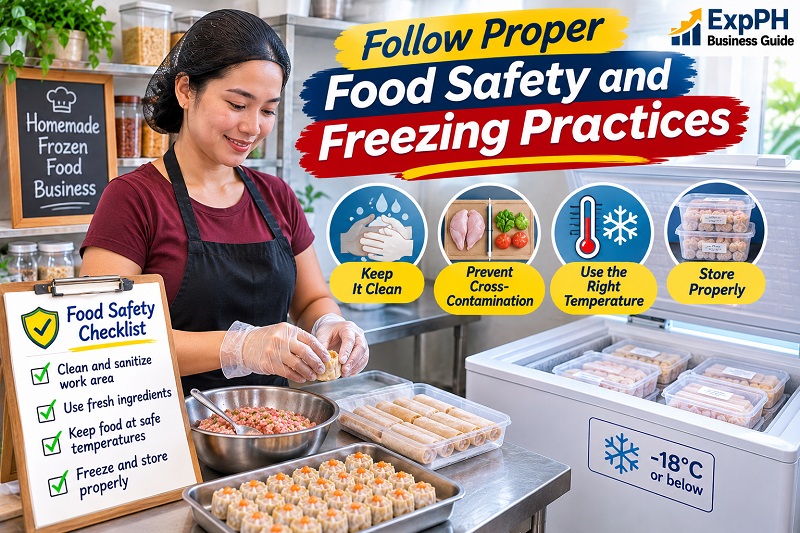
7. Follow Proper Food Safety and Freezing Practices
Maintaining proper food safety practices helps protect customers and preserve the quality of your frozen products. Handle ingredients carefully, prevent cross-contamination, and monitor freezer temperatures. Following safe preparation and storage procedures also helps reduce spoilage and maintain consistent product quality.
The Philippine Food Safety Act of 2013, or Republic Act No. 10611, establishes responsibilities for food business operators to ensure that food meets applicable safety requirements. Read the Food Safety Act of 2013 for the legal framework.
Buy Ingredients from Reliable Suppliers
Purchase ingredients from suppliers that maintain proper handling and storage practices. Check product condition, packaging integrity, and expiration or use-by information where applicable.
For meat and seafood, pay particular attention to how products are transported and stored. Avoid ingredients that have been left at unsafe temperatures or show signs of spoilage.
Prevent Cross-Contamination
Keep raw meat, seafood, vegetables, and other ingredients separated during preparation. Use clean utensils and appropriate chopping boards, and wash equipment between tasks.
Do not allow raw ingredients or their juices to come into contact with finished products or packaging materials. Maintain good personal hygiene and clean the preparation area regularly.
Freeze Products Promptly and Monitor Temperature
Follow a consistent process for moving prepared products into appropriate frozen storage. Avoid leaving perishable ingredients or finished products at room temperature for extended periods.
Use a thermometer to check the freezer rather than assuming it is operating correctly. Keep the freezer door closed as much as possible, and avoid overloading it in a way that prevents proper circulation of cold air.
Establish Safe Handling Instructions
Provide customers with clear instructions for keeping and preparing your products. Explain that frozen products should remain frozen during storage and should be handled according to the product’s specific cooking instructions.
Do not recommend refreezing products that have thawed unless an appropriate food safety procedure confirms that doing so is safe. When there is uncertainty about a product’s safety, do not sell it.
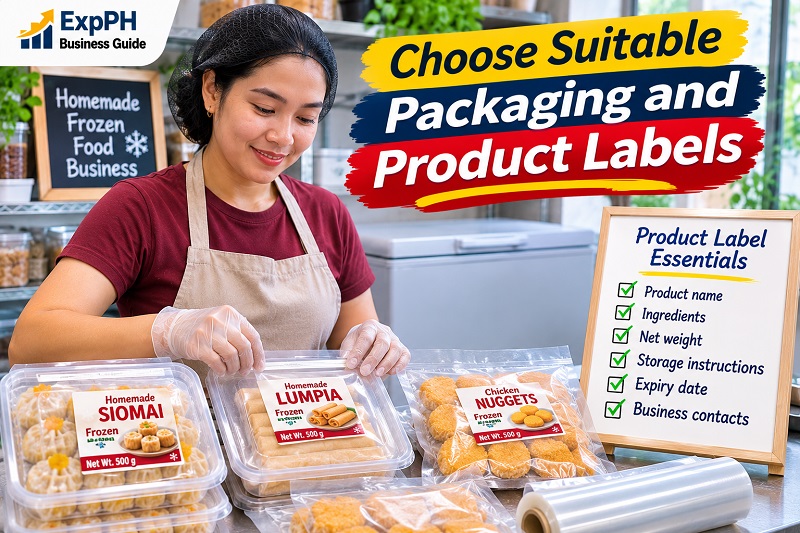
8. Choose Suitable Packaging and Product Labels
Choosing suitable packaging and clear product labels helps protect your frozen food and maintain its quality during storage and delivery. Use durable food-safe materials that can withstand freezing. Include accurate product information and storage instructions to help customers handle and identify their purchases properly.
Select Freezer-Suitable Packaging
Depending on your products, you may consider:
- Food-grade freezer pouches
- Sealed plastic containers suitable for freezing
- Vacuum-sealed bags, where appropriate
- Food-safe trays with secure covers
- Suitable insulated packaging for delivery
Test packaging before using it for regular orders. Check whether it remains sealed and protects the product during freezing and handling.
Include Important Product Information
Your product labels should provide useful and accurate information. Depending on applicable requirements, consider including:
- Product name
- Ingredient list
- Allergen information
- Net weight or package quantity
- Production or packing date
- Batch identification
- Storage instructions
- Cooking or preparation instructions
- Business contact details
Check the labeling requirements that apply to your particular product and business activity. Do not make unsupported claims such as “preservative-free” or “healthy” unless you can substantiate them and meet applicable rules.
Make Your Packaging Easy to Recognize
Use a consistent business name, readable text, and simple design. Your packaging does not need to be expensive, but it should look clean and professional.
Clear labels can help customers distinguish your products and make repeat ordering easier.

9. Promote Your Homemade Frozen Food Business
Promoting your homemade frozen food business helps you reach potential customers and increase awareness of your products. Use affordable methods such as Facebook pages and local community groups. Attractive product photos and genuine customer reviews can also encourage people to discover and purchase your frozen food.
Create a Facebook Business Page
A Facebook page can help you display your products, publish prices, share ordering instructions, and communicate with customers.
Include clear product photos and accurate descriptions. State whether items are sold per pack, per piece, or by weight. Also explain your order schedule, payment methods, and delivery arrangements.
Use Local Community Groups
Local online groups can help you reach people in your neighborhood or nearby communities. Follow each group’s posting rules and avoid repeatedly publishing promotional messages.
When possible, provide useful information such as available products, order cut-off times, and delivery areas.
Share Attractive Product Photos
Take photographs that accurately represent the products you sell. Use clean backgrounds and good lighting so customers can see the actual size, packaging, and appearance.
Avoid using stock images or photographs that make your products look different from what customers will receive.
Encourage Customer Feedback and Referrals
Ask customers for honest feedback about taste, portion size, packaging, and service. With their permission, you may share genuine reviews on your business page.
Satisfied customers may recommend your products to friends and relatives. Consistent quality and dependable communication are important for building that trust.
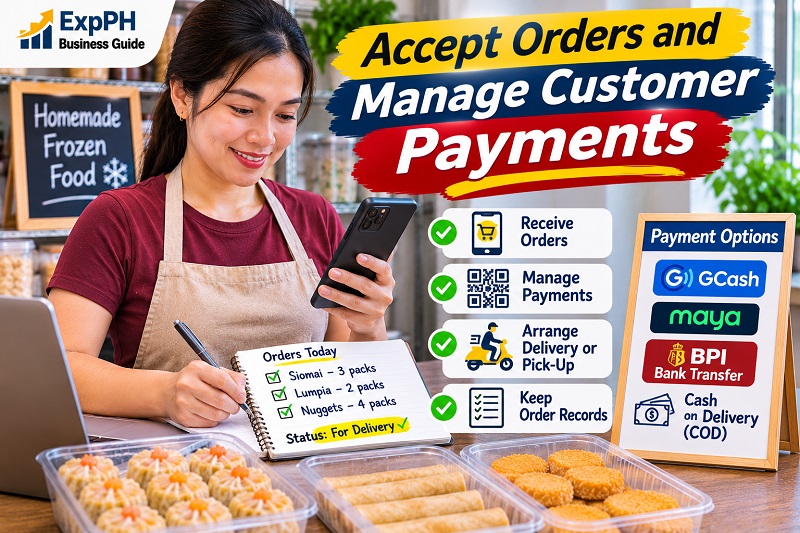
10. Accept Orders and Manage Customer Payments
Managing customer orders and payments properly helps keep your frozen food business organized and reliable. Establish clear ordering procedures, record customer details, and communicate payment policies. A consistent system helps prevent order mistakes and ensures customers receive their purchases as scheduled.
Create a Simple Ordering System
Decide how customers can place orders. You may accept orders through Facebook Messenger, messaging applications, or a dedicated order form.
For every order, record:
- Customer name and contact details
- Products and quantities ordered
- Total amount
- Payment status
- Order confirmation
- Pickup or delivery schedule
- Special instructions
Confirm the order details before preparing products, especially when customers request customized quantities.
Set Clear Payment Policies
Choose which payment methods you will accept, such as cash on pickup, bank transfer, or supported digital payment services.
Explain whether customers need to pay a deposit or the full amount before production. If you accept payment in advance, provide clear confirmation and keep transaction records.
Establish Order Cut-Off Times
Frozen food production may require preparation and freezing time. Set order cut-off times that give you enough time to prepare products safely and organize deliveries.
Avoid accepting more orders than your equipment, storage space, and available working hours can handle.
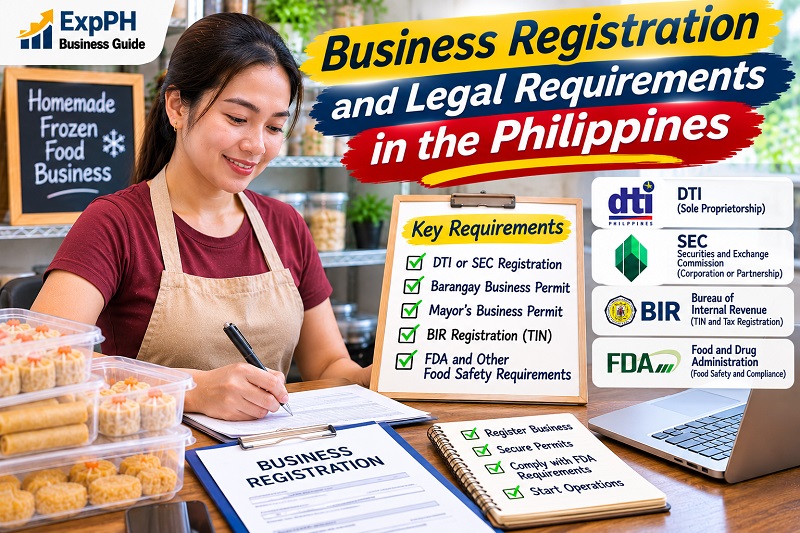
11. Business Registration and Legal Requirements in the Philippines
Understanding the legal requirements helps you prepare your homemade frozen food business for commercial operations. Check the applicable business registrations, local permits, tax obligations, sanitation rules, and FDA requirements. These may vary depending on your products and the activities involved in your business.
DTI Business Name Registration
If you operate as a sole proprietor using a business name different from your true name, you generally need to register that business name with the Department of Trade and Industry (DTI).
You can review the DTI Business Name Registration System for registration information and online services. Business name registration does not replace the permits required to operate your business.
If you establish a partnership or corporation, check the applicable registration process with the Securities and Exchange Commission (SEC).
Barangay and Mayor’s Business Permits
Ask your barangay and city or municipal government about the clearances and business permits required for your home-based operation.
Local requirements may cover zoning, the use of residential premises, inspections, and other conditions. Contact your local Business Permits and Licensing Office (BPLO) before investing heavily in equipment or accepting regular commercial orders.
BIR Registration and Tax Responsibilities
Check the Bureau of Internal Revenue (BIR) requirements for registering your business and meeting applicable tax obligations. Depending on your registration and tax classification, you may need to maintain books or records and comply with invoicing and filing requirements.
Use official BIR information or consult the appropriate Revenue District Office to confirm which requirements apply to your business.
Sanitary Permit and Health Requirements
Food establishments may be subject to sanitary permit requirements under the Code on Sanitation of the Philippines. Presidential Decree No. 856 addresses sanitary permits for food establishments, including places where food is manufactured, processed, stored, or sold.
Ask your local health office about the requirements for your home-based food operation, including inspections and any applicable health certificates. You can review the Code on Sanitation of the Philippines.
Check Whether FDA Authorization Applies
Do not assume that every homemade frozen food seller follows the same FDA registration process. FDA requirements depend on the nature of the food product and the activities performed by the business, such as manufacturing, repacking, trading, or distribution.
Some processed and prepackaged food operations may require an FDA License to Operate and product registration or other applicable authorization. Contact the FDA or consult its current rules to determine the classification and requirements for your specific operation. The FDA’s guidance on food establishment licensing provides information for covered food traders and distributors.
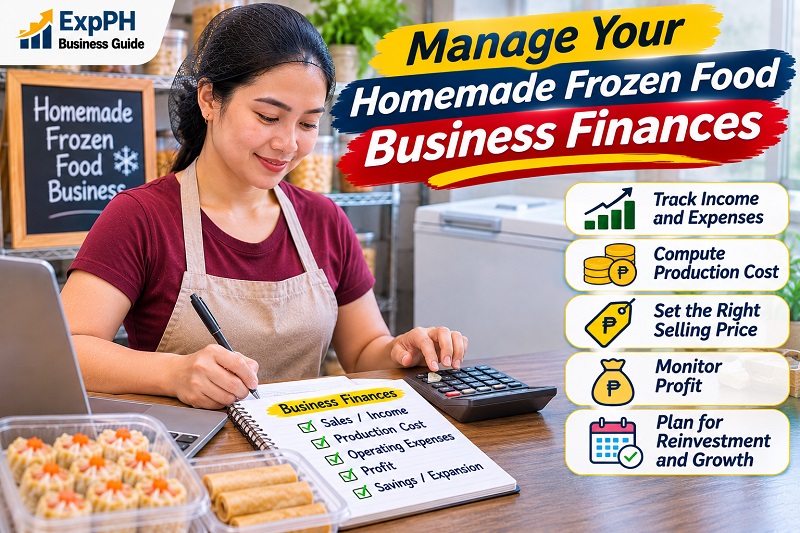
12. Manage Your Homemade Frozen Food Business Finances
Managing your business finances helps you monitor income, control expenses, and understand your actual profit. Keep accurate records of sales and purchases while separating personal and business money. Regularly reviewing your cash flow also helps you plan future expenses and make informed business decisions.
Separate Personal and Business Money
Keep business income and expenses separate from your household spending as much as possible. A dedicated account or clearly organized cash record can make it easier to monitor business transactions.
Record every sale, ingredient purchase, packaging expense, utility cost, and delivery payment.
Monitor Cash Flow
Cash flow refers to the money entering and leaving your business. A business may record sales but still struggle if customers pay late or too much money is tied up in inventory.
Review your available cash regularly. Make sure you have enough funds to purchase ingredients, pay operating expenses, and handle unexpected costs.
Track Profit Instead of Sales Alone
High sales do not automatically mean high profit. Calculate your actual costs and compare them with your revenue.
Review the performance of each product. If a particular item requires too much preparation time or has a low profit margin, consider adjusting its recipe, package size, or selling price.

13. Common Mistakes to Avoid When Starting a Frozen Food Business
Avoiding common business mistakes helps you manage production costs and maintain product quality. Pay attention to freezer capacity, pricing, inventory, and customer orders. Keeping accurate records and following proper storage practices can also prevent unnecessary losses as your frozen food business develops.
Offering Too Many Products at the Beginning
Launching with too many products can make ingredient purchasing, production scheduling, and freezer organization difficult. Start with a small selection and expand when you can manage demand consistently.
Ignoring Freezer Capacity
Producing more food than your freezer can safely accommodate can create storage problems. Plan your production volume according to available freezer space and the appliance’s ability to maintain suitable conditions.
Underpricing Your Products
Some sellers calculate prices based only on ingredient expenses. This can leave out packaging, electricity, labor, delivery, and other operating costs.
Calculate the full production cost before setting your prices.
Neglecting Labels and Storage Instructions
Customers need to know what they are buying and how to handle it. Missing product information can create confusion and reduce confidence in your business.
Use clear and accurate labels and provide appropriate storage and cooking instructions.
Accepting More Orders Than You Can Handle
Taking too many orders can affect product consistency and delivery schedules. Set realistic order limits based on your available time, equipment, and production capacity.
Failing to Keep Business Records
Without sales and expense records, it becomes difficult to identify profitable products or understand where money is being spent.
Maintain simple but consistent records from the beginning.
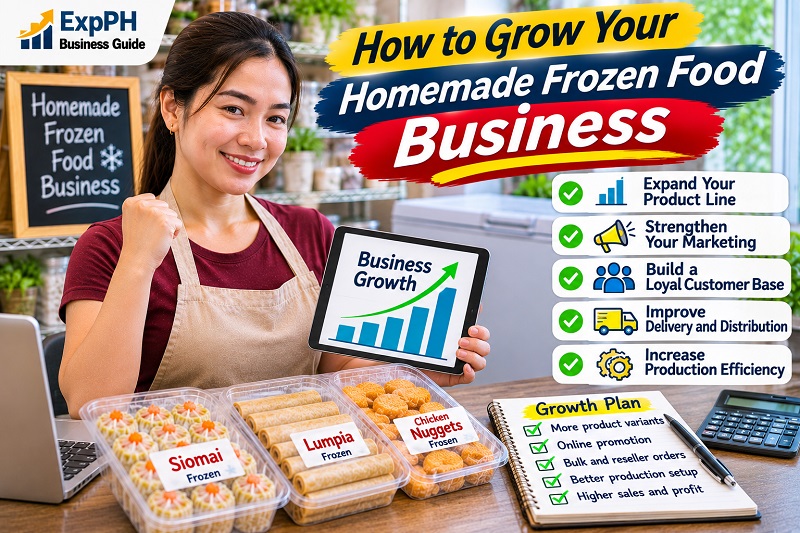
14. How to Grow Your Homemade Frozen Food Business
Growing your homemade frozen food business requires consistent product quality and a clear understanding of customer demand. Introduce new products gradually, explore bulk orders, and improve your branding. Invest in additional equipment when necessary while maintaining reliable service and customer satisfaction as your business expands.
Introduce New Products Gradually
Use customer feedback and sales records to identify products that may complement your existing offerings. Test each new product in small batches before adding it permanently to your menu.
Offer Family Packs and Bulk Orders
Some customers may prefer larger packages for family meals or regular household use. You can test different package sizes and pricing arrangements while ensuring that every option remains profitable.
If you supply small stores or food businesses, establish clear order quantities, payment terms, and delivery schedules.
Improve Your Packaging and Branding
As your customer base grows, consider improving your labels, packaging consistency, and product presentation. A recognizable brand can help customers identify your products and remember your business.
Keep product information accurate and ensure that packaging continues to protect frozen items.
Invest in Equipment When Necessary
Additional freezers, sealing equipment, or preparation tools may become useful as your production volume increases. Before purchasing, calculate the expected cost savings or additional revenue the equipment may support.
Avoid taking on unnecessary expenses when your current setup can still handle customer demand safely.
Build Long-Term Customer Relationships
Reliable product quality, honest communication, and consistent service can encourage repeat purchases. Respond to customer concerns professionally and address problems promptly.
A growing business depends not only on attracting new buyers but also on maintaining the confidence of existing customers.
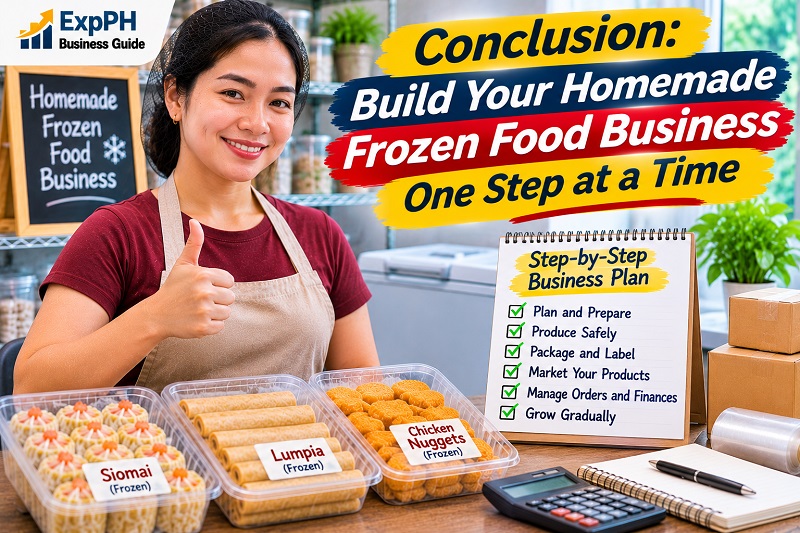
Conclusion: Build Your Homemade Frozen Food Business One Step at a Time
Starting a homemade frozen food business in the Philippines can be a practical opportunity for aspiring entrepreneurs who want to build a business from home. With the right preparation and a clear understanding of customer needs, you can develop a business that matches your available resources and goals.
Starting a homemade frozen food business in the Philippines requires careful planning, consistent food preparation, proper storage, and responsible financial management. You can begin with a small selection of products, test customer demand, and improve your operations as you gain experience.
Pay close attention to food safety, packaging, pricing, and the permits that apply to your business. These responsibilities help protect your customers and create a stronger foundation for long-term operations.
Most importantly, grow at a pace your budget, equipment, and production capacity can support. With reliable products, organized processes, and good customer service, your homemade frozen food business can develop into a more established venture over time.
FAQs About Starting a Homemade Frozen Food Business in the Philippines
1. Is a homemade frozen food business profitable in the Philippines?
It can be profitable when product demand, pricing, ingredient costs, storage expenses, and customer service are managed carefully, although results vary between businesses and locations.
2. What frozen food products can I sell from home?
You can consider siomai, lumpia, longganisa, nuggets, marinated meats, burger patties, and ready-to-cook meals, depending on your skills, equipment, and customer demand.
3. How much capital do I need to start?
Startup capital depends on your equipment, ingredients, packaging, freezer capacity, permits, and production volume, so prepare a budget based on actual local prices.
4. Do I need a freezer for this business?
Yes, suitable frozen storage equipment is essential for maintaining product conditions, organizing inventory, and protecting quality throughout storage before customer pickup or delivery.
5. Do I need to register my frozen food business?
You should check applicable DTI or SEC registration, local permits, BIR obligations, sanitation requirements, and FDA authorizations before starting commercial operations.
6. How should I price homemade frozen food?
Calculate ingredient, packaging, labor, electricity, delivery, and other operating costs, then set a competitive selling price that provides a reasonable profit margin.
7. How can I keep frozen food products safe?
Use fresh ingredients, maintain clean preparation areas, prevent cross-contamination, freeze products promptly, monitor storage temperatures, and provide customers with clear handling instructions.
8. What packaging is suitable for frozen food?
Choose durable, food-safe packaging designed for freezer conditions, with secure seals that protect products against leakage, contamination, and unwanted exposure during storage.
9. How can I promote my frozen food business?
Promote products through Facebook, community groups, clear photographs, customer referrals, and honest reviews, while publishing accurate prices and convenient ordering instructions.
10. Can I expand my frozen food business later?
Yes, you can gradually introduce products, larger packages, bulk orders, or additional equipment after reviewing customer demand, production capacity, cash flow, and profitability.
Ready to take the next step in your entrepreneurial journey?
Explore our Complete Guide to Starting a Business in the Philippines for practical guidance on business planning, registration, financing, and building a successful business from the ground up.
Test your knowledge of starting and managing a homemade frozen food business in the Philippines
Results


#1. What is a practical way to start a frozen food business?
#2. Which is an example of a homemade frozen food product?
#3. What should you consider when choosing frozen food products?
#4. Which expense should be included in your startup budget?
#5. What should you include when calculating product costs?
#6. Why should you monitor freezer temperatures?
#7. What helps prevent cross-contamination during food preparation?
#8. What information should appear on frozen food labels?
#9. Which government agency handles sole proprietor business name registration?
#10. What is a good strategy for growing your frozen food business?
Thank you for taking the quiz!
Share your score and experience in the comments. Your insights may also help other aspiring Filipino entrepreneurs!

A Filipino web developer with a background in Computer Engineering. Founder of ExpPH Blog and ExpPH Business Guide, two Philippines-focused platforms covering OFW guidance, business, finance, freelancing, travel, and lifestyle. Passionate about helping Filipinos grow, he creates practical content that educates, empowers, and inspires readers nationwide.