
Starting your own business is one of the most impactful financial decisions you can make. Many Filipinos aspire to become their own boss, generate stable income, and build long term security for their families. Entrepreneurship offers the opportunity to control your time, grow your earnings, and create value within your community. With proper planning and commitment, a small business can become a reliable path toward financial independence and personal growth.
If you want to start a small business in the Philippines, this step by step guide will help you understand the legal requirements, financial preparation, registration procedures, and practical strategies needed for success. It explains each stage clearly so you can avoid costly mistakes and build a strong foundation. By following the right process from the beginning, you can launch your business with confidence and operate within Philippine regulations.
This guide is written specifically for aspiring Filipino entrepreneurs who want clear and realistic direction, not just theory.
Table of Contents
Why Start a Small Business in the Philippines?
The Philippines offers strong opportunities for aspiring entrepreneurs due to its expanding economy, young workforce, and fast-growing digital environment. Micro, small, and medium enterprises make up most registered businesses nationwide and play a major role in job creation and local economic development across cities and provinces.
Starting small gives you practical advantages such as:
- Testing your idea with lower capital
- Reducing financial risk
- Learning operations step by step
- Scaling once profits become consistent
Whether you plan to open a sari-sari store, online shop, food venture, or service-based business, beginning with a manageable setup allows you to build experience, understand your market, and strengthen your financial foundation before expanding into a larger operation.

Step 1: Choose the Right Business Idea
Before you start a small business in the Philippines, carefully validate your idea to reduce risk and improve your chances of success. A strong concept should solve a real problem, meet existing demand, and fit your current resources and long term goals.
Identify Market Demand
Evaluate your local or online market by asking:
- Is there real demand in your area?
- Who are your target customers?
- Who are your competitors?
- What specific problem are you solving?
Examples include:
- Residential area, sari-sari store or water refilling station
- Urban area, food delivery or laundry service
- Online audience, e-commerce or digital services
Start With Your Skills and Budget
Build your business around what you can realistically manage.
Assess the following:
- Your starting capital
- Your experience and skills
- Your available time
- Your risk tolerance
Avoid choosing a business simply because it is trending. Focus on ideas that are practical, sustainable, and aligned with your capabilities and financial capacity.

Step 2: Prepare Your Business Plan
Creating a simple business plan helps you avoid costly financial mistakes and gives your idea clear direction. You do not need a lengthy document at the beginning. A well organized outline is enough to guide your decisions and monitor progress.
Basic Components of a Simple Business Plan
Include the following essential details:
- Business name and concept
- Target market
- Estimated capital
- Expected monthly expenses
- Pricing strategy
- Break-even analysis
- Marketing strategy
These elements help you understand how your business will operate and generate profit. If you plan to apply for a bank loan or attract investors, prepare a more detailed financial projection to support your funding request.

Step 3: Decide on Your Business Structure
To legally start a small business in the Philippines, you must select the proper business structure. Your choice affects registration requirements, taxes, liability, and ownership control. Understanding each option helps you avoid legal issues and choose a setup that fits your goals and resources.
Sole Proprietorship
A sole proprietorship is ideal for small businesses owned by one individual. It is the simplest and most affordable structure for beginners. You must register with the Department of Trade and Industry through its official website at https://www.dti.gov.ph to secure your business name.
Partnership
If two or more people will own the business, you must register as a partnership with the Securities and Exchange Commission through https://www.sec.gov.ph. This structure allows shared responsibility, shared profits, and clearly defined ownership agreements between partners.
Corporation
A corporation is suitable for larger businesses or those planning to attract investors. It is also registered with the Securities and Exchange Commission. This structure offers stronger legal protection but involves more complex compliance requirements and higher registration costs.
Most small businesses begin as sole proprietorships because the registration process is simpler, faster, and more affordable for new entrepreneurs starting with limited capital.

Step 4: Register Your Business Legally
Legal registration is essential if you want to operate smoothly and avoid penalties. Compliance strengthens your credibility with customers, suppliers, and financial institutions. Following the correct sequence ensures that your documents are processed properly and prevents delays in securing permits and tax registration.
1. Register Business Name
Begin by registering your business name based on your structure:
- Sole proprietorship, register with DTI
- Partnership or corporation, register with SEC
This step officially secures your business name and allows you to proceed with local permit applications.
2. Secure Barangay Clearance
Apply for barangay clearance in the area where your business will operate. This document confirms that your business complies with local community regulations and zoning requirements. It is one of the primary requirements before applying for a mayor’s permit.
3. Get Mayor’s Permit
Apply at your city or municipal hall.
Requirements vary by location but usually include:
- DTI or SEC registration
- Barangay clearance
- Lease contract or proof of address
- Community tax certificate
This permit authorizes you to legally operate within your city or municipality.
4. Register With BIR
Register your business with the Bureau of Internal Revenue through https://www.bir.gov.ph.
After registration you will receive:
- Certificate of Registration
- Authority to Print receipts
- Books of accounts
BIR registration is mandatory for tax compliance and legal business operations in the Philippines.
Step 5: Understand Taxes and Financial Responsibilities
Many new entrepreneurs struggle not because of weak sales but because they neglect financial planning and tax compliance. If you want to successfully start a small business in the Philippines, you must clearly understand your obligations and prepare for regular tax payments from the beginning.
Common Taxes for Small Businesses
Depending on your revenue and registration type, you may need to pay:
- Percentage Tax or VAT
- Income Tax
- Withholding Tax if you have employees
Tax rules can be complex during your first year. Consulting an accountant helps you avoid penalties, file correctly, and build strong financial habits early in your operations.
Open a Business Bank Account
Always separate personal and business funds by opening a dedicated business bank account.
This separation improves:
- Cash flow monitoring
- Loan approval chances
- Financial discipline
Clear financial records help you track performance, prepare tax reports, and make smarter business decisions as you grow.

Step 6: Prepare Your Capital and Funding
The amount of capital you need depends on your business type, scale, and location. Before launching operations, calculate your required investment carefully. Adequate preparation reduces financial stress and helps you operate smoothly during the critical early months of your business.
Possible Funding Sources
You may consider the following sources when raising capital:
- Personal savings
- Family support
- Bank loans
- Cooperative loans
- Government loan programs
Choose funding options with reasonable interest rates and clear repayment terms. Avoid high interest informal lending that can quickly strain your cash flow and limit business growth.
Calculate Your Financial Needs
Before opening your business, estimate the following:
- Startup costs
- Operating expenses for at least three months
- Emergency buffer fund
Preparing these figures ensures you can cover daily expenses, handle slow sales periods, and protect your business from unexpected financial challenges.

Step 7: Build Your Brand and Marketing Strategy
Even a high quality product will struggle without proper marketing. Building a clear brand and consistent promotion strategy helps customers recognize and trust your business. Marketing increases visibility, attracts new buyers, and strengthens your position in a competitive local market.
Offline Marketing
Traditional promotion methods remain effective for many small businesses.
Consider using:
- Tarpaulin and signage
- Flyers in local areas
- Referral incentives
These approaches work well in residential communities and high foot traffic areas where direct visibility influences purchasing decisions.
Online Marketing
A strong digital presence is essential in the Philippines where social media usage is high.
Consider creating:
- Facebook business page
- TikTok promotions
- Google Business Profile
- Simple website
Technology Philippines continues to shape consumer behavior. Even small neighborhood stores now benefit from online visibility and digital customer engagement.
Step 8: Set Up Proper Record Keeping
Accurate record keeping protects your business from financial confusion and legal problems. Organized records help you monitor performance, manage cash flow, and prepare required reports. Strong documentation also supports better decision making as your business grows and operations become more complex.
Track the Following
Maintain clear and updated records of:
- Daily sales
- Expenses
- Inventory
- Supplier payments
- Receivables
You can begin with simple spreadsheets to track transactions consistently. As your business expands, consider using accounting software to improve efficiency and accuracy. Proper bookkeeping is essential during BIR audits and long term financial planning.
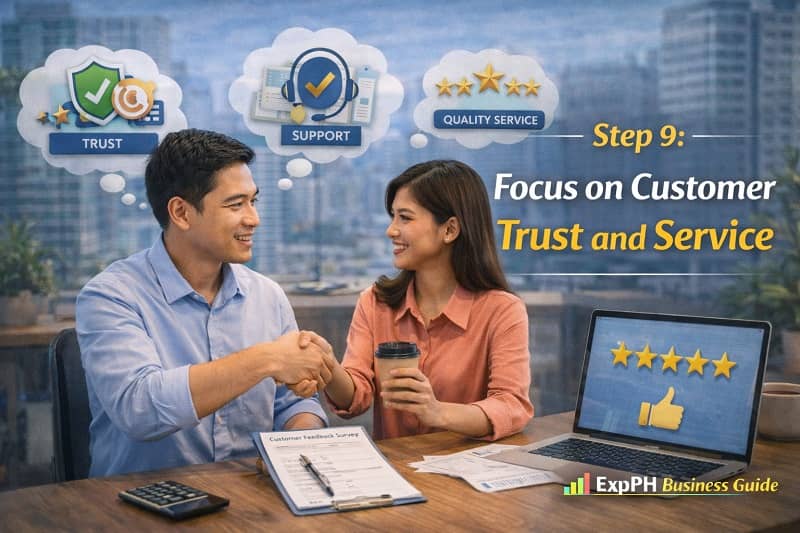
Step 9: Focus on Customer Trust and Service
Long term business success depends heavily on customer trust and satisfaction. Strong relationships encourage repeat purchases and positive referrals. When customers feel valued and respected, they are more likely to remain loyal and recommend your business to others within their community.
To Sustain Your Business
Build customer loyalty by consistently practicing the following:
- Deliver consistent quality
- Be transparent in pricing
- Respond quickly to complaints
- Maintain professional communication
Keeping existing customers is more cost effective than constantly acquiring new ones. Excellent service strengthens your reputation and supports steady, sustainable growth over time.
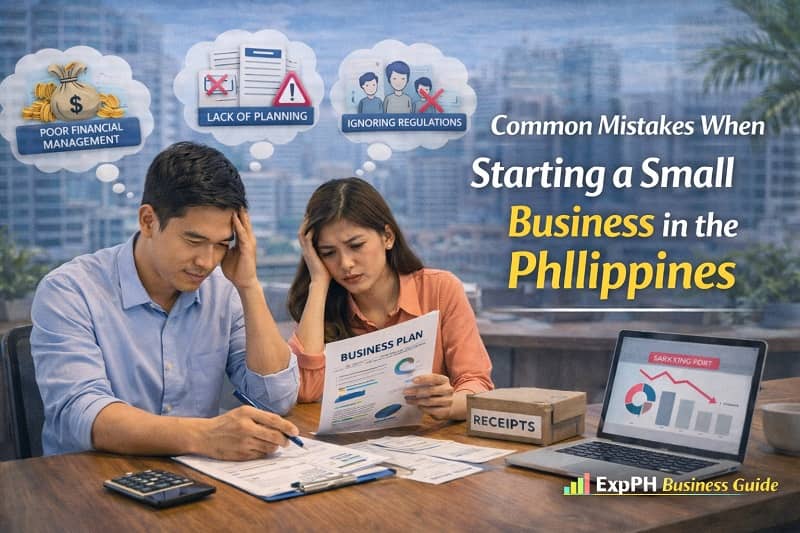
Common Mistakes When Starting a Small Business in the Philippines
Many entrepreneurs face setbacks because of avoidable mistakes during the early stages. When you start a small business in the Philippines, careful planning and discipline are essential. Overlooking basic requirements can create financial strain and legal problems that slow down long term growth.
Avoid These Common Errors
Be mindful of the following mistakes:
- Skipping legal registration
- Underestimating expenses
- Mixing personal and business money
- Ignoring taxes
- Starting without market research
- Spending too much on non essential equipment
Small errors at the beginning can grow into serious financial challenges later. Careful planning and responsible management help protect your investment and improve your chances of success.
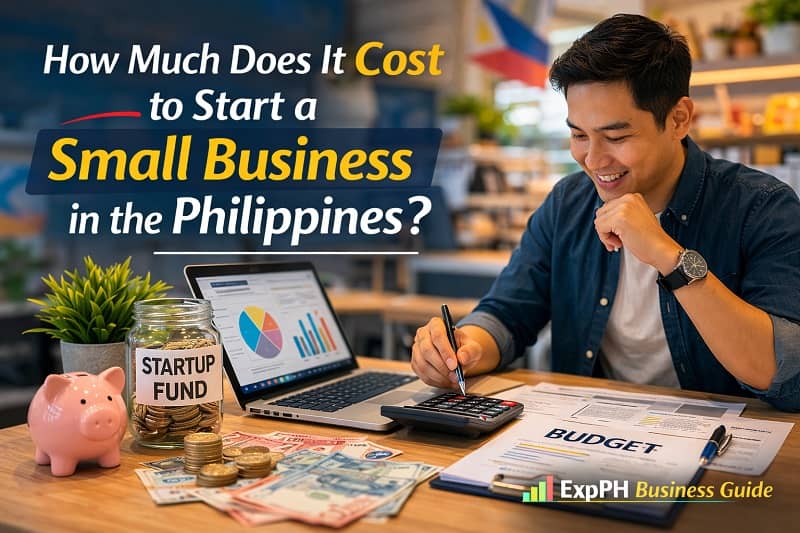
How Much Does It Cost to Start a Small Business in the Philippines?
The cost to start a small business in the Philippines depends on the type, location, and scale of operations. While expenses vary, understanding general estimates helps you prepare realistic capital and avoid financial shortages during the early stages of your business.
General Cost Estimates
Here is a basic guide for different business types:
- Micro home based business, PHP 5,000 to PHP 20,000
- Small physical store, PHP 50,000 to PHP 300,000
- Food business, PHP 100,000 and above
- Online business, can start below PHP 10,000
These figures are only estimates and may increase depending on permits, equipment, and inventory needs. Always prepare extra buffer funds to handle unexpected expenses and maintain stable operations.
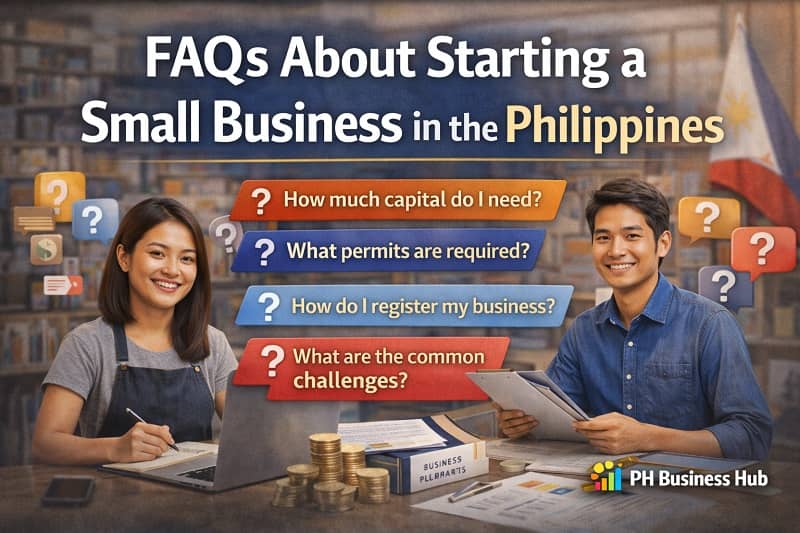
FAQs about starting a small business in the Philippines
1. What is the first step to start a small business in the Philippines?
The first step is validating your business idea through market research. Identify customer demand, study competitors, estimate costs, and ensure your concept solves a real problem.
2. Do I need to register my small business in the Philippines?
Yes, registration is required to operate legally. You must register your business name, secure local permits, and complete BIR registration to comply with tax laws.
3. How much capital do I need to start a small business?
Capital depends on business type and scale. Some home based businesses start with minimal funds, while physical stores require higher investment for rent and inventory.
4. Where do I register a sole proprietorship in the Philippines?
You must register a sole proprietorship with the Department of Trade and Industry. This secures your business name and allows you to apply for permits.
5. What taxes do small businesses need to pay?
Small businesses may pay percentage tax or VAT, income tax, and withholding tax if employing staff. Tax type depends on revenue level and registration classification.
6. Do I need a business bank account?
Opening a business bank account is highly recommended. It separates personal and business funds, improves record keeping, and supports loan applications and financial tracking.
7. Can I start a small business from home?
Yes, many entrepreneurs begin from home to reduce expenses. Ensure your activity complies with local zoning rules and complete required registrations and tax obligations.
8. Is a business plan required before starting?
A formal document is not always required, but a clear business plan helps manage finances, estimate profits, control expenses, and guide long term decisions.
9. How long does business registration usually take?
Processing time varies by location and completeness of documents. Basic registrations may take days, while permits and tax registration can require several weeks.
10. What are common mistakes new entrepreneurs should avoid?
Common mistakes include skipping registration, underestimating expenses, ignoring taxes, mixing finances, and lacking research. Careful planning and discipline reduce risks and improve sustainability.

Final thoughts start a small business in the Philippines
To start a small business in the Philippines, capital alone is not enough. You also need preparation, discipline, legal compliance, and strong financial awareness. Starting small is wise, but starting correctly is even more important. Follow the required registration process, understand your tax responsibilities, separate personal and business finances, and use technology to improve efficiency. Focus on building customer trust through consistent quality and reliable service.
If you approach your venture with patience and clear strategy, your business can develop into a stable and sustainable source of income. Entrepreneurship does not deliver instant success, but it offers a powerful path toward long term financial independence in the Philippines. Build your foundation carefully, manage your finances responsibly, and commit to steady growth supported by smart decisions and continuous learning.
Want to build a business that lasts?
Take the next step with our complete guide, A Practical Guide to Building a Sustainable Business in the Philippines, and learn how to grow, manage, and sustain your business for long-term success.
Business Learning Resources
- Top 4 Proven Online Business Ideas That Work in the Philippine Market
- How Much Capital Do You Really Need to Start a Business in the Philippines
- Common Mistakes First-Time Filipino Entrepreneurs Should Avoid
- Types of Businesses You Can Register in the Philippines
HD Quiz Hub!
Test your understanding of the essential steps involved in launching a small business in the Philippines.
Results


#1. What is the first step before registering a business?
#2. Where do you register a sole proprietorship?
#3. Which agency handles corporate registration?
#4. Which document is required before getting a mayor’s permit?
#5. Why is BIR registration important?
#6. Which is a common funding source?
#7. Why open a business bank account?
#8. Which is a common beginner mistake?
#9. What helps track daily performance?
#10. Why is marketing important?
Thank you for taking your time with us.
Feel free to share your score or experience in the comments and let others know how you did.

A Filipino web developer with a background in Computer Engineering. Founder of ExpPH Blog and ExpPH Business Guide, two Philippines-focused platforms covering OFW guidance, business, finance, freelancing, travel, and lifestyle. Passionate about helping Filipinos grow, he creates practical content that educates, empowers, and inspires readers nationwide.