

Growing a business is exciting, but it can also feel overwhelming. Many Filipino entrepreneurs start small, often from home or with limited capital. After the business begins to gain customers and stable income, the next big question appears: how do you scale a small business in the Philippines without risking everything you have built?
Scaling is different from simply growing. Growth often means increasing sales and expenses at the same time. Scaling means expanding your business in a way that allows revenue to increase faster than costs. For Filipino entrepreneurs, this usually involves improving systems, expanding reach, managing finances wisely, and using technology efficiently.
If you are planning to scale a small business in the Philippines, the most important step is preparation. Before opening another branch, hiring more staff, or increasing inventory, it is important to strengthen the foundation of your business.
This guide will walk you through the most important steps Filipino entrepreneurs should take before scaling their business.
Take your scaling efforts further with a complete growth strategy.
Explore How to Grow and Scale a Small Business in the Philippines (2026 Guide) and learn how to scale your business step by step in 2026.
Table of Contents

1. Understand What Scaling Really Means for Your Business
Many small business owners in the Philippines assume scaling means opening more branches or offering more products. These actions can support expansion, but true scaling focuses on improving efficiency and long term sustainability. A well scaled business increases revenue while controlling costs and maintaining consistent quality.
When you scale a small business in the Philippines, the goal is to grow in a way that keeps operations efficient and profitable. Instead of simply increasing expenses, entrepreneurs should focus on systems and strategies that allow the business to handle higher demand while protecting product quality and customer experience.
When scaling a business, entrepreneurs typically focus on the following goals:
- Increase revenue without significantly increasing costs
- Improve operational systems and workflow
- Serve more customers while maintaining quality
- Strengthen brand visibility and market presence
For example, a home based food business can scale by improving its production workflow and partnering with online delivery platforms. Instead of immediately opening a restaurant, the owner can reach more customers through digital channels while keeping operational costs manageable and reducing financial risk.

2. Evaluate Your Current Business Foundation
Before you attempt to scale a small business in the Philippines, evaluate whether your current business is truly ready for expansion. Growth requires stability. If your operations, finances, or customer demand are not strong enough yet, expanding too early can create serious financial and operational risks.
Check Your Profitability
Strong sales do not always mean strong profit. Many small businesses generate steady revenue but struggle with low margins because of high expenses or poor cost management. If profitability is weak, scaling can multiply financial problems instead of improving the business.
Ask yourself the following questions:
- Are you consistently profitable every month
- Do you clearly track expenses and income
- Do you have enough cash flow to support growth
If the answers to these questions are uncertain, improving financial management should be your priority. Strengthening budgeting, expense tracking, and profit monitoring will help build a stable foundation before you invest money and resources into expanding your business.
Analyze Your Market Demand
Scaling only works when your business has strong and consistent demand. Without enough customers, expansion can lead to unsold products, wasted inventory, and higher operating costs. Understanding your market demand helps you decide whether growth is realistic and sustainable.
Look at indicators such as:
- Repeat customers
- Increasing orders or inquiries
- Growing social media engagement
- Expanding customer base beyond your local area
These indicators show that people value your products or services. When demand continues to grow across different channels or locations, it becomes a strong sign that your business has the potential to expand successfully
3. Strengthen Your Business Systems
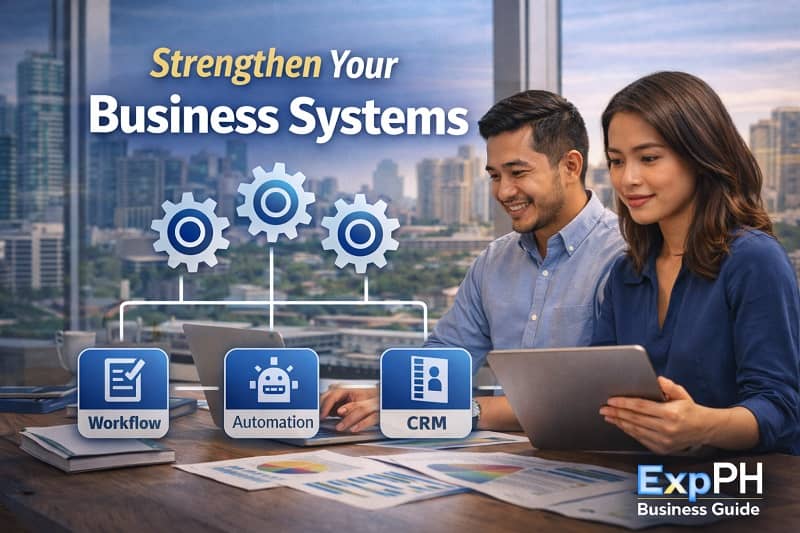
One common mistake entrepreneurs make is expanding while still relying on manual processes and informal systems. If you plan to scale a small business in the Philippines, your operations must become more structured and efficient. Organized systems help maintain quality and prevent costly mistakes as customer demand grows.
Document Your Business Processes
Clear procedures make daily operations easier to manage and replicate. When tasks follow a consistent process, employees can work more efficiently and maintain the same service or product standards even as the business expands.
Create simple procedures for operations such as:
- Customer service
- Inventory management
- Order processing
- Product preparation or service delivery
Documented systems help business owners train employees faster and maintain consistency. When new staff understand the correct process, the business can grow without sacrificing product quality, service reliability, or operational efficiency.
Use Digital Tools
Technology can significantly improve efficiency, even for small businesses. Digital tools simplify routine tasks and reduce manual work, allowing entrepreneurs to focus more on strategy, customer relationships, and business development.
Examples include:
- Online accounting software
- Inventory management apps
- E commerce platforms
- Customer relationship management tools
Using these tools reduces human error and improves operational speed. Efficient systems allow businesses to handle more orders, track finances accurately, and manage customer relationships effectively, which are all essential when preparing to scale operations.

4. Manage Finances Carefully Before Expansion
Scaling a business requires adequate capital and disciplined financial planning. Without careful management, expansion can quickly create debt, cash flow problems, and operational stress. Entrepreneurs who want to scale a small business in the Philippines must ensure their finances are stable before committing resources to growth.
Build a Growth Budget
Before expanding your operations, calculate the total costs involved in scaling your business. Understanding these expenses helps you avoid financial surprises and ensures your expansion plan remains realistic and sustainable for the long term.
These costs may include:
- Hiring new staff
- Purchasing equipment or inventory
- Marketing expenses
- Rent for a new location
A clear and detailed growth budget helps business owners control spending and protect profitability. Planning expenses ahead of time also allows you to evaluate whether the expected increase in revenue can realistically support your expansion strategy.
Explore Financing Options
If your business needs additional capital to grow, several financing options are available to Filipino entrepreneurs. Choosing the right funding source can provide the resources needed for expansion while keeping financial risk manageable.
Common financing options include:
- Small business loans from banks
- Microfinance programs
- Government support programs for MSMEs
The Department of Trade and Industry offers programs that support micro, small, and medium enterprises through training, mentorship, and financial assistance. Entrepreneurs can explore available resources and support programs through the official website: https://www.dti.gov.ph. Selecting the right funding option helps businesses expand while maintaining financial stability.utting excessive financial pressure on your operations.

5. Expand Your Market Reach
After stabilizing your systems and finances, the next step is reaching more customers. Expanding your audience helps increase sales and brand visibility. When you scale a small business in the Philippines, reaching new markets allows your products or services to grow beyond your original location.
Improve Your Online Presence
Many Filipino businesses successfully expand by using digital platforms. Online channels allow entrepreneurs to reach customers beyond their local community. Strengthening your online presence helps increase visibility, attract new buyers, and create more opportunities for sales.
Consider strengthening your presence on:
- Social media platforms
- Online marketplaces
- Your own website or online store
Filipino consumers increasingly prefer online shopping because it is convenient and accessible. By improving your digital presence, your business can reach a larger audience and generate more sales without the high cost of opening additional physical locations.
Develop Strong Branding
A strong brand helps customers recognize and trust your business. Consistent branding creates familiarity and credibility, which encourages customers to choose your products or services over competitors.
To strengthen your brand:
- Maintain consistent visuals and messaging
- Highlight your business story
- Focus on customer satisfaction
When your brand communicates clear values and quality, customers are more likely to return and recommend your business to others. Strong branding also makes it easier to attract new customers even as competition in your industry continues to grow.

6. Build the Right Team
As your business grows, managing every task alone becomes difficult and inefficient. Hiring capable employees allows the business to operate smoothly and prepare for expansion. When you scale a small business in the Philippines, building a reliable team becomes essential for maintaining quality and supporting long term growth.
Delegate Key Responsibilities
Business owners often try to handle every task themselves, which can slow growth and create unnecessary stress. Delegating responsibilities allows operations to run more efficiently while freeing the owner to focus on strategy, partnerships, and future opportunities.
Assign responsibilities such as:
- Sales management
- Customer support
- Operations management
- Marketing
Delegation helps ensure daily operations continue smoothly even when the owner focuses on larger decisions. With clear responsibilities, employees can manage tasks effectively while supporting the business as it expands to serve more customers.
Invest in Employee Training
Employees must understand your company’s standards, processes, and long term goals. Training ensures that every team member can perform their role effectively while maintaining the level of service and quality your customers expect from your business.
Well trained employees improve efficiency and confidence in daily operations. When staff understand procedures and expectations clearly, productivity increases and customer satisfaction improves. Strong training also prepares your team to support business expansion without sacrificing service quality.
7. Monitor Performance and Adjust Strategies
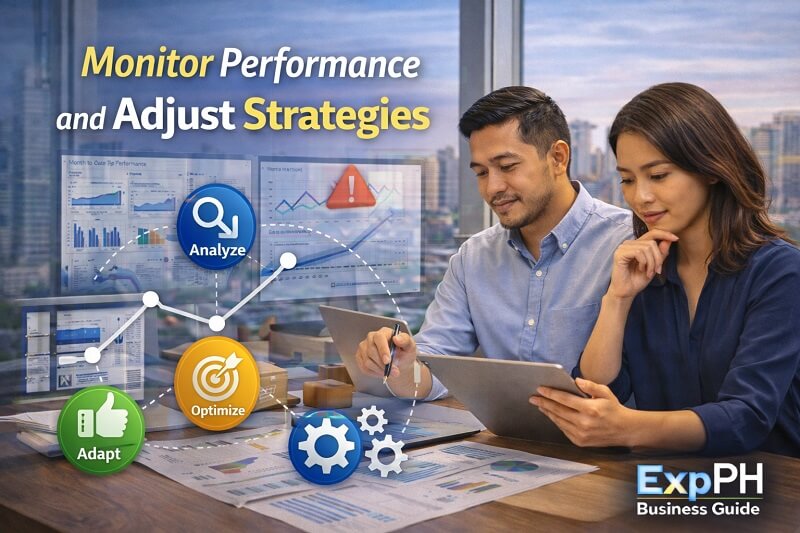
Scaling a business is not a single decision or one time action. It is an ongoing process that requires careful monitoring and consistent improvement. Entrepreneurs who want to scale a small business in the Philippines must regularly review performance to ensure growth remains sustainable and financially healthy.
Track important metrics such as:
- Sales growth
- Profit margins
- Customer retention
- Operational costs
Monitoring these indicators helps business owners understand whether expansion strategies are working. Regular evaluation allows you to detect potential issues early and make adjustments before they become serious problems. Successful companies treat scaling as a continuous long term process rather than a quick expansion.

8. Common Mistakes to Avoid When Scaling
Many promising businesses struggle or fail because they expand too quickly without careful planning. Rapid growth can create financial pressure and operational problems. Entrepreneurs who want to scale a small business in the Philippines must avoid common mistakes that often weaken business stability and long term success.
Here are common mistakes Filipino entrepreneurs should avoid:
- Expanding without stable profit margins
- Ignoring cash flow management
- Hiring too many employees too quickly
- Failing to maintain product or service quality
- Neglecting customer relationships
Avoiding these mistakes helps protect your business during expansion. Careful planning, strong financial control, and consistent service quality improve the chances of sustainable growth. Entrepreneurs who focus on stability and customer satisfaction often build businesses that grow steadily and remain competitive.

Final Thoughts on Scaling a Small Business in the Philippines
Learning how to scale a small business in the Philippines requires patience, careful preparation, and strategic thinking. Business expansion should never be rushed. Entrepreneurs must first build strong operational systems, manage finances responsibly, and strengthen their market presence before increasing production, hiring staff, or entering new markets.
Start by improving your current operations and ensuring your business foundation is stable. Once systems, finances, and customer demand are reliable, you can expand with greater confidence. This approach allows your business to reach more customers, increase revenue, and grow sustainably without creating unnecessary financial or operational risk.
For Filipino entrepreneurs, scaling a business is not only about becoming larger. The real goal is to build a sustainable company that continues operating for many years. A strong business also creates employment opportunities and contributes to economic growth within local communities.
Key principles to remember when scaling your business include:
- Strengthening operational systems before expanding
- Maintaining strong financial management
- Building a reliable team
- Focusing on customer satisfaction
- Expanding gradually with clear strategy
With proper planning and consistent effort, small businesses in the Philippines can grow into stable and successful enterprises. Entrepreneurs who focus on long term sustainability often build companies that remain competitive and continue serving customers for many years.

FAQs About How to Scale a Small Business in the Philippines
1. What does it mean to scale a small business in the Philippines?
Scaling a business means increasing revenue and customer reach while keeping costs controlled. It focuses on improving systems, efficiency, and processes so the business can grow sustainably.
2. When is the right time to scale a small business in the Philippines?
The right time to scale is when your business shows consistent profit, strong demand, and stable operations. Expanding earlier may create financial pressure and operational challenges.
3. Why is profitability important before scaling a business?
Profitability ensures your business can support expansion costs. Without stable profit margins, scaling may increase expenses faster than revenue, which can weaken financial stability.
4. How can Filipino entrepreneurs prepare their business for scaling?
Entrepreneurs should strengthen systems, document processes, manage finances carefully, and analyze market demand. Preparing these areas ensures the business can handle higher customer volume and operational complexity.
5. What role does technology play in scaling a small business?
Technology improves efficiency by automating tasks, managing inventory, tracking finances, and supporting online sales. Digital tools help businesses serve more customers while keeping operations organized and productive.
6. How important is market demand when planning business expansion?
Market demand is essential because expansion only succeeds when customers consistently want your product or service. Strong demand signals that your business has room to grow.
7. Should small businesses in the Philippines expand online before opening new branches?
Many businesses benefit from expanding online first. Digital platforms allow entrepreneurs to reach more customers nationwide while avoiding the higher costs of opening physical locations.
8. Why is building the right team important when scaling a business?
A strong team allows business owners to delegate tasks and focus on strategy. Skilled employees maintain quality service and help manage growing operations effectively.
9. What common mistakes should entrepreneurs avoid when scaling their business?
Entrepreneurs should avoid expanding without stable profits, ignoring cash flow, hiring too quickly, lowering product quality, or neglecting customer relationships during growth.
10. How can small business owners monitor successful scaling?
Business owners should track key indicators including sales growth, profit margins, customer retention, and operational costs. Regular monitoring helps identify problems early and supports better decision making.
More Business Resources
If you are planning to scale a small business in the Philippines, these helpful guides can provide additional insights on hiring, finance, marketing, and business operations.
- When Should You Hire Your First Employee in the Philippines
- When and How to Transition From Small Business to Company
HD Quiz Hub!
Test your knowledge with this quick quiz based on our guide about scaling a small business in the Philippines.
Results


#1. What does scaling a business primarily focus on?
#2. Why should profitability be checked before scaling?
#3. Which factor shows strong market demand?
#4. What helps maintain consistency during business expansion?
#5. Which digital tool helps track business finances?
#6. Why is a growth budget important before expansion?
#7. Which online channel helps businesses reach more customers?
#8. Why is delegation important when scaling?
#9. What metric helps measure business performance?
#10. Which mistake should entrepreneurs avoid during scaling?
Thank you for participating.
We appreciate your time and interest in learning about business growth. Feel free to share your quiz score or experience in the comments and join the conversation with other Filipino entrepreneurs.

A Filipino web developer with a background in Computer Engineering. Founder of ExpPH Blog and ExpPH Business Guide, two Philippines-focused platforms covering OFW guidance, business, finance, freelancing, travel, and lifestyle. Passionate about helping Filipinos grow, he creates practical content that educates, empowers, and inspires readers nationwide.