
Starting a homemade food delivery business in the Philippines can be a practical opportunity for aspiring entrepreneurs who enjoy cooking and want to turn their skills into income. With more customers looking for convenient meals, home-based food sellers can serve nearby households, office workers, students, and busy professionals.
You do not need to begin with a large menu or an expensive commercial kitchen. A carefully planned business can start with a few dishes, a manageable delivery area, and a clear ordering process. However, success requires more than preparing delicious food. You also need to understand food safety, pricing, packaging, customer service, delivery arrangements, and applicable business requirements.
This guide explains how to plan, launch, and manage a homemade food delivery business in the Philippines, including practical steps for controlling costs and building a customer base.
Explore More Low-Capital Business Ideas
Starting a homemade food delivery business can be a practical way to enter entrepreneurship without a large initial investment. If you’re still exploring affordable business opportunities, check out our Best Low-Capital Businesses to Start in the Philippines. Discover more business ideas that match your budget, skills, and resources.
Quick Summary (TL;DR)
Starting a homemade food delivery business in the Philippines involves preparing meals customers want, setting profitable prices, and organizing reliable order and delivery processes.
- Starting approach: Begin with a small menu and manageable order volume.
- Food selection: Offer meals that suit local preferences and your cooking skills.
- Target customers: Consider nearby families, office workers, students, and residents.
- Pricing: Include ingredients, packaging, labor, utilities, and delivery expenses.
- Food safety: Follow proper food handling, preparation, storage, and transport practices.
- Promotion: Use social media, community groups, referrals, and clear food photos.
- Business requirements: Check applicable local permits, registration, tax, and food safety rules.
- Growth strategy: Expand your menu and delivery coverage only when operations can support them.
Key takeaway: Start small, maintain consistent food quality, understand your costs, and build customer trust through reliable service.
Table of Contents

1. Understand the Homemade Food Delivery Business Opportunity in the Philippines
Starting a homemade food delivery business in the Philippines allows you to serve customers who need convenient and affordable meals. By understanding local demand and choosing a suitable business model, you can identify opportunities to sell daily meals, packed lunches, family food packages, and special occasion orders.
Why Consider a Home-Based Food Delivery Business?
A home-based setup may reduce some initial expenses because you could already own basic cooking equipment and kitchen utensils. It can also allow you to test a menu before investing in a larger operation.
However, operating from home does not automatically exempt a business from food safety, sanitation, zoning, or registration requirements. Check the rules that apply to your location and the type of food you intend to sell.
Common Homemade Food Delivery Models
You can choose a business model that matches your available time, equipment, and target customers.
- Daily meal delivery: Prepare affordable meals for customers who order regularly.
- Packed lunch service: Offer rice meals and viands for employees and students.
- Family meal packages: Sell food trays or meal bundles for households.
- Pre-order food service: Accept orders in advance and prepare meals according to confirmed demand.
- Special occasion orders: Prepare food packages for birthdays, small celebrations, and gatherings.
Starting with one model makes it easier to organize your menu, purchasing, preparation schedule, and delivery arrangements.
2. Choose the Right Food Products to Sell
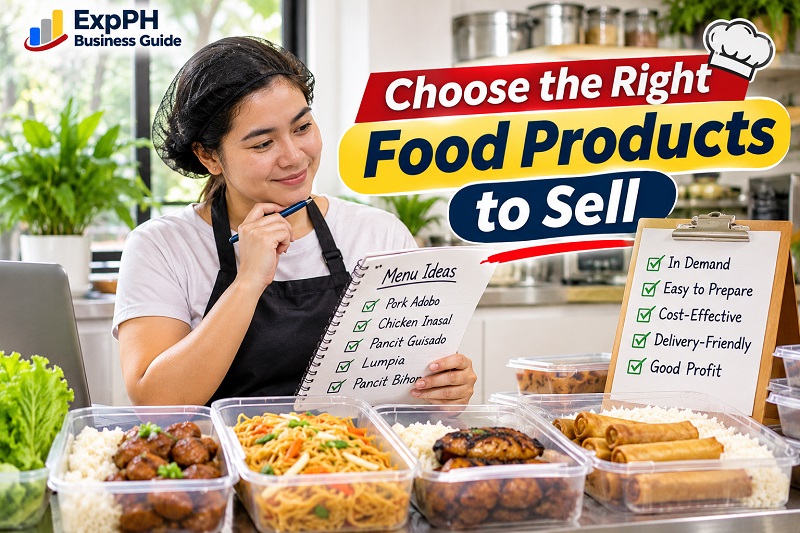
Choosing the right food products helps you create a manageable menu that meets customer preferences. Focus on dishes you can prepare consistently and deliver in good condition. Consider preparation costs, ingredient availability, and food quality before deciding which products to offer regularly.
Popular Homemade Food Ideas in the Philippines
Consider these options when planning your initial menu:
| Food category | Possible products |
|---|---|
| Filipino rice meals | Adobo, menudo, afritada |
| Fried food | Fried chicken, lumpia, pork chops |
| Vegetable dishes | Chopsuey, pinakbet, ginisang vegetables |
| Breakfast meals | Tapsilog, longsilog, tocilog |
| Noodle dishes | Pancit bihon, canton, spaghetti |
| Snacks | Turon, sandwiches, homemade kakanin |
| Family meals | Kare-kare, caldereta, pancit trays |
These are product ideas, not a guarantee of demand. Test which dishes attract customers in your community before committing to a regular menu.
Consider Food Quality During Delivery
Some meals maintain their quality better during transportation than others. Fried dishes can lose their crispness when sealed while hot, while soups and sauces need secure containers to prevent spills.
Test your packaging and delivery process before accepting regular orders. Check the food’s appearance, temperature, texture, and overall quality after the same amount of time it would normally take to reach a customer.

3. Determine Your Starting Capital and Equipment Needs
Planning your starting capital helps you understand the expenses involved in launching a homemade food delivery business. Consider the cost of ingredients, cooking equipment, packaging, utilities, and delivery supplies. Assess your existing resources to avoid unnecessary purchases and prepare a realistic startup budget.
Common Startup Expenses
| Expense | What it covers |
|---|---|
| Ingredients | Meat, vegetables, rice, seasonings, cooking oil |
| Cooking equipment | Stove, pans, pots, utensils |
| Food containers | Meal boxes, cups, sauce containers |
| Packaging supplies | Bags, seals, labels, utensils |
| Utilities | Water, electricity, cooking gas |
| Cleaning supplies | Dishwashing liquid, sanitizers, cleaning materials |
| Marketing | Menu design, product photography, promotions |
| Delivery | Transportation, rider fees, delivery supplies |
| Permits and registration | Applicable government and local requirements |
Equipment You May Need
Depending on your menu, consider preparing:
- Reliable stove or cooking range
- Cooking pots and frying pans
- Knives and chopping boards
- Food weighing scale
- Food-grade storage containers
- Refrigerator for appropriate ingredients
- Food thermometer
- Cleaning and sanitation supplies
- Insulated food delivery bags
Do not purchase expensive equipment simply because other food businesses use it. Choose equipment based on your actual menu and expected order volume.
4. Identify Your Target Customers and Delivery Area
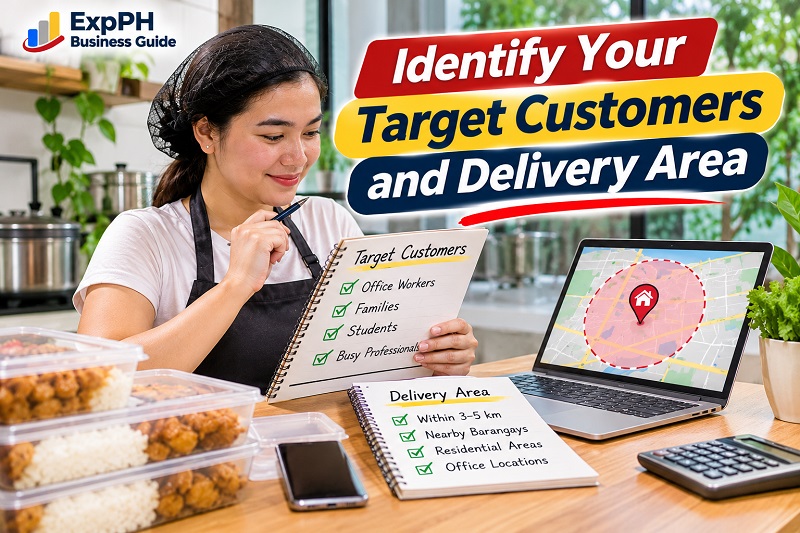
Identifying your target customers helps you understand who is most likely to order your homemade meals. Focus on nearby households, office workers, students, and local businesses. Research their food preferences and budgets so you can plan suitable products and establish a manageable delivery area.
Potential Target Customers
Office workers: Employees may need convenient lunch meals during working days. You can offer affordable rice meals, packed lunches, and scheduled deliveries.
Students: Students may look for reasonably priced meals and snacks. Consider portion sizes and pricing that match their budgets.
Nearby households: Families may order viands, food trays, and meal packages when they need convenient food options.
Small businesses: Offices, shops, and local establishments may need regular meal arrangements for employees.
Event organizers: Customers planning small celebrations may need food trays or prepared meal packages.
Research Your Local Market
Before launching, observe nearby food sellers and identify what they offer. Look at their menu variety, portion sizes, pricing, customer feedback, and delivery coverage.
You can also ask potential customers which dishes they usually order, how much they are comfortable spending, and what delivery schedules they prefer.
Use this information to develop a menu that meets a real local need rather than relying only on personal preferences.
5. Calculate Your Food Costs and Selling Prices
Calculating your food costs helps you set selling prices that cover your expenses and provide a reasonable profit. Include ingredients, packaging, utilities, labor, and delivery costs when estimating each meal’s total production cost. Regularly review your sales records to keep your pricing sustainable.
List All Production Costs
Include the following expenses:
- Ingredients and seasonings
- Rice and other side dishes
- Cooking oil and gas
- Food containers and packaging
- Electricity and water
- Preparation labor
- Delivery costs, when included in the price
- Allowance for reasonable food waste
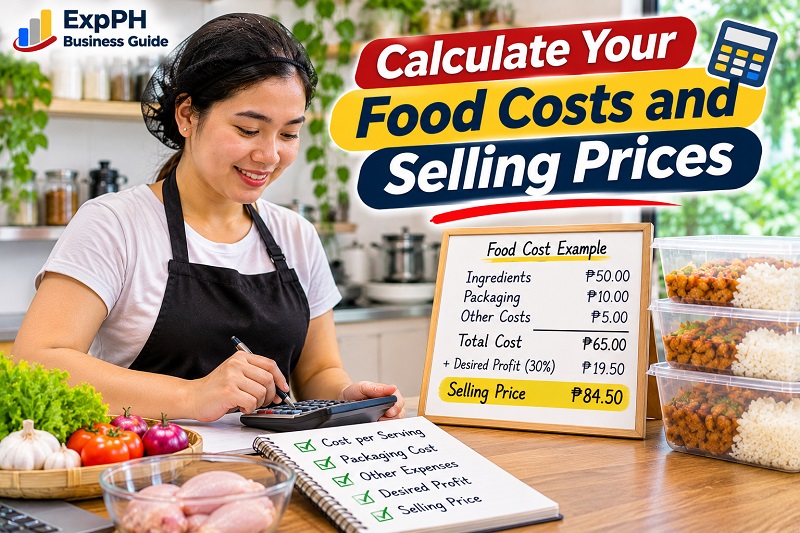
For example, suppose preparing one meal costs ₱65 for ingredients, ₱8 for packaging, and ₱7 for utilities and other production expenses.
Your estimated production cost is ₱80 per meal.
If you sell it for ₱120, the amount remaining before other business expenses is ₱40.
This is not automatically your net profit. You still need to account for other expenses, such as marketing, equipment maintenance, applicable taxes, and business overhead.
Use a Simple Pricing Formula
A useful starting point is:
Selling Price = Total Cost per Meal + Desired Profit
Review your prices regularly, especially when ingredient prices change. Also compare your portions and food quality with other sellers in your area.
Track Your Daily Sales
Maintain a simple record of:
- Number of meals sold
- Total sales collected
- Ingredient purchases
- Packaging expenses
- Delivery expenses
- Other operating costs
- Remaining cash
Accurate records help you identify which dishes contribute most to your business and which products need price adjustments.
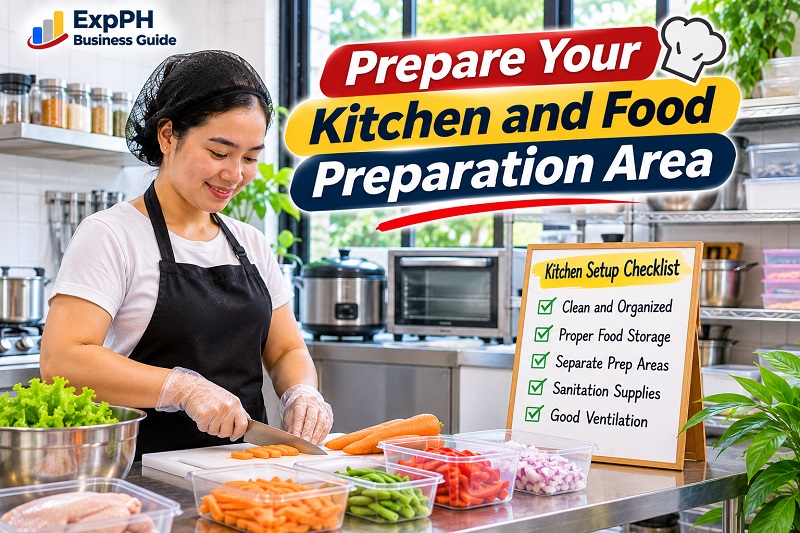
6. Prepare Your Kitchen and Food Preparation Area
Preparing your kitchen properly helps maintain cleanliness and consistency when making meals for customers. Organize your equipment and ingredients while keeping raw and cooked food separate. Establishing a daily preparation schedule also helps you manage orders and complete food deliveries on time.
Keep Food Preparation Organized
Separate raw ingredients from cooked food and ready-to-eat items. Use clean utensils and appropriate chopping boards for different food categories.
Keep ingredients covered and stored under suitable conditions. Clean preparation surfaces regularly and avoid allowing household activities to interfere with food production.
Prepare a Daily Production Schedule
A simple schedule can help prevent delays:
- Check confirmed customer orders.
- Review available ingredients.
- Purchase missing supplies.
- Prepare ingredients safely.
- Cook according to the production schedule.
- Pack and inspect completed meals.
- Arrange customer pickup or delivery.
The schedule may vary depending on your menu. Choose a preparation routine that gives you enough time to cook, pack, and deliver food safely.
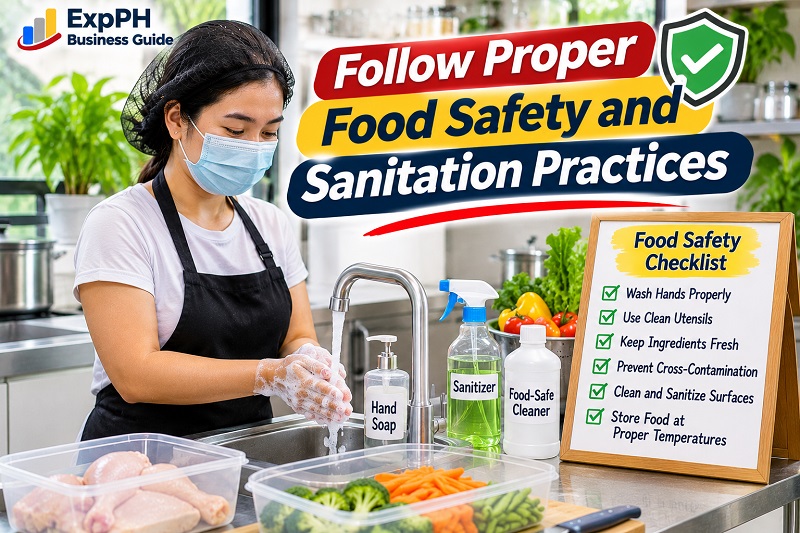
7. Follow Proper Food Safety and Sanitation Practices
Following proper food safety and sanitation practices helps protect customers and maintain meal quality. Handle ingredients carefully, prevent cross-contamination, keep preparation areas clean, and maintain safe food temperatures during storage and delivery to reduce health risks and build customer trust.
The Philippines has food safety requirements under Republic Act No. 10611, also known as the Food Safety Act of 2013. You can review the law through the Official Gazette.
Practice Proper Handwashing and Cleanliness
Wash your hands before preparing food, after handling raw ingredients, after using the restroom, and whenever contamination may have occurred.
Keep kitchen surfaces, utensils, containers, and equipment clean. Anyone helping with food preparation should follow the same hygiene practices.
Prevent Cross-Contamination
Cross-contamination occurs when harmful microorganisms transfer from one food item, surface, or utensil to another.
To reduce this risk:
- Separate raw meat from cooked food.
- Use clean utensils and chopping boards.
- Store raw ingredients in sealed containers.
- Keep ready-to-eat food protected.
- Clean and sanitize food-contact surfaces appropriately.
Maintain Safe Food Temperatures
Cook food thoroughly and avoid leaving perishable meals at room temperature for extended periods. Keep hot food hot and cold food cold during storage and delivery.
Use a food thermometer when appropriate instead of relying only on appearance. Establish a safe process for preparing, holding, and transporting every dish you sell.

8. Choose Suitable Food Packaging and Containers
Choosing suitable food packaging helps protect meals during preparation, handling, and delivery. Use food-grade containers that match each dish and prevent leaks or spills. Consider temperature, moisture, and product presentation to maintain food quality and give customers a convenient delivery experience.
Packaging Options for Different Meals
| Food product | Suitable packaging |
|---|---|
| Rice meals | Compartment meal containers |
| Fried food | Ventilated food containers |
| Soup and broth | Leak-resistant sealed containers |
| Sauces | Small sealed sauce cups |
| Family meals | Food-grade trays with secure covers |
| Desserts | Food-safe cups or boxes |
Include Useful Product Information
For prepackaged products, check which labeling requirements apply to your product and business category. Depending on the product, relevant information may include its name, ingredients, preparation or packing date, storage instructions, and allergen information.
Even for made-to-order meals, providing basic information about ingredients and possible allergens can help customers make informed choices.
Test containers before using them for actual orders. A container that leaks or fails during delivery can lead to complaints and unnecessary expenses.
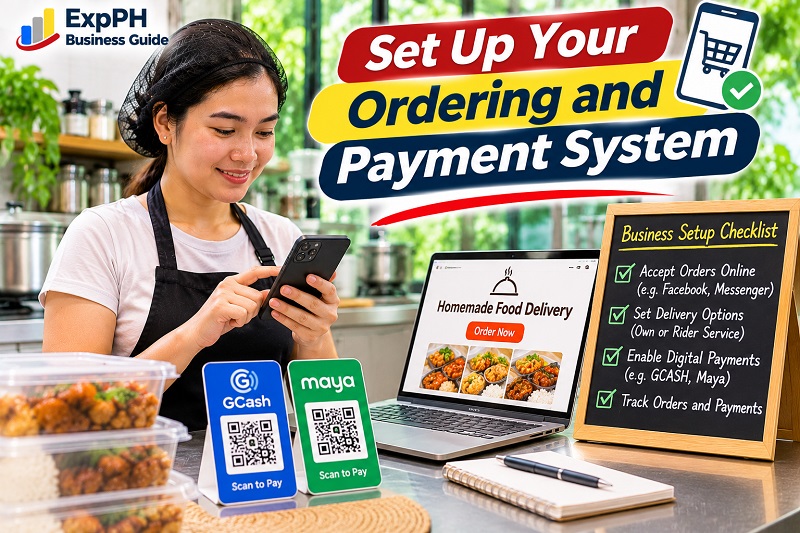
9. Set Up Your Ordering and Payment System
Setting up a simple ordering and payment system helps you manage customer requests and daily transactions efficiently. Choose convenient communication and payment methods while keeping accurate order records. A clear process reduces mistakes and makes ordering easier for both you and your customers.
Information to Collect From Customers
When accepting an order, record:
- Customer name
- Contact number
- Selected meals
- Quantity
- Delivery address
- Preferred delivery time
- Payment method
- Special instructions or allergy information
Confirm the order details before preparing the food. This helps reduce mistakes involving quantities, addresses, and delivery schedules.
Offer Convenient Payment Methods
Depending on your customers’ preferences, you may accept cash on delivery, bank transfers, or available digital wallet payments.
Keep payment records and confirm transactions before marking an order as paid. Never rely solely on a customer-provided payment screenshot when your account has not received the funds.
Set clear policies for cancellations, refunds, order changes, and payment deadlines.

10. Plan Your Food Delivery and Transportation
Planning your food delivery arrangements helps ensure meals reach customers on time and in good condition. Choose a suitable delivery method based on your budget and service area. Use proper food containers and insulated bags when needed to protect meal quality during transportation.
Choose a Suitable Delivery Method
Self-delivery: You can deliver orders yourself when the service area is nearby and the order volume is manageable.
Family assistance: A trusted family member may help with deliveries if the arrangement is practical and complies with applicable requirements.
Third-party riders: You can coordinate with independent delivery riders or available delivery services when you need additional capacity.
Customer pickup: Allow customers to collect confirmed orders when appropriate and permitted by your operating arrangements.
Keep Food Secure During Transportation
Use clean, insulated delivery bags when suitable for the food being transported. Separate hot and cold items, secure containers, and prevent spills.
Plan realistic delivery times. Do not accept more orders than your kitchen and delivery arrangement can handle.
If you offer a delivery fee, calculate it separately or include it clearly in your pricing. Customers should understand the total amount before confirming their orders.

11. Promote Your Homemade Food Delivery Business
Promoting your homemade food delivery business helps attract potential customers and increase awareness of your meals. Use Facebook pages, local community groups, clear food photos, and genuine customer reviews to build trust. Start with affordable marketing methods and evaluate results before spending on paid advertising.
Create a Facebook Business Page
A Facebook page can serve as an online storefront where customers view your menu, prices, photos, ordering instructions, and contact information.
Post regularly and keep your menu updated. Make it easy for customers to understand how to order.
Use Attractive and Accurate Food Photos
Take clear photos of the actual meals you prepare. Use good lighting and simple backgrounds to make the food look appealing without misleading customers.
Include the dish name, price, portion details, and ordering information when appropriate.
Join Local Community Groups
Local community groups can help you reach potential customers within your delivery area. Follow each group’s rules and avoid repeatedly posting promotional messages.
Encourage Customer Reviews and Referrals
Ask satisfied customers to share honest feedback. With their permission, you can feature genuine reviews on your business page.
You may also introduce a simple referral offer, provided the cost fits your budget.
Consider Paid Promotions Carefully
Paid social media advertising may help you reach a larger audience, but it does not guarantee sales.
Start with a small budget, identify your target location, and track how many inquiries and confirmed orders result from each campaign.
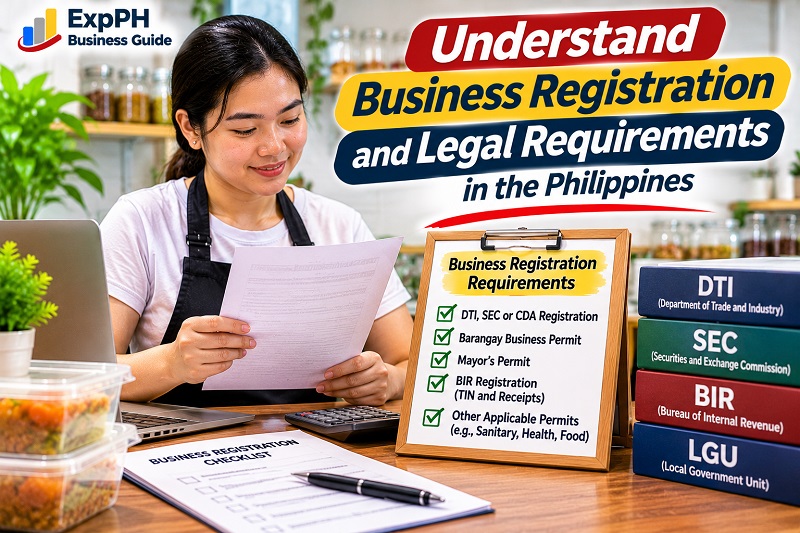
12. Understand Business Registration and Legal Requirements in the Philippines
Understanding business registration and legal requirements helps you prepare your homemade food delivery business for lawful operations. Check the permits and registrations that apply to your business structure and location. Review local government rules and relevant food safety requirements before accepting customer orders.
Business Name Registration
If you operate as a sole proprietor and use a business name, check the Department of Trade and Industry’s Business Name Registration System.
Official resource: DTI Business Name Registration System.
Business name registration is not a substitute for all other permits and licenses.
Local Government Permits
Ask your city or municipal government about the applicable requirements. Depending on your location and activities, these may include:
- Barangay clearance
- Mayor’s permit or business permit
- Sanitary permit
- Health certificates for applicable food handlers
- Inspection or other local requirements
Confirm the exact requirements with your local Business Permits and Licensing Office and health office.
Tax Registration
Check your registration and tax obligations with the Bureau of Internal Revenue. Ask about the appropriate registration process, tax types, invoicing requirements, and recordkeeping obligations for your business.
Official resource: Bureau of Internal Revenue.
Food Safety and FDA Requirements
The Food and Drug Administration regulates certain food products and food establishments under applicable laws and regulations. However, not every homemade meal delivery arrangement has the same FDA licensing requirements.
Ask the FDA and your local government whether your specific operation requires additional authorization, particularly if you intend to manufacture, package, distribute, or sell processed food products beyond freshly prepared meals.
Checking these requirements before investing in your business can help you avoid compliance problems later.

13. Manage Your Business Finances and Daily Operations
Managing your business finances helps you monitor income, control expenses, and maintain organized operations. Keep accurate records of sales and purchases while separating personal and business money. Review inventory and weekly performance to identify areas where you can reduce costs and improve profitability.
Separate Personal and Business Money
Use a separate account or clearly organized cash records for business transactions. This makes it easier to track sales, expenses, and available operating funds.
Avoid using all your sales revenue for personal spending before accounting for ingredient purchases, delivery expenses, and other business obligations.
Monitor Your Inventory
Record the ingredients you purchase and use. Pay attention to expiration dates, storage conditions, and quantities remaining.
Buy supplies based on realistic order forecasts. Purchasing too much perishable food can increase waste and reduce your earnings.
Review Your Business Performance
At the end of each week, review:
- Total meals sold
- Best-selling dishes
- Total revenue
- Ingredient and packaging costs
- Delivery expenses
- Customer feedback
- Food waste
- Estimated profit
Use the results to adjust your menu, prices, and purchasing schedule.
14. Common Mistakes to Avoid When Starting a Homemade Food Delivery Business
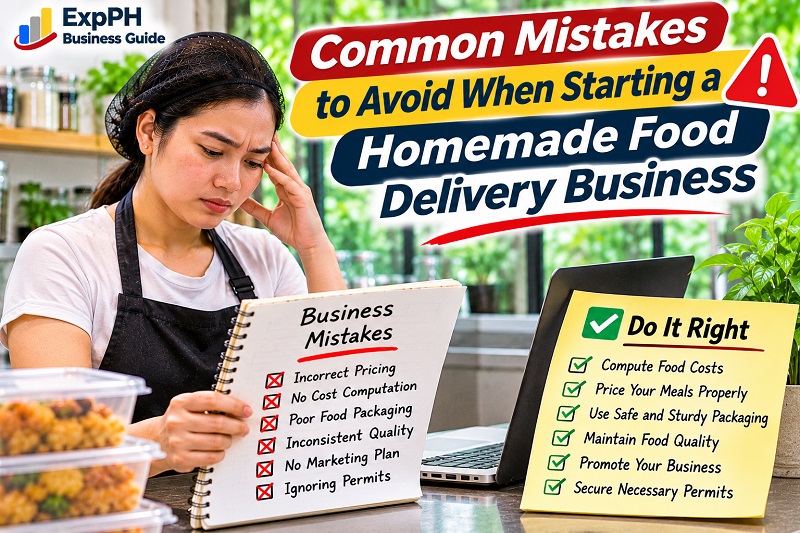
Avoiding common business mistakes helps you maintain food quality and manage expenses effectively. Pay attention to menu size, pricing, food safety, order capacity, and packaging. Keeping accurate financial records also helps prevent unnecessary losses and supports better business decisions as your operation grows.
Offering Too Many Menu Items
A large menu can make preparation and purchasing difficult. Begin with a manageable selection and add dishes after understanding customer demand.
Setting Prices Too Low
Low prices may attract inquiries, but they can leave you without enough money to cover production and operating expenses. Calculate your costs before setting prices.
Ignoring Food Safety
Poor handling, unsuitable storage, and unsafe transportation can put customers at risk. Make food safety part of your daily operating routine.
Accepting More Orders Than You Can Handle
Overloading your kitchen can cause late deliveries, inconsistent portions, and lower food quality. Set an order limit based on your actual capacity.
Using Inappropriate Packaging
Containers that leak, break, or fail to protect food can create delivery problems. Test packaging before using it regularly.
Failing to Record Transactions
Without accurate records, you may not know whether your business is profitable. Record every sale and business expense, even when the amount is small.
15. How to Grow Your Homemade Food Delivery Business
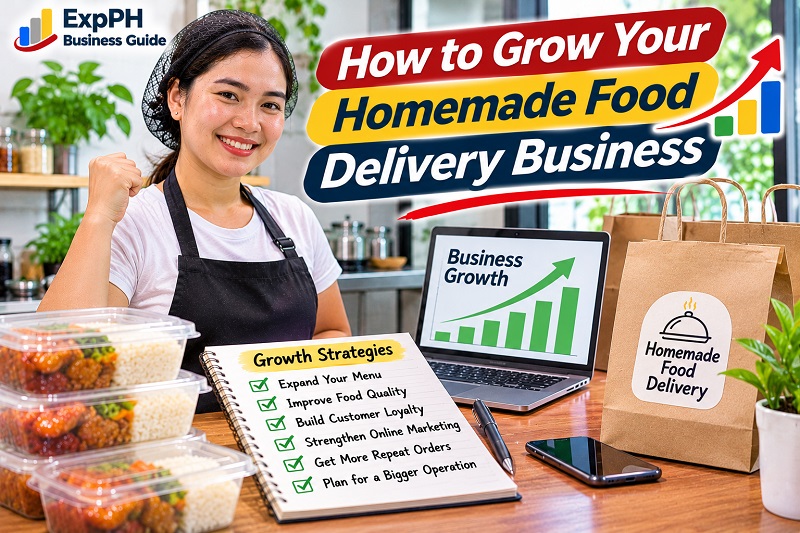
Growing your homemade food delivery business requires consistent food quality and a clear understanding of customer demand. Expand your menu gradually and improve your ordering and delivery systems. Invest in additional equipment when necessary while ensuring your finances can support sustainable business growth.
Expand Your Menu Carefully
Introduce new meals based on customer requests and sales records. Test each product before adding it permanently to your menu.
Offer Meal Packages
You can create weekly meal bundles, family packages, or office lunch arrangements. These offers may help you plan ingredient purchases and production schedules more efficiently.
Build Regular Customer Relationships
Keep customers informed about menu updates, ordering schedules, and available promotions. Respond politely to concerns and use feedback to improve your service.
Improve Your Ordering System
As order volume increases, consider using digital order forms, inventory spreadsheets, or suitable business management tools.
Technology can help you organize orders, track payments, and reduce manual recordkeeping errors.
Invest in Equipment When Necessary
Consider additional cooking equipment, refrigeration, storage, or delivery supplies when your sales justify the expense.
Avoid borrowing or spending heavily based only on expected growth. Review your cash flow and business performance before making major investments.
FAQs About Starting a Homemade Food Delivery Business in the Philippines
1. Is a homemade food delivery business profitable in the Philippines?
It can be profitable when you manage ingredient costs, set appropriate prices, control food waste, maintain quality, and build a consistent customer base over time.
2. How much capital do I need to start a homemade food delivery business?
Your starting capital depends on your equipment, menu, ingredients, packaging, permits, and delivery arrangements. Begin with a realistic budget based on your needs.
3. What homemade food products can I sell for delivery?
You can sell Filipino rice meals, packed lunches, fried dishes, noodles, snacks, desserts, and family meal packages based on your cooking skills and demand.
4. Can I operate a food delivery business from my home?
You may operate from home if your location, kitchen setup, and business activities meet applicable local requirements, sanitation standards, and food safety regulations.
5. Do I need to register my homemade food delivery business?
Registration requirements depend on your business structure and location. Check applicable DTI, BIR, local government, and food safety requirements before starting operations.
6. How should I price homemade food delivery meals?
Calculate ingredients, packaging, utilities, labor, and other operating expenses. Add a reasonable profit margin while considering customer budgets and comparable local food prices.
7. How can I attract customers to my homemade food delivery business?
Promote your menu through Facebook, local community groups, referrals, and clear food photos. Provide accurate prices, convenient ordering instructions, and reliable customer service.
8. What packaging should I use for food delivery?
Choose food-grade containers suitable for each dish. Use secure, leak-resistant packaging that protects food quality, prevents spills, and supports safe transportation to customers.
9. How can I keep delivered food safe?
Maintain proper cooking, storage, and transportation temperatures. Separate raw and cooked ingredients, use clean containers, and minimize the time food remains outside safe conditions.
10. How can I expand my homemade food delivery business?
Expand gradually by introducing popular dishes, offering meal packages, improving delivery arrangements, building customer relationships, and investing in equipment when sales justify additional expenses.
Conclusion: Build Your Homemade Food Delivery Business One Step at a Time
Starting a homemade food delivery business in the Philippines can be a practical way to turn your cooking skills into a small business. You can begin with a manageable menu, serve customers within your community, and improve your operations as you gain experience.
Focus on food quality, proper costing, safe preparation, suitable packaging, and reliable delivery. Keep your financial records organized and check the business requirements that apply to your location and products.
Most importantly, listen to your customers and make improvements based on actual feedback and demand. With careful planning and consistent service, your homemade food delivery business can develop into a more organized and sustainable operation.
Ready to explore more business opportunities? Read our Complete Guide to Starting a Business in the Philippines for practical information about planning, registration, financing, and managing a business.
Test your knowledge of starting and managing a homemade food delivery business in the Philippines
Results


#1. What is a practical way to begin a homemade food delivery business?
#2. What should guide your choice of food products?
#3. Which expense belongs in your food production cost?
#4. Why should you calculate the cost of each meal?
#5. What helps prevent cross-contamination during food preparation?
#6. What should you use to check food temperatures?
#7. What information should you collect when accepting orders?
#8. Which packaging is suitable for soup delivery?
#9. Which agency registers business names for sole proprietors?
#10. What is a sensible approach to expanding your food business?
Thank you for reading and completing the quiz!
Share your score and experience in the comments. We’d love to hear what you learned.

A Filipino web developer with a background in Computer Engineering. Founder of ExpPH Blog and ExpPH Business Guide, two Philippines-focused platforms covering OFW guidance, business, finance, freelancing, travel, and lifestyle. Passionate about helping Filipinos grow, he creates practical content that educates, empowers, and inspires readers nationwide.