
Starting a food cart business in the Philippines is a practical and affordable way to begin your entrepreneurial journey. It requires lower capital compared to larger food businesses and benefits from a strong local demand for street food. Many Filipinos have successfully turned simple food carts into stable sources of income by focusing on quality, consistency, and smart daily operations while managing costs effectively.
If you are planning to start your own food cart business in the Philippines, this guide will walk you through each important step. You will learn how to plan your concept, secure permits, manage daily operations, and apply growth strategies that can help you build a sustainable and profitable business over time.
Before you start, make sure you choose the right business idea.
Check out our full guide here: How to Choose a Small Business in the Philippines (2026 Guide for Beginners)
Table of Contents
Why Start a Food Cart Business in the Philippines?
Starting a food cart business in the Philippines remains a practical option for aspiring entrepreneurs who want a low-risk entry into business. It offers flexibility in operations, manageable startup costs, and strong daily demand, making it suitable for beginners who want steady income and long-term growth potential.
Low Startup Capital
Compared to traditional restaurants, food carts require significantly lower capital, making them accessible to first-time business owners. You can start with around PHP 20,000 to PHP 100,000 depending on your concept, equipment, and location, allowing you to test your business idea without a large financial commitment.
High Demand for Street Food
Street food continues to thrive in the Philippines because many people prefer affordable and convenient meals. Busy areas such as schools, transport terminals, and commercial centers provide steady foot traffic, giving food cart owners a reliable stream of customers throughout the day.
Easy to Scale
A food cart business is easy to expand once it becomes profitable and stable. You can open additional carts in new locations, introduce new menu items, or upgrade to a small restaurant. This flexibility allows gradual growth while reducing financial risk and maintaining control over operations.
Step 1: Choose Your Food Cart Concept
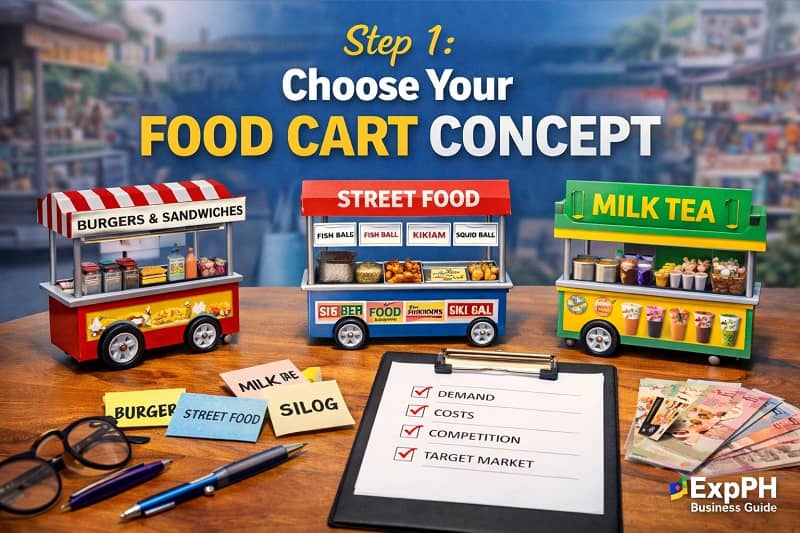
Choosing the right concept is one of the most important decisions when starting a food cart business in the Philippines. Your concept shapes your target customers, pricing strategy, and daily workflow. A clear and focused idea helps you stand out and build a consistent customer base.
Popular Food Cart Ideas in the Philippines
Many successful food cart businesses focus on simple and in-demand products that are easy to prepare and affordable for customers.
Popular options include:
- Fish balls, kikiam, and other street food
- Siomai and dumplings
- Milk tea and refreshing drinks
- Burgers and sandwiches
- Rice meals or silog combinations
How to Choose the Right Concept
Selecting the right concept requires careful planning and observation of your environment.
To increase your chances of success, consider these practical steps:
- Study your target market and their preferences
- Observe competitors in your chosen location
- Choose food that is quick to prepare and easy to serve
- Focus on items with strong demand and good profit margins
Step 2: Prepare Your Capital and Budget
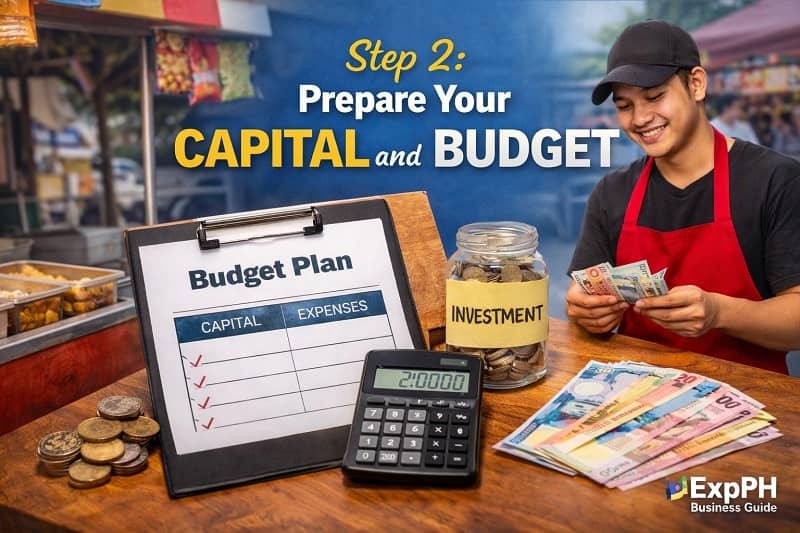
Proper budgeting is essential when starting a food cart business in the Philippines because it helps you control costs and avoid financial problems early on. Planning your expenses carefully allows you to allocate funds wisely, manage daily operations smoothly, and ensure your business remains sustainable as it grows.
Estimated Startup Costs
Starting a food cart business requires a clear understanding of your initial expenses so you can prepare enough capital.
Typical costs may include:
- Food cart or stall: PHP 10,000 to PHP 50,000
- Initial inventory: PHP 5,000 to PHP 15,000
- Permits and registration: PHP 3,000 to PHP 10,000
- Equipment and utensils: PHP 5,000 to PHP 20,000
Financial Tips
Managing your finances properly is key to keeping your business stable and profitable over time.
Follow these simple but effective tips:
- Start small to reduce financial risk
- Track all expenses daily to stay organized
- Separate personal and business money
- Reinvest profits to support business growth
Step 3: Register Your Food Cart Business
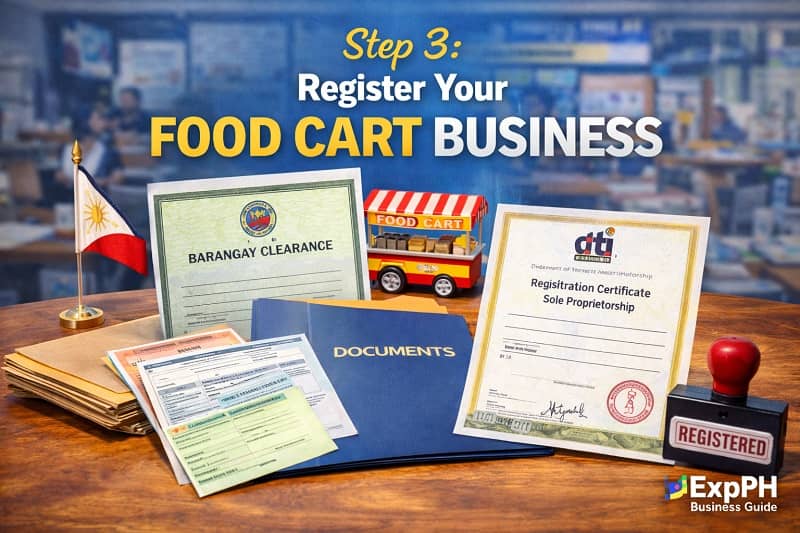
Registering your food cart business in the Philippines is essential for legal operation and long-term success. Proper registration protects your business from penalties and builds credibility with customers. It also ensures you can operate smoothly while preparing your business for future expansion opportunities.
Required Permits in the Philippines
To legally operate your food cart business, you must secure the necessary permits from government agencies.
These include:
- DTI (Department of Trade and Industry) for sole proprietors
- Barangay Clearance
- Mayor’s Permit
- BIR (Bureau of Internal Revenue) registration
For official registration guidance, visit the Department of Trade and Industry website to access updated requirements and procedures.
Why Registration Matters
Completing your business registration provides important advantages that support long-term growth and stability.
Key benefits include:
- Avoid penalties, fines, or possible closure
- Build trust and credibility with customers
- Qualify for expansion and business opportunities
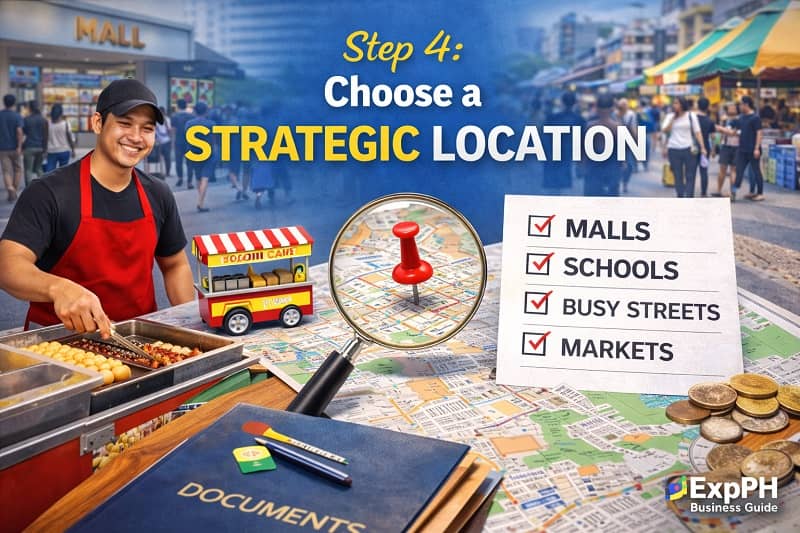
Step 4: Choose a Strategic Location
Choosing the right location is crucial for the success of your food cart business in the Philippines because it directly affects your daily sales and customer reach. A well-placed cart can attract consistent buyers, while a poor location may limit your growth and earning potential.
Best Locations
High-demand areas with steady foot traffic offer better chances of success for your food cart business.
Consider placing your cart in these locations:
- Near schools and universities
- Public markets
- Transport terminals
- Office areas
- Inside malls or food parks
What to Look For
When evaluating a location, focus on factors that support visibility and consistent customer flow.
These include:
- High foot traffic throughout the day
- Good visibility and easy accessibility
- Affordable rental costs within your budget
- Low competition or strong existing demand
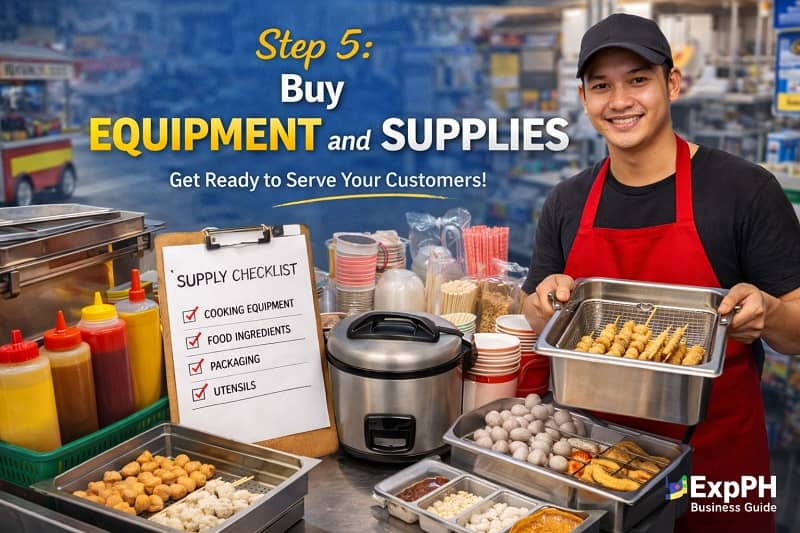
Step 5: Buy Equipment and Supplies
Buying the right equipment is essential for running a smooth and efficient food cart business in the Philippines. Your tools should match your menu and daily production needs to ensure fast service, consistent quality, and minimal downtime during busy hours.
Basic Equipment Checklist
Before starting operations, make sure you have all the necessary equipment to support your food cart setup.
Common essentials include:
- Food cart or kiosk
- Cooking equipment such as grill, steamer, or fryer
- Storage containers for ingredients
- Utensils and serving materials
- Gas tank or electricity source
Tip
Investing in durable and reliable equipment helps reduce long-term costs and prevents frequent breakdowns during operations. Quality tools improve efficiency, maintain food consistency, and support daily productivity, allowing you to serve customers smoothly while avoiding unnecessary repairs and unexpected expenses.
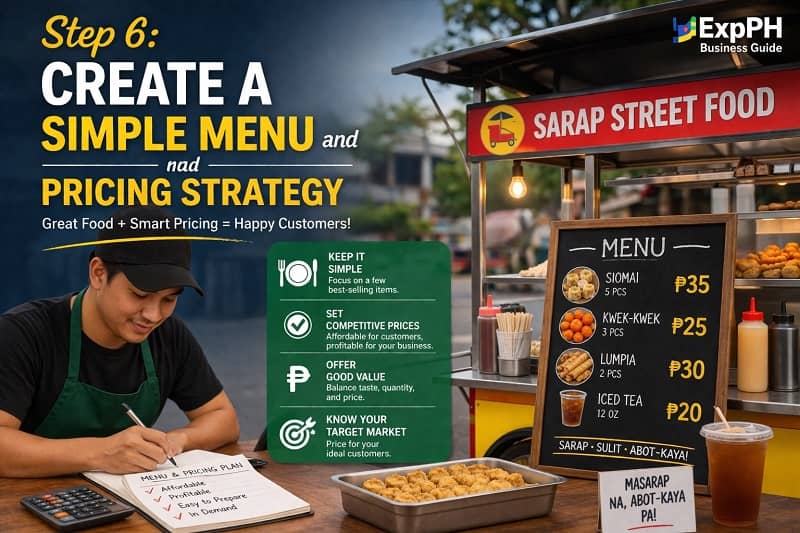
Step 6: Create a Simple Menu and Pricing Strategy
Creating a simple and focused menu is important when starting a food cart business in the Philippines because it helps you maintain consistency and speed in operations. A clear menu also makes it easier for customers to choose, improving service flow and overall customer experience.
Pricing Tips
Setting the right price ensures your business remains profitable while staying competitive in your chosen location.
Consider these practical pricing strategies:
- Calculate your cost per item carefully
- Add a reasonable profit margin
- Check competitor pricing in your area
- Offer combo meals or limited promos to attract buyers
Example
Understanding your cost and pricing helps you maintain steady profits and avoid losses. For example, if your cost per siomai order is PHP 20, you can sell it between PHP 35 and PHP 50 depending on your location, demand, and competition.
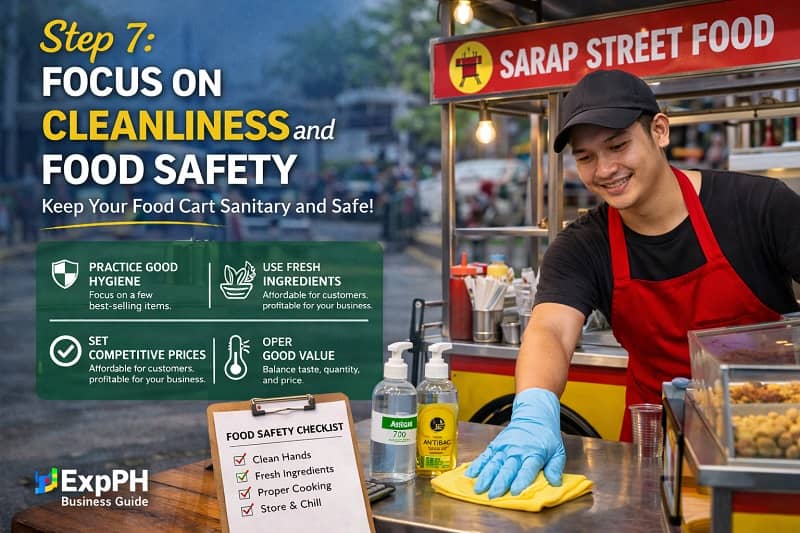
Step 7: Focus on Cleanliness and Food Safety
Maintaining cleanliness and proper food safety standards is essential for any food cart business in the Philippines because it protects your customers and your reputation. Safe food handling builds trust, prevents health risks, and helps ensure your business operates smoothly without issues.
Best Practices
Following proper hygiene and safety practices helps you maintain food quality and customer confidence.
Make sure to apply these basic standards daily:
- Wear gloves and hairnets while preparing food
- Keep your cart clean and organized at all times
- Use fresh and high-quality ingredients
- Store food properly to prevent contamination
You can also review official safety guidelines from the Food and Drug Administration to ensure your food cart business follows proper health and safety standards.

Step 8: Promote Your Food Cart Business
Promoting your food cart business in the Philippines is essential to attract customers and increase daily sales. Even small businesses benefit from consistent marketing efforts that build awareness, strengthen your brand, and help you stand out in competitive locations with many food options.
Simple Marketing Strategies
You do not need a large budget to promote your food cart effectively.
Focus on practical and low-cost strategies such as:
- Use Facebook and local community groups to reach nearby customers
- Offer opening promos or limited discounts to attract attention
- Encourage word-of-mouth referrals from satisfied customers
- Create eye-catching signage to improve visibility
Bonus Tip
Taking clear and appealing photos of your products can help attract more customers online. Post regularly on your social media pages to maintain visibility, build interest, and encourage people to try your food cart when they see your location or promotions.
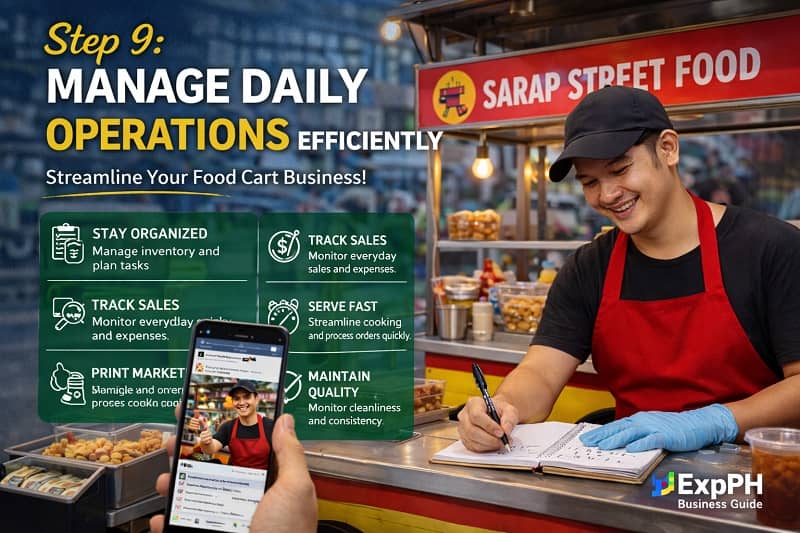
Step 9: Manage Daily Operations Efficiently
Managing daily operations properly is essential for maintaining a successful food cart business in the Philippines because consistency builds customer trust and repeat sales. Efficient routines help you avoid waste, control costs, and ensure smooth service, especially during busy hours when customer demand is high.
Daily Tasks
Staying organized each day helps your business run smoothly and prevents small problems from becoming serious issues.
Focus on these important daily tasks:
- Monitor inventory to avoid shortages or spoilage
- Track sales and expenses accurately
- Maintain cleanliness in your cart and workspace
- Provide excellent and friendly customer service
Common Mistakes to Avoid
Avoiding common mistakes can help protect your profits and improve your overall business performance.
Watch out for these issues:
- Poor inventory management that leads to waste
- Ignoring customer feedback and complaints
- Inconsistent product quality that affects trust
- Overspending on unnecessary items or supplies
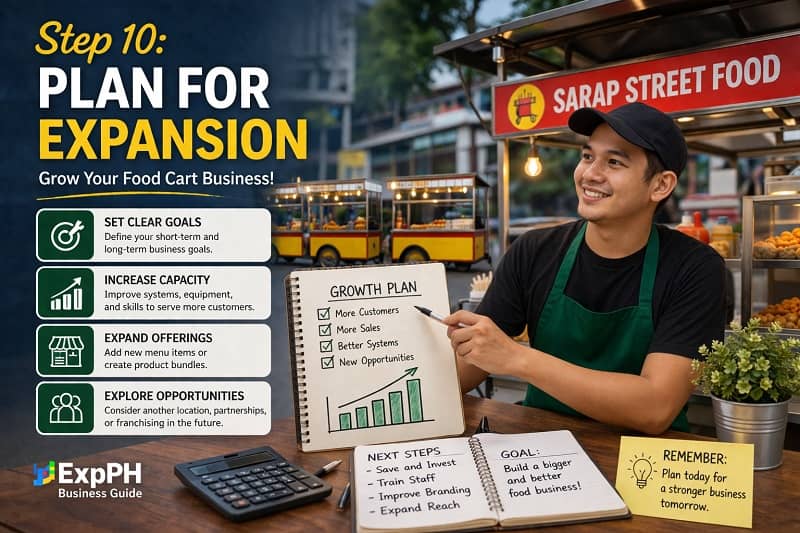
Step 10: Plan for Expansion
Planning for expansion is important once your food cart business in the Philippines becomes stable and consistently profitable. Growth allows you to increase income and strengthen your brand. With proper timing and strategy, you can expand while maintaining quality and efficient operations across all locations.
Growth Options
There are several ways to expand your food cart business depending on your resources and goals.
Consider these practical options:
- Add more food cart branches in high-traffic areas
- Introduce new menu items to attract more customers
- Partner with delivery apps to reach a wider market
- Transition into a small restaurant for long-term growth
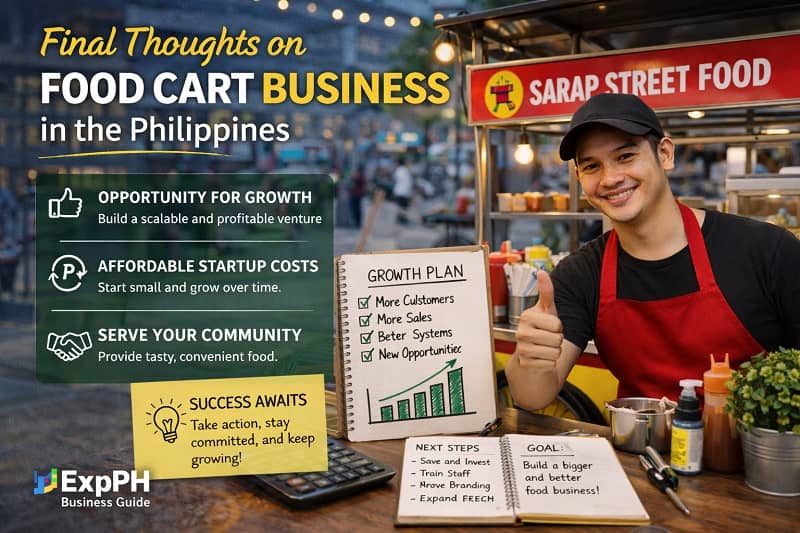
Final Thoughts on Food Cart Business in the Philippines
Starting a food cart business in the Philippines is a practical and achievable way to enter entrepreneurship, especially for beginners with limited capital. With proper planning, a strategic location, and consistent product quality, you can build a stable and profitable business over time. This type of business allows you to learn essential skills while managing risks and gradually improving your operations through daily experience and customer feedback.
Focus on serving quality food, providing excellent customer service, and managing your finances carefully to maintain steady growth. Consistency in these areas helps build customer trust and repeat sales. As your business becomes more stable, you can reinvest your profits to expand operations, improve your offerings, and eventually grow your small food cart into a sustainable and scalable business venture.
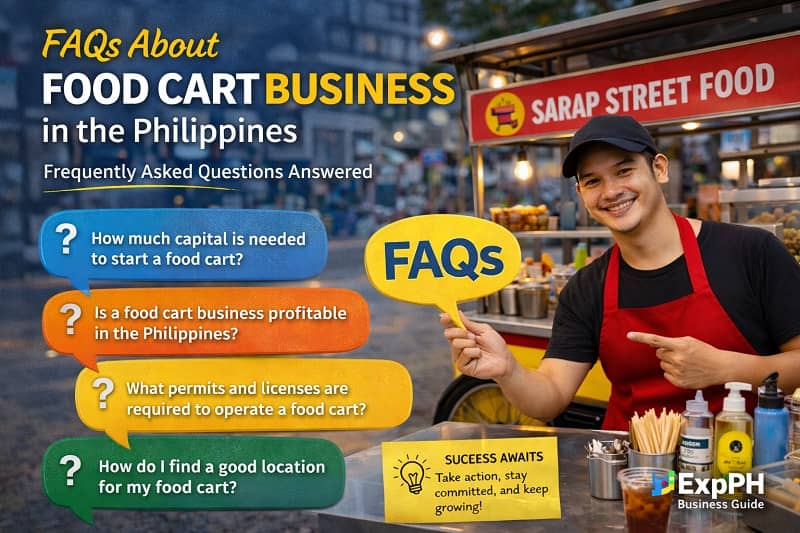
FAQs About Food Cart Business in the Philippines
1. How much capital do I need to start a food cart business in the Philippines?
You can start a food cart business with around PHP 20,000 to PHP 100,000 depending on your concept, equipment, location, and initial inventory requirements.
2. What permits are required for a food cart business in the Philippines?
You need DTI registration, Barangay Clearance, Mayor’s Permit, and BIR registration to legally operate your food cart business and comply with local government regulations.
3. What are the best food cart ideas for beginners in the Philippines?
Simple and popular options include siomai, street food, burgers, milk tea, and rice meals because they are affordable, easy to prepare, and have consistent demand.
4. Where is the best location for a food cart business?
The best locations include areas with high foot traffic such as schools, terminals, markets, offices, and malls where many potential customers pass by daily.
5. How do I price my food cart products properly?
Calculate your total cost per item, add a reasonable profit margin, check competitor pricing, and adjust based on your location, demand, and customer purchasing behavior.
6. How can I attract customers to my food cart business?
Promote your food cart through social media, offer opening discounts, use eye-catching signage, and provide good service to encourage repeat customers and word-of-mouth referrals.
7. Is a food cart business profitable in the Philippines?
A food cart business can be profitable if you choose a good location, manage costs carefully, maintain product quality, and consistently attract and retain loyal customers.
8. What are common mistakes to avoid in a food cart business?
Common mistakes include poor inventory management, inconsistent product quality, ignoring customer feedback, and overspending on unnecessary items that reduce overall business profitability.
9. How can I expand my food cart business in the future?
You can expand by adding more carts, introducing new menu items, partnering with delivery platforms, and eventually upgrading your business into a small restaurant.
10. How important is food safety in a food cart business?
Food safety is very important because it protects customers from health risks, builds trust, ensures compliance with regulations, and helps maintain a strong business reputation.
Want to go beyond food cart business and start your own venture?
Read our full guide here: Complete Guide to Starting a Business in the Philippines (Registration, Costs, and Steps 2026)
Related Guides:
- How to Start a Sari-Sari Store in the Philippines (Complete 2026 Beginner Guide)
- How to Start a Milk Tea Business in the Philippines (Beginner-Friendly Guide)
Food Cart Business Quiz: Test Your Knowledge
Test what you have learned from this guide and see how ready you are to take action. This quick quiz will help reinforce key concepts in a simple and engaging way.
Results


#1. What is a key benefit of a food cart business?
#2. Which agency handles sole proprietorship registration?
#3. What is a popular beginner food cart product?
#4. What is a good location for a food cart?
#5. Why is budgeting important in business?
#6. What should you prioritize in your menu?
#7. Which is a basic equipment needed?
#8. What helps attract more customers?
#9. What is a common mistake in operations?
#10. How can you grow your food cart business?
We appreciate your time.
Share your score or experience in the comments and let others know how you did. Keep learning and building your business journey!

A Filipino web developer with a background in Computer Engineering. Founder of ExpPH Blog and ExpPH Business Guide, two Philippines-focused platforms covering OFW guidance, business, finance, freelancing, travel, and lifestyle. Passionate about helping Filipinos grow, he creates practical content that educates, empowers, and inspires readers nationwide.