

Starting an online selling business in the Philippines is one of the most practical and low-cost ways to earn income today, even for beginners with no prior experience. With platforms like Shopee, Lazada, and Facebook Marketplace, you can reach a wide audience of Filipino buyers without the need for a physical store. This setup allows you to operate with lower costs while still accessing strong market demand across different product categories and locations nationwide.
Whether you are an OFW planning to invest, a student looking for extra income, or someone aiming to build a full-time business, this opportunity is accessible and flexible. You can start small, learn the process, and grow at your own pace. This guide will walk you through clear and practical steps to help you launch, manage, and improve your online selling business successfully.
Choosing the right business comes first.
If you are still deciding what to sell or start, read this guide:
How to Choose a Small Business in the Philippines (2026 Guide for Beginners)
Learn how to choose a profitable, beginner-friendly business that fits your budget and skills.
Table of Contents

Why Start an Online Selling Business in the Philippines Today
The Philippines continues to experience strong growth in e-commerce as more consumers shift to digital shopping. Many Filipinos now prefer buying online because it is convenient, offers competitive prices, and provides access to a wider range of products across different categories and sellers nationwide.
Key Advantages
- Low startup cost compared to traditional businesses
- No need for physical rent or large inventory
- Access to nationwide customers
- Flexible schedule, ideal for side hustles
These advantages make an online selling business in the Philippines one of the most practical and beginner-friendly opportunities today. It allows individuals to start small, manage risks more effectively, and gradually grow a sustainable income stream without requiring large capital or complex business operations.

How Much Capital Do You Need
Starting an online selling business in the Philippines does not require a large investment. You can begin with a small budget and scale gradually as you gain experience. Many successful sellers started with limited capital and focused on reinvesting profits to grow steadily.
Estimated Startup Budget
- ₱1,000 to ₱5,000 for small-scale selling
- ₱5,000 to ₱20,000 for moderate inventory
You can also reduce risk by using pre-order or dropshipping models. These approaches allow you to sell products without holding inventory, helping you test demand and manage cash flow more efficiently during the early stages of your business.
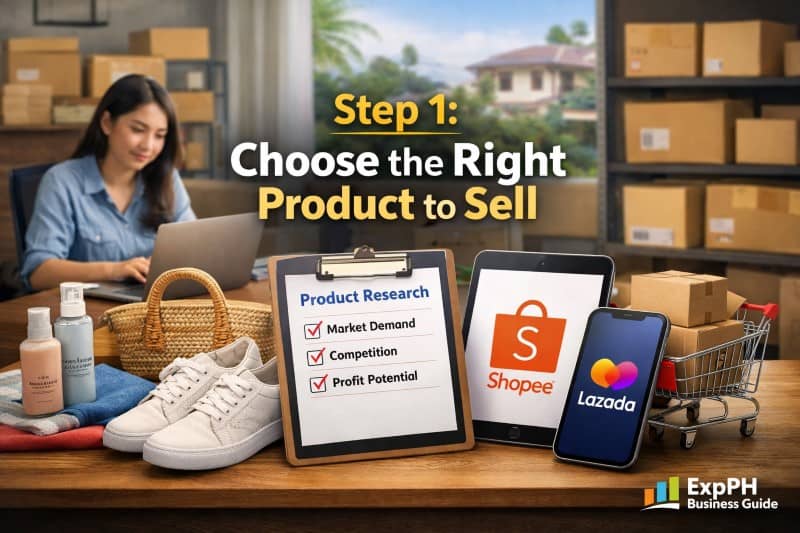
Step 1: Choose the Right Product to Sell
Your product is the foundation of your business and strongly influences your success. Choosing the wrong item can slow growth even if your marketing is effective. Focus on demand, usability, and market trends to ensure your product attracts consistent buyers and repeat customers.
Profitable Product Ideas in the Philippines
- Beauty and skincare products
- Clothing and fashion items
- Home essentials and kitchen tools
- Gadgets and accessories
- Baby products
Tips for Choosing a Winning Product
- Solve a common problem
- Check demand on Shopee and Lazada
- Avoid overly saturated items unless you offer something unique
- Start small and test before scaling
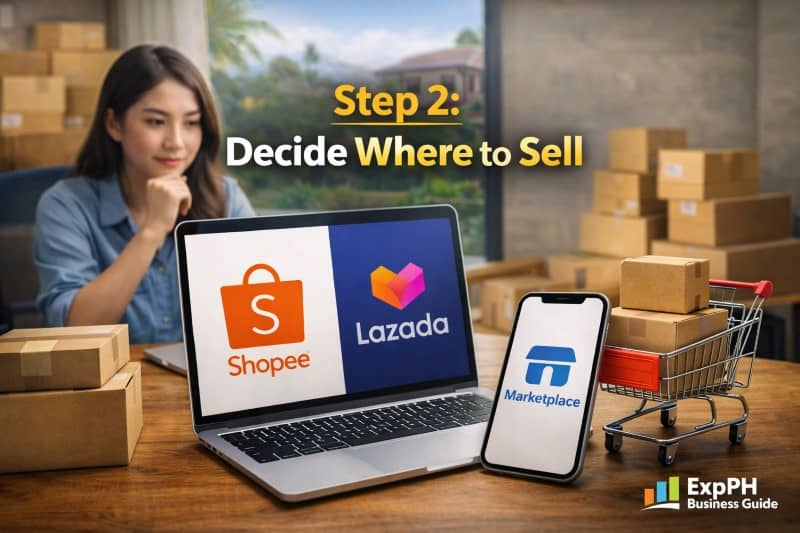
Step 2: Decide Where to Sell (Shopee, Lazada, Facebook)
Each platform offers different advantages depending on your experience and goals. Some are better for beginners while others support long-term scaling. You can start with one platform to learn the basics, then expand to multiple channels as your business grows.
Shopee
- Beginner-friendly
- Strong traffic and built-in marketing tools
- Ideal for small sellers
Lazada
- More structured platform
- Slightly stricter requirements
- Good for scaling and branding
Facebook Marketplace and Facebook Pages
- Free to use
- Direct communication with buyers
- Great for local selling and faster transactions
Best Strategy
Start with Shopee or Facebook to gain experience and validate your product. Once you understand customer behavior and operations, expand to Lazada to scale your brand and reach a broader audience.
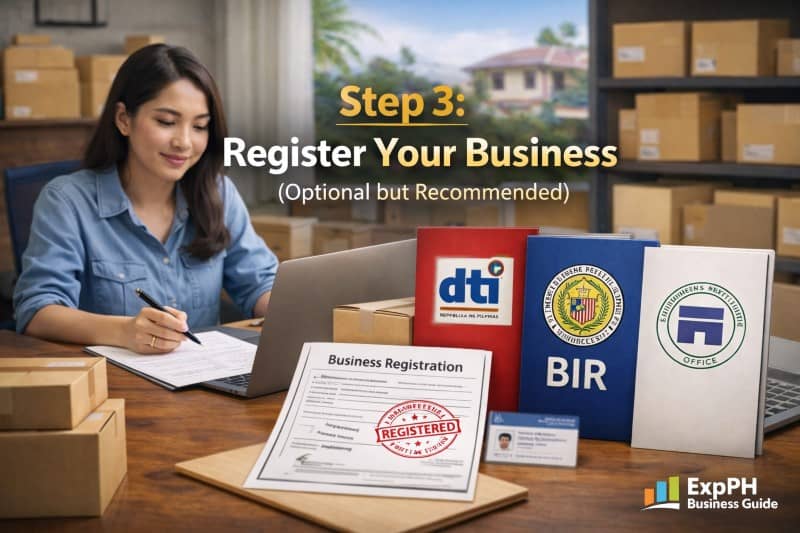
Step 3: Register Your Business (Optional but Recommended)
If you plan to grow your online selling business in the Philippines, registration improves credibility and protects your operations. It also helps you access better opportunities such as partnerships, payment systems, and supplier agreements while ensuring compliance with local business regulations.
Basic Registrations
- DTI (Department of Trade and Industry) for sole proprietors
- BIR (Bureau of Internal Revenue) for tax compliance
- Barangay clearance and mayor’s permit if required locally
For official guidance, visit: https://www.dti.gov.ph
Benefits of Registering
- Build trust with customers
- Access payment gateways and suppliers
- Avoid legal issues in the future
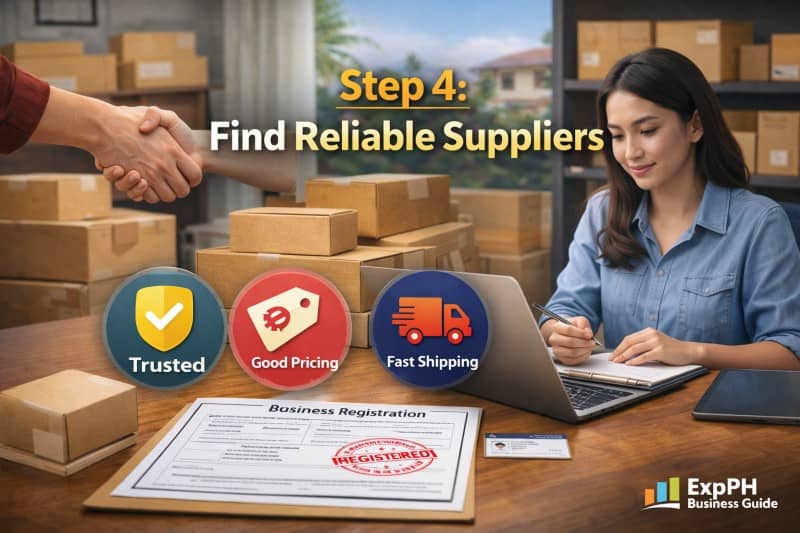
Step 4: Find Reliable Suppliers
Your supplier plays a critical role in product quality, pricing, and delivery speed. A reliable supplier helps maintain customer satisfaction and prevents delays or complaints. Take time to evaluate options carefully before committing to long-term partnerships.
Types of Suppliers
- Local wholesalers such as Divisoria, Baclaran, or online sellers
- Direct manufacturers
- Dropshipping suppliers
What to Look For
- Consistent product quality
- Fast shipping time
- Reasonable pricing
- Clear and responsive communication
Always order samples first to check quality before selling to customers.
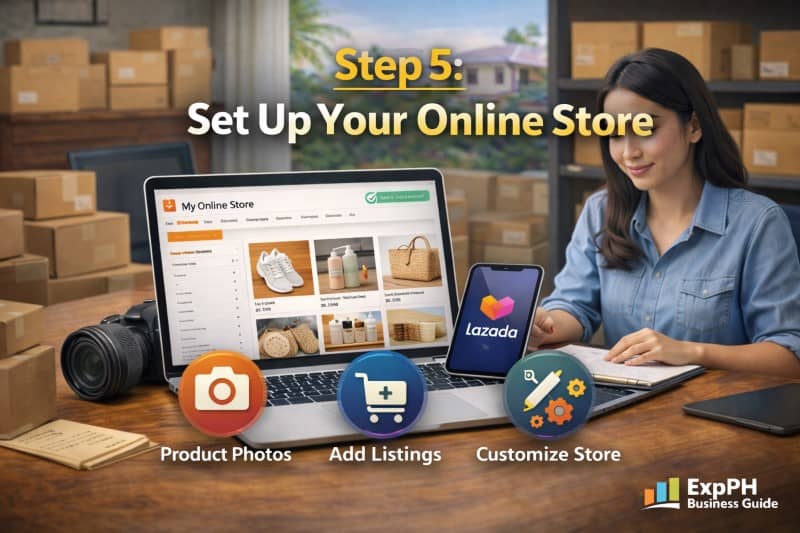
Step 5: Set Up Your Online Store
Building your online presence is essential for attracting customers and establishing trust. A well-structured store with clear information and appealing visuals can increase conversions and improve your chances of getting repeat buyers over time.
Shopee or Lazada Store Setup
- Create a seller account
- Upload clear and high-quality product photos
- Write detailed and accurate product descriptions
- Set competitive pricing based on market research
Facebook Setup
- Create a Facebook Page
- Post products regularly
- Join relevant buy-and-sell groups
Pro Tip
Use real product photos whenever possible. Filipino buyers are more likely to trust actual images because they reflect the true quality and condition of the item.
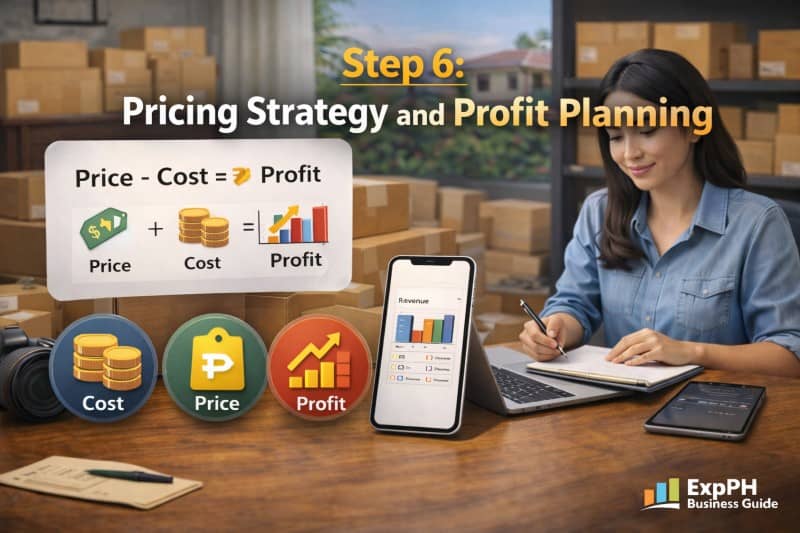
Step 6: Pricing Strategy and Profit Planning
Many beginners struggle because they set prices too low or ignore hidden costs. A proper pricing strategy ensures profitability while remaining competitive in the market. Always calculate expenses carefully before deciding your final selling price.
Include These in Your Pricing
- Product cost
- Shipping fees
- Platform fees such as Shopee or Lazada commissions
- Packaging materials
- Marketing expenses
Simple Formula
Selling Price = Total Cost + Desired Profit
Aim for a profit margin of around 20 percent to 50 percent depending on your product and competition.
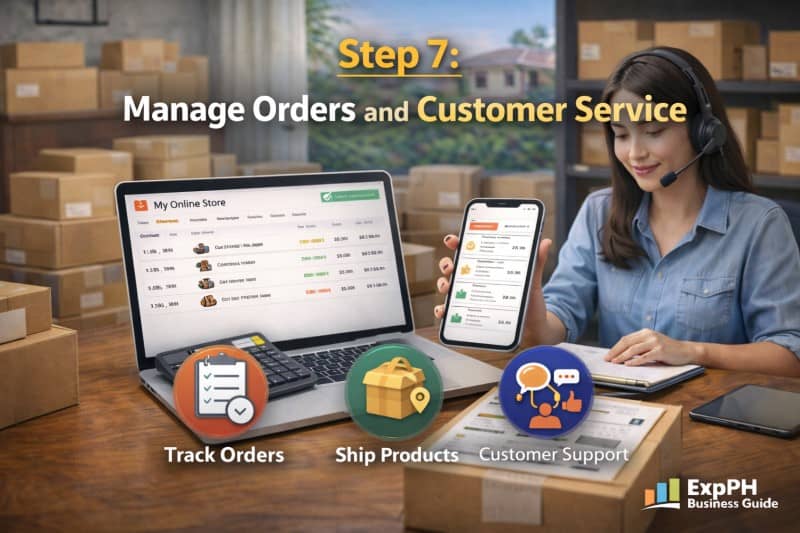
Step 7: Manage Orders and Customer Service
Strong customer service builds trust and encourages repeat purchases. Buyers are more likely to leave positive reviews when they have a smooth experience from inquiry to delivery, which helps your store grow organically over time.
Best Practices
- Respond quickly to inquiries
- Ship orders on time
- Provide accurate tracking details
- Handle complaints in a professional manner
Positive reviews can help your online selling business in the Philippines grow faster than relying only on paid advertising.
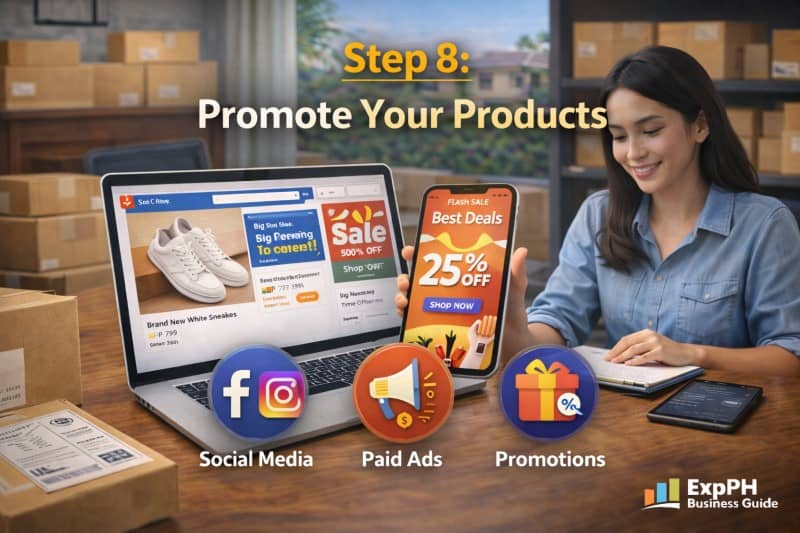
Step 8: Promote Your Products
Even with a good product, visibility is essential to attract customers. Consistent promotion helps you reach more people and build awareness. Start with simple methods, then scale your efforts as your budget and experience grow.
Free Marketing Methods
- Facebook posts and groups
- TikTok product videos
- Shopee and Lazada vouchers
Paid Strategies
- Facebook Ads
- Shopee Ads
- Influencer collaborations
Begin with free methods to test your market, then reinvest your profits into paid advertising to increase reach and sales.
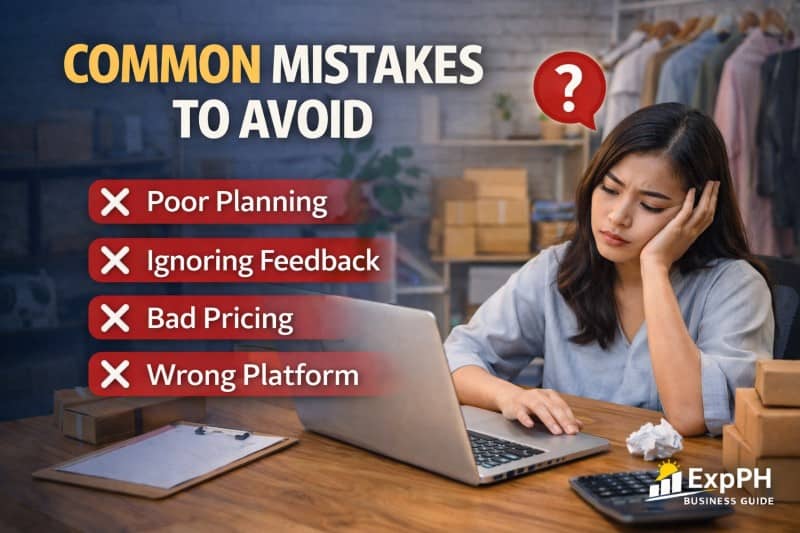
Common Mistakes to Avoid
Many beginners make avoidable mistakes that slow down their progress and reduce profitability. Understanding these common errors early can help you build a more stable and sustainable online selling business while improving your chances of long-term success in a competitive market.
Common Errors
- Selling without researching demand
- Ignoring customer service
- Using poor product photos
- Pricing too low without profit
- Giving up too early
Consistency plays a major role in success. Most profitable sellers did not see immediate results and spent several months improving their products, marketing, and operations before achieving steady sales and building a reliable customer base.
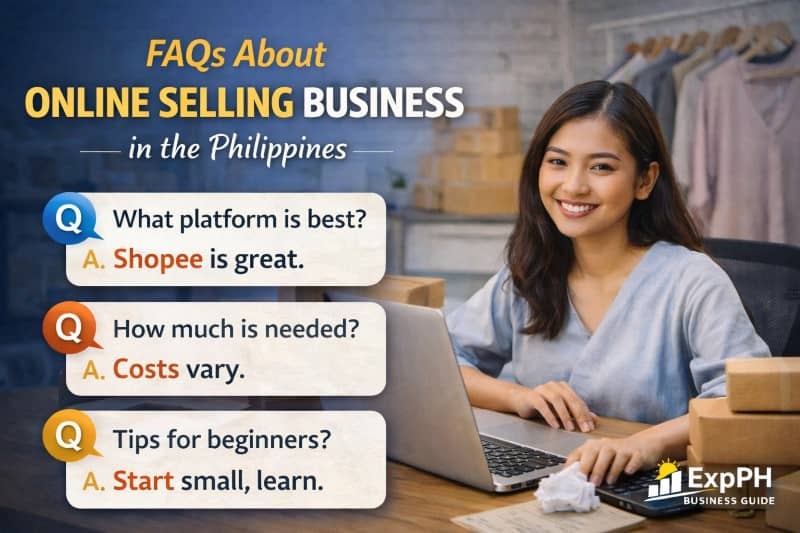
FAQs About Online Selling Business in the Philippines
1. What is an online selling business in the Philippines?
An online selling business in the Philippines involves selling products through digital platforms like Shopee, Lazada, or Facebook, allowing sellers to reach customers without needing a physical store.
2. How much capital do I need to start online selling?
You can start with as little as ₱1,000 depending on your product. Small capital is enough if you use pre-order or dropshipping and manage costs carefully.
3. Which platform is best for beginners?
Shopee is often best for beginners because it offers built-in traffic, simple setup, and marketing tools that help new sellers gain visibility and manage orders easily.
4. Do I need to register my business before selling online?
Business registration is not always required at the start, but it is recommended if you plan to grow, build trust, and comply with Philippine regulations.
5. What products sell well in the Philippines?
Popular products include beauty items, clothing, home essentials, gadgets, and baby products. Items that solve everyday problems and have consistent demand usually perform better online.
6. How do I find reliable suppliers?
Look for suppliers with good reviews, consistent product quality, and fast delivery. Always test products first to ensure they meet customer expectations before selling them online.
7. How do I price my products correctly?
Include all costs such as product price, shipping, packaging, and platform fees. Then add a reasonable profit margin to ensure your business remains sustainable and competitive.
8. How can I get my first customers?
Start by promoting your products on Facebook, joining relevant groups, and using platform tools like Shopee vouchers. Consistent posting and engagement help attract initial buyers.
9. Is customer service important in online selling?
Customer service is very important because it builds trust and encourages repeat purchases. Fast responses, clear communication, and reliable delivery can lead to positive reviews.
10. Can online selling become a full-time business?
Yes, many sellers start part-time and grow into full-time businesses. With consistency, proper planning, and good customer service, online selling can provide stable long-term income opportunities.
Final Thoughts on Online Selling Business in the Philippines
Building an online selling business in the Philippines goes beyond simply listing products and waiting for sales. It requires a clear understanding of your target market, consistent effort, and a focus on delivering real value to customers. Success comes from improving your strategy, adapting to trends, and maintaining reliable service over time.
You do not need a large amount of capital to get started. What matters most is taking action, testing your ideas, and learning from each experience. Small steps, when done consistently, can lead to steady progress and better decision-making as you grow your business with confidence.
With patience and commitment, this simple online venture can develop into a stable source of income. Many sellers begin part-time and eventually turn their stores into full-time businesses. Growth may take time, but consistent effort and smart planning can lead to long-term success.
Ready to take your business seriously?
Starting an online selling business is just the first step.
Complete Guide to Starting a Business in the Philippines (Registration, Costs, and Steps 2026)
Learn how to register your business, understand the real costs, and follow the exact steps to build a legal and scalable business.
Related Guides:
- How to Start a Milk Tea Business in the Philippines (Beginner-Friendly Guide)
- How to Start a Sari-Sari Store in the Philippines (Complete 2026 Beginner Guide)
Online Selling Business in the Philippines Quiz
Test your understanding of how to start an online selling business in the Philippines using Shopee, Lazada, and Facebook. This quick quiz will help you review key concepts and practical steps from the guide.
Results


#1. What is a key advantage of online selling?
#2. Which platform is beginner-friendly?
#3. What should you check before selling?
#4. Which product type sells well?
#5. Why register your business?
#6. What is important in suppliers?
#7. What should pricing include?
#8. What improves customer trust?
#9. How can you promote products?
#10. What helps long-term success?
Thanks for taking the quiz!
Share your score or experience in the comments and let others know how you did.

A Filipino web developer with a background in Computer Engineering. Founder of ExpPH Blog and ExpPH Business Guide, two Philippines-focused platforms covering OFW guidance, business, finance, freelancing, travel, and lifestyle. Passionate about helping Filipinos grow, he creates practical content that educates, empowers, and inspires readers nationwide.