

Starting a food business remains one of the most popular small business opportunities in the Philippines because food is a daily necessity and an important part of Filipino culture. Many Filipinos dream of opening a restaurant, café, eatery, or neighborhood carinderia to create stable income and long-term financial growth. Whether you plan to start a simple carinderia or a larger full-service restaurant, proper registration is an essential step toward building a legal, trusted, and professionally managed food business that can grow successfully over time.
This guide explains the complete restaurant business registration Philippines process that entrepreneurs should understand before opening a food business. You will learn about important permits, legal requirements, registration procedures, taxes, estimated costs, and practical business tips for beginners. The guide also covers important areas such as sanitation permits, employee registrations, and compliance with local government regulations. Understanding these requirements can help restaurant and carinderia owners avoid costly mistakes and establish a stronger foundation for long-term business success.
Planning to launch your own food business?
Read our complete guide on How to Start a Small Restaurant or Carinderia in the Philippines to learn practical tips on budgeting, menu planning, location selection, equipment, and daily operations before completing your restaurant business registration requirements.
Table of Contents
Quick Summary (TL;DR)
- Register your business name with DTI (sole proprietorship) or SEC (corporation/partnership)
- Get a Barangay Clearance and Mayor’s Permit
- Secure BIR registration and official receipts
- Apply for sanitation and health permits for food businesses
- Register employees with SSS, PhilHealth, and Pag-IBIG if hiring staff
- Prepare enough capital for permits, equipment, rent, and operations
- Follow local food safety and sanitation rules to avoid penalties
- Keep financial records organized for tax compliance and business growth

1. Why Proper Business Registration Matters
Many small food stalls and carinderias in the Philippines operate without formal registration. However, registering your business provides important legal and financial advantages. It helps establish credibility, supports long-term growth, and protects your operations from potential problems with local authorities, suppliers, customers, and government agencies in the future.
Legal Protection
Registering your restaurant or carinderia helps protect your business from legal issues, penalties, and possible closure. It shows that your operations follow local government regulations and licensing requirements. Proper permits also reduce risks during inspections and make it easier to handle complaints or compliance concerns professionally.
Customer Trust
Customers are more confident dining at restaurants and carinderias that display valid permits and sanitation certificates. Visible compliance with health and business regulations creates a positive impression and strengthens customer confidence. A properly registered food business also appears more reliable, professional, and committed to maintaining safe food practices.
Access to Financing
Banks and lending companies often require official business registration documents before approving loans, credit lines, or financing applications. Proper registration improves your chances of securing financial support for expansion, equipment purchases, or operational needs. It also helps establish your business records and financial credibility over time.
Expansion Opportunities
Business registration becomes increasingly important if you plan to expand your restaurant or carinderia in the future. Proper documentation allows you to open additional branches, partner with food delivery platforms, supply offices or events, and build formal relationships with suppliers, investors, and commercial establishments more easily.

2. Choose the Right Business Structure
Before beginning the restaurant business registration Philippines process, choose a business structure that matches your goals, budget, and long-term plans. Your chosen setup affects taxes, legal responsibilities, ownership rules, and registration requirements. Selecting the right structure early can help avoid future complications and support smoother business operations.
Sole Proprietorship
A sole proprietorship is the simplest and most affordable business structure for small restaurants and carinderias in the Philippines. It is easy to manage and ideal for owners who want full control of daily operations and profits. Registration is completed through the DTI Business Name Registration System.
Best for:
- Family-run carinderias
- Small food stalls
- First-time entrepreneurs
Partnership
A partnership is suitable when two or more individuals plan to own and manage the restaurant business together. This structure allows partners to combine capital, skills, and responsibilities. However, clear agreements are important to prevent future conflicts. Registration and legal documentation are handled through the Securities and Exchange Commission (SEC).
Corporation
A corporation is ideal for larger restaurant businesses with multiple investors or long-term expansion goals. This structure offers stronger legal protection by separating personal and business liabilities. However, corporations require more paperwork, stricter compliance, and regular reporting obligations compared to smaller business structures in the Philippines.
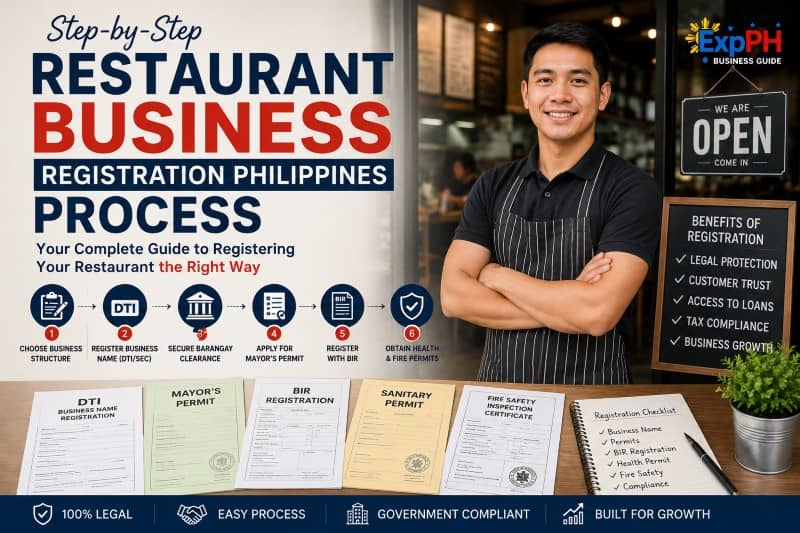
3. Step-by-Step Restaurant Business Registration Philippines Process
Registering a restaurant or carinderia in the Philippines involves several important legal and government requirements. Each step helps ensure your business operates legally, safely, and professionally. From securing business permits to registering with tax and labor agencies, completing these requirements protects your operations and supports long-term business growth.
1. Register Your Business Name
For Sole Proprietorships
If you plan to operate your restaurant or carinderia as a sole proprietorship, you must register your business name with the Department of Trade and Industry (DTI). This process gives your business legal recognition and allows you to proceed with permit applications and other government requirements for lawful operations.
Requirements usually include:
- Valid government ID
- Proposed business name
- Payment for registration fees
Business name registration fees vary depending on territorial scope:
- Barangay
- City/Municipality
- Regional
- National
For Partnerships and Corporations
Partnerships and corporations must register with the Securities and Exchange Commission (SEC) instead of DTI. This process establishes the legal identity of the business and defines ownership structure, responsibilities, and financial arrangements among owners or investors involved in the restaurant or carinderia business.
You may need:
- Articles of Partnership or Incorporation
- Treasurer’s affidavit
- Valid IDs of incorporators
- Business address documents
2. Secure Barangay Clearance
After registering your business name, visit the barangay where your restaurant or carinderia will operate to apply for Barangay Clearance. This document confirms that your business complies with local community rules and zoning regulations. Requirements and processing times may vary depending on the barangay location.
Typical requirements:
- DTI or SEC registration
- Valid ID
- Lease contract or proof of address
- Community tax certificate
Barangay clearance confirms that your business follows local community regulations and operating requirements before applying for additional permits.
3. Apply for a Mayor’s Permit
The Mayor’s Permit is one of the most important requirements for legally operating a restaurant or carinderia in the Philippines. This permit confirms that your business meets local government standards related to safety, sanitation, zoning, and commercial operations within your city or municipality.
Requirements may include:
- Barangay clearance
- DTI or SEC documents
- Lease contract
- Occupancy permit
- Sanitary permit
- Fire safety inspection certificate
Permit procedures, inspection schedules, and fees vary depending on the city or municipality where your business operates. You can check updated requirements through your local government website or the official Department of the Interior and Local Government (DILG) for additional guidance and official information.
4. Register with the BIR
All businesses in the Philippines must register with the Bureau of Internal Revenue (BIR) for tax compliance purposes. Visit the Revenue District Office (RDO) assigned to your business location to complete registration and secure the documents required for issuing receipts and maintaining legal business operations.
Requirements may include:
- DTI or SEC registration
- Mayor’s Permit
- Valid ID
- Books of accounts
- Lease contract
You will also need:
- Certificate of Registration (BIR Form 2303)
- Official receipts or invoices
- Authority to print receipts
- Registration of books of accounts
You can review official tax registration procedures and updated requirements through the official Bureau of Internal Revenue (BIR) website before visiting your assigned Revenue District Office for processing.
5. Obtain Health and Sanitation Permits
Restaurants and carinderias must comply with sanitation and health regulations to protect customers and maintain safe food handling practices. Local government health offices usually conduct inspections before approving permits. Following proper hygiene standards also helps build customer trust and reduces risks related to food safety violations.
Health Certificates
Restaurant staff and food handlers are commonly required to secure health certificates from the local health office before working in food preparation or serving areas. These certificates help confirm that employees meet local health standards and are fit to handle food safely in commercial establishments.
Sanitary Permit
A sanitary permit confirms that your restaurant or carinderia follows approved hygiene and food safety standards required by local authorities. Health inspectors may conduct site visits to evaluate whether your business maintains clean facilities, proper food storage practices, and safe working conditions for employees and customers.
Inspectors may check:
- Kitchen cleanliness
- Food storage
- Water supply
- Waste disposal
- Pest control measures
Following sanitation standards protects customer health, strengthens business credibility, and helps prevent complaints, penalties, or temporary closure caused by violations of local food safety and hygiene regulations.
6. Get Fire Safety Inspection Clearance
Restaurants use gas tanks, cooking appliances, and electrical equipment daily, making fire safety an essential requirement for business operations. Many local government units require approval from the Bureau of Fire Protection (BFP) before issuing a Mayor’s Permit or allowing businesses to begin commercial operations legally.
Common requirements include:
- Fire extinguishers
- Emergency exits
- Proper electrical wiring
- Safety signage
Meeting fire safety standards helps reduce accident risks, protects employees and customers, and ensures your restaurant or carinderia complies with local safety regulations and inspection requirements before opening to the public.
7. Register Employees and Mandatory Contributions
If you hire workers for your restaurant or carinderia, you must register as an employer with government agencies that manage employee benefits and mandatory contributions. Proper registration helps protect workers, ensures compliance with labor laws, and prevents possible penalties or legal issues related to employment violations.
You must register with:
- SSS
- PhilHealth
- Pag-IBIG Fund
Official websites:
These registrations ensure employees receive government-mandated benefits, including healthcare coverage, social security protection, housing assistance, and other benefits required under Philippine labor and employment regulations.
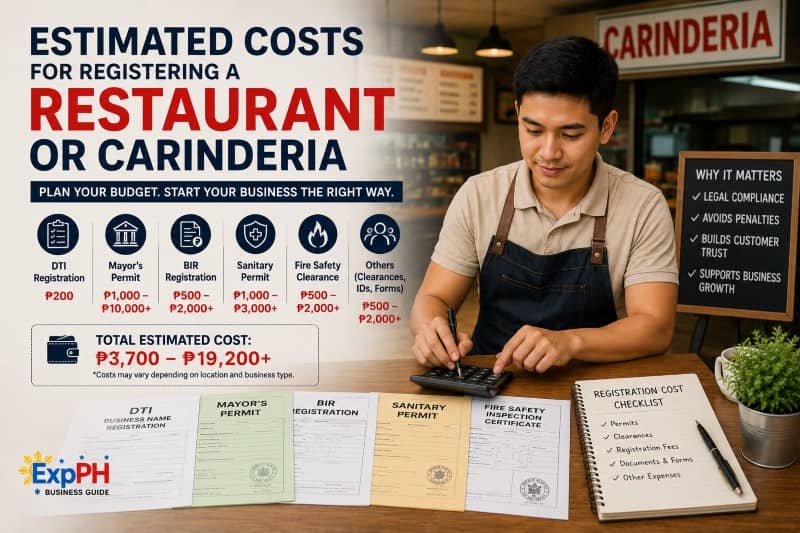
4. Estimated Costs for Registering a Restaurant or Carinderia
The total cost of registering a restaurant or carinderia in the Philippines depends on several factors, including business size, location, rental rates, and local government fees. Startup expenses can vary significantly between small neighborhood food stalls and larger restaurant operations with more equipment and staffing requirements.
Small Carinderia
Small carinderias usually require lower startup capital because they operate with limited seating, simpler equipment, and fewer employees. Registration and permit expenses are generally more affordable, making this setup popular among first-time entrepreneurs and small family-run food businesses in the Philippines.
Estimated registration and permit costs:
- Around ₱5,000 to ₱20,000
Small Restaurant
Small restaurants often require larger investments due to higher operational needs, additional permits, larger kitchen spaces, and more equipment. Costs may also increase depending on interior renovations, seating capacity, and location. Careful budgeting is important before starting restaurant operations and completing the registration process.
Estimated registration and permit costs:
- Around ₱20,000 to ₱100,000 or more
Additional startup expenses may include:
- Rent deposits
- Renovation
- Kitchen equipment
- Tables and chairs
- Inventory
- POS systems
- Utility connections
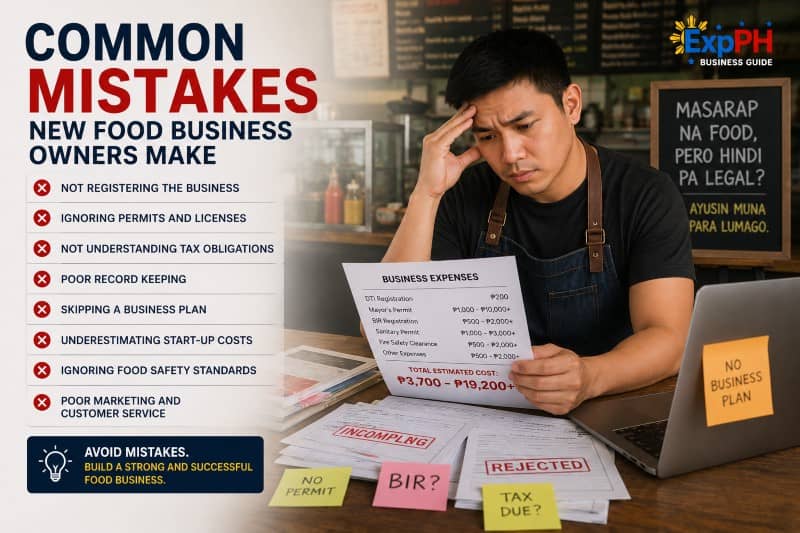
5. Common Mistakes New Food Business Owners Make
Many restaurant and carinderia businesses struggle because of avoidable mistakes during the early stages of operations. Understanding these common problems can help new entrepreneurs improve financial management, maintain legal compliance, and build stronger customer trust. Proper planning and consistent business practices greatly increase long-term success and stability.
Starting Without Permits
Some food business owners begin operating without completing permit and registration requirements to save time or money. However, this decision can lead to penalties, temporary closure orders, legal complications, and difficulties when dealing with suppliers, landlords, delivery platforms, or local government inspections in the future.
Ignoring Financial Records
Many small food businesses experience financial problems because owners fail to separate personal and business finances. Poor recordkeeping makes it difficult to monitor profits, control expenses, and prepare accurate tax documents. Organized financial tracking also helps owners make better business decisions and avoid unnecessary losses.
Open a separate bank account and track:
- Daily sales
- Expenses
- Inventory
- Employee payroll
Underestimating Food Costs
Food prices in the Philippines regularly increase due to supply changes, inflation, and market conditions. Restaurant and carinderia owners must monitor ingredient costs carefully to maintain healthy profit margins. Regular inventory checks and proper menu pricing help prevent losses and improve long-term financial stability for the business.
Poor Sanitation Practices
Cleanliness directly affects customer trust, food safety, and business reputation. Poor sanitation practices can quickly lead to complaints, negative online reviews, or health violations that damage your restaurant or carinderia. Maintaining clean kitchens, proper food handling, and hygienic dining areas helps protect both customers and business credibility.
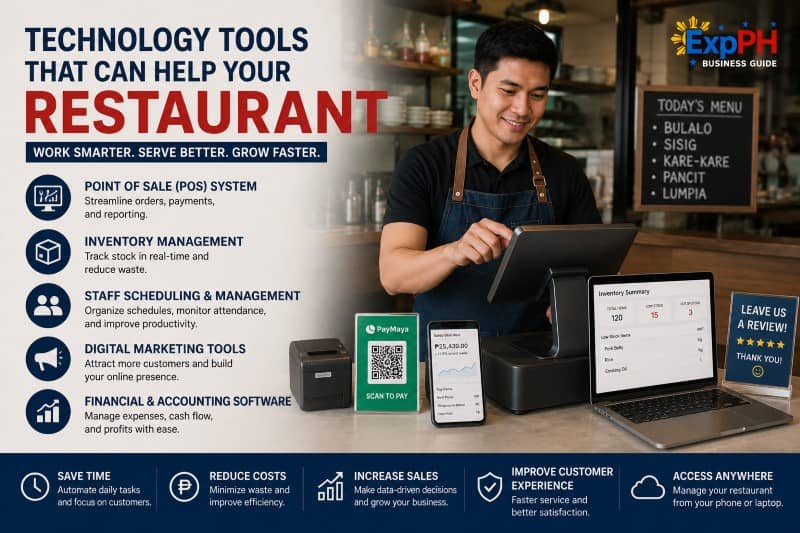
6. Technology Tools That Can Help Your Restaurant
Technology can improve daily operations, customer service, and financial management for restaurants and carinderias of all sizes. Even small food businesses can benefit from affordable digital tools that help reduce manual work, improve accuracy, and support faster service. Modern systems also help businesses stay competitive in growing urban markets.
Useful tools include:
- POS systems
- Digital payment options
- QR code menus
- Inventory tracking apps
- Delivery platform integration
Using digital payment methods and basic restaurant technology can improve convenience for customers and streamline daily business operations. Cashless payments are becoming more common in the Philippines, especially in cities and commercial areas, making digital options valuable for attracting customers and improving the overall dining experience.
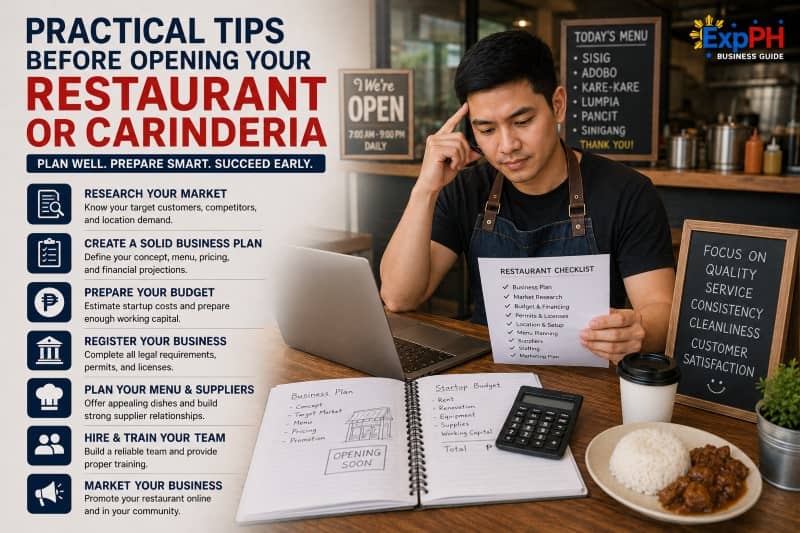
7. Practical Tips Before Opening Your Restaurant or Carinderia
Opening a restaurant or carinderia requires more than good food and cooking skills. Proper planning, budgeting, and understanding customer behavior can greatly improve your chances of long-term success. Following practical business strategies before opening helps reduce risks, improve operations, and prepare your business for unexpected challenges in the future.
Start with a Simple Menu
New restaurant owners should avoid offering too many dishes during the early stages of business operations. A smaller menu helps maintain food quality, improve consistency, reduce ingredient waste, and simplify kitchen management. Focusing on popular and well-prepared meals can also help build customer trust and repeat business.
Study Your Location
Choosing the right location is one of the most important decisions for any restaurant or carinderia business. Areas with strong foot traffic and accessible transportation often attract more customers. Understanding your target market also helps improve pricing, menu planning, and overall business performance from the beginning.
Good locations may include areas near:
- Offices
- Schools
- Markets
- Transport terminals
Build an Emergency Fund
Food businesses often experience slow sales periods, unexpected repairs, rising ingredient prices, and other operational challenges. Preparing an emergency fund helps protect your restaurant or carinderia during difficult situations. Many business owners recommend saving enough funds to cover at least three to six months of operating expenses.
Learn Basic Accounting
Understanding basic accounting helps restaurant owners monitor profits, manage expenses, and maintain healthier business finances. Learning how to track cash flow, pricing, taxes, and inventory can prevent costly mistakes and improve decision-making. Good financial management also supports long-term business growth and better operational stability.
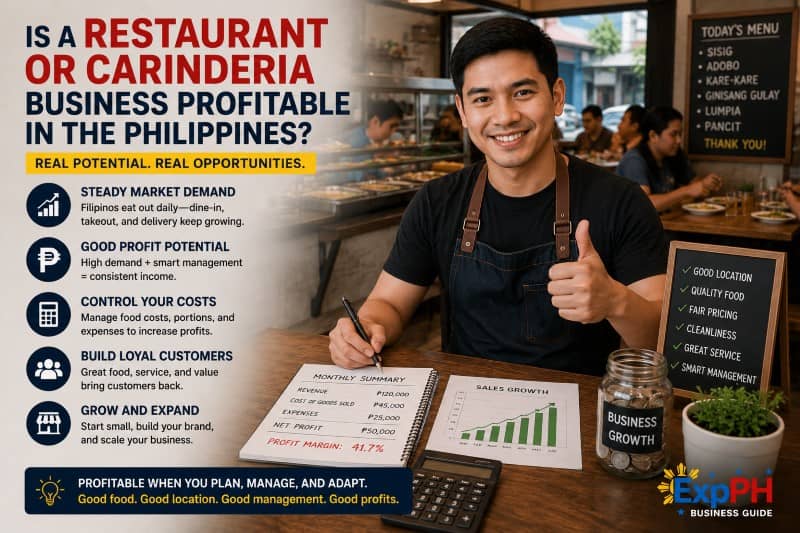
8. Is a Restaurant or Carinderia Business Profitable in the Philippines?
A restaurant or carinderia business can become profitable in the Philippines with proper planning, consistent food quality, and efficient daily operations. Success usually depends on how well owners manage expenses, maintain customer satisfaction, and adapt to local market demand while building a strong reputation within their community.
Success often depends on:
- Location
- Food quality
- Pricing
- Customer service
- Cost control
- Consistency
Many successful restaurant owners in the Philippines started with small carinderias before expanding into larger food businesses. Strong customer relationships, disciplined financial management, and consistent service often help small food establishments grow steadily over time and compete successfully within the local restaurant industry.

Final Thoughts on Restaurant Business Registration in the Philippines
Completing the restaurant business registration Philippines process may feel complicated at the beginning, especially for first-time entrepreneurs. However, proper registration is an important investment that helps protect your business, establish legal operations, and build customer trust. Securing the correct permits and registrations also creates better opportunities for business growth, partnerships, financing, and long-term stability. Following legal requirements early can help prevent unnecessary penalties, operational delays, and costly compliance problems in the future.
Whether you plan to open a small neighborhood carinderia or a larger restaurant, following the correct legal process helps create a stronger foundation for your business. Success in the food industry often depends on compliance, food quality, cleanliness, customer service, and responsible financial management. Restaurant and carinderia owners who consistently maintain good operations and customer satisfaction are more likely to achieve stable income and long-term growth in the competitive Philippine food business industry.
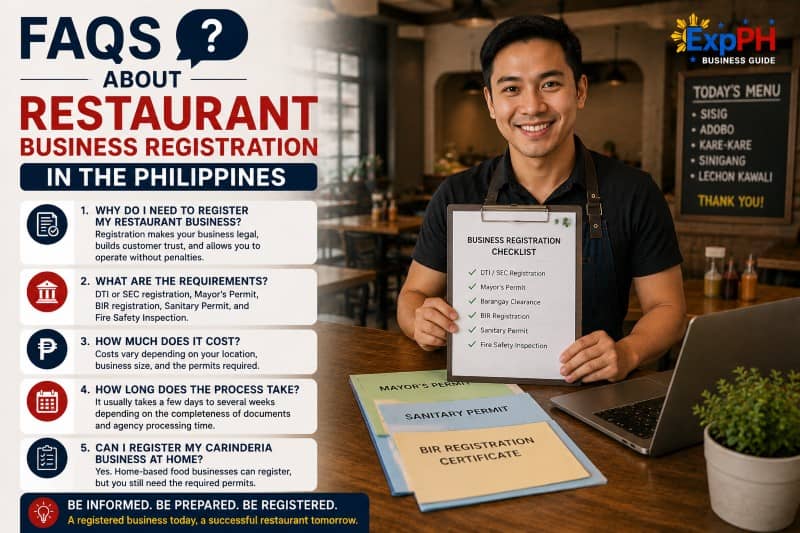
FAQs About Restaurant Business Registration in the Philippines
What permits are needed to open a restaurant or carinderia in the Philippines?
Most restaurant and carinderia businesses need DTI or SEC registration, Barangay Clearance, Mayor’s Permit, BIR registration, and local sanitation permits before opening legally for operations.
How much does restaurant business registration usually cost in the Philippines?
Small carinderias usually spend lower amounts for permits and registration, while restaurants often require higher budgets because of equipment, staffing, and larger spaces during setup.
What business structure is best for first-time restaurant owners?
A sole proprietorship is commonly chosen by first-time entrepreneurs because registration is simpler, cheaper, and easier to manage than larger business structures for beginners today.
Why are health certificates important for food businesses?
Food businesses usually need health certificates and sanitation permits to confirm employees and facilities follow local hygiene standards required by government authorities during inspections properly.
Why is BIR registration important for restaurants and carinderias?
Registering with the BIR allows restaurants and carinderias to issue official receipts, pay taxes correctly, and operate legally under Philippine business regulations for daily operations.
Why should restaurant owners maintain financial records?
Restaurant owners should keep accurate financial records to monitor profits, control expenses, prepare taxes properly, and make better decisions for long-term stability and growth opportunities.
How can technology help restaurant businesses in the Philippines?
Digital payment systems and POS technology help restaurants process transactions faster, reduce manual errors, improve inventory tracking, and provide better customer convenience during busy hours.
Why is location important for restaurant or carinderia businesses?
Choosing a location near offices, schools, markets, or transport terminals can help restaurants attract steady customers and improve daily sales opportunities consistently over time naturally.
What happens if a restaurant operates without permits?
Operating without permits may lead to penalties, inspection problems, temporary closure orders, and difficulties partnering with suppliers or food delivery platforms nationwide for businesses today.
What helps restaurant businesses succeed in the Philippines?
Successful restaurant businesses often grow through consistent food quality, responsible budgeting, clean facilities, and reliable customer service that encourages repeat customers regularly within communities nationwide.
Want to learn more beyond restaurant registration?
Read our pillar guide, How to Register a Business in the Philippines (Complete Guide), and our master pillar, Complete Guide to Starting a Business in the Philippines (Registration, Costs, and Steps 2026), for complete insights on permits, registration, startup costs, and practical business strategies in the Philippines.
Restaurant Business Registration Philippines Quiz
Planning to open a restaurant or carinderia in the Philippines?
Test your knowledge with this quick quiz about business registration, permits, taxes, and legal requirements. This beginner-friendly quiz can help future entrepreneurs better understand the important steps before starting a food business.
Results


#1. Which agency handles sole proprietorship registration?
#2. What permit confirms local community approval?
#3. Which office manages tax registration?
#4. Which document allows official receipts?
#5. What protects food business hygiene standards?
#6. Which agency handles fire inspections?
#7. Which business setup suits beginners best?
#8. What helps track restaurant sales?
#9. Why separate business finances?
#10. Which location attracts strong foot traffic?
Thank you for taking the quiz!
Share your score or experience in the comments and let other readers know which business topic you want to learn about next.

A Filipino web developer with a background in Computer Engineering. Founder of ExpPH Blog and ExpPH Business Guide, two Philippines-focused platforms covering OFW guidance, business, finance, freelancing, travel, and lifestyle. Passionate about helping Filipinos grow, he creates practical content that educates, empowers, and inspires readers nationwide.