

Starting a retail business can be one of the most practical ways to build stable long-term income in the Philippines. From sari-sari stores and mini groceries to clothing boutiques and gadget shops, the retail industry continues to expand because consumers regularly purchase essential goods and daily necessities. Strong customer demand makes retail businesses attractive for entrepreneurs looking to build sustainable income opportunities.
Before opening your retail store to customers, you must complete the proper retail store business registration Philippines requirements. Legal registration helps protect your business from penalties and compliance issues while improving customer confidence and supplier relationships. Registered businesses also gain easier access to business bank accounts, financing opportunities, official receipts, and long-term growth partnerships in the Philippines.
This guide explains the complete retail store business registration Philippines process for beginners and aspiring entrepreneurs. You will learn the required permits, estimated registration costs, legal requirements, and important business tips for operating a compliant retail store. The article also covers financial management, technology tools, and practical strategies that can help support long-term business success.
Planning to open a rice retail store in the Philippines?
Read our complete guide on How to Start a Rice Retail Business in the Philippines to learn about capital requirements, permits, suppliers, pricing strategies, and practical tips for building a profitable rice business.
Table of Contents
Quick Summary (TL;DR)
- Choose your retail business structure first
- Register your business name with DTI (sole proprietorship) or SEC (corporation/partnership)
- Secure a Barangay Clearance
- Apply for a Mayor’s Permit from your local city or municipality
- Register your business with the BIR
- Prepare invoices, receipts, and accounting records
- Register employees with SSS, PhilHealth, and Pag-IBIG if hiring staff
- Open a business bank account for better financial management
- Use accounting and inventory tools to improve operations
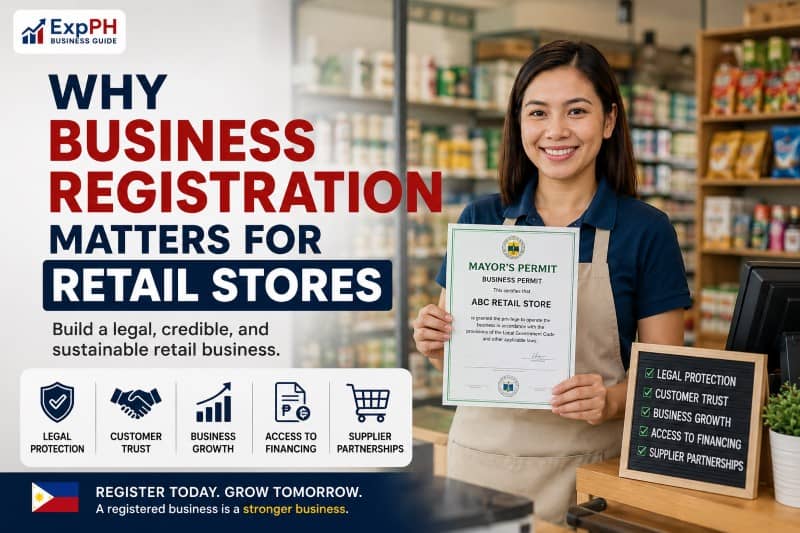
1. Why Business Registration Matters for Retail Stores
Many small retail stores in the Philippines start as informal businesses because the setup process appears faster and less expensive. However, operating without proper registration can create serious legal and financial problems later. Registering your retail store helps establish legitimacy and provides stronger protection as your business grows.
Proper registration gives your retail store several important advantages:
- Legal protection for daily business operations
- Better credibility with customers and suppliers
- Ability to issue official receipts and invoices
- Easier access to business loans and financing
- Eligibility for wholesale supplier partnerships
- Reduced risk of penalties, fines, or business closure
According to the Department of Trade and Industry (DTI), business registration helps entrepreneurs operate legally while improving access to government programs, financial opportunities, and long-term business support. It also strengthens consumer trust and encourages responsible business practices across different industries in the Philippines.
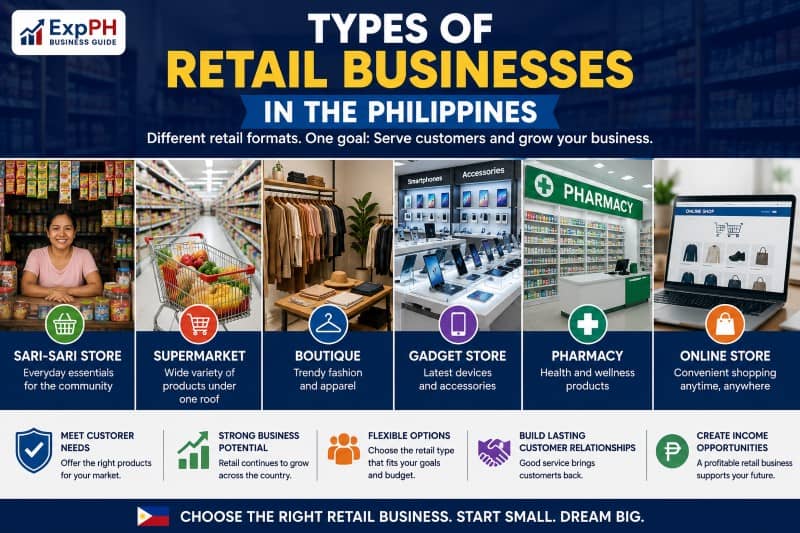
2. Types of Retail Businesses in the Philippines
Before beginning the retail store business registration Philippines process, it is important to identify the type of retail business you want to operate. Your chosen business category can affect permit requirements, taxes, inspections, and operational rules depending on your local government unit and the products you plan to sell.
Common retail businesses in the Philippines include:
- Sari-sari stores
- Grocery stores
- Convenience stores
- Clothing boutiques
- Hardware stores
- Gadget and accessory shops
- Beauty and cosmetics stores
- Pharmacy and wellness shops
- Online retail stores with physical inventory
Some retail businesses may require additional permits or inspections, especially those selling food, medicine, beauty products, or electronic devices. Checking your LGU requirements early can help you avoid delays during the retail store business registration Philippines process and ensure smoother business operations after opening.
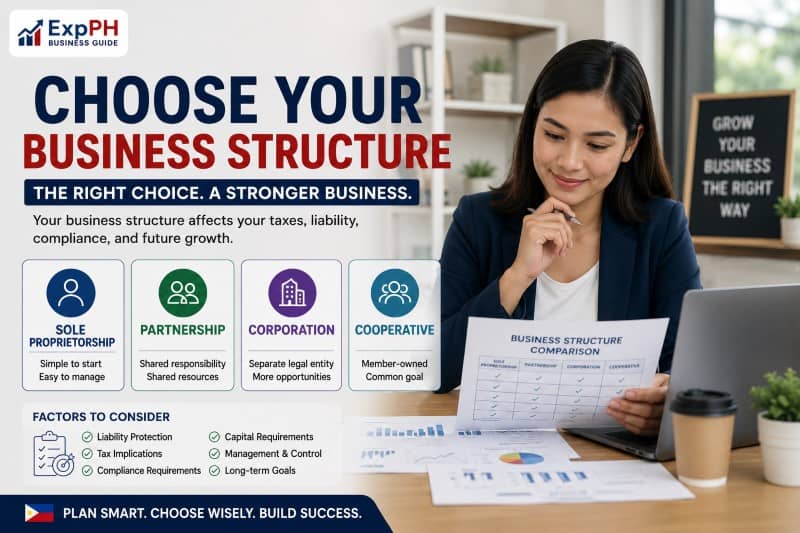
3. Choose Your Business Structure
Before starting the retail store business registration Philippines process, you must choose the right business structure for your store. Your chosen structure affects registration requirements, taxes, ownership responsibilities, and future expansion opportunities. Selecting the correct setup early can help avoid legal and financial complications as your business grows.
Sole Proprietorship
A sole proprietorship is the simplest and most common business structure for beginners in the Philippines. This option is ideal for small retail stores because the registration process is straightforward and affordable. The owner has complete control over operations, profits, and business decisions without needing approval from partners or shareholders.
Advantages:
- Easy registration process
- Lower registration costs
- Full control of the business
Disadvantage:
- Personal assets are not legally separate from the business
You can register a sole proprietorship through the DTI Business Name Registration System. Many small retail entrepreneurs choose this structure because it allows faster setup while keeping business management simple during the early stages of operation.
Partnership
A partnership is a business structure where two or more individuals share ownership, profits, responsibilities, and operational decisions. This setup is commonly used by family-owned retail stores or businesses with multiple investors. Partnerships can provide additional capital and shared expertise, which may help improve business growth and daily management.
Common advantages of partnerships include:
- Shared financial responsibilities
- Combined business skills and experience
- Additional funding from multiple owners
- Shared management and workload
Possible disadvantages include:
- Shared liability among partners
- Potential disagreements in decision-making
- Profit sharing between business owners
Corporation
A corporation is often recommended for larger retail businesses planning long-term expansion in the Philippines. This structure creates a separate legal identity from its owners, helping protect personal assets. Corporations are also more attractive to investors and may offer better opportunities for business growth and scalability.
Benefits of a corporation include:
- Separate legal identity
- Better scalability for expansion
- Easier investor participation
- Greater business credibility
Corporations are registered through the Securities and Exchange Commission (SEC). Although registration requirements are more complex than a sole proprietorship, corporations can provide stronger legal protection and better long-term growth opportunities for expanding retail businesses.
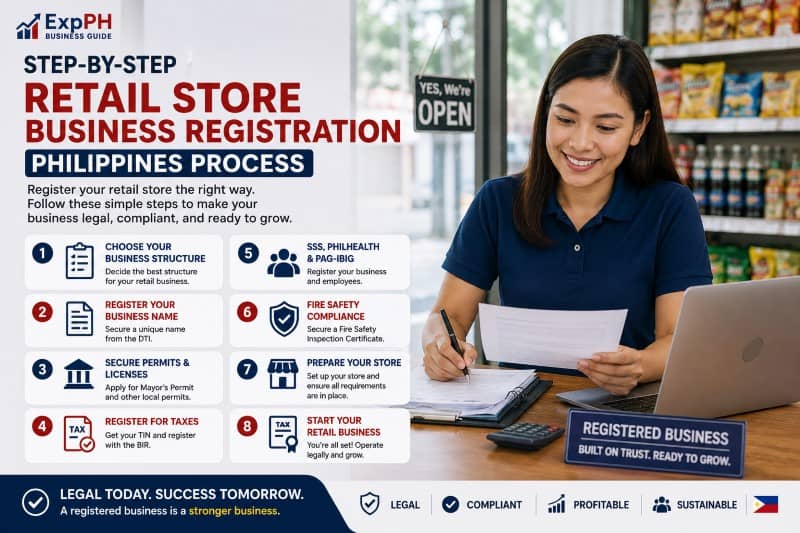
4. Step-by-Step Retail Store Business Registration Philippines Process
Completing the retail store business registration Philippines process involves several important steps. Each requirement helps ensure your business operates legally and complies with local and national regulations. Preparing your documents early can make the application process faster and help prevent unnecessary delays during business registration.
Step 1, Register Your Business Name
Registering your business name is one of the first legal requirements before operating a retail store in the Philippines. The registration process depends on your chosen business structure. Sole proprietors register with DTI, while corporations and partnerships must register with the Securities and Exchange Commission (SEC).
For Sole Proprietors
Sole proprietors must register their business name through the DTI Business Name Registration System. This process officially records your retail business name and protects it within your selected business scope. Registration is usually simple and suitable for small retail stores and beginner entrepreneurs.
Requirements usually include:
- Valid government-issued ID
- Proposed business name
- Business address
- Payment for registration fees
DTI registration fees vary depending on territorial scope:
- Barangay
- City/Municipality
- Regional
- National
Most small retail stores choose city or municipal scope because it provides sufficient protection for local business operations while keeping registration costs lower and more manageable for small business owners.
For Corporations or Partnerships
Corporations and partnerships must register with the Securities and Exchange Commission (SEC) instead of DTI. SEC registration establishes your business as a separate legal entity and is often recommended for businesses with multiple owners, investors, or long-term expansion plans in the retail industry.
Requirements may include:
- Articles of Incorporation or Partnership
- Treasurer’s Affidavit
- Company details
- Capital information
Additional documents may be required depending on your business structure and company setup. Preparing complete information before filing can help reduce delays and improve the overall registration process for your retail business in the Philippines.
Step 2, Secure a Barangay Clearance
After registering your business name, visit the barangay hall where your retail store will operate. The Barangay Clearance confirms that your business complies with local community regulations and zoning requirements. This document is commonly required before applying for additional permits and national business registrations.
Requirements may include:
- DTI or SEC registration
- Valid IDs
- Lease contract or proof of business address
- Community Tax Certificate (Cedula)
Some barangays may request additional documents depending on your business type and location. Processing times are usually quick, especially if your requirements are complete and your business activities comply with local barangay guidelines and community safety regulations.
Step 3, Apply for a Mayor’s Permit
The Mayor’s Permit is one of the most important requirements in the retail store business registration Philippines process. This permit allows your retail business to legally operate within your city or municipality. Applications are usually processed through the local business permits and licensing office.
Common requirements include:
- Barangay Clearance
- DTI or SEC registration
- Lease contract
- Occupancy permit
- Sketch of business location
- Valid IDs
- Fire safety inspection certificate
- Sanitary permit
Processing time depends on your local government unit (LGU). Some cities and municipalities now provide online application systems to improve efficiency, reduce waiting times, and simplify the permit process for small retail business owners across the Philippines.
Step 4, Register With the BIR
Your retail business must register with the Bureau of Internal Revenue (BIR) to comply with Philippine tax laws. BIR registration allows your business to issue official receipts and legally report taxes. This step is required for both physical and online retail businesses operating in the country.
Requirements commonly include:
- DTI or SEC documents
- Mayor’s Permit
- Barangay Clearance
- Valid IDs
- Lease agreement
You also need to:
- Pay the registration fee
- Register books of accounts
- Apply for official receipts or invoices
- Secure your Certificate of Registration (COR)
Some Revenue District Offices (RDOs) may also require business owners to attend taxpayer briefings or orientation seminars. These sessions help new entrepreneurs understand tax responsibilities, filing procedures, and compliance requirements for operating a legal retail business in the Philippines.
Step 5, Register Employees With Government Agencies
If your retail store plans to hire employees, registration with government agencies is mandatory under Philippine labor regulations. Proper registration helps protect workers while ensuring your business complies with employee contribution and benefit requirements required by national labor and social protection laws.
Required employee registrations include:
Completing these registrations ensures employees receive government-mandated benefits such as healthcare coverage, social security protection, salary loans, housing assistance, and other employment benefits. Compliance also helps retail business owners avoid penalties and labor-related legal issues in the future.
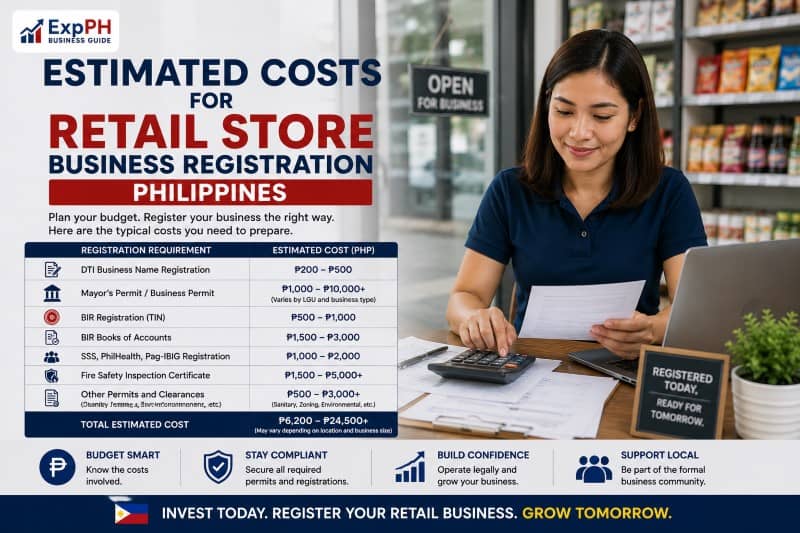
5. Estimated Costs for Retail Store Business Registration Philippines
The total cost of retail store business registration Philippines depends on your business location, store size, and chosen business structure. Fees may also vary between cities and municipalities because each local government unit (LGU) follows its own permit rates, inspection charges, and processing requirements for businesses.
Here are some of the most common registration expenses for retail businesses in the Philippines:
| Registration Item | Estimated Cost |
|---|---|
| DTI Registration | PHP 200 to PHP 2,000 |
| Barangay Clearance | PHP 300 to PHP 1,000 |
| Mayor’s Permit | PHP 2,000 to PHP 15,000+ |
| BIR Registration | Around PHP 500 plus receipt costs |
| Receipt Printing | PHP 1,500 to PHP 5,000 |
| Fire and Sanitary Permits | Varies by LGU |
Aside from registration fees, retail store owners should also prepare additional funds for business inspections, rental deposits, inventory purchases, utility connections, store renovations, and equipment setup. Creating a complete startup budget early can help reduce financial stress and improve long-term business planning and operations.
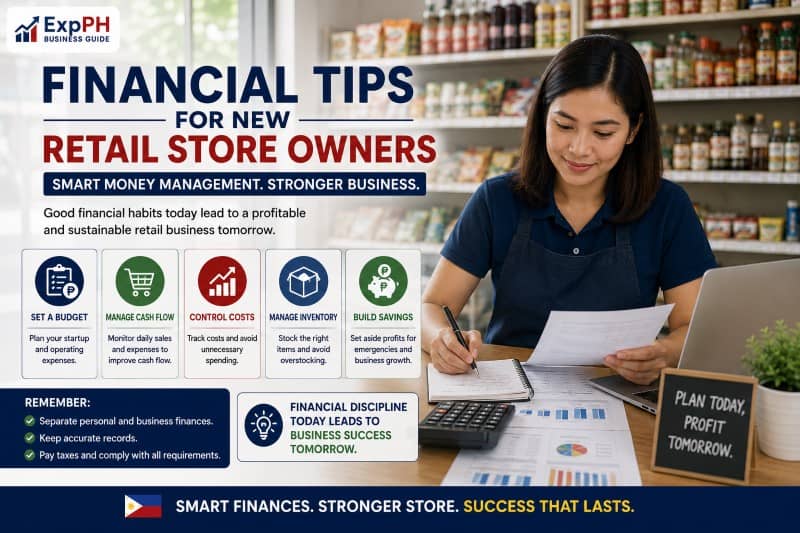
6. Financial Tips for New Retail Store Owners
Strong financial management is essential for maintaining stable operations and long-term profitability in the retail industry. Many small retail businesses struggle because of poor budgeting, weak cash flow control, and inventory problems. Developing good financial habits early can help your retail store operate more efficiently and avoid unnecessary financial risks.
Separate Personal and Business Money
Opening a dedicated business bank account helps retail store owners manage finances more effectively and maintain accurate records. Mixing personal and business money can create accounting problems and make tax reporting more difficult. Separate accounts also help improve professionalism when dealing with suppliers, banks, and financial institutions.
This helps:
- Track income properly
- Simplify accounting
- Improve loan eligibility
- Build business credibility
Using a separate business account can also make it easier to monitor expenses, calculate profits, and prepare financial documents when applying for loans or business expansion opportunities in the future.
Monitor Inventory Carefully
Inventory management plays a major role in retail profitability because unsold products and overstocking can reduce earnings quickly. Retail business owners should regularly review inventory performance to avoid waste, minimize losses, and ensure popular products remain available for customers throughout daily business operations.
Track:
- Fast-moving items
- Slow-moving products
- Expiration dates
- Supplier pricing
Careful inventory tracking also helps improve purchasing decisions and prevents unnecessary spending on products with weak customer demand. Organized inventory systems can support better financial planning and improve overall retail store efficiency.
Maintain Emergency Funds
Retail sales can change unexpectedly because of seasonal demand, inflation, economic conditions, or changing customer spending habits. Emergency funds help protect your retail business during slow sales periods and reduce financial pressure when unexpected expenses or operational challenges affect your daily business activities.
Emergency savings can help cover:
- Utility bills
- Employee salaries
- Inventory restocking
- Equipment repairs
- Rental payments during slow months
Building emergency funds gradually can improve financial stability and help retail store owners continue operating even during difficult market conditions or temporary sales declines.
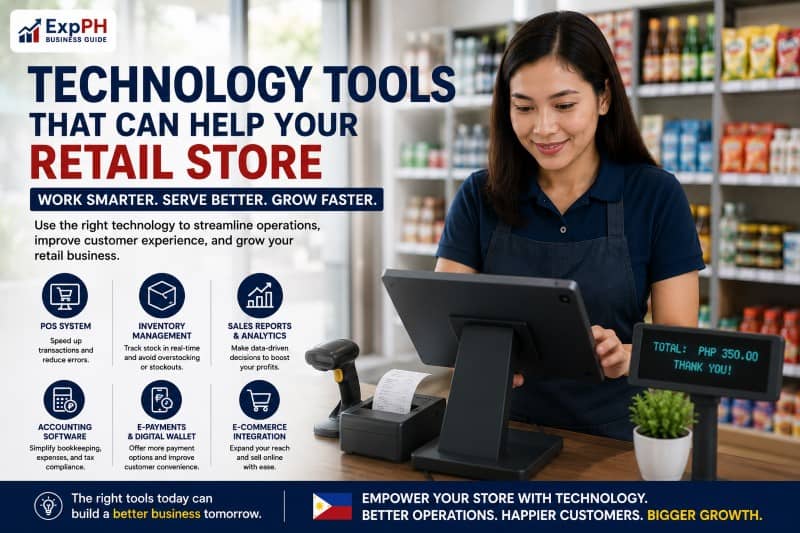
7. Technology Tools That Can Help Your Retail Store
Technology can help retail stores improve daily operations, customer service, and financial management. Even small businesses can benefit from digital tools that simplify transactions, monitor inventory, and organize records more efficiently. Using the right technology can save time, reduce manual errors, and support long-term business growth.
Useful technology tools for retail businesses include:
- Point-of-sale (POS) systems
- Inventory management software
- Digital payment systems
- Accounting software
- Online selling platforms
These tools can help store owners monitor sales, track stock levels, manage expenses, and improve customer convenience. Many affordable software options are now available for small businesses in the Philippines, making digital business management more accessible for new retail entrepreneurs.
Digital payment acceptance is also becoming more important as more Filipino consumers prefer e-wallets and cashless transactions for faster and safer payments. Accepting digital payments can improve customer experience while helping retail stores adapt to changing shopping habits and modern business practices in the Philippines.
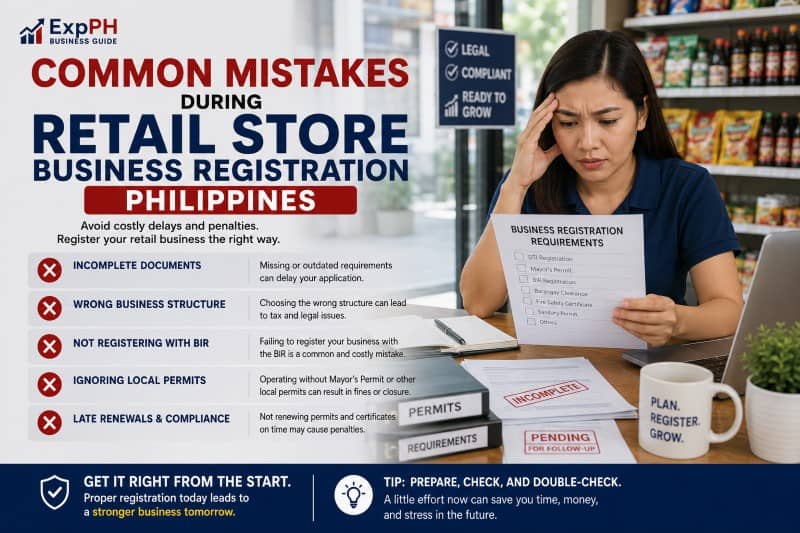
8. Common Mistakes During Retail Store Business Registration Philippines
Many first-time entrepreneurs experience delays or financial problems because of avoidable mistakes during the retail store business registration Philippines process. Understanding these common issues early can help business owners prepare better, reduce unnecessary expenses, and improve their chances of operating a stable and legally compliant retail business.
Choosing the Wrong Location
Business location plays a major role in the success of a retail store because customer visibility and accessibility directly affect daily sales. Choosing a poor location can reduce foot traffic and limit growth opportunities. Researching the area carefully before signing a lease agreement is highly recommended.
Study the following factors carefully:
- Customer demand
- Nearby competitors
- Accessibility
- Rental costs
Evaluating these factors can help you select a location that supports long-term profitability and attracts consistent customer traffic. A good location may also improve brand visibility and customer convenience for your retail business.
Ignoring Tax Compliance
Failing to comply with BIR requirements can lead to penalties, fines, and unnecessary legal problems for retail business owners. Many beginners overlook tax responsibilities because they focus heavily on store operations and sales. Maintaining organized records and submitting taxes on time is essential for legal business operations.
Important tax compliance practices include:
- Keeping organized financial records
- Filing taxes before deadlines
- Issuing official receipts properly
- Monitoring business expenses carefully
Developing good accounting habits early can help simplify tax reporting and reduce stress during financial reviews or government inspections. Proper compliance also strengthens the long-term credibility of your retail business.
Underestimating Capital Needs
Many new retail store owners focus mainly on inventory expenses while overlooking other important operational costs. Insufficient capital can create financial pressure during the first few months of business operations, especially when sales are still growing and customer demand remains unpredictable.
Remember to budget for:
- Permits
- Utility bills
- Employee salaries
- Marketing
- Emergency expenses
Preparing a complete startup budget can help business owners manage expenses more effectively and avoid cash flow problems. Having additional reserve funds also provides better financial stability during slow sales periods or unexpected business challenges.

9. Can You Register an Online Retail Store?
Yes, online retail businesses in the Philippines also need proper legal registration and tax compliance. Many online sellers assume registration is only required for physical stores, but businesses operating digitally are still subject to Philippine business and tax regulations when earning regular income from selling products.
If you sell products through the following platforms:
- TikTok Shop
- Shopee
- Lazada
- Independent websites
You still need proper business registration and tax compliance if operating as a business. Registering your online retail store helps establish credibility, improve customer trust, and support long-term growth opportunities in the competitive Philippine e-commerce industry.
Legal registration is also important when working with suppliers, applying for business loans, opening corporate bank accounts, or expanding into larger online marketplaces. Operating a registered online business can provide stronger protection and better opportunities for sustainable business growth in the future.
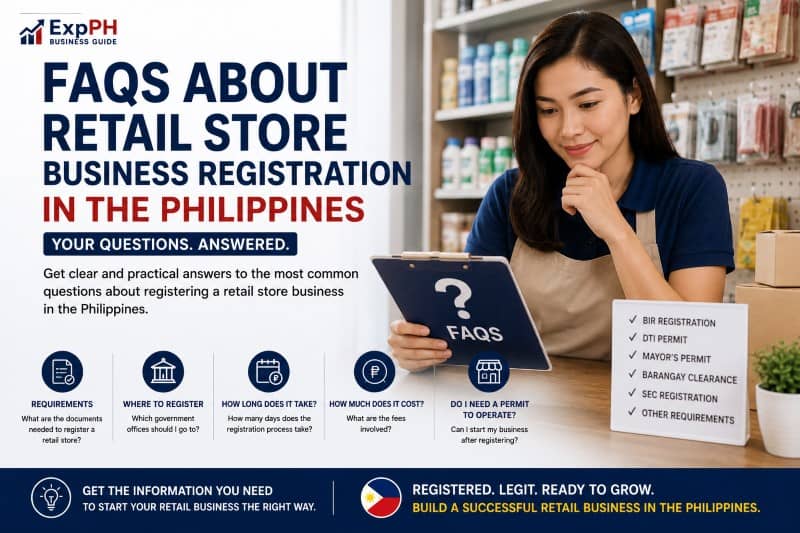
10. FAQs About Retail Store Business Registration in the Philippines
What registrations are required for a retail store business in the Philippines?
Most small retail stores need DTI registration, Barangay Clearance, Mayor’s Permit, and BIR registration before legally operating within their city or municipality in Philippines today.
Do online retail stores need business registration in the Philippines?
Yes, online retail stores selling through social media or marketplaces still need legal registration and tax compliance when operating regularly as businesses nationwide in Philippines.
How much does retail store business registration usually cost?
The total registration cost depends on location, permits, and business structure, but small retail stores commonly spend several thousand pesos during initial processing in Philippines.
What is the best business structure for beginner retail store owners?
A sole proprietorship is the easiest business structure for beginners because registration requirements are simpler, cheaper, and easier to manage during daily operations in Philippines.
Do retail businesses need employee government registrations?
Retail stores hiring workers must register employees with SSS, PhilHealth, and Pag-IBIG to comply with Philippine labor laws and mandatory government benefit requirements properly nationwide.
Why is business registration important for retail stores?
Business registration helps retail stores operate legally, build customer trust, issue official receipts, and access financing opportunities, suppliers, and long-term business partnerships in the Philippines.
How long does the retail business registration process take?
Processing times vary depending on your local government unit, document completeness, and inspection schedules, but many registrations finish within several business weeks in the Philippines.
Do retail stores need official receipts from the BIR?
Retail businesses usually need official receipts because BIR registration requires proper documentation of sales, taxes, and financial transactions for legal business operations in the Philippines.
What should entrepreneurs consider when choosing a retail store location?
Choosing a location with strong customer traffic, reasonable rent, and accessible transportation can improve sales opportunities and support long-term retail business growth in the Philippines.
How can technology help small retail stores in the Philippines?
Digital payment systems help retail stores serve customers more efficiently while supporting cashless transactions, accurate sales tracking, and better daily financial management for business owners
Final Thoughts on Retail Store Business Registration in the Philippines
Completing the retail store business registration Philippines process may feel complicated for first-time entrepreneurs, especially when dealing with permits, taxes, and government requirements. However, the process becomes easier when handled step by step with proper preparation and organized documents. Understanding each requirement early can help reduce delays and make your retail business setup smoother and more manageable.
Legal registration helps protect your business, improve customer trust, and support long-term growth opportunities in the Philippines. Whether you plan to open a sari-sari store, clothing boutique, gadget shop, grocery store, or online retail business, proper registration creates a stronger foundation for stable operations, supplier partnerships, and future business expansion in competitive retail markets.
As your retail business grows, focus not only on legal compliance but also on strong financial management, inventory control, customer service, and business planning. These areas often determine whether a retail store can survive economic challenges and maintain long-term profitability in the highly competitive Philippine retail industry over time.
Ready to learn more about starting a legal business in the Philippines?
Explore our guides, How to Register a Business in the Philippines (Complete Guide) and Complete Guide to Starting a Business in the Philippines (Registration, Costs, and Steps 2026), to understand permits, registration steps, startup costs, and practical business tips for entrepreneurs.
Retail Store Business Registration Philippines Quiz
Test your knowledge about registering a retail store business in the Philippines with this beginner-friendly quiz. Learn more about permits, taxes, registration requirements, and important business steps while improving your understanding of Philippine business regulations.
Results


#1. Which agency handles sole proprietorship registration?
#2. What permit confirms barangay compliance?
#3. Which agency handles tax registration?
#4. Which business structure suits beginners best?
#5. What document allows legal city operations?
#6. Which platform still requires registration?
#7. What helps track retail sales?
#8. Which government agency handles employee housing benefits?
#9. Why is inventory tracking important?
#10. What improves customer payment convenience?
Thank you for taking the quiz
Share your score or business experience in the comments and help other aspiring entrepreneurs learn from your journey.

A Filipino web developer with a background in Computer Engineering. Founder of ExpPH Blog and ExpPH Business Guide, two Philippines-focused platforms covering OFW guidance, business, finance, freelancing, travel, and lifestyle. Passionate about helping Filipinos grow, he creates practical content that educates, empowers, and inspires readers nationwide.