

Growing a business in the Philippines is both rewarding and challenging. As your operations expand, you will reach a point where remaining a small business no longer supports your goals. You begin to need stronger structure, legal protection, and the ability to scale efficiently. This is where the Transition from Small Business to Company becomes important. It allows your business to operate more professionally while preparing for long term growth and stability in a competitive market.
If you are an entrepreneur, freelancer, or OFW building a business in the Philippines, knowing when and how to make this transition can make a significant difference. Moving at the right time helps protect your income and reduces personal risk. It also opens access to better opportunities such as partnerships, funding, and expansion. With the right approach, this step can turn a simple business into a sustainable and scalable source of income.
Prepare your business for the next stage of growth with a clear strategy.
Explore How to Grow and Scale a Small Business in the Philippines (2026 Guide) and learn how to scale your business step by step in 2026.
Table of Contents
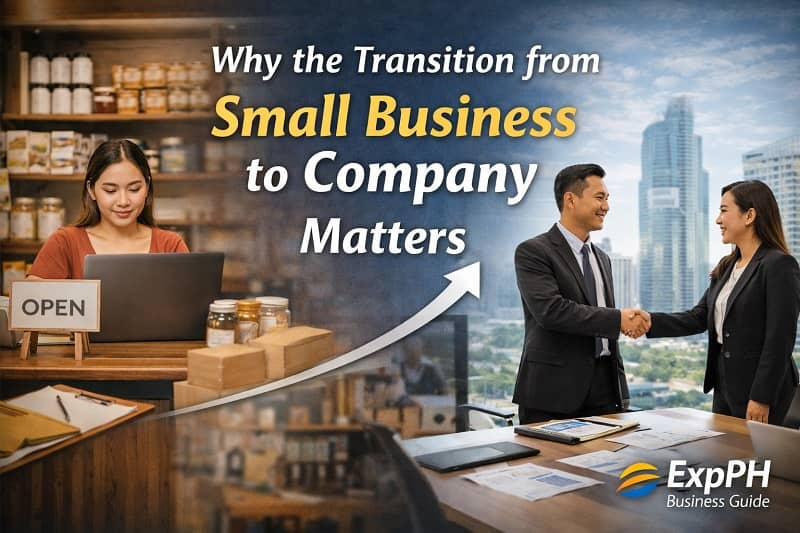
Why the Transition from Small Business to Company Matters
Many Filipino entrepreneurs begin as sole proprietors because the process is simple and affordable. However, as the business grows, this structure can limit expansion and increase personal risk. Making the Transition from Small Business to Company provides better protection, stronger credibility, and more opportunities for long term growth.
Key Reasons to Transition to a Company
Scalability
- A company structure makes it easier to expand operations, hire employees, and open new branches as your business continues to grow.
Limited liability protection
- A company separates personal assets from business liabilities, helping protect your finances from business risks and unexpected obligations.
Stronger credibility
- Registered companies build more trust with clients, investors, and partners, making it easier to secure deals and establish long term relationships.
Access to funding
- Banks and investors prefer companies over sole proprietorships, which increases your chances of getting loans or attracting investment.

Costs Involved in the Transition
Understanding the financial side of the Transition from Small Business to Company helps you plan effectively and avoid unexpected expenses. Preparing a clear budget ensures smoother processing and reduces delays. Knowing the typical costs allows you to allocate resources properly and maintain stable cash flow during the transition.
Typical Expenses
- SEC registration fees
- Legal or consultancy fees
- BIR registration costs
- Local permit updates
These expenses vary based on your business size and complexity. Most small businesses spend around ₱10,000 to ₱30,000, depending on requirements and professional assistance needed.
Top 6 Signs You Are Ready for the Transition from Small Business to Company
Not every business should transition immediately. Timing is key to long term success. Recognizing the right signs helps you avoid unnecessary costs while ensuring your business is prepared for growth, protection, and structure. A well timed move builds stability and opens better opportunities.

1. Your Revenue Is Consistently Growing
Consistent and rising monthly income shows your business has moved beyond survival. This indicates readiness for a more structured setup that supports expansion and stronger financial control.
Indicators:
- Steady monthly income
- Increasing profit margins
- Repeat customers or clients
This level of growth shows your business can handle added responsibilities and costs that come with transitioning to a company structure.

2. You Are Taking Bigger Risks
Working with larger clients and handling higher amounts increases your exposure to risk. Transitioning helps protect your personal assets from business liabilities.
Indicators:
- Signing formal contracts
- Handling high value transactions
- Managing larger responsibilities
As risks grow, separating personal and business finances becomes necessary to avoid serious financial problems.

3. You Plan to Expand
Expanding operations requires better systems and a stronger structure. A company setup supports smoother growth and improved management.
Indicators:
- Opening new branches
- Hiring more employees
- Adding new products or services
A formal structure helps you manage expansion efficiently while maintaining organization and consistency.

4. You Need Investors or Loans
Formal structures are often required to access funding. Registering as a company improves credibility and financial opportunities.
Indicators:
- Applying for business loans
- Seeking investors or partners
- Preparing business proposals
This shows your business is ready to scale and needs financial support to grow further.

5. Your Tax Situation Is Getting Complicated
As income increases, tax responsibilities become more complex. A company structure allows better tax planning and compliance.
Indicators:
- Higher tax payments
- Multiple income streams
- Need for financial planning
Proper tax management helps control expenses and keeps your financial records organized.

6. Your Business Brand Is Becoming Established
A growing brand shows increasing trust and stronger market presence. Formalizing your business strengthens credibility and future opportunities.
Indicators:
- Strong customer recognition
- Increasing demand
- More referrals and partnerships
An established brand benefits from a formal identity, making it easier to build partnerships and expand into larger markets.

3 Types of Business Structures in the Philippines
Before making the Transition from Small Business to Company, choosing the right structure is essential. Each option offers different levels of control, liability protection, and growth potential. Understanding these differences helps you select the best setup for your business goals and long term plans.
1. Sole Proprietorship (Current Setup)
A sole proprietorship is owned and managed by one person. It is the simplest and most affordable structure, commonly used by small businesses and freelancers in the Philippines.
Key Features:
- Owned by one person
- Easy to register through DTI
- No separation between personal and business assets
This setup is ideal for beginners, but it exposes personal assets to business risks and may limit long term growth.
2. Partnership
A partnership involves two or more individuals who share ownership, responsibilities, and profits. It allows pooling of resources and skills, making it suitable for businesses that require collaboration.
Key Features:
- Two or more owners
- Shared responsibilities and profits
- Requires SEC registration
This structure supports shared decision making, but partners must clearly define roles to avoid conflicts and ensure smooth operations.
3. Corporation
A corporation is a separate legal entity from its owners. It offers stronger protection and is designed for businesses that plan to grow and scale over time.
Key Features:
- Separate legal entity
- Can be One Person Corporation (OPC) or regular corporation
- Offers liability protection and scalability
This structure protects personal assets and improves credibility, making it ideal for businesses seeking expansion, investors, or long term stability.
For official details and requirements, you can refer to the Securities and Exchange Commission Philippines, which provides updated guidelines on company registration and compliance.
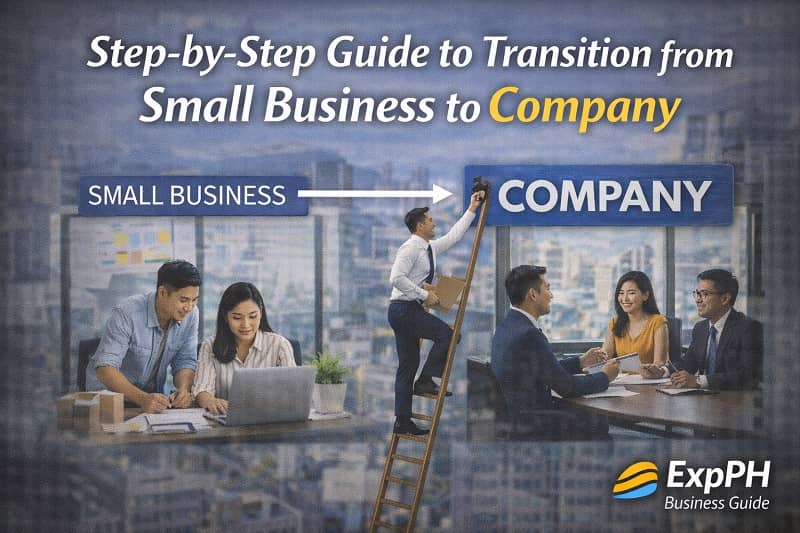
Step-by-Step Guide to Transition from Small Business to Company
This section provides a practical guide for entrepreneurs planning the Transition from Small Business to Company. Following clear steps helps reduce errors, avoid delays, and ensure compliance with Philippine regulations. A structured approach makes the process smoother and prepares your business for growth.
Step 1: Evaluate Your Business Readiness
Start by reviewing your finances, operations, and long term plans. Make sure your business can handle the added responsibilities and costs of becoming a company.
Focus Areas:
- Financial stability
- Operational capacity
- Growth direction
This step ensures your transition supports your goals and does not create unnecessary financial pressure.
Step 2: Choose the Right Company Type
Selecting the correct structure affects control, ownership, and future expansion. Choose based on your business vision and partnership plans.
Options:
- OPC for full control
- Corporation for partners or investors
The right choice provides flexibility and supports your long term business strategy.
Step 3: Register Your Company with SEC
Registering with the Securities and Exchange Commission Philippines makes your business a legal entity. Prepare all required documents before submission.
Requirements:
- Company name reservation
- Articles of Incorporation
- Valid IDs and supporting documents
Completing this step gives your business legal recognition and credibility.
Step 4: Secure BIR Registration
Update your tax records with the Bureau of Internal Revenue Philippines to reflect your new structure. This ensures proper tax compliance and reporting.
Key Actions:
- Update registration details
- Apply for new tax identification if needed
- Register official receipts and books
Accurate registration helps avoid penalties and supports smooth financial management.
Step 5: Transfer Assets and Operations
Move all business related assets and responsibilities to your new company. This ensures continuity and proper ownership under the new structure.
Items to Transfer:
- Bank accounts
- Contracts
- Business permits
- Employees
A complete transfer avoids confusion and ensures all operations are aligned with your company.
Step 6: Update Local Permits
Coordinate with your local government unit to update your business permits and licenses. This keeps your operations compliant with local regulations.
Updates Needed:
- Mayor’s Permit
- Barangay clearance
- Other local licenses
Proper updates ensure your business can operate legally without interruptions or compliance issues.
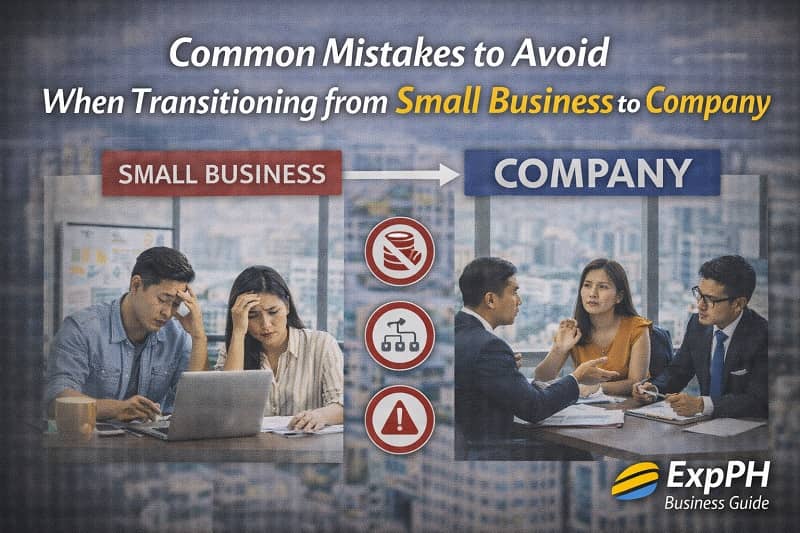
Common Mistakes to Avoid When Transitioning from Small Business to Company
Transitioning is not only about completing paperwork. Many business owners make costly mistakes that can delay progress or create financial problems. Understanding these common errors helps you prepare better and ensures a smoother Transition from Small Business to Company with fewer risks and setbacks.
1. Transitioning Too Early
Moving too soon without stable income can strain your finances. The added costs of registration and compliance may affect your cash flow and daily operations.
Avoid this by ensuring:
- Stable and consistent income
- Clear growth plan
- Sufficient financial reserves
Proper timing helps prevent unnecessary financial pressure.
2. Ignoring Tax Implications
Changing your business structure affects how you are taxed. Failing to plan can lead to unexpected liabilities or penalties.
Avoid this by:
- Reviewing tax obligations
- Consulting a tax professional
- Planning your financial strategy
Proper tax planning ensures compliance and better financial management.
3. Poor Documentation
Incomplete or incorrect documents can delay your registration and approval process. This can waste time and increase costs.
Avoid this by:
- Preparing all required documents
- Double checking details
- Following official requirements
Accurate documentation ensures a smooth and faster registration process.
4. Not Informing Clients and Partners
Failing to inform stakeholders can create confusion and affect business relationships. Transparency is important during the transition.
Avoid this by:
- Notifying clients and partners
- Updating contracts and agreements
- Communicating changes clearly
Clear communication helps maintain trust and ensures continuity of operations.
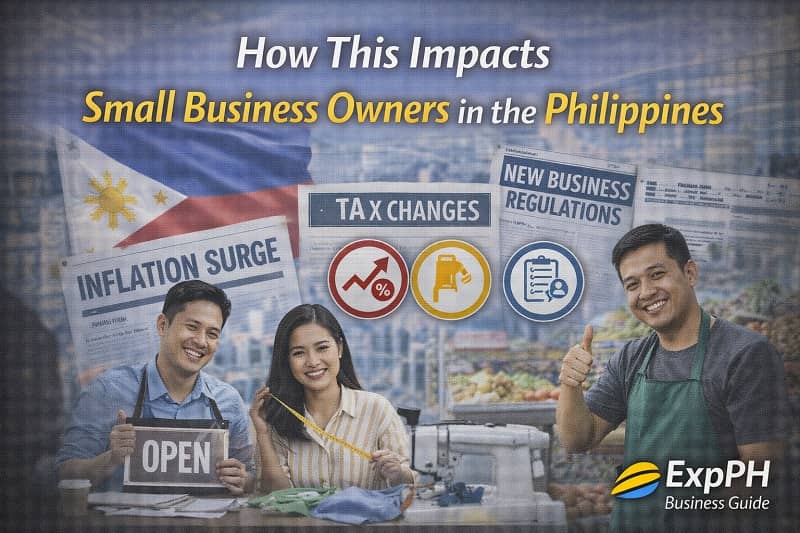
How This Impacts Small Business Owners in the Philippines
For small business owners in the Philippines, this transition plays a key role in long term growth and stability. Moving to a company structure helps improve protection, credibility, and expansion potential as your business becomes more established and competitive.
Benefits include:
- Ability to build a scalable and structured business
- Legal protection for personal assets and investments
- Opportunity to create stable long term income
Many successful entrepreneurs start small, then transition into companies once their business proves sustainable and ready for expansion.

Business Growth After Transition
Once you complete the Transition from Small Business to Company, new opportunities become available. A formal structure improves credibility, supports expansion, and allows better access to resources. This stage focuses on scaling operations, strengthening systems, and positioning your business for long term success.
Growth Strategies
- Expand to new markets or cities
- Apply for business loans or investor funding
- Build a professional team
- Invest in technology and automation
These strategies help your business grow efficiently while improving operations, increasing revenue potential, and maintaining competitiveness in the market.

Technology and Systems to Support Your Company
As your business grows, using the right tools becomes essential for efficiency and control. Proper systems help manage daily operations, reduce errors, and support better decision making. Investing in technology allows your company to operate smoothly and handle increasing demands with confidence.
Recommended Tools
- Accounting software for financial tracking
- Payroll systems for employee management
- CRM tools for customer relationships
- Inventory systems for product businesses
These tools improve accuracy, save time, and streamline operations. With the right systems in place, your business can function like a professional company and sustain long term growth.

Final Thoughts on the Transition from Small Business to Company in the Philippines
The Transition from Small Business to Company is more than a legal requirement. It is a strategic decision that strengthens your business foundation and prepares it for long term growth. By moving to a formal structure, you gain better protection, improved credibility, and the ability to scale operations with greater confidence.
If your business is growing, facing higher risks, or planning to expand, this may be the right time to take action. With proper planning, you can protect your assets, build trust, and unlock new opportunities. Start small, grow wisely, and transition at the right stage to build a strong and sustainable business.
FAQs About the Transition from Small Business to Company in the Philippines
1. When should I transition from a small business to a company in the Philippines?
Transitioning from a small business to a company in the Philippines becomes necessary when growth, risk, and expansion demand stronger legal structure and financial protection.
2. What is the difference between a small business and a company?
A company is a separate legal entity that protects personal assets, while a small business or sole proprietorship does not provide liability separation for owners.
3. What are the main signs that I am ready to transition?
You should transition when your income is stable, risks are increasing, or expansion plans require better structure, allowing your business to operate efficiently and securely.
4. How much does it cost to transition to a company in the Philippines?
The cost of transitioning varies, but small businesses spend between ten thousand and thirty thousand pesos depending on requirements and whether professional assistance is needed.
5. What is the best business structure for transitioning?
The best structure depends on your goals, but entrepreneurs choose a corporation or one person corporation for better protection, credibility, and flexibility for future growth.
6. Do I need to register with the SEC when forming a company?
Yes, registering with the Securities and Exchange Commission is required when forming a corporation, as it gives your business recognition and ensures compliance with regulations.
7. How long does the transition process usually take?
The transition process can take several days to weeks depending on document preparation, approval timelines, and coordination with agencies like SEC, BIR, and local offices.
8. Will my taxes change after transitioning to a company?
Yes, your taxes will change after transitioning because companies follow different tax rules and reporting requirements, requiring planning to avoid penalties and manage obligations effectively.
9. Can I keep my business name when I transition to a company?
You may keep your business name if available and approved during company registration, but you must reserve it again under SEC to ensure legal use.
10. Is transitioning from a small business to a company worth it?
Transitioning is worth it if your business is growing, as it provides protection, improves credibility, and creates opportunities for expansion, funding, and long term stability.
More Business Resources
- Top 8 Proven Ways to Scale a Small Business in the Philippines
- When Should You Hire Your First Employee in the Philippines
Learning Hub Quiz!
Test your understanding of how and when to transition from a small business to a company in the Philippines. This quick quiz will help you review key concepts, signs, and steps involved in making the right move for growth.
Results


#1. When should you transition?
#2. What is a key benefit of a company?
#3. Which structure offers liability protection?
#4. Which agency registers companies?
#5. What indicates readiness to transition?
#6. What is required for funding?
#7. What happens to taxes?
#8. What is needed before SEC registration?
#9. What helps business growth after transition?
#10. Why update local permits?
Thank You for Taking the Quiz!
We appreciate your time and effort. Feel free to share your score or experience in the comments and help others learn from your journey.

A Filipino web developer with a background in Computer Engineering. Founder of ExpPH Blog and ExpPH Business Guide, two Philippines-focused platforms covering OFW guidance, business, finance, freelancing, travel, and lifestyle. Passionate about helping Filipinos grow, he creates practical content that educates, empowers, and inspires readers nationwide.