
Starting a pharmacy business is one of the most reliable and essential ventures you can build in the Philippines. Medicines are a daily need, and communities depend on accessible drugstores for proper healthcare support. If you are planning how to start a pharmacy in the Philippines, this guide will help you understand the steps, legal requirements, costs, and practical strategies needed to build a successful and sustainable pharmacy business.
This article is created for real world use, whether you are an aspiring entrepreneur, an OFW planning to invest in the Philippines, or someone searching for a stable long term business. It focuses on clear guidance, practical decisions, and realistic expectations so you can confidently start, manage, and grow your pharmacy with the right approach.
If you are exploring other opportunities,
check out our guide on Best Profitable Small Business Ideas in the Philippines (Scalable Models 2026) to find profitable and scalable business ideas in the Philippines.
Table of Contents

1. Why Start a Pharmacy Business in the Philippines
The demand for medicines and healthcare products in the Philippines continues to rise as the population grows and more people become health conscious. An increasing number of elderly individuals also drives consistent need for maintenance drugs and basic healthcare products across communities nationwide.
Key Advantages
- Daily demand for essential products
- Repeat customers and consistent cash flow
- Scalable from small drugstore to full pharmacy
- Opportunity to expand into medical supplies and health services
A well-managed pharmacy can provide steady income and long term stability, especially in areas with limited access to healthcare services. With proper planning and reliable supply, it can grow into a trusted and profitable business within the local community.
2. Types of Pharmacy Businesses You Can Start
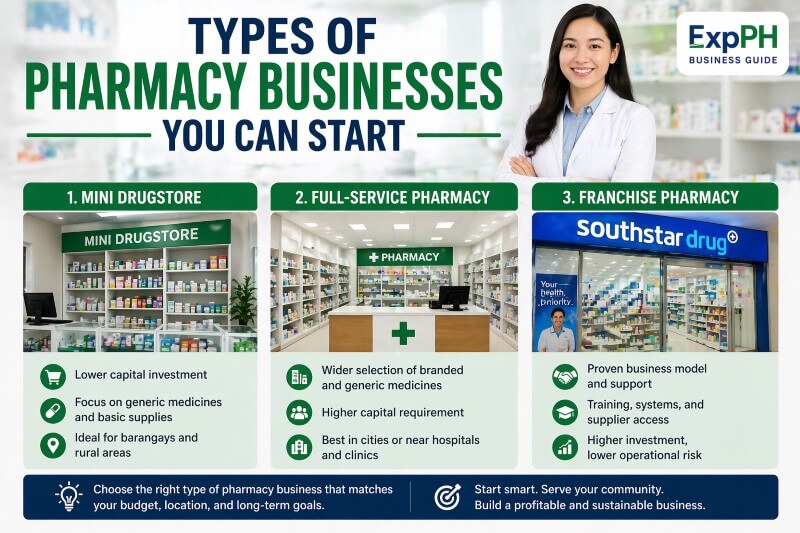
Before learning how to start a pharmacy in the Philippines, it is important to choose the right business model. Your decision will affect your capital, operations, and growth potential. Each type of pharmacy serves different markets, so align your choice with your budget and target customers.
1. Mini Drugstore
A mini drugstore is ideal for beginners who want to start with lower capital and simpler operations. It focuses on fast moving generic medicines and basic healthcare supplies. This setup works best in barangays or rural areas where access to affordable medicine is limited.
- Smaller capital required
- Limited product range (generic medicines and basic supplies)
- Ideal for barangays or rural areas
2. Full-Service Pharmacy
A full-service pharmacy offers a wider selection of branded and generic medicines, along with various health products. It requires higher capital and a more structured system. This type is commonly located in urban areas, especially near hospitals, clinics, or high foot traffic zones.
- Wider selection of branded and generic medicines
- Requires higher capital
- Located in cities or near hospitals
3. Franchise Pharmacy
A franchise pharmacy is a good option for those who prefer guided business operations. Established brands provide systems, training, and supplier networks. While the initial investment is higher, the risk is lower due to brand recognition and operational support from the franchisor.
- Established brands provide support and systems
- Higher initial investment but lower risk
- Includes training and supplier access
3. Legal Requirements to Start a Pharmacy in the Philippines
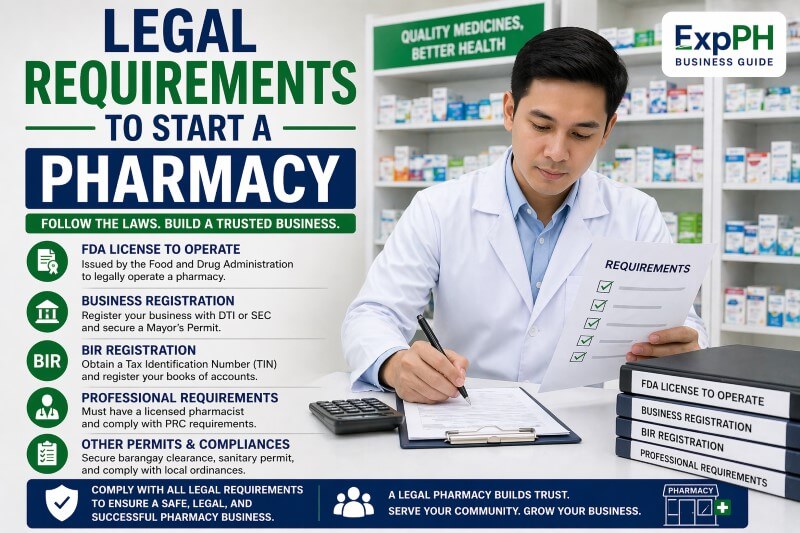
Understanding the legal process is essential when learning how to start a pharmacy in the Philippines. Compliance ensures your business operates safely and avoids penalties. Preparing all permits early helps prevent delays and builds credibility with suppliers, regulators, and customers from the beginning.
1. Register Your Business
You must formally register your business before operating. This step establishes your legal identity and allows you to secure permits, open bank accounts, and issue official receipts. Choose the correct registration type based on your structure and complete all local and national requirements.
- DTI registration (for sole proprietorship) or SEC registration (for corporation)
- Barangay clearance
- Mayor’s permit
- BIR registration
2. FDA License to Operate (LTO)
All pharmacies must secure a License to Operate from the Food and Drug Administration Philippines. This ensures your pharmacy meets safety and quality standards for handling medicines. Without this license, you cannot legally sell pharmaceutical products in the Philippines.
You can apply through their official system here:
https://www.fda.gov.ph
Requirements include:
- Application form
- Business registration documents
- Location plan and layout
- List of products and suppliers
3. Hire a Licensed Pharmacist
Philippine law requires pharmacies to operate under the supervision of a licensed pharmacist. This professional ensures proper dispensing of medicines and compliance with health regulations. Having a qualified pharmacist also builds trust with customers and supports safe and responsible pharmacy operations.
- Must be licensed by the PRC
- Required to be present during operating hours
- Responsible for dispensing regulated medicines
4. Secure Other Permits
Depending on your pharmacy setup and location, additional permits may be required. These ensure your store meets safety, sanitation, and health standards. Completing these requirements protects your business from violations and helps maintain a safe environment for both customers and staff.
- Fire safety inspection certificate
- Sanitary permit
- DOH compliance (for specific products)
4. Capital Requirements for a Pharmacy Business
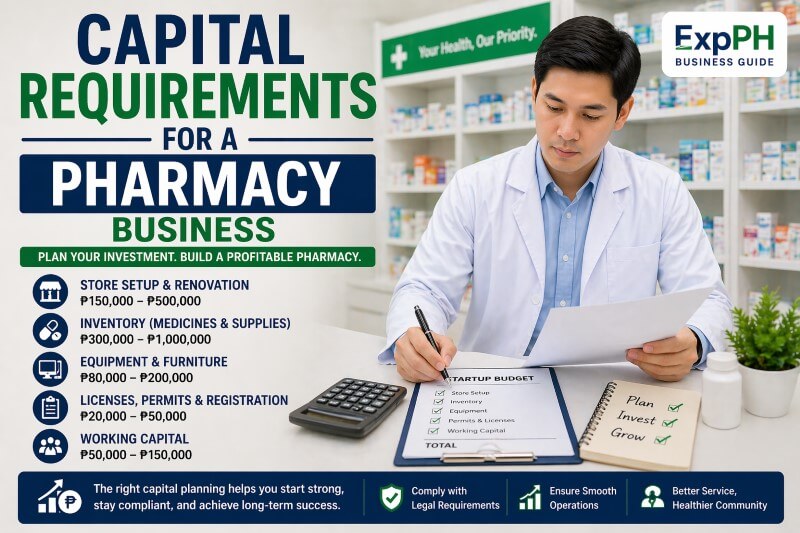
The capital needed to start a pharmacy in the Philippines depends on your store size, location, and product range. A small setup requires less funding, while a full pharmacy demands higher investment for inventory, staffing, and compliance with regulatory standards and operational needs.
Estimated Startup Costs
Mini Drugstore
A mini drugstore is a practical option for beginners with limited capital. It focuses on essential medicines and basic supplies, making it suitable for smaller communities. This setup allows you to start lean while building steady income and expanding gradually over time.
- Capital: ₱300,000 to ₱800,000
Full Pharmacy
A full pharmacy requires a larger investment due to a wider product selection and more structured operations. It is often located in high traffic areas such as cities or near hospitals. This setup offers higher earning potential but involves greater financial commitment.
- Capital: ₱1,000,000 to ₱3,000,000+
Breakdown of Expenses
Starting a pharmacy involves several key expenses that must be carefully planned. Allocating your budget properly ensures smooth operations and avoids financial strain during the early stages of your business. Focus on essential costs that directly support daily operations and compliance.
- Rent and renovation
- Initial inventory of medicines
- Licenses and permits
- Pharmacist salary
- Equipment (shelves, refrigerator, POS system)
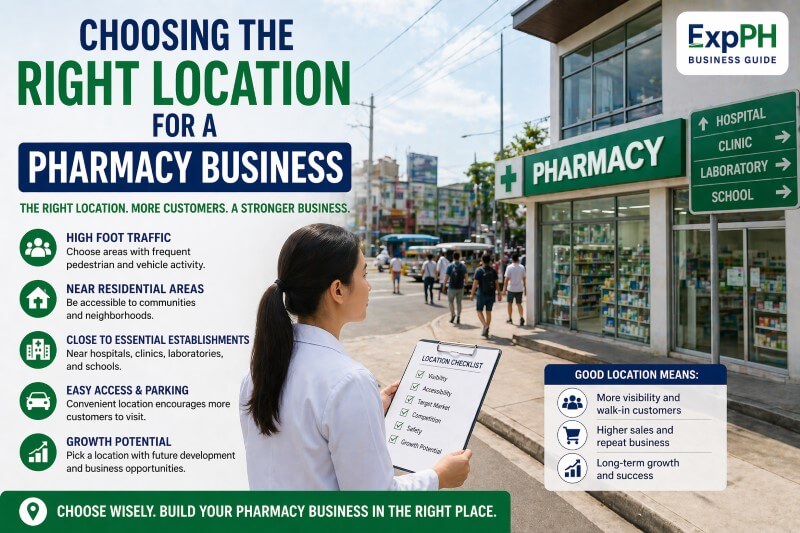
5. Choosing the Right Location for a Pharmacy Business
Location plays a major role in the success of your pharmacy because it directly affects customer access and daily sales. When planning how to start a pharmacy in the Philippines, choosing a strategic area helps ensure steady demand, better visibility, and long term business sustainability.
Best Locations
- Near hospitals or clinics
- Inside residential communities
- Along busy streets or transport hubs
- Areas with limited competition
Practical Tip
Before signing a lease, take time to observe foot traffic, nearby businesses, and customer behavior in the area. Check peak hours and accessibility. A good location should have consistent movement, easy access, and a strong demand for medicines and healthcare products.
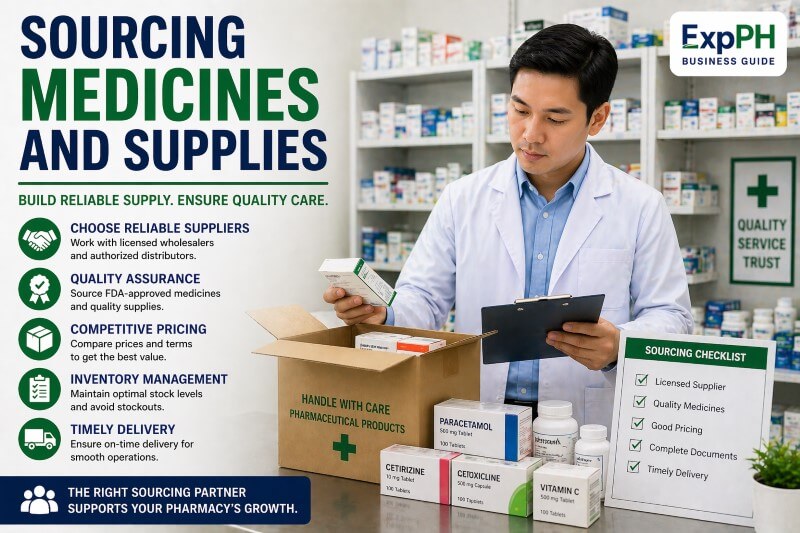
6. Sourcing Medicines and Supplies for a Pharmacy in the Philippines
Reliable suppliers are essential for maintaining product quality, ensuring consistent inventory, and staying compliant with regulations. When planning how to start a pharmacy in the Philippines, choosing trusted sources helps protect your business, build customer confidence, and avoid issues with counterfeit or substandard medicines.
Where to Source
- Licensed pharmaceutical distributors
- Direct from manufacturers
- Pharmacy wholesalers
Important Reminders
- Only buy from suppliers approved by the Food and Drug Administration Philippines
- Keep official receipts and complete documentation for every purchase
- Monitor expiration dates carefully to avoid losses and ensure product safety

7. Setting Up Your Pharmacy in the Philippines
Your pharmacy setup should be clean, well organized, and compliant with health regulations to ensure safe operations. When learning how to start a pharmacy in the Philippines, a proper layout improves efficiency, enhances customer trust, and supports smooth daily transactions and inventory management.
Basic Setup Includes
- Display shelves for over the counter products
- Secure storage for prescription medicines
- Refrigerator for temperature sensitive drugs
- Computerized inventory system
Technology Tip
Using a point of sale system with inventory tracking helps monitor sales, reduce losses, and maintain accurate stock levels. It also improves efficiency, minimizes human error, and allows you to make better business decisions based on real time data and sales performance.
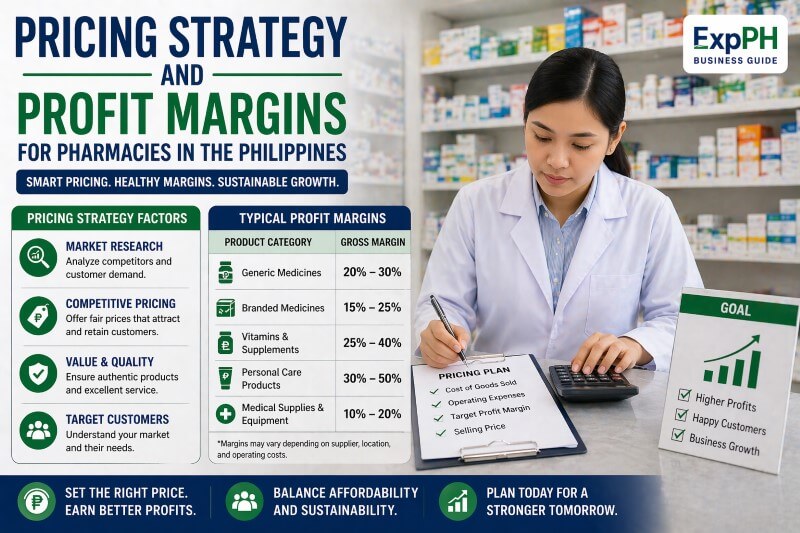
8. Pricing Strategy and Profit Margins for Pharmacies in the Philippines
Pharmacy profit margins are generally moderate but stable, making this business reliable over time. When planning how to start a pharmacy in the Philippines, a clear pricing strategy helps maintain competitiveness while ensuring sustainable profits and steady cash flow for daily operations.
Typical Margins
- Generic medicines: 10% to 30%
- Branded medicines: 5% to 15%
- OTC products: Higher margins
Smart Pricing Tips
- Stay competitive with nearby pharmacies by monitoring local pricing
- Offer affordable generic alternatives to attract budget conscious customers
- Bundle health products when possible to increase sales and customer value
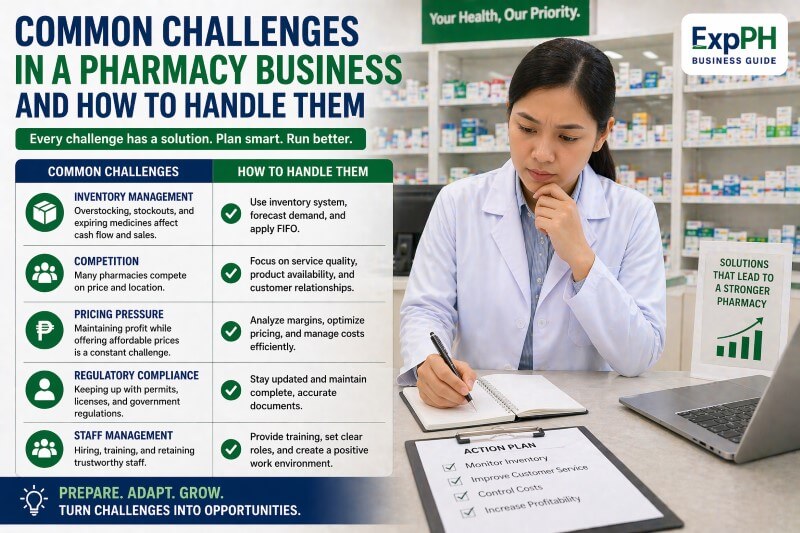
9. Common Challenges in a Pharmacy Business and How to Handle Them
Starting a pharmacy is rewarding but it also comes with operational and financial challenges that require careful planning. When learning how to start a pharmacy in the Philippines, understanding these common issues helps you prepare effective solutions and maintain a stable and compliant business.
1. High Competition
Many pharmacies operate in both urban and rural areas, which increases competition and pricing pressure. To stand out, focus on excellent customer service, consistent product availability, and building trust within your community through reliable and friendly service.
Solution: Focus on customer service and product availability
2. Inventory Management
Managing medicine inventory can be complex due to expiration dates and varying demand. Poor tracking may lead to losses or stock shortages. Implementing a structured system ensures better control and helps maintain the right balance of available products.
Solution: Use digital tracking and reorder systems
3. Regulatory Compliance
Pharmacies must follow strict health and safety regulations to operate legally. Staying compliant requires awareness of updated rules from the Food and Drug Administration Philippines and the Department of Health to avoid penalties or business interruptions.
Solution: Keep updated with FDA and DOH guidelines
4. Cash Flow Issues
Cash flow problems can arise from overstocking or slow moving inventory. Proper budgeting and monitoring of expenses are essential to maintain financial stability. Keeping inventory aligned with demand helps reduce waste and ensures continuous business operations.
Solution: Manage inventory wisely and avoid overstocking

10. Growth Opportunities for Pharmacies in the Philippines
Once your pharmacy becomes stable and consistently profitable, you can start expanding your business to increase revenue and reach more customers. When applying how to start a pharmacy in the Philippines, planning for growth early helps you scale smoothly and stay competitive in a changing healthcare market.
Expansion Ideas
- Add medical supplies and equipment to increase product variety and sales
- Offer basic health services such as blood pressure monitoring to attract more customers
- Open additional branches in nearby communities to expand your market reach
- Create an online ordering system to serve customers who prefer convenience and delivery

Final Thoughts on Starting a Pharmacy in the Philippines
Learning how to start a pharmacy in the Philippines goes beyond simply selling medicines. It involves building a trusted presence that supports the health and well being of your community. With proper planning, full compliance with regulations, and a strong focus on customer needs, your pharmacy can achieve steady profitability while making a meaningful impact on people’s daily lives.
Starting small is a practical approach if you have limited capital, as it allows you to manage risks while gaining experience. Stay consistent with regulatory requirements and prioritize reliable service and product quality. As your operations improve and customer trust grows, your pharmacy can expand into a stable and sustainable business within the Philippine healthcare industry.
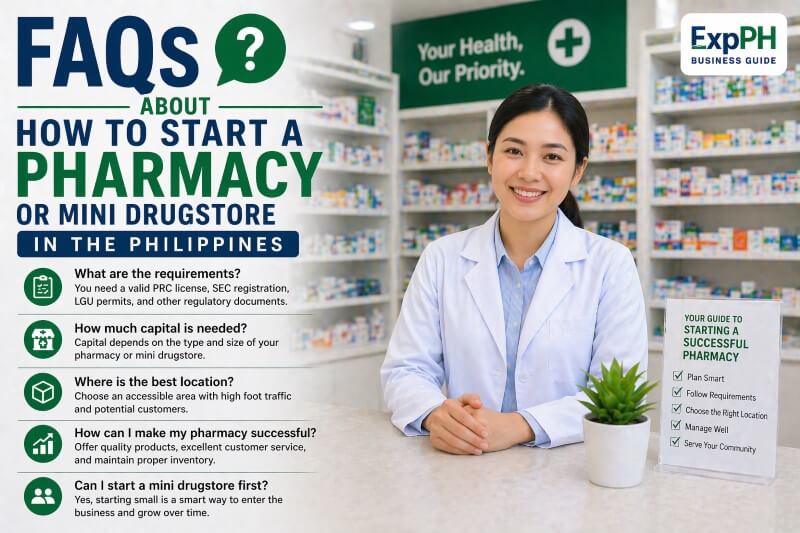
FAQs About How to Start a Pharmacy or Mini Drugstore in the Philippines
1. Do I need a license to start a pharmacy in the Philippines?
Yes, you must secure a License to Operate from the Food and Drug Administration Philippines, along with business permits, to legally operate a pharmacy and sell medicines safely nationwide.
2. How much capital is required to start a mini drugstore?
Starting a mini drugstore in the Philippines usually requires capital between ₱300,000 and ₱800,000, depending on location, inventory size, store setup, and operational expenses.
3. Is a licensed pharmacist required to operate a pharmacy?
Yes, Philippine law requires every pharmacy to have a licensed pharmacist present during operations to ensure proper dispensing of medicines and compliance with health and safety regulations.
4. What are the basic permits needed to start a pharmacy?
You need DTI or SEC registration, barangay clearance, mayor’s permit, BIR registration, and an FDA License to Operate before legally opening your pharmacy business.
5. Can I start a pharmacy business without medical experience?
Yes, you can start a pharmacy without medical experience, but you must hire a licensed pharmacist and understand basic operations, regulations, and inventory management for success.
6. Where is the best location to open a pharmacy?
The best locations include areas near hospitals, clinics, residential communities, or busy streets with high foot traffic and limited competition to ensure consistent customer demand.
7. How do pharmacies earn profit in the Philippines?
Pharmacies earn profit through product markups, especially on generic medicines and over the counter items, while maintaining competitive pricing to attract and retain customers consistently.
8. What products should I sell in a mini drugstore?
A mini drugstore should focus on fast moving generic medicines, basic healthcare supplies, vitamins, and common over the counter products that meet daily community health needs.
9. How do I find reliable medicine suppliers?
You can find reliable suppliers through licensed distributors, manufacturers, and wholesalers approved by the Food and Drug Administration Philippines to ensure product quality and safety compliance.
10. Is a pharmacy business profitable in the Philippines?
Yes, a pharmacy business can be profitable with proper management, good location, reliable supply, and consistent demand, making it a stable long term business opportunity.
Want a complete step by step roadmap?
Check out our Complete Guide to Starting a Business in the Philippines (Registration, Costs, and Steps 2026) for a full breakdown of registration, expenses, and practical steps.
Related Guides:
- How to Start a Beauty Salon or Barbershop in the Philippines
- How to Start a Franchise Business in the Philippines (Costs, Pros, and Risks Explained)
Pharmacy Business Quiz: Start Your Journey in the Philippines
Test your knowledge about how to start a pharmacy or mini drugstore in the Philippines with this quick quiz. It is designed to help you review key steps, requirements, and practical insights before starting your business.
Results


#1. What license is required to operate a pharmacy?
#2. Who must supervise pharmacy operations?
#3. Which registration is for sole proprietors?
#4. What is typical mini drugstore capital?
#5. Where is best pharmacy location?
#6. What system helps inventory tracking?
#7. Which products give higher margins?
#8. What ensures medicine compliance?
#9. What is key competition strategy?
#10. What helps business expansion?
We appreciate your time and effort
Feel free to share your score or experience in the comments and let others learn from your journey.

A Filipino web developer with a background in Computer Engineering. Founder of ExpPH Blog and ExpPH Business Guide, two Philippines-focused platforms covering OFW guidance, business, finance, freelancing, travel, and lifestyle. Passionate about helping Filipinos grow, he creates practical content that educates, empowers, and inspires readers nationwide.