

Starting a rice retail business in the Philippines is a practical and reliable option for aspiring entrepreneurs who want a stable source of income. Rice is a daily necessity for Filipino households, so demand remains consistent throughout the year. This makes it a dependable business even during economic changes. Whether you plan to open a small neighborhood bigasan or expand into a larger distribution setup, this guide provides clear direction to help you understand the process and make informed business decisions.
This article focuses on practical and actionable steps that you can follow with confidence as you start your business. It is designed to help you avoid common mistakes that often lead to losses and frustration. By applying these insights, you can manage your operations more effectively, improve your daily workflow, and build a profitable rice retail business that grows steadily over time through smart planning and consistent effort.
Looking for more scalable opportunities.
Check out Best Profitable Small Business Ideas in the Philippines (Scalable Models 2026) and discover practical ideas with real earning potential and flexible startup costs.
Table of Contents

1. Why a Rice Retail Business is a Good Opportunity
Rice remains a staple food in the Philippines, making a rice retail business a stable and resilient option for aspiring entrepreneurs. Demand stays consistent across all income levels, allowing small business owners to operate even during economic downturns while maintaining steady sales and reliable income over time.
Steady Demand
Filipinos eat rice every day, which creates a consistent and predictable customer base for rice retailers. This daily consumption ensures repeat purchases and steady foot traffic, making it easier to sustain operations compared to seasonal or trend-based businesses that experience fluctuating demand throughout the year.
Low Barrier to Entry
Starting a rice retail business requires relatively low capital compared to other ventures, making it accessible for beginners. Basic equipment, initial inventory, and a small selling space are often enough to begin, allowing entrepreneurs to enter the market without large financial risks or complicated setup requirements.
Flexible Setup
A rice retail business offers flexibility in how you start and operate. You can begin from home to reduce expenses or rent a small commercial space to attract more customers. This adaptability allows you to scale gradually based on your budget, experience, and the demand in your area.
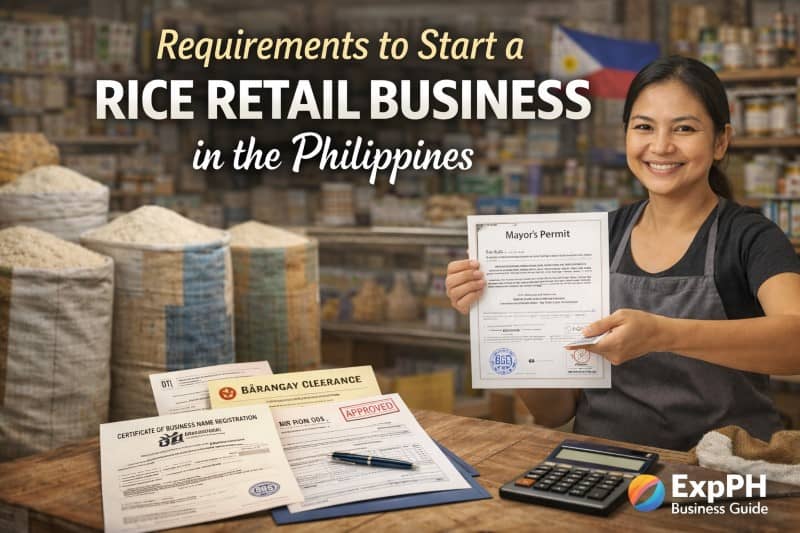
2. Requirements to Start a Rice Retail Business in the Philippines
Before opening your store, you must comply with basic legal and regulatory requirements to operate smoothly and avoid penalties. Securing the proper permits and registrations helps build credibility, ensures compliance with local laws, and protects your business as you begin selling rice in your community.
Business Registration
To legally operate your rice retail business, you need to register with the appropriate government agencies. These registrations confirm your business identity, allow you to issue receipts, and ensure you meet local and national regulations required for small business operations in the Philippines.
- DTI (Department of Trade and Industry) for sole proprietorship
- Barangay Clearance
- Mayor’s Permit from your local government unit
- BIR (Bureau of Internal Revenue) for tax compliance
For official steps and updated guidelines, you can review the DTI registration process here:
https://www.dti.gov.ph/negosyo/registration/
NFA Compliance (If Applicable)
If you plan to sell NFA rice or source from regulated supply chains, you may need to follow specific rules set by the National Food Authority. Compliance ensures that your rice products meet government standards, especially for pricing, sourcing, and distribution within regulated markets.
Sanitary Permit
Since rice is a food product, some local government units require a sanitary permit to ensure proper handling and storage. This includes maintaining cleanliness, preventing contamination, and following food safety practices, which helps protect customers and maintain the quality of your rice products.
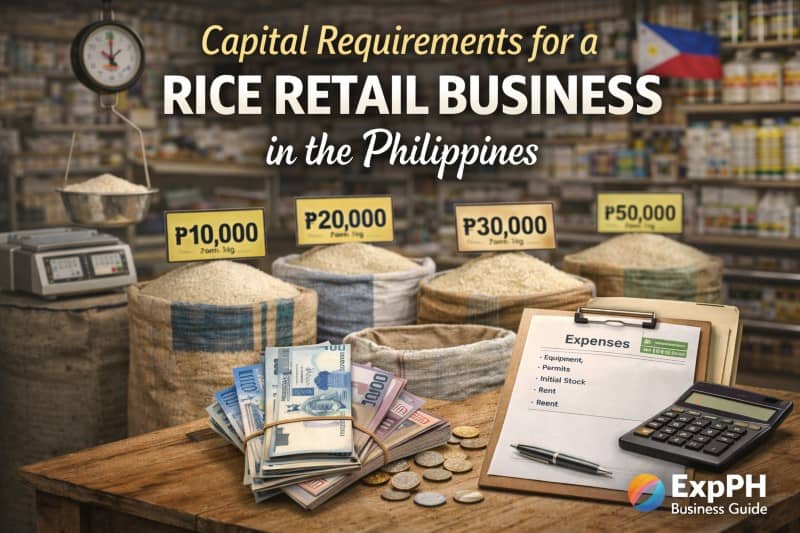
3. Capital Requirements for a Rice Retail Business in the Philippines
The startup cost of a rice retail business in the Philippines depends on your chosen scale and available budget. You can begin with a small setup and expand as profits grow. Careful planning helps you control expenses while ensuring you have enough inventory and equipment to operate efficiently.
Small-Scale Setup (₱20,000 to ₱50,000)
This setup is ideal for beginners who want to test the market with minimal risk and investment. It allows you to operate from home or a small space while building a steady customer base and gaining experience in managing daily sales and inventory.
- 5 to 10 sacks of rice
- Basic weighing scale
- Storage containers
- Simple stall or home-based setup
Medium Setup (₱50,000 to ₱150,000)
A medium setup offers better earning potential and a more professional appearance. It allows you to serve more customers, improve product presentation, and operate from a small rented space, which can help increase visibility and daily sales in your chosen location.
- 20 to 50 sacks of rice
- Branded packaging
- Better weighing system
- Small rented space
Larger Setup (₱150,000 and above)
A larger setup is suitable for entrepreneurs aiming for higher sales volume and long-term growth. It requires more capital but offers greater profit potential through bulk purchasing, wider product selection, and the ability to serve more customers efficiently.
- Bulk inventory
- Delivery capability
- Multiple rice varieties
- Staff and expanded operations
4. Choosing the Right Location for a Rice Retail Business in the Philippines
Location plays a major role in the success of your rice retail business in the Philippines. A well-chosen spot helps you attract steady customers and maintain daily sales. Prioritize areas with consistent demand, good accessibility, and strong visibility to maximize your chances of long-term growth.
Ideal Areas
Choosing the right area increases your chances of consistent sales and repeat customers. Focus on locations where people regularly buy daily essentials. These places naturally generate demand and help your business grow faster through visibility, convenience, and steady foot traffic from nearby residents.
- Residential neighborhoods
- Public markets
- Near sari-sari stores
- High foot traffic areas
What to Look For
When selecting a location, consider factors that directly affect customer convenience and operating costs. A good spot should be easy to find, accessible to buyers, and affordable enough to maintain profitability while allowing your business to operate smoothly on a daily basis.
- Easy access for customers
- Visibility from the road
- Affordable rent

5. Finding Reliable Rice Suppliers
Your supplier plays a key role in the success of your rice retail business in the Philippines. They directly affect your pricing, product quality, and profit margin. Choosing a dependable supplier ensures consistent stock, competitive pricing, and smooth daily operations as your business grows.
Types of Suppliers
Understanding different supplier options helps you choose the best source for your business needs. Each type offers varying prices, supply stability, and product quality. Selecting the right one allows you to balance cost, reliability, and availability based on your target market and budget.
- Local rice traders
- Rice mills
- Wholesale distributors
Tips for Choosing Suppliers
Selecting the right supplier requires careful evaluation and ongoing communication. A good supplier should offer fair pricing, consistent quality, and reliable delivery. Building strong relationships also helps you secure better deals and maintain steady inventory for your daily business operations.
- Compare prices regularly
- Check grain quality
- Build long-term relationships
- Negotiate bulk discounts
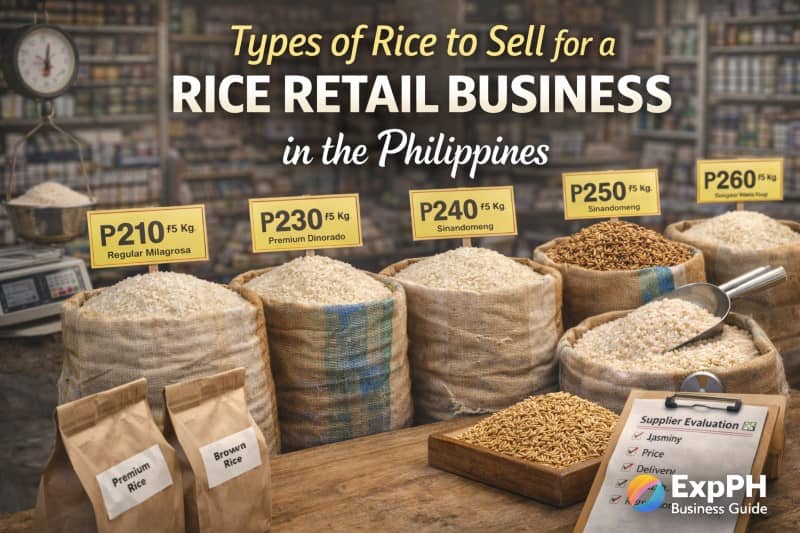
6. Types of Rice to Sell for a Rice Retail Business in the Philippines
Offering different rice varieties helps attract more customers and meet diverse preferences in your area. A balanced selection allows buyers to choose based on budget and taste, which can increase daily sales and customer satisfaction while helping your rice retail business grow steadily over time.
Common Options
Providing popular rice types ensures consistent demand and repeat customers. Each variety appeals to different market segments, from budget-conscious buyers to those who prefer premium quality. Understanding these options helps you stock the right products and adjust your inventory based on local buying behavior.
- Regular milled rice
- Well-milled rice
- Premium or jasmine rice
- Brown rice
Strategy Tip
Start with two to three of the most in-demand rice types in your area to minimize risk and control costs. As your customer base grows and preferences become clearer, gradually expand your offerings to increase sales and better serve a wider range of buyers.
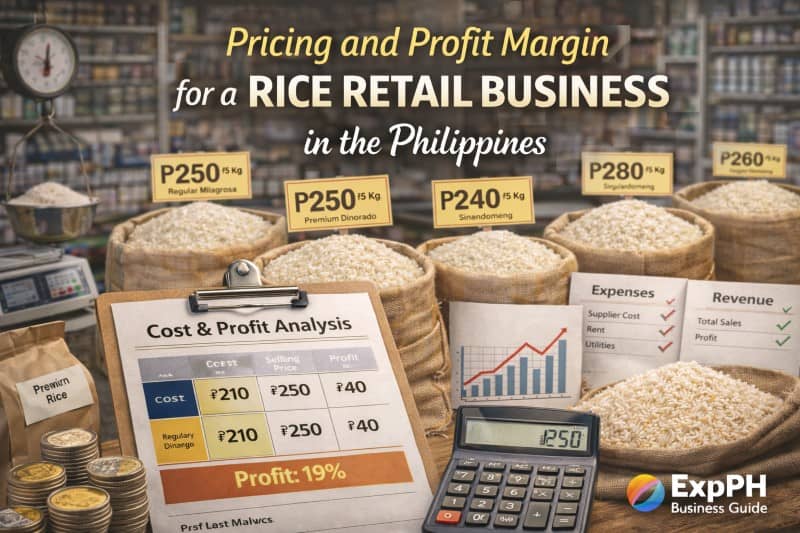
7. Pricing and Profit Margin for a Rice Retail Business in the Philippines
Profit margins in a rice retail business in the Philippines are usually small per kilo, but steady demand and high sales volume create reliable income. Success depends on consistent daily transactions, proper pricing, and efficient operations rather than relying on large markups per item.
Typical Markup
Most rice retailers apply a markup of around ₱2 to ₱5 per kilo depending on location, competition, and supplier pricing. Setting a competitive price helps attract customers while maintaining profit, allowing your business to stay sustainable and grow through regular and consistent sales.
- ₱2 to ₱5 per kilo depending on location and competition
Example
A simple computation helps you understand how profits grow through volume. Even a small markup can generate steady income when sales are consistent and frequent, making this business reliable for long-term earnings if managed properly.
- Selling 1 sack (50 kg) with a ₱3 markup
- ₱150 profit per sack
- Multiply by daily sales to increase total income
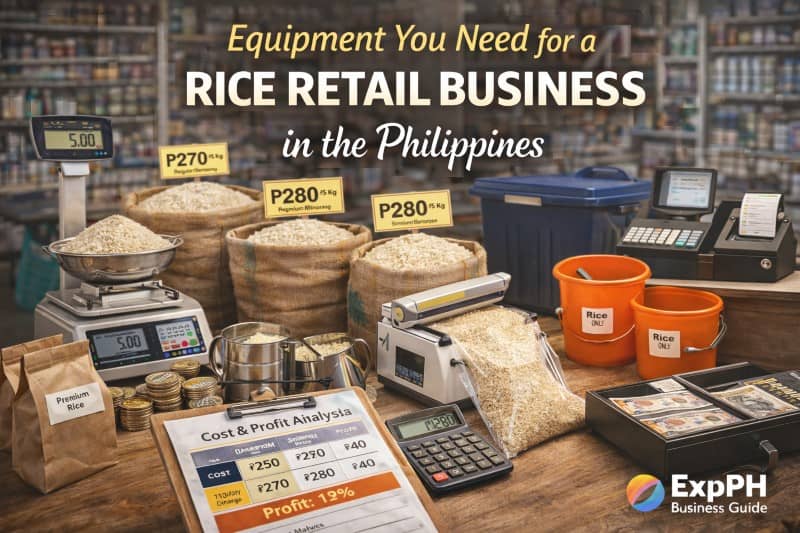
8. Equipment You Need for a Rice Retail Business in the Philippines
Keeping your setup simple but efficient helps you manage daily operations without unnecessary costs. Focus on essential tools that support accurate measurement, proper storage, and smooth customer service. A well-organized setup improves workflow, maintains product quality, and creates a better experience for your buyers.
Basic Equipment
Using the right basic equipment ensures accurate selling, proper storage, and efficient handling of rice. These tools help maintain cleanliness, prevent contamination, and support daily operations. Investing in reliable equipment from the start makes your business easier to manage and builds customer trust.
- Weighing scale
- Rice containers or bins
- Scoops
- Packaging materials
- Storage area (dry and pest-free)
9. Daily Operations and Management for a Rice Retail Business in the Philippines
Running a rice retail business requires consistency, discipline, and attention to detail. Daily routines help maintain product quality, prevent losses, and ensure smooth operations. By managing inventory, serving customers well, and tracking finances, you build a stable system that supports long-term growth and profitability.
Inventory Management
Effective inventory management helps you avoid shortages and prevent spoilage. Monitoring stock regularly ensures you always have enough supply while keeping product quality intact. Proper handling and rotation of rice also protect your business from losses and maintain customer satisfaction.
- Monitor stock daily
- Avoid overstocking to prevent spoilage
- Rotate older stock first
Customer Service
Good customer service builds trust and encourages repeat purchases. Being approachable and consistent in your service helps create a positive buying experience. Cleanliness and accuracy also show professionalism, which can set your business apart from competitors in your area.
- Be friendly and approachable
- Offer accurate measurements
- Maintain cleanliness
Record Keeping
Keeping accurate records allows you to understand your financial performance and make better decisions. Tracking daily transactions helps you monitor profit, control expenses, and identify areas for improvement. This habit is essential for maintaining a healthy and sustainable business.
- Track daily sales
- Track expenses
- Track supplier costs
This helps you understand your profit and improve business decisions over time.
10. Common Mistakes to Avoid When Starting a Rice Retail Business
Many beginners lose money due to simple and avoidable mistakes when starting a rice retail business. Understanding these common errors helps you protect your investment, improve daily operations, and build a stable business that can grow steadily with consistent sales and better decision making.
Poor Location Choice
Choosing a location with low foot traffic can limit your sales even if your prices are competitive. A poor location reduces visibility and customer access, making it harder to attract buyers. Selecting the right area is essential for maintaining steady demand and daily income.
Wrong Pricing Strategy
Setting prices too high can drive customers away, while pricing too low can reduce your profit and sustainability. Finding the right balance helps you stay competitive while earning consistently. Proper pricing ensures your business can grow without sacrificing customer trust or financial stability.
Lack of Supplier Backup
Relying on a single supplier can put your business at risk if supply becomes limited or prices increase. Having at least one alternative supplier ensures you maintain steady inventory, avoid disruptions, and continue serving customers without delays or unexpected shortages.
Ignoring Cleanliness
Proper storage and cleanliness are important to maintain rice quality and customer trust. Poor handling can lead to contamination, spoilage, or pest issues. Keeping your storage area clean and organized helps protect your products and ensures customers feel confident buying from your store.

11. Simple Growth Strategies for a Rice Retail Business
Once your rice retail business is stable, you can begin expanding to increase income and reach more customers. Growth can come from simple improvements in service, product offerings, and customer relationships, helping you build a stronger and more profitable business over time.
Add Delivery Service
Offering delivery within your barangay makes your business more convenient and accessible to customers who cannot visit your store. This service can increase daily sales, attract more buyers, and give you a competitive advantage, especially in areas where convenience is highly valued.
- Offer rice delivery within your barangay
- Provide flexible delivery schedules
- Accept orders through phone or messaging
Sell Related Products
Adding related products helps increase your average sale per customer and improves overall revenue. Customers prefer buying multiple essentials in one place, so offering complementary items makes your store more convenient while supporting steady business growth.
- Cooking oil
- Sugar
- Eggs
Build Customer Loyalty
Building customer loyalty ensures repeat purchases and consistent income. Maintaining good relationships and reliable product quality encourages customers to return regularly, helping your business grow through trust and positive word of mouth within your local community.
- Offer small discounts to regular buyers
- Maintain consistent quality
- Provide friendly and reliable service

12. Financial Tips for Long-Term Success
A rice retail business may appear simple, but strong financial management is essential for long-term success. Managing your money carefully helps you maintain steady operations, avoid losses, and grow your business over time while ensuring that your daily efforts translate into consistent and sustainable income.
Separate Personal and Business Funds
Keeping personal and business finances separate helps you clearly track your income and expenses. This practice prevents confusion, improves financial discipline, and allows you to see the true performance of your business, making it easier to manage cash and plan for future growth.
Reinvest Profits
Reinvesting your earnings allows your business to grow steadily and remain competitive. Instead of spending all profits, allocate a portion to increase inventory, improve equipment, or expand your operations, helping you boost sales and strengthen your overall business performance over time.
Track Cash Flow
Tracking your cash flow daily helps you understand how money moves in and out of your business. This habit allows you to monitor expenses, identify problems early, and make better financial decisions, ensuring your business remains stable and continues to grow consistently.

13. Is a Rice Retail Business Profitable?
A rice retail business in the Philippines can be profitable when managed properly with consistent operations and smart decision making. While profit per kilo is small, steady demand and regular sales create reliable income, making it a practical business for long-term stability and gradual growth.
Key Factors for Success
Profitability depends on several important factors that influence your daily performance and long-term results. Focusing on these areas helps you maintain steady sales, control costs, and improve efficiency, allowing your business to grow while staying competitive in your local market.
- Location
- Supplier pricing
- Daily sales volume
- Good management
Long-Term Outlook
This business is not a quick way to earn large profits, but it offers stable income when managed well. With patience, consistent effort, and proper planning, a rice retail business can provide financial security and long-term sustainability for small business owners.
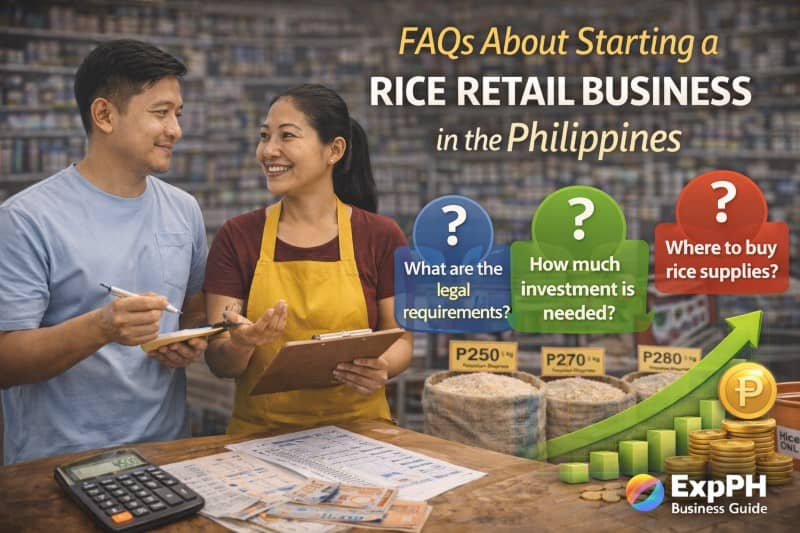
14. FAQs About Starting a Rice Retail Business in the Philippines
What is a rice retail business in the Philippines?
A rice retail business involves buying rice in bulk from suppliers and selling it in smaller quantities to consumers through a store or local stall.
How much capital is needed to start a rice retail business?
Starting capital can range from ₱20,000 to ₱150,000 depending on scale, inventory size, location, and equipment needed for daily operations and storage.
What permits are required to start a rice retail business?
You need DTI registration, barangay clearance, mayor’s permit, and BIR registration to operate legally and comply with local business and tax regulations.
Where is the best location for a rice retail store?
Ideal locations include residential areas, public markets, and high foot traffic zones where customers regularly purchase daily essentials like rice and other household goods.
How do I find reliable rice suppliers?
You can source from rice mills, wholesalers, or traders, then compare prices, check quality, and build relationships to ensure consistent supply and better purchasing terms.
What types of rice should I sell?
Start with common options like regular, well-milled, and premium rice, then expand based on customer demand and preferences in your specific location or target market.
How much profit can a rice retail business make?
Profit usually ranges from ₱2 to ₱5 per kilo, and total earnings depend on daily sales volume, pricing strategy, and how efficiently you manage operations.
Is a rice retail business profitable in the Philippines?
Yes, it can be profitable due to steady demand, but success depends on location, pricing, supplier costs, and consistent daily sales and business management practices.
What are common mistakes to avoid in this business?
Avoid poor location, wrong pricing, unreliable suppliers, and poor storage practices, as these can reduce sales, increase costs, and affect product quality and customer trust.
How can I grow my rice retail business over time?
You can grow by adding delivery services, offering related products, improving customer service, and reinvesting profits to expand inventory and enhance daily operations gradually.
Final Thoughts on Starting a Rice Retail Business in the Philippines
Starting a rice retail business in the Philippines is a practical and reliable opportunity for aspiring entrepreneurs who want a stable source of income. Rice is a daily necessity, which means demand remains consistent across communities. With proper planning, strong supplier relationships, and disciplined daily operations, you can build a dependable business that supports your financial goals and provides long-term security for you and your family.
To succeed, focus on maintaining product quality, earning customer trust, and managing your finances carefully. These core principles help you retain loyal buyers and improve your overall operations. As your experience grows, you can expand your offerings and increase your income. With patience and consistent effort, your small bigasan can develop into a strong and profitable business over time.
Ready to take the next step?
Explore our full guide: Complete Guide to Starting a Business in the Philippines (Registration, Costs, and Steps 2026) for a clear walkthrough of permits, costs, and step by step processes to launch your business successfully.
Related Guides:
- How to Start a Hardware Store in the Philippines
- How to Start a Logistics or Delivery Business in the Philippines
Rice Retail Business in the Philippines Quiz
Test your knowledge about starting a rice retail business in the Philippines. This quick quiz will help reinforce key ideas and practical steps discussed in the guide, from setup to daily operations.
Results


#1. What is a rice retail business?
#2. What is a key advantage?
#3. Which permit is required?
#4. Ideal business location?
#5. Common rice supplier?
#6. Typical markup per kilo?
#7. Basic equipment needed?
#8. What improves daily operations?
#9. Growth strategy example?
#10. Key to profitability?
Thank you for completing the quiz
Share your score or experience in the comments and let others know how you did. Your journey to building a successful business starts with learning and taking action.

A Filipino web developer with a background in Computer Engineering. Founder of ExpPH Blog and ExpPH Business Guide, two Philippines-focused platforms covering OFW guidance, business, finance, freelancing, travel, and lifestyle. Passionate about helping Filipinos grow, he creates practical content that educates, empowers, and inspires readers nationwide.