

When researching Online Business Startup Costs Philippines, many aspiring entrepreneurs believe they need huge capital before launching. But the reality is different. With proper planning, smart tools, and a low-budget strategy, you can start small and grow your income over time.
The good news is that starting a digital business is much cheaper today compared to traditional physical stores. You don’t need to rent commercial space, hire a big team, or invest heavily in expensive equipment right away.
Whether you want to sell products on Instagram, offer freelance services, or launch a Shopee store, understanding the real costs can help you avoid unnecessary expenses and make smarter financial decisions.
While you’re planning your budget, don’t forget about your permits!
If you want to know exactly how to make your shop legal and official, check out our full step-by-step guide: How to Register an Online Business in the Philippines (BIR + DTI Guide).
Table of Contents
Quick Summary (TL;DR)
- You can start an online business in the Philippines with as little as ₱2,000 to ₱20,000 depending on your niche.
- Social media businesses (like selling ukay-ukay or baked goods) have the lowest startup costs.
- E-commerce stores require a bit more budget for inventory, bubble wrap, and shipping pouches.
- A website is optional at first, but highly recommended later for credibility.
- Registering your business (DTI, BIR) adds legitimacy and lets you open corporate bank accounts.
- Free digital tools (like Canva and Meta Business Suite) can significantly reduce your early expenses.
- Careful budgeting is much more important than having massive capital.
Is an Online Business Worth Starting Today?
Absolutely. For many Filipinos, an online business remains one of the most practical ways to build an income stream. The digital economy is only getting bigger. However, success takes patience. The most successful low-budget businesses are the ones that grow steadily through smart budgeting and excellent customer service.

Why Online Businesses Are Growing in the Philippines
The Philippines continues to see massive growth in internet access, online shopping, and digital payments like GCash and Maya. These changes make it incredibly easy for small business owners to connect with customers nationwide.
Many Filipinos now prefer buying online because of the convenience, regular mega-sales (like 11.11), and wider product choices. At the same time, digital platforms allow you to start with minimal financial risk.
Popular online business models in the Philippines include:
- Online selling through Facebook Live or TikTok Shop
- Shopee and Lazada storefronts
- Freelancing services (via Upwork or OnlineJobs.ph)
- Print-on-demand businesses
- Affiliate marketing
- Content creation and vlogging
- Home-based food delivery (selling via GrabFood or Foodpanda)
The low barrier to entry makes online entrepreneurship perfect for students, OFWs, corporate employees looking for a side hustle, and stay-at-home parents.
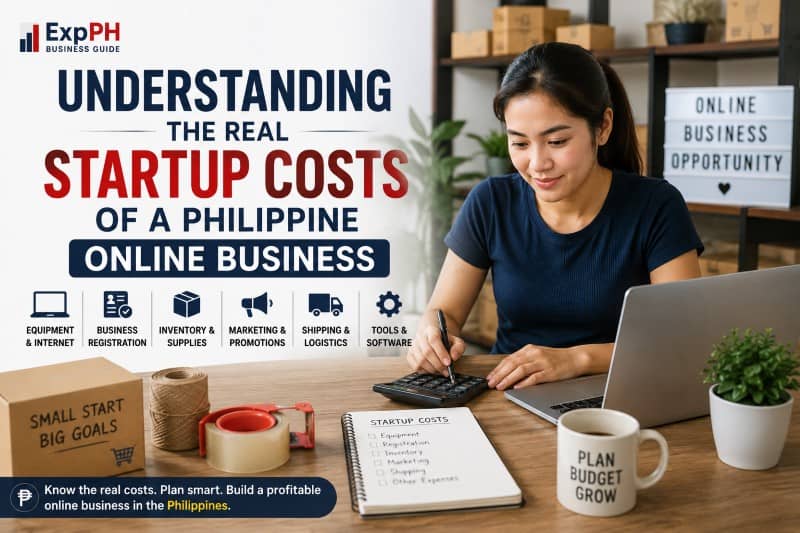
Understanding the Real Startup Costs of a Philippine Online Business
The startup cost of an online business in the Philippines depends entirely on what you plan to do. Some models require physical inventory and packaging, while others just need a good internet connection and a laptop.
Below is a realistic breakdown of common startup expenses.
Basic Equipment and Internet Costs
Before launching, you need reliable tools to communicate with customers and process orders.
Smartphone or Laptop A decent smartphone is usually enough for beginners selling through social media. However, a laptop becomes essential when you need to track inventory on Excel, design graphics, or handle customer support efficiently.
Estimated cost:
- Existing smartphone: ₱0 additional cost
- Budget smartphone upgrade: ₱5,000 to ₱10,000
- Entry-level laptop: ₱15,000 to ₱30,000
Internet Connection Stable internet is your lifeline. You can’t afford to drop out during a Facebook Live selling session.
Estimated monthly cost:
- Mobile data promos: ₱300 to ₱1,000
- Home fiber internet (PLDT, Globe, Converge): ₱1,299 to ₱2,500
Business Registration Costs in the Philippines
Many online sellers start without formal registration to save money. However, registering your business provides huge long-term advantages. It builds customer trust, lets you apply for business loans, and allows you to partner with larger suppliers.
DTI Registration Sole proprietors can easily register online through the DTI Business Name Registration System.
Estimated cost:
- Barangay level: ₱200
- City or municipal level: ₱500
- Regional or national scope: ₱1,000 to ₱2,000
Barangay Clearance and Mayor’s Permit Requirements vary depending on your local LGU.
Estimated cost:
- Barangay clearance: ₱300 to ₱1,000
- Mayor’s permit: ₱2,000 to ₱10,000 (depending on your city and business scale)
BIR Registration To stay compliant and issue official receipts, you need to register with the Bureau of Internal Revenue (BIR).
Possible costs include:
- Registration fee (Update: BIR recently removed the ₱500 annual registration fee, but check current local guidelines)
- Books of accounts and printing of official receipts
- Estimated total: Around ₱1,500 to ₱5,000
Startup Costs for Different Types of Online Businesses
Social Media Selling Business This is the cheapest way to start. Think Instagram thrift stores (ukay-ukay) or Facebook marketplace sellers.
Typical Expenses:
- Initial inventory (e.g., sourcing from Divisoria or Taytay): ₱1,000 to ₱10,000
- Packaging materials: ₱500 to ₱2,000
- Mobile data: ₱500 to ₱1,500
- Optional boosted ads: ₱500 to ₱3,000
- Estimated startup cost: ₱2,000 to ₱15,000
Shopee or Lazada Online Store These platforms give you built-in traffic, but the competition is fierce.
Typical Expenses:
- Product inventory: ₱3,000 to ₱20,000
- Packaging (waybills, bubble wrap in bulk): ₱1,000 to ₱3,000
- Thermal printer (optional but helpful): ₱1,500 to ₱3,000
- Marketplace ads: ₱1,000 to ₱5,000
- Estimated startup cost: ₱5,000 to ₱30,000
Freelancing or Service-Based Business Freelancing has the lowest overhead because you are selling your skills, not physical items.
Typical Expenses:
- Laptop or computer
- Internet connection
- Optional software (like Adobe Creative Cloud or Canva Pro)
- Estimated startup cost: ₱2,000 to ₱10,000 (assuming you already own a computer)
Website and Domain Costs
While you can survive on social media, owning your own website gives you total control over your brand.
- Domain Name (.com or .ph): ₱500 to ₱1,000 per year
- Web Hosting: ₱1,500 to ₱5,000 yearly
- Website Design: Free (if you DIY with WordPress) up to ₱10,000+ for premium themes or hiring a developer.
Marketing Budget for Beginners
Even the best products won’t sell if no one knows they exist.
Free Marketing Methods If you have more time than money, focus on organic growth:
- Posting consistently on TikTok
- Engaging in local Facebook groups
- Asking friends and family for referrals
Paid Advertising Costs If you want faster results, you can run ads.
- Facebook Ads: Start with ₱100 to ₱500 daily to test the waters.
- TikTok Ads: Usually requires a slightly higher minimum budget.
Hidden Costs Many Beginners Forget
Don’t let these sneaky expenses eat into your profit margins:
- RTS (Return to Sender) Packages: When a buyer refuses a Cash-on-Delivery (COD) order, you absorb the shipping loss.
- Transaction Fees: Shopee, Lazada, and even some payment gateways take a percentage of your sales.
- Packaging Replacements: Bubble wrap and tape run out faster than you think.
- Software Subscriptions: Upgrading to Canva Pro or paying for an email marketing tool.

How to Start an Online Business on a Very Small Budget
Starting an online business doesn’t require a massive bank loan. Many successful Filipino entrepreneurs started in their bedrooms with just a few thousand pesos.
- Start With One Product or Service: Don’t buy massive inventory right away. Test the waters to see what people actually want to buy.
- Use Free Digital Tools: Take advantage of free versions of Canva, Google Workspace, and Trello.
- Reinvest Early Profits: Instead of spending your first earnings, use them to buy better packaging, upgrade your internet, or run more ads.
- Focus on Customer Trust: A happy customer will recommend you to their friends, giving you free marketing.
FAQs: Online Business Startup Costs Philippines
How much money is needed to start an online business in the Philippines?
You can easily start a small online business using social media and basic inventory for around ₱2,000 to ₱5,000.
Is business registration necessary right away?
While many start informally to test the waters, registering with the DTI and BIR is highly recommended once you start making consistent sales. It builds trust and keeps you legally compliant.
What is the cheapest online business to start?
Freelancing (like virtual assistance or graphic design) and dropshipping are among the cheapest because you don’t need to buy physical inventory upfront.
Do I need a website?
Not immediately. You can start on Facebook, Instagram, or TikTok. However, a website is a great investment later on to build a professional brand.
What hidden costs should I expect?
Watch out for platform transaction fees, the cost of returned COD packages, shipping materials, and monthly software subscriptions.
What payment methods should I offer?
GCash and Maya are absolute must-haves. Bank transfers (BDO, BPI, UnionBank) and Cash on Delivery (COD) via couriers like J&T Express or LBC are also highly expected by Filipino buyers.
Final Thoughts on Budgeting for Your Online Business
The actual startup cost for an online business in the Philippines comes down to your specific niche and growth plans. You can launch a freelance gig for almost nothing, or you can invest ₱20,000 into a fully stocked Shopee store.
At the end of the day, building a successful business isn’t about having the most capital. It’s about creating sustainable systems, understanding your local market, and managing your expenses carefully.
Now that you have a clear idea of your startup costs, it’s time to take the next step!
Master your money: Learn how to manage your cash flow, taxes, and profits in our Business Finances in the Philippines (Complete Guide).
Launch your business: Ready for the ultimate A-to-Z roadmap? Bookmark our master resource: Complete Guide to Starting a Business in the Philippines (Registration, Costs, and Steps 2026).
Quiz: How Much Does It Really Cost to Start an Online Business?
Think you need a huge budget to launch your online business?
Think again! Take this quick quiz to test your knowledge on real startup costs, business registration, and smart budgeting tips for Filipino entrepreneurs. Let’s see how ready you are to launch!
Results


#1. What is one advantage of online businesses?
#2. Which platform is popular for online selling?
#3. What is essential for online businesses?
#4. Which registration helps sole proprietors?
#5. What is a low-cost business model?
#6. Which tool helps beginners design content?
#7. Why do businesses use websites?
#8. What is a hidden business expense?
#9. What should beginners avoid first?
#10. What helps businesses grow steadily?
Thanks for taking the quiz!
Drop your score in the comments below—we’d love to see how you did, and it might just inspire another future entrepreneur to get started!

A Filipino web developer with a background in Computer Engineering. Founder of ExpPH Blog and ExpPH Business Guide, two Philippines-focused platforms covering OFW guidance, business, finance, freelancing, travel, and lifestyle. Passionate about helping Filipinos grow, he creates practical content that educates, empowers, and inspires readers nationwide.