

Starting a business does not always require a large amount of money. In the Philippines, many aspiring entrepreneurs begin with limited savings, a small home-based operation, or a simple service that addresses everyday needs. What matters most is choosing a business that matches your available capital, skills, location, and target customers.
For Filipinos who want to earn additional income, become self-employed, or eventually build a full-time business, exploring affordable opportunities is a practical first step. From online selling and food businesses to digital services and neighborhood-based enterprises, there are several ways to start small and gradually develop a sustainable source of income.
However, having limited startup capital also means making careful decisions. You need to understand the actual costs, identify potential customers, calculate your expenses, and avoid investing money you cannot afford to lose. A business that works well in one community may not be equally successful in another.
This guide explores Low-Capital Businesses in the Philippines, including 15 affordable business opportunities, their potential customers, estimated starting budgets, basic requirements, and practical considerations. Whether you are a student, employee, parent, freelancer, or aspiring entrepreneur, these ideas can help you identify an opportunity that fits your situation.
Planning to start your own business in the Philippines? Explore our Complete Guide to Starting a Business in the Philippines for practical advice on business planning, registration requirements, budgeting, and the essential steps to turn your business idea into a successful venture.
Quick Summary (TL;DR)
Starting a small business in the Philippines does not always require substantial capital. Choosing the right opportunity begins with understanding your budget, skills, and customer demand. Whether you are considering online selling, food businesses, retail, or digital services, selecting an idea that matches your resources can help you build a sustainable business.
- Assess your budget: Choose a business you can afford to start and operate without putting your finances at risk.
- Identify your skills: Consider your experience, interests, and strengths when choosing a business idea.
- Research market demand: Study your target customers, competitors, and local buying habits before investing.
- Explore practical business ideas: Consider online selling, food services, sari-sari stores, laundry services, or digital freelancing based on your market.
- Choose the right location: Evaluate accessibility, competition, customer traffic, and operating costs if you need a physical business location.
- Calculate startup costs: Include inventory, equipment, permits, utilities, packaging, and working capital.
- Start small and test your idea: Validate customer demand before investing heavily or expanding your operations.
- Plan for profitability: Estimate your selling prices, operating expenses, and potential earnings to determine whether your business is financially sustainable.
- Prepare for registration: Understand applicable DTI or SEC registration, local permits, and BIR requirements for your chosen business structure.
- Think about long-term growth: Choose a business model you can manage today and potentially expand as customer demand increases.
Key takeaway: The best low-capital business is not necessarily the trendiest or the one promising the highest earnings. It is one that matches your budget and abilities, meets genuine customer needs, and offers realistic opportunities for sustainable growth.
Ready to start your business? Explore these 15 low-capital business ideas and choose an opportunity that matches your skills, available capital, and local market demand!
Table of Contents
Understanding Low-Capital Businesses in the Philippines
A low-capital business is an enterprise that can begin with a relatively small amount of money compared with businesses requiring commercial property, expensive equipment, large inventories, or multiple employees.
In the Philippines, low-capital businesses are attractive to people who want to explore entrepreneurship without immediately making a significant financial commitment.
These businesses often operate from home, online platforms, small community spaces, or through direct services offered to customers.
What Makes a Business Low-Capital?
A business can be considered low-capital when its initial requirements are manageable and its operations do not depend on expensive infrastructure.
Common characteristics include:
- Affordable equipment and supplies.
- Small initial inventory.
- Limited rental or operating expenses.
- Flexible working arrangements.
- Opportunities to operate from home.
- Ability to start independently.
- Possibility of accepting orders before purchasing additional supplies.
For example, someone who enjoys cooking might start selling packed meals to nearby employees rather than immediately opening a restaurant.
Similarly, someone with graphic design skills could offer digital services using an existing computer instead of purchasing expensive commercial equipment.
Why More Filipinos Are Exploring Small Businesses
Entrepreneurship offers an alternative way to earn income, particularly for people who want greater control over their working arrangements.
Some Filipinos start businesses to supplement their salaries, while others want to establish an independent source of income for their families.
Small businesses can also serve local needs. Neighborhood communities regularly require affordable food, laundry services, printing, household products, repair services, and other everyday essentials.
The opportunity is not simply about finding a business with a low starting cost. It is about identifying something people are willing and able to purchase repeatedly.
15 Low-Capital Businesses in the Philippines
The following business ideas cover different budgets, skills, and customer markets. The estimated startup amounts are planning examples, not guaranteed costs or profit forecasts. Actual expenses depend on your location, suppliers, equipment, and operating setup.

1. Online Selling and Product Reselling
Estimated starting capital: ₱2,000 to ₱10,000
Online selling allows aspiring entrepreneurs in the Philippines to start a business without renting a physical store. By using platforms such as Facebook Marketplace, TikTok Shop, and Shopee, you can reach potential customers, showcase products, and manage orders from home.
Products you can sell:
- Clothing, bags, and accessories.
- Beauty and personal care products from legitimate suppliers.
- Household essentials.
- Kitchen accessories.
- School and office supplies.
- Phone accessories.
- Locally made products.
How to get started:
Begin with a small selection of products that people in your target market regularly purchase. Compare supplier prices, delivery costs, platform fees, and potential selling prices before accepting orders.
You can also consider a pre-order arrangement to reduce the amount of money tied up in inventory.
Important consideration: Avoid purchasing large quantities of unfamiliar products. Test customer interest first, and make sure your suppliers can consistently provide the items you advertise.

2. Homemade Food and Packed Meal Business
Estimated starting capital: ₱3,000 to ₱10,000
A homemade food and packed meal business is a practical option for entrepreneurs who enjoy cooking and want to serve customers looking for affordable, convenient meals. You can start from your home kitchen and accept orders from nearby employees, students, families, and community members without opening a restaurant.
Products you can offer:
- Budget-friendly packed lunches.
- Filipino rice meals.
- Homemade viands.
- Sandwiches and snacks.
- Pancit and party trays.
- Breakfast meals.
- Frozen homemade food products.
How to get started:
Choose a small menu that you can prepare consistently. Calculate ingredient costs, packaging, cooking fuel, delivery expenses, and your labor before setting your selling price.
Consider accepting advance orders so you can purchase ingredients according to actual demand.
Important consideration: Food preparation requires proper sanitation, safe storage, and responsible handling. Check local health requirements before starting operations.
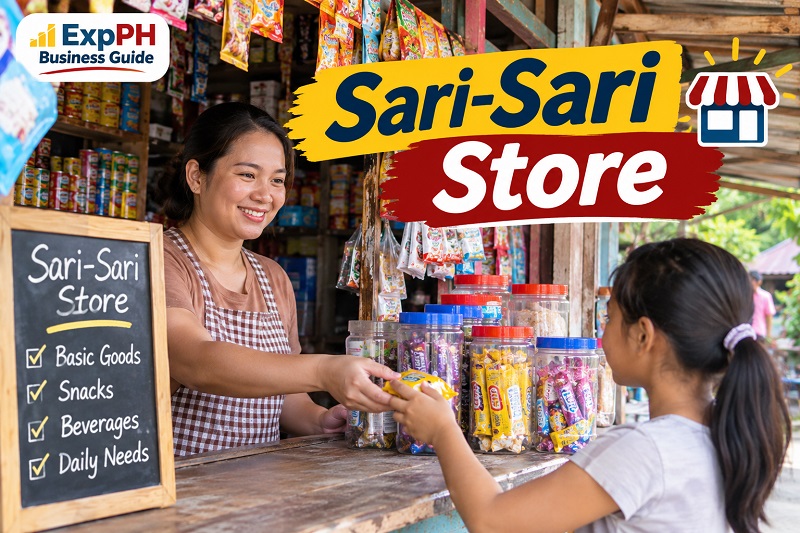
3. Sari-Sari Store
Estimated starting capital: ₱5,000 to ₱20,000
A sari-sari store is a practical business for entrepreneurs who want to serve the everyday needs of their local community. You can sell essential household products from a suitable space at home, making it easier for nearby residents to purchase basic necessities while keeping rental expenses manageable.
Products you can sell:
- Coffee, instant noodles, and canned goods.
- Rice and basic cooking ingredients.
- Biscuits and snacks.
- Soap and laundry products.
- Bottled beverages.
- Basic household necessities.
How to get started:
Observe nearby stores and identify products that residents frequently purchase. Start with essential items instead of filling your shelves with products that might remain unsold.
Compare wholesale suppliers and monitor your inventory regularly.
Important consideration: Location matters. A sari-sari store may struggle when several established competitors already serve the same neighborhood. Keep personal and business money separate, and manage customer credit carefully.

4. Reselling Preloved Clothes
Estimated starting capital: ₱2,000 to ₱8,000
Reselling preloved clothes is a suitable business for entrepreneurs interested in fashion and affordable clothing. You can offer secondhand items in good condition to customers looking for budget-friendly options and unique styles through Facebook groups, online marketplaces, live selling, or a home-based clothing display.
Products you can offer:
- Casual shirts.
- Dresses and blouses.
- Jeans and trousers.
- Children’s clothing.
- Jackets and sweaters.
- Bags and accessories.
How to get started:
Find reliable sources of legally acquired secondhand clothing. Inspect every item for stains, damage, missing buttons, and other defects.
Take clear photographs, provide accurate measurements, and disclose any imperfections.
Important consideration: Avoid purchasing excessive inventory before understanding which clothing styles and sizes your customers prefer. Check applicable rules concerning the sale and sourcing of used clothing.
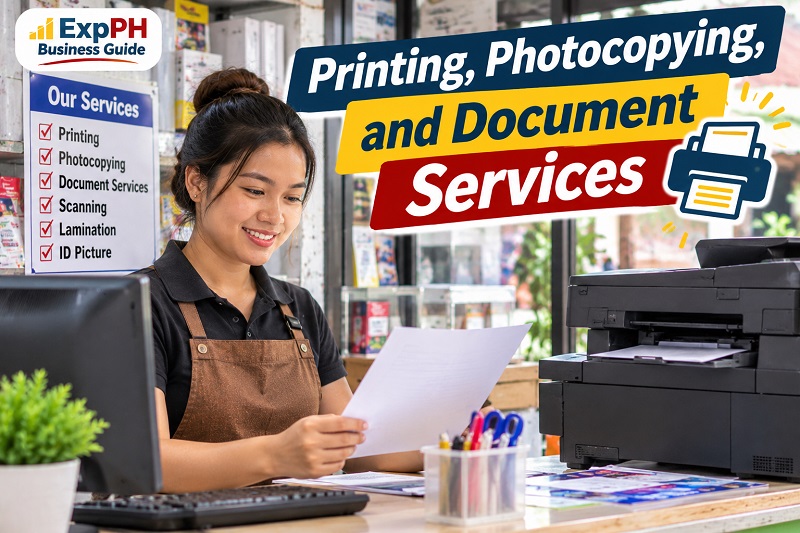
5. Printing, Photocopying, and Document Services
Estimated starting capital: ₱5,000 to ₱20,000
Printing, photocopying, and document services offer a practical business opportunity for entrepreneurs who want to serve students, teachers, employees, job applicants, and small businesses. You can operate from home or a small space near schools, offices, and residential communities where people regularly need document-related services.
Services you can offer:
- Black-and-white printing.
- Colored printing.
- Photocopying.
- Document scanning.
- Resume printing.
- Basic document formatting.
- School project printing.
How to get started:
Start with a reliable printer, paper supplies, and a computer or laptop. Compare the cost of ink, maintenance, electricity, and paper before deciding your service rates.
You can initially accept orders online and arrange customer pickup or delivery.
Important consideration: Printer maintenance and ink consumption can affect your earnings. Set prices that account for supplies, equipment depreciation, and your time.
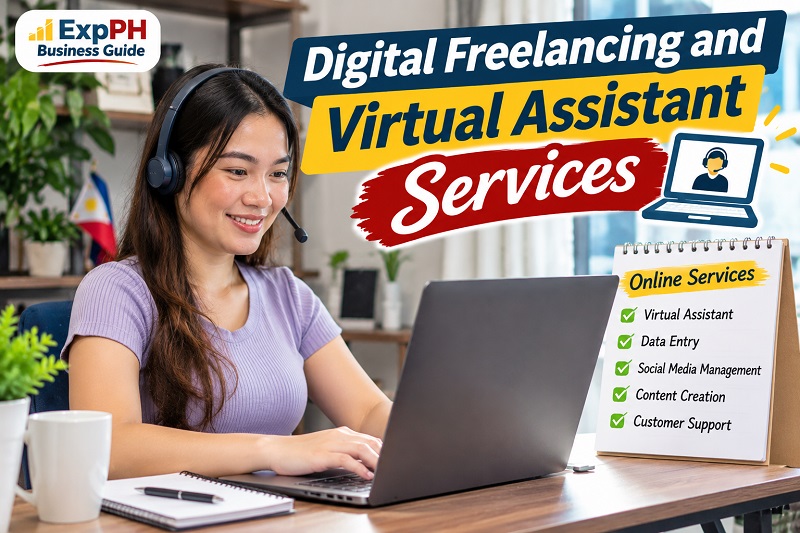
6. Digital Freelancing and Virtual Assistant Services
Estimated starting capital: ₱0 to ₱5,000
Digital freelancing and virtual assistant services allow skilled individuals to earn by providing online support to clients without selling physical products. With a computer, reliable internet connection, and relevant skills, you can offer services to entrepreneurs, businesses, and individuals while working from home.
Services you can offer:
- Virtual assistance.
- Data entry.
- Social media management.
- Graphic design.
- Video editing.
- Content writing.
- Customer support.
- Administrative assistance.
How to get started:
Identify one or two services you can confidently deliver. Prepare sample projects to demonstrate your abilities and create a professional portfolio.
You can find potential clients through freelancing platforms, professional networks, referrals, and direct business outreach.
Important consideration: Digital freelancing requires reliable communication, consistent delivery, and continuous skill development. Be cautious of job offers requiring suspicious upfront payments or promising unrealistic earnings.

7. Homemade Snacks and Merienda Business
Estimated starting capital: ₱2,000 to ₱8,000
A homemade snacks and merienda business is a practical option for entrepreneurs who enjoy preparing Filipino food. You can make affordable snacks and sell them to nearby residents, students, workers, and commuters. Starting with a few popular products allows you to test customer demand while keeping expenses manageable.
Products you can offer:
- Turon and banana cue.
- Palitaw and other kakanin.
- Homemade cookies.
- Sandwiches.
- Cheese sticks.
- Puto and kutsinta.
- Local fried snacks.
How to get started:
Choose products that are affordable to prepare and suitable for your target location. Test different serving sizes and calculate the cost of each portion.
You can begin with pre-orders or a small selling area near your home, provided the location is permitted.
Important consideration: Consider food freshness, preparation time, packaging, and unsold products when calculating your costs.
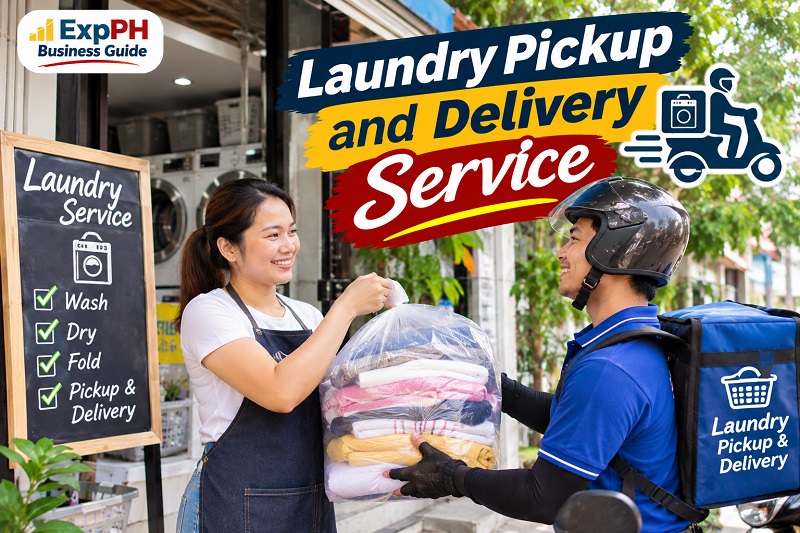
8. Laundry Pickup and Delivery Service
Estimated starting capital: ₱3,000 to ₱10,000
A laundry pickup and delivery service is a practical business for entrepreneurs who want to serve busy workers, students, and families. You can collect customers’ laundry and coordinate cleaning with an established laundry shop without immediately investing in commercial washing machines.
Services you can offer:
- Laundry collection.
- Delivery of cleaned clothes.
- Scheduled pickup.
- Laundry coordination for apartments.
- Special pickup arrangements for regular customers.
How to get started:
Find a reliable laundry partner and agree on service rates, turnaround times, and responsibility for damaged or missing items.
Start within a limited service area to manage transportation expenses.
Important consideration: Establish clear customer agreements and protect personal belongings entrusted to your service.
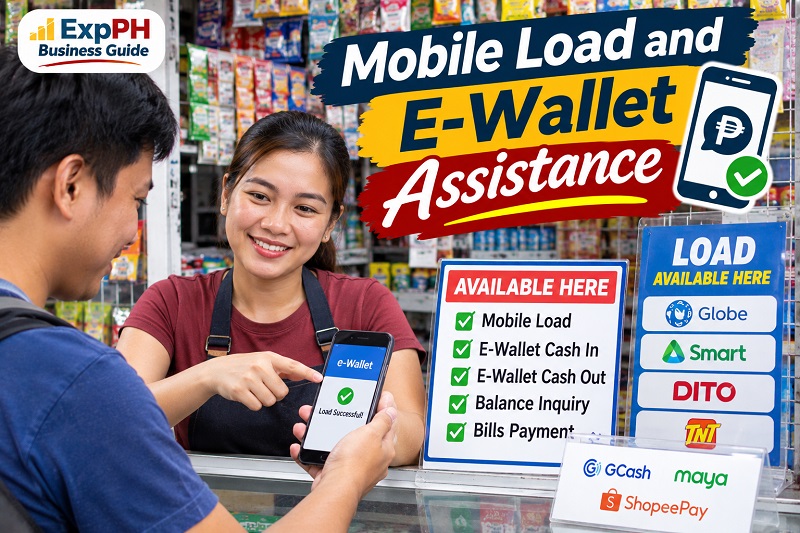
9. Mobile Load and E-Wallet Assistance
Estimated starting capital: ₱1,000 to ₱5,000
A mobile load and e-wallet assistance business provides convenient digital transaction services to people in your community. You can offer prepaid mobile load and authorized e-wallet transactions as a standalone service or add them to an existing sari-sari store to attract more customers.
Possible services:
- Prepaid mobile load.
- Authorized e-wallet cash-in.
- Authorized cash-out.
- Supported bill payment services.
- Other services offered by an accredited provider.
How to get started:
Research legitimate service providers and review their accreditation, transaction charges, commissions, and requirements.
Maintain sufficient operating funds and record every transaction.
Important consideration: Only offer services through authorized channels. Understand transaction limits, applicable fees, fraud prevention procedures, and customer verification requirements. Do not collect customers’ passwords, PINs, or one-time passwords.

10. Personalized Gift and Souvenir Business
Estimated starting capital: ₱2,000 to ₱10,000
A personalized gift and souvenir business allows entrepreneurs to create customized products for birthdays, anniversaries, graduations, weddings, and other special occasions. You can start by accepting customer orders and partnering with suppliers who handle printing or personalization, reducing the need to invest in expensive equipment.
Products you can offer:
- Personalized mugs.
- Customized keychains.
- Gift boxes.
- Printed shirts.
- Personalized notebooks.
- Souvenir packages.
- Customized greeting cards.
How to get started:
Create sample designs and post them on social media. Coordinate with suppliers for production, pricing, and delivery.
Collect an appropriate deposit before ordering customized products to reduce the risk of unpaid orders.
Important consideration: Confirm spelling, design approval, production timelines, and delivery arrangements before processing each order.

11. Homemade Frozen Food Business
Estimated starting capital: ₱5,000 to ₱15,000
A homemade frozen food business offers convenient ready-to-cook meals for households that want to save time preparing food. You can produce items such as siomai, lumpia, and marinated meat at home using reliable ingredients and proper storage equipment, then sell them to customers who regularly buy frozen products.
Products you can offer:
- Homemade siomai.
- Lumpia.
- Burger patties.
- Marinated chicken.
- Frozen meatballs.
- Ready-to-cook Filipino dishes.
How to get started:
Choose a limited product range and calculate ingredient, packaging, electricity, storage, and delivery expenses.
Use proper food packaging and maintain suitable storage temperatures throughout preparation, storage, and delivery.
Important consideration: Food safety is essential. Check the applicable sanitary, labeling, and product registration requirements before selling packaged food products.

12. Home-Based Baking Business
Estimated starting capital: ₱3,000 to ₱12,000
A home-based baking business is a practical opportunity for people who enjoy baking and want to earn from their existing skills. You can start with a small selection of homemade treats and accept orders from nearby customers without investing in a large commercial bakery.
Products you can offer:
- Brownies.
- Cookies.
- Banana bread.
- Cupcakes.
- Homemade cakes.
- Muffins.
- Special occasion dessert boxes.
How to get started:
Select products you can consistently prepare. Calculate the cost of ingredients, packaging, electricity, and preparation time.
Offer pre-orders for birthdays, office gatherings, and family celebrations.
Important consideration: Consistency is important. Customers should receive products with reliable taste, quality, portion sizes, and packaging.
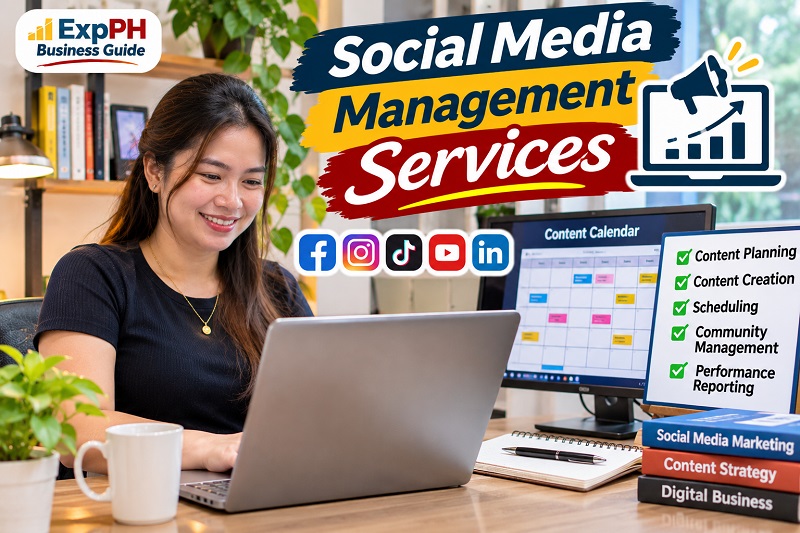
13. Social Media Management Services
Estimated starting capital: ₱0 to ₱5,000
Social media management is a practical business for people who understand online platforms and basic content creation. You can help small businesses maintain their social media accounts by preparing posts, managing customer interactions, and organizing content without requiring a large investment or physical store.
Services you can offer:
- Facebook page management.
- Content scheduling.
- Basic graphic design.
- Caption writing.
- Comment and message management.
- Short-form video editing.
- Monthly content planning.
How to get started:
Build a small portfolio using sample posts and content calendars. Approach local shops, food businesses, and service providers that could benefit from a consistent online presence.
Offer clearly defined service packages so customers understand what they are paying for.
Important consideration: Do not promise specific follower counts, viral posts, or guaranteed sales. Focus on delivering consistent and measurable services.

14. Plant Selling and Gardening Supplies
Estimated starting capital: ₱2,000 to ₱8,000
A plant selling and gardening supplies business is a practical opportunity for people interested in gardening and home improvement. You can start with a small selection of ornamental plants, seedlings, and basic gardening products, then expand your inventory as you learn which items attract local customers.
Products you can offer:
- Ornamental plants.
- Vegetable seedlings.
- Herb plants.
- Succulents.
- Plant pots.
- Soil and gardening supplies.
- Basic gardening kits.
How to get started:
Research plants that grow well in your local environment. Source healthy plants and prepare suitable containers, soil, and basic care instructions.
Sell through community groups, social media, or local markets.
Important consideration: Plants require proper care, and some may not survive transportation or unsuitable growing conditions. Avoid buying large quantities before establishing regular demand.
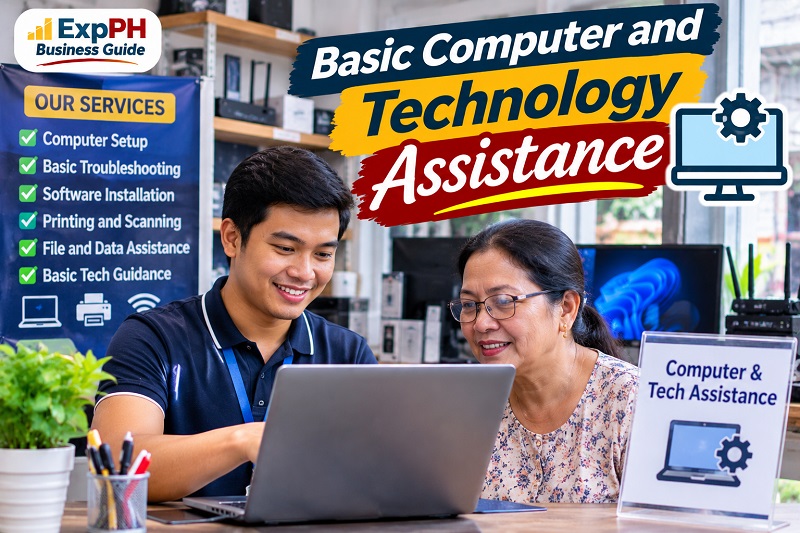
15. Basic Computer and Technology Assistance
Estimated starting capital: ₱1,000 to ₱8,000
A basic computer and technology assistance business is suitable for individuals with practical computer knowledge and troubleshooting skills. You can help students, employees, and small business owners with everyday technology needs by offering convenient services within your community without requiring expensive equipment.
Services you can offer:
- Computer setup assistance.
- Software installation using legitimate licenses.
- Printer setup.
- Basic computer troubleshooting.
- File organization and backup assistance.
- Email configuration.
- Basic technology tutorials.
How to get started:
Identify services you can perform safely and confidently. Create a simple service price list and offer assistance to people within your community.
You can also provide scheduled home visits when appropriate.
Important consideration: Protect customer privacy. Obtain permission before accessing files or accounts, and never retain passwords or confidential information.

Comparing Low-Capital Businesses in the Philippines
Comparing low-capital business opportunities helps aspiring entrepreneurs understand the startup budget and operating setup required for each option. Reviewing these differences can help you identify a business that fits your available resources, preferred working arrangement, and ability to manage daily operations.
The following table summarizes the 15 ideas discussed above.
| Business idea | Estimated capital | Operating setup |
|---|---|---|
| Online selling | ₱2,000 to ₱10,000 | Online |
| Packed meal business | ₱3,000 to ₱10,000 | Home-based |
| Sari-sari store | ₱5,000 to ₱20,000 | Home-based |
| Preloved clothing | ₱2,000 to ₱8,000 | Online/home-based |
| Printing services | ₱5,000 to ₱20,000 | Home-based |
| Digital freelancing | ₱0 to ₱5,000 | Online |
| Merienda business | ₱2,000 to ₱8,000 | Home-based/stall |
| Laundry coordination | ₱3,000 to ₱10,000 | Service-based |
| Mobile load and e-wallet | ₱1,000 to ₱5,000 | Home-based |
| Personalized gifts | ₱2,000 to ₱10,000 | Online |
| Frozen food | ₱5,000 to ₱15,000 | Home-based |
| Home baking | ₱3,000 to ₱12,000 | Home-based |
| Social media management | ₱0 to ₱5,000 | Online |
| Plant selling | ₱2,000 to ₱8,000 | Home-based |
| Technology assistance | ₱1,000 to ₱8,000 | Service-based |
These are illustrative planning ranges, not official industry averages. They assume access to some basic resources, such as a phone, internet connection, kitchen, or computer where relevant. Equipment purchases, permits, and other expenses may increase the actual amount.

How to Choose the Right Business Based on Your Budget
Choosing the right business starts with understanding how much capital you can afford to invest. Your budget helps determine which opportunities are realistic and how you can manage your initial expenses. Comparing business costs with your available resources can help you avoid unnecessary financial risks.
If You Have ₱1,000 to ₱3,000
With a very limited budget, consider businesses that depend more on your existing skills than expensive equipment or inventory.
Possible options include:
- Digital freelancing.
- Social media assistance.
- Small-scale online reselling.
- Pre-order personalized gifts.
- Mobile load services through authorized providers.
- Basic technology assistance.
The main objective is to avoid unnecessary purchases and identify customers before committing your limited funds.
If You Have ₱5,000 to ₱10,000
This budget provides more flexibility for small inventory, food preparation, or basic equipment.
Possible options include:
- Homemade food selling.
- Merienda business.
- Preloved clothing.
- Online product reselling.
- Plant selling.
- Home-based baking.
- Laundry pickup and delivery coordination.
Before spending, reserve enough money for operating expenses and replenishing supplies.
If You Have ₱10,000 to ₱20,000
A larger starting budget can support more inventory, improved equipment, and a wider range of products.
Possible options include:
- A small sari-sari store.
- Printing and photocopying services.
- Frozen food selling.
- Expanded online selling.
- A more developed home-based food operation.
Even with a higher budget, start with manageable operations. Avoid spending everything on equipment or products before confirming customer demand.
How to Start a Small Business in the Philippines
Starting a small business in the Philippines requires more than choosing a promising idea. You need to understand your customers, research competitors, calculate startup costs, and test your products or services. Careful planning, effective promotion, and regular financial monitoring can help build a sustainable business.
The following steps can help you establish a stronger foundation.
Step 1: Identify a Real Customer Need
Start by observing the people around you.
Consider the products and services that residents, employees, students, and households regularly need.
Ask questions such as:
- What products do people frequently purchase?
- What services are difficult to access locally?
- Are existing businesses meeting customer expectations?
- What can I offer at a reasonable price?
- Who would be willing to become my first customers?
A business should solve a recognizable problem or provide something customers genuinely value.
Step 2: Research Your Competitors
Visit nearby businesses and observe how they operate.
Look at their product selection, pricing, customer service, and operating hours.
You do not need to copy another business. Instead, identify opportunities to improve the customer experience.
For example, if several neighborhood stores sell similar products, you might differentiate your store through convenient ordering, better product availability, or reliable delivery.
Step 3: Calculate Your Startup Costs
Write down everything you need before opening.
Your initial budget may include:
- Equipment.
- Inventory.
- Raw materials.
- Packaging.
- Transportation.
- Internet and communication.
- Registration and permit expenses.
- Initial marketing.
- Emergency operating funds.
Do not overlook small expenses. Packaging, electricity, delivery, and maintenance can gradually consume a significant portion of your available capital.
Step 4: Test Your Business Idea
Before investing heavily, conduct a small test.
For example, if you want to sell packed meals, start with a limited number of orders.
If you plan to sell clothing, post a small collection and measure customer interest.
If you want to offer digital services, approach potential clients with a portfolio and a clear service proposal.
Testing helps you discover whether customers are actually interested in your offer.
Step 5: Set Your Prices Properly
Pricing should account for all relevant costs, not just the price of ingredients or products.
For example, consider a homemade food product with the following illustrative costs:
| Expense | Amount |
|---|---|
| Ingredients | ₱35 |
| Packaging | ₱5 |
| Cooking fuel and utilities allocation | ₱3 |
| Other operating costs | ₱2 |
| Total cost | ₱45 |
| Selling price | ₱65 |
| Remaining amount before other unallocated expenses and taxes | ₱20 |
This example demonstrates why calculating the actual cost of each product is important.
The remaining ₱20 is not necessarily your final net profit. You may still need to account for labor, delivery, equipment depreciation, losses, and taxes.
Step 6: Promote Your Business
Marketing does not always require a large advertising budget.
You can start with affordable promotional activities:
- Create a Facebook business page.
- Post clear product photographs.
- Share prices and ordering instructions.
- Ask satisfied customers for honest feedback.
- Participate in relevant community groups.
- Offer introductory promotions within your budget.
- Encourage referrals from existing customers.
Consistent communication helps customers understand what you offer and how they can purchase from you.
Step 7: Monitor Your Business Performance
Record your transactions from the beginning.
Track the following information:
- Daily sales.
- Product expenses.
- Operating costs.
- Inventory.
- Customer orders.
- Outstanding payments.
- Cash available for replenishment.
Simple spreadsheets or bookkeeping applications can help you understand whether your business is financially sustainable.

Business Registration and Legal Requirements in the Philippines
Registering a small business in the Philippines involves understanding the legal requirements that apply to your business activities and location. From business name registration and local permits to tax compliance and industry-specific regulations, meeting these obligations helps you operate properly and avoid potential legal problems.
Department of Trade and Industry Business Name Registration
The Department of Trade and Industry (DTI) handles business name registration for eligible sole proprietors.
If you plan to operate using a business name different from your true name, determine whether DTI registration applies to your business.
Official resource: DTI Business Name Registration System.
Remember that registering a business name is not the same as obtaining every permit required to operate.
Local Government Unit Permits
Depending on your location and business activity, you may need a Mayor’s or Business Permit and other local clearances.
Requirements can vary between cities and municipalities.
Contact your local Business Permits and Licensing Office (BPLO) to confirm the documents, fees, inspections, and procedures applicable to your business.
Bureau of Internal Revenue Registration
The Bureau of Internal Revenue (BIR) administers tax registration and compliance requirements.
Business owners should understand their applicable registration obligations, tax types, invoicing requirements, and filing responsibilities.
Official resource: Bureau of Internal Revenue.
Barangay and Other Applicable Requirements
Depending on your location and business activity, barangay clearance and other supporting documents may be required as part of local business permitting.
Food-related businesses may also need to comply with sanitary permits, food handling standards, and additional requirements.
For certain regulated products, including specific processed food products, additional Food and Drug Administration (FDA) requirements may apply.
Official resource: Food and Drug Administration Philippines.
Barangay Micro Business Enterprise (BMBE)
Eligible micro businesses may also explore registration under the Barangay Micro Business Enterprises Act.
Republic Act No. 9178 provides a framework for qualifying micro enterprises, including certain incentives subject to legal conditions.
Official resource: Republic Act No. 9178, BMBE Act.
Check the current eligibility rules and application procedures before relying on any incentive.

How to Manage Your Small Business Finances
Managing small business finances requires careful attention to income, expenses, and available cash. Even businesses with regular sales can experience financial difficulties without proper planning. Tracking transactions, maintaining emergency savings, and reinvesting wisely can help protect your capital and support long-term business stability.
Separate Personal and Business Money
Avoid mixing household expenses with business funds.
Maintain a separate record of business transactions, even if you initially operate using a simple cash-based system.
This makes it easier to identify how much money belongs to the business and how much is available for personal use.
Maintain an Emergency Fund
Unexpected expenses can affect even small businesses.
Your equipment might require repairs, suppliers may increase prices, or sales may temporarily decline.
Set aside a portion of your available funds for essential operating expenses and unexpected problems.
Reinvest Carefully
Reinvesting can help your business grow, but expansion should be based on actual customer demand.
For example, if a particular product consistently sells, you may consider increasing its inventory.
However, purchasing more products simply because they are available at a discount can create unnecessary financial pressure.
Monitor Cash Flow
Cash flow refers to the movement of money into and out of your business.
Monitor when customers pay, when suppliers need payment, and how much cash is required to maintain operations.
A business that records sales but cannot pay its suppliers or operating expenses may encounter serious problems.

Common Mistakes to Avoid When Starting a Small Business
Starting a small business requires more than choosing products or services to sell. New entrepreneurs also need to manage expenses, set realistic prices, and understand customer expectations. Recognizing common mistakes early can help you protect your savings, avoid unnecessary losses, and build a more sustainable business.
Spending Too Much Before Testing Demand
Do not purchase large quantities of inventory simply because a product looks popular.
Start with a manageable selection and observe customer behavior.
Ignoring Hidden Expenses
Your actual business costs may include transportation, packaging, electricity, maintenance, platform charges, and other operating expenses.
Include these in your financial calculations.
Setting Prices Without Calculating Costs
A low selling price may attract customers, but it can also leave you with insufficient money to cover expenses.
Calculate your total costs before deciding on a selling price.
Borrowing Too Much Money
Borrowing can create financial pressure, particularly when your business has not established consistent sales.
Understand repayment schedules, interest charges, and possible consequences before accepting a loan.
Neglecting Customer Service
Customers often return because they receive reliable service and consistent product quality.
Respond to inquiries professionally, communicate delays honestly, and address complaints responsibly.
Expecting Immediate Profits
A small business may need time to attract customers and develop regular sales.
Prepare for a gradual beginning instead of relying on unrealistic income expectations.

Online Business Opportunities for Filipino Entrepreneurs
Online business opportunities allow Filipino entrepreneurs to reach customers beyond their immediate communities without immediately investing in a physical store. Through online marketplaces, social media, and digital services, you can promote products, offer skills, and manage customer orders while keeping certain operating expenses manageable.
Selling Through Online Marketplaces
Platforms such as Shopee and TikTok Shop allow eligible sellers to list products and reach potential buyers.
Before choosing a platform, review its seller requirements, transaction fees, shipping arrangements, and applicable policies.
Using Social Media to Find Customers
Facebook and other social platforms can help small businesses connect with local communities.
You can publish product photographs, demonstrate how your products work, share customer feedback with permission, and provide ordering information.
Offering Digital Products and Services
Entrepreneurs with creative or technical skills can explore digital services.
Examples include:
- Graphic design.
- Website development.
- Digital marketing.
- Online tutoring.
- Video editing.
- Digital templates.
- Virtual assistance.
Digital businesses may have lower physical inventory requirements, but they still depend on customer acquisition, service quality, and consistent delivery.
Learning New Business Skills Online
Entrepreneurs should continuously improve their knowledge of marketing, bookkeeping, customer service, and business operations.
Online learning platforms such as Udemy offer courses covering business management, entrepreneurship, digital marketing, and other practical skills.
Choose learning materials that address your actual business needs instead of spending too much money on courses before establishing your business.
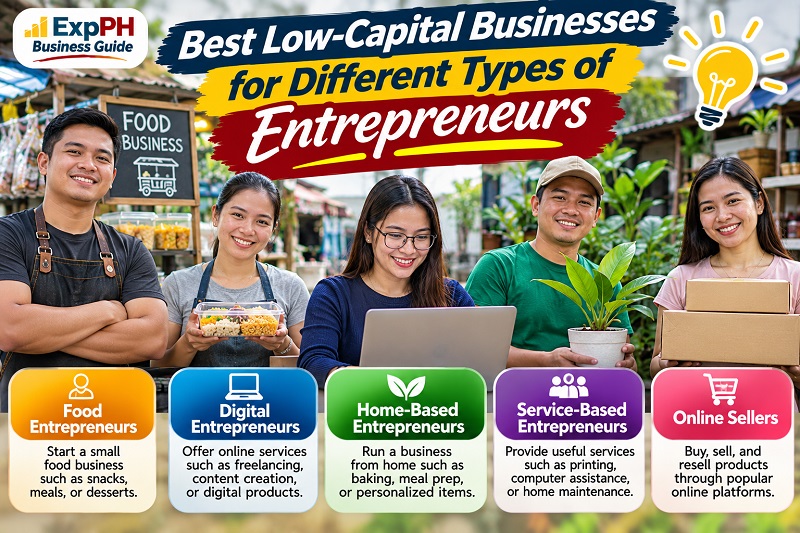
Best Low-Capital Businesses for Different Types of Entrepreneurs
The right low-capital business depends on your lifestyle, available time, skills, and financial resources. Students, working employees, parents, homemakers, and returning OFWs may have different priorities when choosing an opportunity. Understanding these differences can help you select a business that fits your responsibilities and long-term goals.
For Students
Students may prefer flexible businesses that can operate around their academic schedules.
Ideas worth considering include:
- Online reselling.
- Personalized gifts.
- Digital freelancing.
- Homemade snacks.
- Graphic design services.
The priority should be balancing business responsibilities with education.
For Working Employees
Employees who want additional income may prefer businesses that do not require their full-time attention.
Potential options include:
- Pre-order food selling.
- Online product reselling.
- Social media management.
- Digital freelancing.
- Personalized gift services.
Consider your employment agreement and avoid conflicts of interest.
For Parents and Homemakers
Home-based businesses may offer greater flexibility for people managing household responsibilities.
Possible opportunities include:
- Homemade food.
- Home baking.
- Frozen food products.
- Plant selling.
- Online selling.
- Preloved clothing.
Choose an operating schedule that is realistic for your household responsibilities.
For OFWs and Returning Filipinos
Filipinos working overseas may consider starting a business in the Philippines as part of their longer-term financial planning.
However, managing a business remotely requires careful organization and trustworthy local support.
Potential options include:
- Online selling with a reliable local operator.
- A small neighborhood store.
- Food pre-orders.
- Printing services.
- Laundry coordination.
- Digital services.
Avoid sending substantial capital without a clear business plan, written agreements, and reliable financial reporting.
If possible, test the business on a small scale before committing larger amounts of savings.

How to Grow a Small Business Without Overspending
Growing a small business requires careful planning and responsible use of available resources. Instead of expanding too quickly, focus on building customer loyalty, improving your products or services, and managing daily operations efficiently. Gradual improvements can help strengthen your business while keeping unnecessary expenses under control.
Focus on Repeat Customers
Regular customers can provide more predictable demand.
Offer consistent quality, fair pricing, and dependable service to encourage repeat purchases.
Improve Your Products and Services
Listen to customer feedback and identify practical improvements.
For example, a food business might improve packaging, while an online seller might provide more accurate product descriptions.
Small improvements can make your business more competitive.
Expand Products Gradually
Once you understand your customers’ preferences, consider introducing related products or services.
Avoid adding too many items at once because each additional product may increase inventory and management costs.
Use Technology to Improve Efficiency
Affordable digital tools can help manage everyday operations.
You can use spreadsheets for bookkeeping, messaging applications for customer inquiries, and digital calendars for order scheduling.
The goal is to make your work more organized without introducing unnecessary expenses.
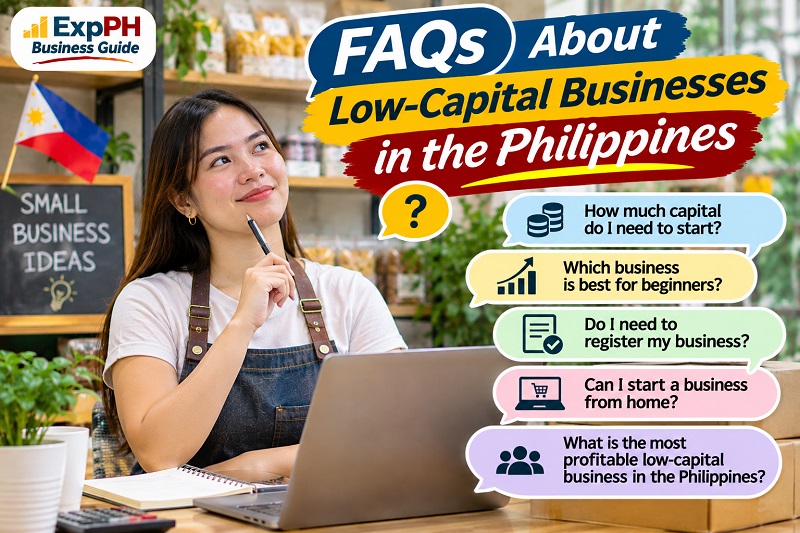
FAQs About Low-Capital Businesses in the Philippines
1. What is the best low-capital business to start in the Philippines?
Online selling, digital freelancing, food pre-orders, and personalized gifts can begin with limited equipment or inventory, depending on your skills, location, and demand.
2. Can I start a business in the Philippines with ₱5,000?
Some service businesses can start below ₱5,000 when you already own essential equipment. Budget carefully for internet, transport, supplies, registration, and operating expenses at first.
3. What small businesses are in demand in the Philippines?
Food selling, online reselling, printing, and neighborhood services can work well when local customers need them. Research local competition and demand before investing your savings.
4. Can I operate a small business from home?
Yes, many entrepreneurs begin from home, but they must check local permits, zoning rules, sanitation standards, and registration obligations that apply to their activities first.
5. How do I calculate the selling price of my products?
Calculate ingredients, packaging, utilities, labor, delivery, platform charges, and other expenses per item. Set a price that covers costs and leaves a reasonable margin consistently.
6. What is the easiest online business to start in the Philippines?
Start with a small product range, use clear photographs, disclose prices, respond promptly, and promote through relevant community groups. Track fees and delivery costs carefully.
7. Do I need to register my small business in the Philippines?
Requirements depend on business structure, location, and activity. Check DTI, BIR, and your local government office well before opening for registration, tax, and permit obligations.
8. How can I manage the finances of a small business?
Keep transaction records, separate personal and business money, monitor inventory, and review cash flow regularly. These habits help identify costs and prevent avoidable losses weekly.
9. Can a low-capital business become profitable?
Do not assume sales equal profit. Include materials, labor, utilities, delivery, platform fees, taxes, equipment costs, and losses when calculating your actual business results accurately.
10. Can OFWs start a business in the Philippines while working abroad?
Yes, but remote ownership requires a trusted local operator, written responsibilities, regular financial reports, and careful controls over spending, inventory, and customer transactions from outset.
Conclusion: Start Small, Plan Carefully, and Build a Sustainable Business
Starting a business does not require having a large amount of money. What matters is finding an opportunity that matches your available resources, abilities, and the needs of your target customers.
The Low-Capital Businesses in the Philippines covered in this guide are not necessarily the ones that promise the highest earnings. They are opportunities that you can realistically manage, operate responsibly, and gradually improve as you gain experience.
Whether you choose online selling, food preparation, digital freelancing, a neighborhood store, or a service-based business, begin with a clear plan. Understand your expenses, test customer demand, maintain accurate financial records, and prioritize customer satisfaction.
Remember that building a business takes patience and consistent effort. You do not need to expand immediately or spend all your savings to establish something meaningful.
Start with what you have, learn from your customers, and make informed decisions as your business develops.
ExpPH Business Guide aims to help Filipino entrepreneurs make better business decisions through practical information, financial awareness, and useful technology insights. With proper preparation and responsible management, a small business can become a valuable foundation for your entrepreneurial journey.
Test Your Knowledge of Low-Capital Businesses in the Philippines
Results


#1. What is an important first step when choosing a low-capital business?
#2. Which business can require as little as ₱0 to ₱5,000 in starting capital?
#3. Which platform can help entrepreneurs sell products online?
#4. What should entrepreneurs calculate before setting product prices?
#5. Which government agency handles business name registration for eligible sole proprietors?
#6. What is one advantage of starting a home-based food business?
#7. Why should entrepreneurs test their business ideas before investing heavily?
#8. What should business owners do with personal and business money?
#9. Which practice helps protect a small business from unexpected expenses?
#10. What is a responsible approach to growing a small business?
We appreciate your time and effort
Share your score or tell us what you learned in the comments.

A Filipino web developer with a background in Computer Engineering. Founder of ExpPH Blog and ExpPH Business Guide, two Philippines-focused platforms covering OFW guidance, business, finance, freelancing, travel, and lifestyle. Passionate about helping Filipinos grow, he creates practical content that educates, empowers, and inspires readers nationwide.