
Starting a home-based baking business in the Philippines can be a practical way to earn extra income while doing something you enjoy. If you love baking and know how to prepare delicious homemade treats, you can turn your skills into a small business without immediately renting a commercial space.
You can begin with a few products, use the kitchen equipment you already have, and accept orders from people in your neighborhood. As your customer base grows, you can gradually expand your menu, improve your equipment, and increase your production capacity.
However, running a successful baking business involves more than preparing delicious products. You also need to understand your startup costs, calculate selling prices, maintain food safety, manage orders, and follow applicable business requirements.
This guide explains how to start a Home-Based Baking Business in the Philippines, from choosing your first products to promoting your business and managing daily operations.
Starting a home-based baking business is one way to earn income with a manageable budget. If you want to explore other business opportunities that require less startup capital, read our guide: Best Low-Capital Businesses to Start in the Philippines. Discover practical business ideas that can help you choose an opportunity that matches your budget, skills, and goals.
Quick Summary (TL;DR)
Starting a home-based baking business in the Philippines can be a practical way to earn income without immediately renting a commercial space. With basic baking equipment, carefully selected products, and proper planning, you can start small and gradually build a customer base.
- Starting capital: You may begin with approximately ₱3,000 to ₱12,000 if you already have basic baking equipment.
- Products to sell: Consider brownies, cookies, cupcakes, banana bread, muffins, and homemade cakes.
- Target customers: Start with neighbors, friends, relatives, students, office workers, and people ordering desserts for special occasions.
- Pricing: Calculate ingredient costs, packaging, electricity, labor, and other expenses before setting your selling prices.
- Promotion: Use Facebook, community groups, referrals, and attractive product photographs to reach potential customers.
- Business requirements: Check the applicable DTI, BIR, local business permit, sanitary, and food-related requirements before operating.
- Growth strategy: Start with a manageable menu, maintain product quality, and expand when customer demand becomes consistent.
Key takeaway: A successful home-based baking business does not require a large kitchen or an extensive product menu from the beginning. Focus on affordable startup costs, consistent product quality, proper pricing, and customer satisfaction to build a sustainable business.
Ready to start your baking business? Choose a few baked products you can prepare consistently, calculate your startup costs, and begin introducing your homemade treats to potential customers.
Table of Contents

1. Why Start a Home-Based Baking Business in the Philippines?
Starting a home-based baking business in the Philippines allows you to turn your baking skills into an income opportunity without immediately investing in a commercial bakery. You can begin with a few homemade products, use existing kitchen equipment, and manage orders around your daily responsibilities.
Lower Initial Investment
You do not necessarily need to rent a commercial space or purchase expensive equipment immediately. Starting from your home can help you manage your initial expenses while testing whether customers are interested in your products.
Flexible Working Schedule
You can organize your baking schedule based on your availability and the number of orders you receive. This flexibility may be useful for people who have other jobs, household responsibilities, or personal commitments.
Opportunity to Build Regular Customers
Customers who enjoy your baked products may order again for birthdays, family gatherings, celebrations, and everyday snacks. Consistent quality and reliable service can help turn occasional buyers into regular customers.
Potential to Expand
As your business grows, you can introduce additional products, accept customized orders, offer dessert packages, or supply baked goods to nearby offices and small establishments.
However, remember that a home-based baking business still requires careful planning. You must manage your costs, maintain food safety, and make sure your products meet customer expectations.

2. Choose the Right Baked Products to Sell
Choosing suitable baked products helps you control startup costs and manage your production more efficiently. Focus on affordable items that match your baking skills and available equipment. Start with products that are easy to prepare consistently while considering customer preferences and the demand for homemade treats.
Brownies
Brownies are a practical product because they can be prepared in batches and divided into individual portions. You can offer classic chocolate brownies, fudgy brownies, and variations with nuts or other toppings.
They are also suitable for small gift boxes, snack orders, and dessert packages.
Cookies
Cookies are popular snacks that can be prepared in different flavors and sizes. You can start with chocolate chip cookies, oatmeal cookies, butter cookies, or other simple recipes.
They are convenient to package and can be sold individually or in assorted boxes.
Cupcakes
Cupcakes are suitable for birthdays, celebrations, school events, and other occasions. You can offer basic flavors such as chocolate and vanilla before introducing customized designs and decorations.
Remember to include the cost of frosting, decorations, cupcake liners, and packaging when calculating your selling price.
Banana Bread
Banana bread can be a good option if you want to offer a homemade product using familiar ingredients. You can sell it as a whole loaf or in smaller portions.
You may also introduce variations such as chocolate chip banana bread or other flavors, depending on customer demand.
Homemade Cakes
Cakes can attract customers celebrating birthdays, anniversaries, and special occasions. However, customized cakes may require more time, ingredients, decorating skills, and specialized equipment.
If you are still starting, consider offering a limited selection of simple cakes before accepting complicated designs.
Muffins and Dessert Boxes
Muffins and dessert boxes can help you offer convenient products for customers who want snacks or assorted treats.
You can prepare different combinations depending on your available ingredients and production capacity.
Practical tip: Start with two or three products that you can prepare consistently. Once you understand your costs, production time, and customer preferences, you can gradually expand your menu.

3. How Much Capital Do You Need to Start a Home-Based Baking Business?
Understanding your startup capital helps you prepare a realistic budget before launching your home-based baking business. Consider the equipment you already own and the products you plan to sell. Estimate your ingredient, packaging, and supply expenses to determine how much money you need to begin.
| Startup Expense | Estimated Cost |
|---|---|
| Flour, sugar, cocoa, and other ingredients | ₱1,000–₱2,500 |
| Butter, eggs, milk, and other baking ingredients | ₱800–₱2,000 |
| Packaging materials and labels | ₱300–₱1,000 |
| Baking paper, liners, and small supplies | ₱300–₱700 |
| Basic promotional materials | ₱200–₱500 |
| Additional kitchen tools or utensils | ₱400–₱1,500 |
| Emergency or additional operating budget | ₱500–₱1,800 |
| Estimated Total | ₱3,500–₱10,000 |
These amounts are examples, not fixed prices. Actual costs will depend on your location, suppliers, ingredient brands, and the products you intend to prepare.
The estimate also assumes that you already have access to a suitable oven and basic kitchen equipment. Purchasing an oven, electric mixer, or other major appliances can significantly increase your starting capital.
Essential Equipment for a Small Baking Business
Before buying new equipment, check what you already have at home. Some useful baking tools include:
- Oven suitable for your products
- Digital kitchen weighing scale
- Measuring cups and spoons
- Mixing bowls
- Baking trays and pans
- Spatulas and whisks
- Cooling racks
- Mixing equipment
- Food-safe storage containers
- Packaging materials
You do not need to purchase every available baking tool immediately. Focus on the equipment required for your initial product selection.

4. Find Your Target Customers
Understanding your target customers helps you identify who is most likely to buy your baked products. Consider the needs and preferences of people in your neighborhood and nearby communities. This will help you choose suitable products, set reasonable prices, and focus your promotional efforts effectively.
Neighbors and Nearby Residents
People living near your home can become your first customers. You can introduce your products through personal recommendations, community groups, and local social media pages.
Students and Office Workers
Students and employees may purchase affordable baked products as snacks. Cookies, brownies, muffins, and individually packaged treats can be convenient options.
Families and Special Occasion Customers
Families may order cakes, cupcakes, and dessert boxes for birthdays, anniversaries, reunions, and other celebrations.
Small Businesses and Offices
Nearby offices, cafés, and small establishments may be interested in purchasing baked products in larger quantities. However, make sure you can consistently meet their order requirements before accepting regular supply arrangements.
Friends and Relatives
Your existing network can help introduce your products to potential customers. Encourage satisfied buyers to recommend your business to other people.
Practical tip: Start by identifying the people most likely to purchase your products. You can use their feedback to improve your menu and determine which items deserve more attention.
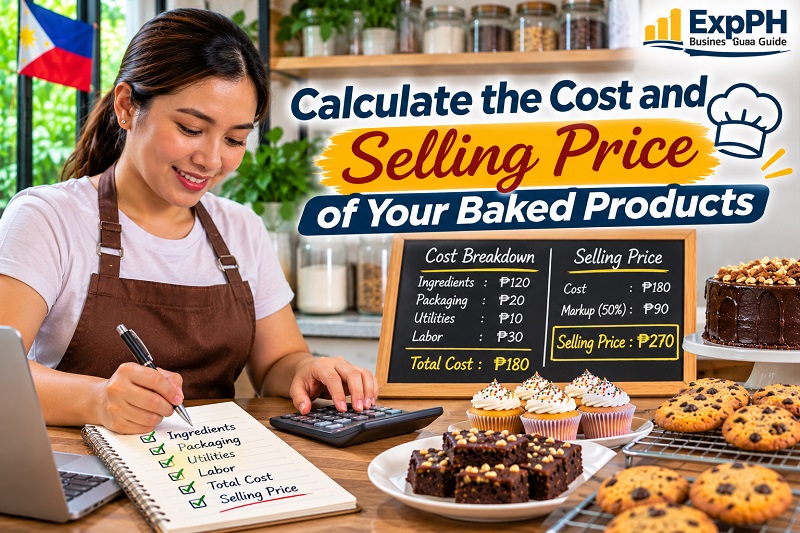
5. Calculate the Cost and Selling Price of Your Baked Products
Calculating your production costs helps you set selling prices that cover your expenses and provide a reasonable profit. Consider the cost of ingredients, packaging, utilities, labor, and other operating expenses. Proper costing allows you to avoid underpricing and maintain a financially sustainable baking business.
- Ingredients
- Packaging materials
- Electricity or gas
- Labor or preparation time
- Delivery expenses, if applicable
- Other operating expenses
Example of Calculating Product Costs
Suppose you prepare one batch of brownies with the following expenses:
| Expense | Cost |
|---|---|
| Flour, sugar, and cocoa | ₱100 |
| Butter and eggs | ₱120 |
| Chocolate and other ingredients | ₱100 |
| Packaging | ₱30 |
| Electricity and other expenses | ₱30 |
| Total Cost | ₱380 |
If the batch produces 20 brownies, the estimated cost per piece is:
₱380 ÷ 20 = ₱19 per brownie
This means each brownie costs approximately ₱19 to produce based on the expenses included in the example.
You can then set a selling price that covers your costs and provides a reasonable profit.
For example, if you sell each brownie for ₱30:
- Selling price per piece: ₱30
- Estimated cost per piece: ₱19
- Estimated difference: ₱11
If you sell all 20 pieces, your total sales would be ₱600. The difference between sales and the estimated production cost would be ₱220.
This is an illustrative calculation. Your actual profit will depend on whether all products are sold and whether you have included every relevant expense.
Avoid Pricing Your Products Too Low
Some beginners set very low prices because they want to attract customers. However, selling below your actual production cost can make it difficult to maintain the business.
Consider ingredient price changes, packaging costs, and the time you spend preparing each order.
Review your costing regularly so you can adjust your prices when necessary.
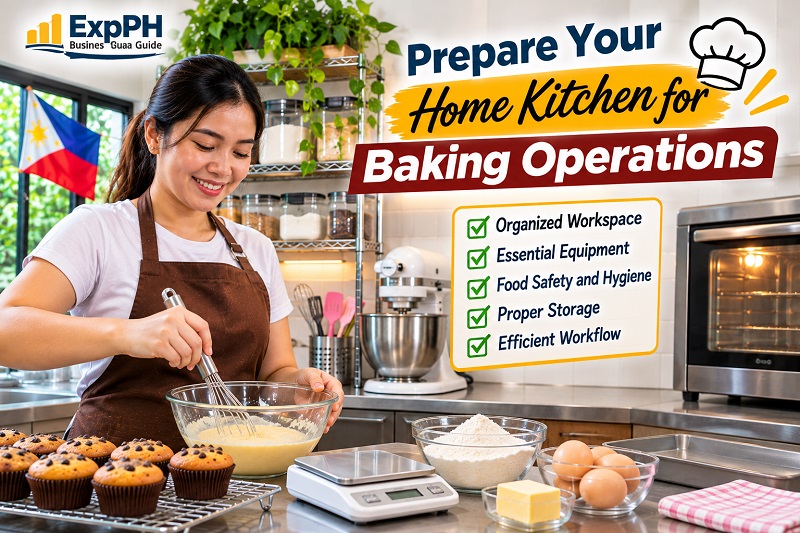
6. Prepare Your Home Kitchen for Baking Operations
Preparing your home kitchen properly helps create a clean and organized space for producing baked goods. Arrange your equipment, maintain clean work surfaces, and store ingredients safely. A suitable preparation area and an organized production schedule can help you maintain food safety and manage daily baking activities efficiently.
Organize Your Baking Equipment
Keep your baking tools in designated storage areas. Separate clean equipment from used utensils and avoid placing food-contact items near cleaning chemicals or household products.
Maintain a Clean Preparation Area
Clean your work surfaces, baking trays, mixing bowls, and utensils before and after use. Remove unnecessary items from your preparation area to reduce the risk of contamination.
Store Ingredients Properly
Keep dry ingredients in clean, sealed containers. Store perishable ingredients according to their required conditions and check expiration dates before using them.
Establish a Production Schedule
Plan when to purchase ingredients, prepare dough or batter, bake products, cool them, package them, and arrange customer deliveries or pickups.
An organized schedule can help you avoid rushed preparation and reduce unnecessary waste.
Separate Household and Business Supplies
Whenever possible, organize your business ingredients and packaging separately from regular household supplies. This can make inventory management easier and help you monitor your business expenses.

7. Follow Food Safety and Storage Practices
Maintaining proper food safety and storage practices helps protect customers and preserve the quality of your baked products. Use clean equipment, handle ingredients carefully, prevent cross-contamination, and store finished goods under suitable conditions. Providing clear storage instructions also helps customers enjoy your products safely.
Wash Your Hands and Equipment
Wash your hands before handling ingredients and after activities that may cause contamination. Clean and sanitize suitable food-contact surfaces and utensils regularly.
Use Fresh and Suitable Ingredients
Check the condition and expiration dates of ingredients before using them. Avoid using ingredients that have unusual odors, damaged packaging, or signs of spoilage.
Prevent Cross-Contamination
Keep ingredients and finished products away from raw food, dirty utensils, cleaning products, and other possible sources of contamination.
Store Products Properly
Different baked goods require different storage conditions. Some products may be stored at room temperature, while products containing cream, custard, or other perishable fillings may require refrigeration.
Follow suitable storage practices for each recipe and product.
Provide Storage Instructions to Customers
Inform customers how to store their purchases and how soon they should consume them. This is especially important for products containing perishable ingredients.
Do not assume every baked product has the same shelf life. Storage duration depends on the recipe, ingredients, preparation conditions, and packaging.
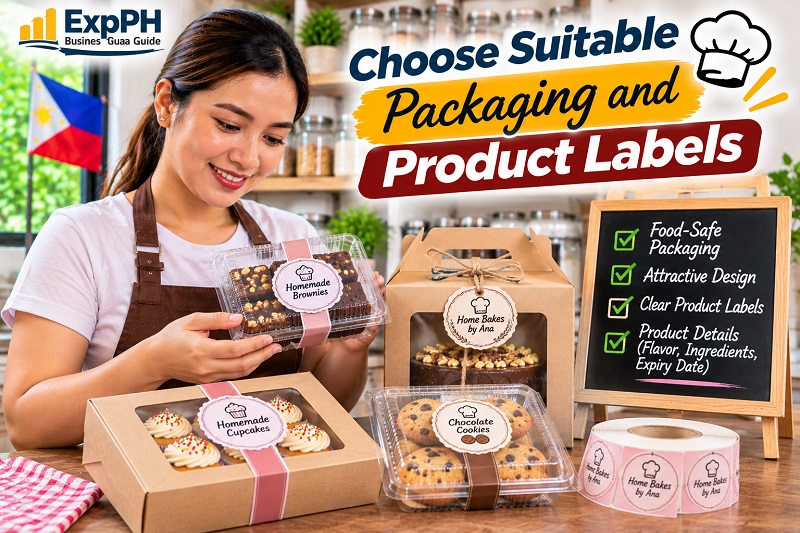
8. Choose Suitable Packaging and Product Labels
Choosing appropriate packaging helps keep your baked products protected and presentable during storage and delivery. Use clean food-safe materials that suit each product. Include accurate labels with essential details such as ingredients, allergens, and storage instructions to inform customers and build trust in your business.
Some packaging options include:
- Brownie boxes
- Cookie pouches
- Cupcake containers
- Cake boxes
- Muffin packaging
- Dessert boxes
- Food-safe containers
Make sure your packaging is clean, suitable for food contact, and strong enough to protect the products.
Include Useful Product Information
Depending on the product and applicable requirements, your labels may include:
- Business or product name
- Product description
- Ingredients
- Allergen information
- Production or preparation date
- Storage instructions
- Contact details
Pay particular attention to allergens such as milk, eggs, wheat, peanuts, and tree nuts. Customers should have access to accurate information about ingredients that may affect them.
Avoid making unsupported claims about your products. Your labels and promotional materials should accurately describe what you sell.

9. Promote Your Home-Based Baking Business
Promoting your home-based baking business helps you reach potential customers and increase awareness of your products. Use affordable methods such as Facebook pages, local community groups, and customer recommendations. Attractive product photographs and introductory promotions can also encourage people to discover and try your baked goods.
Use Facebook to Showcase Your Products
Facebook can help you reach people in your neighborhood and nearby communities.
Create a business page where you can post:
- Product photographs
- Available flavors
- Prices
- Order schedules
- Customer reviews
- Promotional offers
- Ordering instructions
Make sure your page includes accurate contact information and a clear description of your products.
Join Local Community Groups
Some community groups allow members to promote local products and services. Check each group’s rules before posting your menu or advertisements.
You can also introduce your products to neighborhood groups where potential customers may be interested in homemade baked goods.
Take Attractive Product Photographs
Clear photographs can help customers understand what you are selling. Use good lighting, clean backgrounds, and simple arrangements to present your products.
Make sure your photographs accurately represent the actual products customers will receive.
Encourage Customer Recommendations
Satisfied customers may recommend your baked products to their friends, relatives, and colleagues.
You can encourage feedback and ask customers to share their experiences. Genuine recommendations can help build trust with potential buyers.
Offer Introductory Promotions
You may offer limited introductory bundles or discounts to attract initial customers. Before setting a promotional price, calculate your costs to make sure the offer does not result in a loss.
10. Accept Orders and Manage Customer Payments
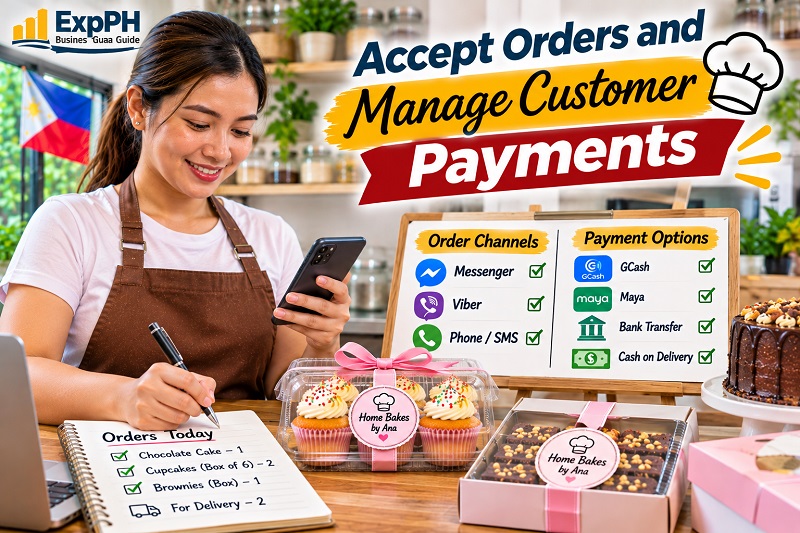
Managing customer orders and payments properly helps keep your baking business organized and reliable. Establish clear ordering procedures, set deadlines, record customer details, and communicate payment policies. A simple order management system can help prevent mistakes and ensure every purchase is handled smoothly.
Create a Clear Menu
Prepare a menu that includes product names, available sizes, prices, and important details. If you offer customized products, explain what customers can request.
Avoid accepting orders for products you cannot consistently prepare.
Set Ordering Deadlines
Give customers enough time to place their orders. For example, you may require advance notice for cakes, customized cupcakes, or large dessert boxes.
Advance ordering helps you plan your ingredients and production schedule.
Record Every Order
Maintain a record containing:
- Customer name
- Contact details
- Products ordered
- Quantity
- Total amount
- Payment status
- Pickup or delivery schedule
- Special instructions
You can use a notebook or spreadsheet to organize these details.
Establish Payment Policies
Decide whether you will accept cash, bank transfers, or available digital payment methods.
For customized or large orders, you may require a deposit before beginning production. Clearly communicate your payment, cancellation, and refund policies before confirming an order.
Confirm Orders Before Production
Send customers a confirmation containing the product details, quantity, total price, payment status, and expected pickup or delivery date.
This simple step can reduce misunderstandings and help you manage your daily workload.

11. Business Registration and Legal Requirements in the Philippines
Registering your home-based baking business and securing the necessary permits help you operate responsibly and comply with Philippine regulations. Understand the requirements for business name registration, local permits, BIR registration, sanitation, and applicable food regulations before accepting commercial orders.
Before selling baked products commercially, review the FDA requirements for food establishments to understand the applicable licensing and documentation requirements.
DTI Business Name Registration
If you operate as a sole proprietor and use a business name different from your true name, you may need to register that business name with the Department of Trade and Industry (DTI).
However, DTI business name registration does not automatically give you permission to operate. You may still need other registrations and permits.
Barangay and Mayor’s or Business Permit
Check with your barangay and local government unit about the permits and clearances required for a home-based food business.
Your local Business Permits and Licensing Office (BPLO) can explain the requirements for your business location and activities.
Some businesses may also need to comply with zoning, building, occupancy, or other local requirements.
Bureau of Internal Revenue (BIR) Registration
Business owners generally need to comply with applicable BIR registration and tax requirements.
Ask the BIR or consult an authorized tax professional about the registration process, applicable taxes, invoicing requirements, and recordkeeping obligations for your business.
Sanitary Permit and Health Requirements
Because baking involves food preparation, ask your local health office about sanitary permit requirements and applicable health regulations.
The requirements may include inspections, sanitation standards, and health-related documentation depending on your business activities.
Food and Drug Administration (FDA) Requirements
Not every small home-based baking activity automatically has the same FDA requirements. Obligations depend on the nature of the products, business activities, and applicable regulations.
If you plan to manufacture, distribute, or sell processed food products through activities covered by FDA rules, check whether an FDA License to Operate (LTO), product registration, or other authorization applies.
Contact the FDA and your local government office before expanding into activities that may require additional authorization.
Important: Do not assume that registering a business name is enough to operate legally. Confirm the requirements with the appropriate government offices before accepting commercial orders.
12. Manage Your Home-Based Baking Business Finances
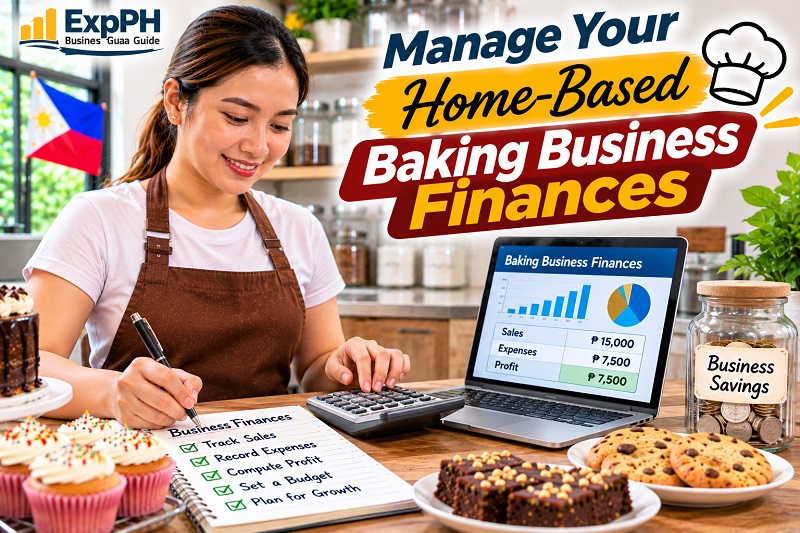
Managing your business finances helps you understand your sales, control expenses, and measure your actual profit. Keep accurate records of daily transactions, ingredient purchases, and inventory. Separating personal and business expenses also makes it easier to monitor your cash flow and plan future business needs.
Record Your Daily Sales
Write down every completed order and the amount received. This helps you monitor your sales and identify your best-selling products.
Track Ingredient and Supply Expenses
Keep receipts and records of your purchases. Monitor how much you spend on flour, sugar, butter, eggs, chocolate, packaging, and other supplies.
Monitor Your Inventory
Check your ingredients regularly to avoid buying more than you need. Proper inventory management can help reduce waste and prevent unexpected shortages.
Calculate Your Actual Profit
Subtract your business expenses from your sales to understand your financial performance.
Remember to account for production costs, packaging, utilities, delivery expenses, and other operating costs.
Set Aside Money for Business Needs
Avoid spending all your sales revenue immediately. Keep enough funds for restocking ingredients, replacing supplies, paying applicable expenses, and handling unexpected costs.
Good financial records can help you decide whether your business is ready to expand.
13. Common Mistakes to Avoid When Starting a Home-Based Baking Business
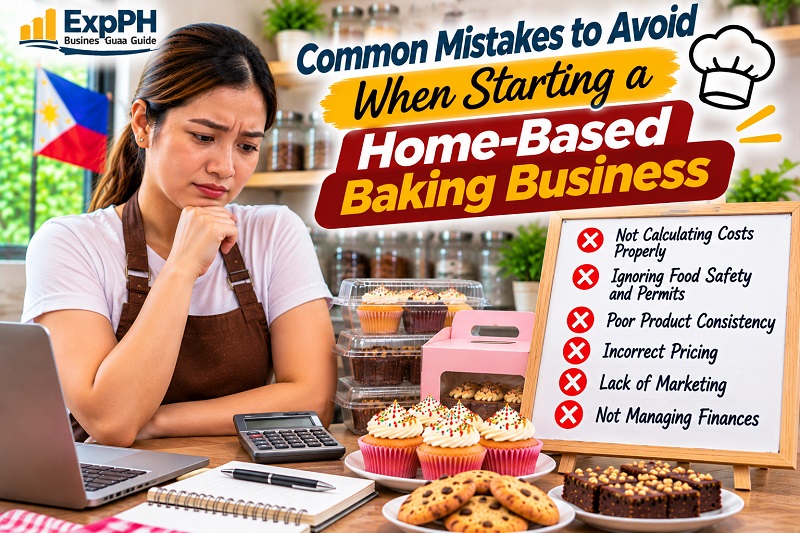
Understanding common mistakes can help you avoid unnecessary expenses and maintain consistent product quality. Pay attention to pricing, inventory, food safety, and customer communication. Managing your workload carefully and making equipment purchases when needed can help you build a more organized and sustainable baking business.
Offering Too Many Products Immediately
A large menu may seem attractive, but it can make production and inventory management difficult.
Start with a few products that you can prepare consistently. Expand your selection after understanding customer demand and production costs.
Setting Prices Without Proper Costing
Do not calculate your selling prices based only on ingredient expenses.
Include packaging, utilities, labor, and other relevant costs to avoid underpricing your products.
Buying Too Much Inventory
Purchasing ingredients in large quantities before establishing regular demand can lead to unnecessary expenses and wasted supplies.
Start with manageable quantities and increase your purchases as your orders grow.
Ignoring Food Safety
Poor sanitation, incorrect storage, and improper handling can affect product quality and customer safety.
Maintain clean preparation areas and follow appropriate food handling practices at all times.
Accepting More Orders Than You Can Handle
Taking too many orders can result in late deliveries, inconsistent products, and unnecessary stress.
Set realistic production limits based on your available time, equipment, and preparation capacity.
Failing to Communicate with Customers
Unclear prices, missing order details, and delayed responses can create misunderstandings.
Provide clear ordering instructions and confirm important details before preparing products.
Spending Too Much on Equipment Too Early
Buying expensive equipment before establishing regular sales can put unnecessary pressure on your budget.
Upgrade your tools gradually when your current equipment limits production or affects product quality.

14. How to Grow Your Home-Based Baking Business
Growing your home-based baking business requires consistent product quality and a clear understanding of customer demand. Introduce new products gradually, explore additional sales opportunities, and improve your branding. Invest in better equipment when necessary while maintaining reliable service and customer satisfaction as your business expands.
Introduce New Products Gradually
Use customer feedback and sales records to identify products worth adding to your menu.
You can introduce seasonal baked goods, special occasion packages, or new flavors without changing your entire product selection at once.
Offer Gift Boxes and Product Bundles
Assorted dessert boxes and gift packages can attract customers who want to purchase treats for birthdays, celebrations, and special occasions.
Calculate the cost of each item and its packaging before setting bundle prices.
Build Relationships with Local Businesses
You may explore supplying baked goods to nearby offices, cafés, and small establishments.
Before accepting regular supply arrangements, make sure you can meet their order quantities, schedules, and quality expectations.
Improve Your Branding
Develop a consistent business name, logo, packaging style, and product presentation.
A recognizable brand can make your business easier for customers to remember and recommend.
Invest in Better Equipment When Necessary
As your orders increase, you may need additional baking trays, mixers, storage equipment, or a larger oven.
Choose upgrades based on actual production needs rather than buying equipment simply because it is available.
Consider Online Ordering
You can use social media and other suitable online tools to display your menu, receive inquiries, and organize pre-orders.
Make sure your ordering process is easy to understand and that you can respond to customer questions reliably.
Maintain Product Quality
Growth should not come at the expense of quality. Continue using consistent recipes, proper measurements, suitable ingredients, and safe preparation practices.
Customers are more likely to order again when they receive products that meet their expectations.

Conclusion: Build Your Home-Based Baking Business One Step at a Time
Starting a home-based baking business in the Philippines can be a practical opportunity for people who enjoy baking and want to turn their skills into an income-generating activity.
You do not need to begin with a large investment or an extensive product menu. You can start with a few baked goods, use the equipment you already have, and accept orders from nearby customers.
However, building a sustainable business requires proper planning. Calculate your production costs, set reasonable selling prices, maintain food safety, organize customer orders, and check the business requirements that apply to your location.
As your customer base grows, you can gradually introduce new products, improve your equipment, and explore additional sales opportunities.
The most important thing is to start with manageable goals, maintain consistent quality, and understand your business finances. With patience, preparation, and reliable customer service, your home-based baking business can develop into a more established venture.

FAQs About Starting a Home-Based Baking Business in the Philippines
1. How much capital do I need to start a home-based baking business in the Philippines?
You may start with ₱3,000 to ₱12,000 if you already own basic equipment. Your actual expenses depend on products, ingredients, packaging, and supplies.
2. Can I start a baking business using my home oven?
Yes, you can begin with a suitable oven you already own. Choose products your equipment can handle safely and consistently before upgrading.
3. What baked products are best to sell when starting?
Brownies, cookies, banana bread, and cupcakes are practical starting options. Choose products you can prepare consistently using affordable ingredients and available equipment.
4. Do I need DTI registration for a home-based baking business?
DTI registration generally applies when sole proprietors use business names different from their true names. Check your registration obligations before operating commercially.
5. Do I need a business permit to sell homemade baked goods?
Depending on your location and activities, you may need local business permits, sanitary permits, and other clearances. Confirm requirements with your municipality before operating.
6. How do I calculate the selling price of baked products?
Add ingredient costs, packaging, electricity, labor, and other expenses. Divide total production costs by the number of portions to estimate each unit’s cost.
7. How can I promote my home-based baking business?
Promote products through Facebook, community groups, referrals, and attractive photographs. Offer clear menus and ordering instructions to help customers purchase conveniently.
8. Can I sell homemade baked goods through Facebook?
Facebook can help showcase products, receive inquiries, and organize pre-orders. Maintain accurate prices, clear ordering instructions, and reliable communication with customers.
9. How do I keep homemade baked products safe and fresh?
Use clean equipment, suitable packaging, and proper storage temperatures. Follow appropriate food handling practices and provide customers with accurate storage instructions.
10. Can a home-based baking business become a full-time business?
Yes. Build consistent demand, maintain financial records, and develop reliable production processes before investing in larger equipment or a commercial location.
Ready to Explore More Business Opportunities in the Philippines?
Starting a home-based baking business is just one of the many ways to build your own source of income. Whether you are planning to launch a small venture or grow an existing business, explore our Complete Guide to Starting a Business in the Philippines for practical guidance on business planning, registration, financing, and managing a successful business.
Test your knowledge of starting and managing a home-based baking business in the Philippines
Results


#1. What is one advantage of starting a home-based baking business?
#2. Which baked products are practical for beginners?
#3. What is an estimated starting capital for someone with basic baking equipment?
#4. Who can be potential first customers?
#5. Which expenses should be included when calculating product costs?
#6. What should you do to maintain food safety?
#7. What information can be included on product labels?
#8. Which platform can help promote homemade baked products?
#9. Which government agency handles business name registration for sole proprietors?
#10. What is a practical way to grow a home-based baking business?
We appreciate your time
Share your quiz score or experience in the comments and let us know which lesson you found most helpful.

A Filipino web developer with a background in Computer Engineering. Founder of ExpPH Blog and ExpPH Business Guide, two Philippines-focused platforms covering OFW guidance, business, finance, freelancing, travel, and lifestyle. Passionate about helping Filipinos grow, he creates practical content that educates, empowers, and inspires readers nationwide.