
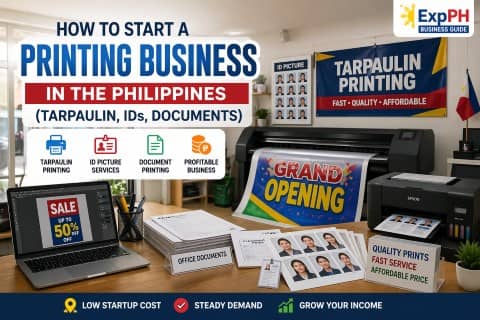
Starting a printing business Philippines is a practical and scalable small business idea that suits both beginners and aspiring entrepreneurs. Demand remains strong because people regularly need printed materials such as school requirements, government forms, business documents, and event tarpaulins. This constant need exists in both urban and provincial areas, making it a reliable option for those who want a business that can generate steady income and adapt to different customer needs.
If you are looking for a business that offers consistent customers, flexible services, and manageable startup costs, this guide is designed to help you succeed. It will walk you through each step in a clear and practical way, from choosing your services and equipment to setting up operations and growing your income. By following this guide, you can build a strong foundation and confidently start your printing business in the Philippines.
If you are still deciding whether a printing business is the right fit,
explore our full guide on Best Profitable Small Business Ideas in the Philippines (Scalable Models 2026) to discover other high income and scalable opportunities. Find the best option that matches your budget, skills, and long term goals.
Table of Contents

1. Why a Printing Business in the Philippines Is a Smart Choice
A printing business Philippines is a practical venture because demand remains steady across many sectors. Students, professionals, and entrepreneurs rely on printed materials daily, making this business relevant in both urban and provincial areas. It offers flexibility and the potential for consistent income year round.
Key Reasons Why This Business Works
- Schools require printed assignments, IDs, and project materials throughout the academic year
- Businesses depend on receipts, flyers, brochures, and tarpaulins for operations and marketing
- Government transactions often need printed forms, copies, and supporting documents
- Events such as birthdays, fiestas, and community gatherings require tarpaulin banners and signage
- Online sellers use printed labels, invoices, and promotional materials for their products
Because of this wide range of customers, you can serve different needs every day. This diversity helps maintain a steady flow of income and reduces the risk of slow periods, making the business more stable and sustainable over time.
2. Types of Printing Services You Can Offer
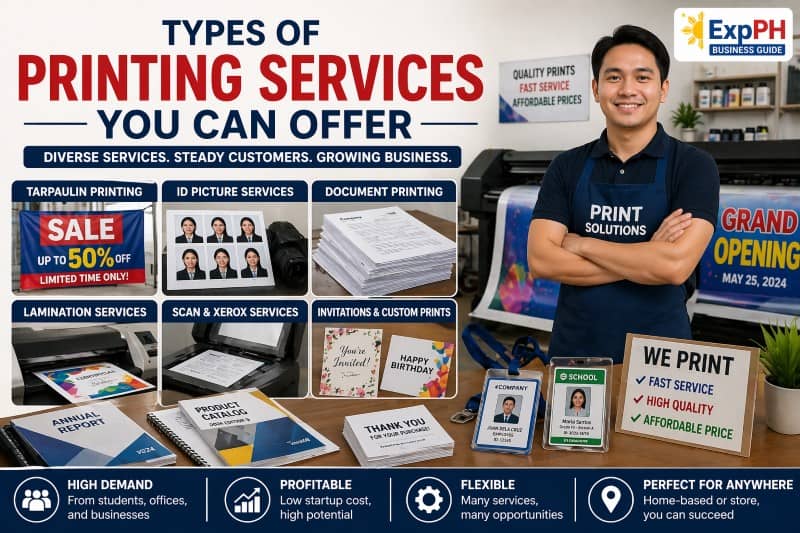
Before starting your printing business Philippines, decide which services to prioritize based on your budget and target market. You can begin with basic offerings and expand as demand grows. A focused approach helps manage costs, improve service quality, and build a loyal customer base over time.
Tarpaulin Printing
Tarpaulin printing is one of the most profitable services because it allows higher pricing compared to standard document printing. It is widely used for promotions and events, making it a strong income source. Beginners can start by outsourcing before investing in their own equipment.
Common uses include:
- Birthday and event banners
- Business promotions and advertisements
- Political campaigns and public announcements
This service may require a tarpaulin printer, but outsourcing to a reliable supplier is a practical option when starting with limited capital.
ID and Photo Printing
ID and photo printing provides steady demand throughout the year, especially in areas near schools, offices, and government institutions. Customers often need quick and affordable photo services, making this a reliable daily income stream for small printing businesses.
You can offer:
- School IDs
- Company or office IDs
- 1×1, 2×2, and passport-size photos
This service is easy to manage and requires minimal equipment, yet it consistently attracts repeat customers.
Document Printing and Photocopying
Document printing and photocopying form the foundation of most printing businesses. These services are used daily by students, employees, and business owners, making them essential for steady operations and regular customer flow.
Services include:
- Black and white printing
- Colored printing
- Photocopying
- Scanning
This setup performs best in locations near schools, review centers, offices, or government buildings where document demand remains constant.
3. Capital Requirements for a Printing Business Philippines
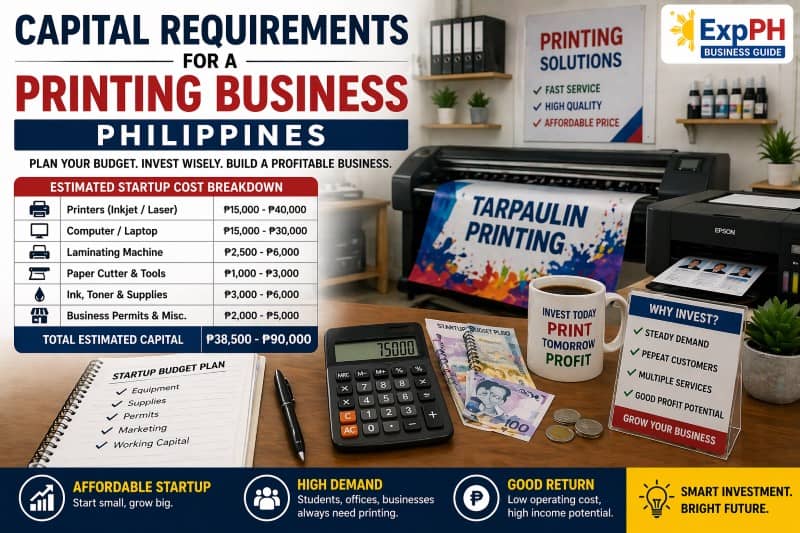
The startup cost for a printing business Philippines depends on your chosen scale, whether you begin at home or open a physical shop. Your budget affects the equipment, services, and capacity you can offer, so planning carefully helps avoid overspending and supports steady business growth.
Small Home-Based Setup (₱15,000 to ₱50,000)
You can start a small printing business at home with basic tools that cover essential services. This setup keeps costs low while allowing you to serve nearby customers or online clients. It is a practical option for beginners testing the market before expanding operations.
You can start with:
- Basic printer (inkjet or continuous ink system)
- Bond paper and photo paper
- Laptop or desktop computer
- Basic editing software
This setup is ideal for beginners who want to start small, minimize risk, and gradually grow their printing business.
Medium Setup with Shop (₱80,000 to ₱200,000+)
A medium setup with a physical shop requires higher investment but allows you to handle more customers and offer additional services. This option is suitable if you want a stable location and a stronger presence in your local area.
Includes:
- Laser printer for bulk printing
- Photocopier machine
- Tarpaulin printer or supplier partnership
- Laminating machine
- Shop rental and signage
This setup helps you expand your services, attract more walk-in customers, and increase your earning potential over time.
4. Equipment You Need to Start a Printing Business in the Philippines
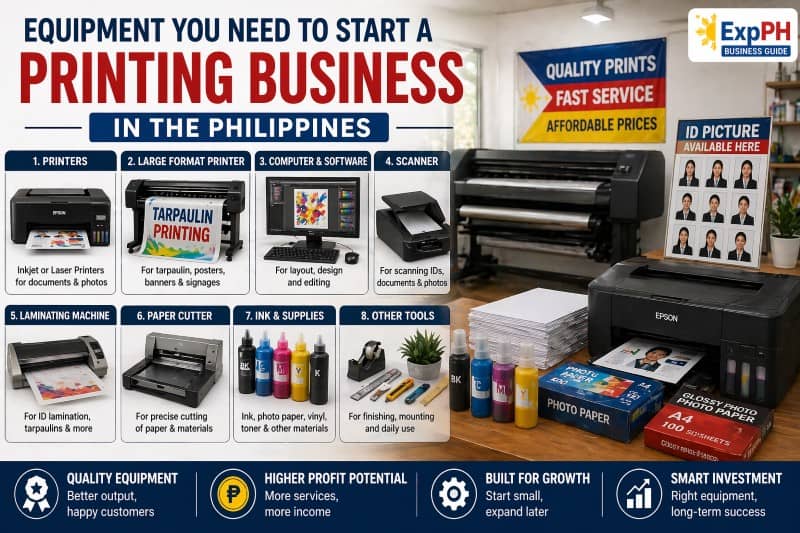
Choosing the right equipment is important for maintaining quality and improving efficiency in your printing business Philippines. Reliable tools help reduce errors, speed up production, and ensure customer satisfaction. Start with practical equipment that matches your budget and service focus to build a strong foundation.
Essential Equipment
Begin with core equipment that supports your daily printing needs. These tools allow you to handle common customer requests while keeping your initial investment manageable. Focus on durability and performance to avoid frequent repairs and interruptions in your operations.
Essential equipment includes:
- Inkjet printer (for photos and colored prints)
- Laser printer (for fast document printing)
- Computer or laptop
- Laminating machine
- Paper cutter
These items are enough to start offering basic services and generate income from day one.
Optional but Recommended
As your business grows, adding more equipment can expand your services and increase your earning potential. These tools are not required at the beginning but can help you attract more customers and handle larger or specialized orders.
Optional but recommended equipment:
- Photocopier machine
- Tarpaulin printer
- Heat press machine (for shirts and mugs)
Starting with essential equipment first is a practical strategy, then reinvesting your profits into upgrades helps your business grow steadily without unnecessary financial pressure.
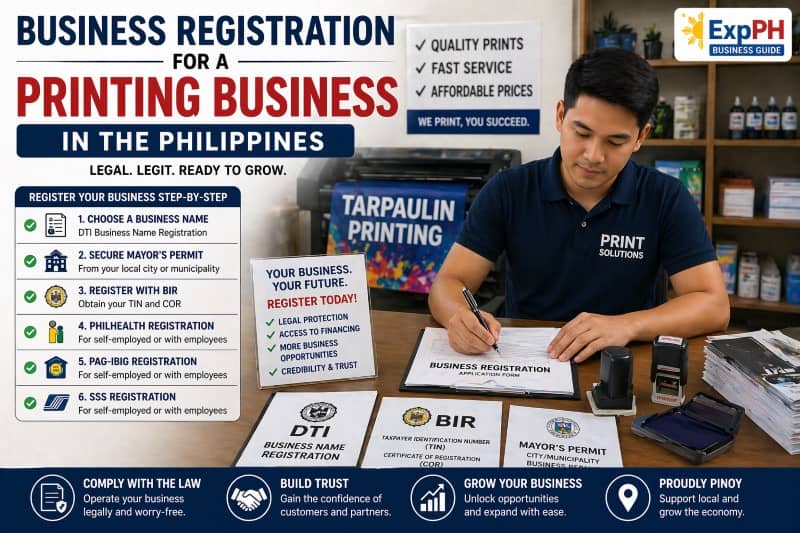
5. Business Registration for a Printing Business in the Philippines
To operate your printing business Philippines legally, you must complete the required registrations with local and national agencies. Proper registration ensures compliance with government regulations, builds credibility, and allows you to issue official receipts, which is important for gaining customer trust and handling larger transactions.
Step-by-Step Registration
Follow these steps to register your printing business and begin operations without legal issues. Each step is important for securing permits and meeting tax requirements in the Philippines.
- Register your business name with the Department of Trade and Industry (DTI)
- Get a Barangay Clearance from your local barangay office
- Apply for a Mayor’s Permit from your city or municipal hall
- Register with the Bureau of Internal Revenue (BIR)
For official guidelines and updated requirements, you can visit the Bureau of Internal Revenue website: https://www.bir.gov.ph
Completing these steps helps you operate smoothly, avoid penalties, and establish a professional reputation for your printing business in the Philippines.
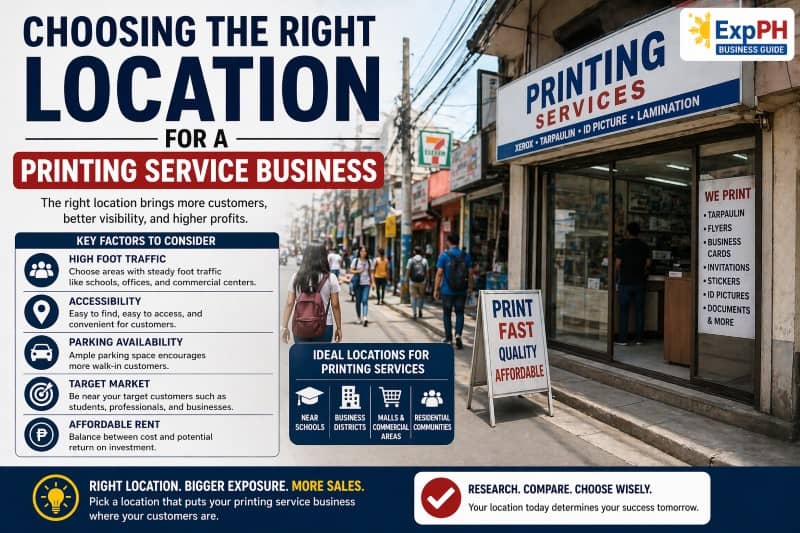
6. Choosing the Right Location for a Printing Service Business
Location plays a major role in the success of your printing business Philippines. A well-chosen area increases visibility, attracts regular customers, and supports steady daily income. Placing your shop where people frequently need printing services can significantly improve your chances of long term growth.
Best Locations
Selecting a strategic location helps you reach your target market more effectively and generate consistent walk-in traffic. Focus on areas where printing needs are part of daily routines and transactions.
- Near schools or universities
- Close to government offices
- Inside or near internet cafés
- Near markets or busy streets
High foot traffic in these areas increases customer exposure and improves your chances of getting repeat clients.
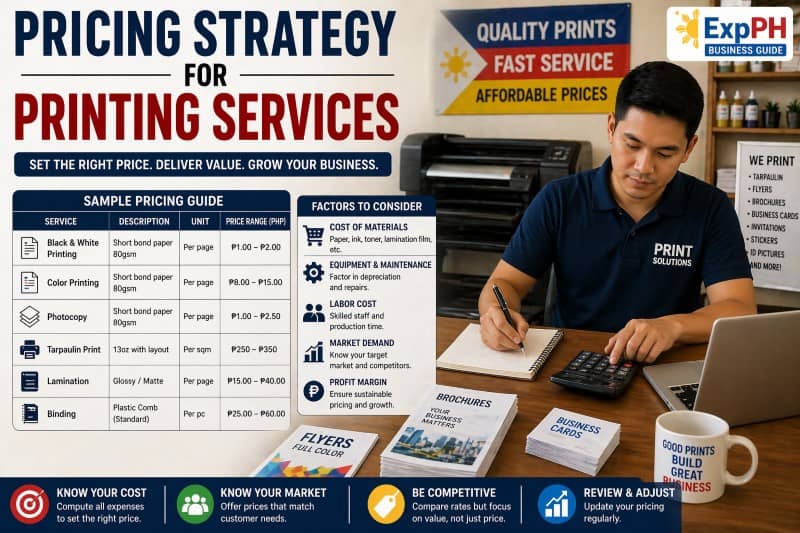
7. Pricing Strategy for Printing Services
Setting the right pricing is important for keeping your printing business Philippines competitive while ensuring consistent profit. Your rates should cover all operating costs and still remain affordable for your target market. A balanced pricing strategy helps attract customers while sustaining long term business growth.
Sample Pricing (Guide Only)
Use these sample prices as a starting point when setting your rates. Adjust based on your location, competition, and operating costs to stay competitive without sacrificing profit.
- Black and white print: ₱2 to ₱5 per page
- Colored print: ₱10 to ₱25 per page
- ID photo: ₱50 to ₱150
- Tarpaulin: ₱120 to ₱250 per square foot
These prices may vary depending on demand, quality, and turnaround time, so regular evaluation is important.
Always Consider
Before finalizing your pricing, make sure to calculate all expenses involved in each service. This ensures that every transaction contributes to your profit and keeps your business financially stable.
- Ink cost
- Paper cost
- Electricity usage
- Time and labor
Careful cost tracking allows you to price your services correctly, avoid losses, and maintain a sustainable printing business in the Philippines.
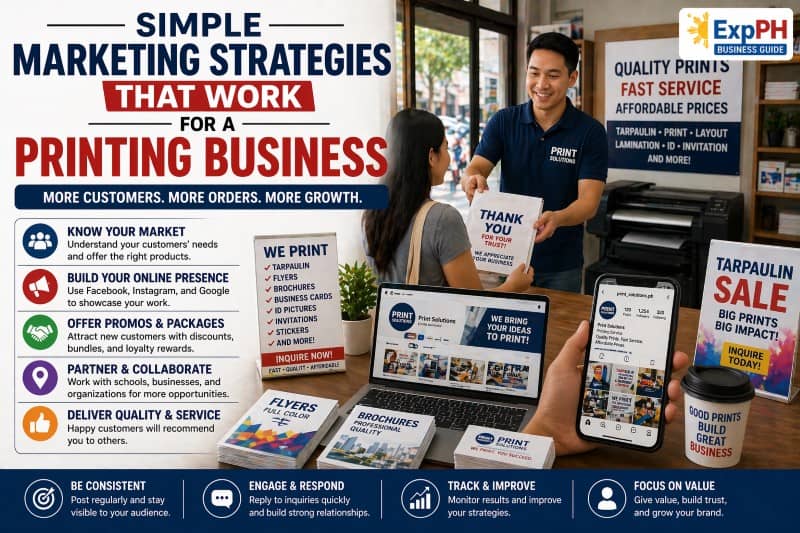
8. Simple Marketing Strategies That Work for a Printing Business
Even a small printing business Philippines can grow quickly with the right promotion and consistent effort. You do not need a large budget to attract customers. Simple and practical marketing strategies can help build awareness, increase daily inquiries, and turn first time clients into repeat customers.
Offline Marketing
Offline strategies remain effective, especially in areas with high foot traffic. These methods help you connect with nearby customers who need quick and accessible printing services.
- Place a visible and clear signboard outside your shop
- Offer student discounts to attract regular school customers
- Partner with nearby schools or offices for bulk or repeat orders
These approaches help establish your presence in the community and build trust with local customers.
Online Marketing
Online promotion allows you to reach more people beyond your physical location. It also helps showcase your work and communicate with customers more efficiently.
- Create a Facebook page for your business
- Post sample prints and tarpaulin designs regularly
- Offer delivery options for bulk orders
- Join local community groups to promote your services
Consistency is important in online marketing. Even simple and regular posts can attract new customers and encourage repeat business over time.
9. Common Mistakes to Avoid in a Printing Business
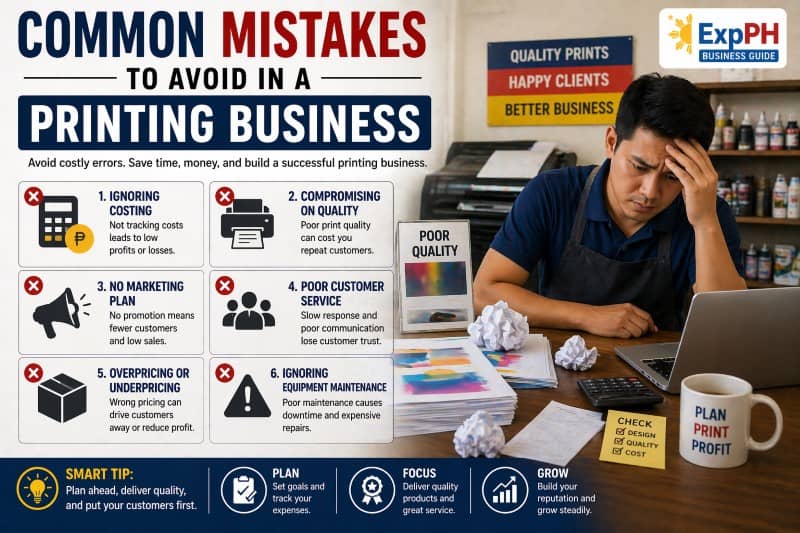
Starting a printing business Philippines is relatively simple, but common mistakes can slow your progress and reduce profitability. Being aware of these issues early helps you make better decisions, protect your investment, and build a stable foundation for long term success.
Common Mistakes
Avoid these frequent errors that many beginners experience when starting their printing business. Correct planning and discipline can help you prevent unnecessary losses and setbacks.
- Buying expensive machines too early without enough demand
- Ignoring regular maintenance of printers and equipment
- Setting prices too low and reducing your profit margins
- Choosing a poor location with low customer traffic
- Not offering multiple services to meet different customer needs
Focusing on steady and controlled growth is more effective than rushing expansion, allowing your business to remain sustainable and profitable over time.
10. Tips to Grow Your Printing Business
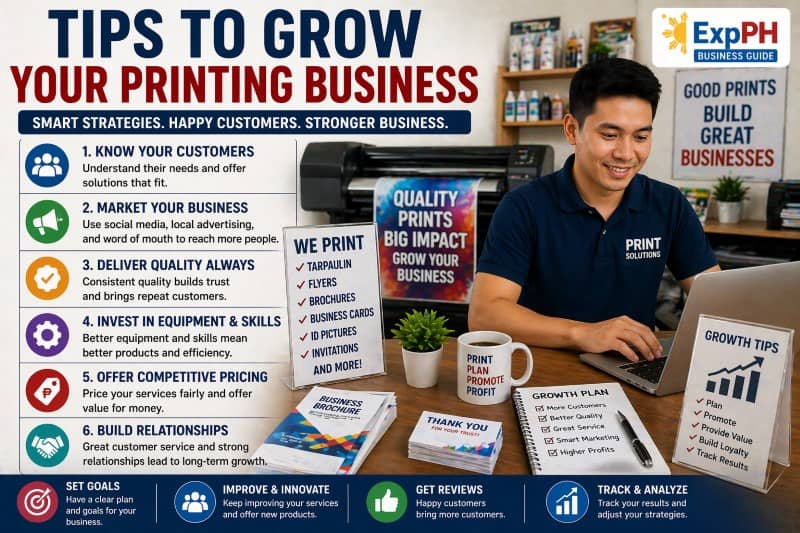
Once your printing business Philippines becomes stable, focus on expanding your services to increase income and attract more customers. Growth should be gradual and based on actual demand. Reinvesting your earnings into useful upgrades helps strengthen your operations and build long term success.
Growth Strategies
These practical strategies can help you scale your printing business while maintaining quality and customer satisfaction. Choose options that match your budget and local market needs.
- Add layout and design services to increase value for customers
- Offer rush printing with higher pricing for urgent requests
- Accept bulk orders from businesses, schools, and organizations
- Sell school supplies or office items to increase daily sales
- Expand into customized products such as shirts and mugs
Smart reinvestment of profits allows your business to grow steadily while improving your services and overall customer experience.

Final Thoughts on Starting a Printing Business in the Philippines
Starting a printing business Philippines is a practical and beginner friendly venture supported by steady daily demand from students, professionals, and small businesses. Whether you begin at home or operate a small shop, success depends on choosing the right location, using reliable equipment, and maintaining consistent service quality that meets customer expectations.
Focus on delivering fast, reliable, and affordable printing services that solve everyday customer needs. Build strong relationships by providing good service and clear communication, especially with students and small businesses who often require repeat transactions. A loyal customer base can help turn your printing business into a stable and long term source of income.
Consistency plays a key role in long term success. By managing your costs carefully, maintaining your equipment, and improving your services over time, you can strengthen your operations and increase profitability. With patience and smart decisions, this simple business can grow into a sustainable and rewarding venture in the Philippines.
FAQs About a Printing Business in the Philippines
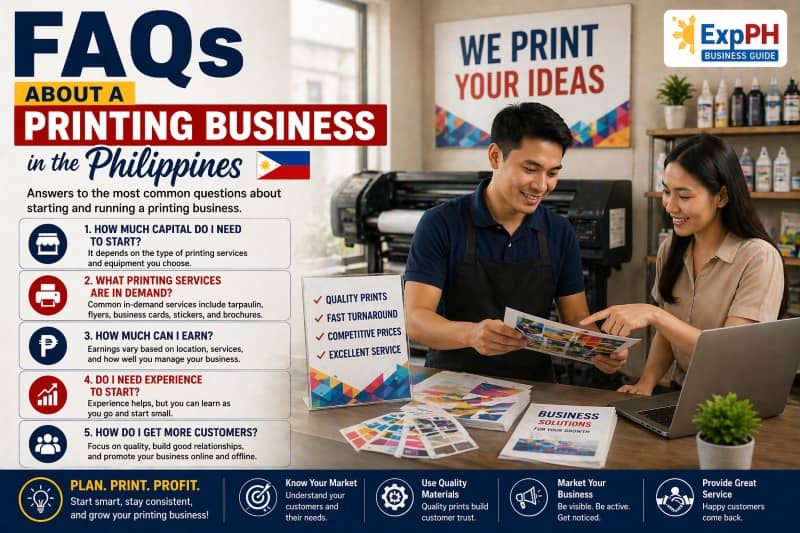
1. How much capital do I need to start a printing business in the Philippines?
You can start with around fifteen thousand pesos for a basic home setup, covering a printer, supplies, and a computer for simple daily printing tasks.
2. Is a printing business profitable in the Philippines?
A printing business remains profitable due to steady demand from students, offices, and events, when you manage costs well and offer reliable and fast services.
3. What equipment do I need to start a printing business?
Common equipment includes an inkjet printer, laser printer, computer, and basic tools like laminator and cutter, allowing you to handle most standard customer printing needs.
4. Can I start a printing business at home?
You can run a printing business from home if space is organized, equipment is reliable, and you comply with registration requirements and customer service expectations.
5. Do I need to register my printing business?
Registering your business is important because it allows you to issue official receipts, avoid penalties, and build trust with customers and potential business partners future.
6. What is the best location for a printing business?
Best locations include areas near schools, offices, or busy streets where people frequently need printing services, increasing visibility and chances of attracting repeat customers daily.
7. How should I price my printing services?
Pricing should cover your costs and remain competitive, ensuring you profit while attracting customers who value quality, reliability, and reasonable rates for everyday printing services.
8. How can I market my printing business effectively?
Marketing your printing business can start with methods like social media posting, signage, and partnerships with nearby schools or offices to gain consistent local customers.
9. What common mistakes should I avoid?
Common mistakes include overspending on equipment, poor location choice, and neglecting maintenance, which can reduce profits and affect service quality and customer satisfaction over time.
10. How can I grow my printing business?
You can grow your business by adding services, improving quality, and reinvesting profits into better equipment, helping you attract customers and increase your income steadily.
Want a complete roadmap for starting any business in the Philippines?
Read our Complete Guide to Starting a Business in the Philippines (Registration, Costs, and Steps 2026) and learn everything from legal registration to startup costs and step by step execution. It is the perfect next step to turn your business plan into reality.
Related Guides:
- How to Start a Hardware Store in the Philippines
- How to Start a Franchise Business in the Philippines (Costs, Pros, and Risks Explained)
Printing Business Philippines Quiz
Test your knowledge about starting a printing business Philippines with this quick and practical quiz. It covers key concepts such as equipment, capital, services, and strategies to help you succeed.
Results


#1. What is a common printing service?
#2. Who are primary customers?
#3. What is a basic equipment?
#4. Where is best location?
#5. What affects pricing?
#6. What is a marketing method?
#7. What is a common mistake?
#8. What helps business grow?
#9. What service is consistent?
#10. Why register business?
We appreciate your time and effort in completing this quiz
Feel free to share your score or experience in the comments and help others learn from your journey.

A Filipino web developer with a background in Computer Engineering. Founder of ExpPH Blog and ExpPH Business Guide, two Philippines-focused platforms covering OFW guidance, business, finance, freelancing, travel, and lifestyle. Passionate about helping Filipinos grow, he creates practical content that educates, empowers, and inspires readers nationwide.