

The Philippine digital economy continues to grow as more consumers adopt online transactions and remote work arrangements. Across the country, Filipinos are shopping through e-commerce platforms, using e-wallets for daily payments, and launching small ventures from home. This shift creates real opportunities for individuals seeking flexible income sources. If you are exploring Online Business Ideas Philippines entrepreneurs can start today, this guide presents practical and market-tested options suited to local demand and realistic startup conditions.
This article is intended for aspiring entrepreneurs, freelancers, and side hustlers who need clear and reliable guidance. Whether you are a student earning extra income, an employee planning a transition, an OFW family member managing finances, or a full-time parent seeking flexibility, the strategies discussed here are grounded in Philippine market realities. The focus remains on actionable insights that reflect local regulations, consumer behavior, and sustainable business practices.
If you want a complete roadmap to turning these ideas into a successful business,
explore A Practical Guide to Building a Sustainable Business in the Philippines and learn how to plan, launch, and grow your business effectively.
Table of Contents

Why Online Businesses Are Thriving in the Philippines
Online businesses continue to grow across the Philippines as digital access becomes more affordable and consumer behavior shifts toward convenience. Entrepreneurs can now reach customers nationwide without opening a physical store. This environment creates strong opportunities for Filipinos who want flexible income sources with manageable startup requirements.
Several factors make the Philippines ideal for online ventures:
- High social media usage, especially Facebook and TikTok
- Widespread use of digital wallets like GCash and Maya
- Growing trust in e-commerce platforms such as Shopee and Lazada
- Lower startup costs compared to traditional businesses
Data from the Philippine Statistics Authority shows that digital transactions and online selling continue expanding across many regions. The shift toward remote work and online shopping accelerated this trend and encouraged more households and small businesses to participate in digital commerce.
As a result, demand remains strong for practical and localized Online Business Ideas Philippines entrepreneurs can realistically start. With proper planning and clear strategy, aspiring business owners can enter the market with minimal capital while building sustainable income opportunities.
How to Choose the Right Online Business for You
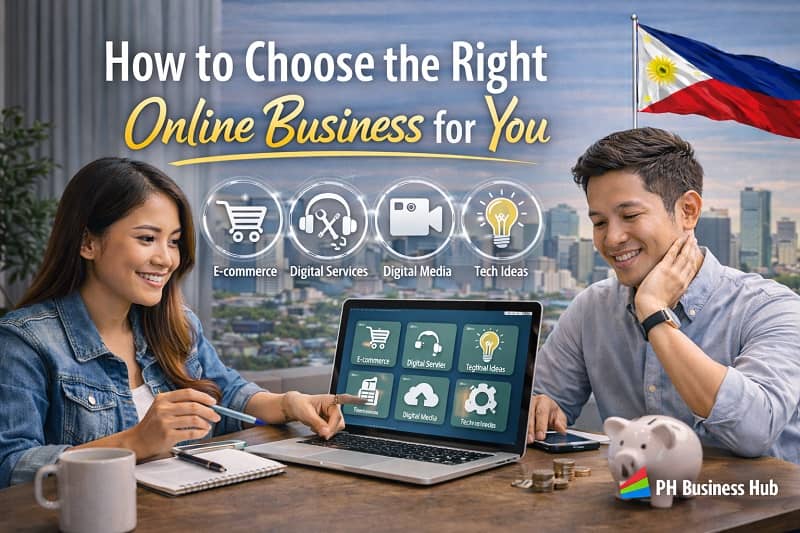
Not all Online Business Ideas Philippines entrepreneurs explore will match their skills, resources, or long term goals. Choosing the right path requires honest self assessment and realistic planning. A clear decision reduces wasted effort and increases the chances of building a sustainable business.
Ask yourself:
- What skills do I already have?
- How much capital can I risk?
- Do I prefer selling products or offering services?
- Can I commit consistently for at least six months?
After evaluating these factors, select one idea and focus on developing it properly. Avoid switching between trends too quickly. Consistent effort, gradual improvement, and disciplined execution often produce stronger results than chasing every new opportunity.
1. E-commerce and Online Selling
E-commerce remains one of the most accessible ways to start a digital venture in the country. With established marketplaces and strong consumer demand, entrepreneurs can sell products nationwide without renting physical space. This model fits beginners seeking structured systems and manageable startup risks.

Reselling Trending Products
Reselling is among the most practical Online Business Ideas Philippines beginners can launch today. The process involves sourcing in-demand products at lower prices and selling them at a reasonable markup through online platforms. It requires basic research, supplier coordination, and consistent marketing effort.
You can source products from:
- Local wholesalers
- Facebook suppliers
- Alibaba or international suppliers
- Divisoria-based distributors
After securing inventory, sellers can distribute products through established online marketplaces that already attract large Filipino audiences. These platforms provide built-in traffic, payment processing, and logistics support, which simplifies operations for new entrepreneurs entering e-commerce.
You can sell through:
- Shopee
- Lazada
- Facebook Marketplace
- TikTok Shop
To improve profitability, focus on items with steady demand and repeat buyers. Popular categories often include practical consumer goods that solve everyday needs and appeal to a broad market across different income groups.
High-demand categories include:
- Beauty and skincare
- Kitchen tools
- Car accessories
- Home organization products
Before setting your final price, calculate all expenses carefully. Include product cost, shipping fees, packaging materials, and platform charges. Proper cost computation protects your margins and ensures your online business remains financially sustainable over time.
Print-on-Demand Merchandise
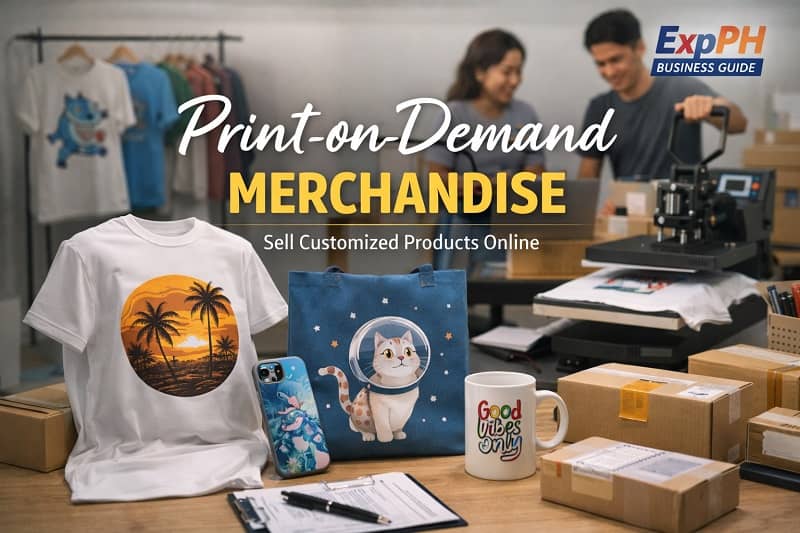
Print-on-demand is a practical option for entrepreneurs who want lower inventory risk and minimal upfront investment. Instead of stocking large quantities, products are created only after a customer places an order. This reduces unsold inventory and helps beginners manage cash flow more efficiently.
You can sell:
- Customized shirts
- Mugs
- Tote bags
- Stickers
In this model, you partner with a printing supplier who manages production and shipping. Your main responsibilities include design creation, marketing, and customer service. This setup allows you to focus on branding and sales while the supplier handles operational fulfillment.
Print-on-demand performs well in the Philippine market for several cultural and practical reasons. Many buyers value meaningful and customized products that reflect personality, humor, or shared experiences.
This model is strong in the Philippines because:
- Many customers buy for birthdays and special occasions
- Personalized gifts are popular
- Local humor and Filipino quotes sell well
2. Service-Based Online Businesses
Service-based online businesses are ideal for individuals who prefer skill-driven income over product selling. Most require minimal capital since the main investment is expertise and reliable internet access. This model suits professionals, graduates, and experienced workers seeking flexible and scalable digital opportunities.

Freelancing Services
Freelancing remains one of the most practical Online Business Ideas Philippines professionals pursue. Instead of selling physical goods, freelancers offer specialized services to clients locally or abroad. Income potential depends on skill level, experience, communication ability, and consistency in delivering quality work.
High-demand services include:
- Virtual assistance
- Social media management
- Graphic design
- Video editing
- Web development
- Bookkeeping
Beginners can start by creating profiles on established freelance marketplaces that connect Filipino professionals with clients. These platforms provide structured systems for job applications, contracts, and payments which make entry easier for new service providers.
Platforms to start:
- Upwork
- OnlineJobs.ph
- Fiverr
If you have accounting knowledge, bookkeeping is especially valuable for small Philippine businesses that need help with expense tracking, invoicing, and basic financial reporting. Many micro and small enterprises prefer outsourcing this function instead of hiring full-time staff.

Online Coaching or Consulting
Online coaching and consulting are strong options for individuals with proven expertise and practical experience. Instead of hourly freelance tasks, you provide structured guidance that helps clients solve specific problems or improve measurable results.
You may specialize in:
- Business
- Fitness
- Academics
- Career coaching
- Financial literacy
Sessions can be delivered through Zoom or Google Meet, allowing you to work with clients nationwide. If coaching becomes a steady source of income, register your business properly. For sole proprietorship guidance, visit the official Department of Trade and Industry website at https://www.dti.gov.ph.
3. Content Creation and Digital Media
Content creation has evolved from a casual hobby into a legitimate online business model in the Philippines. With the right strategy and consistency, creators can build audiences, establish authority, and generate income through multiple digital channels while serving specific market needs.

Blogging for Niche Audiences
Blogging remains a strong option for individuals who prefer writing and structured content. By focusing on a clear niche, you attract targeted readers who actively search for helpful information. Choosing a defined audience improves credibility and long term growth potential.
You can create a blog focused on:
- Personal finance Philippines
- Small business tips
- OFW guides
- Technology reviews
- Food reviews
Once traffic grows, blogs can generate revenue through different monetization strategies. Income usually increases gradually as content volume, search visibility, and reader trust improve over time.
Monetization options:
- Google AdSense
- Affiliate marketing
- Sponsored posts
- Digital product sales
The key to sustainable blogging is publishing consistent and high value content that addresses real Filipino concerns. Articles should provide practical guidance, accurate information, and actionable steps that readers can apply in their daily financial or business decisions.

YouTube or TikTok Monetization
Video platforms offer another scalable opportunity for Filipino creators. If you are confident speaking on camera or presenting visuals, you can build an audience through educational or informative content tailored to local interests.
You can build a channel around:
- Budget tips
- Business tutorials
- Daily life in the Philippines
- Educational explainers
Creators typically earn through diversified revenue streams once their channel gains traction and audience engagement. Growth may take time, but consistent publishing strengthens visibility and credibility.
Income streams include:
- Ad revenue
- Brand deals
- Affiliate commissions
While content creation requires patience and discipline, it can scale significantly over time. With focused positioning and steady output, creators can transform digital platforms into sustainable online businesses.
4. Digital Products and Technology-Based Ideas
Digital products and technology services offer scalable opportunities for Filipino entrepreneurs who want location-independent income. Unlike physical goods, digital offerings can be created once and sold repeatedly. This model supports long term growth and aligns well with the expanding digital economy in the Philippines.

Selling Online Courses
Online learning demand continues to grow as more Filipinos seek practical skills for employment, freelancing, and entrepreneurship. If you have proven expertise, you can package your knowledge into structured lessons that guide learners through clear and measurable outcomes.
Many Filipinos want to learn:
- Freelancing skills
- English improvement
- Business setup guidance
- Basic investing knowledge
Courses can be distributed across various digital channels depending on your audience and marketing strategy. Each platform offers different levels of control, visibility, and revenue sharing arrangements.
You can sell courses through:
- Your own website
- Facebook groups
- Learning platforms
To increase value, develop organized modules supported by worksheets, templates, and step by step systems. Clear progression and practical exercises improve completion rates and strengthen your reputation as a reliable educator in your niche.
Website Development and Tech Services
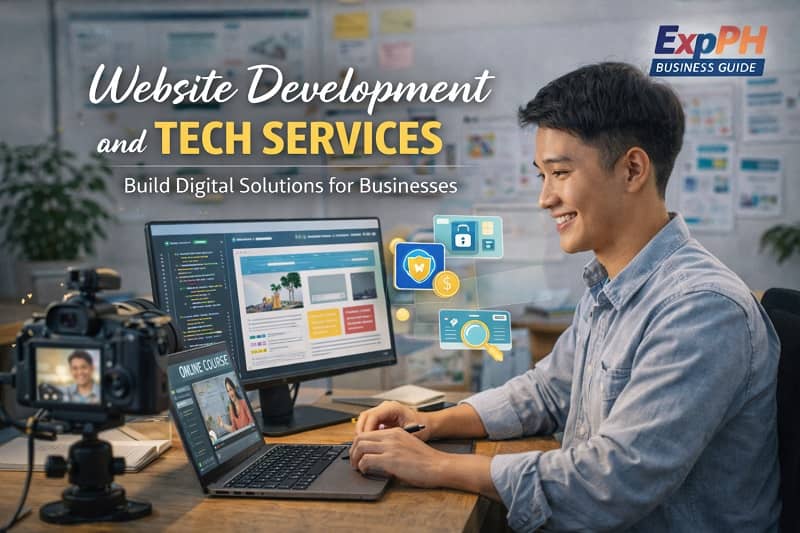
As more MSMEs establish online presence, the need for technical support continues expanding. Small businesses often require professional assistance to compete effectively in digital marketplaces and improve operational efficiency.
Demand remains strong for:
- Website creation
- E-commerce setup
- Payment gateway integration
- SEO optimization
If you have skills in PHP, WordPress, or Shopify, you can build a sustainable service business under the Technology Philippines pillar. Providing reliable and results driven solutions positions you well within competitive Online Business Ideas Philippines opportunities.

Financial Considerations Before Starting
Starting an online business is generally more affordable than opening a physical store, yet proper planning remains essential. Entrepreneurs must evaluate costs, expected income, and financial risks before launching. Careful preparation strengthens decision making and reduces the likelihood of cash flow problems during early operations.
Capital Planning
Before launching your online venture, create a clear and realistic budget. Identifying all necessary expenses helps you avoid underestimating capital requirements and protects your operations during the first few months of limited revenue.
List your:
- Initial tools or equipment cost
- Internet expenses
- Marketing budget
- Emergency buffer fund
Avoid relying on high interest loans during the startup phase unless your business model has been tested and validated. Starting with manageable capital reduces financial pressure and allows you to grow steadily based on actual performance.

Legal Registration and Taxes
As your online business generates consistent income, formal registration becomes an important next step. Legal compliance protects your operations, strengthens credibility, and positions your venture for sustainable expansion within the Philippine market. Proper documentation also reduces risks related to penalties or regulatory issues.
Consider registering with:
- DTI for sole proprietorship
- BIR for tax compliance
- Barangay clearance
Meeting these requirements enhances professionalism and increases opportunities for business partnerships. Many clients and suppliers prefer working with registered enterprises that follow national and local regulations.
Compliance allows you to:
- Issue official receipts
- Open business bank accounts
- Work with corporate clients
Following registration and tax guidelines reflects strong financial discipline and responsible management. This approach aligns with Finance Philippines best practices and supports long term growth through transparency, stability, and improved market trust.

Final Thoughts on Online Business Ideas in the Philippines
The Philippine digital economy continues to expand as more consumers embrace online transactions and digital services. Opportunities are accessible, yet long term success requires discipline, clear strategy, and consistent execution. Entrepreneurs who plan carefully are better positioned to compete and grow sustainably.
The best Online Business Ideas Philippines entrepreneurs pursue are those that:
- Solve real local problems
- Match personal skills
- Follow proper financial planning
- Comply with Philippine regulations
Starting small allows you to test your concept without excessive risk. Gather feedback, refine your offer, and strengthen operations before scaling. Responsible growth helps protect cash flow and ensures your business remains stable during market changes.
Online business is not about instant wealth or shortcuts. It focuses on building steady income streams that improve over time. With patience and practical planning, the Philippine market offers meaningful potential for sustainable and measurable success.
To build a lasting venture, prioritize value before profit. Deliver quality service, maintain financial discipline, and strengthen customer relationships. This mindset builds trust, establishes authority, and supports long term growth in a competitive digital environment.

FAQs About Online Business Ideas in the Philippines
What are the most profitable online business ideas in the Philippines?
Profitable online businesses include freelancing, e-commerce reselling, digital marketing services, and content creation. Success depends on demand, skills, consistent execution, and proper financial management planning.
How much capital is needed to start an online business in the Philippines?
Startup capital varies by model. Service-based businesses may require minimal investment, while e-commerce needs product sourcing budget, marketing funds, internet access, and basic equipment.
Do I need to register my online business in the Philippines?
If earning regularly, registration is recommended. You may register with DTI, secure barangay clearance, and comply with BIR requirements for tax reporting and credibility.
Which platforms are best for selling products online locally?
Popular platforms include Shopee, Lazada, Facebook Marketplace, and TikTok Shop. Each offers built-in traffic, seller tools, and payment systems suited for Philippine customers.
Is freelancing considered a legitimate online business?
Yes, freelancing is a legitimate service-based business. Filipino freelancers offer virtual assistance, design, writing, and technical services to local and international clients.
What skills are in demand for online services?
High-demand skills include social media management, bookkeeping, graphic design, video editing, website development, customer support, and digital marketing for small businesses.
What payment methods are commonly used in Philippine online businesses?
Beginners should assess their skills, interests, available time, and budget. Choose one focused idea, research market demand, then test gradually before scaling.
What payment methods are commonly used in Philippine online businesses?
Common payment methods include GCash, Maya, bank transfers, and cash on delivery. Offering multiple options improves customer convenience and trust.
How long does it take to see profit from an online business?
Profit timelines vary. Some service businesses earn within weeks, while e-commerce may take months. Consistency, marketing effort, and cost control influence results.
What are common mistakes when starting an online business?
Common mistakes include poor pricing, lack of market research, inconsistent marketing, ignoring customer service, and failing to track expenses or comply with regulations.
Want to turn these ideas into a real business?
Read the complete step-by-step guide here: How to Start a Small Business in the Philippines (Step-by-Step Guide)
Related Guides:
- How Much Capital Do You Really Need to Start a Business in the Philippines
- Types of Businesses You Can Register in the Philippines
HD Quiz Hub!
Test your knowledge about practical online business opportunities in the Philippines.
Results


#1. Which platform is popular for local online selling?
#2. Which online business requires minimal capital?
#3. Which payment method is common locally?
#4. What must be computed before pricing?
#5. Which agency handles sole proprietorship registration?
#6. What helps build online trust?
#7. Which skill is in high demand?
#8. What is a low-risk selling model?
#9. What should beginners focus on?
#10. What supports long-term growth?
Thank you for taking the quiz.
Share your score or experience in the comments and let us know which online business idea interests you most.

A Filipino web developer with a background in Computer Engineering. Founder of ExpPH Blog and ExpPH Business Guide, two Philippines-focused platforms covering OFW guidance, business, finance, freelancing, travel, and lifestyle. Passionate about helping Filipinos grow, he creates practical content that educates, empowers, and inspires readers nationwide.