

Starting a laundry business Philippines is one of the most practical and scalable small business ideas today. With busy lifestyles, urban living, and the increasing number of working Filipinos and students, demand for reliable laundry services continues to grow. Many households and individuals prefer outsourcing this task to save time and effort, which creates a steady market for entrepreneurs who can provide consistent and quality service in their local communities.
Whether you are an OFW planning to invest back home or a local entrepreneur seeking a stable income source, this guide will help you understand the process clearly. It covers the essential steps, from choosing the right business model and estimating startup costs to managing operations and calculating return on investment for long term success.
Before starting your laundry business, make sure you choose the right path.
Explore our beginner-friendly guide to selecting the best small business in the Philippines.
How to Choose a Small Business in the Philippines (2026 Guide for Beginners)
Table of Contents
Is a Laundry Business in the Philippines Worth It? (Costs, Profit, and Real ROI Guide)
A laundry business in the Philippines is a practical and sustainable investment, especially in urban areas where demand is consistent. With proper planning, a strategic location, and efficient operations, it can generate steady income and support long term business growth for entrepreneurs looking for a reliable opportunity.

1. Why Start a Laundry Business in the Philippines?
A laundry business Philippines is a practical option for entrepreneurs who want steady income with manageable startup costs. Unlike seasonal ventures, laundry services remain in demand throughout the year since people need clean clothes regularly, making it a reliable and sustainable business choice.
Key Advantages
- Recurring customers that generate stable and predictable income
- Simple business model that is easy to operate and manage daily
- Scalable setup that can grow from a small shop to multiple branches
- Suitable for both residential and commercial areas with consistent demand
Ideal Locations
- Near apartments and boarding houses with limited laundry space
- Close to universities and offices where people have busy schedules
- Inside or near residential communities with regular household demand
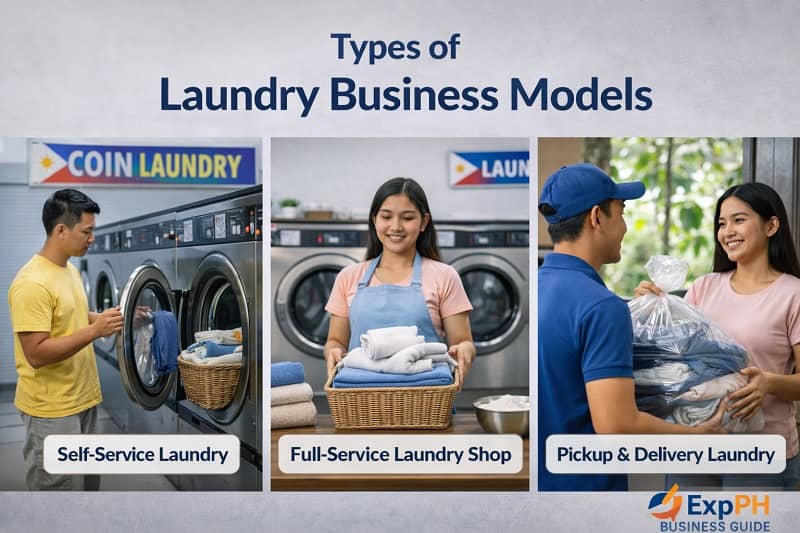
2. Types of Laundry Business Models
Choosing the right setup for your laundry business Philippines is essential for maximizing your investment and return on investment. Each model offers different advantages depending on your budget, target market, and level of involvement in daily operations.
1. Self-Service Laundry (Coin-Operated)
In this setup, customers handle washing and drying using your machines. This model is popular in urban areas where people prefer convenience and independence. It requires higher capital at the start but can generate steady income with minimal staff once operations are stable.
Pros:
- Less labor required since customers operate the machines themselves
- Higher profit margins over time with efficient usage and volume
Cons:
- Higher initial investment due to equipment and setup costs
- Requires regular maintenance to ensure machines remain functional and reliable
2. Full-Service Laundry Shop
In this setup, you handle washing, drying, and folding for customers, offering a complete and convenient service. This model is ideal in areas where people prefer to save time and avoid doing laundry themselves, especially in busy residential communities or working districts.
Pros:
- Lower startup cost compared to coin-operated setups with fewer machines required
- Greater control over service quality, ensuring consistent results and customer satisfaction
Cons:
- Labor-intensive operations that require daily hands-on management
- Requires hiring and supervising staff to maintain efficiency and service standards
3. Pickup and Delivery Laundry
In this setup, you collect laundry from customers and return it after washing, drying, and folding. This model focuses on convenience and is ideal for busy professionals and families. It can also be combined with a physical shop to expand your service reach.
Pros:
- Highly convenient for customers with limited time or mobility
- Can be combined with other laundry models to increase revenue streams
Cons:
Additional transportation costs for fuel, vehicle maintenance, and delivery staff
Requires careful logistics planning to manage schedules and routes efficiently

3. Laundry Business Philippines Startup Costs
The startup cost for a laundry business Philippines depends on your chosen model, location, and equipment needs. A small full-service shop requires less capital, while a self-service setup needs higher investment due to machines. Careful planning helps you control expenses and achieve faster return on investment.
Estimated Capital Breakdown
| Expense | Estimated Cost (PHP) |
|---|---|
| Washing Machines (2 to 4 units) | 80,000 to 300,000 |
| Dryers | 80,000 to 250,000 |
| Shop Renovation | 30,000 to 100,000 |
| Water Installation | 10,000 to 30,000 |
| Permits and Registration | 5,000 to 15,000 |
| Detergents and Supplies | 5,000 to 10,000 |
Total Estimated Capital
- Small setup: ₱150,000 to ₱300,000
- Medium setup: ₱300,000 to ₱700,000
- Larger setup: ₱700,000 and above

4. Business Registration in the Philippines
To legally operate your laundry business Philippines, you must complete the required business registrations and permits. Proper registration ensures compliance with local laws and protects your business from penalties. It also builds credibility and trust with customers who prefer dealing with legitimate and registered service providers.
Required Registrations
- DTI registration for sole proprietorship businesses
- Barangay clearance from your local barangay office
- Mayor’s permit from your city or municipal hall
- BIR registration for tax compliance and official receipts
For official guidelines, you can visit the Department of Trade and Industry website:
https://www.dti.gov.ph
Registering your business properly helps you avoid legal issues and ensures smooth operations. It also allows you to issue official receipts and access opportunities such as business partnerships, supplier accounts, and potential financing options in the future.
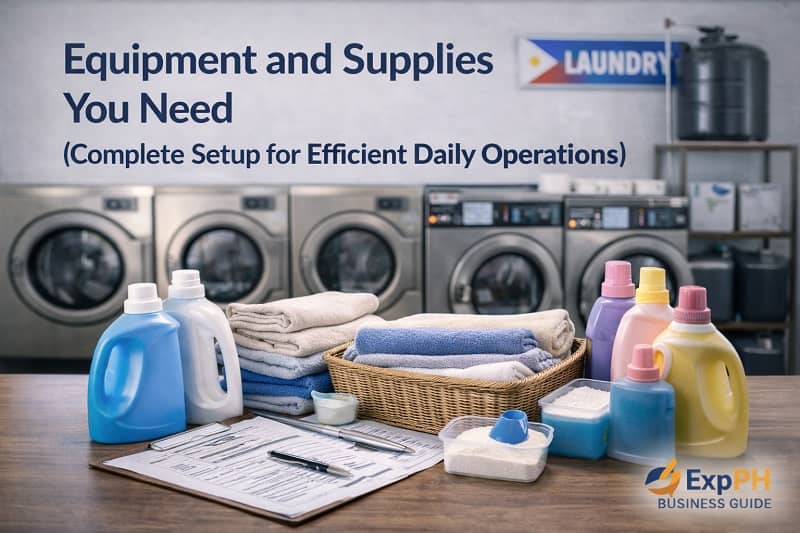
5. Equipment and Supplies You Need (Complete Setup for Efficient Daily Operations)
Choosing the right equipment and supplies is essential for running a smooth and efficient laundry business Philippines. Quality tools improve service speed and consistency while reducing long term maintenance costs. Investing in reliable machines and basic supplies helps ensure better customer satisfaction and stable daily operations.
Essential Equipment
- Washing machines with heavy-duty capacity for frequent daily use
- Spin dryers or tumble dryers for faster drying and better efficiency
- Water tanks and pumps to maintain steady water supply
- Weighing scale to measure laundry accurately and price fairly
Supplies
- Detergent and fabric conditioner for effective cleaning and freshness
- Plastic bags or proper packaging for organized and safe delivery
- Laundry baskets for sorting and handling clothes efficiently
Tip
Investing in energy-efficient machines helps reduce electricity and water consumption over time. Although the initial cost may be higher, it lowers monthly expenses and improves profitability. Efficient equipment also supports long term sustainability and reduces the risk of frequent breakdowns.
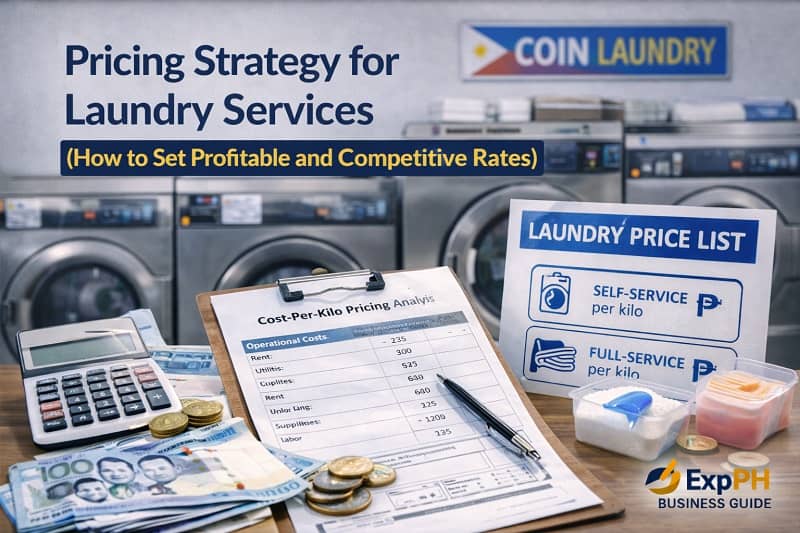
6. Pricing Strategy for Laundry Services (How to Set Profitable and Competitive Rates)
Setting the right pricing for your laundry business Philippines is essential to balance affordability and profitability. Your rates should reflect your costs, location, and service quality. A well-planned pricing strategy helps attract customers while ensuring your business remains sustainable and competitive in your area.
Common Price Range in the Philippines
- Wash and dry services typically range from ₱120 to ₱180 per load depending on location
- Full service including washing, drying, and folding usually costs ₱150 to ₱250 per load
- Per kilo laundry service is commonly priced between ₱25 to ₱40 per kilo
Pricing Tips
- Offer bundle promos to encourage repeat customers and increase customer loyalty
- Provide discounts for bulk orders to attract families and regular clients
- Study competitors in your area to align your pricing with local market demand and expectations
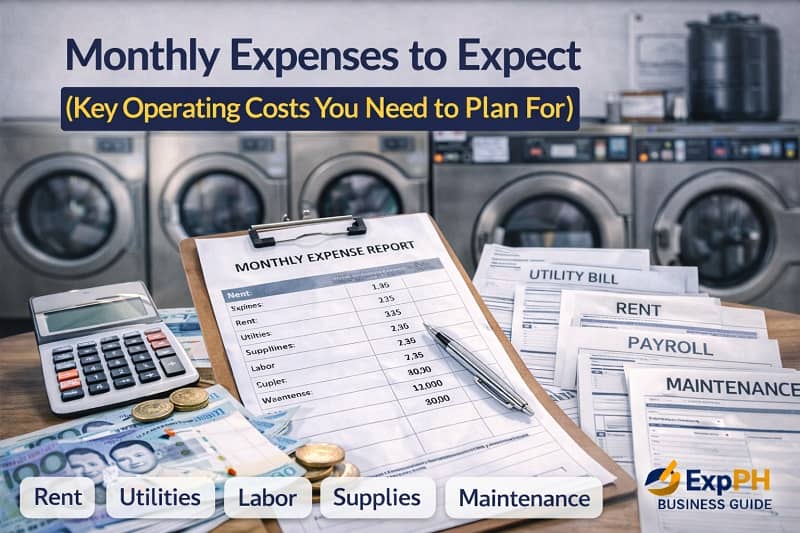
7. Monthly Expenses to Expect (Key Operating Costs You Need to Plan For)
Understanding your monthly expenses is essential for managing cash flow in your laundry business Philippines. Regular costs affect your profitability and pricing decisions. By tracking these expenses carefully, you can maintain stable operations, avoid financial issues, and ensure your business remains sustainable over time.
Typical Monthly Costs
- Rent typically ranges from ₱5,000 to ₱20,000 depending on location and shop size
- Electricity costs around ₱5,000 to ₱15,000 based on machine usage and operating hours
- Water expenses usually fall between ₱2,000 to ₱6,000 depending on consumption
- Staff salary ranges from ₱8,000 to ₱15,000 per employee depending on experience
- Supplies cost about ₱3,000 to ₱8,000 for detergents and packaging materials
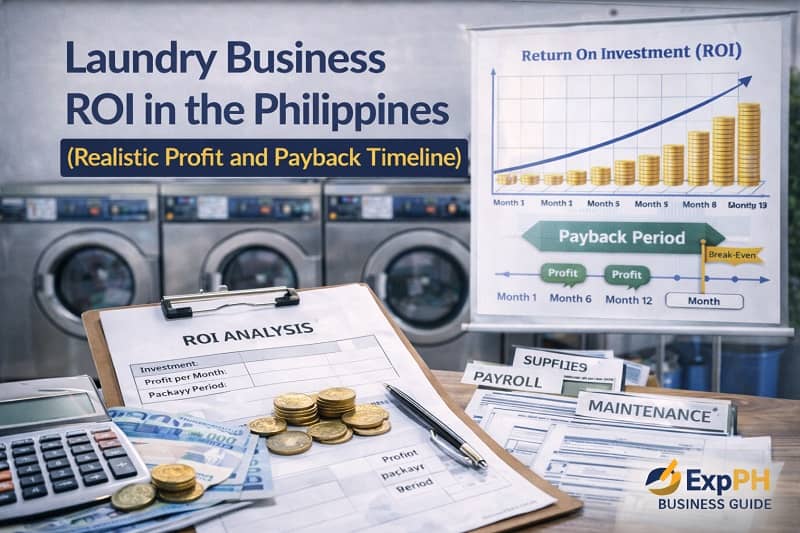
8. Laundry Business ROI in the Philippines (Realistic Profit and Payback Timeline)
The return on investment for a laundry business Philippines depends on location, pricing, and customer volume. A well-placed shop with consistent demand can generate steady income. Proper cost control and efficient operations help improve profit margins and shorten the time needed to recover your initial investment.
Sample Monthly Income Projection
- Average customers per day around 20 depending on location and demand
- Average price per load estimated at ₱150 per customer
- Daily revenue can reach about ₱3,000 with consistent operations
- Monthly revenue may grow to around ₱90,000 with stable customer flow
Estimated Monthly Profit
After deducting expenses such as rent, utilities, and staff salaries, your monthly profit can range from ₱30,000 to ₱60,000. Actual earnings vary based on efficiency, pricing strategy, and how well you manage daily operations and costs.
ROI Timeline
- Small setup can achieve return on investment within 6 to 12 months
- Medium setup may take around 12 to 18 months depending on performance
Reaching your ROI faster depends on strong location, good service quality, and consistent customer retention.
9. Tips to Make Your Laundry Business Successful (Proven Ways to Increase Profit and Customer Retention)
Running a successful laundry business Philippines requires more than basic operations. You need the right location, strong service quality, and smart cost control. Applying these practical strategies helps you attract loyal customers, improve efficiency, and increase long term profitability.
1. Choose the Right Location
Selecting a high-demand location is critical for consistent customer flow. Areas with strong foot traffic and easy access attract more walk-in clients. A visible and convenient location helps build awareness, making it easier for customers to choose your laundry shop over competitors nearby.
2. Focus on Cleanliness and Service
Maintaining cleanliness and delivering consistent service quality builds trust with customers. When clients receive fresh, well-handled laundry every time, they are more likely to return. Good service also leads to word-of-mouth referrals, which helps grow your customer base without extra marketing costs.
3. Offer Pickup and Delivery
Providing pickup and delivery services adds convenience for busy customers who prefer saving time. This option expands your reach beyond walk-in clients and allows you to serve more households. It also gives your business a competitive advantage in areas with multiple laundry shops.
4. Use Social Media Marketing
Promoting your laundry business through Facebook pages and local community groups helps increase visibility. Posting updates, promos, and customer feedback builds trust and engagement. Social media is a cost-effective way to reach nearby customers and attract repeat clients consistently.
5. Monitor Expenses
Tracking your electricity and water usage is essential for controlling operational costs. Regular monitoring helps you identify waste and improve efficiency. Managing expenses carefully ensures better profit margins and allows your business to remain stable even during slower periods.
10. Common Mistakes to Avoid (Costly Errors That Can Affect Your Profit and Growth)
Avoiding common mistakes is important when running a laundry business Philippines. Small errors in planning and operations can lead to losses and slow growth. By understanding these risks early, you can make better decisions and build a more stable and profitable business.
- Starting in a low-demand area limits customer flow and reduces your daily income potential
- Ignoring equipment maintenance can lead to breakdowns, service delays, and higher repair costs
- Poor pricing strategy may drive customers away or reduce your profit margins
- Lack of customer service can damage your reputation and prevent repeat business
Avoiding these mistakes helps you save time, reduce unnecessary expenses, and improve long term success.

Final Thoughts on Starting a Laundry Business in the Philippines
Starting a laundry business Philippines goes beyond buying machines and detergent. It focuses on delivering convenience, reliability, and consistent service that customers can trust. When you prioritize quality results, fair pricing, and efficient daily operations, your business can grow steadily and build a strong reputation within your local community.
With the right systems in place, this type of business offers long term stability and predictable income. Strong customer retention and repeat transactions help maintain steady cash flow. As demand increases, you can expand your services, improve your equipment, or open additional branches to scale your operations and increase profitability over time.
This opportunity is ideal for OFWs returning home, aspiring entrepreneurs, or anyone seeking a dependable income source in the Philippines. It provides a balance between manageable operations and growth potential. With proper planning and commitment, a laundry business can become a sustainable and rewarding investment for long term financial goals.
FAQs About Starting a Laundry Business in the Philippines
What is the estimated capital to start a laundry business in the Philippines?
Starting a laundry business in the Philippines requires capital for machines, rent, permits, and utilities, with small setups beginning around one hundred fifty thousand pesos.
What type of laundry business model should I choose?
You can choose between self service, full service, or pickup models, depending on your budget, target market, and how involved you want to be daily.
Do I need permits to operate a laundry business in the Philippines?
Yes permits such as DTI registration, barangay clearance, mayor permit, and BIR registration are required to operate legally and build trust with customers locally today.
How important is location for a laundry business?
Location affects customer volume, pricing potential, and overall profitability, so choosing areas near apartments, schools, or offices helps ensure consistent demand and steady daily income.
What are the common monthly expenses for this business?
Monthly expenses include rent, electricity, water, staff salaries, and supplies, so tracking these costs carefully helps maintain profitability and avoid unexpected financial problems over time.
How should I price my laundry services?
Pricing should reflect your costs and local competition, ensuring affordability for customers while maintaining margin to cover expenses and generate sustainable profit for your business.
Is pickup and delivery service worth offering?
Offering pickup and delivery increases convenience for customers, expands your reach beyond walk in clients, and helps your laundry business stand out in competitive areas.
How long does it take to get ROI in a laundry business?
Return on investment depends on customer volume, pricing, and cost control, but laundry businesses recover their capital within six to twelve months with consistent operations.
What common mistakes should I avoid?
Common mistakes include choosing poor locations, neglecting machine maintenance, setting incorrect prices, and ignoring customer service, which can reduce profits and slow business growth.
Is a laundry business good for beginners or OFWs?
A laundry business is suitable for OFWs and beginners because it offers steady demand, manageable operations, and potential for long term income when managed properly.
Ready to go beyond just one business idea?
Explore our complete step-by-step guide to starting a business in the Philippines, including registration, costs, and proven steps for beginners.
Complete Guide to Starting a Business in the Philippines (Registration, Costs, and Steps 2026)
Related Guides:
- How to Start a Water Refilling Station in the Philippines (Costs + Requirements)
- How to Start a Small Restaurant or Carinderia in the Philippines
Laundry Business Philippines Quiz
Test your knowledge about starting a laundry business Philippines with this quick quiz. It covers key ideas from setup, costs, pricing, and ROI. This is perfect for beginners who want to check their understanding before starting.
Results


#1. What is a key benefit of this business?
#2. Which model requires higher capital?
#3. What is a common startup cost item?
#4. Which permit is required in Philippines?
#5. What affects your business location success?
#6. What is a typical price range?
#7. What is a common monthly expense?
#8. What increases customer convenience?
#9. What helps increase profit?
#10. What is typical ROI timeline?
Thanks for Taking the Quiz
We appreciate your time. Share your score or experience in the comments and let others learn from your journey.

A Filipino web developer with a background in Computer Engineering. Founder of ExpPH Blog and ExpPH Business Guide, two Philippines-focused platforms covering OFW guidance, business, finance, freelancing, travel, and lifestyle. Passionate about helping Filipinos grow, he creates practical content that educates, empowers, and inspires readers nationwide.