

Starting a milk tea business in the Philippines is a practical way to enter the food and beverage industry, especially for beginners. Demand for affordable drinks and café-style experiences continues to grow, attracting students, office workers, and everyday consumers. This steady demand creates a strong opportunity for small entrepreneurs who want a business that is easy to start and manage.
If you are looking for a simple and realistic way to begin, this guide will walk you through each step of the process. You will learn how to plan your business, prepare your capital, choose the right setup, and launch effectively. It also covers strategies to help you grow your milk tea business and build long-term success.
Before you commit, choose a business that fits your budget, skills, and goals.
Read this guide: How to Choose a Small Business in the Philippines (2026 Guide for Beginners)
Learn how to pick the right business idea before investing your time and money.
Table of Contents

Why Start a Milk Tea Business in the Philippines?
Milk tea has evolved from a passing trend into a regular part of daily life for many Filipinos. It appeals to a wide market that includes students and working adults. Because of its steady demand, it offers a practical opportunity for aspiring entrepreneurs who want a simple yet profitable business.
Key Advantages
- Low to moderate startup cost
- Strong and consistent demand
- Easy to learn and operate
- Flexible setup, home-based, kiosk, or full shop
These advantages make a milk tea business in the Philippines ideal for beginners and small business owners. It does not require complex skills and can be started on a small scale, allowing you to grow gradually as your customer base and confidence increase.

How Much Capital Do You Need?
The capital required for a milk tea business in the Philippines depends on your chosen setup and business size. You can begin with a small budget and expand over time. Many successful entrepreneurs start small to reduce risk while learning operations and building a steady customer base.
Small Home-Based Setup
- Estimated capital: ₱20,000 to ₱50,000
- Best for online selling and delivery
This setup is ideal for beginners who want to test the market with minimal risk. It allows you to operate from home, focus on social media selling, and build your brand before investing in a physical location or larger operation.
Kiosk or Stall
- Estimated capital: ₱80,000 to ₱150,000
- Good for high foot traffic areas
A kiosk or stall setup gives you better visibility and access to walk-in customers. It is suitable for locations near schools, terminals, or busy streets where demand is high and daily sales can be more consistent.
Full Milk Tea Shop
- Estimated capital: ₱200,000 to ₱500,000+
- Includes rent, branding, and staff
This option is best for those who want a complete business setup with seating and a strong brand presence. While it requires higher investment, it also offers greater income potential if managed properly and located in a strategic area.
Starting small is often the smartest approach if you are unsure. You can scale your milk tea business gradually as your sales grow and your experience improves.
Basic Equipment and Supplies
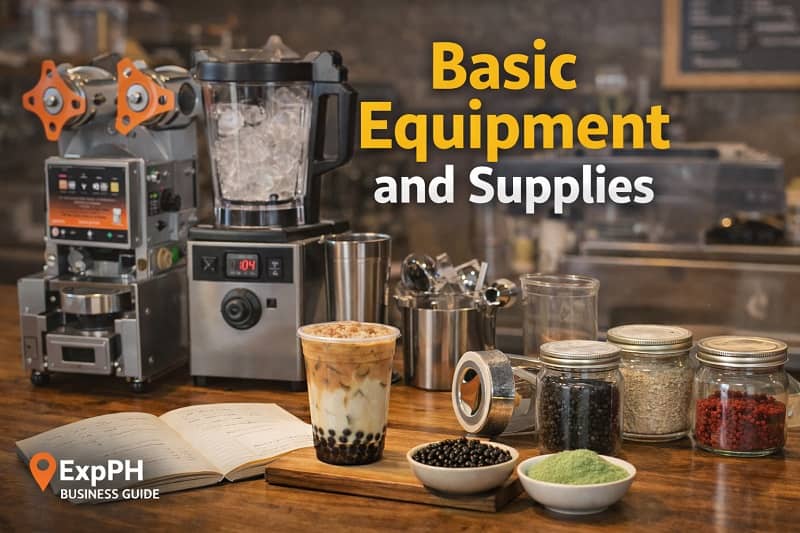
To run a smooth milk tea business in the Philippines, you need the right combination of equipment and quality ingredients. Having reliable tools helps ensure consistent preparation, while good ingredients improve taste. Both play a major role in customer satisfaction and repeat purchases.
Essential Equipment
- Sealing machine
- Shaker
- Measuring cups
- Refrigerator
- Blender
These tools help you prepare drinks efficiently and maintain consistency in every order. Investing in durable equipment reduces downtime and supports daily operations, especially during busy hours when speed and accuracy are important for keeping customers satisfied.
Core Ingredients
- Tea leaves or powder
- Milk or creamer
- Sugar or syrup
- Tapioca pearls
- Flavor powders
Your ingredients define the overall taste of your products. Using high-quality supplies ensures better flavor and texture, which encourages repeat customers. Never compromise on ingredient quality because it directly affects your reputation and long-term success in the market.

Step-by-Step Guide to Start Your Milk Tea Business
Starting a milk tea business in the Philippines can feel overwhelming for beginners, but this guide simplifies the process into clear and practical steps. It helps you plan, budget, register, and launch your business with confidence while avoiding common mistakes and building a strong foundation for long-term growth.
1. Do Market Research
Before investing in a milk tea business in the Philippines, take time to understand your market. Identify your target customers, study competitors in your area, and observe popular flavors and pricing. This step helps you make informed decisions and reduces the risk of starting blindly.
Key Actions:
- Identify your target customers
- Study competitors in your area
- Check popular flavors and price ranges
2. Create a Simple Business Plan
You do not need a complex plan to get started. Focus on the basics such as your budget, pricing, and target market. A simple plan gives direction and helps you stay organized as you build and manage your milk tea business.
Include:
- Startup budget
- Pricing strategy
- Target market
- Sales goals
3. Choose Your Business Model
Decide whether you want to build your own brand or invest in a franchise. Each option has its own advantages and challenges. Your choice should depend on your budget, experience, and long-term vision for your milk tea business.
Independent Brand:
- Full control over branding and menu
- Higher profit margins
Franchise:
- Easier setup
- Established brand recognition
- Higher initial cost
4. Prepare Capital and Budget Allocation
Carefully plan how you will use your capital to avoid overspending. Break down your expenses and prioritize essential costs. Having a clear budget ensures smoother operations and helps you manage your finances more effectively.
Budget Allocation:
- Equipment
- Ingredients
- Rent or space setup
- Permits
- Marketing
Always keep extra funds for unexpected expenses.
5. Register Your Business
To operate legally, you must complete the required registrations. This step builds trust with customers and ensures your business complies with Philippine laws. Proper registration also allows you to grow your business without legal issues.
- Register your business name with Department of Trade and Industry if you are a sole proprietor
- Secure Barangay Clearance
- Apply for a Mayor’s Permit
- Register with BIR for taxes
For official guidance, visit: https://www.dti.gov.ph
6. Buy Equipment and Source Ingredients
Start with essential equipment and focus on quality ingredients. Reliable tools help maintain efficiency, while good ingredients improve taste. Testing your recipes before selling ensures consistency and helps you meet customer expectations from the beginning.
Tips:
- Invest in durable equipment
- Find reliable ingredient suppliers
- Test your recipes before selling
7. Choose Location or Selling Platform
Decide how you will reach your customers based on your budget and target market. A good location or platform increases visibility and sales. Whether physical or online, choose the option that gives you the best access to your ideal customers.
Physical Locations:
- Near schools and universities
- Busy streets
- Commercial areas
Online Options:
- Facebook page
- Food delivery platforms
8. Launch and Promote Your Business
Once everything is ready, launch your milk tea business with a clear promotion plan. Your initial marketing efforts will help attract customers and build awareness. Strong early impressions can lead to repeat buyers and long-term growth.
Launch Strategies:
- Offer opening promos or discounts
- Post regularly on social media
- Encourage customer reviews
- Improve based on feedback
Your first customers will play a key role in building your reputation and growing your business.

Profit Potential of a Milk Tea Business
A well-managed milk tea business in the Philippines can generate steady and reliable income when operations are consistent and demand is strong. With proper pricing and cost control, even a small setup can become profitable over time as your customer base continues to grow.
Sample Daily Computation
- 50 cups per day x ₱80 = ₱4,000 sales
- Estimated profit margin: 40% to 60%
This example shows how daily sales can quickly add up when demand is consistent. Maintaining quality and efficient service helps sustain these numbers and improves your chances of reaching higher daily revenue over time.
Estimated Monthly Profit
- ₱48,000 to ₱72,000
Your actual profit will depend on factors such as location, pricing strategy, operating expenses, and customer volume. Managing costs carefully and increasing sales through promotions or repeat customers can significantly improve your overall profitability.
Common Mistakes to Avoid
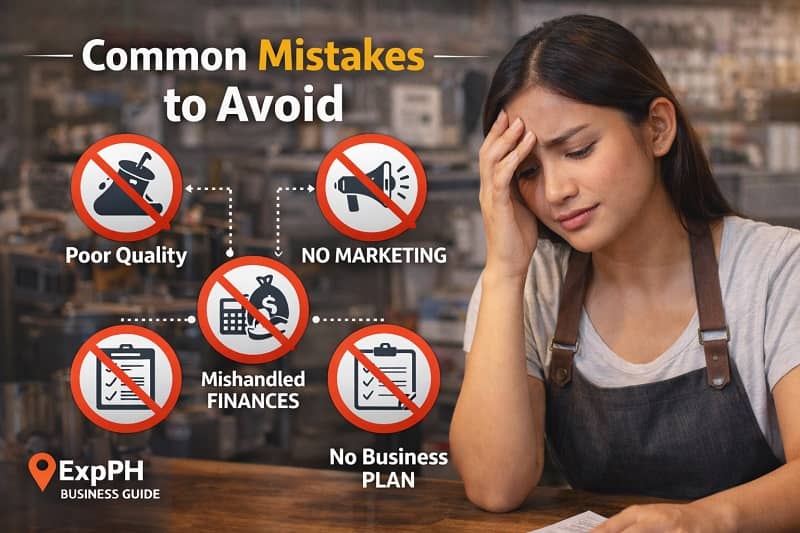
Avoiding common mistakes is essential when starting a milk tea business in the Philippines. Small errors can lead to wasted money and missed opportunities. By understanding these risks early, you can improve your operations and build a stronger foundation for long-term success.
Common Mistakes
- Using low-quality ingredients
- Setting the wrong price
- Overloading your menu
- Ignoring customer feedback
- Weak branding and marketing
These mistakes often affect product quality, customer experience, and sales performance. Focus on consistency, listen to your customers, and improve your branding over time. A simple but well-executed business approach will help you grow and stay competitive.

Tips to Grow Your Milk Tea Business
Once your milk tea business in the Philippines becomes stable, you can focus on expansion and long-term growth. Improving your products and customer experience helps you stay competitive. Growth does not happen overnight, but consistent effort and smart decisions can increase your sales and strengthen your brand.
Growth Strategies
- Introduce new flavors
- Offer loyalty rewards
- Improve packaging and branding
- Expand to new locations
- Build your own brand identity
These strategies help attract new customers while keeping existing ones loyal. Continuous improvement in your products, service, and branding allows your business to grow steadily and adapt to changing customer preferences in a competitive market.

FAQs About Milk Tea Business in the Philippines
1. How much capital do I need to start a milk tea business in the Philippines?
Capital depends on your setup. A home-based business may start at ₱20,000, while a kiosk or shop can require ₱80,000 to ₱500,000 or more.
2. Is a milk tea business profitable in the Philippines?
Yes, it can be profitable with good location, quality products, and consistent marketing. Profit depends on pricing, expenses, and daily sales volume and customer demand.
3. Do I need permits to start a milk tea business?
Yes, you must register your business with DTI, secure barangay clearance, obtain a mayor’s permit, and register with BIR to operate legally in Philippines.
4. Can I start a milk tea business at home?
Yes, you can start from home with minimal capital by selling online. This setup helps you test your products and build customers before expanding.
5. What equipment do I need to start?
You need basic tools like a sealing machine, shaker, blender, measuring cups, and refrigerator. These help ensure consistent preparation and efficient daily operations.
6. How do I choose a good location for my milk tea business?
Choose areas with high foot traffic like schools or commercial zones. A good location increases visibility, attracts more customers, and improves your daily sales potential.
7. Should I start a franchise or my own milk tea brand?
Franchises offer easier setup and branding, while independent brands provide higher profit potential and flexibility. Choose based on your budget, experience, and long-term business goals.
8. What are the most popular milk tea flavors in the Philippines?
Popular flavors include classic milk tea, wintermelon, taro, and matcha. Offering familiar options helps attract customers, especially beginners exploring your milk tea products.
9. How can I market my milk tea business effectively?
Use social media platforms like Facebook and TikTok to promote your products. Post regularly, offer discounts, and engage customers to build trust and increase sales.
10. What are common mistakes to avoid when starting?
Avoid poor ingredient quality, wrong pricing, and weak marketing. Ignoring customer feedback and lacking planning can also affect your growth and long-term business success.
Final Thoughts on Milk Tea Business in the Philippines
Starting a milk tea business in the Philippines offers a practical path for beginners who want a profitable and sustainable venture. Demand remains strong across many locations, making it a reliable option for small entrepreneurs. With proper planning, quality ingredients, and consistent marketing, you can build a business that generates steady income. Even a simple setup can grow over time if you focus on improving operations, understanding your customers, and maintaining product quality.
Success in this business depends on your ability to deliver great taste and create a positive customer experience. Building trust encourages repeat buyers and strengthens your reputation in the market. Manage your finances carefully and track your expenses to protect your profits. Stay consistent with your branding and service while adapting to customer preferences. With patience and the right strategy, your small milk tea business can grow into a stable and successful venture.
Want to Start a Business Beyond Milk Tea?
Learn the full process, from registration to costs and planning.
Read the full guide: Complete Guide to Starting a Business in the Philippines (Registration, Costs, and Steps 2026)
Related Guides:
- How to Start a Food Cart Business in the Philippines (Step-by-Step)
- How to Start a Small Restaurant or Carinderia in the Philippines
Milk Tea Business Quiz: Test Your Knowledge
Think you’re ready to start a milk tea business in the Philippines? Take this quick quiz to check your understanding of the basics, from capital and equipment to marketing and growth strategies. It’s beginner-friendly and designed to help you learn while having fun.
Results


#1. What is the lowest startup capital range?
#2. Which setup is best for beginners?
#3. What is a key success factor?
#4. Which permit is required first?
#5. Where is a good location?
#6. What tool seals cups?
#7. What helps attract customers?
#8. What is a popular flavor?
#9. What is a common mistake?
#10. What supports business growth?
Thanks for taking the quiz!
Feel free to share your score or experience in the comments. Your journey can inspire others who are planning to start their own milk tea business.

A Filipino web developer with a background in Computer Engineering. Founder of ExpPH Blog and ExpPH Business Guide, two Philippines-focused platforms covering OFW guidance, business, finance, freelancing, travel, and lifestyle. Passionate about helping Filipinos grow, he creates practical content that educates, empowers, and inspires readers nationwide.